

Author: mfnnews
Three landscape supply employees gunned down in Texas shooting, police say
A fatal Texas workplace shooting left three dead at a landscape business on Saturday. San Antonio police are investigating the motive behind the targeted attack.
NFL asks all teams to hold moment of silence for Cowboys’ Marshawn Kneeland after shocking death: report
The NFL asked all teams to hold a moment of silence for Dallas Cowboys rookie Marshawn Kneeland, who died Thursday from a self-inflicted gunshot wound.
Deion Sanders’ Colorado Buffaloes eliminated from bowl contention amid lost season
Deion Sanders’ Colorado Buffaloes were eliminated from bowl contention in a 29-22 loss to West Virginia, marking another losing season for the head coach.
How sharia law violates everything the founding fathers built
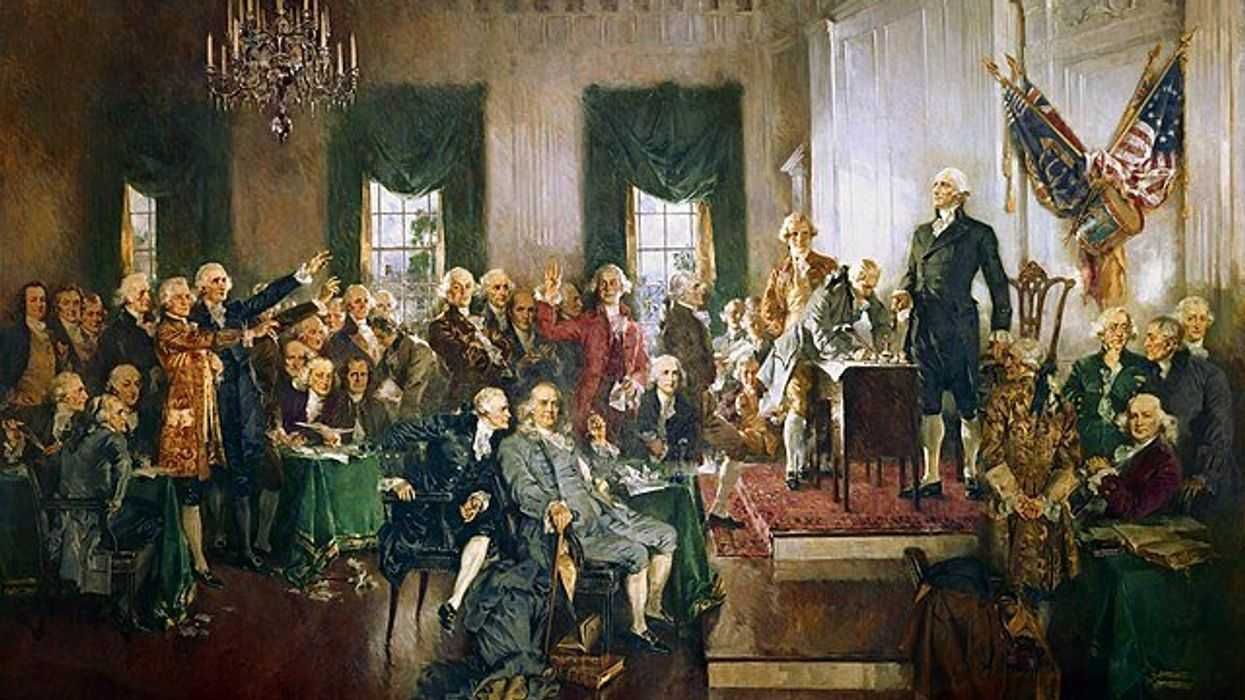
From the moment I first studied the United States Constitution through the lens of scripture, I’ve been struck by how carefully our founders embedded God-given liberty into the fabric of our nation. Freedom of conscience, equality before God, and protection from government overreach are not just political ideas; they are biblical principles.
The more I study, the clearer it becomes that Islamic systems like sharia law, enforced as government policy abroad, stand in sharp contrast to both the freedoms our Constitution guarantees and the liberties scripture upholds.
Christians must be informed, discerning, and proactive in defending freedoms that allow people to come to God freely.
Sharia law, when enforced as government policy, conflicts with constitutional freedom and biblical principles of liberty, including protections for personal conscience, speech, and moral choice.
Sharia law vs. constitutional liberty
Sharia law is a system derived from Islamic religious texts, guiding personal conduct and societal governance.
In countries where it is enforced, it often dictates punishments, civil law, and social norms based on religious authority rather than individual liberty. This approach contrasts sharply with the U.S. Constitution, which separates church and state, ensuring that government does not dictate religious belief or practice.
Scripture emphasizes the importance of freedom in Christ. Galatians 5:1 reminds us, “It is for freedom that Christ has set us free. Stand firm, then, and do not let yourselves be burdened again by a yoke of slavery.” The Constitution mirrors this principle, protecting Americans from coercion in matters of conscience, ensuring that individuals may follow God freely without fear of government reprisal.
Real-world examples of sharia governance
When we examine Muslim nations governed by sharia-based systems, the consequences for personal freedom are clear.
In countries like Saudi Arabia, Iran, and Afghanistan, civil and criminal codes often derive directly from religious texts. These laws enforce strict moral codes, restrict freedom of speech, and impose severe punishments on offenses such as theft, adultery, or apostasy.
RELATED: The Islamification of America is well under way
 osmanpek/iStock/Getty Images Plus
Punishments include public lashings, stonings, and even amputations for certain crimes. LGBTQ individuals face particularly harsh treatment, including imprisonment, corporal punishment, or death. Women’s rights and freedom of expression are often restricted as well.
These policies illustrate a system in which government enforces religious conformity, which directly conflicts with the freedom of conscience guaranteed by the Constitution. The U.S. founders recognized that human governments are fallible; they designed laws to protect liberty and allow people to make moral and spiritual choices voluntarily rather than under coercion.
The biblical perspective on liberty and government
Scripture provides a firm framework for understanding liberty. Romans 13:1-4 teaches that governments are instituted to punish wrongdoers and maintain order, but within limits. Civil authority is meant to restrain evil while upholding justice, not to enforce religious orthodoxy.
John 8:32 reminds us, “Then you will know the truth, and the truth will set you free.” True freedom, in both spiritual and civil contexts, comes from the ability to choose God and live according to His moral order voluntarily.
The Constitution’s protections for freedom of religion, speech, and equal protection under the law reflect these same biblical principles. They ensure that no one is coerced into adherence to a particular religious code, preserving liberty and human dignity.
Sharia-based governance, when implemented as law, replaces personal conscience with mandatory religious observance, undermining the freedoms that God and the founders intended.
How Christians should respond
Loving our neighbors does not mean ignoring the truth about systems of governance. But discernment calls us to distinguish between individuals and systems of law that impose religious authority on entire societies.
Christians are called to defend freedom and truth, speaking boldly yet compassionately.
Understanding the differences between sharia-based governance and constitutional liberty is not purely academic; it’s practical. Nations that merge religion and state often face suppression of speech, persecution of minorities, and human rights violations. Christians must be informed, discerning, and proactive in defending freedoms that allow people to come to God freely.
Practical engagement may include:
- Praying for wisdom to navigate cultural and political issues.
- Educating others about the value of freedom of conscience.
- Participating in civic discourse in ways that honor God while upholding liberty.
Sharia law and the protection of minorities
One area that starkly highlights the contrast is treatment of LGBTQ individuals. In sharia-governed regions, homosexuality is often criminalized, with penalties ranging from imprisonment to corporal punishment, even death. Theft or other criminal offenses can result in amputations, and adultery may be punished by stoning.
Christians are charged to uphold liberty, educate themselves on systems that restrict freedom, and advocate for policies that reflect God’s justice while protecting human conscience.
These practices illustrate the deep conflict between enforced religious law and personal freedom, especially for vulnerable minorities.
In contrast, the U.S. Constitution protects all citizens, ensuring legal equality, freedom of conscience, and due process. The biblical principle that every person is made in the image of God (Genesis 1:27) supports the need to defend dignity and liberty for all.
Historical lessons and modern implications
History demonstrates that societies enforcing religious law as government policy often struggle with oppression and instability. By embedding freedom and separation of powers, the U.S. Constitution creates space for citizens to practice faith voluntarily, without fear of legal coercion.
As Christians, we can see how these principles align with biblical teaching and recognize why coercive religious legal systems are incompatible with God’s design for human freedom.
Standing for freedom with compassion
Understanding these contrasts calls us to vigilance, prayer, and action. Christians are charged to uphold liberty, educate themselves on systems that restrict freedom, and advocate for policies that reflect God’s justice while protecting human conscience.
Loving our neighbors does not mean compromising truth; it means defending freedom in a way that is rooted in Christ’s example of compassion and moral clarity.
By examining Islam as a governance system, we see clearly the importance of constitutional and biblical liberty. Freedom of conscience, protection of minorities, and the ability to choose God freely are not negotiable — they are foundational to both faith and the American experiment.
Standing for these freedoms is an act of love, truth, and obedience to God.
This article is adapted from an essay originally published at Arch Kennedy’s blog.
Mom of 5, pastor both fatally shoot escaped monkeys; authorities provide update on frantic search for animals

A Mississippi mother fatally shot a monkey to protect her children after the “aggressive” animals escaped from an overturned truck, according to multiple reports.
Police said a truck transporting 21 rhesus monkeys from Tulane University’s National Biomedical Research Center in New Orleans overturned on Interstate 59 north of Heidelberg, Mississippi — approximately 85 miles southeast of the state capital of Jackson.
‘I hate that it happened, but I’m going to protect my kids at all costs.’
On Oct. 28, the Jasper County Sheriff’s Office said in a statement, “A truck hauling monkeys from Tulane University has overturned around the 117-mile marker, north of Heidelberg. It has been reported that several monkeys are on the loose.”
Police stressed, “Do not approach the monkeys if you see one. Call 911. They do pose potential health threats and are aggressive.”
Officials from Tulane noted that the university wasn’t transporting the monkeys, and the animals do not belong to the university, according to NBC News.
Tulane told WTVT-TV, “Non-human primates at the Tulane National Biomedical Research Center are provided to other research organizations to advance scientific discovery.”
The sheriff’s office initially warned residents that the animals “carry hepatitis C, herpes, and COVID” based on preliminary reports by the truck’s occupants.
However, the biomedical research company PreLabs — which owns and was transporting the animals — told WDAM-TV, “The animals being transported were not infected with COVID-19, hepatitis, and herpes as indicated in certain news articles.”
PreLabs added, “The animals were being lawfully transported in compliance with all federal and state regulations to a licensed research facility.”
At the time of the car accident, 13 rhesus monkeys were quickly recovered at the crash site, according to another report from WDAM-TV. Meanwhile, another five monkeys were killed near the crash site — but three escaped, according to Jasper County Sheriff Randy Johnson.
Jessica Bond Ferguson — a 35-year-old mother with five children who range in age from 4 to 16 — was alerted by her 16-year-old son about a monkey running around the property of their home near Heidelberg.
Ferguson said she got out of bed, grabbed her gun and her cell phone, then went outside to locate the monkey, which was roughly 60 feet away.
Ferguson told the Associated Press, “I did what any other mother would do to protect her children.”
The mom recalled, “I shot at it, and it just stood there, and I shot again, and he backed up — and that’s when he fell.”
“If it attacked somebody’s kid, and I could have stopped it, that would be a lot on me,” Ferguson declared. “It’s kind of scary and dangerous that they are running around, and people have kids playing in their yards.”
She also blasted those responsible for the monkeys’ escape, telling TMZ that “I wish it didn’t have to happen that way. I just wish they took better measures in taking care of it and trying to find them.”
Ferguson continued, “I feel like if they wanted us to do something else, then they should’ve had a search team out. They could’ve had drones flying around. They could’ve taken more measures to look for these monkeys and prevented this from happening.”
She stressed, “I hate that it happened, but I’m going to protect my kids at all costs.”
In addition, a small-town pastor neutralized one of the other escaped monkeys.
On Monday, Pastor George Barnett was in his car traveling with his two young children and his wife to visit his mother at her home in Vossburg when his wife allegedly spotted a monkey near the highway.
NBC News reported the monkey “scampered into a tree and flashed its teeth.”
With that, Barnett, 45, grabbed his rifle and fired twice, the news network reported, and the monkey fell to the ground.
Barnett told NBC News, “As soon as I saw it, the only thing I thought about was, ‘What if this thing attacks one of those people that I grew up with, or my children?'”
On Thursday, the last escaped monkey was captured.
The Mississippi Department of Wildlife, Fisheries, and Parks told the Associated Press that a resident who lives near the crash site told authorities about the monkey’s location, and authorities “successfully recovered” the animal.
The Mississippi Highway Patrol is investigating the cause of the crash.
PreLabs and the Jasper County Sheriff’s Office did not immediately respond to Blaze News‘ request for comment.
Like Blaze News? Bypass the censors, sign up for our newsletters, and get stories like this direct to your inbox. Sign up here!
From 911 to broadband, criminals are unplugging America

Imagine calling 911 and no one answers. A hospital loses internet access mid-surgery and your child is the patient. You can’t work, access your bank, or contact your doctor — all because a few thieves ripped copper wiring from the ground to sell for scrap.
These aren’t distant hypotheticals. They’re happening across the country right now. In recent weeks alone, copper wire thefts darkened 5,500 streetlights in Tucson, shut down Denver’s A-Line train, and caused $1.25 million in losses in Bakersfield, California, where thieves stripped wiring from electric-vehicle charging stations.
Broadband is critical infrastructure — the digital lifeline of daily American life. Protecting it is not a corporate issue but a consumer one.
The problem isn’t slowing down. Two new reports reveal a stunning rise in theft and vandalism against America’s broadband and wireless networks. Between June 2024 and June 2025, more than 15,000 incidents disrupted service for over 9.5 million customers nationwide. In just the first half of 2025, incidents nearly doubled from the previous six months.
Hospitals, schools, 911 dispatch centers, even military bases have been hit — exposing a growing national vulnerability.
Not just a local nuisance
The cost of stolen wire is trivial compared with the damage it causes. Between June and December 2024, theft-related outages cost society between $38 million and $188 million in losses. California and Texas took the biggest hits — $29.3 million and $18.1 million — while smaller states like Kentucky suffered millions too. Every cut cable ripples outward, silencing entire communities.
These aren’t weekend thieves looking for beer money. They’re organized, brazen, and increasingly strategic. Some know exactly which copper or fiber-optic lines to hit. Others destroy fiber cables by mistake, assuming they contain metal. Either way, the result is the same: chaos, cost, and danger.
Consumers pay the price. Each attack disrupts 911 access, paralyzes small businesses, and stalls health care, banking, and remote work. Broadband expansion — especially in rural and underserved areas — slows to a crawl.
When vandalism becomes sabotage
Some of these attacks are so severe that investigators now treat them as potential acts of domestic terrorism. Charter Communications reports a 200% increase in felony attacks on its Missouri fiber network this year. In Van Nuys, California, vandals cut 13 fiber lines in one night, knocking out 911 dispatch, a military base, and hospitals for 30 hours. These were no petty crimes. They were coordinated strikes that endangered lives.
Businesses, taxpayers, and consumers have invested billions to build these networks. Letting criminals dismantle them for pocket change is unacceptable.
Yet under current federal law, destroying broadband infrastructure isn’t punished like attacks on pipelines, railways, or power grids. In many states, penalties are outdated or nonexistent — effectively giving vandals a free pass to cripple critical systems.
A bipartisan fix
Congress has begun to respond. Reps. Laurel Lee (R-Fla.) and Marc Veasey (D-Texas) have introduced H.R. 2784, the bipartisan Stopping the Theft and Destruction of Broadband Act. The bill would amend federal law to explicitly criminalize the destruction of broadband infrastructure, giving law enforcement the tools needed to act.
Adding broadband systems to the list of protected critical assets under Title 18 of the U.S. Code would send a clear message: This isn’t scrap-metal scavenging — it’s sabotage, and it will be prosecuted as such.
RELATED: China rules the resources we need to build the future. Now what?
 Liudmila Chernetska via iStock/Getty Images
To defend consumers and our connected economy, lawmakers must:
- strengthen penalties for theft or destruction of communications infrastructure, matching protections for other critical sectors;
- crack down on black-market copper sales by holding scrap dealers accountable;
- increase funding and coordination for law enforcement to investigate and prosecute network attacks; and
- support industry-led security upgrades without adding regulatory burdens that slow innovation.
States like Florida, South Carolina, and North Carolina have already moved to deter these crimes. Congress should follow their lead.
Defend what we built
Broadband is critical infrastructure — the digital lifeline of daily American life. Protecting it is not a corporate issue but a consumer one. Americans shouldn’t have to wonder whether their connection will work when they need it most.
We built the connected economy. Now we must defend it — before the vandals win.
Uwan nears Catanduanes, Signal No. 4 up in four Bicol areas
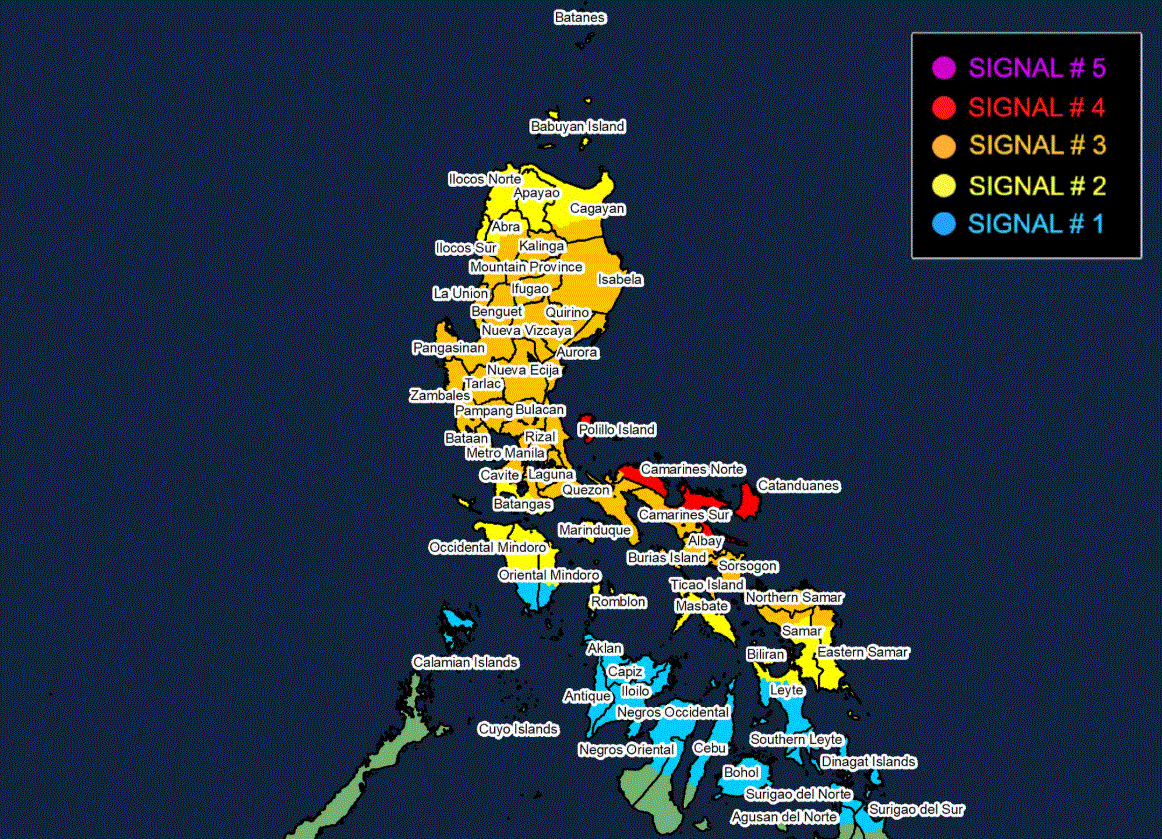
Typhoon Uwan continues to “rapidly intensify” as it heads to Catanduanes province, PAGASA said in its 5 a.m. cyclone bulletin on Sunday.
Negros Occidental logs over P35M in agri losses due to Tino
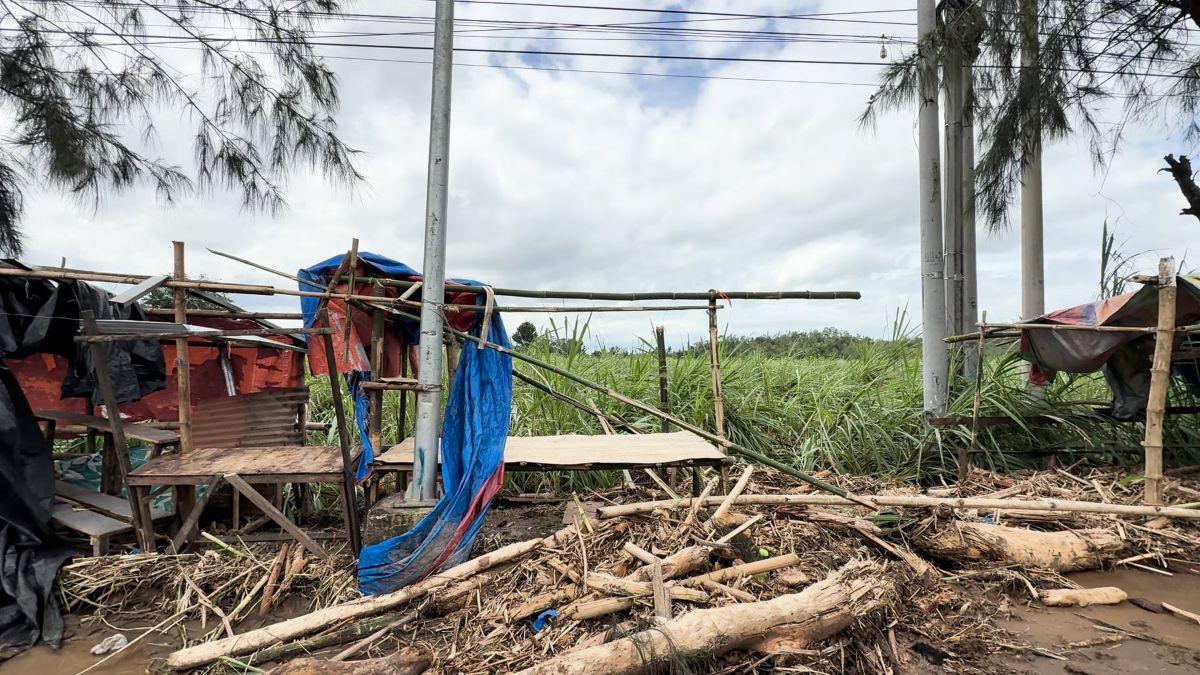
Typhoon Tino (international name: Kalmaegi) wreaked havoc on the agriculture sector of at least 13 local government units (LGUs) in the Province of Negros Occidental.
LIVE UPDATES: Typhoon Uwan (Fung-Wong), Nov. 9, 2025
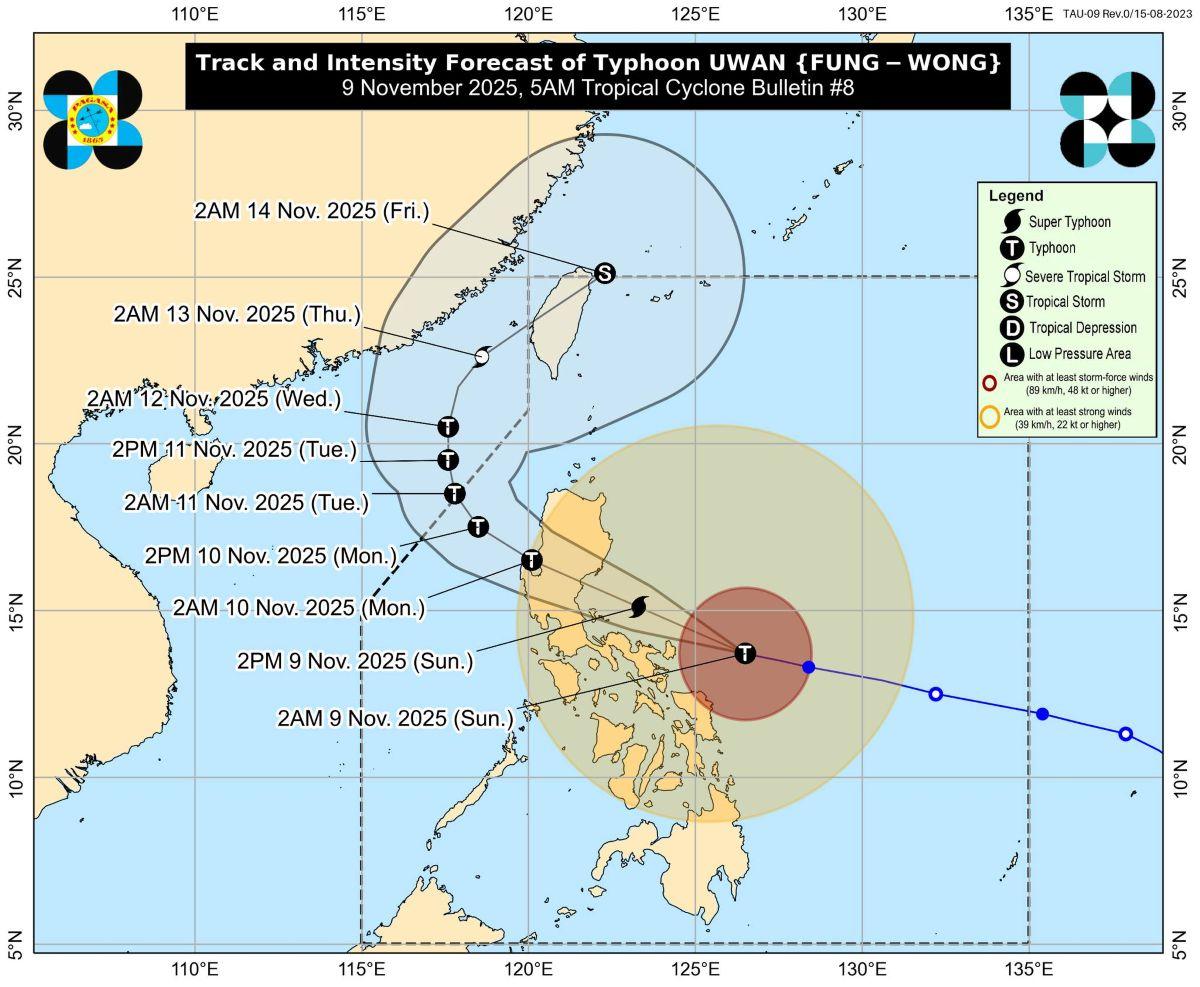
Typhoon Uwan (international name: Fung-Wong) continued to rapidly intensify as it heads for Catanduanes on Sunday morning, weather bureau PAGASA said in its 5 a.m. bulletin.
Tino claims over 50 persons in Negros Occidental

At least 52 individuals perished during the onslaught of Typhoon Tino in the Province of Negros Occidental on November 4, 2025, according to data from the Provincial Disaster Risk Reduction and Management Office (PDRRMO).





