

Category: Inflation
The Data Is In — and the Narrative Is Wrong
It would appear that most mainstream economists and legacy journalists either don’t believe the “numbers” or don’t like what they…
Trump’s economic agenda needs a Vegas test — and a Vegas win
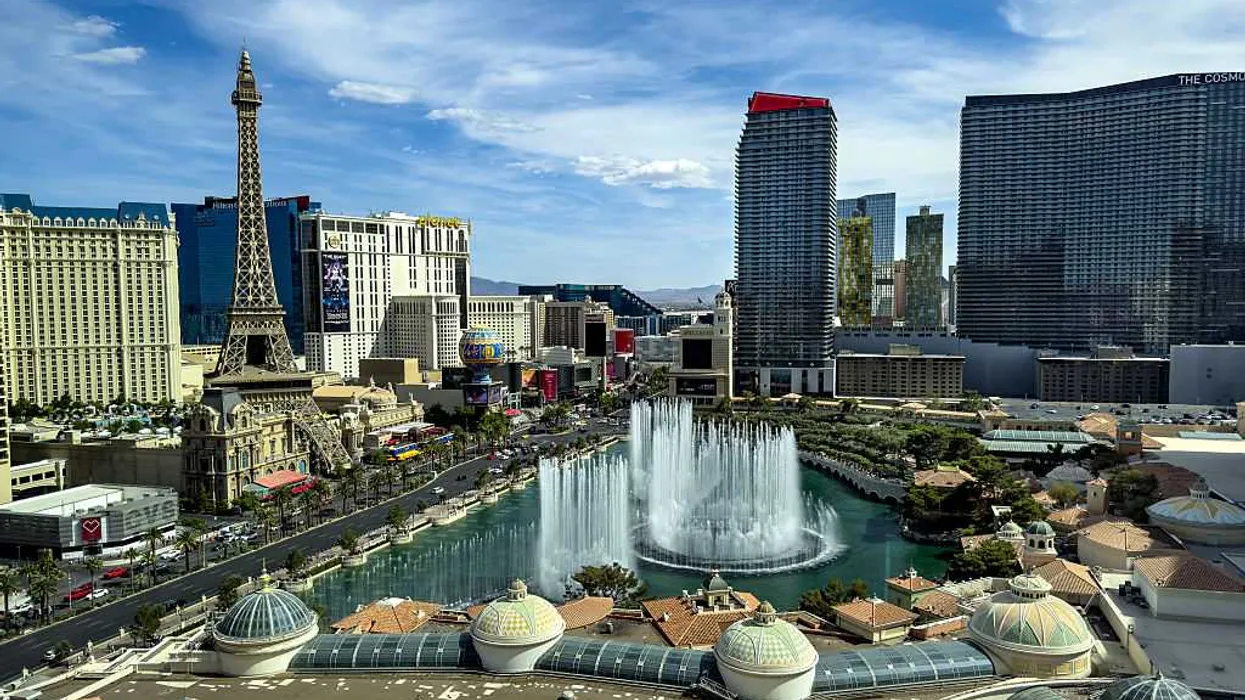
Las Vegas is a mirror. When it works, America works. When it struggles, the problem isn’t local — it’s national.
Vegas was built on a simple idea: value. Give people a reason to come, treat them fairly, and let them choose how much risk they want to take. No lectures. No stupid political games. No government hand in your pocket every five minutes.
A great city doesn’t nickel-and-dime its customers. Value matters. People don’t expect cheap. They expect fair. That lesson applies nationally, too.
That formula built the entertainment capital of the world. And right now, it’s under pressure.
The neon lights have dimmed
Vegas is getting squeezed from both ends, and the pressure feels familiar because it’s the same pressure families across the country have felt.
Under the Biden administration, inflation surged. Housing costs jumped. Groceries, energy, airfare, and insurance rose together. Families didn’t get richer. Their dollars just bought less.
Reckless spending, energy restrictions, and regulatory overreach drove the damage. Washington acted like prices were somebody else’s problem.
Southern Nevada also felt the economic whiplash. Tourism collapsed during the 2020 lockdowns, wiping out billions and driving unemployment as high as 33% at its peak. Visitor spending returned slowly, then softened again in 2025 — after wages, rents, and debt had already risen on the assumption that demand would keep growing.
For locals trying to raise families, that meant higher baseline costs and less margin for error. Housing, rent, and transportation ate paychecks. Hospitality wages rose, but many workers still lost ground as commuting costs and rents climbed faster.
A gamble on progress
Under President Trump, the trend has started to reverse — not overnight, but directionally. Energy production is up. Supply chains have stabilized. Regulatory pressure has eased. Inflation cooled. Costs didn’t snap back, but the bleeding slowed.
That matters because affordability is competitiveness. Vegas shows what happens when value breaks.
For decades, Vegas understood the middle-class customer: a weekend trip, a decent room, a good meal, a show, maybe a little gambling — and you left feeling like you got your money’s worth.
That perception is cracking. Resort fees that feel like a second room rate. Paid parking where it never used to exist. Food and drink prices that make people stop and stare. Fees stacked on top of fees, revealed at checkout. The experience starts feeling less like entertainment and more like an airport terminal.
Visitors notice. And when people feel squeezed, they don’t just complain — they change their behavior.
RELATED: America tried to save the planet and forgot to save itself
 Photo by Timothy Fadek/Corbis via Getty Images
Vegas runs on volume. When fewer visitors come, fewer dollars circulate. The pain hits the dealer, the server, the bartender, the stagehand, the hotel staff, and the rideshare driver long before it reaches the executive suite.
Zoom out, and you see America facing the same dynamic.
The United States used to win because we offered the best value on earth. Not the cheapest — the best deal. A place where costs made sense and life felt attainable.
That edge has been eroding, especially in housing. When home ownership becomes a fantasy, workers can’t relocate, young families delay building stable lives, and talent looks elsewhere.
Meanwhile, competitors are building. Riyadh. Dubai. Macao. Singapore. They’re creating new tourism and entertainment hubs designed to pull dollars away from legacy markets like Las Vegas.
They’re betting America forgets how competition works.
Make Vegas Vegas again
Federal policy matters here. Washington still treats Vegas like a cash register, with outdated rules such as taxing gambling winnings and forcing IRS reporting thresholds stuck in the 1970s. That doesn’t just annoy visitors. It tells the world America doesn’t understand modern consumer behavior.
Ending the federal tax on gambling winnings isn’t radical. It’s strategic. Updating IRS reporting levels isn’t reckless. It’s realistic. Both would improve the visitor experience and help Vegas compete.
The industry also has work to do. A great city doesn’t nickel-and-dime its customers. Transparency matters. Value matters. People don’t expect cheap. They expect fair.
That lesson applies nationally, too.
America doesn’t win by lecturing consumers or ignoring affordability. America wins by making this country the best place on earth to live, work, build, and spend money.
Vegas is telling that story in real time. If Washington listens, the rest of the country benefits.
Trump’s First 12 Months: The Economy, Venezuela, and the American Electorate
In the short 12 months since Donald Trump became president for the second time, his tenure thus far can be…
Trump has the chance to end the welfare free-for-all Minnesota exposed
It’s the $1.2 trillion question.
The United States spends roughly $1.2 trillion every year on means-tested welfare programs — cash aid, food assistance, housing subsidies, and medical care. The list runs through a thicket of acronyms: SNAP, TANF, SSI, EITC, ACTC, WIC, CHIP, ACA subsidies, and CCDBG, plus school meals, Medicaid, and Section 8 housing.
States that eliminate fraud can afford to provide better aid to real residents in need — creating a race to the top in administration rather than a race to exploit Washington.
This guaranteed-income architecture now fuels a destructive cycle. Federal spending drives debt. Debt fuels inflation. Inflation expands dependence. And Washington responds by printing more money and sending it back to the states — without demanding serious accountability.
The result is a bottomless pit of spending, fraud, and inflation, with states handed endless federal funds and almost no incentive to police abuse.
Minnesota’s massive Somali-linked fraud scandal exposes this system in its most grotesque form. The question is whether President Trump will use it to force states to reclaim ownership — and responsibility — over welfare.
The day-care, nutrition, and medical fraud uncovered in Minneapolis is not an aberration. It is the predictable outcome of an open-ended entitlement state. Fraud networks thrive wherever federal money flows without limits or consequences. While the Minneapolis cases involved tight-knit ethnic networks, the underlying problem is national and structural. As long as states do not have to pay their own way, fraud will remain rational behavior.
California offers a parallel example. A report last summer found that roughly one-third of all community college applications in the state were fake — submitted solely to extract federal financial aid. That scam could not survive if California had to pick up the tab.
It isn’t just a blue-state problem, either. As Alex Berenson has reported, Indiana’s Medicaid spending on “autism behavioral therapy” exploded thirtyfold in just six years, reaching $75,000 per child for a few hours a week of unproven playtime therapy. When federal dollars cover the bill, discipline evaporates.
RELATED: Government fraud meets its worst enemy: Some dude with a phone
 Wanlee Prachyapanaprai via iStock/Getty Images
Many Americans ask how Minnesota allowed the Feeding Our Future scandal to persist for years. The answer is simple: Washington supplied unlimited money, and the state faced no budgetary consequence for ignoring warning signs.
Over 200 day-care and medical providers allegedly siphoned billions across Medicaid, child care, and nutrition programs. That scale of fraud does not occur without political indifference — or worse.
States have every incentive under this system to look away. Federal money enables a closed loop of special interests, dependency, and electoral protection. Oversight threatens the flow.
Devolving welfare programs to the states — using fixed block grants rather than open-ended federal matches — would cut this dynamic off at the knees. States must balance their budgets. They do not have a printing press. When fraud costs real money, enforcement follows.
This is the moment for Trump to make that case. Either states raise taxes to fund welfare programs themselves, or they reform and prioritize them. That choice restores democratic accountability.
Consider the contrast. The United States spends roughly $1 trillion on national defense — protecting everyone. Yet we now spend even more on means-tested welfare that serves narrower populations while distorting the economy for all. Open-ended welfare spending drives inflation, which then forces more people onto welfare. End the money-printing, and fewer people will need subsidies in the first place.
RELATED: The insane little story that failed to warn America about the depth of Somali fraud
 NoraVector via iStock/Getty Images
In response to the Minnesota scandal, Trump’s Office of Management and Budget froze $10 billion in funding for TANF and the Child Care Development Fund across several states. That is a start. But temporary freezes will not survive the next Democrat administration.
The durable fix is statutory restructuring — through budget reconciliation — to force states to assume full financial responsibility for welfare programs. Without unlimited federal backstopping, abuse becomes politically and fiscally intolerable.
Critics warn that block grants spark a “race to the bottom.” The 1996 welfare reform suggests the opposite. When states gained ownership, many innovated — emphasizing work, child-care support, and fraud reduction. Accountability improved because incentives changed.
Yes, benefits should be limited to the truly needy. Open-ended entitlements allowed 250 “meal sites” to appear almost overnight in Minnesota, claiming to feed 120,000 children a day.
Force states to balance their books, and they will treat taxpayer money with respect. States that eliminate fraud can afford to provide better aid to real residents in need — creating a race to the top in administration rather than a race to exploit Washington.
The real way to “feed our future” is to end inflationary money-printing and dismantle the infinite entitlement state — so families can afford food on their own again.
Britain’s New Economic Policy: Get Used to Being Worse Off
Britain has been experiencing a cost-of-living crisis since the Brexit in 2020. Today, the situation is no different with persistent…
JORGE MARTINEZ: America First Is Winning, And Democrats Have No Answer For 2026
delivering exactly as promised
Trump’s Economy Grows 4.3 Percent, Dashing Economists’ Lower Expectations
The U.S. economy grew this summer at a surprisingly strong 4.3 percent annual rate in the third quarter, the most…
If voters don’t feel relief, the economy isn’t fixed
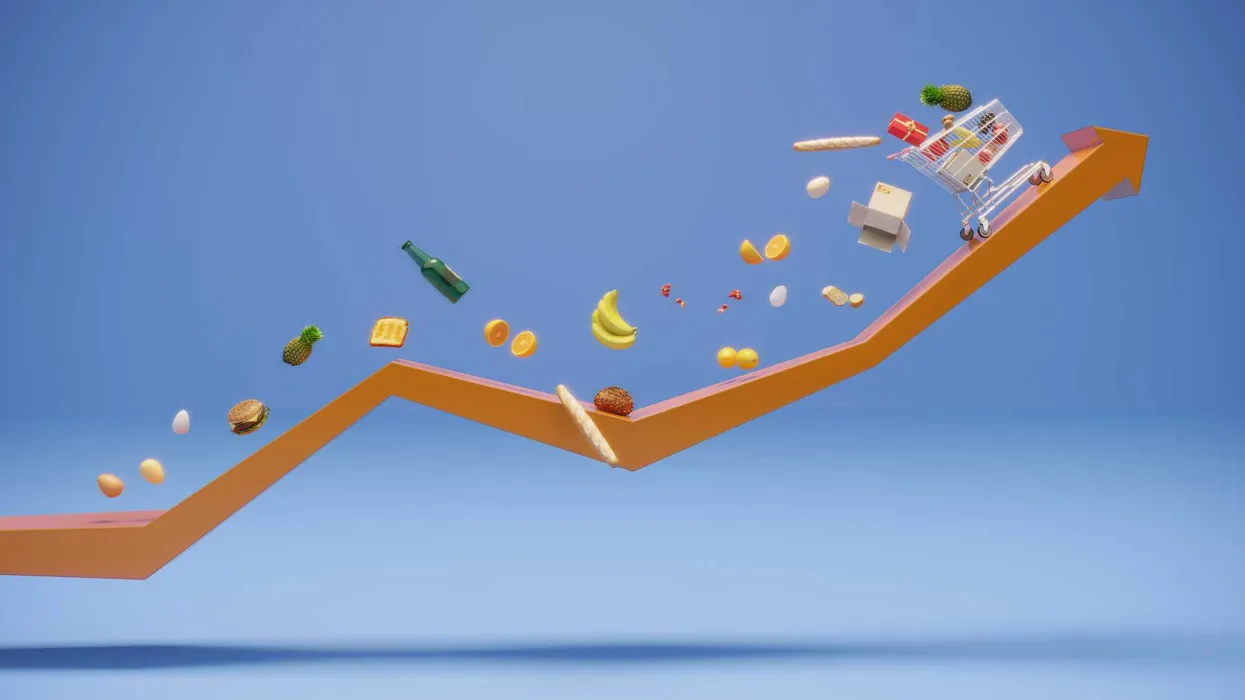
The concerns of many Americans about their economic well-being may be at the highest level since the Great Depression. Politico recently reported that 46% of Americans say their cost of living is the worst that they can remember, including over one-third of Trump voters. Nothing better exemplifies this than the many “30-somethings” who are unable to purchase a home.
Financial anxieties center around affordability, which is the proxy for evaluating whether the economy is meeting the public’s needs. Affordability is the degree to which households can responsibly pay for essential goods and services.
In the end, the nation’s affordability dilemma is about the confidence people have in the country’s economic future.
Gregg Ip, an economic commentator for the Wall Street Journal, says that affordability cannot be measured solely by economic data, but must also account for perceptions of financial security.
President Trump opined that concerns about affordability are a “hoax” created by Democrats for political purposes. Most Americans would disagree. While the runaway inflation of the Biden presidency has moderated, widespread concerns about affordability persist. According to a recent Politico poll, nearly half of the nation found the cost of their groceries, health care, utilities, and housing to be unaffordable. About half of the respondents said food costs are difficult to manage, and more than a quarter skipped medical appointments because of the cost.
In the 2026 midterm elections, it will be incumbent upon Republicans and Democrats to make an affordability agenda “job one.” These agendas should be the yardstick voters use to cast their vote for members of Congress and state officials.
The U.S. affordability crisis is multidimensional, requiring a dual-track strategy that combines structural reforms with immediate and affordable relief for the most vulnerable citizens. Each party’s affordability agenda should demonstrate when households will realize cost-of-living relief, avoid another round of inflation, provide market incentives for innovation, supply expansion and productivity gains, demonstrate distributional fairness, and stress choice over federal mandates.
Restoring an affordable economy will require that failed federal policies be reversed and the president and Congress focus on fixing long-term root causes.
To make goods and services more affordable, public policies should aim at increasing private-sector housing construction, modernizing domestic energy regulations, expanding production, encouraging competition in the health care insurance market, avoiding deficit spending that can rekindle inflation, rolling back regulations that increase consumer and business expenses, and devolving social and educational programs to the states to tailor taxpayer-friendly solutions to local challenges.
The nation’s affordability dilemma is not only about the price of goods and services. It concerns the relationship between costs, income, and the perception of financial security. In the end, it is about the confidence people have in the country’s economic future.
RELATED: All I want for Christmas is for Vivek Ramaswamy to stop embarrassing the GOP
 Photo by Jon Cherry/Getty Images
When households and businesses feel “squeezed,” they lose faith that public or private institutions are protecting their interests. A September 2025 poll conducted by the Pew Research Center found that just 17% of Americans trusted the federal government to do the “right thing” most of the time. Similarly, the July 2025 Gallup survey reported that less than 30% of Americans had confidence in U.S. institutions.
The major impediments to addressing the high cost of living are deep ideological divides over causes and solutions. Progressives emphasize government mandates and regulations, subsidies, and deficit spending. Conservatives stress fiscal restraint and market-driven solutions. Adopting common-sense economic reforms requires compromise and the rejection of left and right extremism driven by grievances and rage.
There is no more important issue for voters than which candidates and parties will boldly tackle the affordability challenge. Success will be influenced by policies that encourage business investment and innovation and workers keeping more of their income.
Editor’s note: This article was originally published by RealClearPolitics and made available via RealClearWire.





