

Category: Maid
Euthanasia and the lie of the ‘good death’
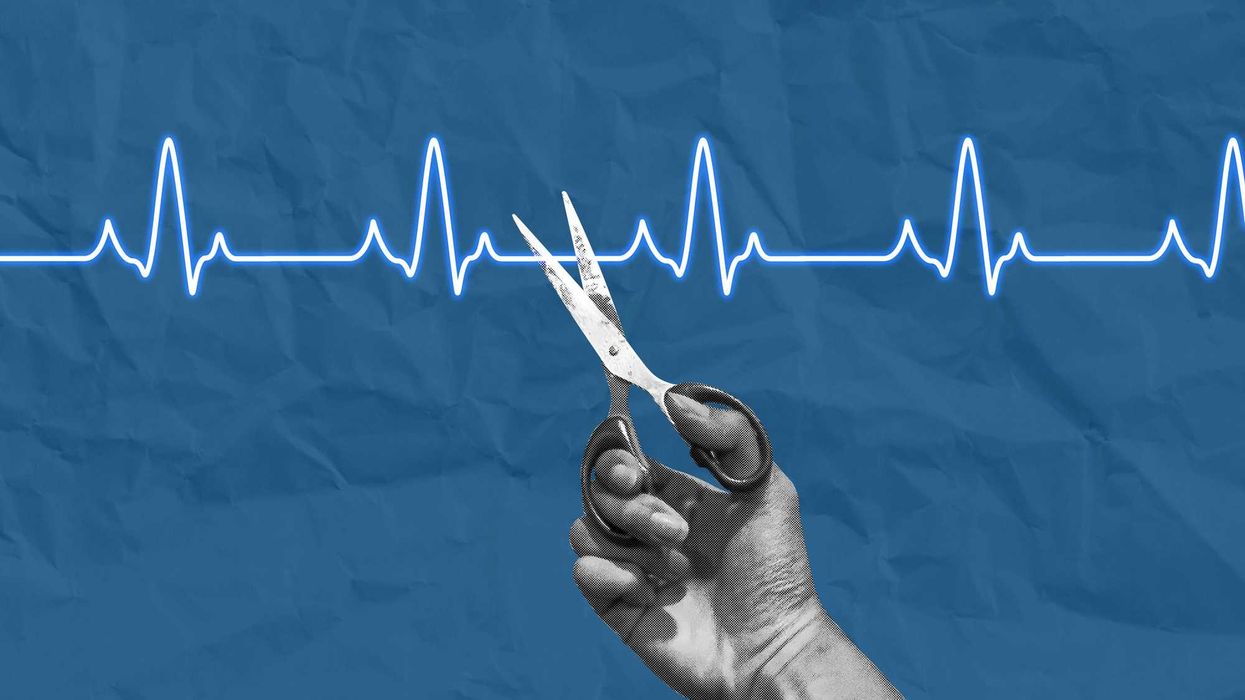
The term euthanasia literally means “good death.” The word is constructed from the Greek eu (good) and thanatos (death) — the same root that inspired the name of the Marvel villain Thanos, whose vision of “balance” required mass death.
The language itself tells you everything. Dress death up as “good,” and you can begin to sell it to failed socialist medical systems as a desirable cure-all.
Euthanasia, often called “doctor-assisted suicide,” has been thrust back into public view by developments in countries like Canada and Spain. What we are seeing is not compassionate medicine. It is the quiet normalization of despair.
A culture that cannot tell its weakest members, ‘Your life is worth living,’ will eventually tell them, ‘Your death is preferable.’
Consider the case of Noelia Castillo in Spain.
Castillo, just 25 years old, had endured profound suffering. As a minor, she was in mental health care. As an adult, she was the victim of sexual assault multiple times. After a suicide attempt following the second assault, she was left paralyzed from the waist down. In that condition, she requested euthanasia.
Her father pleaded with the courts to deny the request, arguing that her mental health made such a decision unsound. The courts disagreed. The state approved her death.
A young woman, failed repeatedly by those entrusted to care for her, was ultimately offered death as the solution.
Even more troubling, British pianist James Rhodes publicly appealed to her to reconsider, offering to cover her medical costs. His plea underscores what the system refused to admit: Castillo did not need death; she needed care.
And Castillo herself admitted as much. In an interview, she essentially asked: If I cannot access health care, am I then entitled to access death care?
That question exposes the entire moral collapse. She was denied meaningful treatment in her socialist system but granted state-funded death as the solution to her suffering.
The Canadian example
If Spain reveals the logic of euthanasia, Canada demonstrates its trajectory. In Vancouver, Miriam Lancaster went to the emergency room for back pain. Instead of being treated, she was offered medically assisted suicide.
Death does cure back pain. It cures everything by eliminating the patient. Failed socialist medicine jumped at the chance to raise its cure statistics.
Thankfully, Lancaster refused. She later received proper treatment and went on to continue traveling the world. Had she accepted the offer, a solvable medical issue would have become a state-sanctioned death and she would have been “cared for” right into the grave.
Then there is the case of Jennyfer Hatch, a 37-year-old Canadian woman suffering from Ehlers-Danlos syndrome, a painful connective tissue disorder. Hatch became the face of a euthanasia promotional campaign titled “All Is Beauty,” a three-minute film celebrating her final days before medically assisted death.
Let that sink in: a commercial for suicide.
And yet Hatch admitted privately that she chose euthanasia not because her condition was untreatable but because obtaining adequate medical care in Canada’s system was too difficult.
The myth of ‘compassionate’ systems
We have long been told by progressives that socialized medicine would deliver universal care, eliminate wait times, and treat every patient with dignity. Instead, it is increasingly offering a different solution: eliminate the patient.
The logic is brutally simple. If you cannot heal the sick, you can always reduce the number of sick people. These socialists saw the story of Thanos as a “how to.”
People have always been capable of taking their own lives. A system that merely facilitates suicide adds nothing of value. It does not heal; it does not restore; it simply institutionalizes despair. It admits it offers no meaning in life to those who suffer.
RELATED: The judgment behind the abortion numbers
 DREW ANGERER/AFP/Getty Images
What is a good death?
At the heart of this debate is a deeper question: What do we mean by a good death?
For modern secular societies, the answer is increasingly clear: a good death is a painless one. It is an escape from suffering.
But this definition collapses under scrutiny.
First, it ignores the most basic philosophical question, one raised memorably by Hamlet: “What dreams may come when we have shuffled off this mortal coil?” If death is not the end, if judgment awaits, then euthanasia is not an escape but a gamble of the highest stakes. It the solution urged by demons looking forward to claiming another soul.
Second, it misunderstands the nature of a good life.
A life free from all pain is not a noble life. It is not the life we admire, nor the life we aspire to. Our stories, our heroes, and our deepest intuitions all tell us the same thing: Meaning is forged through suffering.
Imagine a hero who, one-third of the way through the story, says, “This is too hard. I think I’ll end my life to avoid the suffering ahead.” That is not a hero. It is a failure.
Suffering, rightly understood, is not meaningless. It teaches perseverance, discipline, and faith. It refines character.
As Scripture teaches, “Add to your faith virtue, to virtue knowledge, to knowledge self-control, to self-control perseverance …” (2 Peter 1:5-6).
A pain-free life is not the highest good. A life shaped by truth, virtue, and endurance aimed at eternal life of knowing God is our chief and highest good.
The real crisis
The rise of euthanasia is not ultimately about medicine. It is about worldview.
Societies that reject God are left with no ultimate purpose, no transcendent hope, and no reason to endure suffering. When affluence fails and suffering remains, the only consistent answer left is escape.
A culture that cannot tell its weakest members, “Your life is worth living,” will eventually tell them, “Your death is preferable.” From hating God, the culture naturally moves to hating neighbors. It is a moral collapse described in Romans 1:31. The people become heartless and ruthless.
A better hope
The answer to suffering is not death. It is redemption.
Only a worldview grounded in the reality of God can make sense of suffering without surrendering to it. Only Christ offers not merely relief from pain, but restoration, meaning, and eternal hope. He can heal our physical pain, but more importantly, he can forgive our sin and restore our communion with God.
The growing acceptance of euthanasia should force us to confront the emptiness of the alternatives.
If death is our only answer, then we have already lost. But if life has meaning, then suffering is not the end of the story.
And that is the difference between despair and hope.
More than 76,000 Canadians have been killed through MAID. One province has had enough.
The Canadian federal government under former Prime Minister Justin Trudeau legalized medically assisted suicide nationwide in 2016.
As critics predicted, the state-facilitated suicide program — referred to as medical assistance in dying — was grossly liberalized in a short of period of time, maximizing both the number of accepted rationales and the number of those killed.
The province of Alberta appears keen to rein in Canada’s sick experiment and protect its would-be victims, especially ahead of the Carney government’s planned MAID eligibility expansion next year.
Background
In its first year, MAID offed 1,108 Canadians. That number tripled the following year, and by 2021, the number of Canadians killed by their government had climbed to over 10,000 in a single year.
‘MAID should not be a substitute for robust health care.’
The Canadian government revealed in its latest MAID report that a total of 16,499 people were euthanized under the program in 2024, accounting for over 5% of all deaths in Canada that year. Of those euthanized, at least 4.4% nationally were not terminally ill. In Alberta, the number was 4.6%.
By the end of 2024, the number of Canadians who have died through MAID crested 76,000.
Originally, MAID applicants had to be 18 or older and suffering from a “grievous and irremediable medical condition” causing “enduring physical or psychological suffering that is intolerable” to them.
Within years, the country’s eugenicist-founded health care system had given the green light to effectively execute those struggling with anxiety, autism, depression, economic hardship, PTSD, and other survivable issues.
RELATED: Canada’s conservative challenger Pierre Poilievre wins big on Joe Rogan’s podcast
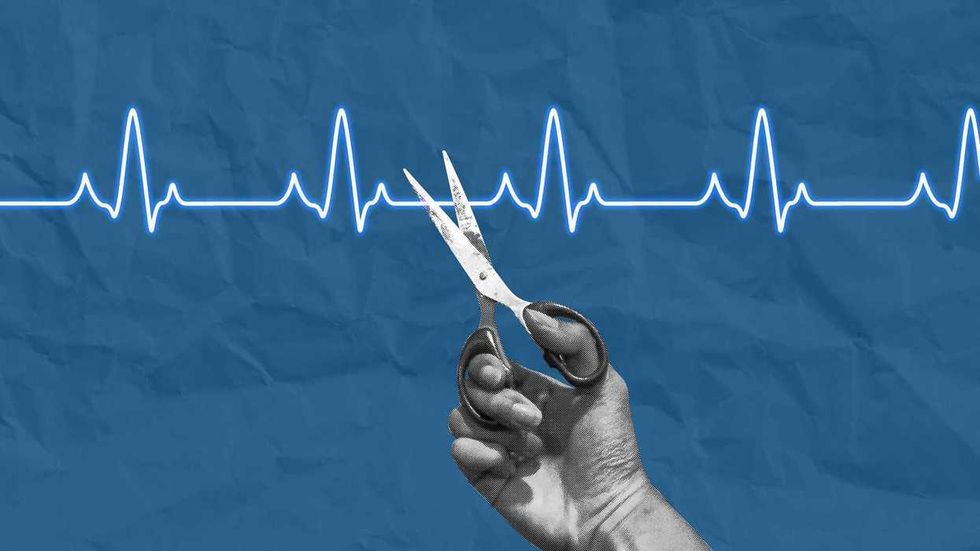 Mininyx Doodle/Getty Images
Persons suffering solely from a mental illness will be eligible for MAID beginning March 17, 2027.
Alberta takes action
Alberta Attorney General Mickey Amery, who is also the justice minister of the ruling United Conservative government, introduced legislation last month — the Safeguards for Last Resort Termination of Life Act — that would “increase oversight, introduce necessary safeguards, and provide greater clarity around eligibility requirements for medical assistance in dying … in the province.”
The bill would, among other things, prohibit MAID in Alberta for: persons under 18; persons whose sole underlying medical condition is a mental illness; individuals lacking the capacity to make their own health care decisions; and advance requests.
It would also prohibit euthanasia for individuals whose natural death is not reasonably foreseeable; restrict the display of MAID propaganda; empower health practitioners and institutions to refuse participation in the euthanasia regime; and bar Alberta health professionals from referring individuals for MAID eligibility assessments outside the province.
The legislation would also introduce penalties for doctors and nurses who violate the proposed provincial rules.
“Canada has the fastest growing death rates in the world when it comes to MAID. Far from being an option of last resort, MAID is now the fifth leading cause of death in Canada,” Amery told the Alberta Legislature last week. “The country is currently projected to reach its 100,000th death by MAID in June, becoming the first nation in the modern era to measure its total assisted deaths in the six figures, more than the totals of any other jurisdiction with some form of legal, doctor-assisted death.”
Alberta Premier Danielle Smith said in a statement, “Those struggling with severe mental health challenges need treatment, compassion and support, not a path to end their life at what may be their lowest moment. In Alberta, a patient whose sole underlying condition is mental illness will not be eligible for MAID.”
‘The state refusing to fund and provide a killing service is the baseline.’
Rebecca Vachon, health program director for the Canadian think tank Cardus, said in a statement, “We support the adoption of these enhanced protections for Albertans and urge all legislators to work collaboratively to implement them.”
While the Catholic Bishops of Alberta underscored that “the Church teaches that ‘euthanasia and assisted suicide are always the wrong choice,'” they similarly characterized the bill as an important step in the right direction, stating, “A just society is one that protects the vulnerable, upholds the dignity of every person, and chooses to accompany them in times of illness and dying. The Alberta government is taking some significant steps that respect these necessary values.”
Gabrielle Peters, a disabled writer and co-founder of Disability Filibuster, recently noted in a piece for the Macdonald-Laurier Institute,
The state refusing to fund and provide a killing service is the baseline we build from. Without that, there is simply no foundation. If disability — and only disability — makes one killable, then why would a state build the infrastructure, policies, and programs necessary to support disabled life? Particularly when one is an expense and the other represents considerable cost-saving?
Some euthanasia advocates have joined state media in framing the life-affirming legislation in negative terms.
The Canadian Civil Liberties Association, for instance, suggested that the legislation “would significantly restrict access to medical assistance in dying … and undermine constitutionally protected rights.”
Michael Trew, Alberta’s former chief addiction and mental health officer, recently wrote that the bill “amounts to taking away choice from many who are fully competent” and that “this loss of choice INCREASES pain and suffering.”
Like Blaze News? Bypass the censors, sign up for our newsletters, and get stories like this direct to your inbox. Sign up here!
The country that mocks America’s ‘culture of death’ has embraced one of its own

Canada loves to lecture America about compassion. Every time a shooting makes the headlines, Canadian commentators cannot wait to discuss how the United States has a “culture of death” because we refuse to regulate guns the way enlightened nations supposedly do.
But north of our border, a very different crisis is unfolding — one that is harder to moralize because it exposes a deeper cultural failure.
A society that no longer recognizes the value of life will not long defend freedom, dignity, or moral order.
The Canadian government is not only permitting death, but it’s also administering, expanding, and redefining it as “medical care.” Medical assistance in dying is no longer a rare, tragic exception. It has become one of the country’s leading causes of death, offered to people whose problems are treatable, whose conditions are survivable, and whose value should never have been in question.
In Canada, MAID is now responsible for nearly 5% of all deaths — 1 out of every 20 citizens. And this is happening in a country that claims the moral high ground over American gun violence. Canada now records more deaths per capita from doctors administering lethal drugs than America records from firearms. Their number is 37.9 deaths per 100,000 people. Ours is 13.7. Yet we are the country supposedly drowning in a “culture of death.”
No lecture from abroad can paper over this fact: Canada has built a system where eliminating suffering increasingly means eliminating the sufferer.
Choosing death over care
One example of what Canada now calls “compassion” is the case of Jolene Bond, a woman suffering from a painful but treatable thyroid condition that causes dangerously high calcium levels, bone deterioration, soft-tissue damage, nausea, and unrelenting pain. Her condition is severe, but it is not terminal. Surgery could help her. And in a functioning medical system, she would have it.
But Jolene lives under socialized medicine. The specialists she needs are either unavailable, overrun with patients, or blocked behind bureaucratic requirements she cannot meet. She cannot get a referral. She cannot get an appointment. She cannot reach the doctor in another province who is qualified to perform the operation. Every pathway to treatment is jammed by paperwork, shortages, and waitlists that stretch into the horizon and beyond.
Yet the Canadian government had something else ready for her — something immediate.
They offered her MAID.
Not help, not relief, not a doctor willing to drive across a provincial line and simply examine her. Instead, Canada offered Jolene a state-approved death. A lethal injection is easier to obtain than a medical referral. Killing her would be easier than treating her. And the system calls that compassion.
Bureaucracy replaces medicine
Jolene’s story is not an outlier. It is the logical outcome of a system that cannot keep its promises. When the machinery of socialized medicine breaks down, the state simply replaces care with a final, irreversible “solution.” A bureaucratic checkbox becomes the last decision of a person’s life.
Canada insists its process is rigorous, humane, and safeguarded. Yet the bureaucracy now reviewing Jolene’s case is not asking how she can receive treatment; it is asking whether she has enough signatures to qualify for a lethal injection. And the debate among Canadian officials is not how to preserve life, but whether she has met the paperwork threshold to end it.
This is the dark inversion that always emerges when the state claims the power to decide when life is no longer worth living. Bureaucracy replaces conscience. Eligibility criteria replace compassion. A panel of physicians replaces the family gathered at a bedside. And eventually, the “right” to die becomes an expectation — especially for those who are poor, elderly, or alone.
 Photo by Graham Hughes/NurPhoto via Getty Images
The logical end of a broken system
We ignore this lesson at our own peril. Canada’s health care system is collapsing under demographic pressure, uncontrolled migration, and the unavoidable math of government-run medicine.
When the system breaks, someone must bear the cost. MAID has become the release valve.
The ideology behind this system is already drifting south. In American medical journals and bioethics conferences, you will hear this same rhetoric. The argument is always dressed in compassion. But underneath, it reduces the value of human life to a calculation: Are you useful? Are you affordable? Are you too much of a burden?
The West was built on a conviction that every human life has inherent value. That truth gave us hospitals before it gave us universities. It gave us charity before it gave us science. It is written into the Declaration of Independence.
Canada’s MAID program reveals what happens when a country lets that foundation erode. Life becomes negotiable, and suffering becomes a justification for elimination.
A society that no longer recognizes the value of life will not long defend freedom, dignity, or moral order. If compassion becomes indistinguishable from convenience, and if medicine becomes indistinguishable from euthanasia, the West will have abandoned the very principles that built it. That is the lesson from our northern neighbor — a warning, not a blueprint.
‘Pro-death legislators’ want euthanasia in Illinois — Canada reveals why that’s a terrible idea
Democratic lawmakers in the Illinois legislature have passed a bill that would legalize doctor-assisted suicide across the state.
The bill now awaiting Democratic Gov. JB Pritzker’s signature, SB 1950, originally started out as a measure concerning sanitary food preparation. The bill was, however, hollowed out then repurposed. Instead of keeping consumers healthy, the language was changed to expedite death — authorizing a qualified patient with a terminal disease to demand that their doctor prescribe a lethal dose of medication, thereby ending “the patient’s life in a peaceful manner.”
Catholic leaders in the state are among the bill’s loudest critics.
‘Now, they can prescribe death.’
In May, Cardinal Blase Cupich, the archbishop of Chicago, wrote, “I have to ask why, in a time when growing understanding of the deteriorating mental health of the U.S. population — and particularly among our youth — caused the country to create the 988 mental health crisis line, we would want to take this step to normalize suicide as a solution to life’s challenges.”
Cupich stressed that the Illinois legislature should explore options that instead “honor the dignity of human life and provide compassionate care to those experiencing life-ending illness.”
Bishop Thomas John Paprocki of the Diocese of Springfield stated after legislators ignored Cupich’s counsel and passed the bill in a 30-27 vote on Friday, “It is quite fitting that the forces of the culture of death in the Illinois General Assembly passed physician-assisted suicide on October 31 — a day that, culturally, has become synonymous with glorifying death and evil.”
RELATED: The total state will kill you for being old
 Blaze Media Illustration
“It’s also ironic that these pro-death legislators did it under the cloud of darkness at 2:54 a.m. Make no mistake: killing oneself is not dying with dignity. Doctors take an oath to do no harm. Now, they can prescribe death,” the bishop continued. “Physician assisted suicide undermines the value of each person, especially the vulnerable, the poor, and those with disabilities.”
The Illinois Catholic Conference warned on Wednesday that the legalization of assisted suicide in Illinois will put the “state on a slippery path that jeopardizes the well-being of the poor and marginalized, especially those in the disability community and have foreseeable tragic consequences.”
The dangers and fallout of legalized assisted suicide are hardly hypothetical.
North of the border, Canada is weeks away from publishing its sixth annual report on so-called medical assistance in dying. While the official numbers have yet to be released accounting for all MAID deaths in 2024 nationwide, provincial data appear to indicate another year-over-year increase in state-facilitated slayings.
The federal government under former Prime Minister Justin Trudeau passed the Medical Assistance in Dying Act in 2016, legalizing euthanasia nationwide. Originally, applicants had to be 18 or older and suffering from a “grievous and irremediable medical condition” causing “enduring physical or psychological suffering that is intolerable” to them.
The state-facilitated suicide program has since been grossly liberalized such that the country’s eugenicist-founded health care system can now effectively execute those struggling with anxiety, autism, depression, economic woes, PTSD, and other survivable issues.
In its first year, MAID offed 1,108 Canadians. That number tripled the following year, and by 2021, the number had climbed to over 10,000 assisted-suicide deaths in a single year.
The Canadian think tank Cardus revealed last year that “MAiD in Canada is no longer unusual or rare. Federal predictions about the expected frequency of MAiD have significantly underestimated the numbers of Canadians who are dying by this means.”
As of 2022, MAID was tied with cerebrovascular diseases as the fifth leading cause of death in the country. The following year, state-facilitated suicide claimed the lives of 15,343 individuals, accounting for 4.7% of all deaths in the country.
‘Feeling like a burden can play on a patient’s decision to request and receive a MAiD death.’
Authorities in Nova Scotia, a province of just over 1 million souls, indicated to Blaze News that it saw a drop in completed MAID slayings last year. Whereas there were 380 slayings in 2023, there were allegedly only 169 in 2024, with 286 active cases and 71 recorded natural deaths prior to MAID.
This appears to be the exception, not the rule.
The nation’s more populous provinces have alternatively seen continued increases in MAID slayings.
British Columbia’s 2024 euthanasia data, for instance, indicate that there were 3,000 state-facilitated suicides in the province last year. While most of the victims were over the age of 65, 1.5% of those slain were between the ages of 18 and 45 and individuals who were not dying. In fact, among the conditions cited as reasons and/or contributing reasons for MAID were “frailty,” dementia, mental disorders, and unstated neurological conditions.
The Euthanasia Prevent Coalition noted that MAID deaths in B.C. were up over 8% from the previous year and accounted for 6.7% of all deaths in the province last year.
Alberta, a province of just over 5 million souls, recorded 1,117 deaths in 2024, representing a year-over-year increase of 14.3% and making its total MAID kill count 5,646 victims since 2016.
Data obtained by the MAiD in Canada Substack indicate that in 2024, Ontario had 4,957 deaths, representing an increase of 6.8% and making its grand total 23,333 victims since 2016.
Quebec reportedly had 6,058 MAID deaths last year, representing an increase of 6.4% and making its grand total over 26,000 victims since 2016. In addition to the growing number of deaths, there is apparently a growing cohort of doctors willing to dish out lethal doses in Quebec. A recent government report indicated that over 2,000 physicians were involved in the slayings, representing an 11% increase over the previous year.
Rebecca Vachon, health program director at Cardus, told Blaze News that “based on current reporting from the most populous provinces, we expect to see more than 16,500 ‘medical assistance in dying’ or euthanasia deaths in 2024, which is an increase from the 15,343 deaths reported in 2023. This will likely result in MAiD deaths constituting 5% of total deaths in Canada that year, which, as Cardus discussed in a report released last fall, is a far cry from the expectations set by the courts that MAiD would be for exceptional cases only.”
 Photo by Scott Olson/Getty Images
The Canadian government released a report in 2020 indicating that the previous year, MAID resulted in a net cost reduction of over $86 million for provincial governments. The report additionally noted that further liberalization of the MAID program under Bill C-7, which was passed in March 2021, would result in an additional $62 million reduction in costs.
When asked whether MAID is being championed in part as a way to cut costs for Canada’s immigration-strained health care system, Vachon told Blaze News, “Regardless of intentions, the pressure that feeling like a burden can play on a patient’s decision to request and receive a MAiD death should not be understated.”
“For instance, Canadian MAiD providers report that almost 50% of the patients they helped die in 2023 reported feeling they were a burden on others — up 10% from the previous year,” Vachon said.
‘Illinois should be a state that offers compassion, care, and hope — not death — as the answer to human suffering.’
Polls conducted by Cardus in partnership with the Angus Reid Institute found that 62% of Canadians fear that those who are financially or socially vulnerable may consider state-facilitated suicide because of difficulties accessing adequate care, Vachon indicated.
The fear is justified given that 42% of all MAID deaths from 2019 to 2023 involved people who required disability supports. Of those victims, over 1,017 never received those supports.
“Canadians deserve care that alleviates their suffering and prevents it from becoming ‘unbearable,'” Vachon said.
Blaze News has reached out for comment to Prime Minister Mark Carney’s office as well as to the leaders of the New Democratic Party and Conservative Party, Don Davies and Pierre Poilievre.
While the slope has been greased in Canada and in states such as California, Colorado, Hawaii, Maine, Vermont, and Washington, there’s still hope that Pritzker may reconsider, especially after he noted on Monday, “It was something that I didn’t expect and didn’t know it was going to be voted on, so we’re examining it even now.”
Rather than sign the bill, the Illinois Catholic Conference has implored Pritzker to “expand and improve on palliative care programs that offer expert assessment and management of pain and other symptoms.”
Bishop Paprocki noted, “Pray for Gov. Pritzker to reject this legislation. Illinois should be a state that offers compassion, care, and hope — not death — as the answer to human suffering.”
Like Blaze News? Bypass the censors, sign up for our newsletters, and get stories like this direct to your inbox. Sign up here!





