






Fox News Channel

GOP Rep. Gill: MN Welfare Fraud Money ‘Could Have Been Funneled to Al-Shabaab Terrorists in Somalia’
During an appearance on Fox News Channel's "Hannity," Rep. Brandon...
Don't miss...
Trump gives Iran a final warning ahead of peace talks

President Donald Trump has warned Iran that the United States will swiftly resume the bombing campaign if they fail to strike a deal.
Talks are set to resume in Islamabad, Pakistan, between the Iranians and the American delegation led by Vice President JD Vance ahead of the ceasefire’s expiration on Wednesday. Trump announced the ceasefire earlier in April after threatening to destroy civilian infrastructure in Iran, infamously dubbing the operation “Power Plant Day” and “Bridge Day.”
‘They have to use common sense.’
“Well, I expect to be bombing because I think that’s a better attitude to go in with,” Trump said in an interview Tuesday. “But we’re ready to go. I mean the military is raring to go. They are absolutely incredible.”
“We have the most powerful military in the world, and everybody knows it.”
RELATED: IDF soldier caught smashing Jesus statue with sledgehammer — officials and critics react
 Elke Scholiers/Getty Images
Since the ceasefire was put into place almost two weeks ago, Trump has ordered the military to take control of the Strait of Hormuz in an attempt to constrain Iran even further. Despite the United States’ many attempts to pressure Iran into making a deal, including the first round of negotiations that lasted 21 hours, a long-term agreement has not yet materialized.
“Iran can get themselves in a very good footing if they make a deal,” Trump said. “They can make themselves into a strong nation again, a wonderful nation again. They have incredible people.”
“But they have to use reason, and they have to use common sense.”
Like Blaze News? Bypass the censors, sign up for our newsletters, and get stories like this direct to your inbox. Sign up here!
Democrat melts down after Secretary Doug Burgum drops bombshell about NGOs during committee hearing
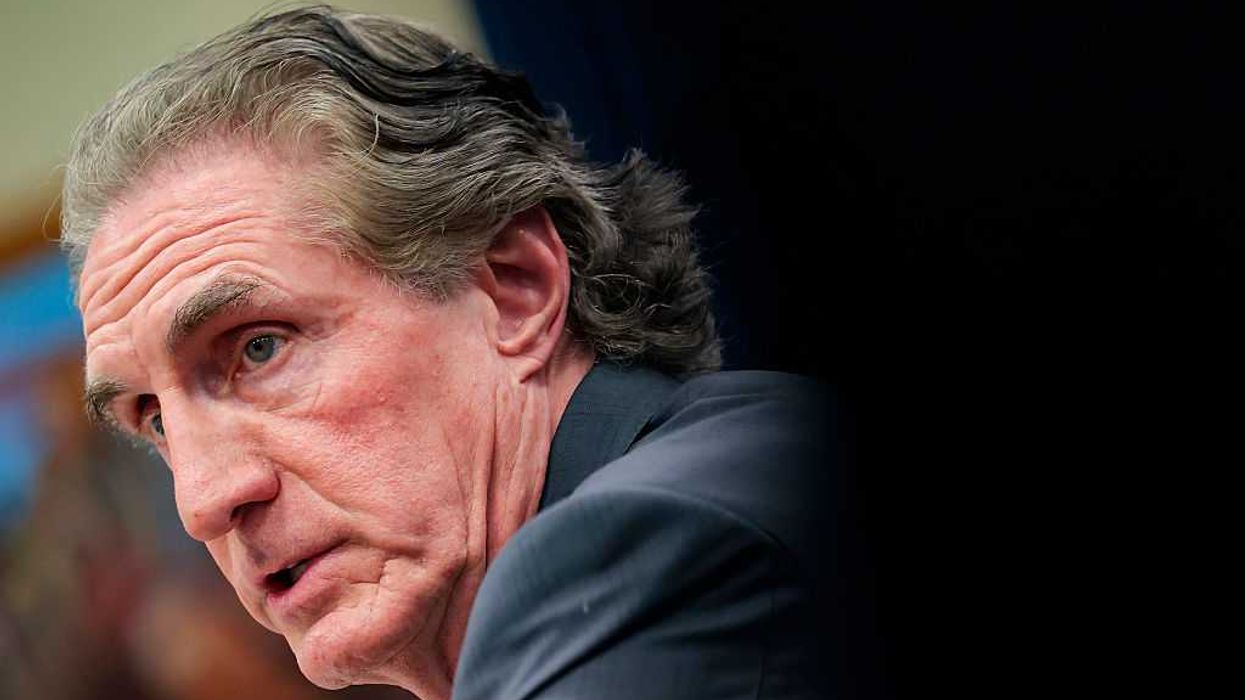
Democrats had a meltdown during a committee hearing while grilling Secretary of the Interior Doug Burgum on all of the programs he is attempting to shut down.
And no one was ready for his answer.
‘We found organizations that were receiving grants from Interior where 80 to 100% of the revenue of that NGO was a grant from the federal government.’
In a Monday House Committee Hearing, Rep. Rosa DeLauro (D-Conn.) asked for clarification on Burgum’s proposed “complete elimination” of some programs in the Fish and Wildlife Service, including some state and tribal wildlife grants.
Burgum replied with a shocking statistic about where some “nongovernmental organizations” get their money.
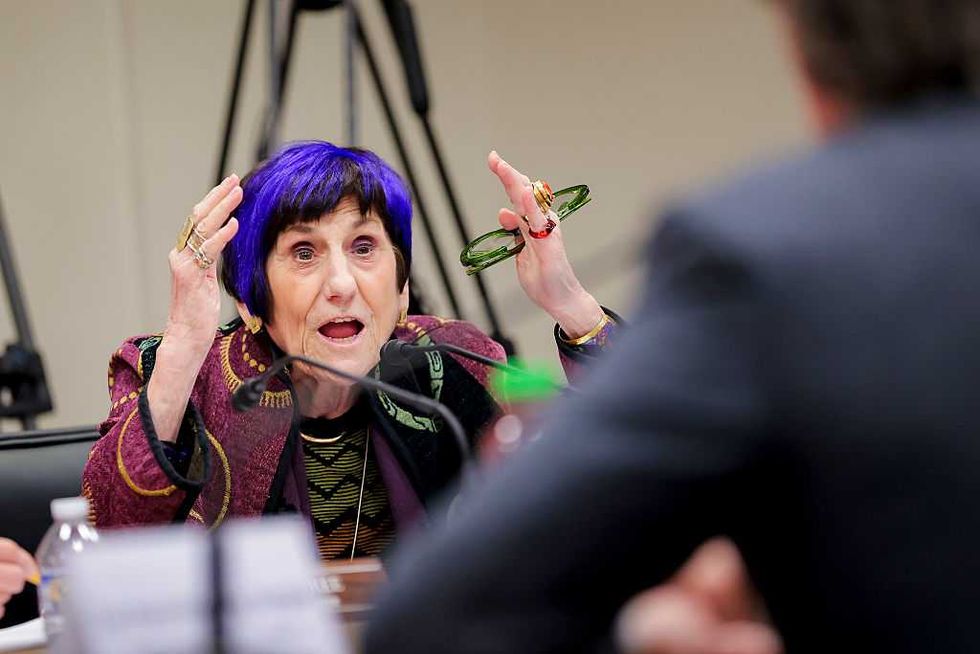 Heather Diehl/Getty Images
“There was a review done of the grants,” he said.
“And that is an area where there’s been substantial review. We found organizations that were receiving grants from Interior where 80 to 100% of the revenue of that NGO was a grant from the federal government.”
“And yet those organizations, we were the sole source of their revenue, but they would have a CEO making $650,000 and four $400,000 lobbyists,” Burgum continued.
DeLauro stammered in reply: “It would be very interesting because we can’t get any information. We may agree with you. Give us the reasons why all of these grants are cut, the organizations are cut. … We just can’t take your word.”
Like Blaze News? Bypass the censors, sign up for our newsletters, and get stories like this direct to your inbox. Sign up here!
Amazon gives lame excuse for removing ‘offensive’ dystopian novel about mass migration ruining Europe

France was among the Western nations whose elites determined it worthwhile in the second half of the 20th century to open the floodgates to mass migration from the third world, especially from former colonies.
Award-winning French novelist and travel writer Jean Raspail foresaw the threat this demographic replacement posed to his nation and to Western civilization more broadly and dared — following the collapse of the Fourth Republic and amid the flight of Vietnamese “boat people” to Europe — to explore this threat in his controversial 1973 dystopian novel, “The Camp of the Saints.”
‘A ban by Amazon is a virtual ban of book sales and distribution.’
Both then and now, Raspail’s novel serves, on the one hand, to illuminate the folly of multiculturalist aspirations and allowing unassimilable hordes of culturally antipathetic foreigners into one’s nation and, on the other hand, to enrage those who are still pretending that unchecked mass migration is a laudable policy and that saying otherwise is “racist.”
Evidently, the book is still ruffling feathers. This time around, the novel has apparently prompted a negative reaction from the world’s largest company, Amazon.
The novel — characterized by the Southern Poverty Law Center as a “racist fantasy about an invasion of France and the white Western world by a fleet of starving, dark-skinned refugees” — was first translated into English in 1975 and has been published several times since in the United States. Despite growing in relevance and popularity, supply couldn’t meet demand for the book in recent years, especially as the right-holders had reportedly refused to reprint it. A small publishing house stepped up, however, and managed to secure the rights.
RELATED: They’ll Build a Fire with Your Lovely Oak Door
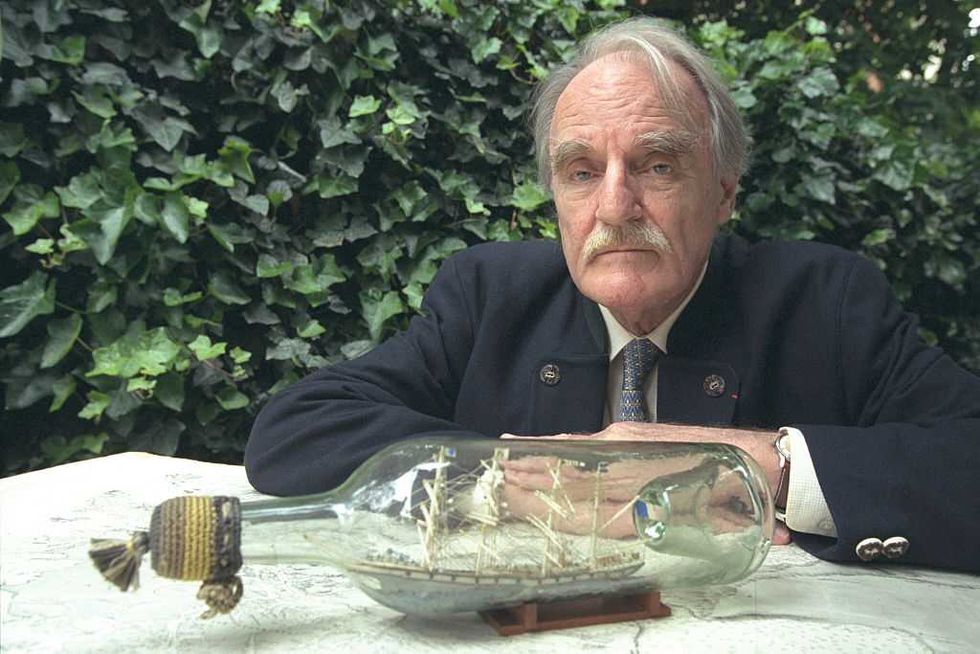 The late French writer Jean Raspail; Micheline Pelletier/Sygma/Getty Images
Vauban Books, an imprint of Redoubt Press, published a new edition in September, generating significant waves and sales. After months of sales of the title on its platform, Amazon U.S. removed the paperback listing for the new edition on Friday.
Vauban Books editor in chief Ethan Rundell said in a statement on Sunday that his publishing house was “informed by Amazon that the book is in violation of the company’s ‘offensive content’ policy. Amazon has supplied no information as to which portions of the book are offensive nor to whom.”
After noting that Vauban had sold roughly 20,000 paperback copies of the book since first listing it for presale on Amazon last summer and that it nets an average rating of 4.8 stars, Rundell said, “It may be no coincidence that the listing was removed one day after New York Magazine published a critical article on Vice President Vance that referenced the book. This echoes a 2019 campaign that targeted Stephen Miller, leading the novel’s previous publisher to drop the title from its catalogue.”
Rundell noted that regardless of whether Amazon chooses to distribute the title, Vauban Books “remains committed to keeping the novel in print and accessible worldwide.”
Shortly after making the initial statement, Vauban Books announced that Amazon U.S. had also removed the hardcover edition of the novel.
There was a great deal of backlash over the book’s removal.
Nathan Pinkoski, a senior fellow at the Center for Renewing America who penned the introduction for the new edition, called the reported removal of the paperback option “an egregious act of censorship.”
“Amazon is committed to the burning of your fine oak doors,” wrote BlazeTV host Auron MacIntyre, referencing the following line from the novel, “Your universe has no meaning to them. [The invading migrants] will not try to understand. They will be tired, they will be cold, they will make a fire with your beautiful oak door.”
Former Idaho Solicitor General Theo Wold wrote, “Amazon just censored a book first published in 1973 that depicts the destruction of the west through third-world mass migration. I’m sure all the people who whine about ‘book bans’ when a school board prevents 6-year-olds from reading about gay sex will be just as upset.”
Jason Kenney, Canada’s former Conservative minister of immigration and former Alberta premier, tweeted, “This is outrageous. Amazon handles up to 80% of book distribution in North America. A ban by Amazon is a virtual ban of book sales and distribution. I have never read The Camp of the Saints (although I am now moved to do so,) so offer no judgement about its merits. But there is no denying that it is a widely read novel with a significant cultural impact on France, and around the world.”
It appears the backlash prompted Amazon to rethink things.
As of Monday morning, the paperback version of the novel is available again on Amazon.
When asked for comment about the novel’s removal, Amazon told Blaze News that an “error” was responsible for the paperback listing of the book’s temporary removal and that other formats were not affected.
An Amazon spokesperson told Blaze News, “We’ve resolved an error that briefly affected the availability of a paperback listing of The Camp of the Saints, and the title is now restored.”
Vauban Books stated after its title reappeared on the platform, “Amazon has still not offered an explanation as to why the novel was taken down. We have received NO explanation, much less apology, for the deletion of the paperback Friday and hardcover this morning.”
Like Blaze News? Bypass the censors, sign up for our newsletters, and get stories like this direct to your inbox. Sign up here!

Anton Vinzon busy with training for upcoming series ‘Kamao”

Anton Vinzon has been busy with physical training for his lead role as a young boxer in the upcoming Kapuso series “Kamao.”
Alden Richards excited to work with idol Christopher De Leon in ‘Code Gray”

Alden Richards is thrilled to be working with one of his industry idols, Christopher De Leon, in the upcoming medical series, “Code Gray.”
HYBE chairman Bang Si Hyuk issues statement as South Korean police seek warrant for his arrest

HYBE chairman Bang Si Hyuk has released a statement through his legal representative after South Korean police requested a warrant for his arrest due to alleged fraudulent trading.
Elusive tamaraw spotted anew in Santa Cruz, Occidental Mindoro

The elusive and critically endangered tamaraw has been spotted again in the mountains of Sta. Cruz, Occidental Mindoro.
NASA rover adds to the list of organic compounds detected on Mars

WASHINGTON – Performing a type of experiment never before tried beyond Earth, NASA’s Curiosity rover has identified more organic compounds on Mars as scientists strive to learn whether the Red Planet ever harbored life.
PBA: Phoenix stops Rain or Shine”s unbeaten run with epic 18-point comeback

Phoenix erased a huge deficit to stun erstwhile undefeated Rain or Shine, 87-83, in the PBA Season 50 Commissioner’s Cup on Tuesday at the Ninoy Aquino Stadium.





