

Category: Prayer
My son is fighting for his life. The FDA doesn’t seem to care.

I’ve been fighting Duchenne muscular dystrophy for 40 years. My brothers Angelo and Antonio died from it at ages 20 and 22, respectively. Antonio died in 2015, when my son, Ryu, was barely a toddler and had already been diagnosed with the same terminal illness.
My childhood memories are of praying for my brothers, caring for them with my mother, and Mom taking all five of her kids to church almost every day. I always asked God to heal my brothers, and — after Ryu was born — I added him to those prayers.
I’ve been saying the same prayer for help and to be able to lend my voice for over 40 years.
But I also went to God with another prayer — I asked that He would open the door that allowed me to share our family’s story. I didn’t know what that looked like, or when it would come, but I trusted in it.
This year, that prayer was answered when I was asked to speak out not just on behalf of my brothers and son, but for every family that feels isolated because of a terminal rare disease.
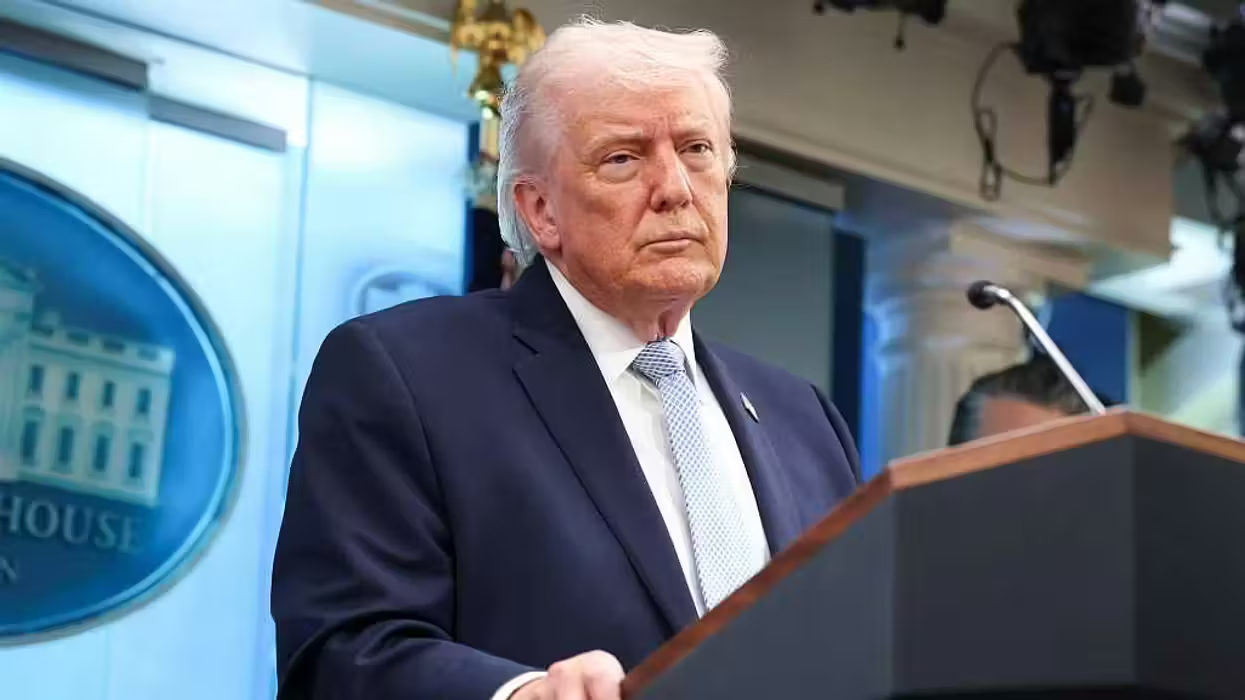
I visited Washington, D.C., to share my story with lawmakers from both parties as well as patient advocates and to ask them to push the Food and Drug Administration to stop standing in the way of drugs like Elevidys, the only gene therapy treatment for my son’s illness.
The advocacy worked. I can’t say how much my own small voice, speaking up for the first time, helped, but so many people speaking out made a difference.
The first indicator was when the Center for Biologics Evaluation and Research Director Dr. Vinay Prasad announced his resignation from the FDA just a week later — he leaves this month. Prasad blocked treatments, with the support of FDA Commissioner Marty Makary, that could have helped kids like Ryu all across the country to live.
RELATED: Trump is keeping his word on health care costs
 Anna Moneymaker/Getty Images
I’m just a mom. But we recently celebrated Easter, where a carpenter saved the world. He overcame the establishment of His time, which was willing to throw the vulnerable and sick to the side. He fell, but He didn’t falter — I hope to follow His example.
As we were approaching Holy Thursday this year, Ryu was having a hard evening. He needed his Bipap machine to help his lungs function, as he so often does. But he looked at me — my 14-year-old wheelchair-bound boy who is the happiest kid I know — and said, “Mom, this sucks. But what you’re doing makes it a lot easier.”
My story may not matter to FDA Commissioner Makary, who seems to have forgotten about Ryu and thousands of other kids like him. But God sees every hair on our heads. He named us before our parents knew us. And sometimes, like Gabriel told the prophet Daniel, prayers are answered long before we see their fruition.
I’ve been saying the same prayer for help and to be able to lend my voice for over 40 years. To the world, Antonio and Angelo may be long deceased, but they are the foundation for how my husband and I have cared for Ryu. And God has allowed me to carry their stories from my home in El Paso to our nation’s capital.
Commissioner Makary and Dr. Prasad may have forgotten that their job is to save lives, but God seems to have different plans. He’s just getting started with me in spreading His good news, and so far it has been amazing.
But I’m also not surprised, because I knew God would take care of it all.
Editor’s note: This article was originally published in the Christian Post.
Ted Nugent’s loud protest is the wake-up call Western elites want to ignore
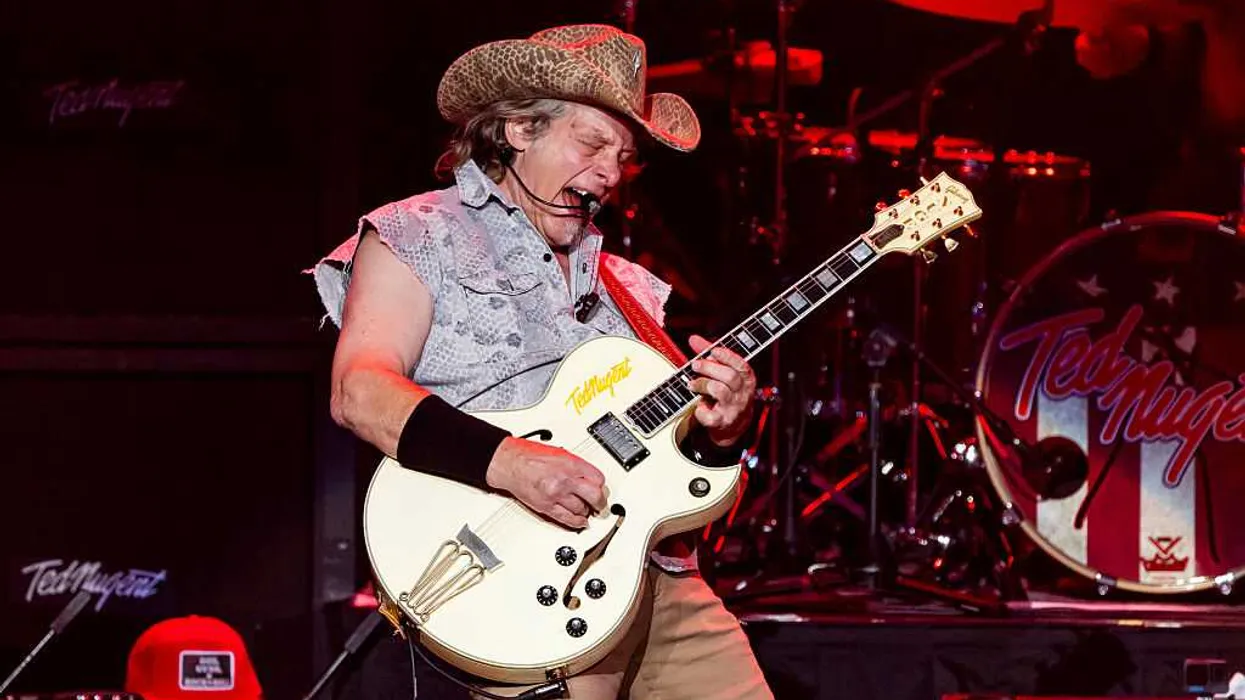
Ted Nugent is known for many things. Subtlety isn’t one of them.
This is a man who treats volume knobs the way toddlers treat bedtime: with open defiance. So when a mosque in his Michigan town began broadcasting the early-morning call to prayer over loudspeakers, Nugent reacted in the way only Nugent would. He turned his back yard into a launchpad for a one-man rock assault.
You don’t need to be religious to see the problem. You only need to have ears.
Excessive? Perhaps. But it tapped straight into a frustration millions feel but rarely voice — not loudly, anyway.
The early-morning Islamic call to prayer echoing through American suburbs isn’t “diversity” or a charming cultural detail. It’s noise — loud, sudden, inescapable noise. It jolts families awake, spooks pets, startles infants, and demands that the entire block adapt.
Nugent’s counterattack may have been a little over the top, but beneath the distortion pedals sits a simple point: Public peace matters. In a free country, quiet hours come first. And no imported custom, however sacred to some, earns an automatic exemption.
Richard Dawkins once called the Islamic call to prayer “hauntingly beautiful.” This from a man who spent decades explaining that God doesn’t exist. It’s a strange kind of aesthetic tourism: Romanticize a religious ritual while rejecting the very religion that produced it. Dawkins was wrong about the existence of God, and he is equally wrong about the Islamic call to prayer.
The call to prayer wasn’t designed as background music, and it wasn’t conceived for multicultural suburbs where everyone keeps different hours and believes different things. It was forged in a seventh-century society where faith and authority were fused, where religion structured public life down to the minute, and where submission — literal, explicit submission — wasn’t merely encouraged but expected.
Islam’s founding worldview assumed a unified religious community, a shared legal and moral order, and a sharp distinction between believers and nonbelievers. That distinction shaped status, obligation, and allegiance.
In the Muslim context, the adhan makes perfect sense. It is a public summons for a public faith, a declaration of dominance over the rhythm of the day, and reminder that life moves according to Allah’s schedule — not yours. It reminds everyone, believer or not, that the community’s obligations take precedence over the individuals’ preferences.
But transplant it into America (or any predominantly Christian society), and it makes zero sense. The operating systems and expectations are different. The very idea of a faith dictating the morning routine of people who don’t share it runs directly against the grain of Western life.
RELATED: Why progressives want to destroy Christianity — but spare Islam
 AlxeyPnferov/iStock/Getty Images Plus
This is the part Dawkins missed entirely when he praised the adhan.
It’s easy to romanticize a sound when you encounter it on holiday, filtered through distance, novelty, and sand-warm nostalgia. It’s quite another when it is broadcast at 5 a.m. into a neighborhood that never agreed to have its eardrums shattered before the coffee even brews.
Dawkins hears melody, but he ignores meaning. He praises the tune while overlooking the text, which was never written for pluralism. It was written for a social order in which Islam set the terms — and nonbelievers either complied or faced the consequences.
You don’t need to be religious to see the problem. You only need to have ears.
The adhan doesn’t float gently on the breeze. It is projected through megaphones with the explicit purpose of commanding attention. It is designed to override the soundscape of daily life. Barking dog? Buried. Garbage truck? Drowned. Your alarm clock? Irrelevant. The Islamic call to prayer cuts through everything because that is precisely what it was built to do.
And that is where the first collision occurs. In America, no foreign religion should be granted the right to reorder everyone’s routine. Christianity, which most readers know intimately, offers a useful contrast. Church bells ring, yes, but briefly and symbolically. They don’t deliver multi-minute recitations meant to summon or correct anyone.
But with fewer bells ringing, other sounds inevitably move in to fill the void. These include ones far louder, far longer, and far less rooted in America’s traditions.
There’s a difference between freedom of religion and freedom to dominate the public square.
In a predominantly Christian society, faith is personal, chosen, and interior. Prayer happens inside churches, inside homes, inside hearts — not broadcast across rooftops as compulsory ambience. The Western idea of worship is reflective and voluntary. The call to prayer, by contrast, is commanding and public by design.
Sound, as Ted Nugent knows well, is anything but neutral. A community’s soundscape shapes its psychology. People become anxious, irritable, exhausted, and far more prone to accidents when their sleep is disrupted. After all, we prosecute noisy neighbors for far less.
Yet Western elites recoil at the idea that a religious practice might be subject to the same standards as the guy who revs his motorcycle at midnight. If anything, a more intrusive and more extended ritual deserves more examination — not less.
Although I truly dislike what Islam represents, this isn’t about hatred. It is about the delicate, daily compromises a pluralistic nation depends on. When one group insists on broadcasting its obligations to everyone else, the common ground cracks, the social contract comes apart, and people start to feel like strangers on their own streets.
The call to prayer has no place in polite society. There’s a difference between freedom of religion and freedom to dominate the public square. One belongs in America. The other never will.
When America feared God: The bold Thanksgiving prayer they don’t teach any more
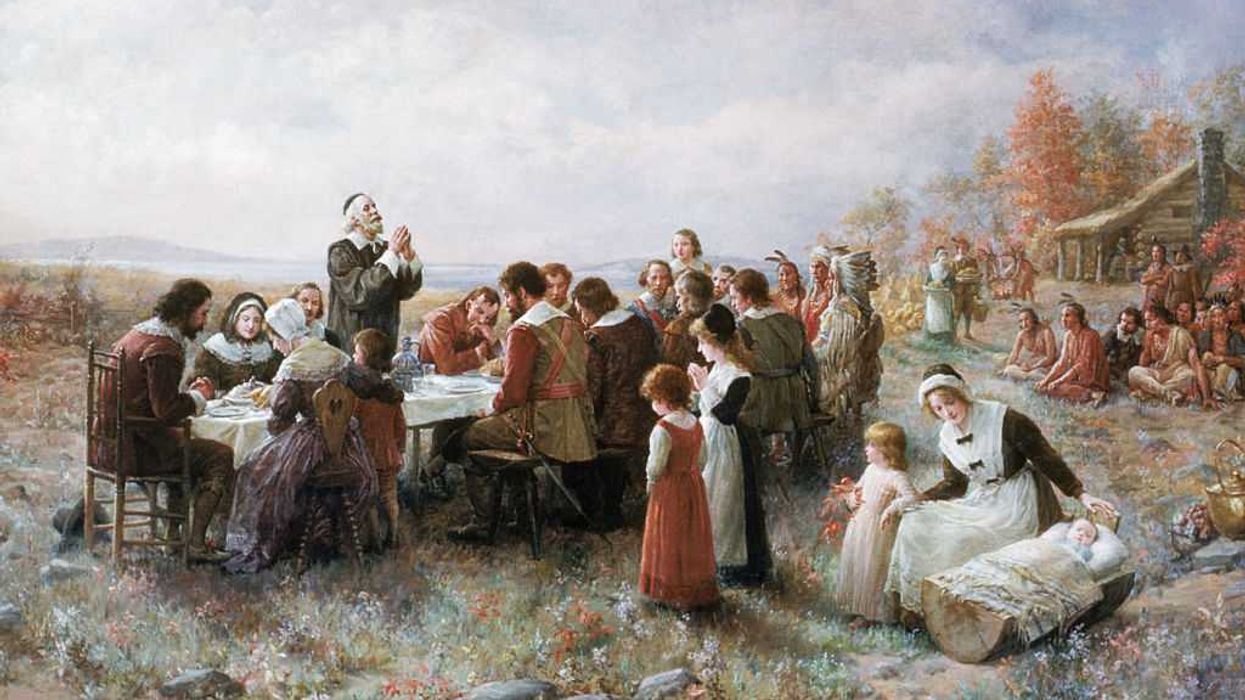
Thanksgiving is an annual reminder of our nation’s Christian roots and our godly heritage. Although Virginia proclaims that the first Thanksgiving was in Jamestown in 1619 — not in Plymouth in 1621 — the Plymouth one became the prototype of our annual celebrations.
George Washington was the first president under the Constitution to declare a national day of thanksgiving, and President Lincoln was the first to declare Thanksgiving an annual holiday.
‘It is the indispensable Duty of all Men to adore the superintending Providence of Almighty God; to acknowledge with Gratitude their Obligation to him for Benefits received, and to implore such further Blessings as they stand in Need of …’
However, Samuel Adams, with the help of two other continental congressmen, was the first to declare a National Day of Thanksgiving for America as an independent nation.
The time was the fall of 1777. Overall, it seemed that things were not going well for the United States. Americans lost the Battle of Brandywine on September 11, which Dr. Peter Lillback notes was our “first 9/11.”
George Washington saw that the Brandywine defeat meant the impending fall of Philadelphia, our nation’s capital at the time, into the hands of the British.
So Congress had to flee westward, first to Lancaster and then to York, Pennsylvania. Washington and his troops had to flee westward also. They ended up in a place called Valley Forge. The worst was yet to come with the brutal winter there.
Meanwhile, on October 7, 1777, there was a victory at Saratoga, New York. Samuel Adams of Boston, a key leader in American independence, saw that we as a nation could rejoice in this act of divine Providence. So — with the help of fellow Continental Congressmen Rev. John Witherspoon of New Jersey and Richard Henry Lee of Virginia — Samuel Adams wrote our country’s first thanksgiving declaration as an independent nation.
This is what they wrote in that First National Thanksgiving Proclamation, November 1, 1777: “It is the indispensable Duty of all Men to adore the superintending Providence of Almighty God; to acknowledge with Gratitude their Obligation to him for Benefits received, and to implore such further Blessings as they stand in Need of.”
As humans, as Christians, we should be grateful. They continue, “And it having pleased him in his abundant Mercy, not only to continue to us the innumerable Bounties of his common Providence; but also to smile upon us in the Prosecution of a just and necessary War, for the Defense and Establishment of our unalienable Rights and Liberties; particularly in that he hath been pleased, in so great a Measure, to prosper the Means used for the Support of our Troops, and to crown our Arms with most signal success.”
I think it’s fair to say that Adams, Witherspoon, and Lee were looking for the good news (the Saratoga victory) in a sea of bad news (American setbacks, the latest of which was the defeat at Brandywine).
They continue: “It is therefore recommended to the legislative or executive Powers of these UNITED STATES to set apart THURSDAY, the eighteenth Day of December next, for SOLEMN THANKSGIVING and PRAISE.”
And what were the Americans to do during that day of Thanksgiving and praise? To confess “their manifold sins … that it may please GOD through the Merits of JESUS CHRIST, mercifully to forgive and blot them out of Remembrance; That it may please him graciously to afford his Blessing on the Governments of these States respectively, and prosper the public Council of the whole.”
RELATED: That we may all unite in rendering unto our Creator our sincere and humble thanks
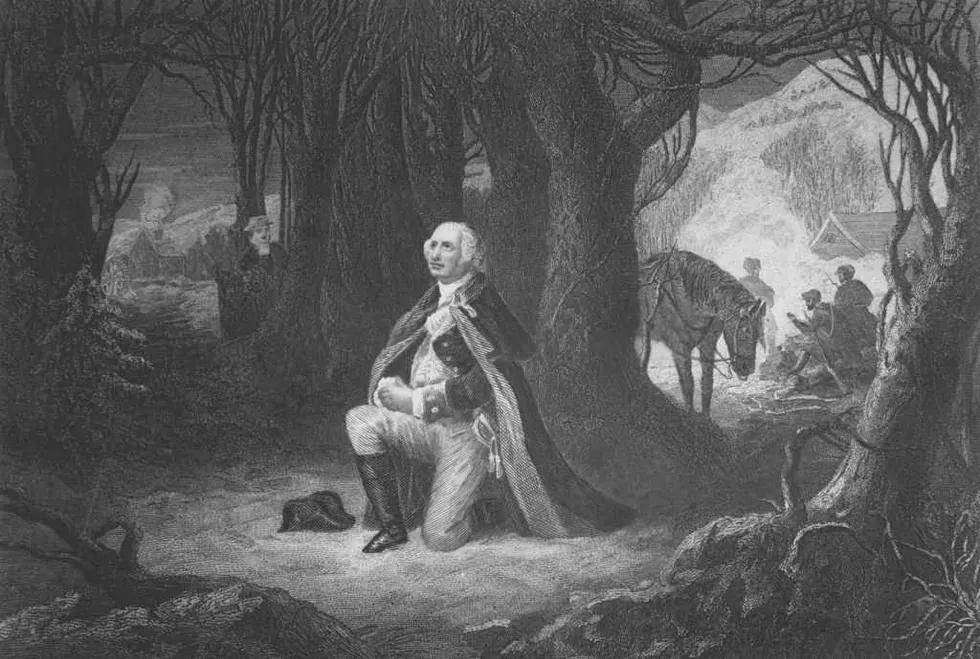 Interim Archives/Getty Images
If someone prayed like this in Congress today, people might try to drive him out of town on a rail — like the leftist members of Congress who blew a gasket when California minister Jack Hibbs prayed in the name of Jesus in Congress in early 2024.
Writing on behalf of Congress, Adams, Witherspoon, and Lee continue: “To inspire our Commanders, both by Land and Sea, and all under them, with that Wisdom and Fortitude which may render them fit Instruments, under the Providence of Almighty GOD, to secure for these United States, the greatest of all human Blessings, INDEPENDENCE and PEACE.”
They also prayed for God “to prosper the Trade and Manufactures of the People,” as well as the farmers, for success of the crops. They also asked for God’s help in the schools, which they note are “so necessary for cultivating the Principles of true Liberty, Virtue and Piety, under his nurturing Hand; and to prosper the Means of Religion, for the promotion and enlargement of that Kingdom, which consisteth ‘in Righteousness, Peace and Joy in the Holy Ghost.’”
This prayer proclamation is no namby-pamby type of prayer such as we might hear from Congress these days. These are bold proclamations of faith, showing the pro-Christian side of the founding fathers that we rarely hear about these days.
This article is adapted from an essay originally published at Jerry Newcombe’s website.





