

Category: Trucking
Florida police pull dozens of immigrant truck drivers off roads: ‘People with no names’
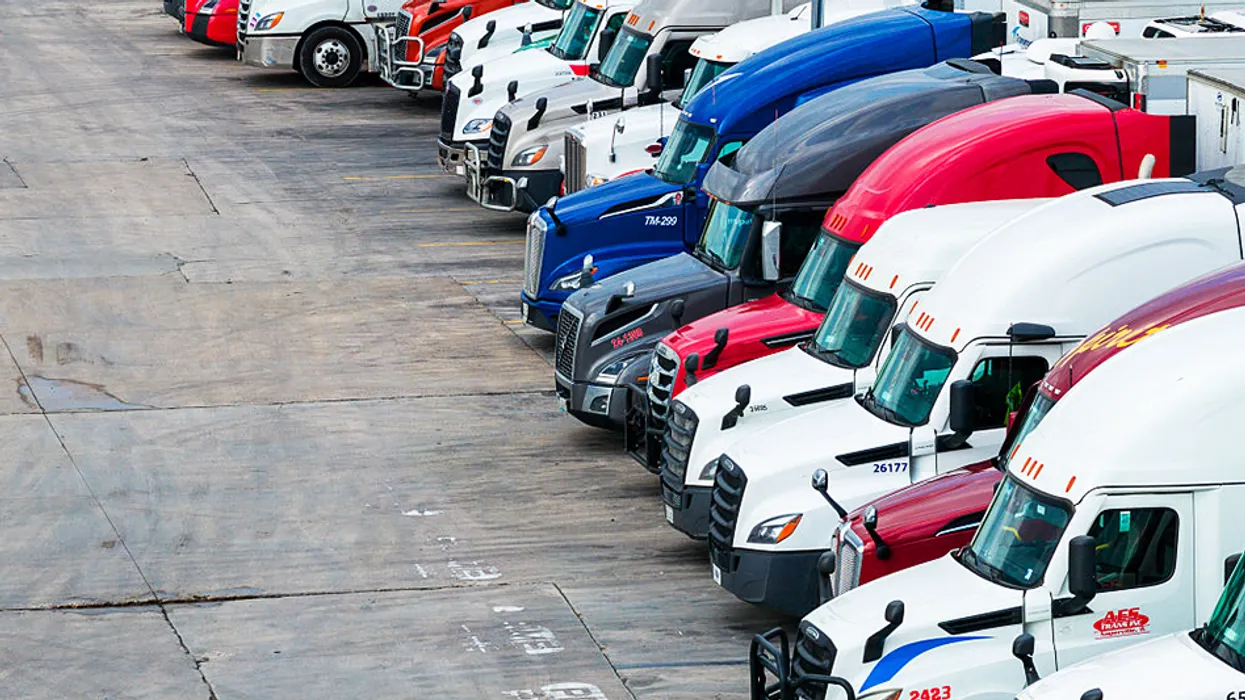
A Florida commercial driver’s license crackdown has revealed huge safety issues within the industry.
The Florida Department of Law Enforcement recently partnered with state and federal agencies to implement a four-day investigative task force called “Operation Highway Shield.”
‘We’ve got someone who is behind the wheel that is putting lives at risk, that has no regard for safety.’
FDLE Commissioner Mark Glass spoke to reporters on Thursday and revealed the staggering numbers of violations that were discovered when they inspected approximately 3,300 drivers.
From those drivers, authorities removed 176 from service, with 42 of them cited for federal immigration violations, while another 35 drivers were arrested for criminal charges.
“Some of the driver’s license that we would find wouldn’t even have a name on the CDL,” Glass told reporters. “Literally no name. … But you got a CDL, no first name, and it even says no name given; from other states, that is not from the state of Florida.”
At the same time, another 54 drivers were relieved of service over language deficiencies. According to Fox 35 Orlando, these deficiencies were tied to federal requirements outlined in President Trump’s executive order from April of last year, titled “Enforcing Commonsense Rules of the Road for America’s Truck Drivers.” The order requires proficiency in English.
“So you’re having people with no names, operating commercial motor vehicles, but different types of endorsement running up and down your highways,” Glass explained.
RELATED: End of the road: 200,000 foreign truckers could lose their CDLs as Trump’s rule takes effect
In one instance, officials said that in the Central Florida region of Sumter County, a truck driver was accused of swerving while on Interstate 4, which passes through Tampa and Orlando.
Authorities said the driver turned out to have limited English proficiency while also exceeding the legal blood alcohol level with a 0.27. In Florida, the legal blood alcohol level for typical drivers is 0.08%. For commercial drivers, however, it is 0.04%. This means the driver was nearly seven times over the legal limit.
“The larger picture of this is that we’ve got someone who is behind the wheel that is putting lives at risk, that has no regard for safety,” Federal Motor Carrier Safety Administrator Derek Barrs said.
Employers can also face consequences in these instances, too, Barrs warned.
 David Paul Morris/Bloomberg/Getty Images
More than 10 agencies participated in the operation, which is just a small part of the typical 100,000 inspections done in the state per year. Fox 51 Gainesville reported that about a quarter of those inspections typically result in vehicles being removed from the road due to mechanical issues and another 10% because of driver violations.
Florida currently has 23 vehicle inspection sites in the state and plans to add another near the Florida-Alabama border.
Like Blaze News? Bypass the censors, sign up for our newsletters, and get stories like this direct to your inbox. Sign up here!
Retail Theft’s Next Frontier
Retail theft no longer begins or ends in a store aisle. What Americans once understood as “organized retail crime” has…
Diesel under attack: EPA targets engines that power America
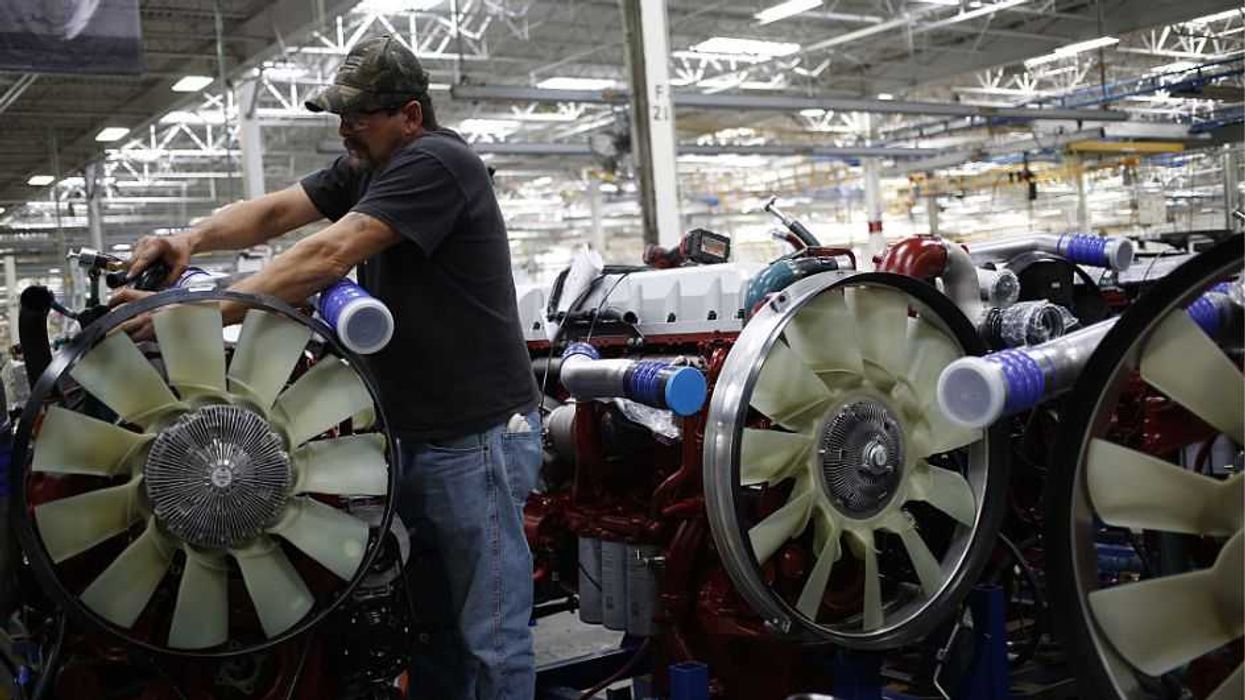
America runs on diesel. From freight haulers and farm equipment to fire trucks and snowplows, diesel engines are the torque behind our economy.
Yet the same engines that built the nation’s backbone are now in Washington’s crosshairs — strangled by layers of federal regulation that threaten the people who keep America moving.
Fire departments, ambulance services, and municipal snowplows all run on diesel. If their vehicles can’t move, lives are at risk.
The Environmental Protection Agency insists it’s cleaning the air. But for those who live and work beyond the Beltway, these mandates aren’t saving the planet — they’re shutting down livelihoods.
Cost of clean
Since 2010, every diesel engine sold in the U.S. has come fitted with diesel particulate filters and selective catalytic reduction systems — components meant to capture soot and neutralize nitrogen oxides. In theory, they’re good for the environment. In practice, they’re crippling the very trucks that keep shelves stocked and first responders rolling.
DPFs clog, SCR units freeze, and when that happens, engines “derate” into limp mode — losing power until the system is fixed. A single failure can leave a truck stranded for days and cost upwards of $5,000 to repair. For independent owner-operators, who haul 70% of the nation’s freight, that can mean the difference between survival and bankruptcy.
Even worse, under the Clean Air Act, simply repairing or modifying those failing systems can make a mechanic a federal felon.
Tamper tantrum
Meet Troy Lake, a 65-year-old diesel expert from Cheyenne, Wyoming. For decades, Lake kept his community’s fleets running — farm trucks, snowplows, ambulances, and school buses. But when emissions systems began failing in subzero temperatures, Lake found himself forced to choose between obeying Washington’s regulations or keeping critical vehicles on the road.
His fix? Remove the faulty components and reprogram the engine to restore performance — a commonsense solution that kept essential services moving. But the EPA saw it differently. Under federal law, “tampering” with emissions controls carries up to five years in prison and $250,000 in fines per vehicle.
In June 2024, Lake pleaded guilty to one count of emissions tampering. By December, a federal judge sentenced him to a year in prison. His shop was fined $52,500 and shut down. Ironically, during his sentence, Lake worked on the prison’s own diesel equipment — the same skills that, outside those walls, had made him a criminal.
Now home but barred from his trade, Lake carries a felony record that cost him his business, his rights, and his reputation — all for keeping his community’s engines running.
Endless repair cycles
No one disputes that diesel exhaust can harm air quality. The EPA’s emission rules dramatically cut pollution over the past decade. But these results have come at an unsustainable cost to the people who depend on diesel most.
According to the American Trucking Associations, emissions-related repairs account for roughly 13% of total maintenance costs for Class 8 trucks. Each incident costs an average of $1,500 and countless hours of downtime. Multiply that across millions of trucks, and the burden on small businesses and rural economies is staggering.
Farmers, truckers, and local governments can’t afford the endless repair cycles. For them, Washington’s mandates translate to fewer working trucks, higher consumer costs, and dangerous response delays in emergencies.
Senator Lummis fights back
Wyoming Senator Cynthia Lummis (R) sees what’s happening. She’s watched the federal government criminalize working Americans while ignoring the real-world consequences of its rules. In October 2025, she introduced the Diesel Truck Liberation Act — legislation designed to restore sanity and balance.
The bill would:
- Remove mandatory federal requirements for DPFs, SCRs, and onboard diagnostics;
- Limit the EPA’s enforcement powers over diesel tuning and emissions deletes;
- Protect mechanics and operators from prosecution for performing practical repairs; and
- Provide retroactive relief — vacating sentences, clearing records, and refunding fines for past convictions.
A call for flexibility
Environmental advocates warn that such legislation could reverse decades of progress under the Clean Air Act.
That’s a legitimate concern. Clean air matters. But it’s also true that today’s engine tuning and filtration technologies are far more advanced than those available when these mandates were written. Recent research shows that advanced, model-based engine controls and “virtual sensors” can significantly cut nitrogen oxide and particulate emissions and help engines stay within strict tailpipe limits while reducing dependence on extra physical sensors and minimizing urea and fuel penalties.
Even current EPA leadership has acknowledged the need for flexibility and modernization. The question isn’t whether we should protect the environment — it’s whether rigid, outdated enforcement is the best way to do it.
And the impact doesn’t stop at the loading dock. Fire departments, ambulance services, and municipal snowplows all run on diesel. If their vehicles can’t move, lives are at risk. A snowstorm doesn’t care about EPA compliance, and neither does a heart attack.
Who makes the rules?
Opponents of the Diesel Truck Liberation Act argue that removing emissions hardware would increase pollution, disproportionately harming urban and low-income communities. Supporters counter that Washington’s policies have already created economic inequality by crushing rural economies and small operators.
The divide isn’t really about clean air — it’s about who gets to make the rules. Should unelected bureaucrats in D.C. dictate how a farmer in Wyoming runs his truck? Or should local communities have the flexibility to balance environmental goals with economic reality?
 Image via @MusicScarf/X (screenshot)/Photographer: Emily Elconin/Bloomberg via Getty Images
Common sense prevails
The Diesel Truck Liberation Act doesn’t aim to destroy the Clean Air Act. It aims to reform it. It recognizes that environmental protection must work hand in hand with reliability, safety, and economic survival.
For people like Troy Lake, it’s about justice — not just for one man, but for thousands of mechanics and operators who’ve been punished for solving real problems in real America.
And there’s already a hopeful sign: President Trump recently issued a full pardon for Lake, acknowledging that enforcing broken regulations against hardworking Americans is not justice — it’s overreach.
The next step is whether Congress will follow through. The bill currently sits in the Senate Environment Committee, with hearings expected later this year. If it passes, it could set a precedent for rethinking how environmental policy is enforced — and how to protect the people who keep America running.
America’s diesel fleet isn’t the enemy. It’s the engine that powers our nation — from coast to coast, farm to factory, and every highway in between. Reasonable environmental goals are achievable, but not through criminalizing those who fix the equipment that keeps this country alive.
The question facing lawmakers is simple: Will they choose common sense — or continue punishing the very people who make modern life possible?





