

Category: Christianity
5 pro athletes who boldly take a knee — for Jesus Christ

When most athletes look back on their glory days, it’s the game-winning plays and the intense team camaraderie they want to relive.
Not former San Francisco 49ers quarterback Colin Kaepernick.
‘My victory was secure on the cross … and it doesn’t matter if I win this tournament or lose this tournament.’
Ten years after he first knelt in protest during the National Anthem, the onetime culture warrior has written a book. His publisher describes “The Perilous Fight” as “equal parts memoir and manifesto.”
Kaepernick may miss that era — after opting out of his contract in 2017, he never played for another NFL team again — but it’s safe to say most fans are happy to have moved on.
In fact, there’s been a different kind of rebellion brewing in pro sports lately — quieter and less disruptive, but no less profound.
Players taking a knee today are more likely doing it to pray than posture — and they don’t seem especially concerned with who’s watching.
While faith has always had its place in sports, this boldness is something new. These aren’t symbolic gestures or vague references to “the man upstairs” but unabashed statements of conviction: Christ comes first.
Here are five Christian athletes proudly living their faith.
1. C.J. Stroud
Stroud doesn’t treat faith as a postgame add-on. The Houston Texans quarterback consistently credits his success to God.
Even after a career-worst performance led to a crushing playoff loss against the Patriots, Stroud kept it in perspective: “Before I do anything, I want to give God the glory — my Lord and savior, Jesus Christ. Without Him, I’m nothing. I just appreciate Him giving me this opportunity, this platform to play this great game with this great organization.”
2. Brock Purdy
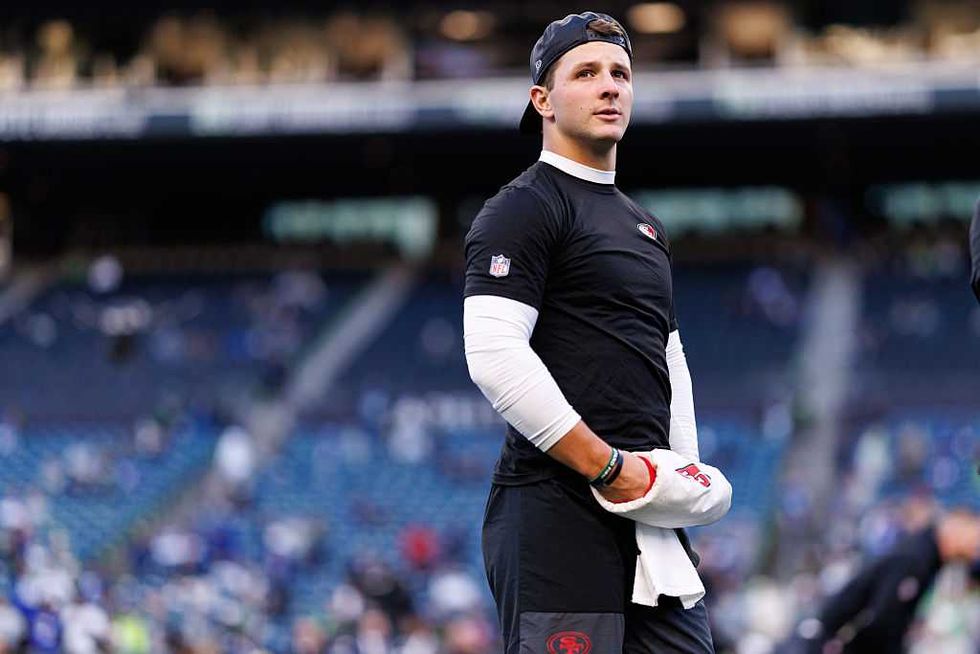 Brooke Sutton/Getty Images
49ers quarterback Brock Purdy may have been last pick in the 2022 NFL draft, but his subsequent success has shown he’s no “Mr. Irrelevant.” His legendary predecessor Steve Young says that makes sense, considering that the greatest QBs aren’t flashy, but “at peace.”
The secret to Purdy’s serenity? Founding his identity on faith, not football: “No matter what I’m going to face moving forward … football, God, and Jesus are going to be my identity.”
3. Scottie Scheffler
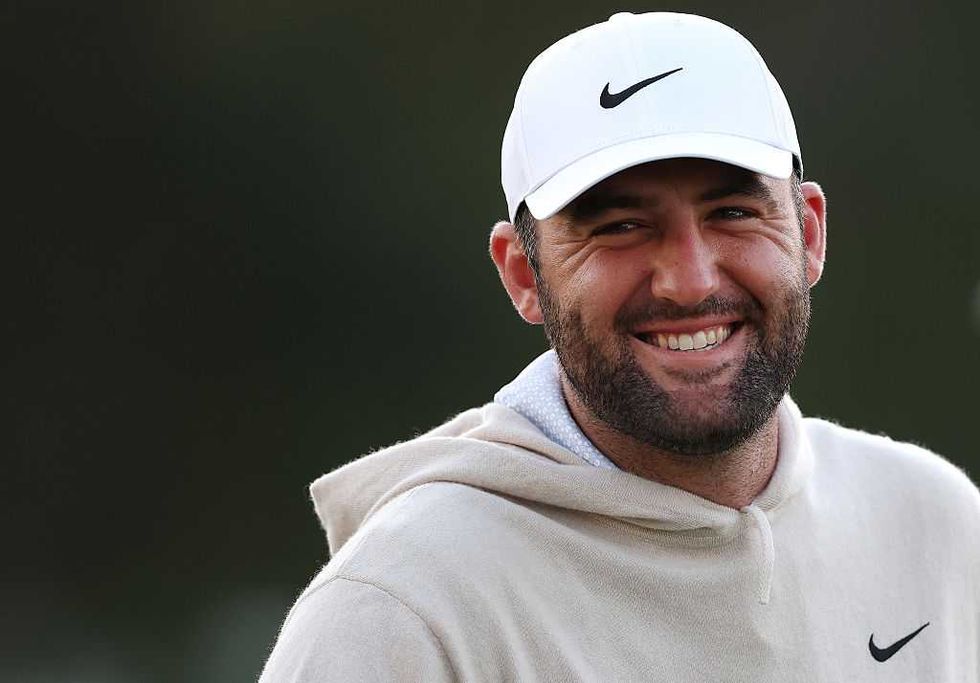 Andrew Redington/Getty Images
For someone who’s the highest ranked golfer in the world, Scottie Scheffler doesn’t seem too interested in keeping score.
After his second Masters victory in 2024, the 29-year-old made it clear that he’s got his eyes on a higher prize.
“My buddies told me this morning, my victory was secure on the cross,” he said. “And that’s a pretty special feeling to know that I’m secure for forever, and it doesn’t matter if I win this tournament or lose this tournament. My identity is secure for forever.”
4. Clayton Kershaw
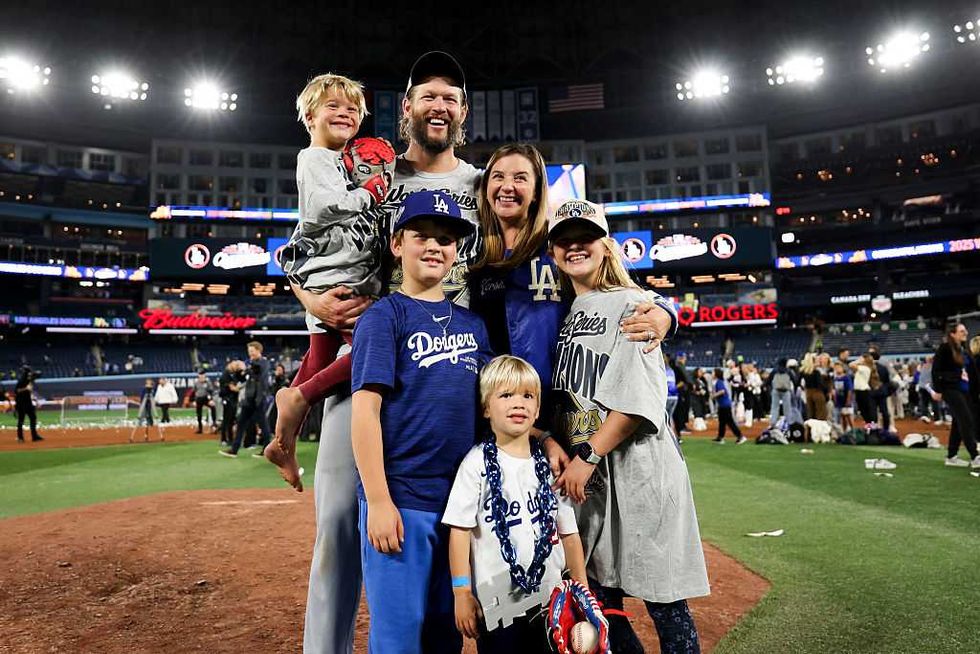 Michael Chisholm/Getty Images
Clayton Kershaw was always the kind of player who let his performance do the talking. Over 18 years pitching for the Dodgers, the left-hander racked up three Cy Young awards, 3,000 strikeouts, and three World Series titles — including last year’s, his final season.
He brings that quiet excellence to his life as a Christian as well, putting his time and energy into Kershaw’s Challenge, the Christian charity he and his wife run. When the Dodgers insisted on holding “Pride Night” in 2025, he countered by writing “Genesis 9:12-16” on his hat — drawing attention to the rainbow’s older, sacred meaning.
5. Stephen Curry
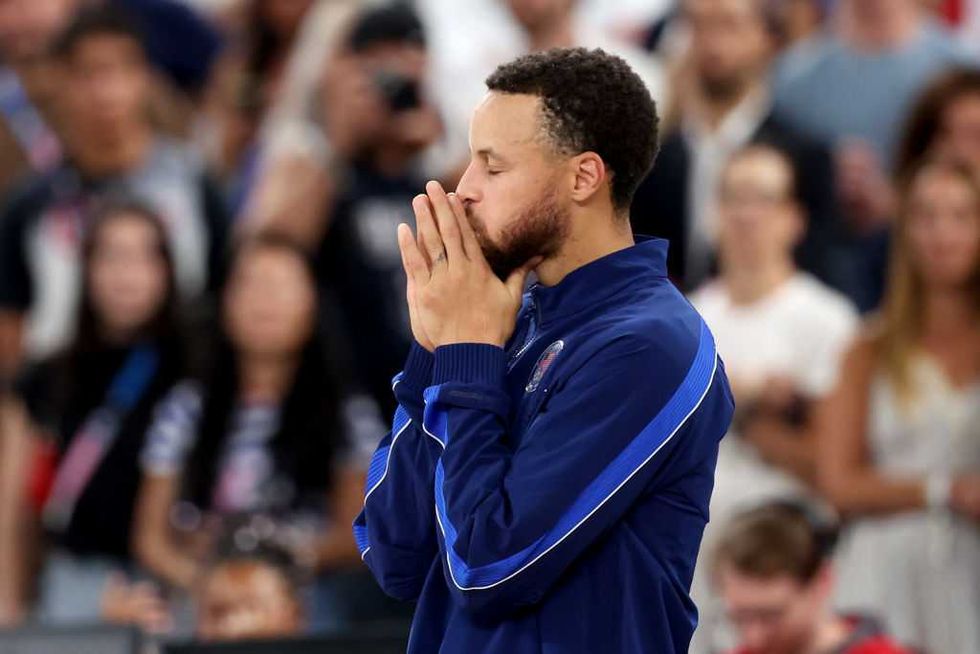 Ezra Shaw/Getty Images
Stephen Curry may have been born into basketball — his father played for the Charlotte Hornets — but it was his family’s deep faith that formed his life.
Early in his career as a Golden State Warrior, the gifted point guard made his priorities clear:
The Holy Spirit is moving through our locker room in a way I’ve never experienced before. It’s allowing us to reach a lot of people, and personally I am just trying to use this stage to share how God has been a blessing to my life and how He can be the same in everyone else’s.
More than a decade later, Curry is still at the top of his game — and making sure his three kids get the same faith-first upbringing he did.
5 pro athletes who boldly take a knee — for Jesus Christ
When most athletes look back on their glory days, it’s the game-winning plays and the intense team camaraderie they want to relive.
Not former San Francisco 49ers quarterback Colin Kaepernick.
‘My victory was secure on the cross … and it doesn’t matter if I win this tournament or lose this tournament.’
Ten years after he first knelt in protest during the National Anthem, the onetime culture warrior has written a book. His publisher describes “The Perilous Fight” as “equal parts memoir and manifesto.”
Kaepernick may miss that era — after opting out of his contract in 2017, he never played for another NFL team again — but it’s safe to say most fans are happy to have moved on.
In fact, there’s been a different kind of rebellion brewing in pro sports lately — quieter and less disruptive, but no less profound.
Players taking a knee today are more likely doing it to pray than posture — and they don’t seem especially concerned with who’s watching.
While faith has always had its place in sports, this boldness is something new. These aren’t symbolic gestures or vague references to “the man upstairs” but unabashed statements of conviction: Christ comes first.
Here are five Christian athletes proudly living their faith.
1. C.J. Stroud
Stroud doesn’t treat faith as a postgame add-on. The Houston Texans quarterback consistently credits his success to God.
Even after a career-worst performance led to a crushing playoff loss against the Patriots, Stroud kept it in perspective: “Before I do anything, I want to give God the glory — my Lord and savior, Jesus Christ. Without Him, I’m nothing. I just appreciate Him giving me this opportunity, this platform to play this great game with this great organization.”
2. Brock Purdy
Brooke Sutton/Getty Images
49ers quarterback Brock Purdy may have been last pick in the 2022 NFL draft, but his subsequent success has shown he’s no “Mr. Irrelevant.” His legendary predecessor Steve Young says that makes sense, considering that the greatest QBs aren’t flashy, but “at peace.”
The secret to Purdy’s serenity? Founding his identity on faith, not football: “No matter what I’m going to face moving forward … football, God, and Jesus are going to be my identity.”
3. Scottie Scheffler
Andrew Redington/Getty Images
For someone who’s the highest ranked golfer in the world, Scottie Scheffler doesn’t seem too interested in keeping score.
After his second Masters victory in 2024, the 29-year-old made it clear that he’s got his eyes on a higher prize.
“My buddies told me this morning, my victory was secure on the cross,” he said. “And that’s a pretty special feeling to know that I’m secure for forever, and it doesn’t matter if I win this tournament or lose this tournament. My identity is secure for forever.”
4. Clayton Kershaw
Michael Chisholm/Getty Images
Clayton Kershaw was always the kind of player who let his performance do the talking. Over 18 years pitching for the Dodgers, the left-hander racked up three Cy Young awards, 3,000 strikeouts, and three World Series titles — including last year’s, his final season.
He brings that quiet excellence to his life as a Christian as well, putting his time and energy into Kershaw’s Challenge, the Christian charity he and his wife run. When the Dodgers insisted on holding “Pride Night” in 2025, he countered by writing “Genesis 9:12-16” on his hat — drawing attention to the rainbow’s older, sacred meaning.
5. Stephen Curry
Ezra Shaw/Getty Images
Stephen Curry may have been born into basketball — his father played for the Charlotte Hornets — but it was his family’s deep faith that formed his life.
Early in his career as a Golden State Warrior, the gifted point guard made his priorities clear:
The Holy Spirit is moving through our locker room in a way I’ve never experienced before. It’s allowing us to reach a lot of people, and personally I am just trying to use this stage to share how God has been a blessing to my life and how He can be the same in everyone else’s.
More than a decade later, Curry is still at the top of his game — and making sure his three kids get the same faith-first upbringing he did.
Liz Wheeler drops truth bomb on Pope Leo’s ‘be less fearful’ of Islam comments
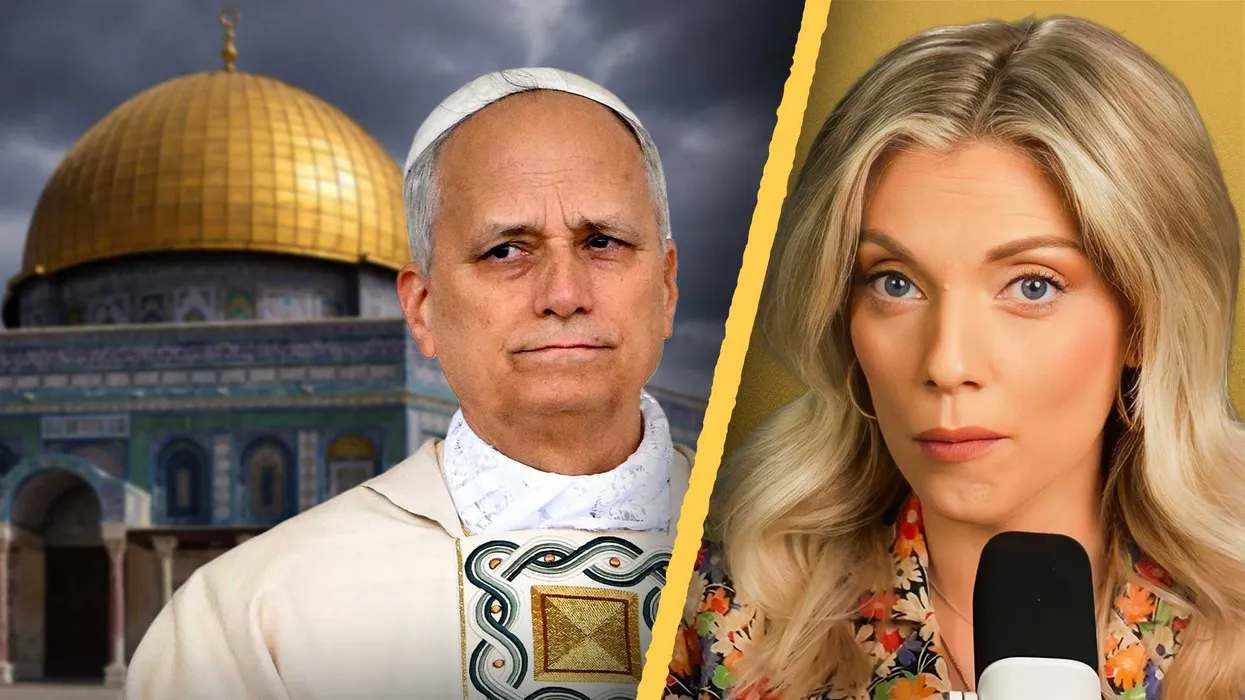
An old comment from Pope Leo XIV is circulating widely again on social media amid his ongoing apostolic journey to Africa, where he has been meeting with Muslim leaders and visiting Muslim holy sites, including the Grand Mosque of Algiers.
In December 2025, during an in-flight press conference on the papal plane returning from his trip to Turkey and Lebanon, the pope said, “I think one of the great lessons that Lebanon can teach to the world is precisely showing a land where Islam and Christianity are both present and are respected and that there is a possibility to live together, to be friends.”
He added: “I think those are lessons that would be important also to be heard in Europe or North America. We should perhaps be a little less fearful and look for ways of promoting authentic dialogue and respect.”
Liz Wheeler, BlazeTV host of “The Liz Wheeler Show,” is deeply disappointed to hear “the successor of Saint Peter [articulating] leftist political opinions.”
Liz shares some harrowing statistics: “93% of the 4,849 Christians who were murdered for their faith last year were murdered by Muslims, by Islamists, most of them in sub-Saharan Africa.”
“The pope is visiting Africa as we speak, and I would wonder if he visited the mass graves of the Catholics slaughtered in Africa,” she says, playing a video clip of a Nigerian Catholic priest pleading for Western intervention, as he stands behind the body of a woman murdered for her faith by Muslim radicals.
“[The pope] put a wreath on a Muslim grave yesterday in Algeria to commemorate Algerians that were killed in their war of independence. What he didn’t mention was these Algerians who were killed were fighting Catholics. They murdered Catholics,” she continues.
“It is discouraging to hear the pope tell us to be less fearful of Islam as if we’re in sin for this — for recognizing the fanatical nature of their religious belief in jihad, which is based on our observation that our differences with Muslims are not relegated to something in the past,” she says.
“It wasn’t just a battle during the Crusades centuries ago, but it’s happening now. The massacre of Christians is happening today in Africa at the hands of Islamists who are killing in the name of their religion.”
To hear more, watch the video above.
Want more from Liz Wheeler?
To enjoy more of Liz’s based commentary, subscribe to BlazeTV — the largest multi-platform network of voices who love America, defend the Constitution, and live the American dream.
Life can be hard, but don’t forget to laugh

This week, I sat down to pay a medical bill. It wasn’t the entire bill, but just my portion.
It came to about $5,300.
That’s the co-pay for my wife’s new prosthetic legs. And that’s after insurance did what insurance does, which is a separate conversation best handled with prayer, patience, and possibly a therapist (who also requires a deductible and co-pay).
On top of that, I’ve had a few medical issues myself lately. A biopsy this week, an MRI last month. More bills trickling in. You don’t even wait for the mail any more. They find you online now.
If what we believe is true, then suffering is not meaningless or random, and it is not final.
So I did what I have done for 40 years of caregiving. I paid what I could and planned the rest while waiting for the insurance payments to sort out.
In four decades, with nearly a hundred surgeries for my wife, every provider — and in a medical journey like hers, there have been many — has always worked with me. Particularly when I showed the initiative and talked with the provider first.
But this week, I didn’t just plan a payment; I accidentally paid the whole thing. All of it. In one click.
There’s a special kind of silence that fills the room when you realize what you have just done. It’s not panic or fear, but that slow, sinking realization that you have just made a very enthusiastic financial decision you did not intend to make.
I immediately called the provider. The person I spoke with voided the payment, set me up on something more manageable, and reassured me that I was not the first person to make such a mistake. Since it was caught on the same day, everything would be fine.
I thanked the reassuring person, hung up, sat there for a moment, and then laughed.
I laughed because it brought to mind a PSA I helped put together years ago during National Caregiver Awareness Month. We riffed on the comic “you might be a redneck …” routine and did it about family caregivers.
Caregiving gives you plenty of material for that sort of routine.
If a hospital bed has ever hampered your love life … you might be a caregiver.
If you’re the one asking for a price check on suppositories … you might be a caregiver.
If you’ve ever hooked up your dog to your wife’s wheelchair just to see if it would work … you might be a caregiver. (It does work — but watch out for squirrels.)
And after that phone call, I laughed because I could add another one: If you’ve ever financed your wife’s prosthetic legs … you might be a caregiver.
This is how we have learned to shoulder the immensity of what we carry.
We live in a culture where outrage is currency and perspective is in short supply. Outrage and victimhood are easy to perform. Caregiving isn’t. When someone you love is suffering, she doesn’t need a performance.
RELATED: The most honest phrase you’ll hear all week
 Brendan SMIALOWSKI/AFP/Getty Images
Caregiving chips away at those cultural indulgences. Bills still come, and bodies still break. Responsibilities don’t pause so that you can craft the perfect complaint. You either learn to carry it, or it crushes you.
If you’re going to endure this, you also learn to laugh. Not because things are easy, but because this isn’t the end.
Scripture tells us there is a time to weep and a time to laugh.
We weep in hospital rooms. We weep in quiet moments when the weight of it all settles in. We weep while watching helplessly as someone we love struggles.
But we also laugh because we are refusing to let the pain define us.
And for the Christian, that refusal is not rooted in being naturally strong or optimistic, but in what we believe to be true. That truth requires something of us, especially in our darkest moments.
If what we believe is true, then suffering is not meaningless or random, and it is not final.
God is not absent from it. If He is Lord at all, then He is Lord of all. The promise of the gospel is not that we learn to cope better, but that Christ redeems completely.
Right now, my wife uses prosthetic legs. Right now, we deal with bills, setbacks, and the daily logistics of a body that has endured more than most people can imagine. But a day is coming when all that will change. No prosthetics, pain, or co-pays. No fragile bodies that wear out under the strain of this world.
Until then, we live here. So yes, we weep. But we also laugh — sometimes right after accidentally trying to pay $5,300 we don’t have. For now, we still crack a smile, even with tears on our cheeks.
“Ten more payments … and you can walk anywhere you want, baby!”
I reach for her hand and help her stand. She chuckles. Not because it’s easy, but because it’s not the end.
Young men flocking to Christianity in record numbers
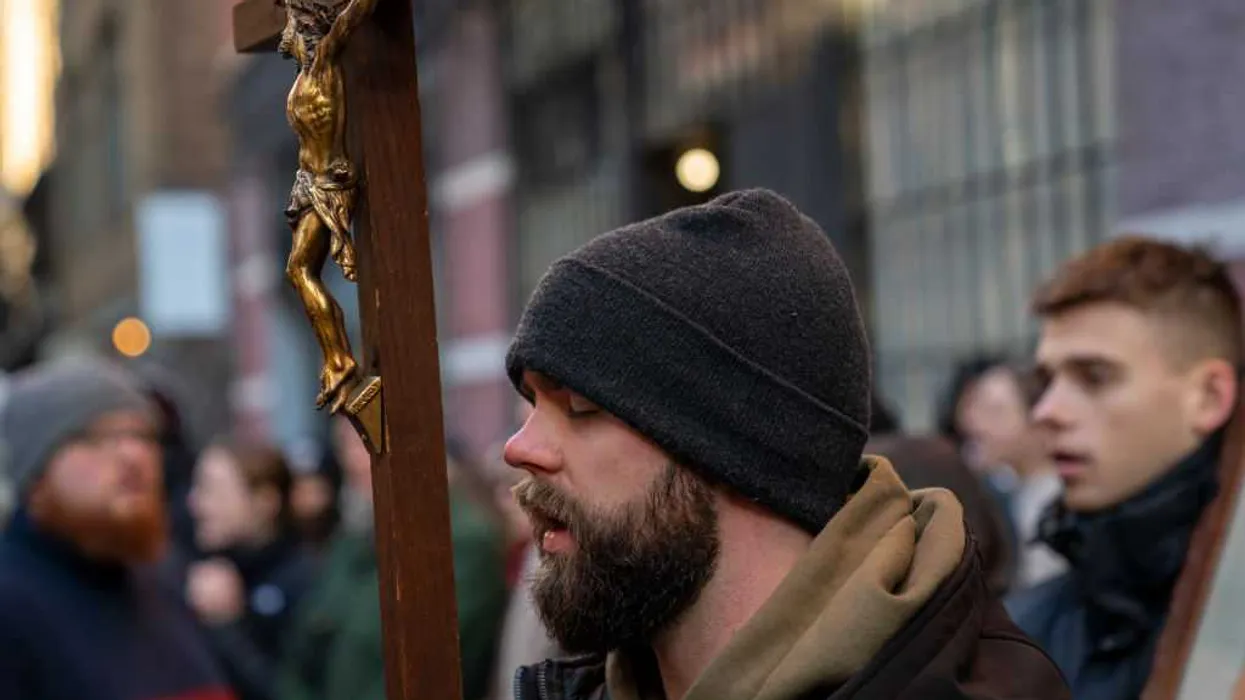
Gallup has been asking Americans for decades about the importance of religion in their lives. For both sexes and across various age groups, the general trend since 2000 has been downward.
With the exception of an increase from 2010 to 2013, this was certainly the case among men ages 18-29, but no longer.
‘A similar increase has occurred among young Republican women.’
A possible course correction athwart the forces of atomization and disenchantment appears to be under way, with young men stating en masse that religion is now “very important” to them.
Whereas in 2022-2023, only 28% of this cohort said religion was very important to them, that number skyrocketed to 42% in 2024-2025.
Women lag
Women in the same age group are plumbing new lows, with only 29% of respondents reporting that religion was very important to them in 2024-2025, down from 52% in 2000-2001. In every other age category, women lead men when assessing religion as very important.
Young men’s sense of religion’s importance has been more than rhetorical.
Church attendance shot up seven points between 2022-2023 and 2024-2025, hitting 40% — a virtual tie with young women and its highest level since 2012-2013. This year’s data, showing that young men are continuing to attend places of worship weekly or monthly, suggests this was no flash in the pan.
RELATED: What Christians can learn from a high school musical
 KEVIN WURM/AFP/Getty Images
Bipartisan boom
When broken down by party affiliation, the latest reported term-over-term increase for young men was seven points for Republican men— from 45% in 2022-2023 to 52% most recently — and 3% for Democrat men — from 23% to 26%.
Not only did 2024-2025 see a spike in religious attendance, it saw the highest recorded identification with a specific religious affiliation — 63% — since 2012-2013. Of course, there are higher records to beat, including the decades-long high of 80% in 2000-2001.
Religious affiliation among women in the age group also increased since the previous term, hitting 60% in 2024-2025 — the first increase since 2002-2003.
Record conversions
“The finding that Republicans have driven heightened religious attendance among young men — and that a similar increase has occurred among young Republican women — suggests political dynamics may be playing a role in religious changes among the nation’s young adults,” said Gallup.
Young men’s turn to religion comes at a time of record convert baptisms both for the Catholic and Mormon churches in America. It also comes amid a period of relatively stabilized religiosity after years of decline and disaffiliation.
Like Blaze News? Bypass the censors, sign up for our newsletters, and get stories like this direct to your inbox. Sign up here!
‘I wanted to thank God in public’: Fighting tears, Victor Glover gives legendary speech on return to Earth

NASA’s Victor Glover showed once again why he represents some of the best of what the United States has to offer.
After Glover and the Artemis II crew splashed down in the Pacific Ocean on Friday, the pilot almost broke down in tears while delivering his first remarks since returning to dry land.
‘It’s too big to just be in one body.’
The crew members were in Houston, Texas, following their successful lunar orbit when Glover was asked by Commander Reid Wiseman to give a few words. Glover, who has been revered for providing on-the-spot wisdom before and during the mission, was at first at a loss for words.
“I have not processed what we just did, and I’m afraid to start even trying,” Glover began.
Fighting back tears, he powered through.
“When this started on April 3, I wanted to thank God in public, and I want to thank God again,” he said, as he became visibly emotional. “Because even bigger than my challenge trying to describe what we went through, the gratitude of seeing what we saw, doing what we did, and being with who I was with — it’s too big to just be in one body.”
The audience at NASA’s Johnson Space Center erupted in applause as the pilot then thanked his wife and four daughters, whom he referred to as “those five beautiful cocoa-skinned ladies.”
RELATED: NASA astronaut gives very American response to DEI questioning
“I love you … all of you,” Glover continued. He then turned his attention to NASA staff and leadership.
While the leadership has changed since 2023, he remarked, “the qualities haven’t. And we are fortunate to be in this agency at this time together.”
Wiseman wasn’t short on wisdom, either. The crew leader fought back tears of his own when he had the microphone, mostly talking about the worry and anxiety the astronauts’ families had ahead of mission launch.
“This was not easy being 200,000+ miles away from home. Like, before you launch, it feels like it’s the greatest dream on Earth. And when you’re out there, you just want to get back to your families and your friends.”
Wiseman concluded by noting how special it is to be human and how grateful he feels to be on planet Earth.
 Danielle Villasana/Getty Images
Rep. Michael Cloud (R-Texas) took the podium soon after to thank the Artemis II crew on behalf of America. The congressman stated that the United States, as well as the world, “desperately needed this.”
Cloud said the mission reminded him of Psalm 8, affirming that “even as we look to the night sky and as we look at creation, and behold the stars and the moon, we begin to think about what is mankind from God’s perspective.”
The Artemis II crew reached a point 252,756 miles from Earth and set a new human record for the maximum distance away from the planet.
Artemis III is set for mid-2027, while Artemis IV is targeted for early 2028 and is expected to land humans on the moon.
Like Blaze News? Bypass the censors, sign up for our newsletters, and get stories like this direct to your inbox. Sign up here!
Chick-fil-A worker on why he didn’t keep $10K cash left in restroom: ‘That’s not what Jesus would’ve done’

Chick-fil-A employee Jaydon Cintron told WITN-TV he was taking his break on Good Friday morning when he found two white envelopes in the men’s restroom at the restaurant in Kinston, North Carolina. Kinston is about 90 minutes southeast of Raleigh.
“They were on the floor next to the toilet. My first thought was just like, … OK, no, this isn’t happening,” Cintron told WITN. “Something is wrong.”
‘Money is useless without character.’
But it was happening — and something most definitely was wrong for the person to whom the envelopes belonged.
Return to sender
You see, one envelope was labeled First Citizens Bank, and it contained $5,000; the other envelope was labeled Truist Bank, and it contained $4,333, the station said.
And how did Cintron react?
He told the station he simply picked up the envelopes and brought them to human resources.
A WITN reporter asked the 18-year-old why he didn’t keep the cash for himself.
Cintron replied to the station with the following: “That’s not what Jesus would’ve done. That’s not what God would’ve wanted.”
RELATED: The secret to Chick-fil-A’s success has nothing to do with chicken
‘True integrity’
Cintron added to WITN that his faith guides his thought process: “Money is useless without character.”
Kinston Police Chief Keith Goyette told the station that “a lot of people will unfortunately take that money and run with it. But kudos to that employee at Chick-fil-A. [He] definitely deserves an award.”
John McPhaul, owner of the Kinston Chick-fil-A, noted to WITN that Cintron embodies the restaurant’s principles: “True leadership, true integrity is doing the right thing when no one’s watching. And Jay did that in this case, and he should be commended for it.”
The station said the restaurant tried to search security video in an attempt to identify the owner of the money but had no luck.
However, Chief Goyette told WITN the owner of the money came forward Monday morning to claim the $9,333.
It’s own reward
Cintron revealed to the station that the owner of the money approached him and offered him a $500 reward for his good deed, but Cintron initially declined and told the man he expected no reward for what his faith told him was the right thing to do.
“I don’t want anything out of this,” Cintron told the station, adding, “I did this because that’s what Jesus would do.”
WITN noted that after declining the reward multiple times, the teenager finally accepted it — and numerous viewers agreed that Cintron deserves all the recognition he’s receiving.
Like Blaze News? Bypass the censors, sign up for our newsletters, and get stories like this direct to your inbox. Sign up here!
NASA’s Victor Glover shares gospel as he circles dark side of the moon: ‘Love God with all that you are’
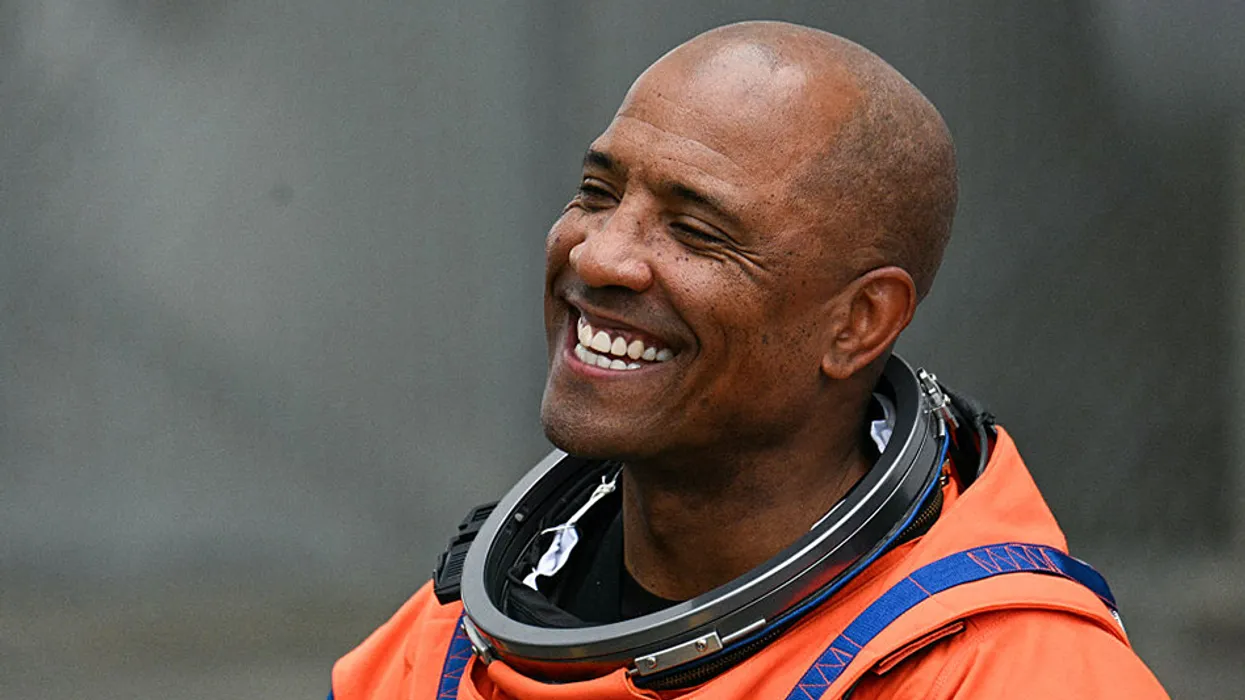
NASA’s Artemis II pilot found time to speak about Christ and Christianity before circumnavigating the moon on Monday.
Before Victor Glover and his fellow crew members traversed the dark side of the moon, losing radio signal as they went out of Earth’s line of sight, Glover said he wanted to remind Earth-dwellers about one of the “most important mysteries” in the world.
‘We love you from the moon.’
In a message to NASA’s mission control, with the radio transmission broadcasted live, Glover revealed he was talking about “love.”
“Christ said in response to ‘what was the greatest command’ that it was to love God with all that you are. And he, also being a great teacher, said the second is equal to it, and that is to love your neighbor as yourself,” Glover stated.
He concluded the transmission, marked at 6:44 p.m. ET, by saying, “And so as we prepare to go out of radio communication, we’re still going to feel your love from Earth. And to all of you down there on Earth and around Earth: We love you from the moon.”
After a pause, mission control responded: “Houston copies. We’ll see you on the other side.”
“We will see you on the other side,” Glover affirmed.
RELATED: NASA astronaut gives very American response to DEI questioning
According to NASA’s log, the crew had just witnessed an “Earthset” three minutes earlier, the moment Earth drops below the lunar horizon.
This marked the beginning of about 40 minutes of darkness as the astronauts traveled behind the moon, which blocks the radio signals from NASA’s network.
The Artemis II crew reached 252,756 miles beyond our planet 18 minutes later, at 7:02 p.m., at a new human record for the maximum distance attained from Earth.
By 8:35 p.m., the crew entered a solar eclipse that lasted about an hour, before beginning their trip back home.
Glover has been full of memorable and insightful quotes throughout the mission, including the remarks he made before Easter. Glover spoke on video alongside his crew members about “the beauty of creation” over the weekend, saying that from his perspective, he could see Earth as one whole, and it reminded him of Scripture.
“When I read the Bible and I look at all of the amazing things that were done for us who were created … you have this amazing place — this spaceship. You guys are talking to us because we’re in a spaceship really far from Earth. But you’re on a spaceship called Earth that was created to give us a place to live in the universe — in the cosmos,” Glover explained.
Astonishingly, without having prepared remarks, Glover delivered an extemporaneous motivational speech to all those listening.
“Maybe the distance we are from you makes you think what we’re doing is special, but we’re the same distance from you. And I’m trying to tell you — just trust me: You are special. In all of this emptiness — this is a whole bunch of nothing, this thing we call the universe — you have this oasis, this beautiful place that we get to exist together.”
Like Blaze News? Bypass the censors, sign up for our newsletters, and get stories like this direct to your inbox. Sign up here!
UConn star Tarris Reed praises Jesus ahead of national championship: ‘He changed everything about me’

University of Connecticut star Tarris Reed Jr. spoke beautifully about Easter, the Resurrection, and how Jesus has affected him following the March Madness semifinals on Saturday.
Reed took the podium following a 71-62 win over Illinois, which sent UConn to the national championship against Michigan, his former team, on Monday night.
‘He changed everything about me.’
Surprisingly, a reporter in Indianapolis brought up Easter weekend during Reed’s press conference, asking the 22-year-old what the Resurrection means to him.
Praise and proof
With a smile on his face, Reed rubbed his chin and said, “That’s a great question.”
“The resurrection is really everything,” he began. “That’s like, the staple of Christianity. So like, without the Resurrection, there is no Christian [faith], there is no Jesus.”
Reed then went into details that are rarely heard in the sports world, which may signal a continued shift into faith being proclaimed by high-level athletes.
“I feel like once you can show a lot of significant evidence for the Resurrection, I mean, it shows a lot of proof towards Christianity. So I feel like just to go through, where I came from throughout my college career … Jesus just literally changed my mind.”
RELATED: Olympic Committee adopts new policy on ‘trans’ athletes
Bible based
Before the national tournament, Reed said he has been drawing inspiration from his Christianity, saying he reads the Bible every morning. When his confidence has been low, he has turned to God and been “strong” in his faith.
It was then that Reed began telling reporters that his belief in Jesus has changed him completely.
“He changed everything about me,” Reed said on Saturday night. “It’s crazy looking back; like I saw my old team Michigan the other day and spoke to a couple of those guys. We [have] just seen each other just grow so much and just change. So it’s just been a blessing just to see myself just, like I said, grow through Jesus. I mean He just, like I said, wiped my eyes clean.”
While there aren’t as many instances, Reed had spoken about being a Christian during his time at Michigan, but he admitted recently he did not read the Bible when he played there.
Interestingly enough though, he cited similar reasoning for turning to his faith in 2023 with the Wolverines.
“When things are crumbling down, I know that I have faith in Jesus Christ. He’s going to produce and carry me through the storm,” he said at the time.
RELATED: Jason Whitlock: The NCAA tournament has a Bruce Pearl problem
 Patrick Smith/Getty Images
Walking of faith
Ahead of the tournament final, the 6’11” center says he has completely changed due to his faith, right down to the way he walks.
“My whole mind is different. The way I talk, walk, act changed. The way I treat other people. It’s like more not to get, but more to serve. You know, I feel like I’m here to really serve and serve others.”
UConn plays Michigan Monday night at 8:50 p.m. ET for the national championship.
Like Blaze News? Bypass the censors, sign up for our newsletters, and get stories like this direct to your inbox. Sign up here!
8 arguments that the Resurrection really happened
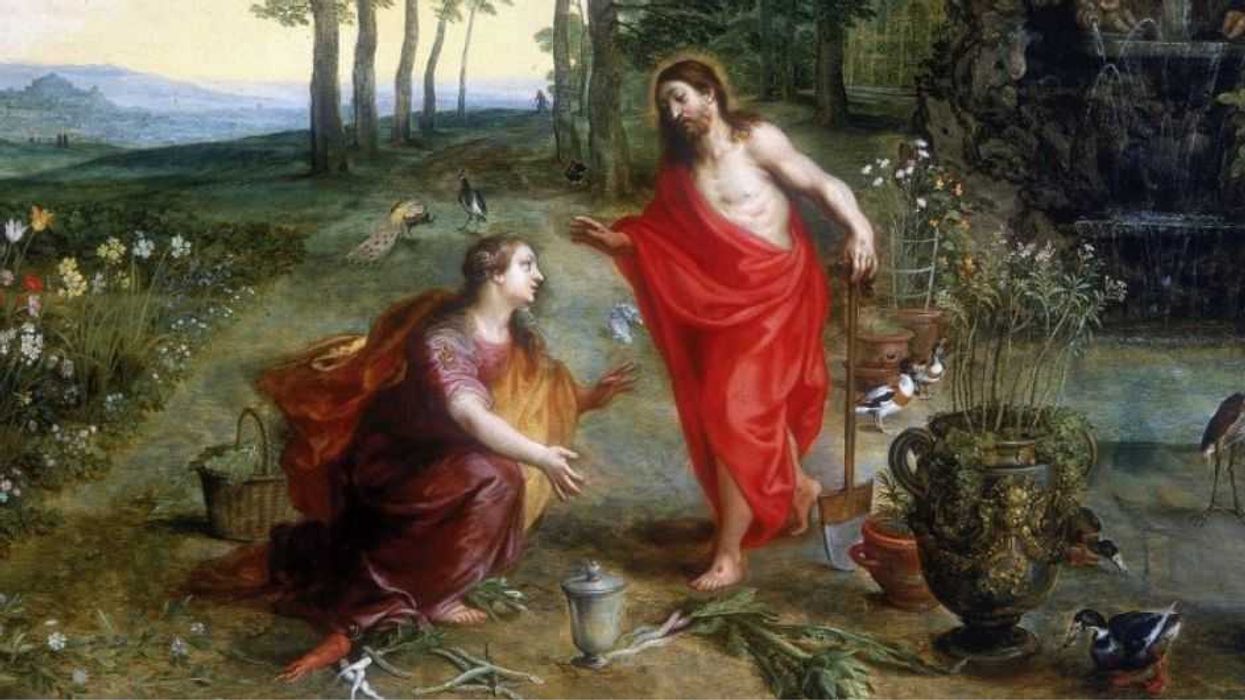
If you had to summarize what Christians believe in as few words as possible, you could do worse than “He is risen.”
In fact, the resurrection is so central to the faith that believers and nonbelievers alike often lose sight of it. In arguing over what Jesus said and what he meant by it and whether or not his moral prescriptions make sense in our “enlightened” 21st century, it’s easy to skip over the one simple, historical question at the heart of it all.
Even ex-evangelists like Ehrman accept that Paul genuinely believed he had an encounter with the risen Jesus.
Did the first-century Jewish leader known as Jesus of Nazareth, executed by Roman authorities in Judea circa A.D. 33, come back from the dead?
If he didn’t, Christianity is nothing more than a nice set of lessons and aphorisms. If he did, well, even the staunchest anti-Christian has some explaining to do.
He is risen. It’s such an embarrassingly outlandish claim, and so obscured by the mists of time, that it is easy to see why even some Christians are tempted to hedge and say it’s a metaphor.
But when you look at the evidence, the “it’s just a story” line gets harder to maintain.
Here are eight reasons why. Have a blessed Easter.
1. The tomb really was empty
If Jesus’ body were still in the grave, Christianity ends before it begins. The movement started in Jerusalem, within weeks of the crucifixion, under hostile scrutiny. Had the authorities been able to produce a body, they certainly would have.
Even the non-Christian historian Michael Grant acknowledged that historians, applying normal standards, cannot simply dismiss the empty tomb. The earliest counterclaim (first reported in the Gospel of Matthew) — that the disciples stole the body — concedes the point: The tomb was empty.
2. The first witnesses were the least credible
All four Gospels agree on an awkward detail: Women discovered the empty tomb first.
As even skeptical scholar Bart D. Ehrman has pointed out, this is not the kind of detail early Christians would be likely to invent in a culture where female testimony carried less weight. If you’re crafting a persuasive story, you don’t start here.
3. The disciples’ behavior doesn’t make sense otherwise
Before the Resurrection, Jesus’ followers were scattered, afraid, and in hiding. Afterward, they were publicly proclaiming that he had risen — at real personal cost, knowing it could mean persecution or even martyrdom.
New Testament scholar E.P. Sanders — hardly anyone’s idea of a biblical fundamentalist — wrote: “That Jesus’ followers (and later Paul) had resurrection experiences is, in my judgment, a fact. What the reality was that gave rise to the experiences I do not know.”
4. The earliest testimony is too early to be legend
In 1 Corinthians 15, Paul presents a creedal formula about Jesus’ death and Resurrection that predates the Gospels:
For what I received I passed on to you as of first importance: that Christ died for our sins according to the Scriptures, that he was buried, that he was raised on the third day according to the Scriptures, and that he appeared to Cephas, and then to the Twelve (1 Corinthians 15:3-5, NIV).
New Testament scholar James D.G. Dunn dates this material to within just a few years of the crucifixion. That’s far too early for legend to develop, with no time for stories to evolve, circulate, and displace living eyewitnesses who could correct them.
5. There are multiple, overlapping eyewitness claims
We don’t just have one Resurrection story. We have multiple early accounts and traditions, including the four detailed narratives presented by the Gospels.
According to Richard Bauckham, the Gospels are best understood as closely tied to eyewitness testimony. Why? Because they read like accounts anchored to real people — named witnesses, stable core details, and traditions formed while eyewitnesses were still alive to check them.
6. Skeptics and enemies didn’t stay that way
Two of the most important early Christians weren’t early believers at all: James and Paul the apostle.
Even ex-evangelists like Ehrman accept that Paul genuinely believed he had an encounter with the risen Jesus. You can argue about what it was, but not that it didn’t happen.
7. It spread fast, in the place where it could most easily be disproved
Christianity didn’t grow slowly as a tale imported from some distant region. It took off in Jerusalem, the very place where Jesus had been publicly executed and buried — and the place where its radical claims could most readily be checked, challenged, and shut down.
New Testament scholar Larry Hurtado has shown how rapidly early devotion to the risen, divine Jesus emerged — far earlier than standard models of religious evolution would predict.
8. The “pagan copycat” theory falls apart under scrutiny
It’s common to argue that Christianity borrowed the resurrection from pagan myths — usually that of Mithras, deity of a Greco-Roman mystery cult.
But the parallels don’t hold. The confusion comes from the fact that Mithraic imagery includes themes of cosmic renewal and salvation tied to the famous bull-slaying scene — language that can sound, at a distance, like death and rebirth. In the actual myth, however, Mithras does not die and return to life; rather, killing the sacred bull creates new life and order. He is a conquering figure, not a dying and rising savior.
Scholar of religion Tryggve N.D. Mettinger — himself no Christian apologist — concluded that while some ancient myths involve dying and rising figures, none match the Jewish, historical, bodily resurrection claim of Christianity.





