

Category: Artificial intelligence
The divisive issue that could decide the midterms now has $200 million on the line
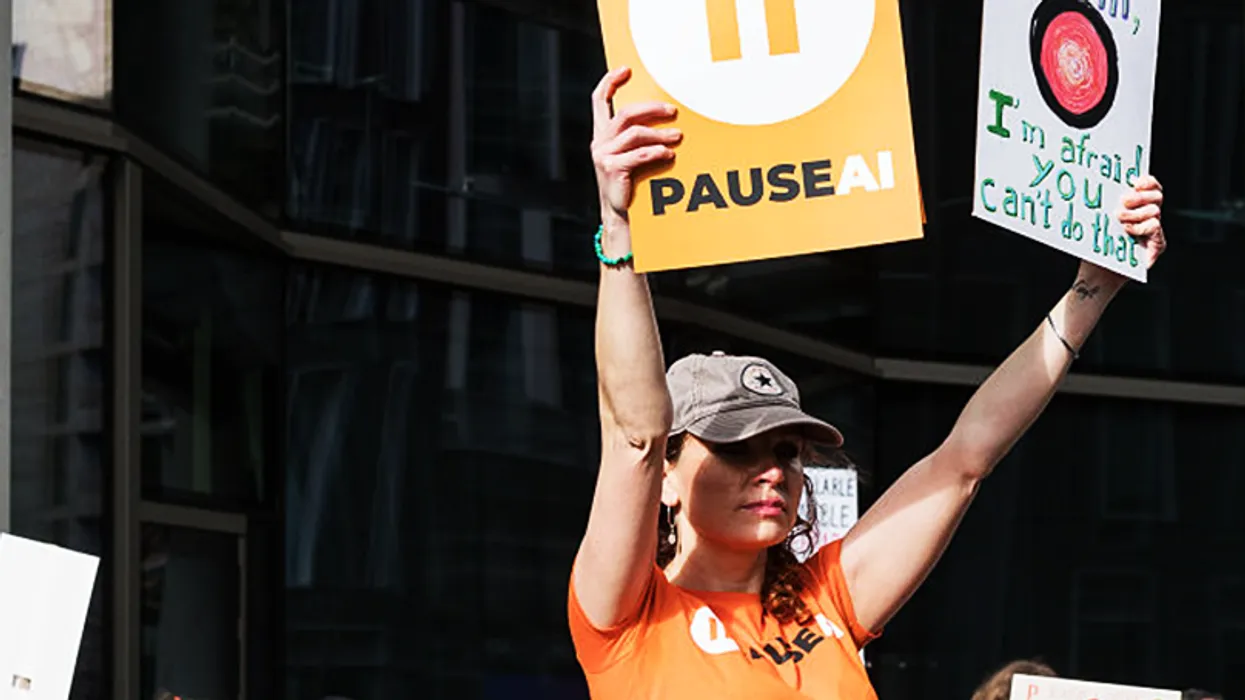
A bet on artificial intelligence is driving a nine-figure investment in the political world ahead of the midterms.
With millions of dollars on hand, one super PAC insistent on pushing artificial intelligence is injecting cash into political campaigns across the country.
‘About half of Americans are more concerned than excited about the increased use of AI in daily life.’
With the help of some generous venture capitalists, super PAC Leading the Future was just announced to have surpassed $140 million in just about a year and a half.
The latest donations have added to the $125 million raised in 2025.
Leading the Future — which says it is focused on “advancing a positive, forward-looking agenda for AI innovation in Washington, D.C.” — has been willing to pump money into candidates from either party and has done so in states like Illinois, New York, and Texas.
Business Insider reports that the PAC generally pushes candidates who show broad support of AI and tech innovation, while keeping regulations light.
This included $1.4 million to Texas Republican candidates across four districts: Tom Sell, Jace Yarbrough, Jessica Steinmann, and Chris Gober.
For Democrats, $1.1 million was reportedly provided to former Rep. Melissa Bean, with $1.4 million going to Jesse Jackson Jr., both in Illinois.
The PAC is also supporting Democrat Alex Bores’ run to replace Rep. Jerry Nadler (D) in New York, according to NOTUS.
RELATED: Catastrophic new iPhone threat leaked to hackers — are you safe?
 Mark Felix/AFP/Getty Images
The jury is still out in terms of support from the general public on AI overall, with skepticism and lack of acceptance still floating around 50/50.
Pew polling from 2025 showed that about half of Americans are more concerned than excited about the increased use of AI in daily life. About half of respondents also said AI will worsen the ability to think creatively and form meaningful relationships.
The data also had Republicans and Democrats split on their concern. Half of respondents from both parties said they were more concerned than excited about the increased use of AI.
About 10% from both parties said they were more excited than concerned.
Favorability floats around 50% in 2026 polling from Data for Progress. It is most favored by black people (61%), those under 45 (61%), and men (57%). At the same time, it is mostly unfavorable with women (51%) and those over 45 (52%).
RELATED: Video: Why is a Chinese robot chasing wild boars in Poland?
 Roberto Salomone/Bloomberg/Getty Images
Public skepticism may be the biggest hurdle for the super PAC to overcome, but it is also facing opposition money.
Another network called Public First is pledging $50 million to candidates who support regulation, in either party, in 2026.
Public First positions itself as representing American voters who have concerns about “the impacts of AI on kids, workers, consumers, and the American economy.”
Like Blaze News? Bypass the censors, sign up for our newsletters, and get stories like this direct to your inbox. Sign up here!
The top 5 dangers of UBI

Social media is rife with warnings that AI will take everyone’s jobs within the next one to five years. If true, mass unemployment will become a mainstay of modern life, sparking questions as to how civilization as we know it will survive. The big-brained elite think they have a solution through universal basic income — with some optimists like Elon Musk claiming that high basic income is the wave of the future — but this idealistic concept poses several dangers severe enough that they could dismantle America and bring about the end of the world.
1. The death of capitalism
Let’s get this one out of the way first: UBI is a gateway to socialism. In a world where the people earn nothing and everything of value is handed down from on high, the capitalist system that made this country great ceases to exist.
Forced dependence, by any other name, is a form of slavery.
Without a consistent job or a way to earn a steady salary, the people must become dependent on the elite who control the money and dole it out at their discretion. Who exactly is expected to do this honestly and fairly? The government has shown itself to be an unreliable steward, especially on the left as the pursuit of equity ensures some groups — like white, straight men — are intentionally marginalized in favor of minority groups. Private companies don’t seem like good benefactors either, as many of them are currently firing employees in favor of AI, simply to keep more money for themselves.
Even if the UBI rollout magically goes off without a hitch, capitalism stands to face another hurdle. People are less likely to buy products and services when they live on a basic fixed income. In a study conducted in 2024, UBI recipients were most likely to spend UBI on necessities, like food and transportation, while withholding their dollars from what can be seen as more frivolous expenses that drive the American economy.
2. Financial inequity
The left’s disdain for wealthy Americans is well-known, with politicians regularly calling for the rich to “pay their fair share,” because why should you keep your money when the government can have it instead? Right now, the left tries to confiscate as much of the people’s earnings as possible through taxes — like California’s outrageous wealth tax — and if given the chance, they’d gladly redistribute those funds to groups that didn’t earn it.
RELATED: Why doesn’t money make you happy?
 MicrovOne/Getty Images
Universal basic income would install a fast lane to the left’s unofficial wealth redistribution program. Once in power, they would get to decide which groups receive UBI, as well as the amounts that are distributed. In a left-leaning world, that could mean minority groups get more basic income while “privileged” groups receive less, finally giving them the power to push the “equity” they’ve chased since the Biden administration.
3. The end of the American dream
While Elon Musk’s “high basic income” is a novel idea, the reality of a socialist system means that most of us will get a meager allowance while the elite keep the lion’s share for themselves. In doing so, this will create a larger divide between the upper class and lower class. At the same time, the middle class who can’t work, can’t earn money, and can’t get a leg up will also fall into the lower-class bracket.
Under UBI, the middle class will be hollowed out, permanently relegating the majority of Americans to poverty. Even worse, this new system will ensure that no one can escape the lower class simply because they don’t have a way to earn more money than the elites are willing to give. Job scarcity and financial dependence will keep the poor in check, and the American dream will cease to exist.
4. Freedom isn’t free
Our forefathers promised the people life, liberty, and the pursuit of happiness. They made a social contract, one that still stands to this day. But if the jobs go away, UBI is instated, and the people must depend on someone else for their next paycheck, the Declaration of Independence loses its power.
Simply put, the people can’t be free if we’re forced to depend on politicians, benefactors, or elitists to provide our way of life. Forced dependence, by any other name, is a form of slavery. Universal basic income gives the elite the power to take our rights and render our founding documents null and void.
5. One step closer to the end times
Last but not least, UBI is one of the final levers required to spread the mark of the beast, the precursor to the end times.
In the New International Version of the Bible, Revelation 13:16-17 says: “It also forced all people, great and small, rich and poor, free and slave, to receive a mark on their right hands or on their foreheads, so that they could not buy or sell unless they had the mark, which is the name of the beast or the number of its name.”
This doesn’t just mean you can’t buy or sell products unless someone says so. It also means you would need the mark to receive UBI payments.
To put it bluntly, it’s easier to force the people to sell their souls when their means to work, earn money, and be free are all taken away. Even if UBI isn’t the mark itself, it’s a Trojan horse that will usher in top-down control that can be exploited by the most evil forces our world has ever known. It’s exactly what the devil wants and needs before the book of Revelation comes to pass.
Is universal basic income inevitable?
In a word, no, not yet. The things above can only happen if the two things below about the ongoing AI race are true:
- AI will be effective enough to fully replace human jobs, a feat that’s proving difficult with continuous hallucinations, mistakes, and more.
- AI will have the power to produce endless mountains of cash. There can only be enough basic income for everybody — even in small amounts — if AI can print infinite money.
Assuming these are true, more roadblocks stand in the way of an AI-controlled economy.
A crippled economy
Businesses are currently run by people who buy products and services from other human-led companies. Some businesses sell products to each other (B2B), while other businesses sell straight to consumers (B2C). This cycle is the beating heart of capitalism.
If companies are suddenly all run by the same AI platforms, they’ll no longer need to buy digital services from each other to get work done. They can simply use AI to build custom versions for their own companies at little or no extra cost, thus cutting out third-party vendors and partners, which will ultimately make some companies obsolete. In fact, this loophole has the power to take down the entire digital B2B market.
On the commerce side, consumers face a different problem. They can’t use AI to manufacture physical products for themselves — like iPhones, PCs, and game consoles — but under the universal basic income strategy, they are more likely to hold their money for necessary purchases than to spend it like they do today. This monumental shift in spending habits could also cripple companies and the market, or at the very least, it could stifle year-over-year growth.
In short, universal basic income, ushered in by the revolution of AI, would be a huge disaster for American workers, the American economy, and the American dream. All of it is in jeopardy unless the government passes regulations that prevent mass job loss. Luckily, after kneecapping the states’ ability to regulate AI via executive order, the federal government is finally stepping up by introducing the National AI Legislative Framework and the Trump America AI Act. More on that soon.
Sam Altman described as ‘sociopath’ by board member in brutal insider report: ‘He’s unconstrained by truth’
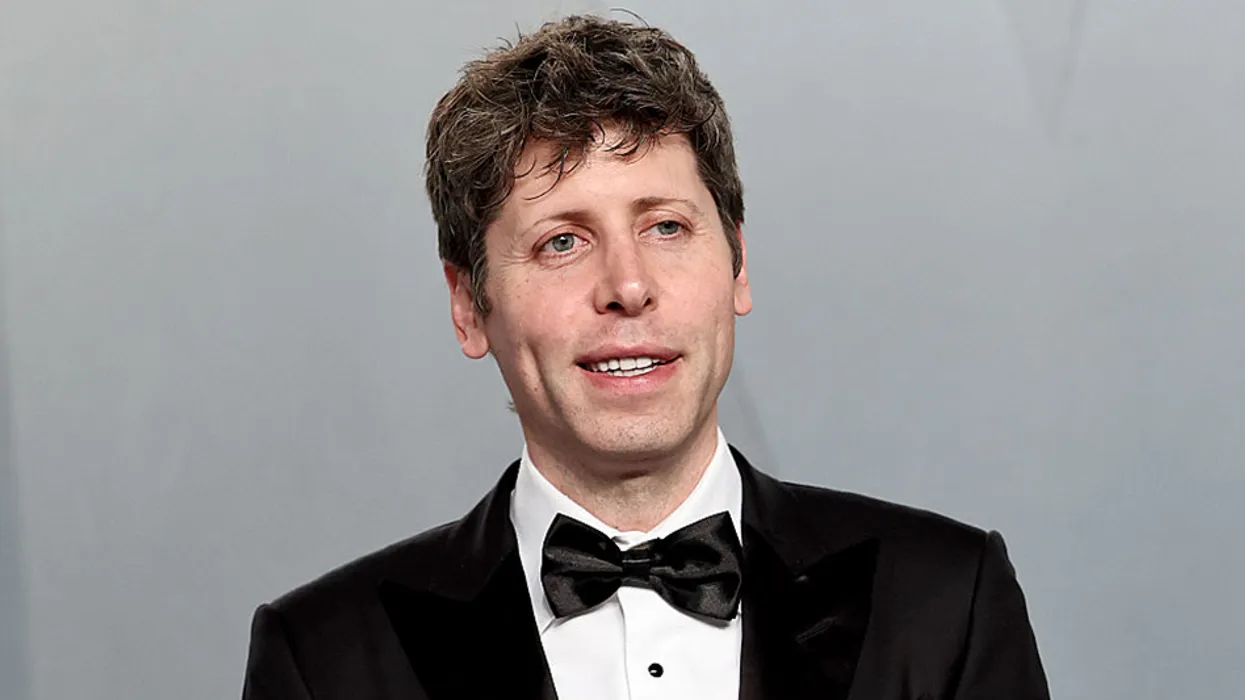
OpenAI CEO Sam Altman was dragged through the mud in a new in-depth report that features former colleagues and current board members referring to him as sociopath and a liar.
Altman, 40, has yet to respond to claims made in a recent report, some of which were uncovered in secret memos to OpenAI’s board members.
‘He is a sociopath. He would do anything.’
According to the New Yorker, OpenAI’s chief scientist, Ilya Sutskever, sent the memos to three other board members in 2023. One of the memos about Altman began with a list titled “Sam exhibits a consistent pattern of.” The first item on the list was “lying.”
The memos also alleged that Altman misrepresented facts to executives and board members while deceiving them about safety protocols. Unfortunately for Altman, the claims did not stop there.
“He’s unconstrained by truth,” a board member told the New Yorker. “He has two traits that are almost never seen in the same person. The first is a strong desire to please people, to be liked in any given interaction. The second is almost a sociopathic lack of concern for the consequences that may come from deceiving someone.”
The outlet said that the unnamed board member was not the only person to describe Altman as “sociopathic” without being prompted. Not long before his 2013 suicide, according to the New Yorker, coder Aaron Swartz warned at least one friend about Altman, whom Swartz had known from their time together at Y Combinator. His warning: “You need to understand that Sam can never be trusted. He is a sociopath. He would do anything.”
Sutskever additionally implied that he did not think Altman should have power over others, saying, “I don’t think Sam is the guy who should have his finger on the button.”
Others described him as more ambitious than anything else.
RELATED: Sam Altman tells BlackRock he wants AI on a meter ‘like electricity or water’
Former OpenAI board member Sue Yoon said Altman was “not this Machiavellian villain” but was able to convince himself of his own sales pitches.
“He’s too caught up in his own self-belief,” she reportedly said. “So he does things that, if you live in the real world, make no sense. But he doesn’t live in the real world.”
Other anonymous colleagues cited by the New Yorker said that Sutskever and similar detractors were simply aspiring to take Altman’s throne. Still, even many neutral comments did not help Altman’s portrayal in the report.
“He’s unbelievably persuasive. Like, Jedi mind tricks,” a tech executive colleague of Altman’s reportedly said. “He’s just next-level.”
At the same time, OpenAI is allegedly in the midst of unleashing superintelligence that Altman himself says will be so disruptive that it will require a new social contract.
RELATED: Sexting with chatbots is too far, OpenAI decides
 Anna Moneymaker/Getty Images
Altman told Axios that there would be widespread job loss and a threat of cyberattacks coupled with social unrest.
“I suspect in the next year,” he said, “we will see significant threats we have to mitigate from cyber.”
Altman proposed a new deal with citizens that includes a public wealth fund, taxes on “automated labor,” a 32-hour workweek, and the “right to AI.”
That confirms previous reports that Altman wanted to put AI on a meter like electricity or water, to both democratize its usage and limit the possibility of overburdening the electrical grid.
OpenAI did not respond to Return’s request for comment about the claims made about Altman and who they were coming from.
Like Blaze News? Bypass the censors, sign up for our newsletters, and get stories like this direct to your inbox. Sign up here!
States should work with AI, not against it
For decades, Americans have been conditioned to fear AI. From big-budget blockbusters portraying apocalyptic scenarios to TV shows and books that show AI in a negative light, AI has been shown negatively ever since HAL refused to open the bay doors.
This Hollywood-driven fear has affected real policy change on the state level. The problem is that many of these policies are overly restrictive and come from a place of fear rather than objectivity.
AI innovators should have one set of rules to follow nationwide, rather than being forced to tailor products and services according to a patchwork of laws.
They come from an understandable place, of course. AI has been known to hallucinate legal cases and run roughshod over privacy law, and it can be used in abusive and hurtful ways. It is imperative that humans remain involved in decision-making and implement strong safeguards against misuse. The White House recently called for such policies in the National AI Legislative Framework.
But the Trump administration has also recognized that regulations can be a hindrance.
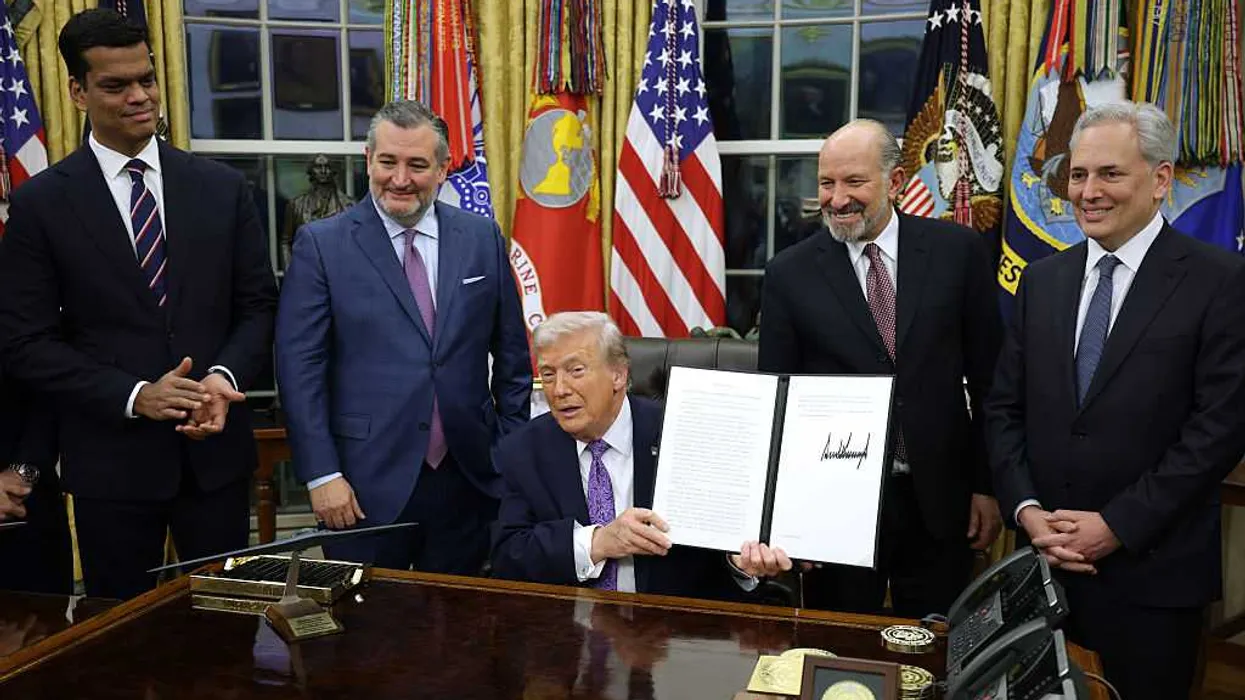
This is why President Trump issued an executive order to establish a federal framework for AI regulation last December. “My Administration must act with the Congress to ensure that there is a minimally burdensome national standard — not 50 discordant State ones,” he wrote in the order. “The resulting framework must forbid State laws that conflict with the policy set forth in this order. … A carefully crafted national framework can ensure that the United States wins the AI race, as we must.”
The order also directed the secretary of commerce to publish a report examining AI regulations from coast to coast. It will identify state AI laws the administration considers “onerous” to create a targeting map that will inform the priorities of the Justice Department’s AI Litigation Task Force.
Colorado — which is already in the administration’s crosshairs, according to the executive order — and other states whose laws make the list (such as California, New York, and Illinois) could lose significant federal dollars.
Although President Trump’s order targets states, cities aren’t in the clear. The DOJ recently created a new Enforcement and Affirmative Litigation Branch within the Civil Division that is tasked with “filing lawsuits against states, municipalities, and private entities that interfere with or obstruct federal policies,” underscoring the administration’s intent to challenge local laws that appear to violate the Supremacy Clause.
RELATED: California’s next dumb tech idea: Show your papers to scroll
 Samuel Boivin/NurPhoto/Getty Images
Centralizing AI oversight makes sense. Without a deep understanding of artificial intelligence and machine learning, city and state leaders can inadvertently hinder progress in the field of technology (such as restricting the use of aged, anonymized data for algorithm training).
Regardless of the federal funding at stake, city and state statutes governing AI should be reviewed for conflicts with federal policy, which is being carefully designed to allow growth across industries where, today, progress is often powered by AI.
For the good of America’s economic engine, AI innovators should have one set of rules to follow nationwide, rather than being forced to tailor products and services according to a patchwork of laws.
The future is here, and we should not be afraid of it. AI is a powerful driver for progress in business, science, medicine, and a variety of other fields. Efficiency, accuracy, productivity, creativity, and analysis are magnified and elevated by this technology.
Cities and states should seek to harness this tool and use it for their people. The way forward is smart, federally driven guardrails that allow innovation to flourish, not a giant stop sign.
AI needs so much computing power, it’s being taken away from gamers

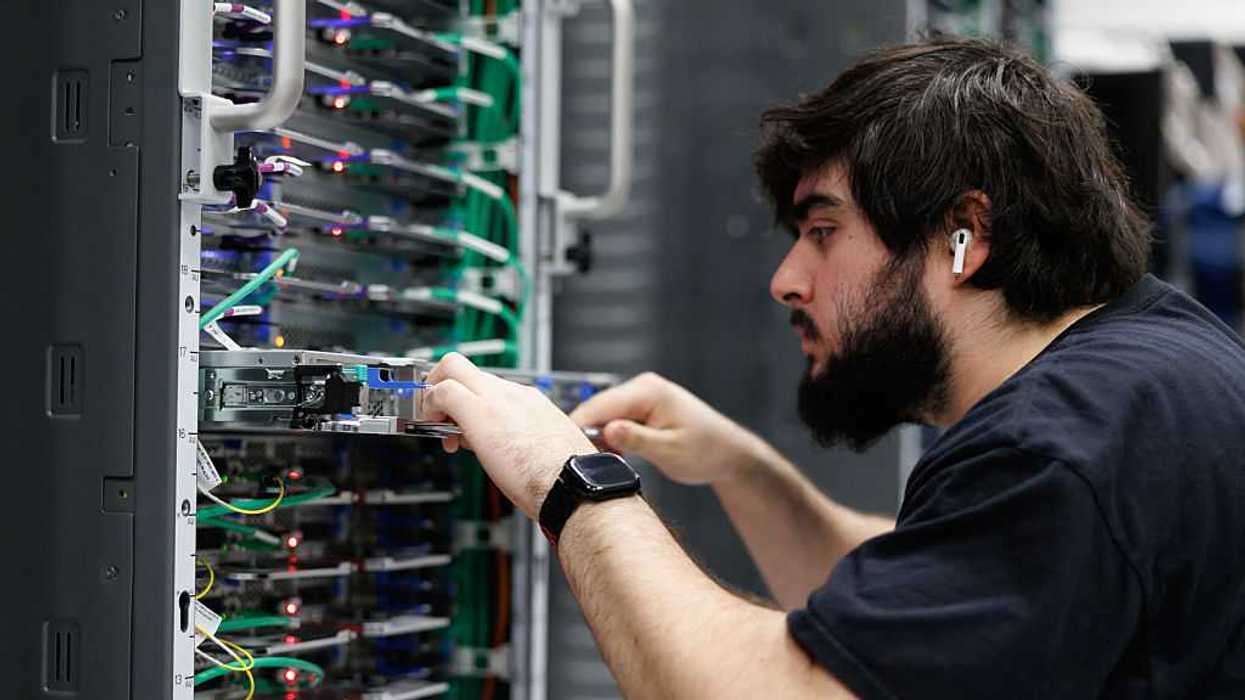
AI is completely decimating computer component supply chains, causing mass RAM shortages and increasing prices for new products. While most premium consumer electronics are feeling the heat from these constraints, the gaming industry is getting hit particularly hard. Along with new consoles from Valve’s Steam hardware division, Nvidia’s gaming GPU road map is floundering, and no reprieve is in sight.
Nvidia’s stunted GPU road map
Nvidia is one of the hottest companies on the planet right now, rising up the valuation charts to fifth place after spending years below the top 10. Most of this growth was driven by its GPUs tuned for AI, but although the company has taken a liking to its spot atop the AI hierarchy, its humble beginnings took root in the gaming industry.
Buy your new gear now. Right now. If you can find it.
Nvidia makes some of the best gaming GPUs money can buy, and its products are the gold standard that most game developers use when crafting their games. Unfortunately, gaming hardware just isn’t as lucrative as an entire roster of Big Tech giants willing to spend billions on the best gear to train their large language models.
RAM shortages have caused Nvidia to make a hard decision — keep printing money on the backs of Big Tech or pinch pennies with gamers who want the best graphics. It chose the former.
Latest reports revealed a bleak outlook for Nvidia’s gaming GPU lineup. The first red flag was when it skipped out on unveiling new GPUs at CES in January, a move that is very unlike Nvidia. We’ve since learned that the RTX 50 Super series refresh that was on the way is now delayed. Adding insult to injury, the next-generation RTX 60 series was pushed back even further, rolling to 2027 or maybe even 2028.
That means Nvidia’s gaming GPUs are virtually stuck in limbo, forcing gamers to purchase the same equipment that’s already a year old and aging quickly. Now, that doesn’t mean the 50 series is lacking in terms of performance; they’re still very capable cards. But it does mean that innovation in the industry will stall until Nvidia remembers that it used to be a gaming company before its ostentatious affair with AI.
Steam Machine delays
Valve, meanwhile, has been on a roll lately, with its first-ever handheld gaming computer, the Steam Deck, reaching critical acclaim among gamers everywhere. The launch went so well that Valve decided to take a second stab at a full TV console, once again dubbed Steam Machine.
 JianGang Wang/Getty Images
The device is said to be a PC/console hybrid powered by SteamOS, Valve’s Linux-based gaming platform that, in many ways, offers better gaming performance than Windows. Without a crystal ball, it’s impossible to predict whether the Steam Machine sequel will be received better than the original, but if the Steam Deck’s success is any indication, Valve could have a breakout hit on its hands.
The only problem is that the Steam Machine, which was set to release in the first half of 2026, has now been delayed, thanks to — you guessed it — RAM shortages. Some estimates suspect that the console will now arrive mid-year, but Valve hasn’t confirmed this timeline yet. The company has also refrained from announcing an official price, citing that fluctuating RAM costs could drive the final MSRP higher.
Making matters even worse, the Steam Deck has also curiously disappeared from shelves in recent weeks, sparking concerns over Valve’s entire console business.
OEMs fight back
Some OEMs are trying to find ways around the RAM shortages in order to keep their product road maps alive, but the results could be detrimental to their brands. PC manufacturers like Dell, ASUS, and HP are reportedly looking to lesser-known Chinese companies outside their usual supply chains to provide RAM for their laptops.
While this could cut down on RAM costs and boost availability, the memory from these Chinese suppliers are untested in name-brand computers at scale. That means performance could suffer, and it could even open these laptops to security risks.
What are gamers to do?
Needless to say, all of this puts gamers in a tough position. With new hardware delays, market scarcity, potential shoddy RAM options, and rising prices, it’s growing more difficult for gamers to upgrade their existing hardware or make repairs as old components start to break.
The worst part is that RAM shortages are expected to last into 2028. As they drag on, fewer products will be available, and prices on current hardware will jump to even more unreasonable levels. There’s just not enough supply to meet demand, and that could make it impossible for gamers to get the gear they need.
Now you have three options:
- Pray that your current rig holds out until the end of the decade when, hopefully, these issues are resolved.
- Try cloud gaming. It might be easier to rent a rig until this all gets sorted out. But in doing that, you own less of your gaming experience, leaving yourself open to the dictates of companies that could eventually require biometric authentication for access, as is the case with Discord’s new ID-enforced age restrictions.
- Buy your new gear now. Right now. If you can find it.
Why you should buy now, if you can
If you want a 50 series GPU or a brand-new Steam Deck, you might be out of luck. But if a gaming laptop is what you’re after, there’s hope.
Because Nvidia didn’t release new GPUs for 2026, most of the “new” gaming laptops launching this year are minor refreshes. Instead of waiting for these models to drop, last year’s models with the same GPUs are still available and ripe for the picking.
I took advantage of this loophole myself, snatching up a 2025 ROG Zephyrus G14 with a stellar 5070 Ti that was made with premium parts from a time before the RAM shortages. It’s the smarter option than springing for the marginally better 2026 version with an inflated price tag, internals from a third-rate Chinese supplier, and more than likely, a delayed release date. Given the way the market has shaken out, I couldn’t be happier with my decision.
Gamers have to choose what’s best for them, but one thing is clear: If you don’t buy new hardware now, you might be waiting until the turn of the decade for better upgrades to come along, and in the fast-paced world of video games, that’s a long time to wait indeed.
Dear Globalists, AI Won’t Defeat Christianity
This year’s meeting of liberal elites in Davos, Switzerland, was supposed to be banal. You can always tell when meetings…
Melania’s bold AI message to America’s youth: ‘Use AI as a tool, but do not let it replace your personal intelligence’

Appearing at the “Zoom Ahead: AI for Tomorrow’s Leaders” virtual event from the White House on Friday, Melania Trump addressed the rapid advancement of AI technology, highlighting both its current capabilities and the potential risks and opportunities it may present in the future.
Thanking Zoom founder Eric Yuan for hosting the event, the first lady praised the company’s leadership in the tech space and connected the discussion to what she described as her broader “mission.”
Mrs. Trump said AI has expanded access to creative tools in ways that were previously unimaginable, allowing young people to explore fields such as film, fashion, art, and music.
“Your support directly advances my mission to prepare America’s next generation to use AI to enhance their education and ultimately their careers,” Mrs. Trump said.
She told the audience they were “fortunate” to be living in what she repeatedly described as “the age of imagination,” a new era shaped by artificial intelligence.
“The age of imagination is a new era, powered by artificial intelligence, where one’s curiosity can be satisfied almost magically in seconds,” she said.
RELATED: AI isn’t killing writers — it’s killing mediocre writing
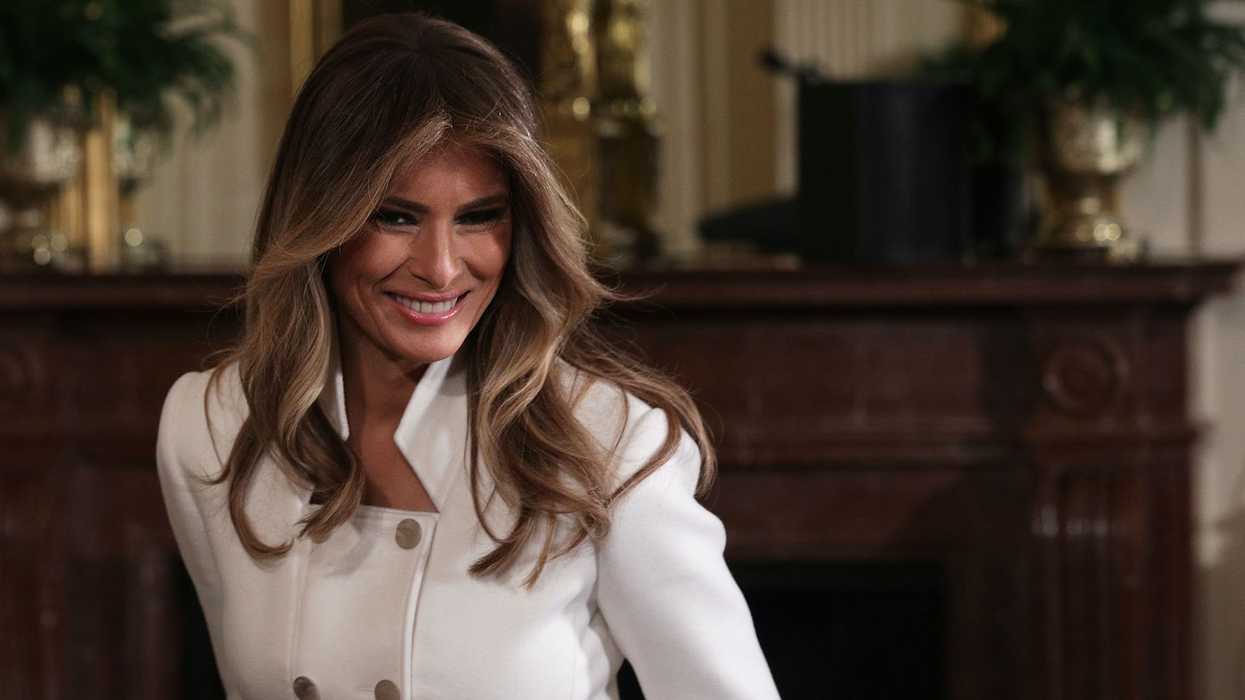 Photo by Alex Wong/Getty Images
Mrs. Trump said AI has expanded access to creative tools in ways that were previously unimaginable, allowing young people to explore fields such as film, fashion, art, and music from their own homes.
“For the first time in history, the young girl dreaming of becoming a fashion designer and the young boy who wants to stand up his school animated superhero series can do so from their own home,” Trump said.
She emphasized that curiosity has always been central to human progress, pointing to writers, scientists, architects, and artists who challenged unanswered questions and the status quo.
“Every giant at some point in time questions the status quo,” she said. “Their singular vision pushes humanity in a new direction.”
She noted, however, that the power of the technology actually lies in the human “imagination.”
“Artificial intelligence provides all the tools needed to implement your creative vision today,” she said.
“But what do you need to start? You need to harness your imagination.”
She encouraged students and creators to focus on developing the ability to ask meaningful questions and to think critically beyond the information AI can provide.
RELATED: Can artificial intelligence help us want better, not just more?
 Brooks Kraft/Getty Images
The first lady stressed that while AI can generate content, it cannot replace human purpose.
“Although artificial intelligence can generate images and information, only humans can generate meaning and purpose,” she said.
She concluded by urging the audience to treat AI as a tool rather than a shortcut, encouraging intellectual honesty and personal responsibility in how the technology is used.
“Use AI as a tool, but do not let it replace your personal intelligence,” Mrs. Trump said.
Like Blaze News? Bypass the censors, sign up for our newsletters, and get stories like this direct to your inbox. Sign up here!
Melania’s bold AI message to America’s youth: ‘Use AI as a tool, but do not let it replace your personal intelligence’
Appearing at the “Zoom Ahead: AI for Tomorrow’s Leaders” virtual event from the White House on Friday, Melania Trump addressed the rapid advancement of AI technology, highlighting both its current capabilities and the potential risks and opportunities it may present in the future.
Thanking Zoom founder Eric Yuan for hosting the event, the first lady praised the company’s leadership in the tech space and connected the discussion to what she described as her broader “mission.”
Mrs. Trump said AI has expanded access to creative tools in ways that were previously unimaginable, allowing young people to explore fields such as film, fashion, art, and music.
“Your support directly advances my mission to prepare America’s next generation to use AI to enhance their education and ultimately their careers,” Mrs. Trump said.
She told the audience they were “fortunate” to be living in what she repeatedly described as “the age of imagination,” a new era shaped by artificial intelligence.
“The age of imagination is a new era, powered by artificial intelligence, where one’s curiosity can be satisfied almost magically in seconds,” she said.
RELATED: AI isn’t killing writers — it’s killing mediocre writing
Photo by Alex Wong/Getty Images
Mrs. Trump said AI has expanded access to creative tools in ways that were previously unimaginable, allowing young people to explore fields such as film, fashion, art, and music from their own homes.
“For the first time in history, the young girl dreaming of becoming a fashion designer and the young boy who wants to stand up his school animated superhero series can do so from their own home,” Trump said.
She emphasized that curiosity has always been central to human progress, pointing to writers, scientists, architects, and artists who challenged unanswered questions and the status quo.
“Every giant at some point in time questions the status quo,” she said. “Their singular vision pushes humanity in a new direction.”
She noted, however, that the power of the technology actually lies in the human “imagination.”
“Artificial intelligence provides all the tools needed to implement your creative vision today,” she said.
“But what do you need to start? You need to harness your imagination.”
She encouraged students and creators to focus on developing the ability to ask meaningful questions and to think critically beyond the information AI can provide.
RELATED: Can artificial intelligence help us want better, not just more?
Brooks Kraft/Getty Images
The first lady stressed that while AI can generate content, it cannot replace human purpose.
“Although artificial intelligence can generate images and information, only humans can generate meaning and purpose,” she said.
She concluded by urging the audience to treat AI as a tool rather than a shortcut, encouraging intellectual honesty and personal responsibility in how the technology is used.
“Use AI as a tool, but do not let it replace your personal intelligence,” Mrs. Trump said.
Like Blaze News? Bypass the censors, sign up for our newsletters, and get stories like this direct to your inbox. Sign up here!
Blame Everyone for Grok’s Perverted Porn Problem
Humanity has an unfortunate tendency toward perversion. Given a tool capable of mediocre goods and banal evils, we (as a…





