

Category: Faith
‘I wanted to thank God in public’: Fighting tears, Victor Glover gives legendary speech on return to Earth

NASA’s Victor Glover showed once again why he represents some of the best of what the United States has to offer.
After Glover and the Artemis II crew splashed down in the Pacific Ocean on Friday, the pilot almost broke down in tears while delivering his first remarks since returning to dry land.
‘It’s too big to just be in one body.’
The crew members were in Houston, Texas, following their successful lunar orbit when Glover was asked by Commander Reid Wiseman to give a few words. Glover, who has been revered for providing on-the-spot wisdom before and during the mission, was at first at a loss for words.
“I have not processed what we just did, and I’m afraid to start even trying,” Glover began.
Fighting back tears, he powered through.
“When this started on April 3, I wanted to thank God in public, and I want to thank God again,” he said, as he became visibly emotional. “Because even bigger than my challenge trying to describe what we went through, the gratitude of seeing what we saw, doing what we did, and being with who I was with — it’s too big to just be in one body.”
The audience at NASA’s Johnson Space Center erupted in applause as the pilot then thanked his wife and four daughters, whom he referred to as “those five beautiful cocoa-skinned ladies.”
RELATED: NASA astronaut gives very American response to DEI questioning
“I love you … all of you,” Glover continued. He then turned his attention to NASA staff and leadership.
While the leadership has changed since 2023, he remarked, “the qualities haven’t. And we are fortunate to be in this agency at this time together.”
Wiseman wasn’t short on wisdom, either. The crew leader fought back tears of his own when he had the microphone, mostly talking about the worry and anxiety the astronauts’ families had ahead of mission launch.
“This was not easy being 200,000+ miles away from home. Like, before you launch, it feels like it’s the greatest dream on Earth. And when you’re out there, you just want to get back to your families and your friends.”
Wiseman concluded by noting how special it is to be human and how grateful he feels to be on planet Earth.
 Danielle Villasana/Getty Images
Rep. Michael Cloud (R-Texas) took the podium soon after to thank the Artemis II crew on behalf of America. The congressman stated that the United States, as well as the world, “desperately needed this.”
Cloud said the mission reminded him of Psalm 8, affirming that “even as we look to the night sky and as we look at creation, and behold the stars and the moon, we begin to think about what is mankind from God’s perspective.”
The Artemis II crew reached a point 252,756 miles from Earth and set a new human record for the maximum distance away from the planet.
Artemis III is set for mid-2027, while Artemis IV is targeted for early 2028 and is expected to land humans on the moon.
Like Blaze News? Bypass the censors, sign up for our newsletters, and get stories like this direct to your inbox. Sign up here!
Chick-fil-A worker on why he didn’t keep $10K cash left in restroom: ‘That’s not what Jesus would’ve done’

Chick-fil-A employee Jaydon Cintron told WITN-TV he was taking his break on Good Friday morning when he found two white envelopes in the men’s restroom at the restaurant in Kinston, North Carolina. Kinston is about 90 minutes southeast of Raleigh.
“They were on the floor next to the toilet. My first thought was just like, … OK, no, this isn’t happening,” Cintron told WITN. “Something is wrong.”
‘Money is useless without character.’
But it was happening — and something most definitely was wrong for the person to whom the envelopes belonged.
Return to sender
You see, one envelope was labeled First Citizens Bank, and it contained $5,000; the other envelope was labeled Truist Bank, and it contained $4,333, the station said.
And how did Cintron react?
He told the station he simply picked up the envelopes and brought them to human resources.
A WITN reporter asked the 18-year-old why he didn’t keep the cash for himself.
Cintron replied to the station with the following: “That’s not what Jesus would’ve done. That’s not what God would’ve wanted.”
RELATED: The secret to Chick-fil-A’s success has nothing to do with chicken
‘True integrity’
Cintron added to WITN that his faith guides his thought process: “Money is useless without character.”
Kinston Police Chief Keith Goyette told the station that “a lot of people will unfortunately take that money and run with it. But kudos to that employee at Chick-fil-A. [He] definitely deserves an award.”
John McPhaul, owner of the Kinston Chick-fil-A, noted to WITN that Cintron embodies the restaurant’s principles: “True leadership, true integrity is doing the right thing when no one’s watching. And Jay did that in this case, and he should be commended for it.”
The station said the restaurant tried to search security video in an attempt to identify the owner of the money but had no luck.
However, Chief Goyette told WITN the owner of the money came forward Monday morning to claim the $9,333.
It’s own reward
Cintron revealed to the station that the owner of the money approached him and offered him a $500 reward for his good deed, but Cintron initially declined and told the man he expected no reward for what his faith told him was the right thing to do.
“I don’t want anything out of this,” Cintron told the station, adding, “I did this because that’s what Jesus would do.”
WITN noted that after declining the reward multiple times, the teenager finally accepted it — and numerous viewers agreed that Cintron deserves all the recognition he’s receiving.
Like Blaze News? Bypass the censors, sign up for our newsletters, and get stories like this direct to your inbox. Sign up here!
My son is fighting for his life. The FDA doesn’t seem to care.

I’ve been fighting Duchenne muscular dystrophy for 40 years. My brothers Angelo and Antonio died from it at ages 20 and 22, respectively. Antonio died in 2015, when my son, Ryu, was barely a toddler and had already been diagnosed with the same terminal illness.
My childhood memories are of praying for my brothers, caring for them with my mother, and Mom taking all five of her kids to church almost every day. I always asked God to heal my brothers, and — after Ryu was born — I added him to those prayers.
I’ve been saying the same prayer for help and to be able to lend my voice for over 40 years.
But I also went to God with another prayer — I asked that He would open the door that allowed me to share our family’s story. I didn’t know what that looked like, or when it would come, but I trusted in it.
This year, that prayer was answered when I was asked to speak out not just on behalf of my brothers and son, but for every family that feels isolated because of a terminal rare disease.
I visited Washington, D.C., to share my story with lawmakers from both parties as well as patient advocates and to ask them to push the Food and Drug Administration to stop standing in the way of drugs like Elevidys, the only gene therapy treatment for my son’s illness.
The advocacy worked. I can’t say how much my own small voice, speaking up for the first time, helped, but so many people speaking out made a difference.
The first indicator was when the Center for Biologics Evaluation and Research Director Dr. Vinay Prasad announced his resignation from the FDA just a week later — he leaves this month. Prasad blocked treatments, with the support of FDA Commissioner Marty Makary, that could have helped kids like Ryu all across the country to live.
RELATED: Trump is keeping his word on health care costs
 Anna Moneymaker/Getty Images
I’m just a mom. But we recently celebrated Easter, where a carpenter saved the world. He overcame the establishment of His time, which was willing to throw the vulnerable and sick to the side. He fell, but He didn’t falter — I hope to follow His example.
As we were approaching Holy Thursday this year, Ryu was having a hard evening. He needed his Bipap machine to help his lungs function, as he so often does. But he looked at me — my 14-year-old wheelchair-bound boy who is the happiest kid I know — and said, “Mom, this sucks. But what you’re doing makes it a lot easier.”
My story may not matter to FDA Commissioner Makary, who seems to have forgotten about Ryu and thousands of other kids like him. But God sees every hair on our heads. He named us before our parents knew us. And sometimes, like Gabriel told the prophet Daniel, prayers are answered long before we see their fruition.
I’ve been saying the same prayer for help and to be able to lend my voice for over 40 years. To the world, Antonio and Angelo may be long deceased, but they are the foundation for how my husband and I have cared for Ryu. And God has allowed me to carry their stories from my home in El Paso to our nation’s capital.
Commissioner Makary and Dr. Prasad may have forgotten that their job is to save lives, but God seems to have different plans. He’s just getting started with me in spreading His good news, and so far it has been amazing.
But I’m also not surprised, because I knew God would take care of it all.
Editor’s note: This article was originally published in the Christian Post.
NASA’s Victor Glover shares gospel as he circles dark side of the moon: ‘Love God with all that you are’
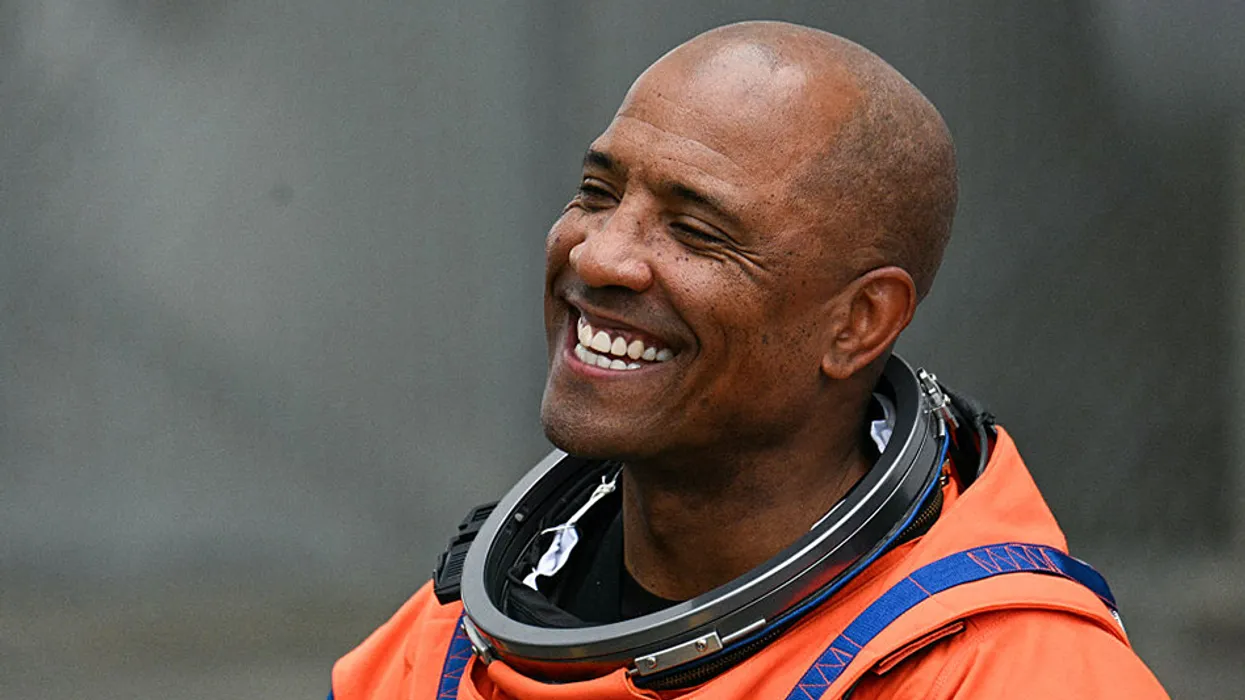
NASA’s Artemis II pilot found time to speak about Christ and Christianity before circumnavigating the moon on Monday.
Before Victor Glover and his fellow crew members traversed the dark side of the moon, losing radio signal as they went out of Earth’s line of sight, Glover said he wanted to remind Earth-dwellers about one of the “most important mysteries” in the world.
‘We love you from the moon.’
In a message to NASA’s mission control, with the radio transmission broadcasted live, Glover revealed he was talking about “love.”
“Christ said in response to ‘what was the greatest command’ that it was to love God with all that you are. And he, also being a great teacher, said the second is equal to it, and that is to love your neighbor as yourself,” Glover stated.
He concluded the transmission, marked at 6:44 p.m. ET, by saying, “And so as we prepare to go out of radio communication, we’re still going to feel your love from Earth. And to all of you down there on Earth and around Earth: We love you from the moon.”
After a pause, mission control responded: “Houston copies. We’ll see you on the other side.”
“We will see you on the other side,” Glover affirmed.
RELATED: NASA astronaut gives very American response to DEI questioning
According to NASA’s log, the crew had just witnessed an “Earthset” three minutes earlier, the moment Earth drops below the lunar horizon.
This marked the beginning of about 40 minutes of darkness as the astronauts traveled behind the moon, which blocks the radio signals from NASA’s network.
The Artemis II crew reached 252,756 miles beyond our planet 18 minutes later, at 7:02 p.m., at a new human record for the maximum distance attained from Earth.
By 8:35 p.m., the crew entered a solar eclipse that lasted about an hour, before beginning their trip back home.
Glover has been full of memorable and insightful quotes throughout the mission, including the remarks he made before Easter. Glover spoke on video alongside his crew members about “the beauty of creation” over the weekend, saying that from his perspective, he could see Earth as one whole, and it reminded him of Scripture.
“When I read the Bible and I look at all of the amazing things that were done for us who were created … you have this amazing place — this spaceship. You guys are talking to us because we’re in a spaceship really far from Earth. But you’re on a spaceship called Earth that was created to give us a place to live in the universe — in the cosmos,” Glover explained.
Astonishingly, without having prepared remarks, Glover delivered an extemporaneous motivational speech to all those listening.
“Maybe the distance we are from you makes you think what we’re doing is special, but we’re the same distance from you. And I’m trying to tell you — just trust me: You are special. In all of this emptiness — this is a whole bunch of nothing, this thing we call the universe — you have this oasis, this beautiful place that we get to exist together.”
Like Blaze News? Bypass the censors, sign up for our newsletters, and get stories like this direct to your inbox. Sign up here!
8 arguments that the Resurrection really happened

If you had to summarize what Christians believe in as few words as possible, you could do worse than “He is risen.”
In fact, the resurrection is so central to the faith that believers and nonbelievers alike often lose sight of it. In arguing over what Jesus said and what he meant by it and whether or not his moral prescriptions make sense in our “enlightened” 21st century, it’s easy to skip over the one simple, historical question at the heart of it all.
Even ex-evangelists like Ehrman accept that Paul genuinely believed he had an encounter with the risen Jesus.
Did the first-century Jewish leader known as Jesus of Nazareth, executed by Roman authorities in Judea circa A.D. 33, come back from the dead?
If he didn’t, Christianity is nothing more than a nice set of lessons and aphorisms. If he did, well, even the staunchest anti-Christian has some explaining to do.
He is risen. It’s such an embarrassingly outlandish claim, and so obscured by the mists of time, that it is easy to see why even some Christians are tempted to hedge and say it’s a metaphor.
But when you look at the evidence, the “it’s just a story” line gets harder to maintain.
Here are eight reasons why. Have a blessed Easter.
1. The tomb really was empty
If Jesus’ body were still in the grave, Christianity ends before it begins. The movement started in Jerusalem, within weeks of the crucifixion, under hostile scrutiny. Had the authorities been able to produce a body, they certainly would have.
Even the non-Christian historian Michael Grant acknowledged that historians, applying normal standards, cannot simply dismiss the empty tomb. The earliest counterclaim (first reported in the Gospel of Matthew) — that the disciples stole the body — concedes the point: The tomb was empty.
2. The first witnesses were the least credible
All four Gospels agree on an awkward detail: Women discovered the empty tomb first.
As even skeptical scholar Bart D. Ehrman has pointed out, this is not the kind of detail early Christians would be likely to invent in a culture where female testimony carried less weight. If you’re crafting a persuasive story, you don’t start here.
3. The disciples’ behavior doesn’t make sense otherwise
Before the Resurrection, Jesus’ followers were scattered, afraid, and in hiding. Afterward, they were publicly proclaiming that he had risen — at real personal cost, knowing it could mean persecution or even martyrdom.
New Testament scholar E.P. Sanders — hardly anyone’s idea of a biblical fundamentalist — wrote: “That Jesus’ followers (and later Paul) had resurrection experiences is, in my judgment, a fact. What the reality was that gave rise to the experiences I do not know.”
4. The earliest testimony is too early to be legend
In 1 Corinthians 15, Paul presents a creedal formula about Jesus’ death and Resurrection that predates the Gospels:
For what I received I passed on to you as of first importance: that Christ died for our sins according to the Scriptures, that he was buried, that he was raised on the third day according to the Scriptures, and that he appeared to Cephas, and then to the Twelve (1 Corinthians 15:3-5, NIV).
New Testament scholar James D.G. Dunn dates this material to within just a few years of the crucifixion. That’s far too early for legend to develop, with no time for stories to evolve, circulate, and displace living eyewitnesses who could correct them.
5. There are multiple, overlapping eyewitness claims
We don’t just have one Resurrection story. We have multiple early accounts and traditions, including the four detailed narratives presented by the Gospels.
According to Richard Bauckham, the Gospels are best understood as closely tied to eyewitness testimony. Why? Because they read like accounts anchored to real people — named witnesses, stable core details, and traditions formed while eyewitnesses were still alive to check them.
6. Skeptics and enemies didn’t stay that way
Two of the most important early Christians weren’t early believers at all: James and Paul the apostle.
Even ex-evangelists like Ehrman accept that Paul genuinely believed he had an encounter with the risen Jesus. You can argue about what it was, but not that it didn’t happen.
7. It spread fast, in the place where it could most easily be disproved
Christianity didn’t grow slowly as a tale imported from some distant region. It took off in Jerusalem, the very place where Jesus had been publicly executed and buried — and the place where its radical claims could most readily be checked, challenged, and shut down.
New Testament scholar Larry Hurtado has shown how rapidly early devotion to the risen, divine Jesus emerged — far earlier than standard models of religious evolution would predict.
8. The “pagan copycat” theory falls apart under scrutiny
It’s common to argue that Christianity borrowed the resurrection from pagan myths — usually that of Mithras, deity of a Greco-Roman mystery cult.
But the parallels don’t hold. The confusion comes from the fact that Mithraic imagery includes themes of cosmic renewal and salvation tied to the famous bull-slaying scene — language that can sound, at a distance, like death and rebirth. In the actual myth, however, Mithras does not die and return to life; rather, killing the sacred bull creates new life and order. He is a conquering figure, not a dying and rising savior.
Scholar of religion Tryggve N.D. Mettinger — himself no Christian apologist — concluded that while some ancient myths involve dying and rising figures, none match the Jewish, historical, bodily resurrection claim of Christianity.
The Virus in the Faculty Lounge
Many of our strongest voices have decried a new tribalism. They call out those who spurn the emphasis on merit…
Knifed for ‘being a Christian’? Suspect allegedly stabs man and his dog after asking about victim’s religion

A suspect allegedly stabbed a man and his dog Sunday in Washington state after the suspect asked the victim what religion he is, the Pierce County Sheriff’s Office said.
The 54-year-old male victim called 911 reporting that an unknown male stabbed him near the S S Quickstop Grocery in Parkland just before 6:30 a.m. and that the male fled southbound on Park Avenue S., officials said. Parkland is about 45 minutes south of Seattle.
‘This would actually be a hate crime based on religion.’
When deputies arrived, the victim was in serious condition and told deputies the unknown man had come up to him and asked what religion he was, officials said.
“The victim answered the man and said something about being a Christian, and the man then attacked and stabbed the victim and his dog,” officials added.
The victim provided a description of the suspect prior to being transported to a local hospital; the victim’s dog was also in serious condition and was transported to a local animal hospital and was taken into surgery immediately, officials said.
Deputies used a K-9 to search the area for more than two hours but were unable to locate the suspect, officials said.
At 8:40 a.m. while conducting an area check, a deputy saw the suspect in the 800 block of 112th St. S, and the suspect fled behind a nearby home, officials said.
Deputies followed the suspect and reported that shots had been fired at 8:47 a.m., officials said.
KOMO-TV reported that the sheriff’s office confirmed the suspect was dead and that multiple deputies shot the suspect.
The sheriff’s office added to KOMO that the suspect was armed with multiple knives, was resisting arrest, and approached deputies before shots were fired.
Detectives do not know the suspect’s identity or his connection, if any, to the area or the house he fled behind, KOMO added.
KING-TV said the stabbing victim, Eddie Nitschke, lives in the convenience store’s parking lot in a car with his girlfriend and two dogs.
Nitschke told KING he initially responded to the suspect that he wasn’t religious, but the suspect kept pushing the issue about what religion he was, after which Nitschke told the suspect, “I guess Christian.”
The suspect then accused Nitschke of pursuing him, KING added: “He said, ‘You’ve been looking for me for some time,’ and I said, ‘I don’t even know you.'”
KING said the suspect soon struck Nitschke multiple times with two knives and punctured his lung.
During the attack, Nitschke told his girlfriend to release their dog from the car, KING reported, adding that the dog attacked the suspect and was also stabbed.
“My shirt was drenched with blood,” Nitschke recounted to KING.
More from KING:
At the hospital, Nitschke discovered the suspect was being treated in an adjacent room. While being interviewed by police, he heard commotion next door.
“And then I’m sitting there and then I hear ‘Code red, code red’ and they wheeled the guy in right beside me in the next room,” Nitschke said.
After learning the suspect had died, Nitschke said he felt conflicted.
“When I found out that he died, I thought to myself, ‘Oh, he died.’ I felt bad, but then I thought, ‘He just stabbed me,’” he said.
Nitschke discharged himself from the hospital, KING said.
“They didn’t want to let me go,” he recalled to KING. “I just don’t want to be in the hospital. I wanted to find out about my dog.” It appears from KING’s video report that the dog is OK.
More than 500 comments have appeared under the sheriff’s office Facebook post about the incident. As you might imagine, some commenters didn’t take too kindly to the suspect’s actions apparently related to the victim reportedly telling him he’s a Christian.
- “I believe this would be on major news if he, the victim, wasn’t Christian,” one commenter wrote.
- “This would actually be a hate crime based on religion,” another user said. “Will it be prosecuted that way? Doubtful due to the religion being Christianity.”
- “It’s not a hate crime if the victim is Christian,” another user said with seeming sarcasm.
- “No protests?” another commenter wondered with tongue fully in cheek.
- “Another hate crime attack that the mainstream media will ignore since facts don’t support their agenda,” another user stated. “Libs will post laughing emojis since they are mentally ill and have twisted morals.”
Like Blaze News? Bypass the censors, sign up for our newsletters, and get stories like this direct to your inbox. Sign up here!
Knifed for ‘being a Christian’? Suspect allegedly stabs man and his dog after asking about victim’s religion
A suspect allegedly stabbed a man and his dog Sunday in Washington state after the suspect asked the victim what religion he is, the Pierce County Sheriff’s Office said.
The 54-year-old male victim called 911 reporting that an unknown male stabbed him near the S S Quickstop Grocery in Parkland just before 6:30 a.m. and that the male fled southbound on Park Avenue S., officials said. Parkland is about 45 minutes south of Seattle.
‘This would actually be a hate crime based on religion.’
When deputies arrived, the victim was in serious condition and told deputies the unknown man had come up to him and asked what religion he was, officials said.
“The victim answered the man and said something about being a Christian, and the man then attacked and stabbed the victim and his dog,” officials added.
The victim provided a description of the suspect prior to being transported to a local hospital; the victim’s dog was also in serious condition and was transported to a local animal hospital and was taken into surgery immediately, officials said.
Deputies used a K-9 to search the area for more than two hours but were unable to locate the suspect, officials said.
At 8:40 a.m. while conducting an area check, a deputy saw the suspect in the 800 block of 112th St. S, and the suspect fled behind a nearby home, officials said.
Deputies followed the suspect and reported that shots had been fired at 8:47 a.m., officials said.
KOMO-TV reported that the sheriff’s office confirmed the suspect was dead and that multiple deputies shot the suspect.
The sheriff’s office added to KOMO that the suspect was armed with multiple knives, was resisting arrest, and approached deputies before shots were fired.
Detectives do not know the suspect’s identity or his connection, if any, to the area or the house he fled behind, KOMO added.
KING-TV said the stabbing victim, Eddie Nitschke, lives in the convenience store’s parking lot in a car with his girlfriend and two dogs.
Nitschke told KING he initially responded to the suspect that he wasn’t religious, but the suspect kept pushing the issue about what religion he was, after which Nitschke told the suspect, “I guess Christian.”
The suspect then accused Nitschke of pursuing him, KING added: “He said, ‘You’ve been looking for me for some time,’ and I said, ‘I don’t even know you.'”
KING said the suspect soon struck Nitschke multiple times with two knives and punctured his lung.
During the attack, Nitschke told his girlfriend to release their dog from the car, KING reported, adding that the dog attacked the suspect and was also stabbed.
“My shirt was drenched with blood,” Nitschke recounted to KING.
More from KING:
At the hospital, Nitschke discovered the suspect was being treated in an adjacent room. While being interviewed by police, he heard commotion next door.
“And then I’m sitting there and then I hear ‘Code red, code red’ and they wheeled the guy in right beside me in the next room,” Nitschke said.
After learning the suspect had died, Nitschke said he felt conflicted.
“When I found out that he died, I thought to myself, ‘Oh, he died.’ I felt bad, but then I thought, ‘He just stabbed me,’” he said.
Nitschke discharged himself from the hospital, KING said.
“They didn’t want to let me go,” he recalled to KING. “I just don’t want to be in the hospital. I wanted to find out about my dog.” It appears from KING’s video report that the dog is OK.
More than 500 comments have appeared under the sheriff’s office Facebook post about the incident. As you might imagine, some commenters didn’t take too kindly to the suspect’s actions apparently related to the victim reportedly telling him he’s a Christian.
- “I believe this would be on major news if he, the victim, wasn’t Christian,” one commenter wrote.
- “This would actually be a hate crime based on religion,” another user said. “Will it be prosecuted that way? Doubtful due to the religion being Christianity.”
- “It’s not a hate crime if the victim is Christian,” another user said with seeming sarcasm.
- “No protests?” another commenter wondered with tongue fully in cheek.
- “Another hate crime attack that the mainstream media will ignore since facts don’t support their agenda,” another user stated. “Libs will post laughing emojis since they are mentally ill and have twisted morals.”
Like Blaze News? Bypass the censors, sign up for our newsletters, and get stories like this direct to your inbox. Sign up here!
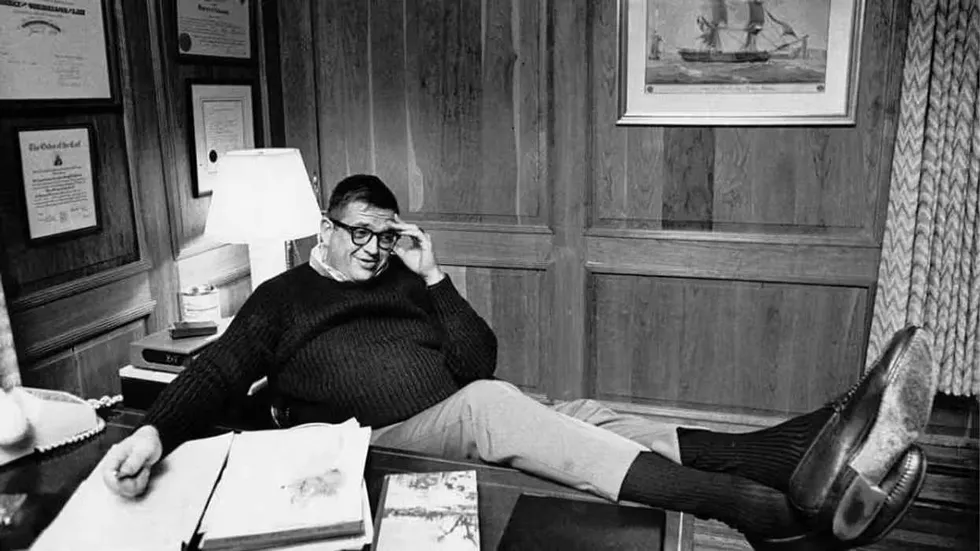
Malcolm Muggeridge: Fashionable idealist turned sage against the machine

“The depravity of man is at once the most empirically verifiable reality and the most intellectually resisted fact.”
The name of the man who made this pronouncement may not mean much to many readers now. Yet the world he warned about has arrived all the same, whether his name is remembered or not.
When Malcolm Muggeridge — a British journalist and broadcaster who became a public figure in his own right — died in 1990, many of his fears still felt abstract. The moral strain was visible, but the structure was holding. Progress was spoken of with confidence, and freedom still sounded uncomplicated.
‘I never knew what joy was until I gave up pursuing happiness.’
Today, those assumptions lie in pieces. What he distrusted has hardened into dogma. What he questioned has become unquestionable. We are living amid the consequences of ideas he spent a lifetime probing.
Theory meets reality
Muggeridge was never dazzled by modern promises. He distrusted grand schemes that claimed to perfect humanity while refusing to reckon with human nature. That suspicion wasn’t a pose; it was learned. As a young man, he flirted with communism, drawn in by its certainty and its language of justice. Then he went to Moscow. There, theory met reality.
What he encountered was not liberation but deprivation. Hunger was rationalized as hope. Cruelty came wrapped in benevolent language. Compassion was loudly proclaimed and quietly absent. The experience cured him of fashionable idealism for life. It also taught him something harder to accept: Evil often enters history announcing itself as virtue, and the most dangerous lies are told with complete sincerity.
That lesson stayed with him. In an age once again thick with certainty, that insight feels uncomfortably current.
Pills and permissiveness
Yet Muggeridge’s critique extended beyond politics. At heart, he believed the modern crisis was spiritual. God had become an embarrassment, sin a diagnosis, and responsibility something to be displaced by grievance. Pleasure, once understood as a byproduct of order, was recast as life’s purpose. The result, he argued, wasn’t freedom but loss.
This realism shaped his opposition to the sexual revolution. Long before its consequences were obvious, he warned that freedom severed from restraint wouldn’t liberate people so much as hollow them out. He mocked the belief that pills and permissiveness would deliver happiness. What he anticipated instead was loneliness, instability, and a culture increasingly medicated against its own dissatisfaction.
Muggeridge also understood the media with unsettling clarity. As a journalist and broadcaster, he watched newsrooms trade substance for spectacle and truth for approval. When entertainment becomes the highest aim, he warned, reality soon becomes optional.
By the end of his career, Muggeridge had dismantled nearly every modern promise. Fame proved thin. Desire disappointed. Professional success brought no lasting peace. Skepticism could clear the ground, but it could not explain why nothing worked.
A skeptic stands down
When after more than a decade of exploring Christianity, Muggeridge finally entered the Catholic Church in 1982, the reaction among his peers was disbelief bordering on embarrassment. This was not the impulse of a sentimental seeker but of one of Britain’s most famous skeptics — a man who had mocked piety, distrusted enthusiasm, and made a career of puncturing illusions.
Friends assumed it was a late-life affectation, a theatrical flourish from an aging contrarian. Muggeridge himself knew better. He had not converted because Christianity felt safe or consoling, but because, after a lifetime of alternatives, it was the only account of reality that still made sense.
As he had written years before in “Jesus Rediscovered,” “I never knew what joy was until I gave up pursuing happiness.”
That sentence captures the logic of his conversion. Muggeridge did not arrive at faith through nostalgia or temperament. Christianity did not flatter him. It named pride, lust, and cruelty plainly, then offered grace without euphemism. It explained the world he had already seen — and himself within it.
RELATED: Chuck Colson: Nixon loyalist who found hope in true obedience
 Washington Post/Getty Images
Truth endures
His Catholicism was not an escape from seriousness but its culmination. He believed human beings flourish within limits, not without them; that desire requires direction; that pleasure without purpose corrodes. Christianity endured, he argued, not because it was comforting but because it was true.
After his conversion, Muggeridge did not soften. He sharpened. The satire retained its bite. The warnings grew more direct. But they were no longer merely critical. Skepticism had given way to clarity — not because he had abandoned reason, but because he had finally stopped pretending it was enough.
More than three decades after his death, Muggeridge’s voice sounds less like commentary than like counsel. The world he warned about has arrived. What remains is the stubborn relevance of faith grounded in reality — and the freedom that comes only when truth is faced, rather than fled.





