

Category: Data centers
Republicans must reject Big Tech land grabs or start losing elections
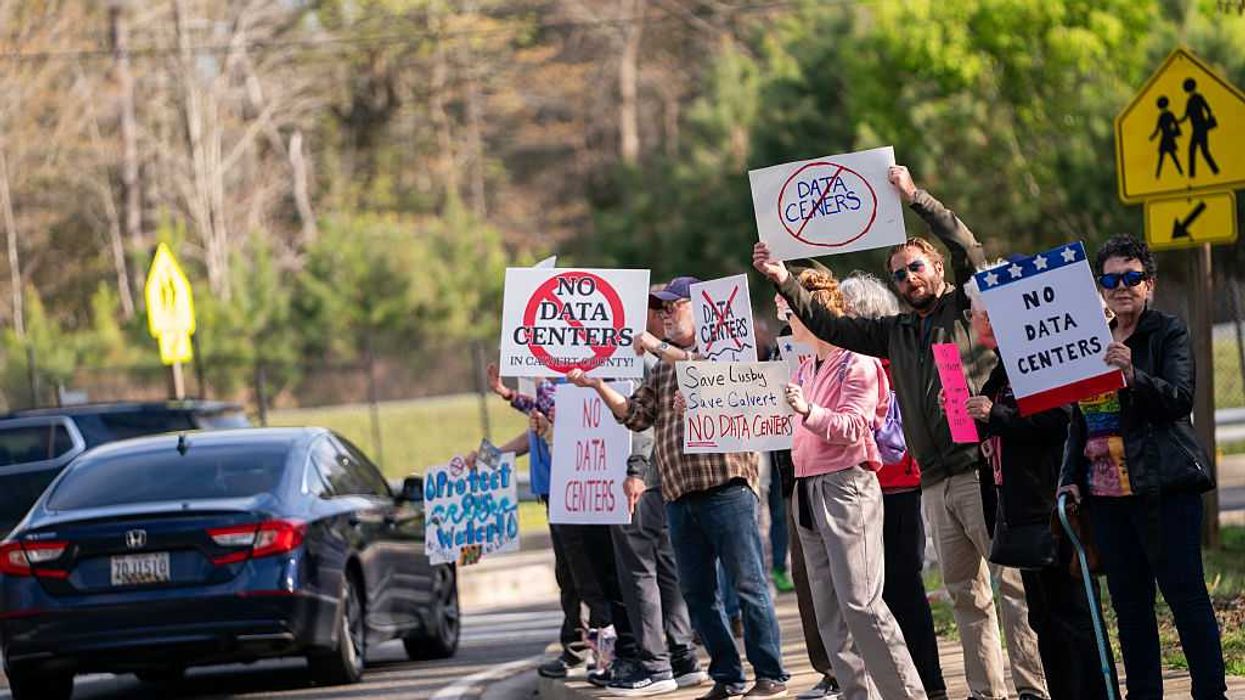
Republicans are continuing their uninterrupted streak of woefully underperforming in elections. However, in the first of its kind referendum on Big Tech data centers, voters are showing that a party that embraces land sovereignty over Big Tech dystopian land grabs will win the day.
Sadly, Republicans have chosen to be on the losing side of the issue.
The public is being asked to shoulder a burden to facilitate a supposed technology whose benefits are very unclear and dubious.
In a first of its kind local referendum, voters in Port Washington, Wisconsin, voted by a margin of 2-1 for a referendum that will require all future data center projects in the area to be approved by a vote of the city’s residents.
The referendum was sparked in the wake of Oracle and OpenAI’s Stargate facility setting up shop in the area. The proposed 1.3 gigawatt facility will consume the power equivalent of over one million households.
The referendum does not undo the Stargate project but will prevent any future project worth more than $10 million from getting approval without the public input.
Over 1,000 residents signed the petition that put this measure on the ballot. “We are not against development,” added Michael Baester, founding member of Great Lakes Neighbors United, which spearheaded this campaign. “We are for development that the community understands, supports, and has chosen together. Tonight proves that when citizens organize and engage, their voices can be heard.”
What is so important nationally about this vote is that Port Washington was carried by Trump 52-48 in 2024. It is the quintessential swing city that sways the Wisconsin vote, and by proxy, the entire country’s electorate.
Such an emphatic result from a swing town demonstrates the potency of the data center issue.
According to Politico, other communities around the country are set to vote on similar ballot measures.
Imagine if Republicans could get on the right side of the data center issue. What might that do for their failing election efforts?
In Festus, Missouri, a solid conservative jurisdiction, voters ousted four GOP councilmen who recently approved rezoning for a $6 billion data center. Two of them were defeated by margins greater than 2-1.
Thus the grassroots opposition to data centers is just as virulent in red America as it is in swing areas that have already soured on Trump because of the economy.
Oklahoma is a state where Trump carried every county, yet voters there are firmly opposed to data centers.
After Google tried to bribe the locals in Osage County to support a hyperscale data center, the Rock Volunteer Fire Department turned down a $250,000 donation from the company. This is a county Trump won by 41 points.
The opposition is just as stiff in the cities. Last month, the Tulsa City Council voted unanimously to halt construction of new data centers for nine months. All 19 speakers at the meeting voiced support for the moratorium.
Across the state in Oklahoma City, the city council recently voted to rezone over 800 acres of farmland for a Google data center. The council is now facing a recall petition.
Portage County, Ohio, is a prototypical rust belt, blue-collar county that traditionally voted Democrat but migrated to the GOP under Trump. The president carried the county by 15 points in 2024. Last week, the Ravenna City Council moved forward with a 12-month moratorium on the centers after a crowd filled the city council chambers to speak against the proposed projects.
In many respects, the ubiquitous opposition to data centers is a reflection of the sheer pervasiveness and magnitude of these projects, targeting nearly every county in states like Ohio, Indiana, Georgia, Texas, Oklahoma, Virginia, and Arizona and numerous places in the majority of other states.
According to the Midcontinent Independent System Operator, the grid operator in most of the Midwest, by 2030, the proposed hyperscale data centers in Indiana will use an amount of electricity equivalent to twice that used by the entire state.
None of this makes any sense nor is it sustainable, especially for a product that increasingly fails to produce a degree of profit that could come close to paying for all the capital expenditure and power.
This is why red-state RINOs like those in drought-stricken Texas continue to shower these companies with lavish sales tax breaks.
RELATED: Data centers are a hidden tax on your burger
 lchumpitaz/Getty Images
We don’t offer 30-year abatements like this to any other industry, but this is what data centers require to remain solvent because their hardware depreciates so quickly. According to the state comptroller, Lone Star voters will subsidize $3.2 billion in tax breaks to the largest companies on the planet over the next two years.
Four of the largest states targeted for data centers — Arizona, Texas, Oklahoma, and Georgia — are languishing through a severe and sustained drought.
Industry apologists are trying to gaslight people into believing that their closed-loop systems will somehow not affect the water flow, but it’s inconceivable that it won’t have a short-term effect and also pose health concerns when recycled back into the water table.
An application from Amazon to the Indiana Department of Environmental Management indicates that the sanitary system it is constructing for two of its hyperscales in New Carlisle is designed to use more than 1.6 million gallons per day on hot summer days.
This is “only” the equivalent water use of about 5,000 households, which pales in comparison to some other facilities and to the magnitude of the power use. Keep in mind that the entire population of this town is just under 1,900.
There’s a reason why 65% of voters oppose all data center construction, including a clear majority of all demographics, ideological groups, and income levels, despite all of the lobbying and electioneering by Big Tech.
The public is being asked to shoulder a burden to facilitate a supposed technology whose benefits are very unclear and dubious.
Republicans can continue ignoring this grassroots revolt, but they will do so at their own peril. Nothing motivates voters more than the preservation of their own communities. That is one thing that still unites a divided America.
West Virginia Republicans are betraying their voters for AI special interests
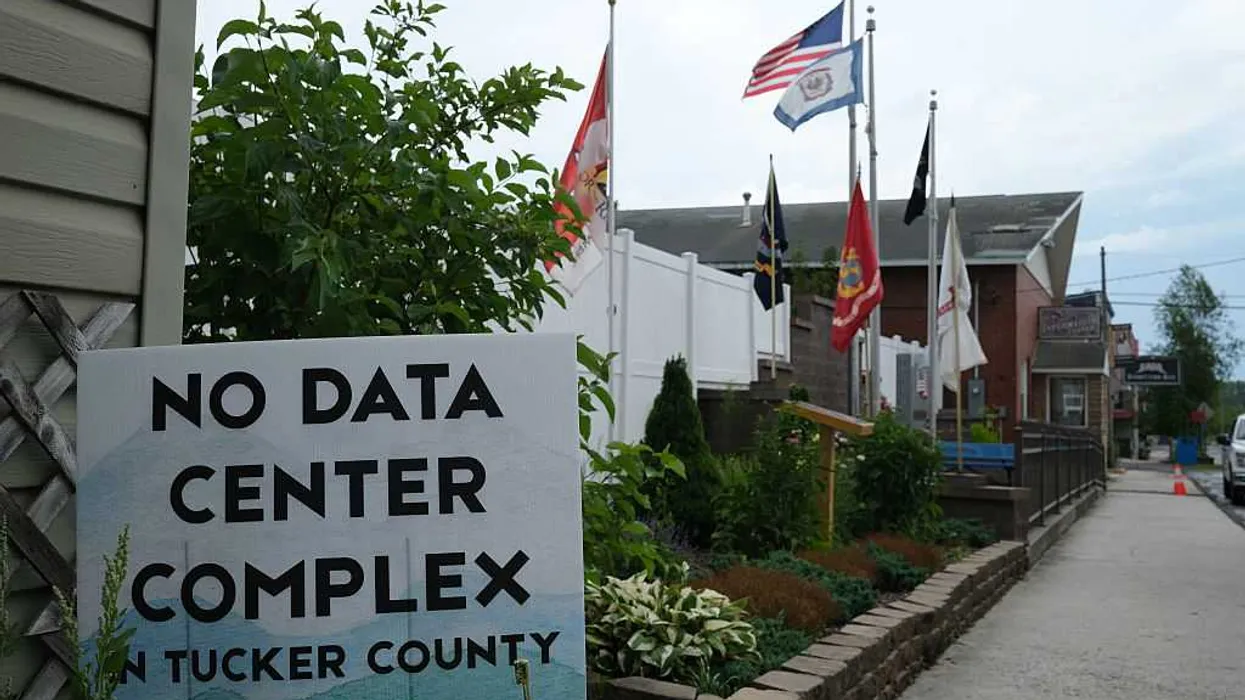
There is a reason why most red-state Republican leaders fail to reflect the political values of their constituents. They represent the special interests they work for rather than the whole of the people.
Nowhere is this more evident than with the ravaging of West Virginia by generative AI data centers, promoted by people like House of Delegates Speaker Roger Hanshaw, who legally represents special interest groups fighting poor, local communities in court.
The same man who was instrumental in stripping localities of their ability to block data centers is now representing the people behind those data centers in court.
Remember the provision in the One Big Beautiful Bill Act of 2025 that originally attempted to strip all state and local governments of any ability to block data centers from being built? Well, last year, West Virginia enacted just such a ban at the state level. Hanshaw shepherded HB 2014 to Republican Gov. Patrick Morrisey’s desk.
Among many special tax and regulatory favors offered to data centers, this bill removed local jurisdiction over the siting, zoning, and operating of certified high-impact data centers and microgrids.
Thus, companies like Google, Meta, and OpenAI could work with state politicians bought into their pay-for-play and force their way into any community. And what better person to be fighting for them than the speaker of the House?
While serving as speaker, Hanshaw filed a notice of appearance in the appeal to the Department of Evironmental Protection’s Air Quality Board on behalf of his client MGS CNP1 LLC, which is an affiliate of Houston-based Fidelis New Energy working on a data center project in Mason County.
This was in the middle of the session and just one week after the state House of Delegates passed legislation making it easier for these projects to obtain certification with the Department of Commerce.
Then, just two days after the session ended, Hanshaw took on a case through his work at Bowles Rice for Fundamental Data, the company working on powering the data center bonanza in Tucker County.
So the same man who was instrumental in stripping localities of their ability to block data centers is now representing the people behind those data centers in court against local community groups appealing the DEP’s permit issuance.
It was the Tucker County fight that led me to speak out nationally against this mindless business model of raping red-state land, power, and water for a form of generative AI that serves nothing but chatslop and the surveillance state.
Last August, I vacationed in Tucker County, home to the gorgeous Blackwater Falls State Park and Canaan Valley. A county that voted for Trump by a 50-vote margin, these people are the forgotten men that MAGA was supposed to represent.
RELATED: How to power the AI race without losing control
 Rudall30/Getty Images
I spoke with several locals who were irate beyond words about the injustice occurring in a state with barely any Democrat elected officials.
What’s worse is that West Virginia is also being violated with endless transmission lines to power the blue-state “data center alley” in northern Virginia. According to a report from the Institute for Energy Economics and Financial Analysts, West Virginia energy consumers will be expected to pay $572 million in higher rates to fund the rope to hang themselves.
What is so offensive is that these projects are not even creating jobs. According to the February JOLT report from BLS, construction remains in the greatest recession since the Great Recession, despite these so-called data center projects. Oracle, which is at the center of the cloud computing in the data centers, is laying off 18% of its workforce.
Shockingly, Henshaw and his minions attempted to pass even greater handouts for data centers offered to no other industry, in addition to what was in HB 2014.
This session, they introduced SB 623, which offered a complete property tax exemption and sales tax exemption on all data center equipment. They also introduced HB 4013, which would have created a new tax credit available to data centers to offset all state income, sales/use, franchise, and payroll withholding taxes based on capital investments, construction costs, and wages.
How many jobs did they have to create to qualify? Just 10! Which, of course, is a tacit admission that these behemoths don’t create many jobs, despite their enormous footprint, cost, and consumption of power.
In other words, Agenda 2030 is being fulfilled right under our noses in a state where Republicans control both houses of the legislature with 32-2 and 91-9 majorities.
What West Virginia, with its mind-numbing GOP majorities, shows is that the lack of conservative outcomes under GOP control is not due to a lack of power or votes but too much access to money and special interests.
Data Centers Are an Easy Scapegoat for Failing Electrical Grids
Data centers are easy targets. They require large amounts of water, electricity, and land. They’re an eyesore. Of the 3,907…
On Venezuelan Oil Tankers, Chinese AI, and American Energy Traitors
As the U.S. Navy leads the largest fleet ever assembled in the Caribbean Sea to pressure the illegitimate Maduro regime…
Liz Warren hustles Trump with a housing bill from hell
What is it about the National Defense Authorization Act that makes it a dumping ground for every dumb liberal pet project?
First the Trump administration pushed an AI data-center amnesty that would have stripped states of authority over massive, power-hungry facilities. Then lawmakers tried to slip in Sen. Elizabeth Warren’s housing bill, a package built to subsidize Section 8 tenants and builders and to fuel the very forces driving the current housing bubble. After a backlash, both provisions came out of the NDAA. Now congressional leaders plan to pass the Massachusetts Democrat’s housing bill on its own.
The real crisis comes from government debt and the inflation it fuels. This is not a shortage of lumber or land. It is a monetary chokehold created by government policy.
Earlier this year, Senate Banking Committee Chairman Tim Scott (R-S.C.) worked with Warren to move S. 2651, an omnibus housing package that expands every federal program Trump previously vowed to cut. They attached the legislation to the Senate’s NDAA, then lobbied House conservatives to adopt it in their version of the defense bill. At the last minute, House leaders stripped the language. The House Financial Services Committee now plans to mark up the bill next week.
Here’s the trouble: The bill misdiagnoses the housing crisis. It treats high prices as a supply shortage instead of a government-fueled asset bubble and inflationary pricing distortion.
The result is predictable. Its 40 provisions would expand Section 8, loan subsidies, “affordable housing” grants, and even looser mortgage programs for people priced out of the market. Every one of these items pours accelerant on the factors that drove the 2008 bubble and the post-COVID spike.
Government subsidies for overbuilding and for buyers who cannot afford homes created the crisis. Yet like a dog returning to its vomit, Scott, the president, and Senate Democrats are endorsing Warren’s 2020 campaign platform to revive the same model. The bill promises builders and activist groups federal cash in exchange for regulatory concessions. The trade-off is disastrous.
Section 202 creates a new federal grant program to fund local housing projects in designated zones — a warmed-over version of the community-engineering schemes Obama’s Department of Housing and Urban Development pushed a decade ago.
Meantime, Section 209 establishes a $200 million yearly fund at HUD to award “innovative housing reforms” to localities that reshape zoning to favor dense, subsidized units.
Conservatives would call these incentives an invitation to replicate failed urban policies in red suburbs. The bill rewards grifting nonprofits and community organizers who treat federal housing programs as political infrastructure.
At the same time, the administration is pushing rules that limit red-state zoning authority to clear the way for data-center construction while promoting Section 8 expansion with new incentives and zoning guidance. It revives, in effect, Obama’s Affirmatively Furthering Fair Housing regime — the same racial-gerrymandering tool Trump killed in his first term. Supporting the Scott-Warren bill would revive it in practice.
Worse, the bill rests on a false premise. America doesn’t have a housing shortage. According to Redfin, as of October sellers outnumbered buyers by 36.8% — about 529,000 more sellers — the largest gap since 2013. Census data shows about 148 million housing units for roughly 134 million households, a surplus of around 14 million units. When Trump took office, the vacancy count stood near 11 million, yet prices were far more affordable.
The real crisis comes from government debt and the inflation it fuels. Construction costs surged with inflation. Interest rates spiked to service that debt, creating an interest-rate cliff that locked millions of homeowners into sub-3% mortgages. They cannot sell without doubling their monthly costs. High rates froze the existing inventory in place. This is not a shortage of lumber or land. It is a monetary chokehold created by government policy.
RELATED: Why the kids are not all right — and Boomers still pretend nothing’s wrong
 Photo by Andrew Lichtenstein/Corbis via Getty Images
Federal housing policy adds another layer. Fannie Mae and Freddie Mac long prioritized “access to credit” over price stability. By guaranteeing high-risk loans and encouraging low down payments, they allow buyers to bid more than their incomes justify. Subsidized credit lifts prices for sellers, not buyers.
S. 2651 makes the problem worse by expanding the Community Development Block Grant and similar programs, encouraging activist groups and corporate developers to overbuild units no one can afford without subsidies. That process pushes prices upward and strengthens corporate buy-ups of suburban neighborhoods.
The administration previously acknowledged these distortions. In Trump’s FY 2021 budget, the Office of Management and Budget proposed eliminating CDBG and the HOME Investment Partnerships Program, arguing that states and localities were better positioned to address affordability challenges. This new bill reverses that logic entirely.
The Federal Reserve’s rate whiplash — a decade of near-zero borrowing costs followed by sudden hikes — froze supply by trapping owners inside artificially cheap mortgages. Washington’s policies created the gridlock. The inventory exists. Monetary policy quarantined it.
What the administration needs to do is allow prices to fall back toward alignment with median incomes. That adjustment would restore affordability without new federal intervention. Instead, the FHFA is pushing lower credit-score requirements for subsidized mortgages. That mistake will repeat the pattern of enticing families into overpriced homes they cannot sustain.
Housing policy should stop trying to prop up inflated prices. The market must correct. A federal “solution” built around 40 expansionary programs will intensify the crisis, not solve it. Doing nothing would spur more affordability than this bipartisan blunder.
Cattle rancher battles Amazon data center accused of poisoning water supply, causing miscarriages
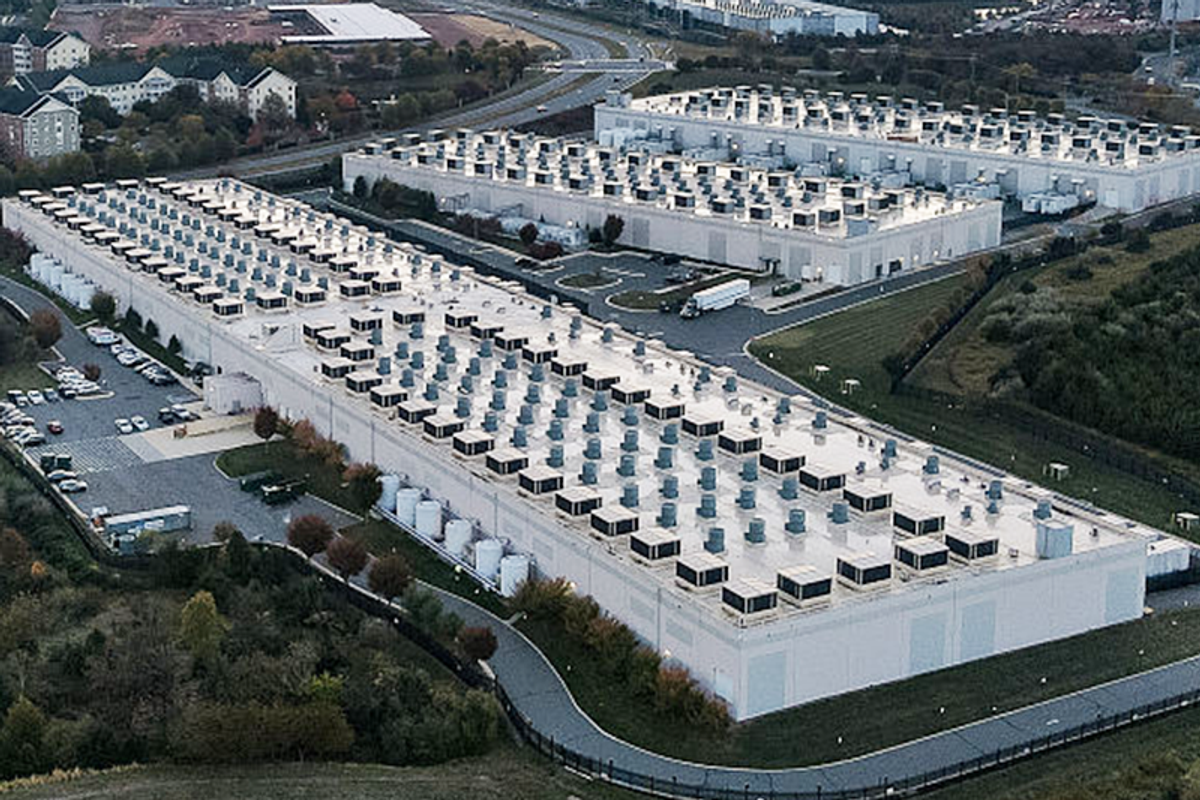
An Oregon cattle rancher did his own research into an apparent rise in obscure medical conditions after the opening of an Amazon data center.
The facility, which requires enormous amounts of water to cool its infrastructure, stands accused of adding wastewater — laden with nitrates — to an already struggling filtration system.
‘Our data centers draw water from the same supply as other community members.’
Jim Doherty from Morrow, Oregon, sought out to investigate the alleged increase in health problems stemming from toxins in the local water supply. Doherty has since performed tests, worked alongside his county, and knocked on doors to try to solve the equation. He spoke with Rolling Stone about his findings.
The rancher said he surveyed 70 local wells and shockingly found that 68 of them violated federal limits for the allowable levels of nitrates in drinking water. In the same report, Doherty detailed that of the first 30 homes he visited in his area, 25 residents had recently suffered miscarriages.
The report alleged a number of illnesses related to the water supply — which included different forms of cancer — and pointed the finger at pollution exacerbated by an Amazon data center that popped up in 2011. The square-footage of the data center ranges in estimates from 120,000 to 200,000 but comes with a 15-year tax abatement worth nearly $200 million.
The cost of this, allegedly, is a slew of health problems.
RELATED: Apple to invest $500 billion in US including new AI server factory in Texas
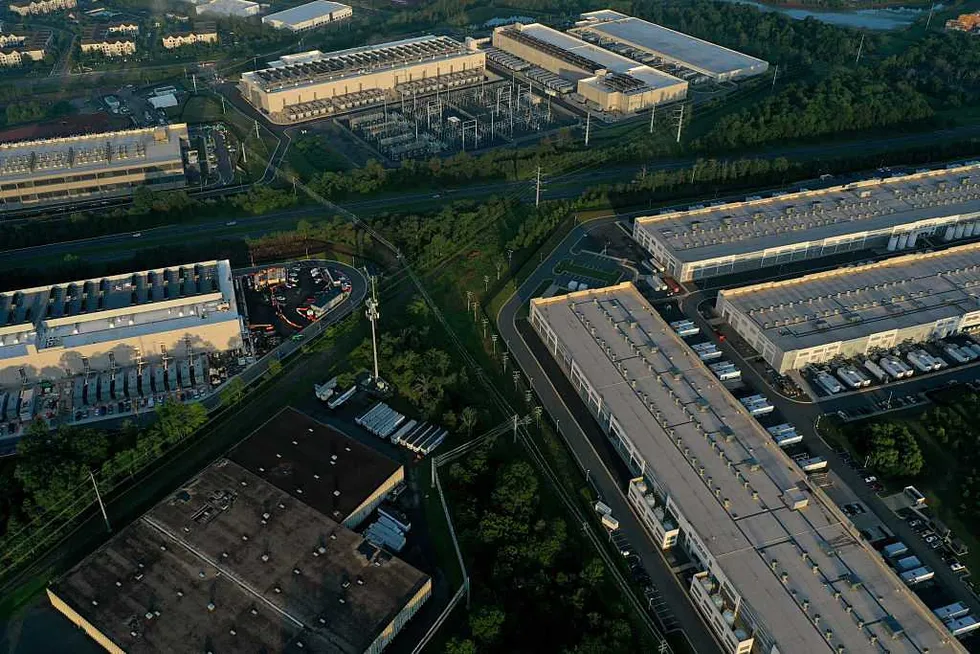 Amazon Web Services and Iron Mountain data centers in Manassas, Virginia, on July 9, 2025. Total power usage in the US is expected to climb 2.15% in 2026, spurred largely by a 5% spike from commercial users because of the expansion of data centers, according to a US Energy Department report released in June. Photographer: Nathan Howard/Bloomberg via Getty Images
“One man about 60 years old had his voice box taken out because of a cancer that only smokers get, but that guy hadn’t smoked a day of his life,” Doherty told Rolling Stone.
Another woman reportedly wrote Doherty to tell him her husband got “kidney cancer in his early 40s. His doctor thought it was due to exposure to herbicides and pesticides. He lost a kidney, but he lived.”
“We had acceptable levels of [toxins in our] drinking water when we first moved there,” the woman claimed. “After my husband’s cancer, we realized they went up and up through the years. It’s very sad.”
Doherty’s wife, Kelly, also claimed that out of the 14 people that live on their road, “I think nine of them have cancer right now.”
On the contrary, Amazon spokesman Lisa Levandowski told Rolling Stone that “the apparent narrative” about the 45,000-person county is “misleading and inaccurate.”
“The truth is that this region has long-documented groundwater quality challenges that significantly predate AWS’ presence, and federal, state, and local agencies have spent years working to address nitrates from agricultural fertilizer, manure, septic systems, and wastewater from food processing plants,” Levandowski explained.
She went on, “Our data centers draw water from the same supply as other community members; nitrates are not an additive we use in any of our processes, and the volume of water our facilities use and return represents only a very small fraction of the overall water system — not enough to have any meaningful impact on water quality.”
RELATED: Zuckerberg to dump hundreds of billions into new Manhattan-size projects
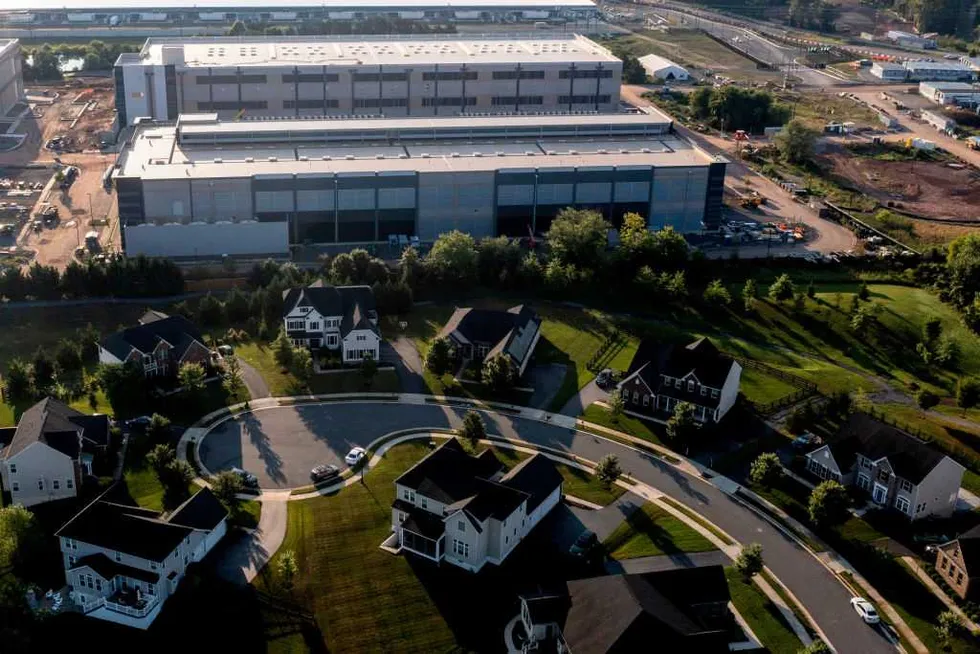 An Amazon Web Services data center in Stone Ridge, Virginia, US, on Sunday, July 28, 2024. Data center developers in Northern Virginia are asking utility Dominion Energy Inc. for as much power as several nuclear reactors can generate, in the latest sign of how artificial intelligence is helping drive up electricity demand. Photographer: Nathan Howard/Bloomberg via Getty Images
Oregon Rural Action, an activist group focused on preserving water, compared the situation to the “historical precedent” of Flint, Michigan.
“In part because of how slow the response to the crisis has been, and in part because of who’s affected. These are people who have no political or economic power and very little knowledge of the risk,” executive director Kristin Ostrom told Rolling Stone.
The argument that Amazon has increased the amount of toxins in the water is indeed a complex one as there exist arguments on both sides that require investigation to prove.
As the Department of Energy explains, the process of cooling with water typically includes water softening to remove harmful toxins, but that does not mean there aren’t additives involved in the process.
Possible additives include phosphates to prevent corrosion, acids to adjust pH levels, and anti-foaming agents, to name a few. Nitrates can also be used to prevent corrosion in cooling systems.
The DOE also notes that when water evaporates from cooling towers, dissolved solids or toxins become more highly concentrated. This is typically solved by removing a portion of the highly concentrated water and replacing it with “fresh make-up water.”
Like Blaze News? Bypass the censors, sign up for our newsletters, and get stories like this direct to your inbox. Sign up here!
Big Tech’s AI boom hits voters hard — and Democrats pounce

Wouldn’t it be a bitter irony if Republicans lost the midterms — maybe even in conservative red states — because Democrats outmaneuvered them on the dangers of the AI data-center boom? The left now warns voters about land seizures, rising electric bills, water shortages, and Big Tech’s unchecked power. Meanwhile, Republicans stay quiet as Trump himself champions the very agenda voters increasingly fear.
During the Biden years, Republicans attacked Big Tech censorship, digital surveillance, Agenda 2030 land-grabs, and the artificial online culture reshaping young Americans. Every one of those concerns now intersects with the data-center explosion — energy demands, land use, power monopolies, and the rise of generative AI — but the political right barely whispers about it.
Republicans can channel AI toward focused, beneficial uses and away from a dystopian model that erodes civic life. Voters already want that shift.
Democrats don’t make that mistake. They see a potent electoral weapon.
Georgia hadn’t elected a Democrat statewide since 2006. Yet Democrat Peter Hubbard defeated a Republican incumbent on the Public Service Commission by 26 points by hammering “sweetheart deals” GOP officials granted hyperscale data centers. Voters in the state face repeated rate hikes linked to the massive energy demands of Big Tech facilities.
“The number-one issue was affordability,” Hubbard told Wired. “But a very close second was data centers and the concern around them just sucking up the water, the electricity, the land — and not really paying any taxes.”
He wasn’t exaggerating. In 2022, Georgia’s Republican legislature passed a sales-tax exemption for data centers. In 2024, a bipartisan bill attempted to halt those tax breaks, but Gov. Brian Kemp (R) vetoed it. Voters noticed — and punished the GOP for it.
Georgia now surpasses northern Virginia in hyperscale growth. Atlanta’s data-center inventory rose 222% in two years, with more than 2,150 megawatts of new construction under way. It’s no mystery why Democrats flipped two PSC seats in blowouts.
Republicans lost because they defended crony capitalism that inflated energy bills, devoured land, and fed an AI industry conservatives once warned about. If Kamala Harris had pushed the data-center agenda as aggressively as Trump now does, Republicans would be in open revolt. But Trump’s support silences the conservative grassroots and leaves Democrats free to define the issue.
Virginia tells the same story. Democrat John McAuliff flipped a GOP seat by attacking Big Tech’s land-grab and the rising utility costs tied to data-center expansion. He blasted his opponent for profiting while family farms vanished under the footprint of hyperscale development. He became the first Democrat in 30 years to carry the district.
At the statewide level, Democrat Abigail Spanberger won the governor’s office by arguing that AI data centers must pay their “fair share” of soaring energy costs. She framed the issue as a fight to protect families from Big Tech’s strain on the grid.
New Jersey voters heard similar warnings as they faced a 22% electric rate increase. Democrat Mikie Sherrill defeated Republican Jack Ciattarelli by double digits after blaming part of the spike on hyperscale energy demand. She pledged to declare a state of emergency to halt increases and require data centers to fund grid upgrades.
This pattern repeats in reliably red states.
Indiana saw dozens of new hyperscale proposals, yet not a single Republican official pushed back. Ordinary citizens blocked one of Google’s planned rezonings near Indianapolis. Liberal groups — like Citizens Action Coalition — filled the leadership vacuum and demanded a moratorium on new data centers, calling it a fight against “big tech oligarchs that are calling all the shots at every single level of government.”
RELATED: Stop feeding Big Tech and start feeding Americans again
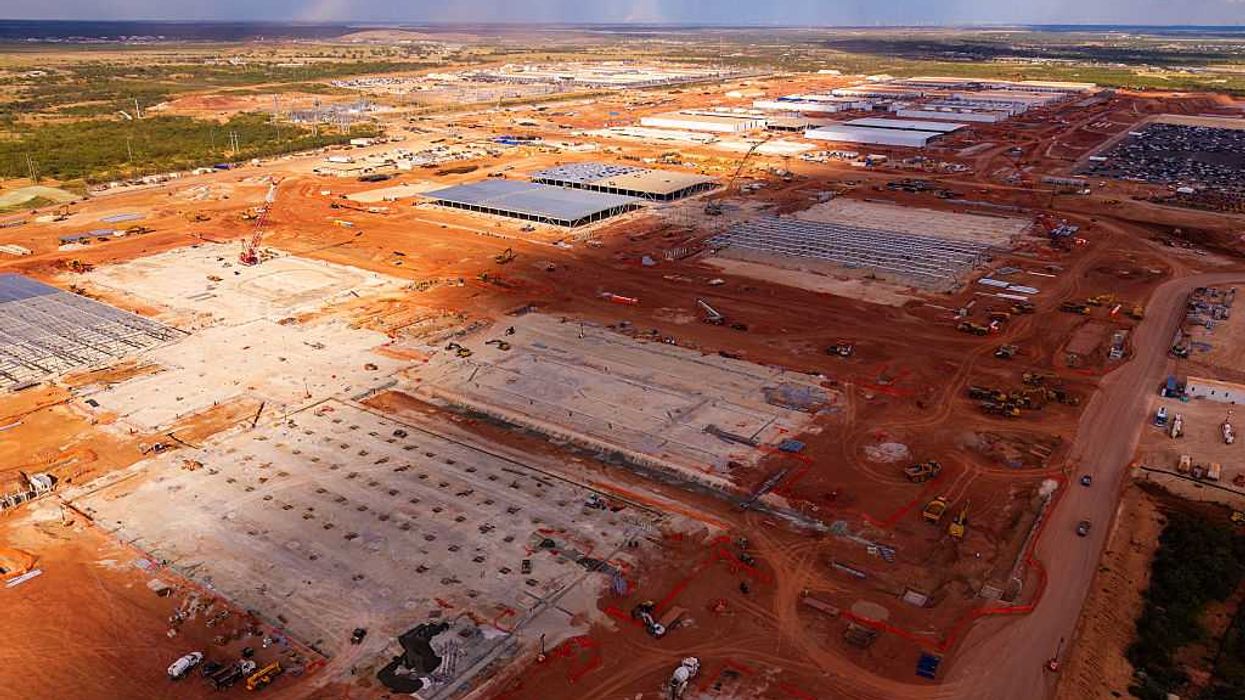 Kyle Grillot/Bloomberg via Getty Images
Republican leaders, meanwhile, worked to ban states from regulating AI at all. This summer they attempted to insert a sweeping prohibition into the budget reconciliation bill that would bar states from regulating data-center siting or AI content for 10 years. House Majority Leader Steve Scalise (R-La.) now seeks to attach the same language to the FY 2026 defense authorization act. President Trump backs the provision.
Instead of ceding the issue to the left, Republicans should correct course. They can channel AI toward focused, beneficial uses and away from a dystopian model that erodes civic life. Voters already want that shift. A new University of Maryland poll found residents believe — by a 2-1 margin — that AI will harm society more than it helps. More than 80% expressed deep concern about declining face-to-face interaction, the erosion of education and critical thinking, and job displacement fueled by AI.
Capital expenditures cannot sustain the current pace of expansion, and public patience with Big Tech’s demands is running out. The political party that recognizes these realities first will earn the credit. Right now, the party that once defended property rights, community values, and human-centered technology is getting lapped by the party that partnered with Big Tech oligarchs to censor Americans during COVID.
Republicans still have time to lead. But they won’t win a fight they refuse to join.
When the AI bubble bursts, guess who pays?

For months, Silicon Valley insisted the artificial-intelligence boom wasn’t another government-fueled bubble. Now the same companies are begging Washington for “help” while pretending it isn’t a bailout.
Any technology that truly meets consumer demand doesn’t need taxpayer favors to survive and thrive — least of all trillion-dollar corporations. Yet the entire AI buildout depends on subsidies, tax breaks, and cheap credit. The push to cover America’s landscape with power-hungry data centers has never been viable in a free market. And the industry knows it.
The AI bubble isn’t about innovation — it’s about insulation. The same elites who inflated the market with easy money are now preparing to dump the risk on taxpayers.
Last week, OpenAI chief financial officer Sarah Friar let the truth slip. In a CNBC interview, she admitted the company needs a “backstop” — a government-supported guarantee — to secure the massive loans propping up its data-center empire.
“We’re looking for an ecosystem of banks, private equity, maybe even governmental … the ways governments can come to bear,” Friar said. When asked whether that meant a federal subsidy, she added, “The guarantee that allows the financing to happen … that can drop the cost of financing, increase the loan-to-value … an equity portion for some federal backstop. Exactly, and I think we’re seeing that. I think the U.S. government in particular has been incredibly forward-leaning.”
Translation: OpenAI’s debt-to-revenue ratio looks like a Ponzi scheme, and the government is already “forward-leaning” in keeping it afloat. Oracle — one of OpenAI’s key partners — carries a debt-to-equity ratio of 453%. Both companies want to privatize profits and socialize losses.
After public backlash, Friar tried to walk it back, claiming “backstop” was the wrong word. Then on LinkedIn, she used different words to describe the same thing: “American strength in technology will come from building real industrial capacity, which requires the private sector and government playing their part.”
When government “plays its part,” taxpayers pay the bill. Yet no one remembers the federal government “doing its part” for Apple or Motorola when the smartphone revolution took off — because those products sold just fine without subsidies.
The denials keep coming
OpenAI CEO Sam Altman quickly followed with a 1,500-word denial: “We do not have or want government guarantees for OpenAI datacenters.” Then he conceded they’re seeking loan guarantees for infrastructure — just not for software.
That distinction exposes the scam. Software revolutions scale cheaply. Data-center revolutions depend on state-sponsored power, water, and land. If this industry were self-sustaining, Trump wouldn’t need to tout Stargate — his administration’s marquee AI-infrastructure initiative — as a national project. Federal involvement is baked in, from subsidized energy to public land giveaways.
Altman’s own words confirm it. In an October interview with podcaster Tyler Cowen, released a day before his denial, Altman said, “When something gets sufficiently huge … the federal government is kind of the insurer of last resort.” He wasn’t talking about nuclear policy — he meant the financial side.
The coming crash
Anyone paying attention can see the rot. Nvidia, OpenAI, Oracle, and Meta are all entangled in a debt-driven accounting loop that would make Enron blush. This speculative bubble is inflating not because AI is transforming productivity, but because Wall Street and Washington are colluding to prop up stock prices and GDP growth.
When the crash comes — and it will — Washington will step in, exactly as it did with the banks in 2008 and the automakers in 2009. The “insurer of last resort” is already on standby.
The smoking gun
A leaked 11-page letter from OpenAI to the White House makes the scheme explicit. In the October 27 document addressed to the Office of Science and Technology Policy, Christopher Lehane, OpenAI’s chief global affairs officer, urged the government to provide “grants, cost-sharing agreements, loans, or loan guarantees” to help build America’s AI industrial base — all “to compete with China.”
Altman can tweet denials all he wants — his own company’s correspondence tells a different story. The pitch mirrors China’s state-capitalist model, except Beijing at least owns its industrial output. In America’s version, taxpayers absorb the risk while private firms pocket the reward.
RELATED: Stop feeding Big Tech and start feeding Americans again
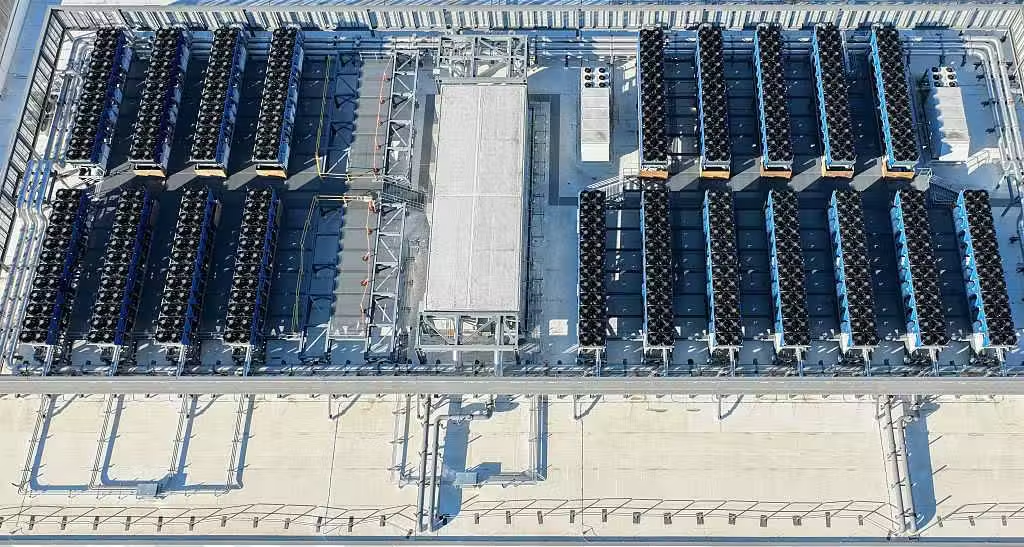 Credit: Photo by Mario Tama/Getty Images
Meanwhile, the data-center race is driving up electricity and water costs nationwide. The United States is building roughly 10 times as many hyper-scale data centers as China — and footing the bill through inflated utility rates and public subsidies.
Privatized profits, socialized losses
When investor Brad Gerstner recently asked Altman how a company with $13 billion in revenue could possibly afford $1.4 trillion in commitments, Altman sneered, “Happy to find a buyer for your shares.” He can afford that arrogance because he knows who the buyer of last resort will be: the federal government.
The AI bubble isn’t about innovation — it’s about insulation. The same elites who inflated the market with easy money are now preparing to dump the risk on taxpayers.
And when the collapse comes, they’ll call it “national security.”





