

Day: January 6, 2026
Trans athlete at center of Supreme Court case accused of sexual harassment, intimidation tactics against girls
West Virginia student Adaleia Cross alleged sexual harassment by a transgender teammate, whose case on transgender athletes is headed to the Supreme Court.
Latin America fractures over Trump’s Maduro capture as regional allies shift right
Latin American nations split over Venezuela’s Maduro capture as regional summit fails to reach consensus, exposing a new shift to the right across the Western Hemisphere.
Trump continues lambasting incumbent Republican Thomas Massie as challenger files to enter race
President Donald Trump lambasted GOP Rep. Thomas Massie of Kentucky again on Truth Social, while again expressing his support for challenger Ed Gallrein.
What investigators still haven’t asked about Minnesota’s fraud

The national spotlight has settled on the industrial-scale fraud uncovered in Minnesota, much of it linked to networks operating within the state’s Somali immigrant community. To date, coverage has focused on how operators allegedly diverted nearly $9 billion in public funds into shell businesses that existed largely to funnel money to friends and family through no-show jobs and inflated contracts.
That story matters. But it may not be the whole story.
Fraud at this scale almost never stands alone. Where investigators uncover massive deception, additional crimes often lie beneath the surface.
Most of the businesses implicated in the scheme presented themselves as child-care centers, autism service providers, and non-emergency medical transport companies. For readers unfamiliar with immigration enforcement, the reaction is straightforward: Criminals stole money intended for society’s most vulnerable.
For those who have spent decades working in immigration law and border security, a different question arises. Why build an end-to-end infrastructure of licensed service providers unless it served additional purposes?
Videos circulating online show many of these facilities sitting empty — unused day-cares, idle transport vans, and vacant offices. That does not prove the businesses were harmless.
In criminal investigations, fraud rarely exists in isolation. One axiom holds that following the money reveals the perpetrators. A second, less discussed rule also applies: Following the money backward often reveals additional crimes.
Illegal immigration provides a perfect example. The initial violation occurs when an alien enters unlawfully or makes false asylum claims. Additional offenses frequently follow: identity theft, illegal employment, fraudulent tax filings, and payments to smugglers to bring in relatives. Organized crime and terrorist groups have used similar layered fraud models for decades. Illicit revenue becomes seed money for broader criminal activity.
Despite the scale of the Minnesota fraud, little public attention has focused on whether these businesses were used for more than financial theft. There appears to be no comprehensive inquiry into whether any of the entities sponsored employment-based visas, concealed smuggled minors, facilitated labor trafficking, or enabled sex trafficking.
None of those allegations has been proven. But the structure of the alleged scheme bears an uncomfortable resemblance to the network of Health and Human Services contractors through which the Biden administration lost track of thousands of unaccompanied alien children.
According to a City Journal investigation, federal counterterrorism sources confirmed that millions of dollars from the Minnesota fraud flowed back to Somalia, where funds ultimately reached al-Shabaab, the al-Qaeda-affiliated terrorist organization. The report described Minnesota taxpayers as the group’s largest single funding source.
RELATED: Minnesota’s fraud scandal exposes a dangerously loose election system
 Photo by Andrew Harnik/Getty Images
If accurate, that finding raises a far more serious concern. Terrorist organizations do not stop at cash transfers when operational infrastructure is available. A network of licensed service providers — child-care centers, transportation companies, and health services — offers precisely the kind of cover such groups seek to move people, materials, and money discreetly inside the United States.
The full extent of al-Shabaab’s involvement remains unclear. Covert operations rarely reveal themselves all at once. They are built deliberately, in stages, with long timelines. Minnesota records suggest (and the explosion in Minnesota Democrat Rep. Ilhan Omar’s personal wealth seems to indicate) that much of the large-scale fraud linked to Somali-run entities accelerated over the past decade. That timeline raises the possibility that the scheme was still maturing when investigators uncovered it.
If so, authorities may have disrupted a funding and logistics pipeline before all layers of criminal activity were fully deployed.
One point remains undeniable: Where there’s smoke, there’s fire. Fraud at this scale almost never stands alone. Where investigators uncover massive deception, additional crimes often lie beneath the surface.
Federal authorities should pursue this case to its roots. That means examining every entity, every financial flow, and every operational link — not just to recover stolen funds, but to determine what else those structures were built to conceal.
2025 is so over and so is virtual reality

Mark Zuckerberg, in a 2021 presentation that seemed less a business strategy than a fever dream, rebranded his company from Facebook to Meta. He was selling a future in which we would inhabit a digital utopia, a place where the friction of the physical world, the traffic, the decay, the awkward silences, would be smoothed over by the order of code.
It was a grand vision, one that presumed that the right combination of capital and engineering can solve the human condition.
However, Meta is now quietly retreating from its all-in bet, one of the most expensive experiments in business history.
It was a $60 billion attempt to fix a reality we still prefer to the simulation.
The premise was always seductive, in the way that the shadows on the wall of Plato’s cave were seductive: a world that promised to be more pleasurable, more malleable than reality. But the metaverse, as it began to take shape, was less a hyperreal paradise than a clumsy imposition. To enter this new world, one had to strap a computer to one’s face, a set of electronic “ski goggles” that isolated the wearer, blinded him to his surroundings, and demanded a total surrender of attention. The Quest traded the ease of the smartphone, which slides effortlessly into our pockets, for a device that induced sweat, fatigue, and the vague nausea of motion-to-photon delays.
Horizon Worlds, Meta’s flagship social platform, was intended to be the bustling town square of the new digital age. Instead, it became a study in desolation. By the fall of 2022, the platform struggled to retain 200,000 monthly users, a number that seems almost tragic when weighed against the tens of billions of dollars poured into its creation. Those who did visit found a landscape populated by legless, floating torsos, cartoon avatars that managed to be both childish and uncanny. It was a ghost town, a place where the silence was amplified by the vast, empty digital architecture.
This failure was not without precedent. In the 1990s, Nintendo’s Virtual Boy promised a similar revolution and delivered only headaches and monochrome red graphics, selling fewer than 800,000 units before vanishing into the landfill of bad ideas. In the early 2000s, Second Life was briefly the darling of pundits, who prophesied we would all soon be working and shopping in its pixelated aisles; by 2010, it had faded into a niche curiosity. The pattern is clear: The cultural imagination is enticed by the idea of VR, but the human animal balks at its practice.
There is a stubborn materiality to our existence that the architects of the metaverse failed to overcome. We are embodied beings. We like the warmth of a hand, the smell of rain, the ability to glance at a screen and then look away. The metaverse demanded we leave the physical world behind, a proposition that felt increasingly dystopian.
RELATED: Inside Zuckerberg’s losing metaverse bet
 David Paul Morris/Bloomberg via Getty Images
Marshall McLuhan warned that a medium pushed to its extreme can “implode” into something else, and the metaverse seemed to hit that breaking point, an implosion in which the medium devoured its own appeal. The users did not want to be immersed in a corporate-controlled simulacrum; they wanted convenience. They wanted the blue bubble of a text message, not a virtual meeting in a boardroom rendered in low-polygon graphics.
The retreat, when it came, was swift and brutal, in the way corporate corrections often are. By 2023, a metaverse winter had set in. Disney shuttered its division; Microsoft sunset its social VR platform. The world became captivated by a new technology: generative AI. Suddenly the conversation was not about new worlds but about automated intelligence that could write our emails and paint our pictures. Meta, reading the tea leaves and the plummeting engagement metrics, pivoted. The irrational exuberance for VR gave way to sober retrenchment.
The financial markets, at times the coldest arbiters of value, cheered the death of the dream. When news broke in late 2025 that Meta would cut Reality Labs’ budget and lay off staff, its stock jumped, adding nearly $70 billion in value overnight. It was a signal that the experiment was over. The Great White Whale of tech had once again slipped away, leaving the innovators holding the harpoon, exhausted.
John Carmack, the legendary game developer who tried to steer Meta’s VR ship before resigning in frustration, noted that the company had “a ridiculous amount of people and resources” but constantly “self-sabotaged.” The metaverse was not killed by a lack of technology; the Quest 3 is a marvel of engineering. It died from a lack of human necessity. It was a $60 billion attempt to fix a reality that, for all its flaws, we still prefer to the simulation.
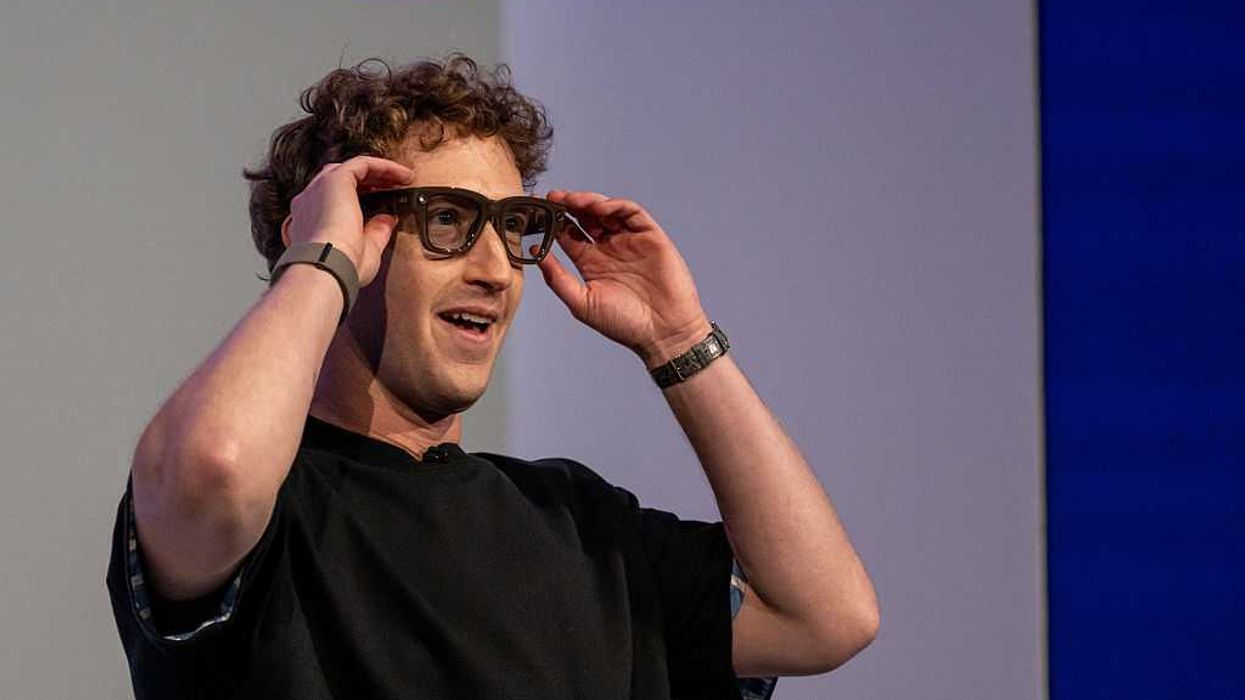
The retreat is less a defeat than a recalibration. Meta is now looking toward “smart glasses,” wearables that overlay the digital onto the real rather than replacing it. The form factor concedes the stubborn fact that we want to remain in the world. The dream of the metaverse, that hyperreal paradise where models replace the real, has been deferred. We have chosen to keep the goggles off, to live for now, in Baudrillard’s words, in the desert of the real.
Adam Lawyer denies Melanie Marquez’s abuse allegations, calls claims ‘baseless’

Melanie Marquez’s husband, Adam “Randy” Lawyer, denied the allegations of abuse made against him by the former beauty queen.
Middle blocker to midlaner: Esports athlete Yue shares transition from volleyball to Mobile Legends

Kenneth “Yue” Tadeo has always been tenacious as evident with his superb plays and exceptional skills as a midlaner in the Mobile Legends: Bang Bang esports scene.
NBA: Clippers, without James Harden, maintain hot streak vs. Warriors

Kawhi Leonard led the way with 24 points, Kobe Sanders chipped in with 20 and the Los Angeles Clippers overcame the absence of James Harden to hold off the visiting Golden State Warriors, 103-102, on Monday night.
NBA: Hawks, Trae Young mutually exploring trade options –reports

The Atlanta Hawks and point guard Trae Young are working to find a trade destination for the four-time All-Star, according to multiple media reports.
US-Venezuela tension won”t affect PH oil price –DOE

US-Venezuela tension won”t affect PH oil price, DOE





