

Day: December 25, 2025
Kate Middleton takes center stage at royal Christmas walk as Andrew is frozen out
Princess of Wales leads royal Christmas walk with Prince William and their children, showcasing family unity while greeting enthusiastic public crowds at service.
Hawaii, Cal players brawl as Rainbow Warriors pull off incredible comeback victory
The Hawaii Rainbow Warriors came back from 21 points down to defeat the California Golden Bears in the Hawaii Bowl. A brawl broke out afterward.
The American dream lives where people still choose to build
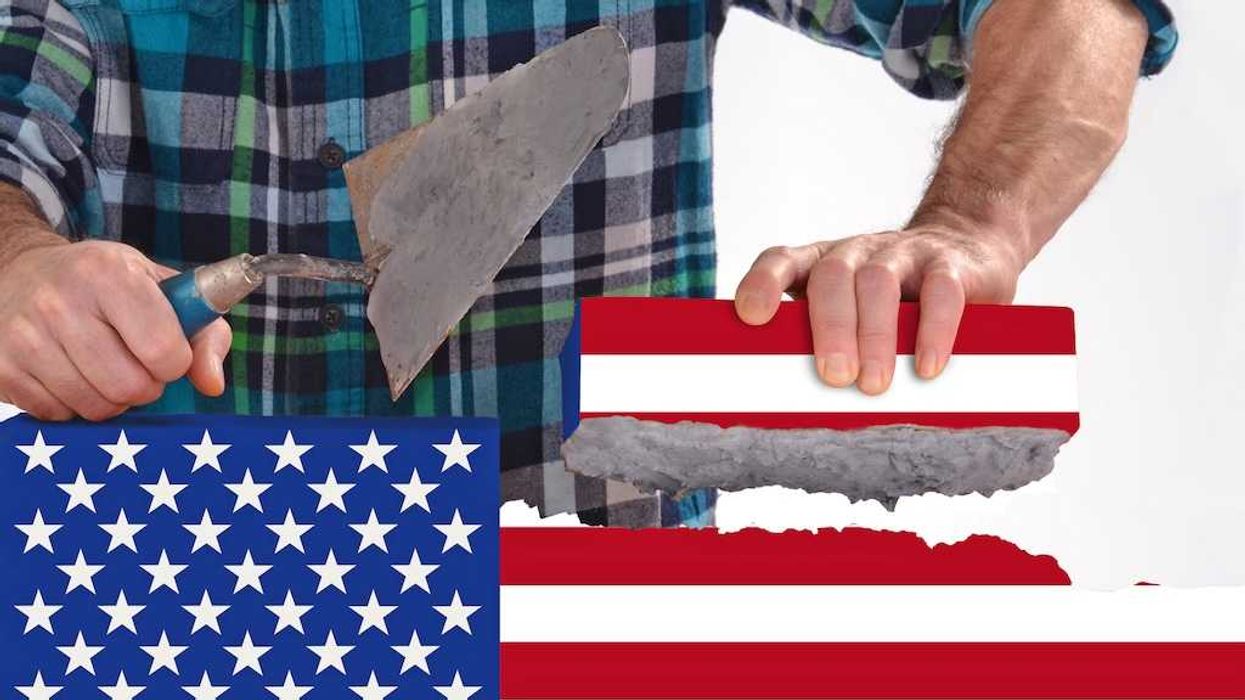
“For many, the American dream has become a nightmare,” Sen. Bernie Sanders (I-Vt.) has said, capturing a sentiment that has become common on the political left and across modern culture.
That line now travels far beyond politics. Scroll social media for five minutes, and you’ll see the same message repeated in endless variations: Owning a home is impossible. Raising a family is irresponsible. Work doesn’t pay. The system is rigged. The future is closed.
The American dream was never a promise of ease or comfort by age 25. It was an invitation to build something meaningful over time through responsibility and perseverance.
This message is everywhere, and it is doing real damage.
Harder lives, false conclusions
Life has become harder in tangible ways. Housing costs have surged. College has grown bloated and expensive. Inflation punished families already living close to the margins. Young adults feel delayed, uncertain, and anxious about the future.
Those frustrations are real. The conclusion being pushed alongside them is not.
The lie is not that things are harder. The lie is that effort no longer matters.
That lie spreads quickly online because it feels validating. A 30-second video declaring the system broken beyond repair asks nothing of the viewer except agreement. Building a life requires patience, sacrifice, and time. One goes viral. The other happens quietly.
Much of this shift comes from where young Americans now form their beliefs. For many in Generation Z, ideas about money, marriage, and the future are no longer shaped primarily by parents, churches, employers, or local communities. They are shaped by algorithm-driven platforms like TikTok and X, where extremity is rewarded with attention.
In those spaces, online figures routinely dismiss the American dream as a scam and portray starting a family as a trap rather than a source of meaning or stability. Cynicism is marketed as realism. Detachment is framed as wisdom. A generation looking for guidance is taught to expect failure before it ever tries.
Why despair is profitable
This narrative didn’t arise by accident. It feeds on real pain, but it’s also profitable. Political movements gain leverage by convincing voters that only sweeping control from the top can fix a hopeless system. Media companies thrive on pessimism because fear keeps people watching. Online grievance entrepreneurs build massive followings by telling young people that nothing they do will ever be enough.
If Americans stop believing they can build a future, someone else will gladly build power over them.
History keeps disproving this story.
Tell the generation that survived the Great Depression that the American dream was dead. Tell the men who returned from World War II, many wounded and broke, who used the GI Bill to buy homes and start families, that the climb was too steep. Tell the children of factory workers who grew up without air conditioning, college degrees, or safety nets — but still built middle-class lives through work and sacrifice — that the odds were unfair.
Tell the families of the 1950s and 1960s who lived modestly, saved slowly, and delayed gratification for decades that life was easy. Tell the Americans who endured oil crises, layoffs, and double-digit inflation in the 1970s and early 1980s that the system was designed for their comfort.
The dream was never easy
Life has never been easy. The climb has always been steep. The American dream was never built on convenience. It was built on resilience.
The truth is less dramatic — and far more hopeful. The American dream didn’t disappear. It changed shape.
It was never a promise of ease or comfort by age 25. It was an invitation to build something meaningful over time through responsibility and perseverance. For generations, it rested on a simple foundation: Work hard, form families, contribute locally, and invest in something bigger than yourself.
That path was never easy. What changed is not the dream, but our tolerance for effort and our patience for delayed reward.
The quiet math of real life
Despite the noise, the American dream remains visible in places social media rarely celebrates. It shows up in the quiet math of real life.
Research from the Institute for Family Studies finds that stably married Americans approaching retirement hold, on average, more than $640,000 in household assets, compared with roughly $167,000 for divorced or never-married adults — even after accounting for age, education, and race. That gap reflects decades of shared sacrifice, income pooling, planning, and commitment.
These stories don’t trend online. They play out quietly every day.
Ironically, many of the loudest voices declaring the dream dead are doing quite well selling that message. Entire online brands are built on telling people that life is impossible — while generating substantial revenue and influence in the process. Despair has become an industry.
RELATED: Christmas is worth celebrating, even if your family is fractured
 Chris Ratcliffe/Bloomberg via Getty Images
What truly threatens the American dream is not capitalism, competition, or even inequality. It’s a culture that encourages permanent adolescence. A culture that treats commitment as a burden, delays adulthood indefinitely, and then wonders why people feel anxious and untethered.
The American dream doesn’t die because life is hard. It dies when people are convinced that hard things aren’t worth doing.
Too many young Americans are told that marriage can wait, children are optional, faith is outdated, and roots are restrictive. They’re promised freedom through detachment and fulfillment through endless choice — then wake up years later with more options than ever and less meaning than expected.
Builders still have the advantage
This isn’t a policy argument. It’s a cultural one. No law can manufacture purpose. No program can force optimism. But a nation that teaches its citizens the dream is dead shouldn’t be surprised when fewer people try to live it.
The American dream has always belonged to builders of families, businesses, and communities. It never belonged to those waiting for perfect conditions or guaranteed outcomes.
The American dream isn’t dead. But telling Americans that it is has become fashionable, profitable, and politically useful.
The question is whether we continue to accept that story — or choose, once again, to build.
Glenn Beck’s AI Christmas song just humiliated every ‘Happy Holidays’ grinch in America
Glenn Beck has been one of the loudest and boldest voices in conservative media regarding the dangers of artificial intelligence. For three decades, he’s been warning that a day is coming when technology outpaces human control and reshapes society.
As that day draws ever closer, Glenn has urged his audience to learn how to use AI — not as a source for critical thinking, not as a companion — but as a tool beholden to our command.
Glenn has been modeling for his listeners what it looks like to use artificial intelligence well. On his radio program, he regularly shares how he employs AI for research, meal planning, budget optimization, brainstorming, and trend analysis, among other tasks.
Bottom line: AI isn’t good or evil. It just amplifies whoever’s holding the reins.
And this December, Glenn took that philosophy one joyful step further. While left-wing activists and institutions continue their annual push to secularize the holiday — replacing “Merry Christmas” with “Happy Holidays,” banning songs that mention Jesus, and swapping Christmas parties for generic “winter celebrations” — Glenn gave AI a simple but profound task: Produce a song that boldly puts Christ back in Christmas.
And it did not disappoint.
The lyrics are as follows:
Well, the season’s here, and the lights are bright, but they tell me, I can’t say Merry Christmas tonight.
They want RamaHanuKwanzMas all in one breath.
Buddy, that phrase is gonna bore me to death.
So grab some cocoa. Let’s reclaim this place.
It’s the birthday of the baby.
Yeah, remember who that is.
So I’m putting the Christ back in Christmas.
No microaggression here.
My friend, if words can break you, I’ll bless your heart, because that’s a battle we can’t defend.
Yeah, I’m putting the Christ back in Christmas.
Let common sense unfold. Out with the new, in with the old.
Merry Christmas. Let the truth be told.
And hey baby, it’s cold outside, relax.
It’s flirting, not a federal crime.
We used to laugh and dance in snow.
Now they fact-check mistletoe.
They say intent don’t matter.
Well, sure it does, ask Santa.
He’s judging hearts, not Twitter buzz.
So I’m putting the Christ back in Christmas.
You can keep your outrage warm.
If every jingle is problematic, buddy, that’s the real snowstorm.
Yeah, I’m putting the Christ back in Christmas.
Not buying what they sold.
Out with the new, in with the old.
Merry Christmas. Let the truth be told.
They say that greeting is oppressive.
Well, bless my soul.
Who knew if Merry Christmas makes you tremble, the problem ain’t the phrase, it’s you.
I’ll question with boldness. I’ll reason with grace, but don’t rewrite my holiday to make it a safe space.
So here’s to the manger.
The star in the sky.
The angels who sang up that holy night.
Here’s to the story that still brings hope
Even when cultures lost the remote.
Raise your voice, let the bells all ring.
This season was always about one King.
Yeah, I’m putting the Christ back in Christmas.
Let the real good news unfold.
The world may chase the wrapping paper, but the manger holds the gold.
So I put the Christ back in Christmas from the young to the gray and old.
Out with the new, in with the old.
Merry Christmas. Let the truth be told.
So crank up the volume, hit play, and let this AI-born anthem remind the culture: Christmas isn’t canceled — Christ is, and will forever be, King.
Want more from Glenn Beck?
To enjoy more of Glenn’s masterful storytelling, thought-provoking analysis, and uncanny ability to make sense of the chaos, subscribe to BlazeTV — the largest multi-platform network of voices who love America, defend the Constitution, and live the American dream.


Ashley Sarmiento, inamin sa ina na nahihirapan siyang magpaka-strong sa ‘PBB’

Bumuhos ang luha ni PBB housemate Ashley Sarmiento nang makausap ang kaniyang ina sa isang episode ng ‘Pinoy Big Brother Celebrity Collab Edition 2.0.’
Legaspi family, emosyonal na nag-sorry at nagpasalamat sa isa”t isa

Hindi naiwasan nina Zoren Legaspi, Carmina Villarroel, Cassy, at Mavy, na maging emosyonal nang ihayag nila ang kanilang saloobin para sa isa”t isa sa araw ng Pasko.
EJ Obiena celebrates Christmas with family for the first time in eight years

Filipino pole vaulter EJ Obiena is celebrating the Christmas season with his family for the first time in eight years.





