

Day: December 26, 2025
Israel FM accuses Palestinian Authority of aiding terror with ‘Pay-for-Slay’ after deadly attack
Two Israelis were killed in terrorist attacks in Israel on Friday, as officials accused the Palestinian Authority of misleading the world about its active terror payment policy.
RFK Jr’s dye-free food vision blocked by Obama-appointed judge
Obama-appointed judge blocks Morrisey’s RFK-inspired food dye ban in West Virginia, siding with manufacturers over Make America Healthy Again targeting additives.
Millions affected as major airline ends advantage miles program on basic economy tickets
Affecting millions of budget travelers seeking loyalty points and miles, American Airlines has eliminated rewards earning on basic economy fares starting Dec. 17.
Denise Austin calls weight-loss injections ‘miracle’ but warns users are missing one key step
Fitness expert Denise Austin says weight-loss injections like Ozempic work, but warns muscle conditioning is key for lasting results. Start with 5-pound weights.
Country star Riley Green admits fame is ‘not reality’ compared to farm life in Alabama
Riley Green chooses bulldozers over red carpets. The country singer says his Alabama farm keeps him humble while building his successful music career.
Fascinating Christmas
Defending Christianity around Christmas has, unfortunately, become commonplace. But defending it with military force is new. Yesterday President Trump ordered airstrikes on ISIS targets in northern Nigeria where those same ISIS forces have been wiping out entire Christian villages. Because everyone is still in a food coma the commentary has yet to begin to flow, but watch for it soon.
The post Fascinating Christmas appeared first on The Hugh Hewitt Show.
Does your city feel like Disney? Blame Robert Moses
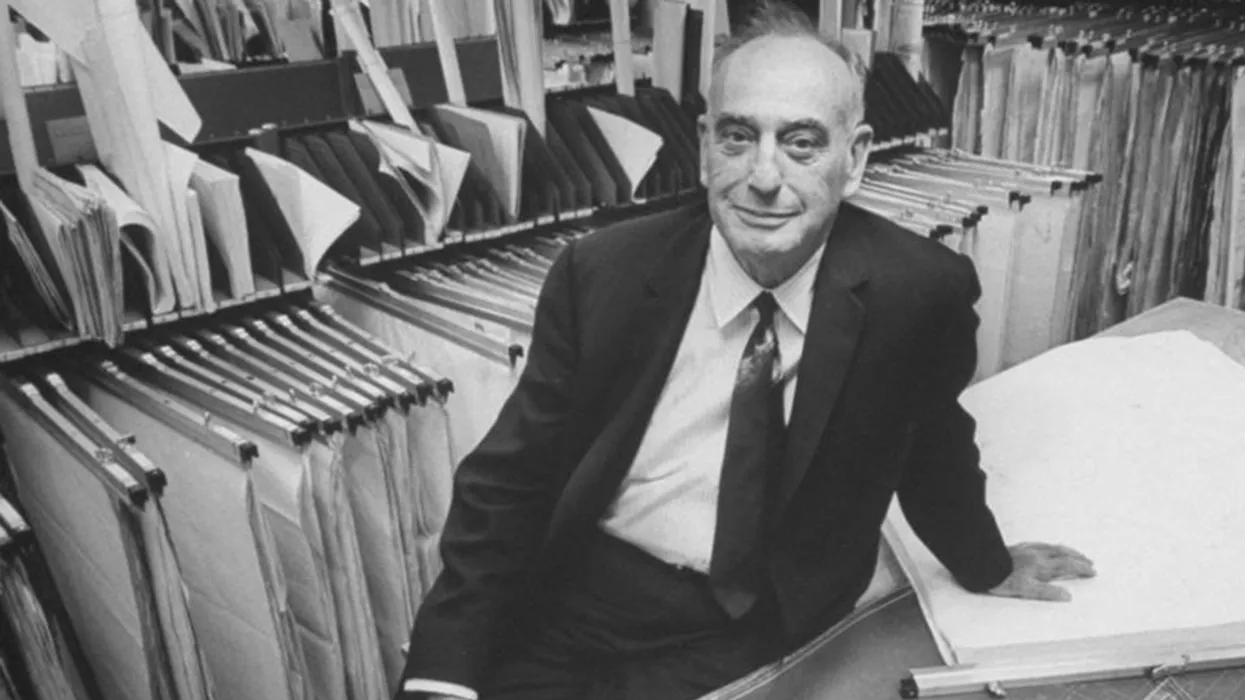
A single man had near-unending influence over the infrastructure of the largest North American cities.
Robert Moses, born in 1888 in New Haven, Connecticut, helped pioneer large-scale urban infrastructure built around cars and commerce. His top-down planning approach later influenced other controlled, master-planned environments, including those created by Walt Disney.
‘An extraordinary man who, denied power within the normal framework of the democratic process, stepped outside that framework.’
Moses held many titles during his time in politics and city/park planning, including secretary of state of New York (1927-1929), the first chairman of New York State Council of Parks (1924-1963), and the first commissioner of the New York City Department of Parks and Recreation (1934-1960).
Mr. Moses’ neighborhood
Moses’ influence can be seen all over New York City, and he is predominantly responsible for turning a collection of neighborhoods into the common metropolis that most cities appear as today.
It was Moses’ idea to run expressways right through the middle of cities to maximize access to commercial zones. He was responsible for infrastructure projects like the Brooklyn-Queens Expressway, the Staten Island Expressway, and the Cross Bronx Expressway. Many bridges that lead into New York City and Manhattan were his doing as well.
FDR Drive, where the United Nations headquarters is located, is also a creation of Moses.
All’s fair
Aside from numerous bridges and expressways, Moses also built nearly 30,000 apartment units by 1939, which is discussed in his biography, “The Power Broker,” by Robert Caro.
The book describes Moses as “an extraordinary man who, denied power within the normal framework of the democratic process, stepped outside that framework to grasp power sufficient to shape a great city and to hold sway over the very texture of millions of lives.”
It was that influence and power in New York that led him to becoming the president of the World’s Fair in 1964. Which, according to a documentary by Defunctland, led to Moses implementing mass evictions in low-income neighborhoods to make way for road systems.
RELATED: Comedian Shane Gillis shocks ESPN crowd with Epstein and illegal alien jokes: ‘This is Disney’
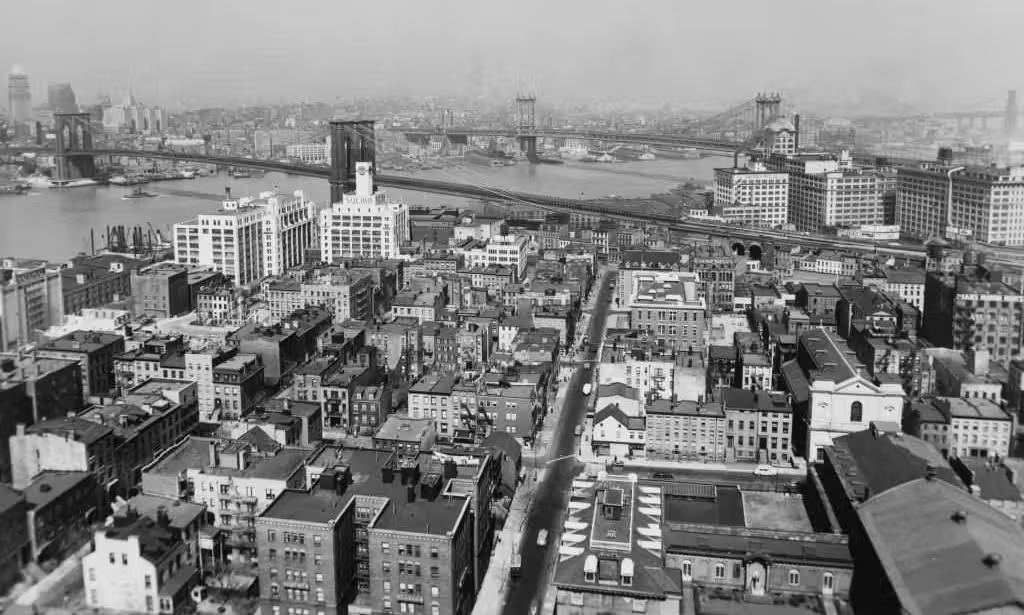 Photo by Bettmann Archive/Getty Images
Moses planned to make at least half of the fairgrounds permanent and openly said that much of the infrastructure was meant to stay as part of his vision of a futuristic park. This plan mirrored Moses’ suggestions for many of the city projects he worked on.
Shopping block
At the same time, the fair was more heavily commercialized than any before it. Moses abandoned the visual and thematic consistency of earlier fairs to maximize profit, allowing companies to design their own exhibits in exchange for high rental and repair fees — services that were allegedly monopolized by a small number of favored contractors.
Moses’ success in commercialization was noted by Disney, who wished to replicate his overall design thesis when plotting out Disney World in Florida. The two had worked together on the 1939 World’s Fair, for which Disney created a special promo cartoon and even licensed a Donald Duck Day.
The first animatronics were created for the 1964 iteration of the fair as well.
Moses’ influence goes far beyond Disney, though. He either directly consulted on, or influenced, the planning of at least a dozen North American cities. He is responsible for the infrastructural theory that cities should be focused on commercial centers, not residential housing.
Room for vroom
The idea that cars should move swiftly through cities on expressways took hold in places like Portland, where Moses was hired to help design the freeway network.
In Pittsburgh, Moses put his skills in planning both parkways and parks into practice when he was hired by the Pittsburgh Regional Planning Association to solve congestion issues. He ended up building the Penn-Lincoln Parkway, the Crosstown Boulevard, and the Point State Park.
RELATED: Tragic Kingdom: String of mysterious deaths shakes Disney World
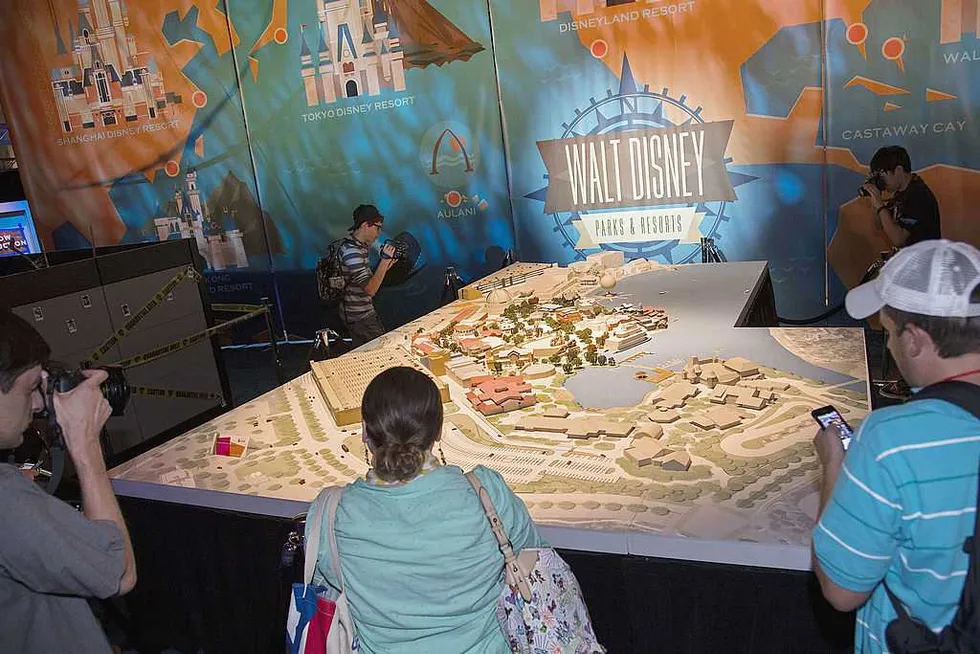 Photo by Paul Hiffmeyer/D23 EXPO via Getty Images
Moses acted as a consultant for a “high-speed freeway” in New Orleans in the 1940s and “stressed the benefits of removing vehicle traffic from the crowded streets,” according to an article by urban planning expert Jeff Brown.
While most of his suggestions were not taken in New Orleans, they were in Hartford, Connecticut, where he planned another freeway. The city declined his suggestion to build a parking garage in tandem with the expressway, though.
Interestingly, Moses’ road was reportedly placed through a slum in order to capitalize on “urban renewal funds” to help pay for the project.
Goin’ south
Other cities like Boston, San Francisco, Baltimore, Memphis, Phoenix, and Toronto, Canada, have seen indirect influence from Moses. In the 1940s and 1950s, Moses eventually faced resistance, and many of his highway projects were scaled back or canceled, according to the New World Encyclopedia.
As the desire for Moses’ planning skills eventually soured, he and others looked to opportunities in Latin America.
The article “Transforming the modern Latin American city: Robert Moses and the International Basic Economic Corporation” discusses how in 1950, the mayor of Sao Paulo, Brazil, hired a commercial corporation headed by Nelson Rockefeller to design the public works for the city.
Moses was appointed director of studies to work in the “Program of Public Improvements” for Sao Paulo and allegedly caused great controversy in Brazil due to his intentions to import American companies to operate in the country.
Moses’ influence is still visible in major cities where congestion is chronic and housing is scarce. Disney World succeeded for a simpler reason: It was designed entirely around consumerism, without the complications of cars, housing, or civic life.
In that sense, Disney World represents a kind of Robert Moses ideal — an urban space devoted purely to consumption, perfectly controlled, and freed from the democratic friction and human needs that constrained Moses in the real world.
If voters don’t feel relief, the economy isn’t fixed

The concerns of many Americans about their economic well-being may be at the highest level since the Great Depression. Politico recently reported that 46% of Americans say their cost of living is the worst that they can remember, including over one-third of Trump voters. Nothing better exemplifies this than the many “30-somethings” who are unable to purchase a home.
Financial anxieties center around affordability, which is the proxy for evaluating whether the economy is meeting the public’s needs. Affordability is the degree to which households can responsibly pay for essential goods and services.
In the end, the nation’s affordability dilemma is about the confidence people have in the country’s economic future.
Gregg Ip, an economic commentator for the Wall Street Journal, says that affordability cannot be measured solely by economic data, but must also account for perceptions of financial security.
President Trump opined that concerns about affordability are a “hoax” created by Democrats for political purposes. Most Americans would disagree. While the runaway inflation of the Biden presidency has moderated, widespread concerns about affordability persist. According to a recent Politico poll, nearly half of the nation found the cost of their groceries, health care, utilities, and housing to be unaffordable. About half of the respondents said food costs are difficult to manage, and more than a quarter skipped medical appointments because of the cost.
In the 2026 midterm elections, it will be incumbent upon Republicans and Democrats to make an affordability agenda “job one.” These agendas should be the yardstick voters use to cast their vote for members of Congress and state officials.
The U.S. affordability crisis is multidimensional, requiring a dual-track strategy that combines structural reforms with immediate and affordable relief for the most vulnerable citizens. Each party’s affordability agenda should demonstrate when households will realize cost-of-living relief, avoid another round of inflation, provide market incentives for innovation, supply expansion and productivity gains, demonstrate distributional fairness, and stress choice over federal mandates.
Restoring an affordable economy will require that failed federal policies be reversed and the president and Congress focus on fixing long-term root causes.
To make goods and services more affordable, public policies should aim at increasing private-sector housing construction, modernizing domestic energy regulations, expanding production, encouraging competition in the health care insurance market, avoiding deficit spending that can rekindle inflation, rolling back regulations that increase consumer and business expenses, and devolving social and educational programs to the states to tailor taxpayer-friendly solutions to local challenges.
The nation’s affordability dilemma is not only about the price of goods and services. It concerns the relationship between costs, income, and the perception of financial security. In the end, it is about the confidence people have in the country’s economic future.
RELATED: All I want for Christmas is for Vivek Ramaswamy to stop embarrassing the GOP
 Photo by Jon Cherry/Getty Images
When households and businesses feel “squeezed,” they lose faith that public or private institutions are protecting their interests. A September 2025 poll conducted by the Pew Research Center found that just 17% of Americans trusted the federal government to do the “right thing” most of the time. Similarly, the July 2025 Gallup survey reported that less than 30% of Americans had confidence in U.S. institutions.
The major impediments to addressing the high cost of living are deep ideological divides over causes and solutions. Progressives emphasize government mandates and regulations, subsidies, and deficit spending. Conservatives stress fiscal restraint and market-driven solutions. Adopting common-sense economic reforms requires compromise and the rejection of left and right extremism driven by grievances and rage.
There is no more important issue for voters than which candidates and parties will boldly tackle the affordability challenge. Success will be influenced by policies that encourage business investment and innovation and workers keeping more of their income.
Editor’s note: This article was originally published by RealClearPolitics and made available via RealClearWire.

2025 Showbiz Recap: Milestones, collaborations, and farewells in Philippine entertainment

Philippine showbiz marked 2025 with major milestones, landmark collaborations, and moments of remembrance.





