Day: December 27, 2025
Browns’ Myles Garrett says it would be ‘special’ to break sack record against Aaron Rodgers
Cleveland Browns’ Myles Garrett is a half-sack away from tying the NFL single-season sack record, and he said it would be special do it against Pittsburgh Steelers’ Aaron Rodgers.
Phillies’ Bryce Harper sends apparent message to team exec in TikTok post after criticism
After criticism from the Philadelphia Phillies’ front office, Bryce Harper wore a shirt that sparked reaction and speculation about his response to management’s remarks.
Texas 19-year-old Camila Mendoza Olmos vanishes outside her home on Christmas Eve
Camila Mendoza Olmos, a 19-year-old who “normally goes for a morning walk,” was last seen outside her home on the morning of Christmas Eve, authorities said.
Italian authorities arrest 9 people who allegedly used charities to funnel more than $8m to Hamas
Italy arrested nine people linked to three charities that allegedly funneled approximately $8.2 million to the Hamas terrorist organization.
2025 shockers: The biggest moments that rocked the campaign trail
Political power shifts dominated 2025 as Trump pushed redistricting battles and Democrats overperformed in elections, setting the stage for 2026 midterms.
Don’t Blame Me Kid!
Monday past we looked at an anecdotal piece from the NYTimes about how young people unrealistically think life is unaffordable. But it took a piece in The Free Press for me to understand just how wide and deep the ingratitude and expectation gap is between the youth and our seniors, the title – “Total Boomer Luxury Communism Is Bankrupting America.” Nothing like starting a piece with an insult.
The post Don’t Blame Me Kid! appeared first on The Hugh Hewitt Show.
Preparedness isn’t paranoia. It’s pattern recognition.
A certain smug comfort belongs to people who have never stood between a riot line and a camera, never smelled accelerant on the wind, never watched their phones lose signal while fire chewed through an entire neighborhood. They talk about “heated rhetoric” and “charged atmospheres” as if danger were theoretical. For women reporters on the ground, it isn’t.
The front line is not a metaphor. It is a place. And it is getting more dangerous by the year.
This is not a gadget story. It is a survival story.
I have covered Antifa riots where the mob knew my name before I reached the sidewalk. I have been screamed at, followed, and threatened by people who publicly denounce violence while privately practicing it. I have watched law enforcement stand down under progressive policies that place the comfort of agitators above the safety of citizens. And I have learned, the hard way, that when cities become unlivable, women pay first.
The left loves to talk about “lived experience.” Here is mine: Democrat governance has made America’s major cities objectively less safe, and being a female independent journalist in them now requires the mindset of a survivalist.
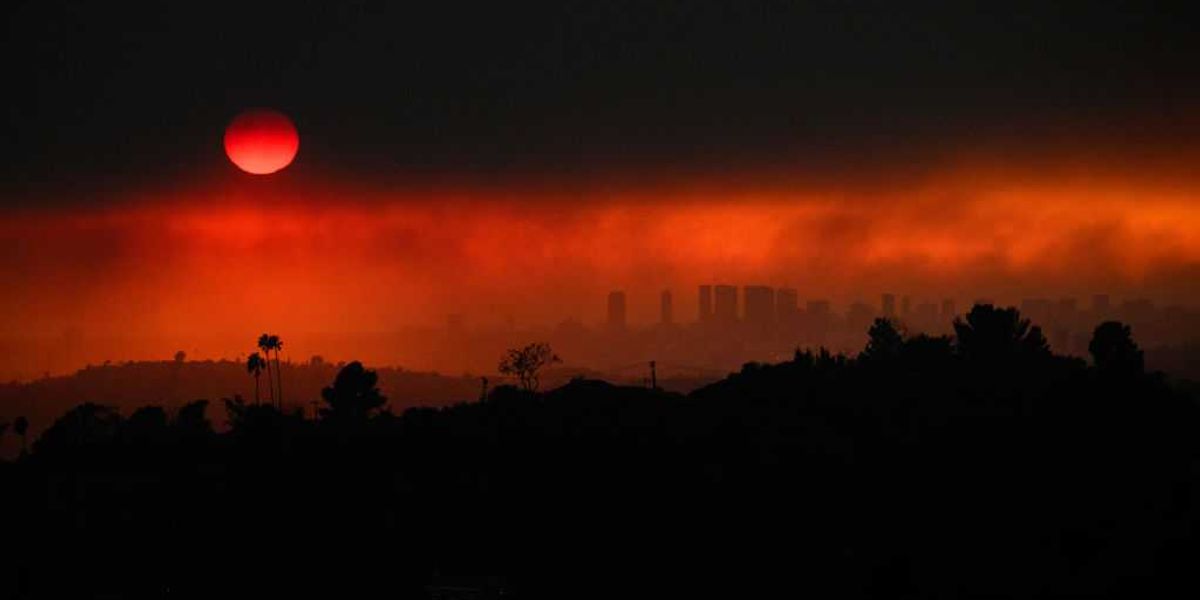
That became brutally clear during the Los Angeles wildfires of 2025.
I was there when the sky turned orange and evacuation orders contradicted one another. Cell towers failed. Emergency lines were overwhelmed. Friends and family lost homes — not hypothetically, not statistically, but completely. In that chaos, the only reason I was able to coordinate help, locate people, and call for assistance was a satellite phone. While 911 systems collapsed, that device worked. No signal dependency. No excuses.
That is not a gadget story. It is a survival story.
The same lesson repeats itself elsewhere. In Washington, D.C., shootings now occur in places that once felt immune — near offices, events, and corridors of power. I was at Butler. I have been steps away from moments that could have gone very differently. Anyone insisting that “these things don’t happen here” is either lying or sheltered by privilege.
When whistleblowers reach out to me, they do not do it over casual cell calls. They use secure satellite communications, because they understand something our leaders prefer not to acknowledge: privacy is safety. Satellite phones are resistant to interception, independent of fragile infrastructure, and immune to spam and shutdowns. When people have something dangerous to say, they choose tools that help keep them alive.
This is not paranoia. It is pattern recognition.
People have died hiking because there was no signal. Boaters have vanished because help could not be reached. Hurricanes do not care about ideology. Fires do not check voter registration. Yet one party consistently opposes disaster preparedness, energy independence, and resilient infrastructure — while demanding blind trust in systems that fail precisely when they are needed most.
Preparedness is not extremism. It is common sense.
Redundancy in communication is not political. Neither are solar-powered backups or hardened devices. Nor is concern about electromagnetic vulnerabilities when our lives run through centralized, fragile networks. Thinking ahead does not make you radical. It makes you female in a country that keeps telling women to be brave while stripping away the tools that make bravery survivable.
And yes, it matters who builds those tools.
If I am calling for help, I want American customer service — American voices, American-owned companies. Safety should not come with a foreign accent and a hold button. Trust is part of security.
This is why satellite phones, solar chargers, emergency kits, and hardened cases are no longer niche products. They are rational responses to an increasingly unstable political and physical environment. They are also meaningful gifts — because nothing says you care like giving someone a way to come home alive.
RELATED: A nation without trust is a nation on borrowed time
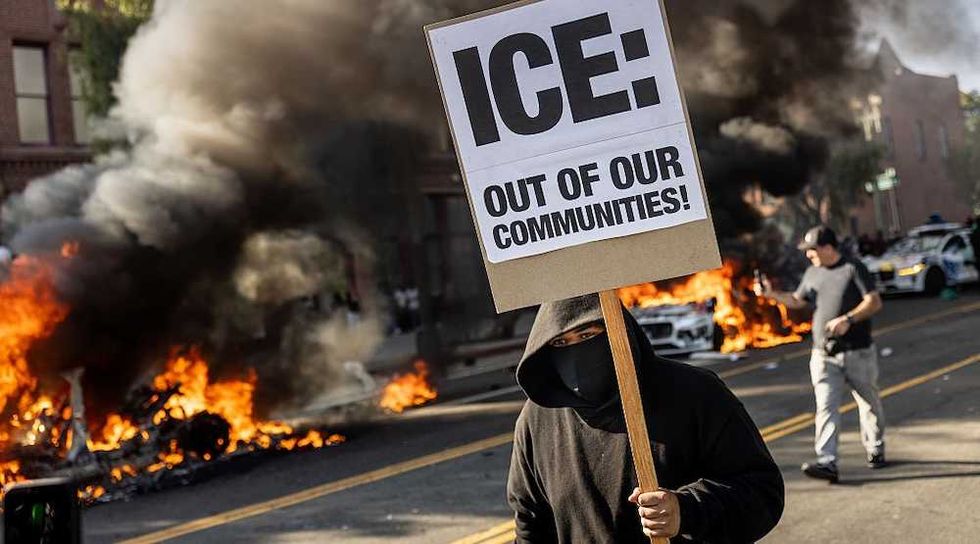 Photo by Jay L Clendenin/Getty Images
Which brings us to 2026.
Around President Trump, TPUSA events, or Republican members of Congress, the threat environment is asymmetric. The left has normalized political violence while denying it exists. Media figures excuse it. Politicians minimize it. Prosecutors decline to prosecute it. And women journalists who refuse to conform are expected to absorb the consequences quietly.
I won’t.
The question voters should ask heading into the midterms is not which party sounds kinder on cable news. It is which party acknowledges reality — and equips Americans, especially women, to survive it.
One side treats chaos as a political tool. The other treats safety as the foundation of freedom.
I know which one kept me connected when the fires closed in. I know which one refuses to pretend riots are “mostly peaceful.” And I know which one understands that strong borders, strong policing, resilient infrastructure, and personal preparedness are not luxuries in dangerous times.
The front line is expanding. It runs through our cities, our forests, our streets, and our inboxes. Women are already on it — whether policymakers realize it or not.
The only question left is whether America will choose leaders who take our safety seriously or continue sacrificing us to ideology.
Because the danger is real. And pretending otherwise is the most reckless policy of all.
‘Baby, It’s Cold Outside’: The perfect song to drown out 2025’s pop dreck

The top songs this Christmas should certainly offend anyone who thought “Baby, It’s Cold Outside” was worthy of outrage.
At the height of the woke era, media outlets argued over whether the 1944 Frank Loesser classic should be banned, as radio stations pulled the song because its lyrics allegedly alluded to “date rape.”
‘Baby, I’m a dog, I’m a mutt.’
The media apparatus sprung into action with parody after cross-dressing parody. Few defended the song — surprisingly, Variety was one of the biggest outliers — and the “Me Too” mantra carried on looking for more scalps to take.
Robin Thicke’s “Blurred Lines” soon received similar treatment, despite garnering almost a billion views on YouTube. With featured artist Pharrell saying the song he profited off of was evidence of a prominent “chauvinist culture,” that art was not allowed to exist as art.
While offense can be taken in any generation’s music, it seems appropriate to note that it seemingly goes one direction, and progressive cookie-cutter sexual content cannot be questioned.
This has not changed in 2025, as slop tops the charts with stereotypical soft-core imagery.
Sombr, ‘Back to Friends’
Topping the Billboard charts in the rock and alternative category as of Dec. 17 is “Back to Friends” by Sombr. In this song by New Yorker Shane Michael Boose, he talks about the difficulty of returning to a normal friendship with some one he has slept with.
The song about being forgotten by a presumed love one remains fairly generic until the music video is taken into account, which features multiple gay make-out scenes juxtaposed with explosions of lava.
RELATED: Taylor Swift isn’t a role model — and it’s time for moms to stop pretending she is
Leon Thomas, ‘Mutt’
The R&B and hip-hop category is led by Leon Thomas’ “Mutt.”
Although the song came out in 2024, it is hitting new highs for the 2025 Christmas season, with lyrics about Thomas convincing a woman that there is no need for them to wait to have sex, because, “Baby, I’m a dog, I’m a mutt.”
Thomas notes that he wishes for him and his new lady to “break in” his new apartment, while adding that he believes in the Second Amendment, with the lyrics: “Thirty-two, like my pants size ’cause a n***a tried breaking in.”
The song is really not offensive, but neither are lyrics from the 1940s saying, “My mother will start to worry.”
RELATED: The viral country anthem that has girlboss Twitter melting down and trad women cheering
Kehlani, ‘Folded’
Not to be forgotten at No. 2 on the R&B list is Kehlani’s “Folded.”
Kehlani Ashley Parrish, an Oakland-born singer who once aspired to be a Juilliard-trained dancer, shows off her moves in the video, where she sports a completely see-through dress and essentially dances naked alongside women in their underwear.
Again, while this is not a new phenomenon for a music video, it seems extremely egregious when placed next to the 1949 film “Neptune’s Daughter” that popularized “Baby, It’s Cold Outside.”
While Kehlani carries laundry and talks about folding clothes in her music video, the obvious inference is that she is talking about her preferred sexual position.
The lyrics website Genius states, “Here, Kehlani seems to be implying she can ‘fold’ her body for her lover if they decide they want to become romantic again.”
Taylor Swift, ‘The Fate of Ophelia’
It comes as no surprise that Taylor Swift is topping the pop charts with “The Fate of Ophelia,” even though the music video came out in October. Swift obviously sexualizes herself — maybe Dean Martin did too? — as a 1950s showgirl, but the song centers on Shakespeare’s “Hamlet” and has Swift nearly dying from heartbreak in the lyrics.
Some lyrics are almost direct lifts from “Hamlet,” but the song as a whole is light-years away in terms of degeneracy in comparison to the other items on this list.
However, it is hard to imagine how it is conceivable that Swift dancing in lingerie and being groped on a pirate ship is less controversial than, “My sister will be suspicious (Gosh, your lips look delicious).”
While music lovers may notice that wild offense-taking now skips the industry unless it serves a political purpose, that equilibrium rarely holds forever. Cultural pendulums do swing.
When they do, the correction sometimes arrives loudly — through provocation, politics, or spectacle. But just as often, it comes quietly, in the form of art that refuses to scandalize at all.
Ella Langley, ‘Choosin’ Texas’
Which brings us to Ella Langley. Topping the country charts this Christmas with “Choosin’ Texas,” the Alabama native commits a far subtler transgression: She sings plainly about heartbreak, drinking alone, and the ache of love gone wrong — without sexual exhibitionism, ideological signaling, or manufactured outrage. She even manages to say a few positive things about Texas and Tennessee. In 2025, that kind of restraint may be the most disruptive posture left.
America First energy policy is paying off at the pump
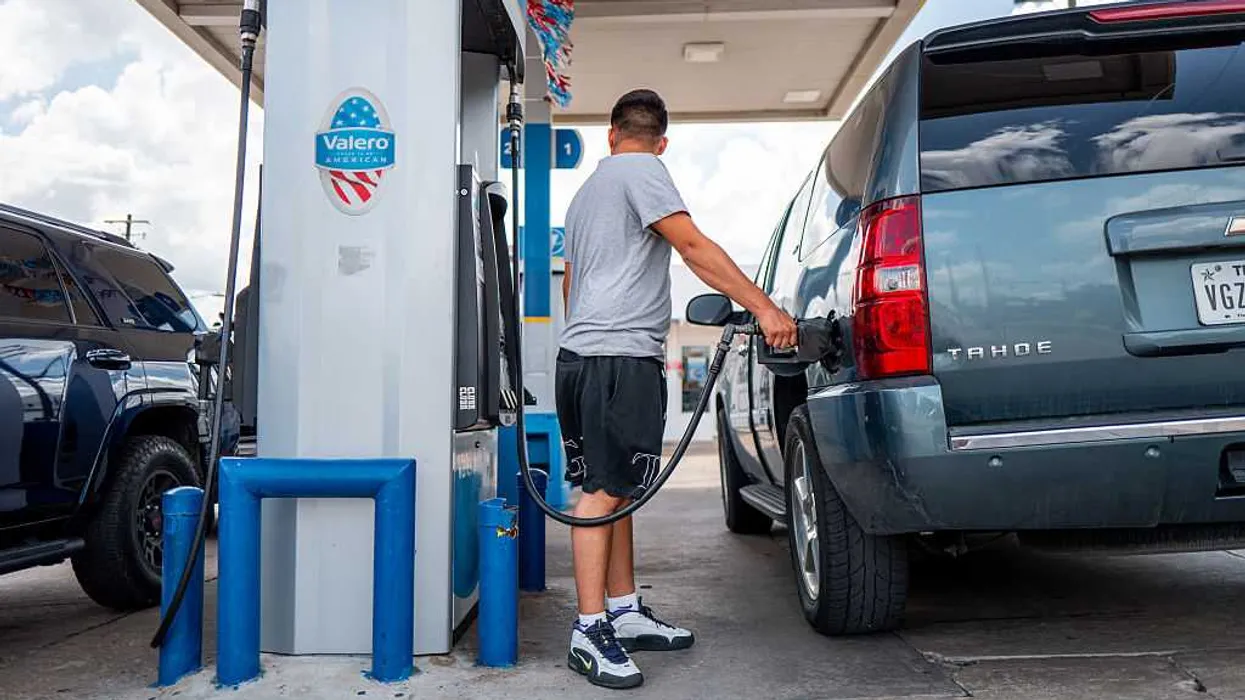
When it comes to gas prices, what a difference one administration can make. After peaking above $5 a gallon under President Biden, prices at the pump are now at their lowest levels in more than four years — and still falling. Today, the national average for regular gas sits at about $2.85, and a growing number of stations are dipping below $2. That’s a real Christmas gift for working families, one that makes a meaningful difference.
Falling gas prices bring immediate relief to households worried about affordability while also easing pressure across the broader economy. Compared with this time last year, Americans are saving a collective $400 million per week at the pump, according to GasBuddy.
Cheaper fuel deserves celebration, but there is more work to be done to lock in these gains and drive prices even lower.
Most people associate the One Big Beautiful Bill Act primarily with tax cuts. But it may prove to be one of the most consequential pro-energy laws passed in years. Lower gas prices do not happen by accident. They are the result of deliberate policy choices — specifically, President Trump’s reversal of the anti-energy agenda pursued by the Biden administration.
That agenda, driven by radical environmental activists, sought to force a rapid transition away from oil and gas regardless of cost. It relied on higher taxes, blocked infrastructure projects, restricted leasing, and constrained production. Taken together, those policies drove up prices and fueled inflation that hit working families hardest.
On day one, President Trump moved quickly to unwind many of those decisions, issuing nearly half a dozen energy-focused executive orders that restored certainty for producers. That early action was followed by his signature legislative achievement, the One Big Beautiful Bill Act, which combined broad-based tax relief with policies designed to restore American energy dominance.
The bill reduces production costs by repealing the Inflation Reduction Act’s misguided fee increase on oil and gas produced on federal lands. It cuts that fee by 25%, making domestic production more attractive and more affordable for drillers.
Just as important, the OBBBA restores predictability to federal leasing. The law mandates nearly 40 offshore oil and gas lease sales in the Gulf of America, Alaska, and other regions. It also establishes quarterly onshore lease sales and biannual offshore sales, giving the private sector long-term certainty. Under President Biden, leasing all but ground to a halt, with fewer leases issued than at any point since the 1960s — crippling the pipeline of future energy projects.
The bill also repeals or tightens a range of Green New Deal-style tax credits that heavily subsidized renewables at the expense of oil and gas. Those credits masked the true costs of renewable projects and distorted electricity markets, contributing to grid instability and higher energy prices.
RELATED: 5 truths the climate cult can’t bury any more
 Justin Hamel/Bloomberg via Getty Images
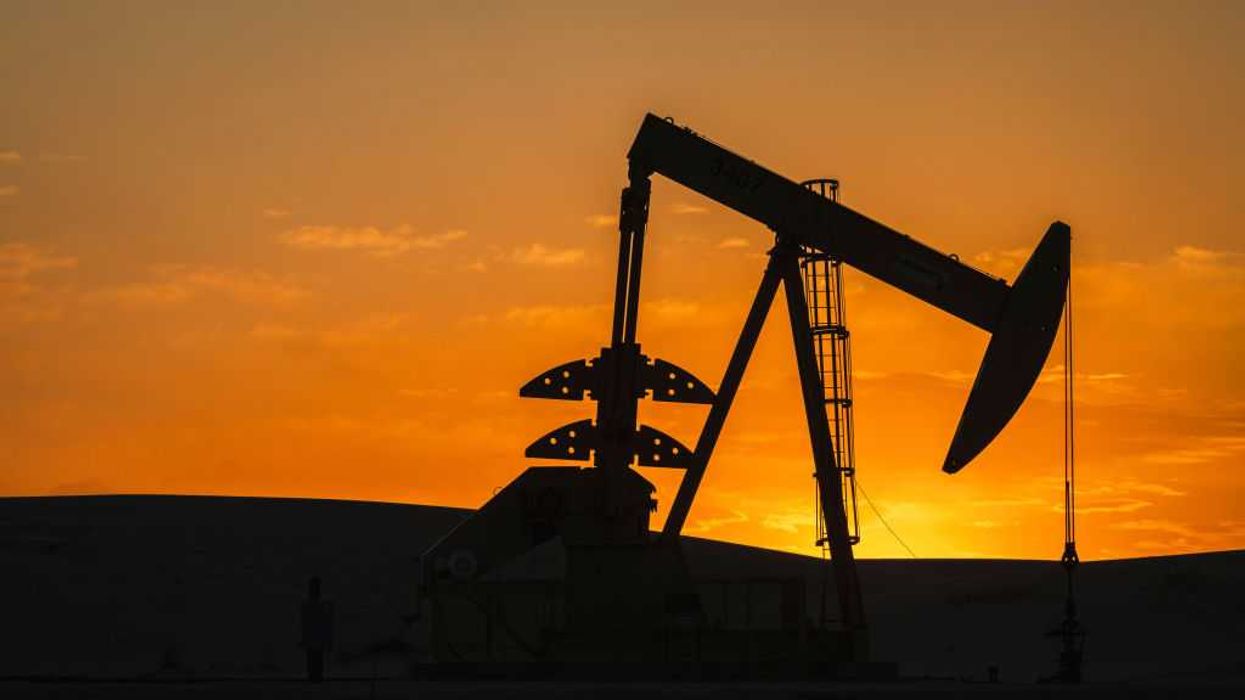
The bottom line is simple: The OBBBA encourages more oil and gas production at lower cost. Over the next decade, that means a steadier supply of crude ready to be refined into affordable gasoline.
Still, Congress and the administration should not take their foot off the gas. Cheaper fuel deserves celebration, but there is more work to be done to lock in these gains and drive prices even lower.
At the top of the list is permitting reform. Energy projects routinely take longer to permit than to build. Environmental reviews intended to inform decisions have morphed into open-ended processes that stretch on for years. Even approved projects can be tied up indefinitely by duplicative reviews and serial lawsuits from activist groups. The result is uncertainty that discourages investment and delays infrastructure Americans depend on every day.
America First energy dominance is working, and families are saving real money because of it. The House has already passed several pro-energy permitting reforms, but meaningful engagement with the Senate will be required to deliver a comprehensive overhaul to the president’s desk. Without permitting reform, the full benefits of the OBBBA’s energy provisions will remain unrealized.
The lesson is clear: Energy dominance follows when government gets out of the way. If permitting reform advances next year, producers will gain the certainty and speed they need to deliver reliable, affordable energy to consumers. In 2026, Congress should finish the job.
PBA: TNT survives Magnolia, advances to Philippine Cup semifinals
_2025_12_27_22_30_34.jpg)
Twice-to-beat TNT survived Magnolia, 118-109, in the PBA Philippine Cup quarterfinals on Saturday at the Smart Araneta Coliseum to advance to the semifinals.