

Day: December 30, 2025
‘Who put them there?’ Scientists struggle to explain UFO-like objects captured in 1950s astronomy photos.

The National Geographic Society undertook a massive astronomical survey between 1949 and 1958 at the Palomar Observatory in California, snapping thousands of photographs of the sky from the north celestial pole to 33 degrees south of the celestial equator.
According to a 1959 leaflet issued by the Astronomical Society of the Pacific, the result was a “map of the sky, one that can be used like any road map, to help the astronomer find his way to objects too faint to see directly at the eye-piece of a telescope.”
The Palomar Observatory Sky Survey images captured a multitude of inexplicable star-like objects that astronomers had reportedly seen appear then quickly vanish. The objects, which flashed in the sky several years before the October 1957 launch of Sputnik, supposedly cannot be chalked up to gravitational lensing, gamma ray bursts, fragmenting asteroids, and/or various non-astronomical effects.
“We’ve ruled out some of the prosaic explanations, and it means we have to at least consider the possibility that these might be artificial objects from somewhere,” Stephen Bruehl, a professor at the Vanderbilt University School of Medicine, told Live Science.
In a peer-reviewed study published in October in the journal Scientific Reports, Bruehl and co-author Beatriz Villarroel, a Swedish astronomer, found that there are “associations beyond chance between occurrence of transients and both nuclear testing and [unidentified anomalous phenomenon] sightings.”
The duo analyzed the transient data available for the time period Nov. 19, 1949, to April 28, 1957, and tested for possible associations between the occurrence of 107,875 transients, which were observed on 310 of the 2,718 days in this period, and above-ground nuclear weapons tests, which were conducted by the U.S., the U.K., and the former USSR on 123 days during the study period.
RELATED: Pentagon psyop exposed: Military reportedly cooked up tales of alien technology in weapons cover-up
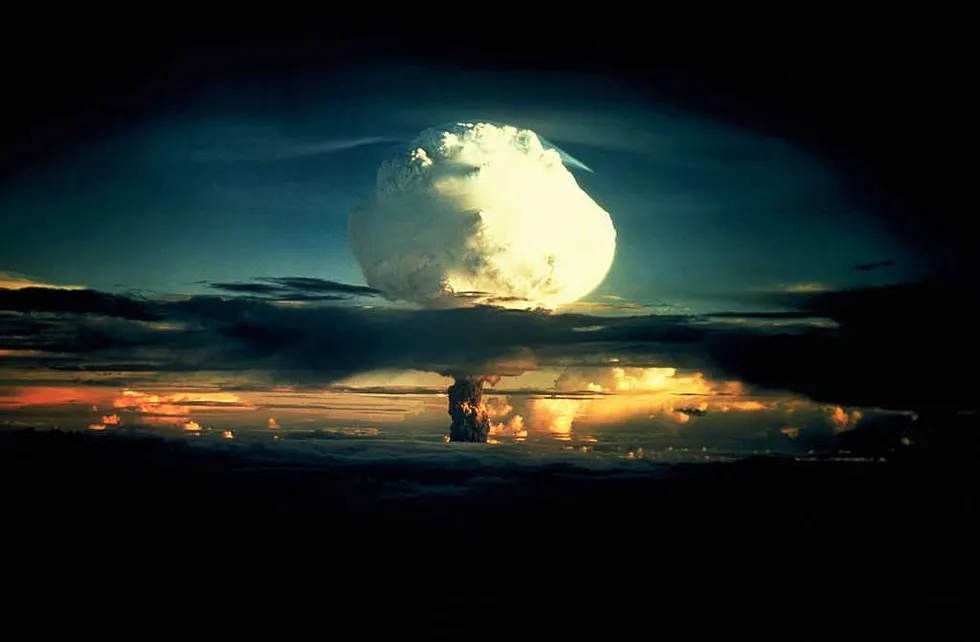 Photo by © CORBIS/Corbis via Getty Images
The researchers found that a “transient was 45% more likely to be observed on dates within a nuclear test window compared to dates outside of a nuclear test window.”
The duo also linked the transients to unidentified flying object/unidentified anomalous phenomenon reports, noting that “for days on which at least one transient was identified, significant associations were noted between total number of transients and total number of independent UAP reports per date.”
‘Why do they seem to show interest in nuclear testing?’
“For every additional UAP reported on a given date, there was an 8.5% increase in number of transients identified,” Bruehl and Villarroel wrote.
When it came down to hypothesizing what the transients might be, the duo came up with two possibilities that could account for associations of transients with both nuclear testing and UAP reports.
“The first involves an unexpected and previously undocumented atmospheric phenomenon triggered by nuclear detonations or related to nuclear fallout that may serve as a stimulus for some UAP reports and appear as transients on astronomical images,” they wrote.
The duo noted, however, that this first hypothesis is problematic, as effects in the atmosphere “would be likely to result in a streak on the image over the 50 min exposure, yet all transients appear as distinct point sources rather than streaks.”
Additionally, the researchers noted that transients were “most often observed one day after a nuclear test; such atmospheric phenomena would have to be sustained and remain localized in one location for approximately 24 h to account for the visual appearance of transients.”
After poking holes in their first hypothesis, the duo propped up their second hypothesis on the “well-known strand of UAP lore suggesting that nuclear weapons may attract UAP.”
“Within this latter hypothesis, our results could be viewed as indicating that transients are artificial, reflective objects either in high-altitude orbits around Earth or at high altitudes within the atmosphere,” they added.
Bruehl said to Live Science, “If it turns out that transients are reflective artificial objects in orbit — prior to Sputnik — who put them there, and why do they seem to show interest in nuclear testing?”
Michael Wiescher, a nuclear astrophysicist at the University of Notre Dame in France, suggested to Scientific American that nuclear tests alone might be the simpler explanation for the transients as they “obviously have an impact on the atmosphere” and can leave “a lot of junk in the outer atmosphere.”
Sean Kirkpatrick, former head of the Department of War’s UAP-investigating All-Domain Anomaly Resolution Office, similarly suggested that the explanation likely has to do with nuclear tests and the sun, noting that the “first thing that comes to mind is solar flare radiation or ionized particle radiation from nuclear testing.”
Kirkpatrick also suggested that high-altitude balloons, which were used for nuclear monitoring, could account for some of the UAP reports.
Like Blaze News? Bypass the censors, sign up for our newsletters, and get stories like this direct to your inbox. Sign up here!
How data centers could spark the next populist revolt

Everyone keeps promising that artificial intelligence will deliver wonders beyond imagination — medical breakthroughs, massive productivity gains, boundless prosperity. Maybe it will. Maybe it won’t. But one outcome is already clear: If data centers keep driving up Americans’ electricity bills, AI will quickly become a political liability.
Across the country, data center expansion has already helped push electricity prices up 13% over the past year, and voters are starting to push back.
Handled correctly, AI can strengthen America. Handled poorly — by letting data centers overwhelm the grid and drive families toward energy poverty — it will accelerate decline.
In recent months, plans for massive new data centers in Virginia, Maryland, Texas, and Arizona have stalled or collapsed under local backlash. Ordinary Americans have packed town halls and flooded city councils, demanding protection from corporate projects that devour land, drain water supplies, and strain already fragile power grids.
These communities are not rejecting technology. They are rejecting exploitation. As one local official in Chandler, Arizona, told a developer bluntly, “If you can’t show me what’s in it for Chandler, then we’re not having a conversation.”
The problem runs deeper than zoning fights or aesthetics. America’s monopoly utility model shields data centers from the true cost of the strain they impose on the grid. When a facility requires new substations, transmission lines, or transformers — or when its relentless demand drives up electricity prices — utilities spread those costs across every household and small business in the service area.
That arrangement socializes the costs of Big Tech’s growth while privatizing the gains. It also breeds populist anger.
A better approach sits within reach: neighborhood battery programs that put communities first.
Whole-home battery systems continue to gain traction. Rooftop solar panels, small generators, or off-peak grid power can recharge them. Batteries store electricity when it’s cheap and abundant, then release it when demand spikes or outages hit. They protect families from blackouts, lower monthly utility bills, and sometimes allow homeowners to sell power back to the grid.
One policy shift should become non-negotiable: Approval for new data centers should hinge on funding neighborhood battery programs in the communities they impact.
In practice, that requirement would push tech companies to help install home battery systems in nearby neighborhoods, delivering backup power, grid stability, and real relief on electric bills. These distributed batteries would form a flexible, local energy reserve — absorbing peak demand instead of worsening it.
RELATED: Your laptop is about to become a casualty of the AI grift
 Photo by: Jim West/UCG/Universal Images Group via Getty Images
Most importantly, this model reverses the flow of benefits. Working families would no longer subsidize Big Tech’s expansion while receiving nothing in return. Communities would share directly in the upside.
Access to local land, water, and electricity should come with obligations. Companies that consume enormous public resources should invest in the people who live alongside them — not leave residents stranded when the grid buckles.
Politicians who ignore this gathering backlash risk sleepwalking into a revolt. The choice is straightforward: Build an energy system that serves citizens who keep the country running, or face their fury when they realize they have been sacrificed for someone else’s high-tech gold rush.
Handled correctly, AI can strengthen America. Handled poorly — by letting data centers overwhelm the grid and drive families toward energy poverty — it will accelerate decline.
We still have time to choose. Let’s choose wisely.
Forget ‘Die Hard’ — ‘Brazil’ is the ultimate Christmas movie

The cultural powers that be determined long ago that a film needn’t deal directly with the Nativity of our Lord and Savior to qualify as a “Christmas movie.”
Many films apparently qualify simply by virtue of their plot events’ proximity to December 25, their festive backdrops, and their occasional visual reference to Coca-Cola Claus, starred pines, and/or the birth of God.
In a way, the Christmas imagery does visually what the movie’s eponymous theme song does sonically: tease at something lovely and wonderful beyond the nightmare.
Rest assured as the bare-footed cop wastes German terrorists at his estranged wife’s office party; as the two burglars repeatedly fall prey to an abandoned adolescent’s mutilatory traps; and as the inventor’s son unwittingly turns his Chinatown-sourced present into a demon infestation — these are indeed Christmas movies.
Given the genre’s flexible criteria, Terry Gilliam’s 1985 masterpiece “Brazil” also qualifies.
State Santa
In truth, the Python alumnus’ film about a bureaucrat’s maddening investigation of his totalitarian government’s execution of the wrong man is a far stronger entry than “Die Hard,” “Home Alone,” “Gremlins,” and other such flicks.
Not only is there Christmastime imagery throughout, but such visuals are also of great importance, providing insights both into the treachery of the film’s principal antagonist — the state — as well as into what appears missing in Gilliam’s dystopian world.
In the opening scene, a man pushes a cart full of wrapped presents past a storefront window framed by tinsel and crowded with “Merry Christmas” signage, television sets, and baubles.
Next we enter an apartment where a mother reads “A Christmas Carol” to her daughter, a father wraps a present, and a boy plays at the foot of a well-dressed evergreen.
After numerous scenes featuring gift exchanges, mutterings of “Happy Christmas,” and Christmas trees, we meet a kindly faced man dressed as Santa.
Jingle hells
This is, however, no feel-good Christmas movie.
The storefront window is firebombed.
Armored police storm into the family’s apartment, jab a rifle in the father’s gut, and take him away in a bag while his wife screams in horror.
The gifts exchanged and piling up throughout the film — besides the offers of job promotions and plastic surgery — appear to all be versions of the same novelty device, a meaningless “executive decision-maker.”
The kindly faced man dressed as Santa is a propaganda-spewing government official who rolls into the protagonist Sam Lowry’s padded cell on a wheelchair to inform Lowry — played by Jonathan Pryce — that his fugitive lover is dead.
With exception to the heart-warming domestic scene interrupted by the totalitarian bureaucracy’s jackboots at the beginning of the film, the Christmas imagery rings hollow and for good reason.
Extra to dehumanizing workplaces, purposefully meaningless work, bureaucratic red tape, and paperwork that’s so bad it ends up killing Robert DeNiro’s character — at least by the tortured protagonist’s account — the regime’s population-control scheme relies on consumerism.
The regime has, accordingly, done its apparent best to empty Christmas of the holy day’s real significance and meaning, donning it as a costume to sell and control.
RELATED: Santa Claus: Innocent Christmas fun or counterfeit Jesus?

Beyond the nightmare
“Brazil” is not, however, an anti-Christmas film.
The emptiness of the costume prompts reflection about its proper filling — a reflection that should invariably lead one to Christ.
In a way, the Christmas imagery does visually what the movie’s eponymous theme song does sonically: tease at something lovely and wonderful beyond the nightmare Gilliam once dubbed “Nineteen Eighty-Four-and-a-Half.”
“I had this vision of a radio playing exotic music on a beach covered in coal dust, inspired by a visit to the steel town of Port Talbot. Originally the song I had in mind was Ry Cooder’s ‘Maria Elena,’ but later I changed it to ‘Aquarela do Brasil’ by Ary Barroso,” Gilliam told the Guardian.
“The idea of someone in an ugly, despairing place dreaming of something hopeful led to Sam Lowry, trapped in his bureaucratic world, escaping into fantasy.”
Whereas the recurrent theme from the samba references a fantasy the regime can crush, the various indirect reminders that Christmas is about more than presents and half-hearted niceties reference a hidden truth and source of eternal hope: that God was born in Bethlehem.

Will Ashley says he manifested lead role, award nominations 5 years ago

Will Ashley is living his dreams in 2025.
Idris Elba, Lionesses recognized in UK honors list
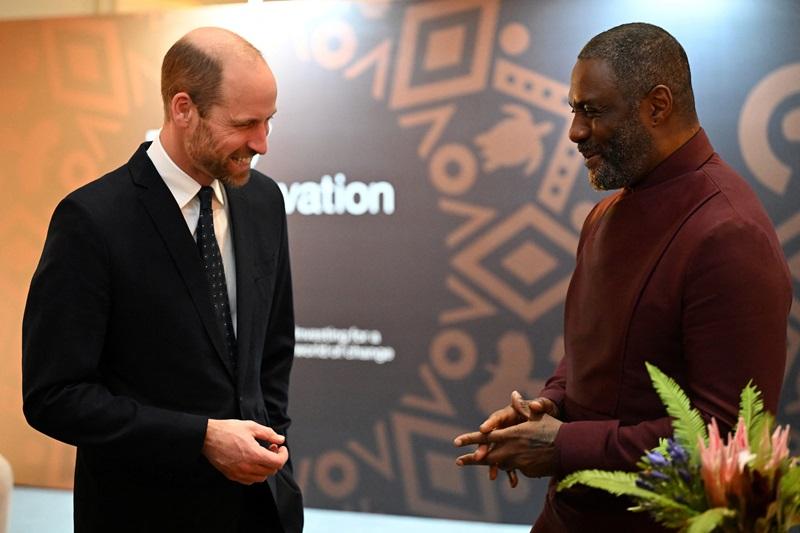
Actor Idris Elba and members of England’s triumphant Women’s Euro 2025 football team were among famous Britons recognized in the country’s traditional New Year Honors on Monday.
Sparkle stars gear up for Kapuso Countdown to 2026 performances

Kapuso and Sparkle stars are hard at work as they gear up for the Kapuso Countdown to 2026, which will be held on December 31 at the Mall of Asia in Pasay City.
Regine Tolentino recreates 2004 FHM cover

Regine Tolentino just proved that she her body is still tea as she recreated her 2004 FHM cover!
K-pop label ADOR files damages suit against ex-NewJeans member

K-pop label ADOR has filed a compensation suit against a former member of megaband NewJeans, the firm said Tuesday, a day after announcing Danielle’s removal following a year-long dispute that stalled the group’s careers.
How to take care of one”s digital well-being this 2026

The new year is just around the corner, a time when many people set new goals and make resolutions, whether it is visiting new places or trying out new hobbies. For those aiming for a healthier lifestyle this 2026, improving digital well-being is also something worth considering.





