Category: Chris rufo
We used to need guts to sin. Now we just need wi-fi.
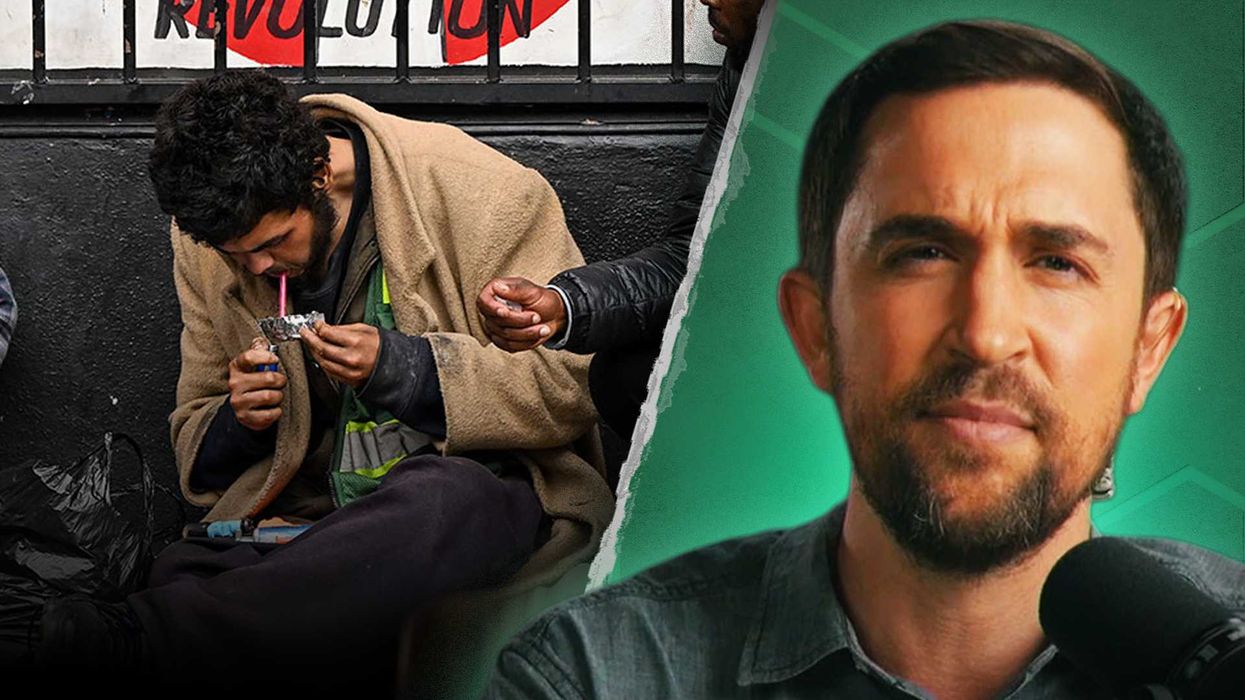
Once upon a time, before the digital age swept us up in a current of global access, vices like gambling, pornography, and marijuana were kept in check with what BlazeTV hosts Christopher Rufo and Jonathan Keeperman argue was healthy friction.
It’s what made Mr. Johnson blush when he skulked up to the checkout counter at the local video rental with an X-rated videotape sandwiched between two rom-coms. It’s what forced hopeful gamblers to sneak into illegal card rooms at the back of sketchy bars, pockets stuffed with ATM cash withdrawn in small increments to avoid spousal skepticism. It’s what necessitated dark parking lot meetups, secret car compartments, and stashes of air fresheners and breath mints.
But today, none of those physical and social barriers exist. Want to watch an adult film? Jump online; there are millions to choose from. Interested in placing a bet? Easy: Open an app and blow $10,000 on a random ping-pong match without ever leaving the comfort of your bed. Out of weed in a state that hasn’t legalized it? No problem; there are hundreds of dispensaries that will illegally ship right to your front door.
The glowing rectangle that lives in our pocket has pulverized every obstacle that once kept vices reined in.
Keeperman laments the death of “the gray market,” where “public shame and censure” were a real obstacle for vice-seekers but not so large an obstacle that they barred them completely from indulging.
“I think that balance is sort of ideal,” he tells Rufo.
“People, unfortunately, without any of these barriers to entry, they go down these rabbit holes; they start cultivating these bad behaviors, these addictions, and it ruins their lives. And it ruins the lives of the people around them, and it’s horrible for society.”
He remembers working at his town’s video rental shop as a teenager and the “cycle of shame” that commenced every time a local would sheepishly duck out of the curtained room at the back of the store with “Debbie Does Dallas” tucked covertly under his arm.
“It was like, ‘All right, man, like, cool. You’re embarrassed; I’m embarrassed to be doing this.’ … But it was good. That’s how it should be,” he reminisces.
This system of shame and risk also benefited kids. Keeperman recalls the notorious male student who stole Playboy magazines from his dad’s secret stash and smuggled them to school in his backpack so he could charge his fellow delinquents $5 for a week’s rental.
“It’s shameful, and if the vice principal catches you, you’re screwed, man. You’re in the doghouse. … You might get suspended or get these demerits or whatever, and your mom’s going to be mad at you,” he laughs.
But in all seriousness, these were real barriers that kept a lot of kids from engaging in pornography. But today, there’s no need for magazines or smuggling. All kids need to do is run a quick Google search alone in their bedrooms, and they’ll be inundated with graphic content from hundreds of sites. Addiction is all but guaranteed.
Keeperman says that while he takes all necessary precautions to prevent his children from accessing graphic content on their devices, he knows there’s only so much he can do.
“My kid’s going to have a public life. He’s going to have a social life that extends beyond the boundaries that we can draw for him as parents. And I can’t control what the kid next door does. You just can’t. And it’s just too easy. It’s too accessible,” he says.
Rufo says the answer to this problem of a barrier-less world is to re-create the barriers in the digital sphere.
“You have to have a digital version of the back room and the curtain, meaning you have to have ID verification, age verification,” he says.
To hear more of his theory, watch the episode above.
Want more from Rufo & Lomez?
To enjoy more of the news through the anthropological lens of Christopher Rufo and Lomez, subscribe to BlazeTV — the largest multi-platform network of voices who love America, defend the Constitution, and live the American dream.
AI isn’t killing writers — it’s killing mediocre writing
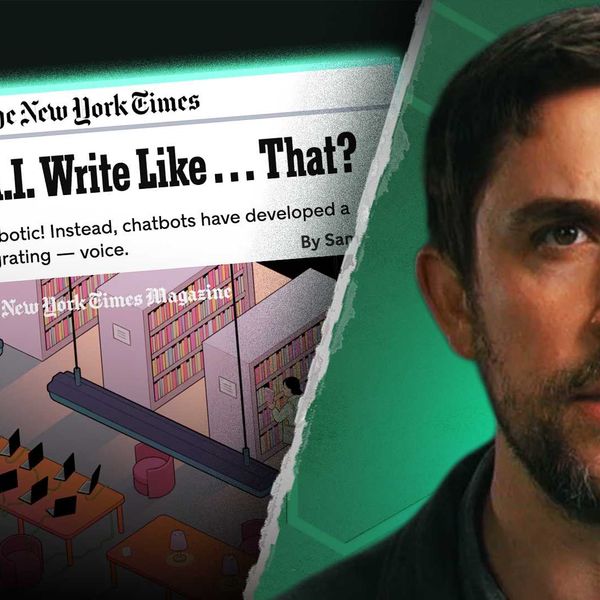
For years, we were warned that artificial intelligence would eventually eliminate the need for writers. In mere seconds, it would be able to crank out essays, articles, reports, blog posts, you name it, rendering flesh-and-blood writers obsolete.
Well, those days are here. AI writing floods our inboxes, social media feeds, and web pages every single day.
But it’s not quite the product we were pitched. While bots can indeed string coherent sentences together, the end result is mediocre at best. Its flat, em-dash heavy, idiosyncrasy-free, polite prose is easily recognizable to average readers, most of whom are disenchanted by the lack of human touch.
It turns out AI — beholden to algorithms and formulas — cannot counterfeit the voices of the deeply complicated, unique creatures that are human beings.
Christopher Rufo and Jonathan Keeperman, BlazeTV hosts of “Rufo & Lomez,” believe that AI writing may actually make writers more valuable — but just the ones with genuine talent.
AI is undeniably eliminating the massive class of mediocre writers. The kind of text AI produces is quickly becoming “the default sound or voice of people who don’t have talent, who can’t do things on their own. … It’s becoming the default voice of stupidity,” says Keeperman.
On the flip side, “Anybody who can write at a level above [AI] now has more value.”
The pervasiveness of AI copy seems to suggest that those genuine talents are few and far between.
“I am seeing [AI writing] everywhere. I am seeing it in published books. … Tons of ad copy even for really prominent companies that obviously have huge marketing departments [are] leaning on these sort of tripartite adjectival phrases. … There’s all these sort of syntactical signals that are giveaways,” says Keeperman, “but it’s also making me attuned to people who can write really well, and I find myself gravitating towards those people.”
But that doesn’t mean writers can’t use AI to their advantage. It is an excellent tool for “research,” “aggregating a lot of information,” “analysis,” and “brainstorming,” Keeperman adds.
Rufo agrees. “Terrible writing, [but] it’s good for discovery. … I think for certain tasks, it’s better than a Google search or a search engine search.”
For someone like him, who conducts large-scale research, AI can expedite the process of sifting through hundreds of pages of PDFs, but it’s not fail-proof.
AI is “maybe comparable to an undergraduate research assistant but … an unreliable [one],” says Rufo.
“You double-check the work, and you realize that the AI makes up 30% of the things that it’s telling you.”
“It seems like something that has huge potential, but I just see it slowing down in its improvement. I see it still having some fundamental flaws that would prevent it from being a trustworthy object of delegation,” he says.
“I remain extremely skeptical of the AI doomers or AI fatalists who think that this is going to take over the world and the machines are going to be controlling everything. It’s like it can’t even format citations. I think we’re a long ways away from the AI taking over the world.”
To hear more, watch the episode above
Want more from Rufo & Lomez?
To enjoy more of the news through the anthropological lens of Christopher Rufo and Lomez, subscribe to BlazeTV — the largest multi-platform network of voices who love America, defend the Constitution, and live the American dream.
Debate: Can JD Vance become the right’s great unifier — or does his VP role stand in the way?
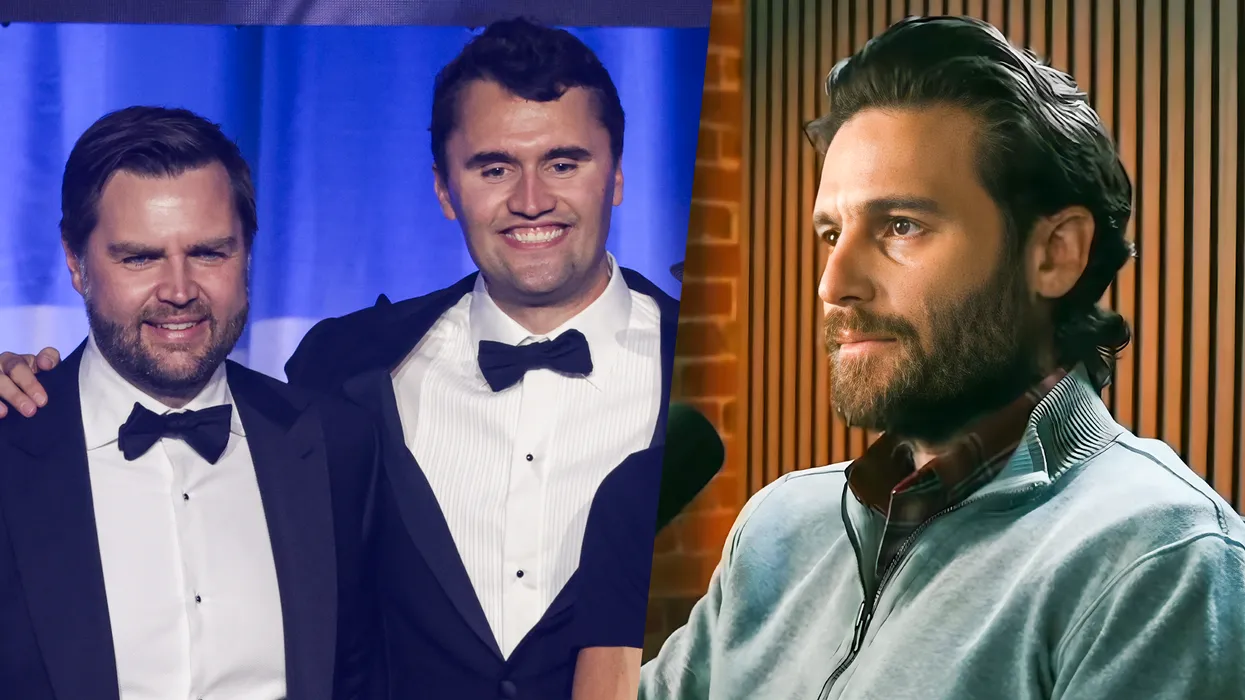
The young conservative movement is experiencing a notable leadership gap amid ongoing chaos in the online right-wing space. Sure, there are passionate influencers and rising political voices, but no one has fully stepped up to unify and guide the broader coalition with a commanding presence.
One person investigative journalist and BlazeTV host Christopher Rufo thinks might be able to step into the role, however, is Vice President JD Vance. But Rufo’s co-host Jonathan Keeperman isn’t sure Vance is up for the job either.
In this episode of “Rufo & Lomez,” the hosts debate whether JD Vance can step up as the unifying leader the conservative movement needs amid escalating chaos.
“I’ve been so far a bit surprised that the vice president hasn’t tried to step into this role,” says Rufo, arguing that Vance has both the “charisma” and the “authority” to effectively lead the movement.
“I’ve known JD over the years. … It does feel like he has some hesitation or maybe even some fear,” he adds.
While Keeperman agrees that Vance “has all of the tools and charisma and … the right talking points” to be an excellent leader, his role as the vice president would actually be a hindrance.
“I don’t think JD Vance should actually do that in his vice presidential position. Not right now. I think it’d be a bit presumptuous. I think people might kind of see it as him stepping in to sort of correct a situation that I think needs to just happen organically,” he counters.
For one, Vance’s position prohibits him from “[speaking] candidly about the administration.”
“Whoever is going to step into this role has to feel credible to this audience, and part of that credibility is going to come from just speaking honestly about all of these different things happening in this ecosystem — whether it’s the different personalities, the ideas, the sort of ideology that’s animating Trump but also the specific actions that the Trump administration is taking,” Keeperman explains.
In other words, the kind of leader people will follow needs to be an outsider who can speak brutal truths about the current administration, and Vance, as Trump’s right-hand man, can’t be that person.
Secondly, President Trump is still the top dog, Keeperman explains. For his VP to assume the authority of this role as the leader of the conservative movement “might not sit well inside of this coalition.”
“Maybe you’re right,” Rufo concedes. “We need some sort of native figure to step up in the same way that Charlie Kirk did, in the same way that Tucker had done.”
To hear more of the conversation, watch the episode above.
Want more from Rufo & Lomez?
To enjoy more of the news through the anthropological lens of Christopher Rufo and Lomez, subscribe to BlazeTV — the largest multi-platform network of voices who love America, defend the Constitution, and live the American dream.
How Minnesota proved blood is thicker than common sense
Traditionally, immigrants adopt the customs and culture of the natives whose country they have moved into. But as we know, progressives have flipped the script. In their warped worldview, the natives must devolve for the sake of the newcomers in the name of “tolerance and inclusivity.”
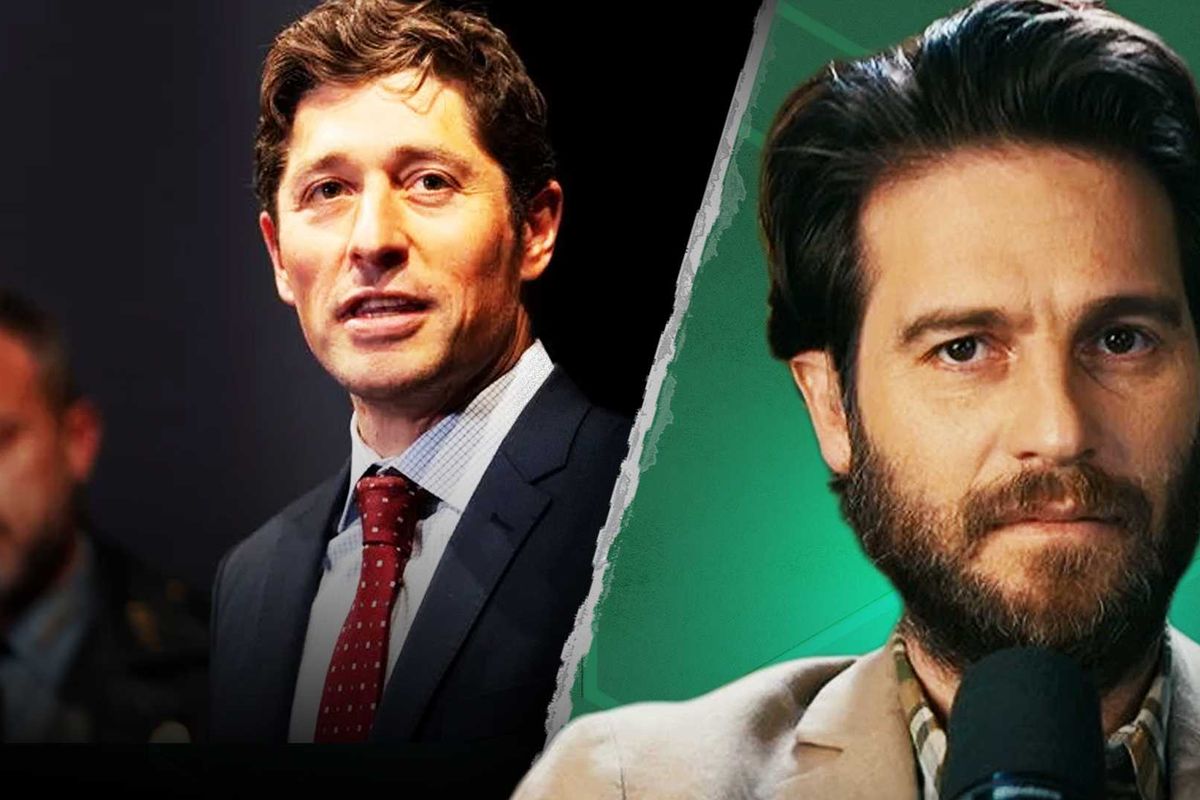
Minnesota is the perfect exhibit. After Christopher Rufo’s reporting exposed massive Somali-led fraud rings draining hundreds of millions in taxpayer funds, you would expect the mayor of Minneapolis to condemn the grift. Instead, Jacob Frey went full solidarity mode.
In a December 2 press conference, Frey vowed that city police and staff would refuse to cooperate with ICE and then switched to speaking in Somali to pledge his support to the community.
On the latest “Rufo & Lomez,” Christopher Rufo and co-host Jonathan Keeperman tear into Frey’s performance, dissecting what it really reveals about Minnesota.
“Our police, many of whom are Somali themselves, are trusted partners in keeping people safe. They will not collaborate with any federal agency around doing immigration enforcement work. Our city staff and our law enforcement will not ask the question as to whether an individual is documented or not,” said Frey.
“That’s not American. That’s not what we are about. And we’re going to do right by every single person in our cities,” he continued, before fumbling through several lines delivered in Somali.
“We love you, we stand with you, and we aren’t backing down,” he concluded.
Keeperman points out the darkly comic “synchronicity” of Frey’s stance: “The Nordic populations of the upper Midwest are engaged in the exact same sort of altruistic migration experiment … that their kinfolk are engaged in still in their Scandinavian countries.”
It’s living proof of what he’s been saying all along: “You can’t just strip people of the habits and norms of the groups that they come from.”
In other words, ethnic character travels. It’s true of the Somali-Americans who brought with them the exact same clan-based fraud and grift that is rampant back in Somalia. And it’s true of Minnesotans, who, centuries after their ancestors left Scandinavia, are still running the identical open-borders generosity script — right down to importing a Somali community now accused of massive fraud — because that self-sacrificial impulse never actually left the bloodline.
But Keeperman sees zero chance that Frey or Governor Tim Walz (D) will ever recognize the self-destructive insanity of their immigration stance. “A guy like Jacob Frey or Tim Walz simply just has to lose an election. The people of Minnesota are at some point going to just have to say, ‘We’re not going to do this any more.”’
Rufo isn’t hopeful that Minnesotans are anywhere near their breaking point, however.
Not only was Jacob Frey re-elected as mayor despite stories of Somali fraud circulating in the media for years, but the candidate who narrowly lost to him was Omar Fateh — a radicalized Somali Democrat socialist.
Fateh, Keeperman reminds us, “was committing fraud during the election to rig the Democratic primary in his favor.”
But because Minnesotans are ideologues when it comes to immigration — and can’t bear to fully confront the mess they have invited — the Democratic-Farmer-Labor Party took “the gloves off” by revoking Fateh’s rigged endorsement, only to pull its punches and refuse to hammer him on the fraud because it makes people “feel too uncomfortable as white liberals in good standing,” adds Rufo.
To make matters worse, Fateh had “long-standing relationships with a number of the people who were arrested and then convicted of these fraud schemes,” he continues. “And so the fraudsters were not the downtrodden, the exiled, the marginalized. … No, these people were tightly knit with Ilhan Omar, with Omar Fateh, with Attorney General Keith Ellison.”
In sum, when Jacob Frey is “the least bad option,” it’s obvious Minnesota is nowhere near ready to address its immigration problem.
Want more from Rufo & Lomez?
To enjoy more of the news through the anthropological lens of Christopher Rufo and Lomez, subscribe to BlazeTV — the largest multi-platform network of voices who love America, defend the Constitution, and live the American dream.
In defense of Karens: Do we owe America’s manager-summoning moms an apology?

Whether she’s demanding to speak to the manager, lecturing the barista, or calling the cops on a neighbor’s backyard BBQ — nobody likes a Karen. That’s why there are hundreds of thousands of internet memes aiming to mock her out of existence.
But maybe we’ve jumped the gun in villainizing America’s entitlement queens. Maybe Karens (irritating antics aside) serve a critical purpose in society.
That’s what Christopher Rufo and Jonathan Keeperman — BlazeTV hosts of “Rufo & Lomez” — argue.
“We need to mount a principled, unashamed, and unapologetic defense of the Karen archetype,” says Rufo.
The “Karen,” he explains, “is precisely the person who upholds the civic order. [She’s] the mother, the authority figure who is nosy enough and assertive enough to say, ‘Hey, wait a minute. You’re transgressing these important pillars of our social order.”’
Keeperman, who once “wrote an impassioned defense of the Karen,” agrees: “In a society that is undergoing this decay and in which our sort of infrastructure doesn’t work and basic service has been degraded … the attack on the Karen is a way to avoid ever having to confront that these things are breaking down.”
The Karen, he argues, is one of the only ones bold enough to stand in the gap and demand order and quality in a world of chaos and low bars. Even if Karens do go about it in annoying, “hysterical [ways],” they nonetheless “demand that things work … demand that there is a certain baseline presumption and expectation of etiquette in our public spaces” — and that, he says, is a good thing.
But not all Karens are equal. The one screaming about micro-aggressions and misgendering is not the same as the one demanding that rulebooks and protocols be followed.
The latter, says Rufo, is a “defender of civilization,” a warrior for “right and wrong,” and a lover of tradition. But this “universal tough mother” who defends what is good, right, and true unfortunately has been conflated with the “tote bag NPR Karen.”
Rule-loving, high-expectation sticklers — annoying as they can be — are the last line of defense against civilizational sloppiness. Mock them into silence and the only Karens left will be the ones policing pronouns instead of pool rules.
To hear more of the conversation, watch the episode above.
Want more from Rufo & Lomez?
To enjoy more of the news through the anthropological lens of Christopher Rufo and Lomez, subscribe to BlazeTV — the largest multi-platform network of voices who love America, defend the Constitution, and live the American dream.
The 5-point plan to turn Trump’s 2025 wins into permanent victory
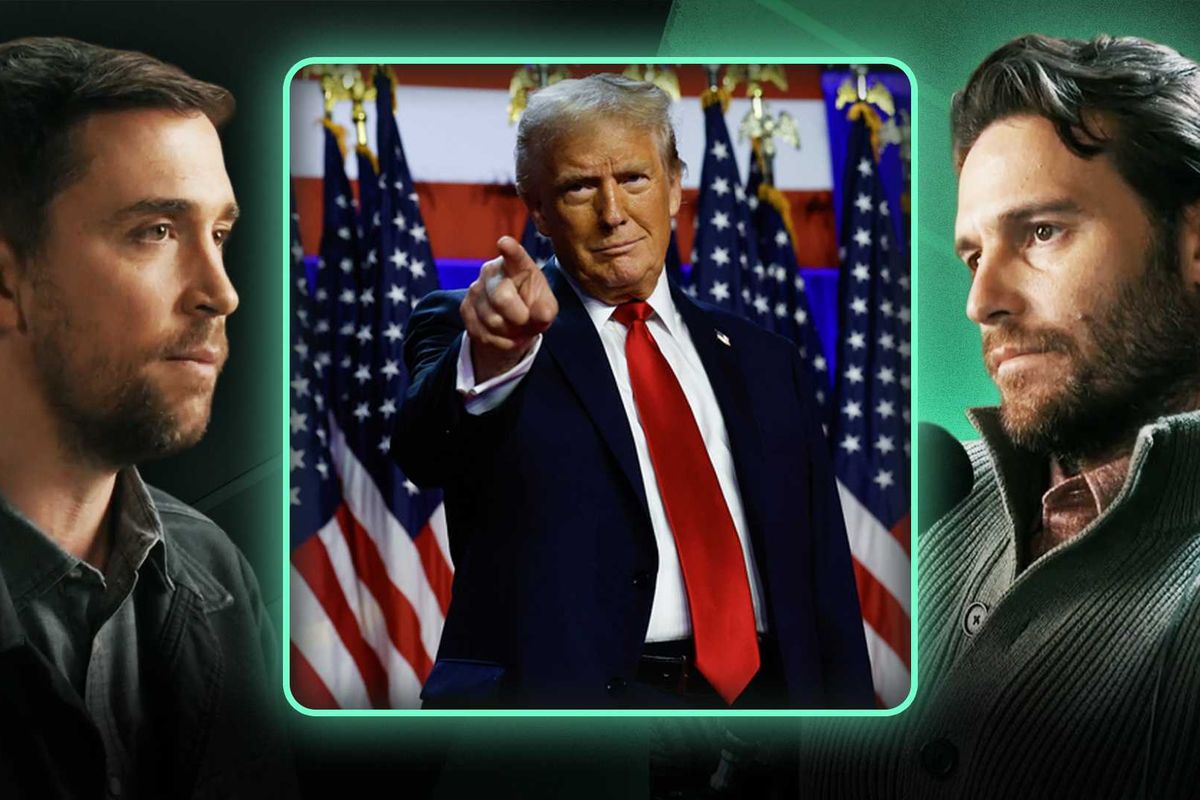
As the Trump administration nears the end of year one, Chris Rufo and Jonathan Keeperman (Lomez), hosts of BlazeTV’s newest show “Rufo & Lomez,” are compelled to not only pause and reflect on 2025, but also to ask the hard questions no one else will — and demand the second-year playbook that actually delivers total victory.
“I think it started out with some very solid wins — kind of blitzkrieg-style action on many fronts — but has the Trump administration hit a stall? Are things going as well as they should be?” asks Rufo.
In this episode, the duo, celebrating the wins and acknowledging the losses, offer a “five-point agenda” aimed at ensuring more success is on the horizon.
1. Reimmigration warfare
Immigration was second only to the economy in issues that drew voters to Trump, who pledged “mass deportations” from the rally pulpit his entire campaign trail. While the administration came out of the gate with ferocious plans to flush illegal aliens out of the country, deportations need to speed up, Rufo argues.
“What we’ve seen is a lot of fireworks, especially when it comes to DHS and ICE activities, but the actual deportations are rather low,” Lomez notes.
But that makes sense. “You’re never going to have enough muscle, enough kind of logistical force to deport 15 million people in handcuffs,” says Rufo.
The answer to this problem, they argue, is remigration — the voluntary relocation back to one’s native country. If the Trump administration is serious about hitting high numbers of deportations, it must incentivize people to leave of their own accord.
“If you want to get 10 million plus people to voluntarily leave the United States, you have to make their current life virtually impossible,” says Rufo. “You have to freeze them out of the financial system. You have to have punitive taxation on remittances that makes that economic incentive disappear.”
It is also critical that we begin looking at immigration through the lens of what benefits the American people, he adds. “We have to be ruthlessly selective about which populations are most likely to assimilate, most likely to contribute, and least likely to be a kind of net negative on whatever dimension — economic, social, cultural, [and] political. … Nobody has a right to immigrate to the United States. That’s a decision left to us.”
2. Build a future young Americans can afford
The nation’s younger generations are financially crushed in ways they weren’t just 10 years ago. Home affordability especially is out of reach for the majority of people under 40.
Rufo emphasizes the need for the Trump administration to “make a concrete economic agenda that will improve the possibilities for young people that are entering the work world and becoming adults.”
For starters, says Lomez, “We need to get rid of the regulatory framework that benefits older people at the expense of the young” — things like senior property-tax caps, locked-in low interest rates that keep people from ever selling, and zoning laws and building restrictions that prevent affordable homes from being built.
3. Crush terror networks
“The administration has to dismantle the left-wing terror networks, whether it’s Antifa [or] other organized militant groups,” says Rufo. “They have to actually get mugshots, case numbers, inmate numbers — the tangible evidence.”
These terror networks “are essentially saying that ‘we can control the streets in places like Portland; we can veto peaceful conservative speech in places like Berkeley.’ We have to ensure that they can no longer do so and can no longer exert control through violence.”
Lomez says the Trump administration’s designation of Antifa as a terrorist network was “a huge step in the right direction,” but more action is needed. He acknowledges that some of what the administration is doing is probably “sensitive” and might take years to accomplish, but it needs to “explain to the American people what they are doing” and up the consequences for violent members of these groups.
“The other thing that we need to put pressure on,” he says, “ is these institutions that are harboring these people [in terror networks].”
“If you do a good job planting bombs at the Pentagon as the Weather Underground did, you get sinecures at major universities’ you get speaking gigs; you get massive publicity. You become a public intellectual for the left. There are ways of applying pressure to these institutions to prevent them from doing this.”
However, in order to see this through, the right people must be in power. Otherwise bureaucracy slows it down or makes it impossible. Right now there are “certain Cabinet officials [who] are doing an amazing job,” says Rufo. “They’re extremely aggressive, [but] others seem to be more in it for the prestige, more in it for the spotlight, more in it the perks of the office.”
“We have to get people that are willing to fight and willing to play hard, and it has to be backed up at the highest level of the government.”
4. Death to DEI
While the Trump administration excelled at ripping up the DEI apparatus in the federal government, the initiative lives on in other places.
“Corporations, universities, school districts have kept this DEI system, a system of anti-white discrimination in particular, as part of their operating procedure,” says Rufo.
The Trump administration must “use the power of the government to say, ‘This stops now. It’s a violation of the Civil Rights Act. You don’t qualify for federal grants and contracts. You have to stop it.”’
“We need to go back and we need to look at who was making decisions in accordance with this anti-white ideology, but that broadly is encompassed under this sort of woke banner, so this would include like the trans stuff … and we need to remove them completely,” adds Lomez. “We need to apply maximum coercive pressure on these institutions to get rid of these people. They cannot employ these people any longer.”
5. Bankrupt the universities
To fix broken, ideologically captured universities, we can’t just punish them with investigations or funding cuts, says Rufo. We have to make them financially liable for student loans. “You have to make the universities hold the bag so that when it blows up, they blow up with it.”
This will have multiple positive downstream effects: reduce administrative bloat; stop the admission of unqualified students; end the “everyone must go to college” scam; and shift lower quintiles to trades, apprenticeships, associates degrees, and on-the-job training.
“The Trump administration should figure out how to use this student debt problem and essentially offload it to the universities. Look, universities are not MAGA’s base. Punishing the universities is not going to punish MAGA voters — precisely the opposite,” says Rufo, “and so there’s got to be a little bit of political calculation that’s baked into this formula that yields the outcome that we want.”
To hear more of Rufo and Lomez’s five-point plan for the Trump administration to stack up Ws, watch the full episode above.
Want more from Rufo & Lomez?
To enjoy more of the news through the anthropological lens of Christopher Rufo and Lomez, subscribe to BlazeTV — the largest multi-platform network of voices who love America, defend the Constitution, and live the American dream.
The scariest thing about Zohran Mamdani isn’t his socialism
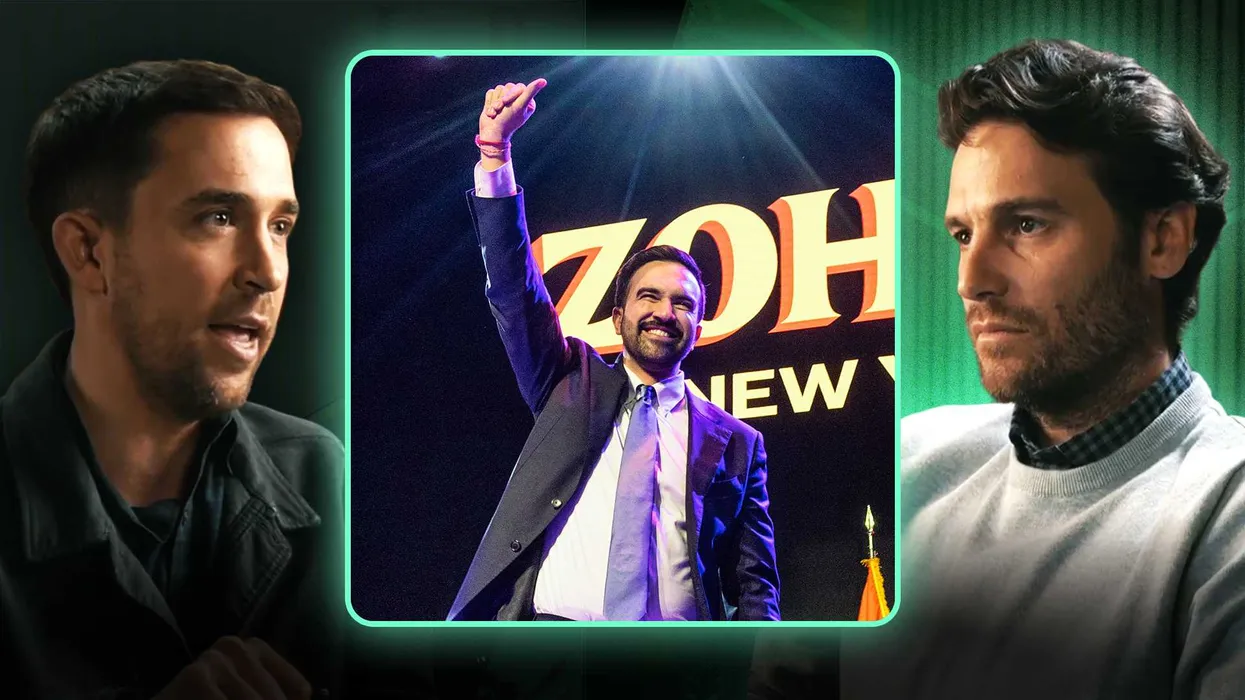
Last Tuesday, Zohran Mamdani — a Muslim Democrat socialist — won the New York City mayoral election in a landslide victory over disgraced former Gov. Andrew Cuomo. Like all socialists, he seduced the city’s financially crushed population, which is nearly everyone in tax-choked NYC, with a mountain of “free” promises: free buses, free childcare, rent freezes, and city-run grocery stores.
Of course, anyone with half a brain knows socialism bleeds cities dry every time. It’s death by a thousand tax hikes, crime waves, and empty storefronts.
The fiscal meltdown has dominated headlines since Mamdani’s win — but is economic suicide really the Big Apple’s most pressing threat?
Lomez, in the debut episode of BlazeTV’s “Rufo and Lomez,” says no. It’s what the radical symbolizes that should really scare us.
While Lomez “[doesn’t] like him at all,” he doesn’t think Mamdani’s economic reform or his other progressive policies will be as revolutionary as people are saying.
“If I’m looking for the sort of policy daylight between what he might do in New York City versus [former mayor] de Blasio, I think it’s pretty thin,” he says.
“Do I think Zohran Mamdani is going to impose a kind of communist authoritarianism on New York City? No, I don’t. I think things will just kind of get incrementally worse in ways that aren’t good,” he predicts.
The “key thing” that makes Mamdani scary, he says, is what the radical symbolizes.
“Mamdani represents above all else a kind of post-Americanness, a post-white Americanness in particular. I think that’s really important,” he says.
Lomez points to a clip of Mamdani’s victory speech on election night as evidence of this. In this segment that’s gone viral, he repeatedly thanked not Americans but immigrants for powering his campaign.
“Thank you to those so often forgotten by the politics of our city, who made this movement their own. I speak of Yemeni bodega owners and Mexican abuelas! Senegalese taxi drivers and Uzbek nurses! Trinidadian line cooks and Ethiopian aunties!” he boomed from the podium.
“He’s praising the Mexican abuelas and the Senegalese Door Dash drivers … not Mexican-American, not Senegalese-American, just those things without the hyphen at all,” says Lomez, reminding listeners that “Zohran Mamdani made explicitly anti-white statements during his campaign,” like pitching taxes for white people specifically.
“I think that kind of normalization, which is something we’ve seen from the Democratic Party sort of escalating over the last decade, is the most important part of this, and it’s the thing that gives me the most concern.”
To hear more, watch the full episode above.
Want more from Rufo & Lomez?
To enjoy more of the news through the anthropological lens of Christopher Rufo and Lomez, subscribe to BlazeTV — the largest multi-platform network of voices who love America, defend the Constitution, and live the American dream.