Category: Christian
Christmas in the Sub-Tropics
TAMPA – Christmas time again, and I like the season. But it’s a very different business here in peninsula Florida…
Why the world hates strong men — but it’s exactly what God wants
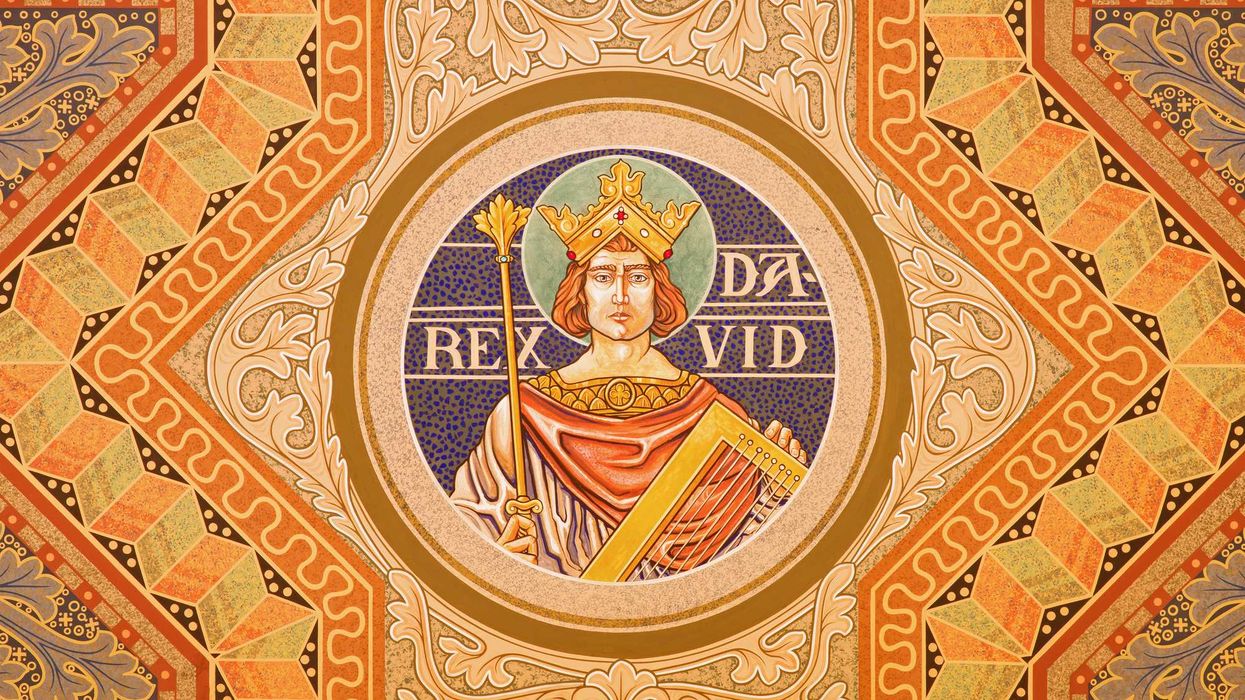
Something has gone wrong.
After years of being told they are toxic and problematic, many men have simply cowed in deference to the spirit of our age. They imbibed the poisonous slogans and succumbed to what the world says about them.
Those who live day after day in a state of passivity give themselves over to a lie.
Some men attempt to punch back either by embracing their “toxicity” or ideologies that are slapped onto them.
The temptation in such an age is for men to become passive. This passivity is not a new temptation for men. It is the same temptation that Adam failed to defeat in the garden. Passivity is that peculiar behavior that gives into evil, often standing back and doing nothing. It is the soul bowed in deference.
The passive man does not resist the evil doer, he gives in, and doesn’t stand firm in the faith.
Even in reacting against the spirit of the age, men can become passive and allow the enemy to set the terms of the engagement. The more common expression of passivity is the man who becomes “nice” in order to placate like a dog who cowers and tucks its tail hoping to stave off any harm. The passive man is an agreeable man. He wants to keep his head down. He would rather be dead than ever appear intimidating to anyone or anything.
The man who rejects passivity, on the other hand, is often perceived to be arrogant. He is something who can be accused of “thinking too highly” of himself.
But the opposite of passivity is not arrogance but agency.
We need men of agency. Men who act, initiate, and change what is within their power to change. Agency is taking responsibility and pushing forward in the face of opposition and obstacles. It is faith in motion. As James 2:17 says, “Faith without works is dead.”
There are two main contentions that keep Christian men particularly from taking agency.
First, they are told that control is a dangerous idol. Christians, men included, are often taught that if they try to exercise control, then they are not trusting God. This is reflected in surveys of pastors who claim that control is a top idol among their churches. Pastor Eric Geiger, for example, identifies “control” as a “root idol.” For Geiger, control is “a longing to have everything go according to my plan.” Heaven forbid that people want things to go according to plan.
Second, they are told that power is inherently bad. Therefore any accumulation of or dispensing of power is considered dangerous and harmful to others. Geiger also frames power itself as a number one root idol that he defines as “a longing for influence or recognition.” He encourages Christians to repent of their longing for power and control.
Both of these spurious notions are not rooted in scripture but in the upside-down world of the enemy who desires that Christians control nothing and have no power.
RELATED: Dear Christian: God didn’t call you to be a ‘beautiful loser’
 RomoloTavani/iStock/Getty Images Plus
Can a Christian idolize power? Sure. Can a Christian idolize control? Yep. But there is very little nuance when these pastors and Christian leaders speak. They simply wish to denounce power and control, both key ingredients in exercising agency.
People who excel at agency — let’s call it “high agency” — know what is within their power and control and how to maximize it for good. People with passivity or low agency instead fall back and behave as if nothing is within their control and that they cannot change anything.
Sadly it seems that low agency is what is required in some churches today. It is often reframed as a virtue where one is fully trusting God when, in reality, they have relinquished control.
Much of the depression, anxiety, and despondency we witness in our world is better understood as passivity and low agency. It is the posture of the soul that just gives itself over to obstacles. Rather than exhibiting resiliency and exertion when in duress, the passive person simply gives up. Consumerism only enables this type of low-exertion lifestyle where people become habituated to quick fixes and easy solutions.
Those who live day after day in a state of passivity give themselves over to a lie: They cannot change, nothing will change, they are helpless.
When believed en masse, this kind of population is easy to control because they have forsaken control themselves. They are always looking for a strong person, ideology, or drink to fix their problems.
This is particularly problematic in Christianity. We believe in providence and human responsibility. We are to love the Lord Jesus Christ by obedience, walking in righteousness and putting to death the deeds of the flesh. Our faith in God should always move us to act in courage as we do not doubt the goodness of God.
Agency works along the path of God’s providence and faith. It is the car on the road — and we are called to accelerate.
God may give you more than you can handle. He is generous in this way. In our feelings of being overwhelmed or swamped, God invites us to take action and trust in Him. If things do not go as planned, we trust the God who is in total control.
We need men today who gain power and control. They must first master themselves to worship the master, Jesus Christ. By the Spirit, we are able to exercise discipline and control over our bodies and put them to good use for God’s glory.
One of the quickest ways to slip into passivity is to wait to act until everything is easy. This day is probably not coming for you. Let’s say you want to get married. The man of agency will take the first step he can in finding a bride instead of just waiting around until she appears.
Passivity often leads to thinking like a victim. It invites jealousy and contempt for others because others seem to be in control and have power. It creates anxiety because it is always worried about failing or things not working out. Instead the agentic man trusts God’s providence, looks at what he has been given, and works out the problem.
In our age of anxiety, agency is the answer.
Agency works along the path of God’s providence and faith. It is the car on the road — and we are called to accelerate (and brake when necessary).
Men who exude agency will be misperceived today. They will be called prideful, toxic, power-hungry, and controlling. But none of these descriptions are necessarily true. They are simply the reaction strong men receive in an age of passivity.
The strong men that are needed in our hard times are ones who take the initiative, assume responsibility, and never give into evil. They are men of high agency.
Ted Nugent’s loud protest is the wake-up call Western elites want to ignore

Ted Nugent is known for many things. Subtlety isn’t one of them.
This is a man who treats volume knobs the way toddlers treat bedtime: with open defiance. So when a mosque in his Michigan town began broadcasting the early-morning call to prayer over loudspeakers, Nugent reacted in the way only Nugent would. He turned his back yard into a launchpad for a one-man rock assault.
You don’t need to be religious to see the problem. You only need to have ears.
Excessive? Perhaps. But it tapped straight into a frustration millions feel but rarely voice — not loudly, anyway.
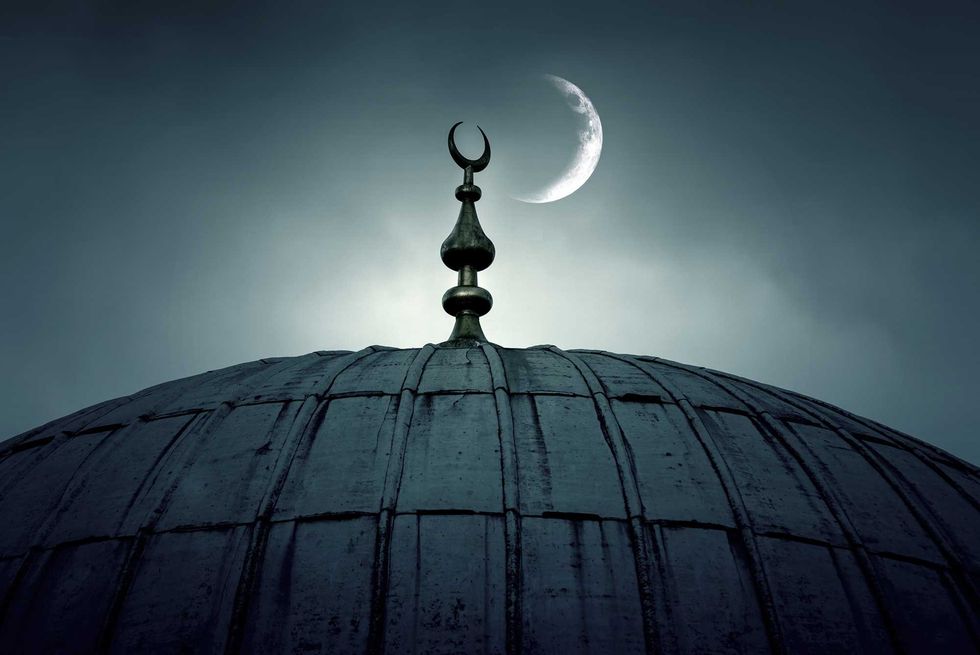
The early-morning Islamic call to prayer echoing through American suburbs isn’t “diversity” or a charming cultural detail. It’s noise — loud, sudden, inescapable noise. It jolts families awake, spooks pets, startles infants, and demands that the entire block adapt.
Nugent’s counterattack may have been a little over the top, but beneath the distortion pedals sits a simple point: Public peace matters. In a free country, quiet hours come first. And no imported custom, however sacred to some, earns an automatic exemption.
Richard Dawkins once called the Islamic call to prayer “hauntingly beautiful.” This from a man who spent decades explaining that God doesn’t exist. It’s a strange kind of aesthetic tourism: Romanticize a religious ritual while rejecting the very religion that produced it. Dawkins was wrong about the existence of God, and he is equally wrong about the Islamic call to prayer.
The call to prayer wasn’t designed as background music, and it wasn’t conceived for multicultural suburbs where everyone keeps different hours and believes different things. It was forged in a seventh-century society where faith and authority were fused, where religion structured public life down to the minute, and where submission — literal, explicit submission — wasn’t merely encouraged but expected.
Islam’s founding worldview assumed a unified religious community, a shared legal and moral order, and a sharp distinction between believers and nonbelievers. That distinction shaped status, obligation, and allegiance.
In the Muslim context, the adhan makes perfect sense. It is a public summons for a public faith, a declaration of dominance over the rhythm of the day, and reminder that life moves according to Allah’s schedule — not yours. It reminds everyone, believer or not, that the community’s obligations take precedence over the individuals’ preferences.
But transplant it into America (or any predominantly Christian society), and it makes zero sense. The operating systems and expectations are different. The very idea of a faith dictating the morning routine of people who don’t share it runs directly against the grain of Western life.
RELATED: Why progressives want to destroy Christianity — but spare Islam
 AlxeyPnferov/iStock/Getty Images Plus
This is the part Dawkins missed entirely when he praised the adhan.
It’s easy to romanticize a sound when you encounter it on holiday, filtered through distance, novelty, and sand-warm nostalgia. It’s quite another when it is broadcast at 5 a.m. into a neighborhood that never agreed to have its eardrums shattered before the coffee even brews.
Dawkins hears melody, but he ignores meaning. He praises the tune while overlooking the text, which was never written for pluralism. It was written for a social order in which Islam set the terms — and nonbelievers either complied or faced the consequences.
You don’t need to be religious to see the problem. You only need to have ears.
The adhan doesn’t float gently on the breeze. It is projected through megaphones with the explicit purpose of commanding attention. It is designed to override the soundscape of daily life. Barking dog? Buried. Garbage truck? Drowned. Your alarm clock? Irrelevant. The Islamic call to prayer cuts through everything because that is precisely what it was built to do.
And that is where the first collision occurs. In America, no foreign religion should be granted the right to reorder everyone’s routine. Christianity, which most readers know intimately, offers a useful contrast. Church bells ring, yes, but briefly and symbolically. They don’t deliver multi-minute recitations meant to summon or correct anyone.
But with fewer bells ringing, other sounds inevitably move in to fill the void. These include ones far louder, far longer, and far less rooted in America’s traditions.
There’s a difference between freedom of religion and freedom to dominate the public square.
In a predominantly Christian society, faith is personal, chosen, and interior. Prayer happens inside churches, inside homes, inside hearts — not broadcast across rooftops as compulsory ambience. The Western idea of worship is reflective and voluntary. The call to prayer, by contrast, is commanding and public by design.
Sound, as Ted Nugent knows well, is anything but neutral. A community’s soundscape shapes its psychology. People become anxious, irritable, exhausted, and far more prone to accidents when their sleep is disrupted. After all, we prosecute noisy neighbors for far less.
Yet Western elites recoil at the idea that a religious practice might be subject to the same standards as the guy who revs his motorcycle at midnight. If anything, a more intrusive and more extended ritual deserves more examination — not less.
Although I truly dislike what Islam represents, this isn’t about hatred. It is about the delicate, daily compromises a pluralistic nation depends on. When one group insists on broadcasting its obligations to everyone else, the common ground cracks, the social contract comes apart, and people start to feel like strangers on their own streets.
The call to prayer has no place in polite society. There’s a difference between freedom of religion and freedom to dominate the public square. One belongs in America. The other never will.
Islamic Extremists Prepare To Slaughter Hundreds On Christmas, Local Intel Warns
‘More dead bodies were found in the bush today’
Muslim Somali Immigrants Pose Risk To Christian Brethren, Pastor Says
‘Fear, cultural pressure, or past experiences’
The West is terrified of reality — but this Christian priest says it out loud
Fr. Brendan Kilcoyne is one of the few priests in Ireland with the courage to say what others won’t.
Week after week, he tells the truth that the rest of public life tiptoes around: Ireland, like Britain and much of the West, is being reshaped by two forces at once — an aggressively secular culture that mocks belief, and a rising influx of people whose values come from religious traditions deeply at odds with Christianity.
This is the part the West refuses to face: A culture without God doesn’t stay neutral.
Both currents weaken what remains of Ireland’s Christian foundations. One breaks it down. The other builds something else in its place.
Kilcoyne doesn’t simply call for “legal immigration” — the safe line politicians repeat to sound reasonable — but he goes farther.
He calls for Christian-only immigration, not as a provocation but as a survival strategy for a civilization that once took the gospel for granted. In a country where faith once shaped the architecture of daily life, he argues that if people must come from abroad, they should be people who can carry that faith forward.
He’s right. It’s the only sane path left.
I know this to be true from experience. Ireland hosts thousands of Filipino workers, many of them nurses and care staff. They are some of the warmest people I have ever met. In many ways, they remind many Irish people of an older Ireland — devout, hardworking, grateful, family-centered.
My mother works closely with a Filipino woman in her home-nursing work. She describes her as one of the kindest souls she has ever known. This isn’t some abstract argument about cultural cohesion. Instead, it’s something I’ve watched play out in real life. Their Catholic faith shapes their character, their sense of duty, and their reverence for life. Wherever they go, they make the place stronger.
Contrast that with what just happened in the U.S.
Sarah Beckstrom, a 20-year-old Army specialist, was shot and killed in Washington, D.C. The alleged gunman, Afghan national Rahmanullah Lakanwal, came into the country after the Biden administration’s disastrous withdrawal from Afghanistan. One can’t pretend cases like this exist in a vacuum, any more than one can pretend the grooming-gang scandals in Britain came out of thin air.
These tragedies sit inside a larger pattern. The West has opened its doors to people with radically different expectations about women, law, authority, violence, and faith — and then acts stunned when those differences surface in the streets.
RELATED: Correcting the narrative: What the Bible actually says about immigration
 AndreyPopov/iStock/Getty Images
In America, Islam is on track to become the second-largest religion by 2040, outpacing Judaism and mainline Protestantism. That shift isn’t driven by conversion but by immigration patterns and birth rates.
Let that sink in. A country built on Christian memory and Christian morals is heading toward a religious landscape its founders would barely recognize. None of this is speculation. It’s demographic math.
This matters because religions aren’t interchangeable. They shape law, culture, expectations for public life, attitudes toward authority, dissent, forgiveness, and the value of the individual. A society shaped by the Sermon on the Mount will never think or function the same as one shaped by Islam’s foundational texts.
The two traditions couldn’t be farther apart.
One formed cultures around decency and love of neighbor. The other arose in an age of conquest, tribal loyalty, and rigid obedience. These differences aren’t cosmetic but civilizational. And with Christianity in the West losing its fighting spirit, it’s not hard to see which force will fill the vacuum. Islam is not a private spirituality, but a complete system of life — legal, social, political — built on the expectation that it will shape the society around it.
Again, this isn’t speculation. It’s written into its earliest texts and confirmed by its history, which raises the obvious question: What kind of West emerges when the religious balance tips this far?
Kilcoyne’s message isn’t aimed at Ireland alone. It applies to any nation whose culture was built on Christianity — meaning most of Europe, the U.S., Canada, and Australia.
A society can’t function without shared belief and shared boundaries. Christianity once provided both. It shaped civic standards, festivals, art, manners, and the meaning of freedom. Remove it, and the God-sized space is claimed by something else immediately, like nihilism, resentment, and ideologies far more savage and unforgiving.
While being Christian doesn’t automatically make people decent, it does mean they’re far more likely to share the values that hold a society together.
This is the part the West refuses to face: A culture without God doesn’t stay neutral. It slides into something far less humane. And a country that imports large numbers of people who follow a religion with no respect for Christian norms doesn’t stay stable. It absorbs that religion’s worldview whether it wants to or not.
If immigration is necessary — and in many aging nations it is — Kilcoyne asks why we wouldn’t welcome those whose faith strengthens, rather than weakens, the society they enter.
Why not bring in people who see children not as burdens but blessings, who honor marriage, who take charity seriously, who treat the elderly with care, who believe suffering has meaning, and who know the world is more than appetite and impulse?
These are the qualities that once made the West strong. And while being Christian doesn’t automatically make people decent, it does mean they’re far more likely to share the values that hold a society together.
Sarah Beckstrom is dead. A young woman who trusted her country, trusted its leaders, trusted the system that put her in uniform. If America had been more serious about value-based immigration — if it had prioritized people who share its creed and its cultural instincts — she might still be alive. Her death shouldn’t be treated as another tragic headline to scroll past.
If anything, let it mark the moment the country finally admits that immigration policy isn’t a paperwork issue but a question of national survival in the most literal sense. Let her death mean something.
Let it push America toward choosing people who lift the nation up — not those who drag it into the abyss.
How a man hated for facts found the ultimate truth — and the godless can’t deny it
For most of his career, Charles Murray carried a strange sort of notoriety.
He never asked for it, and he certainly didn’t enjoy it, but it clung to him all the same. He was the man who pointed out differences in IQ across groups — differences supported by mountains of data — and was promptly told he was a monster for noticing.
It is refreshing to watch a man of his stature poke holes in the pretensions of modern unbelief.
To the elite commentariat, acknowledging uncomfortable facts is far more dangerous than denying them. Murray learned that lesson the hard way. The label “racist” followed him for the simple sin of looking at the world as it is, not as fashionable minds say it must be.
Now, in his new book “Taking Religion Seriously,” he commits a second and perhaps even more impermissible offense: He takes God seriously. And in our age of brazen unbelief — when Richard Dawkins still preaches that matter explains everything and Sam Harris speaks of spirituality while denying the Spirit — this is the ultimate rebellion.
Murray has joined an unexpected migration of thinkers who once rejected faith but now find themselves drawn to it. Ayaan Hirsi Ali, once firmly planted in the New Atheist camp, shocked her old colleagues in 2023 when she publicly embraced Christianity.
Murray’s turn is quieter, more measured, and unmistakably his own. But he is walking down the very same path.
Faith beyond reason
The book is a quick read, but it echoes for days.
Murray writes not as a preacher but as a man who has spent a lifetime studying human behavior at its highest and lowest extremes. He knows what happens to communities when faith vanishes. He tracked it in “Coming Apart” long before religion reporters noticed. When church attendance drops, families weaken, neighborhoods suffer, and loneliness settles like dust over entire towns.
For years, Murray called for a “cultural Great Awakening” — a return to shared habits and values without requiring belief itself. Even then, the idea looked doomed, like trying to spark a flame in deep space. And now, finally, he seems willing to concede the obvious.
This book is Murray’s attempt to understand that missing ingredient. It’s the story of an agnostic who found himself slowly pulled toward the transcendent.
His wife, Catherine, became interested in faith. Murray followed her questions, then his own. He approached classical arguments for God not as trophies to be displayed but as puzzles worth pondering. The unmoved mover. Fine-tuning. The strange universality of the moral compass. And he reads C.S. Lewis with the care of a man who knows he may be wrong and wants to be right.
This humility gives the book a sense of clarity. Murray doesn’t pretend to have been struck by lightning. He jokes that he has yet to feel the “joys of faith,” comparing himself to a child outside a bright window, watching a celebration he longs to join. It is one of the loveliest passages in the book and one of the most honest.
RELATED: Why real Christianity terrifies the elites — and they’re right to worry
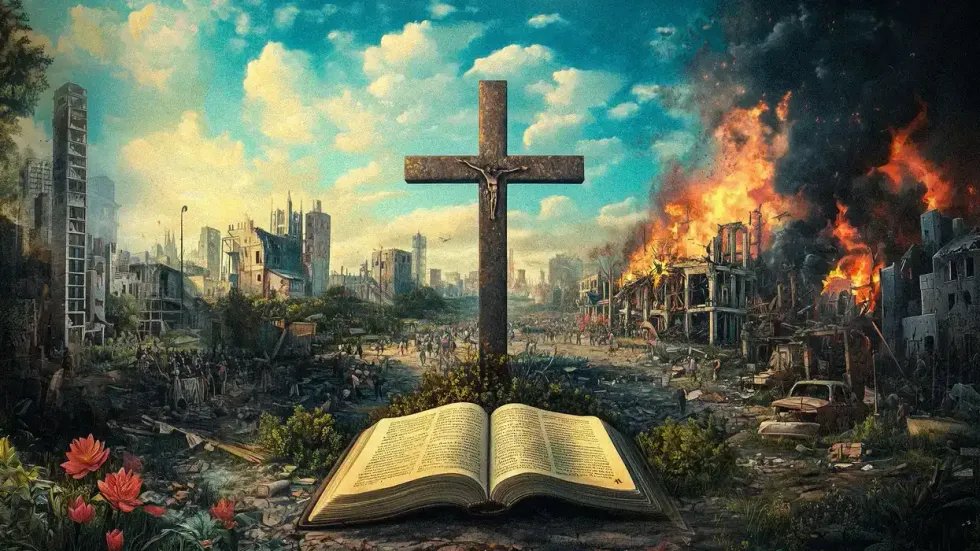 Blaze Media Illustration
To his credit, Murray confronts the fear that haunts the secular mind: the fear of looking foolish.
His mention of the “tribe of smart people” lands less as pride and more as an admission that he was shaped by a previous paradigm in which intellect stood in for conviction. And he knows exactly how that tribe behaves. Terminal lucidity? Near-death experiences? To the self-appointed high priests of materialism, such things must be dismissed before anyone dares examine them. They carry their disbelief like a badge of honor.
Murray refuses to play along. If the evidence points beyond matter, he says, follow it. Even if the clever people frown — and especially then.
It is refreshing to watch a man of his stature poke holes in the pretensions of modern unbelief, not with anger or sarcasm, but with a steady hand and a willingness to face what many prefer to ignore — and hope we ignore too.
Truth conquers data
For Christians, the most moving aspect of the book is Murray’s recognition that religion can’t be divorced from the heart of who we are. A society can’t thrive on secondhand virtue. It must grow from living faith, not admiration from a distance.
Murray’s old belief in an underlying, all-encompassing framework without God now strikes him as absurd. The last few years have shown him what many Christians already know: Attempting to build community on the fumes of forgotten belief is folly. The foundation is already dust before the first brick is laid.
Murray now accepts the existence of God. He accepts the reliability of scripture. He accepts the claims of Christ. And perhaps most telling of all, he no longer fears death. A man who once considered suicide at the end of life now finds himself at peace.
That, in itself, is a kind of miracle.
“Taking Religion Seriously” isn’t an altar call. It’s something rarer: the record of a mind long trained to trust data now learning to trust truth. Murray shows that the honest search for meaning will always lead beyond materialism, beyond ego, beyond the boundaries set by those who pride themselves on sophistication but know nothing of the soul.
Violent attacks against Christians spike in Europe; France leading the way with anti-Christian hate crimes: Report

Christians are brutally persecuted the world over. According to the watchdog group Open Doors, over 380 million Christians suffer high levels of persecution and discrimination for their faith, and over 4,476 were killed for their faith in 2024 alone.
While the top 10 worst countries for Christians are all in Africa, Asia, and the Indian subcontinent — Nigeria, for instance, saw over 300 Christian schoolchildren abducted during a raid by bandits on Friday — Christians are also subjected to violent attacks, discrimination, and state suppression in supposedly civilized Western nations.
’15 incidents featured satanic symbols or references.’
The U.S. and Canada have together, for instance, seen thousands of acts of hostility against churches in recent years.
Across the Atlantic, a British court handed a grieving father a criminal sentence last year for praying silently near the abortion clinic that killed his unborn son. In France, Christians were reportedly arrested at gunpoint for peacefully protesting the mockery of their faith during the 2024 Olympics opening ceremony. In Spain, a maniac broke into a monastery in November 2024, savagely attacking several people and fatally bludgeoning a Franciscan monk. Farther afield, an Islamic terrorist stabbed an Assyrian bishop on April 15, 2024, in an Australian church.
The Observatory on Intolerance and Discrimination Against Christians in Europe, a Vienna-based watchdog group, recently revealed that violent attacks on Christians spiked in Europe and the U.K. last year.
The watchdog noted in its annual report that a total of 2,211 anti-Christian hate crimes were documented by European governments and civil society organizations in 2024.
OIDAC hinted that the actual number of hate crimes may be much higher, as surveys indicate they are grossly underreported. In Poland, for example, nearly 50% of Catholic priests surveyed indicated that they were met with aggression sometime in the past year, yet over 80% failed to report such incidents.
RELATED: ‘Mass slaughter’: Trump moves to help Nigerian Christians under attack
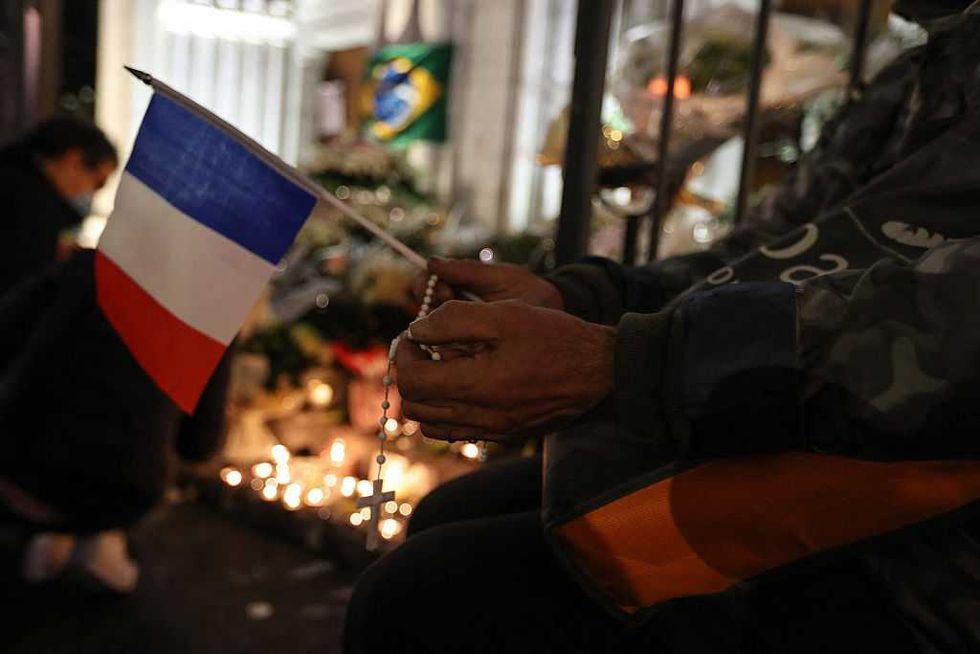 Photo by VALERY HACHE/AFP via Getty Images.
Nevertheless, OIDAC indicated that this reflects a general decrease over 2023 — a year when there were 2,444 reported hate crimes. The decrease is partly the result of a dip in recorded incidents in France but largely the result of “lower figures reported by U.K. police, which noted a change in methodology in its official report,” the report reads.
Of the 516 anti-Christian hate crimes independently recorded by OIDAC last year, the most frequent form of violence was vandalism, at 50% of reported incidents, followed by arson attacks, 15%; desecration, 13%; physical assaults, 7.5%; theft of religious objects, 5.5%; and threats, accounting for 4% of incidents. These figures do not account for burglaries at religious sites, of which there were nearly 900 additional recorded cases.
While reported anti-Christian hate crimes have generally decreased, the number of personal attacks — including assault, harassment, and threats — “rose from 232 in 2023 to 274 in 2024.”
The watchdog indicated on the basis of police and civil society data that the top five European nations most affected by anti-Christian hate crimes last year were, in descending order, France, Britain, Germany, Austria, and Spain.
Among the incidents highlighted in the worst-rated country, France, were the destruction of historic Church of the Immaculate Conception in Saint-Omer by an arsonist on Sept. 2, 2024, and the March 11, 2024, vandalism of a church and desecration of the cemetery in the village Clermont-d’Excideuil, where “Isa will break the cross” and “Submit to Islam” were spray-painted on graves, the war memorial, and the church door.
Since many of the offenders have not been apprehended, the watchdog group could not say definitively what is driving this trend. However, among the 93 cases OIDAC documented wherein the perpetrators’ motives or affiliations could be established, “the most common were linked to radical Islamist ideology (35), radical left-wing ideology (19), radical right-wing ideology (7), and other political motives (11). Additionally, 15 incidents featured satanic symbols or references.”
Like Blaze News? Bypass the censors, sign up for our newsletters, and get stories like this direct to your inbox. Sign up here!
When America feared God: The bold Thanksgiving prayer they don’t teach any more
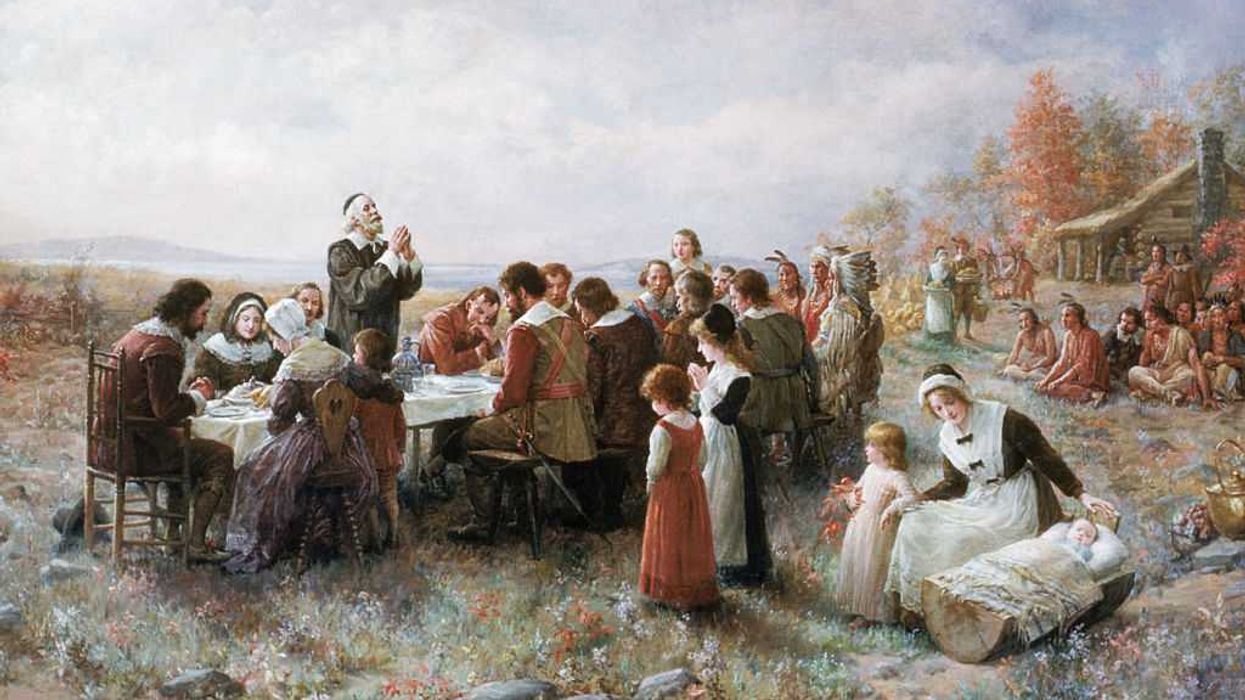
Thanksgiving is an annual reminder of our nation’s Christian roots and our godly heritage. Although Virginia proclaims that the first Thanksgiving was in Jamestown in 1619 — not in Plymouth in 1621 — the Plymouth one became the prototype of our annual celebrations.
George Washington was the first president under the Constitution to declare a national day of thanksgiving, and President Lincoln was the first to declare Thanksgiving an annual holiday.
‘It is the indispensable Duty of all Men to adore the superintending Providence of Almighty God; to acknowledge with Gratitude their Obligation to him for Benefits received, and to implore such further Blessings as they stand in Need of …’
However, Samuel Adams, with the help of two other continental congressmen, was the first to declare a National Day of Thanksgiving for America as an independent nation.
The time was the fall of 1777. Overall, it seemed that things were not going well for the United States. Americans lost the Battle of Brandywine on September 11, which Dr. Peter Lillback notes was our “first 9/11.”
George Washington saw that the Brandywine defeat meant the impending fall of Philadelphia, our nation’s capital at the time, into the hands of the British.
So Congress had to flee westward, first to Lancaster and then to York, Pennsylvania. Washington and his troops had to flee westward also. They ended up in a place called Valley Forge. The worst was yet to come with the brutal winter there.
Meanwhile, on October 7, 1777, there was a victory at Saratoga, New York. Samuel Adams of Boston, a key leader in American independence, saw that we as a nation could rejoice in this act of divine Providence. So — with the help of fellow Continental Congressmen Rev. John Witherspoon of New Jersey and Richard Henry Lee of Virginia — Samuel Adams wrote our country’s first thanksgiving declaration as an independent nation.
This is what they wrote in that First National Thanksgiving Proclamation, November 1, 1777: “It is the indispensable Duty of all Men to adore the superintending Providence of Almighty God; to acknowledge with Gratitude their Obligation to him for Benefits received, and to implore such further Blessings as they stand in Need of.”
As humans, as Christians, we should be grateful. They continue, “And it having pleased him in his abundant Mercy, not only to continue to us the innumerable Bounties of his common Providence; but also to smile upon us in the Prosecution of a just and necessary War, for the Defense and Establishment of our unalienable Rights and Liberties; particularly in that he hath been pleased, in so great a Measure, to prosper the Means used for the Support of our Troops, and to crown our Arms with most signal success.”
I think it’s fair to say that Adams, Witherspoon, and Lee were looking for the good news (the Saratoga victory) in a sea of bad news (American setbacks, the latest of which was the defeat at Brandywine).
They continue: “It is therefore recommended to the legislative or executive Powers of these UNITED STATES to set apart THURSDAY, the eighteenth Day of December next, for SOLEMN THANKSGIVING and PRAISE.”
And what were the Americans to do during that day of Thanksgiving and praise? To confess “their manifold sins … that it may please GOD through the Merits of JESUS CHRIST, mercifully to forgive and blot them out of Remembrance; That it may please him graciously to afford his Blessing on the Governments of these States respectively, and prosper the public Council of the whole.”
RELATED: That we may all unite in rendering unto our Creator our sincere and humble thanks
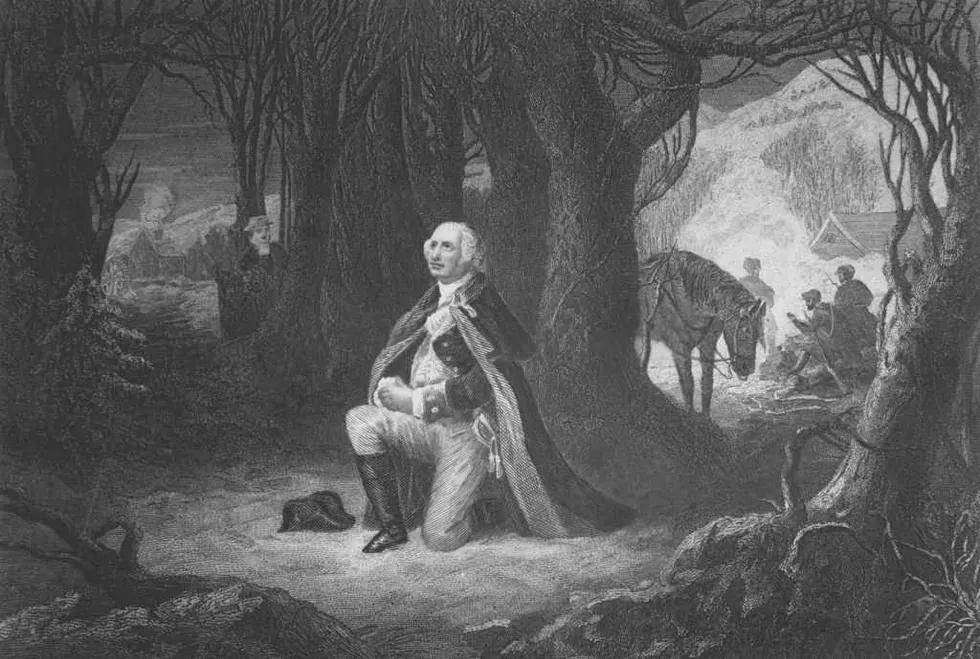 Interim Archives/Getty Images
If someone prayed like this in Congress today, people might try to drive him out of town on a rail — like the leftist members of Congress who blew a gasket when California minister Jack Hibbs prayed in the name of Jesus in Congress in early 2024.
Writing on behalf of Congress, Adams, Witherspoon, and Lee continue: “To inspire our Commanders, both by Land and Sea, and all under them, with that Wisdom and Fortitude which may render them fit Instruments, under the Providence of Almighty GOD, to secure for these United States, the greatest of all human Blessings, INDEPENDENCE and PEACE.”
They also prayed for God “to prosper the Trade and Manufactures of the People,” as well as the farmers, for success of the crops. They also asked for God’s help in the schools, which they note are “so necessary for cultivating the Principles of true Liberty, Virtue and Piety, under his nurturing Hand; and to prosper the Means of Religion, for the promotion and enlargement of that Kingdom, which consisteth ‘in Righteousness, Peace and Joy in the Holy Ghost.’”
This prayer proclamation is no namby-pamby type of prayer such as we might hear from Congress these days. These are bold proclamations of faith, showing the pro-Christian side of the founding fathers that we rarely hear about these days.
This article is adapted from an essay originally published at Jerry Newcombe’s website.
Leftist heresy: This Bible pitch sounds holy — until you spot the socialist trick
“Nothing is free.” I can still hear my dad saying this whenever I excitedly told him I got something for “free.” I would argue, “But it was free for me,” and he would reply, “Yes — because someone else paid for it.”
That is exactly how many of the 40 million Americans hooked on food stamps and government assistance think. It feels “free,” but it is paid for by hardworking taxpayers — like yours truly. And a government that can feed you can also starve you.
On paper, socialism looks compassionate — until you remember history and human nature.
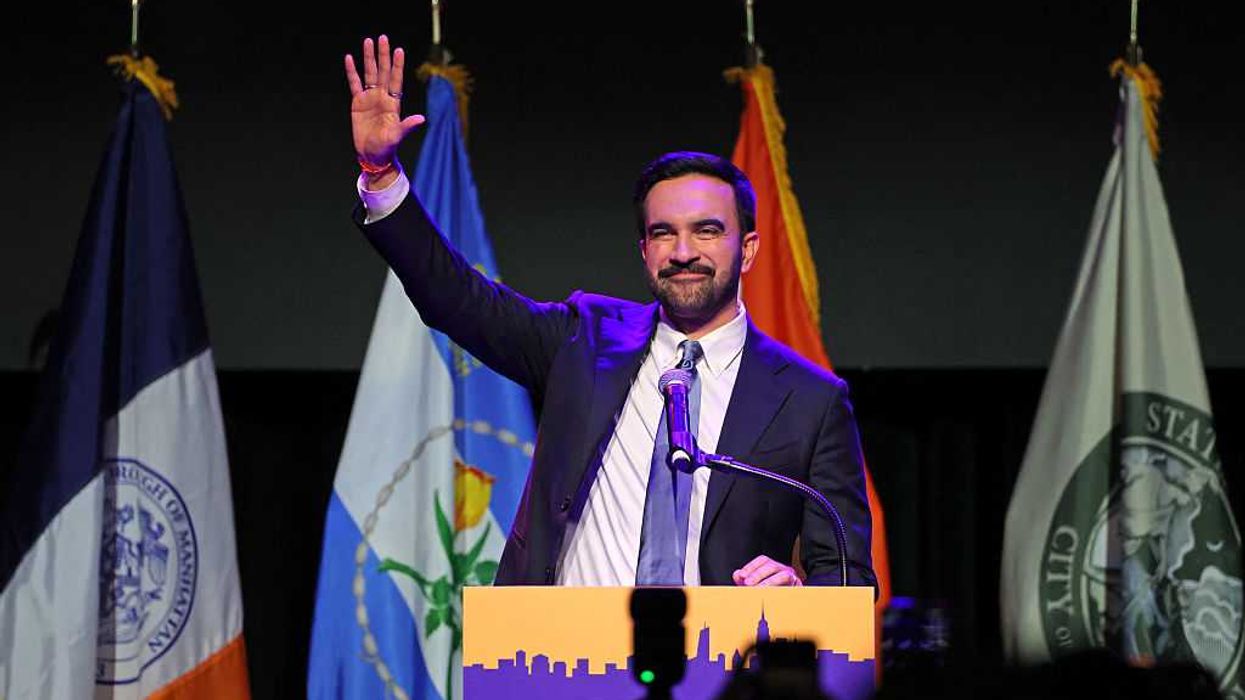
In the wake of the New York mayoral election, socialism is trending again. Zohran Mamdani is just the latest pawn to make it look flashy and appealing.
Even worse, progressive Christians have jumped on the bandwagon, insisting that socialism is biblical and pointing to Acts 2 as their proof text. They say, “We need to feed the hungry,” “We need to provide for the homeless,” “We need to sell what we have so others have more.” These are admirable sentiments. But they are often advocated by people who rarely offer up their own property or pocketbooks, though they are eager to demand yours.
But who is the “we” in Acts 2?
The answer is simple: the church — not the government.
Acts 2 took place during Pentecost, when Jerusalem was crowded with Jewish pilgrims from across the empire. After thousands came to faith, many stayed longer than expected, creating urgent, unusual needs. In response, believers shared what they had. Acts 2:44-45 says Christians “had everything in common” and “were selling their possessions” and distributing the proceeds “as any had need.”
A few important clarifications:
- These were Christians, not government officials.
- Their giving was voluntary, not legislated.
- Their generosity was rooted in personal sacrifice, not state coercion.
- This was a temporary response to a specific moment, not an economic model for nations.
The early church practiced radical generosity because the situation demanded it — not because God or scripture command state-run redistribution. It was compassion from the heart, not a political system.
Socialism starts and ends with a deadly sin
Socialism is inherently immoral because it is built on envy — one of the seven deadly sins. Envy is a resentful desire for what someone else has. Scripture warns against it repeatedly because it is rooted in covetousness: “Do not covet.” Proverbs says envy “rots the bones.” Galatians tells us not to provoke or envy one another. It is part of the “acts of the flesh,” something to root out of our lives entirely — not something to build public policy around.
Socialism claims it reduces inequality by redistributing resources “fairly.” In practice, that means taking from those who earn and giving to those who don’t, with the government deciding how every penny is spent. The poor become dependent, the productive get punished, and the state grows stronger.
On the NYC campaign trail, Mamdani promised a buffet of freebies — free child care, free bus rides, rent control, city-run grocery stores. Margaret Thatcher famously and pointedly said, “The problem with socialism is that eventually you run out of other people’s money.”
Economist Thomas Sowell put it even more bluntly: “What do you call it when someone steals money secretly? Theft. What do you call it when someone takes money by force? Robbery. What do you call it when politicians take someone else’s money and give it to people likely to vote for them? Social justice.”
That is how Mamdani won and why the fantasy of socialism keeps selling. There’s a reason the mousetrap always has “free” cheese.
Interestingly enough, Mamdani also claims to be in favor of feminism and woke policies at the same time — but these contradict with his Muslim faith entirely. His ideas end up at stark odds with Christian values and the dominant moral language of modern progressives alike.
As believers, we must reject his ideas altogether and fight for what is true and good for human flourishing.
Socialism sounds compassionate — but it’s not
On paper, socialism looks compassionate. Everyone gets something “free,” and everyone is supposedly happier. It can even sound like something Jesus would endorse — until you remember history and human nature.
The Bible promotes voluntary generosity, not government-run redistribution. From “You shall not steal” (Exodus 20:15) to Paul’s reminder that giving should never be “under compulsion” (2 Corinthians 9:7), scripture keeps ownership and charity in the realm of personal moral choice. With socialism, religious liberty — living out your faith convictions — goes out the window completely.
Every nation that has embraced socialism — from the Soviet Union to Venezuela — has collapsed into shortages, inflation, and hunger. Power consolidates at the top, innovation dies, dependence grows, and people lose freedom, dignity, and hope.
RELATED: How one ancient sin empowers wokeness, socialism, and cancel culture
 bauhaus1000/iStock/Getty Images
Human nature hasn’t changed, and it will not change any time soon. No one wants to build a business through blood, sweat, and tears only to watch the government seize most of the earnings and waste them. The more you make, the more the state takes.
Arthur Brooks’ research in his book “Who Really Cares” shows conservatives give about 30% more to charity than liberals — even though liberals earn slightly more. Conservatives volunteer more, give blood more often, and donate more time.
Why? Because voluntary, faith-driven generosity is far more effective than state-mandated redistribution.
Socialism is born from envy, mandated by force, and finished by famine. It has never worked, and it will not magically work now. Socialism in practice is like being a zoo animal: fed and controlled, but never free. Liberty lets you roam, build, create, and live with dignity.
I will choose freedom over control every single time.
The Bible doesn’t endorse socialism — and neither should we
Scripture calls believers to voluntary generosity and selflessness. It never once advocates for government coercion or its reckless policies. And America’s heritage of Christian-informed self-governance affirms personal responsibility and limited government.
That’s why the Bible doesn’t endorse socialism, and that’s why Mamdani’s state-centered vision should concern anyone who values Christian freedom and America’s founding principles.
Government has a role, and the church has a role. They are not the same. And because politics deals with morality, Christians must be engaged — especially when socialism resurfaces dressed up as compassion.
My dad was right: Nothing is free. Not then, not now, not ever. Someone always pays for it.