

Category: Christianity
Feminism: The ‘Shadow Church’ Replacing Christianity
“Feminism has created a Shadow Church,” author Carrie Gress stated at the Catholic Information Center in Washington, D.C., last week….
Hillary Clinton baselessly attacks Allie Beth Stuckey in desperate op-ed — accuses MAGA Christians of ‘war on empathy’

Failed presidential candidate and former U.S. Secretary of State Hillary Rodham Clinton wrote an op-ed in the Atlantic on Thursday, claiming to be a devout follower of Jesus Christ and accusing BlazeTV host Allie Beth Stuckey of promoting a distorted version of Christianity that, Clinton asserted, has led to violence in Minneapolis.
The desperate op-ed demonstrated that Stuckey’s warnings about “toxic empathy” are pushing through left-wing efforts to guilt-trip Christians — which Stuckey made a point of in a special episode of her “Relatable” podcast. The reason Hillary Clinton attacked her, Stuckey said, “is so incredibly clear to me, and that is that we are over the target. We have gotten to the heart of progressive manipulation.”
‘When Hillary Clinton is writing 6,000 word op-eds in the Atlantic attacking warnings against toxic empathy, you know you’re over the target. Keep. Going.’
Clinton claimed that “hard-right ‘Christian influencers’” have waged a “war on empathy” and rejected bedrock values, including “dignity, mercy, and compassion.” She appeared to depict true Christian faith as nothing more than “love thy neighbor.”
The former secretary of state contended that President Donald Trump and his allies have altogether abandoned empathy, instead aiming to “spread fear,” particularly among “undocumented immigrants,” through “inhumane” treatment.
Clinton called out recent events in Minneapolis, claiming that Trump’s federal agents killed Alex Pretti while he was trying “help a woman they had thrown to the ground and pepper-sprayed.”
“Christian nationalism” is threatening to “replace democracy with theocracy in America,” according to Clinton.
She criticized Stuckey for calling a sermon by Mariann Edgar Budde, the Episcopal bishop of Washington, “toxic empathy that is in complete opposition to God’s Word and in support of the most satanic, destructive ideas ever conjured up.”
RELATED: Anti-ICE influencers explained: How women get radicalized
 Photo by BRENDAN SMIALOWSKI/AFP via Getty Images
Clinton mentioned Stuckey’s book, “Toxic Empathy: How Progressives Exploit Christian Compassion,” and mocked the concept that empathy could ever be “toxic,” calling it an “oxymoron.”
“I don’t know if the phrase reflects moral blindness or moral bankruptcy, but either way it’s appalling,” she wrote.
Clinton argued that the “mainstream Christian view” of welcoming illegal immigrants “enrages” Stuckey.
“The author of Toxic Empathy, who styles herself a voice for Christian women, has more than a million followers on social media. In between lifestyle pitter-patter and her demonization of IVF treatments, she warns women not to listen to their soft hearts,” Clinton continued. “This commissar of MAGA morality targets other evangelicals whose empathy, she warns, has left them open to manipulation. Maybe they recognize the humanity of an undocumented immigrant family and decide that mass deportation has gone too far. Or they make space in their heart for a young rape survivor forced to carry a pregnancy to term and start questioning the wisdom and morality of total abortion bans. It’s all toxic to Stuckey.”
 Photo by ROBYN BECK/AFP via Getty Images
Clinton’s call to action to her Christian supporters was to “follow the example of courageous faith leaders standing up to the Trump administration’s abuses.” She urged Democrats to fill the gaps of “compassion and community” that conservatives “give up.”
“I hope grassroots faith leaders across the country who are appalled by what they see from an immoral administration and an extremist political right also find their voice. It is understandable that some stay silent out of fear. Influencers like Stuckey are zealously policing any deviation from the party line. But speaking truth to power has been part of the Christian tradition since the very beginning. The Christian community — and the country — would be stronger and healthier if we heard these voices,” Clinton said.
Stuckey responded to the hit piece in a post on X, writing, “When Hillary Clinton is writing 6,000 word op-eds in the Atlantic attacking warnings against toxic empathy, you know you’re over the target. Keep. Going.”
“I’m not being sarcastic when I say I’m glad to hear that Hillary Clinton identifies as a Christian,” Stuckey stated on her podcast. “I did not know that we had that in common, sincerely, but for her to position herself as someone who is an authority on faith, when she admits here that she’s never been public about her faith, that’s a problem. That’s actually not something that’s an option within Christianity.”
Like Blaze News? Bypass the censors, sign up for our newsletters, and get stories like this direct to your inbox. Sign up here!
America’s old cultic trick: Sex, salvation, and the return of polygamy

American religious history is littered with cult leaders who promised a blessed life through deviant sexuality. From the earliest frontier movements to the modern era, the pattern is remarkably consistent: a charismatic figure announces that traditional Christian morality is oppressive, outdated, or unnatural — and that true freedom, enlightenment, or spiritual power is found through sexual transgression.
Today’s polygamy apologists are not offering anything new. Like cult leaders before them, they package sexual license as enlightenment and rebellion as honesty.
The sexual revolution of the 1960s can be understood as a much larger cultural wave of the same desire. “Any way you want it, that’s the way you need it,” became a slogan of liberation, echoing the older Luciferian maxim, “Do what thou wilt.” The point was not merely freedom from social constraints, but freedom from moral law itself.
The LGBTQ+ movement followed this trajectory and intensified it by questioning the very idea of nature altogether. Gender was no longer something discovered or received but something invented by the autonomous mind. Reality itself became plastic, malleable to inner desire. If the mind declares it, then it must be so.
That impulse represents the more openly “liberal” side of the sexual revolution. But today we are witnessing what some might call a more “conservative” version gaining traction: a renewed interest in polyamory and polygamy. This, too, bears all the classic marks of rejecting Christian marriage — only now it does so in a more crafty way, cloaking itself in appeals to nature, history, and even Scripture. This camouflage makes it especially dangerous.
The first move modern polygamy advocates is an appeal to what comes naturally. Men, we are told, are not designed to be with just one woman for life. What is the proof? Male desire. Men experience lust for multiple women; therefore, monogamy must be unnatural.
This argument collapses on closer inspection. It amounts to saying that because men experience disordered desire, they should not be expected to govern it. Lust becomes its own justification. By this logic, no appetite — sexual or otherwise — should ever be restrained. Gluttony, rage, greed, and violence would all be “natural” simply because they occur.
Others dress this same claim in evolutionary language. Men, we are told, are merely advanced apes whose biological purpose is to spread their seed as widely as possible. This argument is simply an abdication of moral reasoning. If evolutionary impulse defines moral obligation, then fidelity, sacrifice, and self-control become irrational. Civilization itself becomes a mistake.
Proponents of polygamy then pivot to the Bible. Didn’t Jacob have two wives? Didn’t David have many? And Solomon more than all of them?
Therefore — what, exactly?
These are not normative examples for the Christian. Scripture never presents polygamy as an ideal. At best, it records God’s tolerance of sinful arrangements within a fallen world, never His approval. In fact, the biblical record consistently highlights the misery, injustice, and disorder produced by polygamous households. The entire account of Jacob having children with four women is an account of their contest and jealousy.
Most strikingly, the very man most often invoked by modern apologists — Solomon — is the author of Scripture’s greatest celebration of monogamous love: the Song of Solomon. The man with many wives wrote the Bible’s most eloquent testimony to exclusive devotion between one man and one woman. That irony should give pause.
From the beginning, marriage was instituted as a one-flesh union. One man. One woman. One covenant. When adultery occurs,it is not the creation of a new marriage but the violation of an existing one. Bringing in a third, fourth, or fifth person breaks the union between one man and one woman as the man moves on to the next woman. This is why God uses adultery as His primary image for Israel’s sin. The prophets do not praise Israel’s “polyamory” with other gods; they condemn it as betrayal.
RELATED: Michael Knowles explains why he isn’t a Christian Zionist
 Photo by Olivier Touron/AFP via Getty Images
In the New Testament, Jesus explicitly reaffirms this creational order. Appealing not to cultural norms but to Genesis itself, He teaches that from the beginning God made them male and female and that the two — not three, not many — become one flesh. Jesus was perfectly aware that pagans often practiced polygamy.
Paul makes this even more explicit in 1 Timothy 3. As the gospel advances into pagan cultures where polygamy existed, Paul does not relax the standard for Christian leadership. An elder must be the husband of one wife. Polygamist marriages of people who converted to Christianity were not dissolved, but they were not held up as ideal in the place of Christian marriage, which points us to Christ’s monogamous love for his church. A man should have known better, even as a pagan, and thus Christian leadership was preserved for those who understood what marriage pointed toward from the beginning.
From beginning to end, the biblical story is monogamous. The Old Testament image of God and Israel gives way to the New Testament image of Christ and His bride, the church. History itself culminates not in a harem, but in a wedding: the marriage supper of the Lamb.
Christ has a bride — not brides.
Today’s polygamy apologists are not offering anything new. Like cult leaders before them, they package sexual license as enlightenment and rebellion as honesty. Like wolves in sheep’s clothing, they aim not at hardened skeptics but at the unguarded and naïve.
Christians must be better equipped. Know the Scriptures. Understand the arguments. Do not be deceived by appeals to desire dressed up as nature or sin disguised as tradition. The sexual revolution — whether “progressive” or “conservative” — always ends the same way: with broken people, broken families, and broken faith.
Truth, by contrast, calls us not to indulge our lusts, but to master them. The Christian marriage points us to Christ’s monogamous love for his church.
Final words revealed from Marine who survived war — but was gunned down at home in Facebook Marketplace trap

A decorated U.S. Marine veteran — who reportedly survived dangerous military missions overseas — was shot and killed at his Missouri home during what was supposed to be the sale of an iPhone on Facebook Marketplace, according to police. The distinguished service member allegedly spent the last moments of his life delivering a heartbreaking message to his family.
According to KOMU-TV, police were dispatched around 8:15 p.m. Jan. 18 concerning reports of gunshots at a residence in Columbia.
‘While stationed in Baghdad, Burke founded the Oasis Church.’
The Columbia Police Department said in a statement that 42-year-old Michael Ryan Burke was shot at his home.
Citing court documents, the New York Post reported that Burke was trying to sell his iPhone 15 Pro for $585 after arranging the sale on Facebook Marketplace.
Court docs said Burke provided a buyer with his address, and around 8:10 p.m. one of the suspects messaged the seller: “I’m here.”
Moments later, the transaction reportedly spiraled into violence, and Burke was shot. He was later pronounced dead at a local hospital.
Police arrested Alexis Baumann, Kobe Aust, and Joseph Crane, all 18 years old, along with a fourth individual whom authorities identified as a juvenile.
Citing court documents, the New York Post reported that one suspect confessed to investigators that they had “arranged to meet with the victim under the ruse of buying the victim’s cell phone.”
The Post reported that Baumann told investigators she drove the group to Burke’s home, and Crane and the juvenile went inside.
KOMU-TV in a separate story reported that Baumann confessed to investigators that she heard three gunshots from inside the home and recalled that the juvenile ran out of the home; the suspects drove away from the crime scene, according to court documents.
Citing the probable cause statement, WDAF-TV reported that detectives used traffic cameras to determine that the suspects’ car traveled in the direction of a nearby Walmart.
Just after the shooting, Burke’s stolen phone was sold at an ecoATM at a nearby Walmart, according to court documents.
Court documents indicated that surveillance cameras caught Baumann and the juvenile suspect selling the phone at Walmart.
A day before Burke was killed, the juvenile stole another cell phone under the guise of a Facebook Marketplace sale, according to court documents. The Post reported that the juvenile told the alleged victim, “If you touch me, I’ll shoot you.”
Baumann and Aust were arrested on charges of second-degree murder, first-degree robbery, and first-degree burglary; Crane and the juvenile were arrested on charges of second-degree murder, armed criminal action, first-degree robbery, first-degree burglary, and unlawful use of a weapon, Columbia Police said.
All three 18-year-old suspects are being detained without bond at the Boone County Jail, while the unidentified juvenile is being held at the Boone County Juvenile Office.
 (L to R) Kobe Aust, Alexis Baumann, Joseph Crane. Image source: Boone County (Mo.) Jail
Jerry Reifeiss — who met Burke 24 years ago as a fraternity brother at Mizzou’s Sigma Nu — revealed the Marine’s heartbreaking last goodbye.
Reifeiss told KRCG-TV that Burke contacted his mother and sister: “He texted them saying that, ‘Hey, I’m dying, and I love you.'”
“That was just Ryan,” Reifeiss continued. “He always put people in front of him and wanted to make sure people knew how he felt.”
Before he died, Burke reportedly called 911 and gave a description of his attackers to the dispatcher.
“He didn’t want to go on to the next life and pass away without providing some information to us here that would bring justice to these people and let people know he always loves them,” Reifeiss said.
Reifeiss said of the arrests, “I’m very happy the police did their job and were able to get these people very quickly, assuming these are the correct people.”
Burke’s obituary said he served as a “Force Reconnaissance Marine in the United States Marine Corps, holding the rank of Staff Sergeant, with both active-duty and reserve service.”
Burke was deployed to Iraq in support of Operation Iraqi Freedom with the 13th Marine Expeditionary Unit. From 2014 to 2021, Burke served as a medic in Baghdad.
While stationed in Baghdad, Burke founded the Oasis Church. According to his obituary, Burke also founded Holy Smokes — a men’s Bible study group. Burke also preached and taught in Uganda, the Philippines, Kenya, the U.K., and throughout the U.S.
The obituary states, “He was deeply committed to creating lasting impact, helping fund schools and churches in Africa and Asia, including support for 14 churches in the Philippines.”
One of Burke’s passions was fighting human trafficking, and he worked both locally and internationally to help victims.
Burke also served as a firefighter with the city of Columbia.
Police said there is an “active and ongoing investigation” into the alleged murder.
Anyone with information about this case is urged to contact the Columbia Police Department at 573-874-7652 or call CrimeStoppers at 573-875-8477.
The Columbia Police Department did not immediately respond to Blaze News‘ request for comment.
Like Blaze News? Bypass the censors, sign up for our newsletters, and get stories like this direct to your inbox. Sign up here!
Critically ill ‘The Blind Side’ star shows signs of recovery; family credits power of prayer

A beloved Christian actor is showing possible signs of recovery while in hospital on life support.
Quinton Aaron starred in “The Blind Side,” a movie with Sandra Bullock about Michael Oher, a homeless and traumatized boy who is taken in by a Christian family and becomes a first-round NFL draft pick.
‘I grew up in the church. I was raised in the church.’
In real life, Aaron’s wife, Margarita, said she rushed the 41-year-old to the hospital after he lost feeling in his legs. The issues were initially thought to be from a bad sleep, but pain persisted in Aaron’s neck and back until he became numb.
His wife is a registered nurse, and she helped him lie down before calling 911. The big man — reportedly around 6’6″ — was in and out of consciousness on the way to hospital.
Doctors allegedly determined after several tests that he had a blood infection and recommended he be put on life support, according to TMZ.
A ‘fighter’
After initial reports looked grim, the outlet explained that Aaron was partially breathing on his own until Monday, when he “opened his eyes today and gave a thumbs-up,” his wife said.
Describing her husband as “a fighter,” Margarita had previously said, “He’s showing a lot of improvement. We all have faith in God that he will walk out of here fully recovered.”
Aaron had been dealing with health issues last March, according to E News. He was hospitalized after experiencing a bloody cough coupled with a fever and was told he was likely dealing with Type A flu and pneumonia.
In 2019, he was also admitted to a hospital for an upper respiratory infection and bronchitis.
Man of faith
The man of faith was interviewed by Blaze News in 2013 when he said, “I grew up in the church. I was raised in the church.”
“I do believe in showing more so than having to say. I feel like if I live the Christian life, then the people should be able to see it in my everyday actions.”
RELATED: Matthew McConaughey: Choose God and family, not ‘participation trophies’
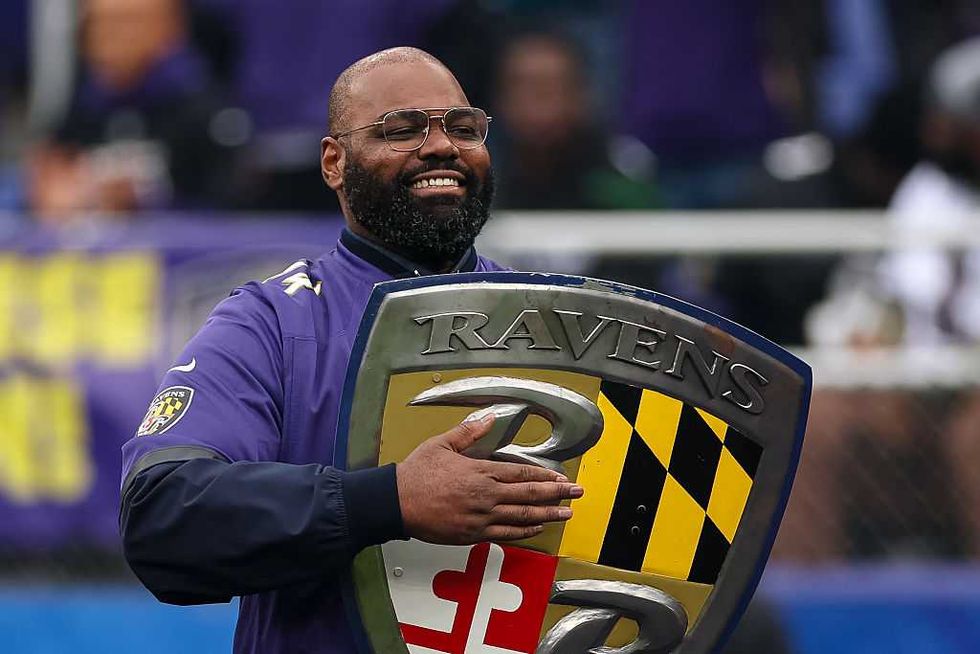 Photo by Scott Taetsch/Getty Images
Outspoken Christian
Aaron has been outspoken about being a Christian in Hollywood. In a 2017 interview, he noted that many people in the film industry are “not very charitable” unless it benefits them.
“I’ve noticed that, especially with friends in Hollywood, if you want to keep a friend, don’t ask them for anything. I tell people all the time, I say, ‘The moment you ask for a favor, you’re probably never going to hear from them again,'” he explained.
“They may grant that favor, but don’t plan on asking for another one,” the actor added.
Oher, whom Aaron portrayed in the 2009 film, had eight seasons in the NFL, five of which were with the Baltimore Ravens.
Like Blaze News? Bypass the censors, sign up for our newsletters, and get stories like this direct to your inbox. Sign up here!
To Accept the Things I Cannot Change
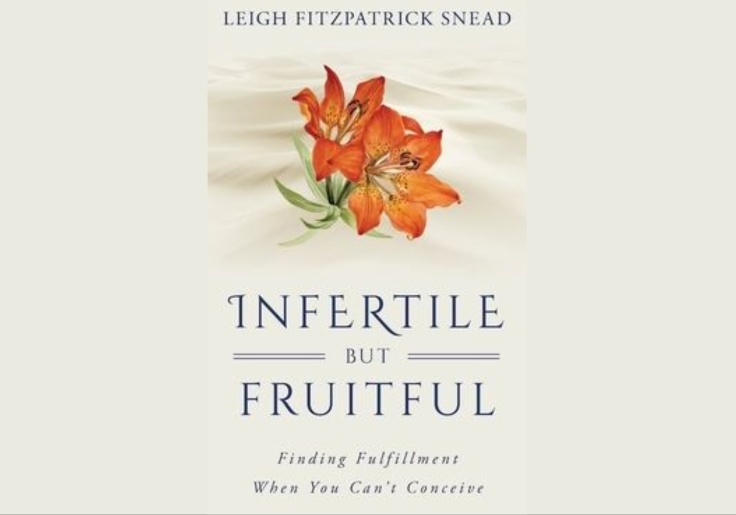
Menstrual cycles are not an illness, and medicating them as if they are—suppressing the body’s natural hormonal rhythms—clashes with what was once left-wing skepticism of corporate influence in medicine, while conveniently profiting Big Pharma. This should not be a controversial or political claim. And yet, as the New York Times recently noted, it has become one—and a conservative one at that.
The post To Accept the Things I Cannot Change appeared first on .
Malcolm Muggeridge: Fashionable idealist turned sage against the machine

“The depravity of man is at once the most empirically verifiable reality and the most intellectually resisted fact.”
The name of the man who made this pronouncement may not mean much to many readers now. Yet the world he warned about has arrived all the same, whether his name is remembered or not.
When Malcolm Muggeridge — a British journalist and broadcaster who became a public figure in his own right — died in 1990, many of his fears still felt abstract. The moral strain was visible, but the structure was holding. Progress was spoken of with confidence, and freedom still sounded uncomplicated.
‘I never knew what joy was until I gave up pursuing happiness.’
Today, those assumptions lie in pieces. What he distrusted has hardened into dogma. What he questioned has become unquestionable. We are living amid the consequences of ideas he spent a lifetime probing.
Theory meets reality
Muggeridge was never dazzled by modern promises. He distrusted grand schemes that claimed to perfect humanity while refusing to reckon with human nature. That suspicion wasn’t a pose; it was learned. As a young man, he flirted with communism, drawn in by its certainty and its language of justice. Then he went to Moscow. There, theory met reality.
What he encountered was not liberation but deprivation. Hunger was rationalized as hope. Cruelty came wrapped in benevolent language. Compassion was loudly proclaimed and quietly absent. The experience cured him of fashionable idealism for life. It also taught him something harder to accept: Evil often enters history announcing itself as virtue, and the most dangerous lies are told with complete sincerity.
That lesson stayed with him. In an age once again thick with certainty, that insight feels uncomfortably current.
Pills and permissiveness
Yet Muggeridge’s critique extended beyond politics. At heart, he believed the modern crisis was spiritual. God had become an embarrassment, sin a diagnosis, and responsibility something to be displaced by grievance. Pleasure, once understood as a byproduct of order, was recast as life’s purpose. The result, he argued, wasn’t freedom but loss.
This realism shaped his opposition to the sexual revolution. Long before its consequences were obvious, he warned that freedom severed from restraint wouldn’t liberate people so much as hollow them out. He mocked the belief that pills and permissiveness would deliver happiness. What he anticipated instead was loneliness, instability, and a culture increasingly medicated against its own dissatisfaction.
Muggeridge also understood the media with unsettling clarity. As a journalist and broadcaster, he watched newsrooms trade substance for spectacle and truth for approval. When entertainment becomes the highest aim, he warned, reality soon becomes optional.
By the end of his career, Muggeridge had dismantled nearly every modern promise. Fame proved thin. Desire disappointed. Professional success brought no lasting peace. Skepticism could clear the ground, but it could not explain why nothing worked.
A skeptic stands down
When after more than a decade of exploring Christianity, Muggeridge finally entered the Catholic Church in 1982, the reaction among his peers was disbelief bordering on embarrassment. This was not the impulse of a sentimental seeker but of one of Britain’s most famous skeptics — a man who had mocked piety, distrusted enthusiasm, and made a career of puncturing illusions.
Friends assumed it was a late-life affectation, a theatrical flourish from an aging contrarian. Muggeridge himself knew better. He had not converted because Christianity felt safe or consoling, but because, after a lifetime of alternatives, it was the only account of reality that still made sense.
As he had written years before in “Jesus Rediscovered,” “I never knew what joy was until I gave up pursuing happiness.”
That sentence captures the logic of his conversion. Muggeridge did not arrive at faith through nostalgia or temperament. Christianity did not flatter him. It named pride, lust, and cruelty plainly, then offered grace without euphemism. It explained the world he had already seen — and himself within it.
RELATED: Chuck Colson: Nixon loyalist who found hope in true obedience
 Washington Post/Getty Images
Truth endures
His Catholicism was not an escape from seriousness but its culmination. He believed human beings flourish within limits, not without them; that desire requires direction; that pleasure without purpose corrodes. Christianity endured, he argued, not because it was comforting but because it was true.
After his conversion, Muggeridge did not soften. He sharpened. The satire retained its bite. The warnings grew more direct. But they were no longer merely critical. Skepticism had given way to clarity — not because he had abandoned reason, but because he had finally stopped pretending it was enough.
More than three decades after his death, Muggeridge’s voice sounds less like commentary than like counsel. The world he warned about has arrived. What remains is the stubborn relevance of faith grounded in reality — and the freedom that comes only when truth is faced, rather than fled.
The Fred Phelps Left Invades the Churches
A Pew poll released about a year ago noted that just 37 percent of American liberals identify as Christians, versus…
Influencer culture is poisoning the pulpit — and the fallout is catastrophic
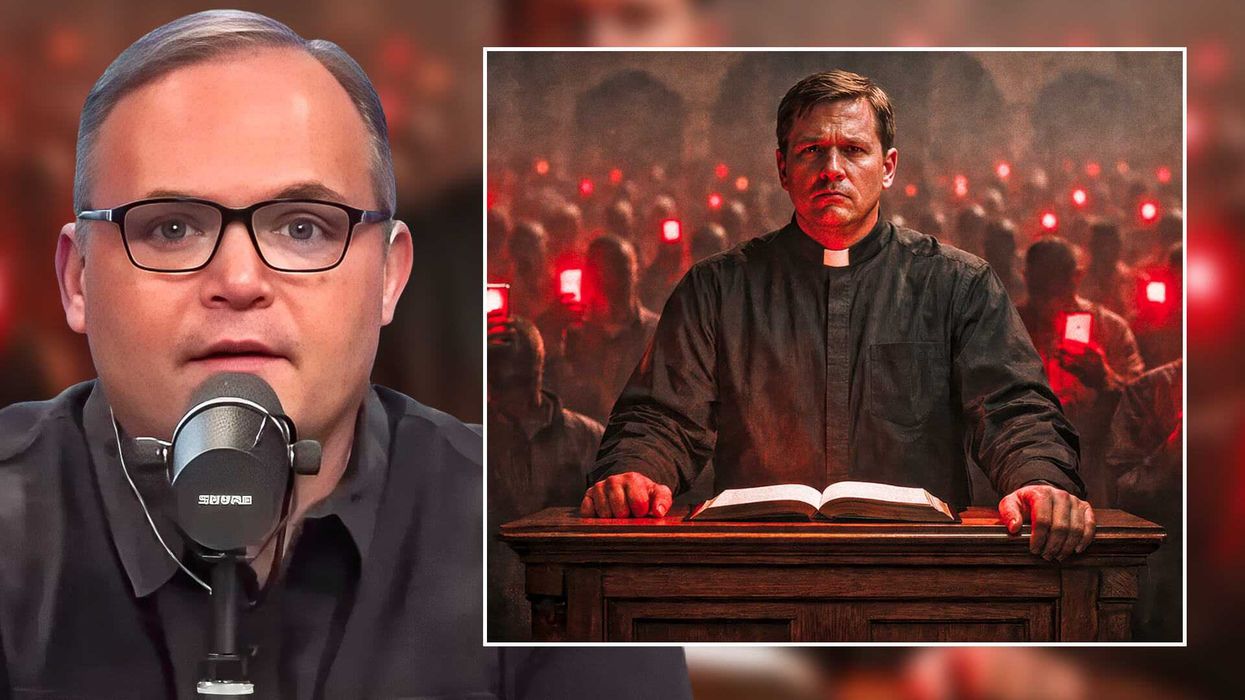
Joel Osteen preaches a heretical prosperity gospel; Timothy Keller’s “third way” softens biblical truth for acceptability; and Rick Warren’s seeker-sensitive approach waters the gospel down into a self-help guide.
What do all three of these pastors have in common?
They “were really not preaching so much for the people in the pews but because they wanted a broader cultural acceptance from more mainstream or academic or globalist institutions,” says BlazeTV host Steve Deace. “And so they altered their approach as pastors within their own churches in order to appeal to an audience that was actually not sitting in their churches.”
While Osteen, Keller, and Warren belong to an older generation of preachers, Deace is concerned that that same hunger for approval is cropping up in younger generations of pastors who have been seduced by social media fame.
On this episode of the “Steve Deace Show,” Deace interviews senior pastor of East River Church in Ohio, Michael Foster, about how influencer culture is slowly creeping in and corroding the pulpit.
Some of these young pastors, says Deace, are “not really preaching to Michael in the third row whose marriage is on the rocks, and he’s lost the respect of his kids, and he doesn’t know how to get it back. [They’re] preaching to @dontjewmebro43 on X.”
“I’m not really preaching the gospel to him, but I’m preaching some nascent gospel applications that may or may not be adjudicated properly in order … to feed his fury, to give me the engagement that I want,” he rails, imitating these people-pleasing ministers.
Foster, who’s written several essays on this subject, says that it’s critical that pastors know their individual sheep.
“He’s got particular sheep. You see this in the New Testament when you have Paul preaching the same gospel, the same teaching, but he addresses problems in Colossae that aren’t in Corinth and problems in Corinth that aren’t in Colossae,” he says.
On the other hand, “Influencing speaks to … broad generalizations over a national level.”
“Because the influencer online social media culture is such a huge part of our lives, it is reshaping ministry right now where people are speaking to not maybe the actual issues in their church but the things that they’re hearing other people talk about in their feeds,” says Foster.
“It’s training people to not be pastors anymore, just to be talking heads, to be commentators.”
“Is there a way for you as a pastor to avoid falling into this trap without a really solid elder board and accountability in your life personally?” asks Deace.
That question, says Foster, is the equivalent of asking: “Could you ride a roller coaster without a roller coaster bar and survive it?”
There are three tips he gives to ministers that will help ensure they stay in the lane of pastor and not veer into the influencer lane:
1. Strong elders who are involved in sermons and accountability.
2. Tailor sermons toward specific congregational needs, not broad issues/topics.
3. Reject fame and notoriety if they come.
On the latter, Foster says, “You have to have an abusive relationship with celebrity as a pastor. I think you have to hate it, right? Spit in its face. If it comes back for more, well, that was its choice.”
To hear more of the conversation, watch the video above.
Want more from Steve Deace?
To enjoy more of Steve’s take on national politics, Christian worldview, and principled conservatism with a snarky twist, subscribe to BlazeTV — the largest multi-platform network of voices who love America, defend the Constitution, and live the American dream.
Biden’s faith attacks backfire: Support for religious liberties soars to record high under Trump, new report shows
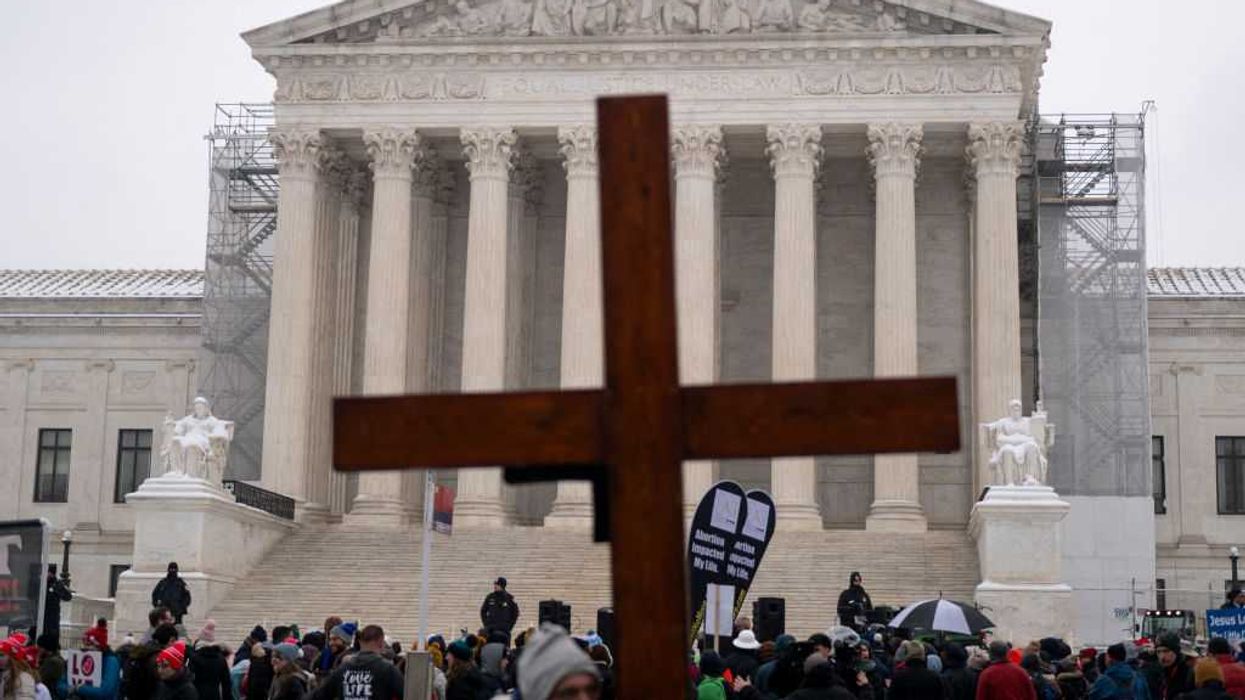
Against a backdrop of mounting attacks on churches, the Biden administration worked ardently to curb religious liberties wherever they came into conflict with the left’s radical agenda.
For example:
- the Biden Equal Employment Opportunity Commission implemented a rule requiring employers — including Christian organizations — to accommodate workers’ efforts to abort their unborn children;
- the EEOC attempted to force Christians to pay for employees’ sex-rejection mutilations;
- the Biden Department of Health and Human Services attempted to bar Christian providers who hold biblical and scientifically grounded views about sex and marriage from the foster-care system; and
- under Biden, a Catholic, the FBI characterized conservative Catholics as potential domestic terrorists and proposed to infiltrate Catholic churches as “threat mitigation.”
It’s clear from the Becket Fund for Religious Liberty’s latest Religious Freedom Index that unlike the administration voted out of power in 2024, the American people overwhelmingly — and increasingly — support religious liberties.
‘Our nation still believes that our first freedom belongs at the heart of our culture; not as a source of conflict, but as a foundation for overcoming it.’
Over the past six years, Becket has tracked public opinion on religious freedom. The legal group’s index for 2025 published on Friday registered the highest cumulative score for public support of religious freedom to-date — 71 on a scale from 0 to 100 where 0 indicates complete opposition to religious liberty and 100 indicates robust support.
This amounts to a dramatic shift, especially when compared to 2020, when the composite score was 66.
Whereas in 2020, 52% of respondents agreed that religious freedom is inherently public and that Americans should be able to share their faith in public spaces, that number jumped to 57% in the latest RFI.
There was an even bigger shift when it came to support for parents’ ability to opt out of public school curricula they believe to be inappropriate — a jump from 63% in 2021 to 73% in 2025.
RELATED: 6 ways I’m using 2026 to deepen my relationship with God
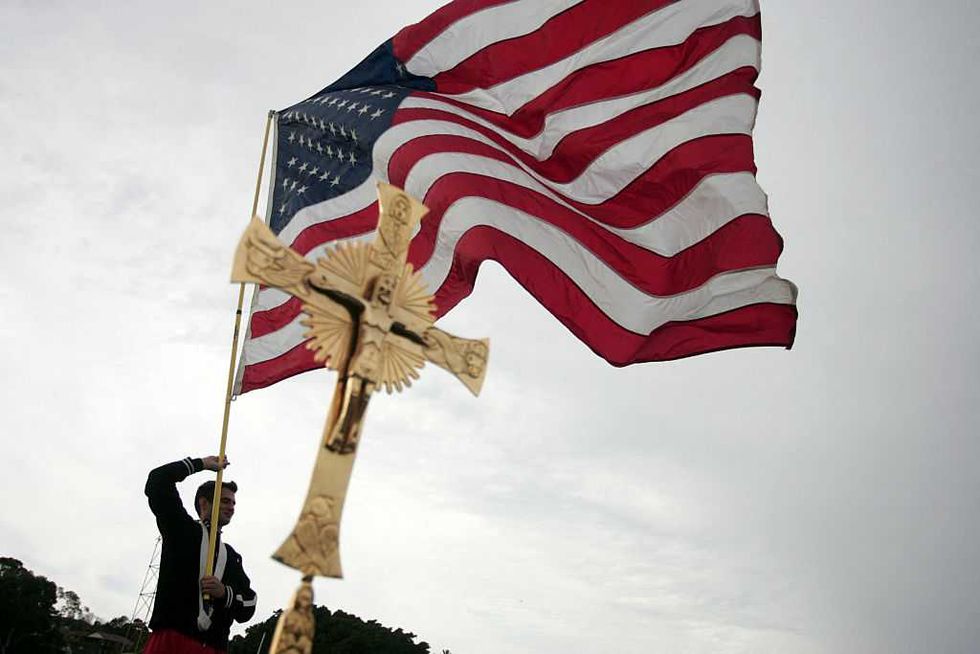 Photo by ANOEK DE GROOT/AFP via Getty Images
When asked specifically about the Supreme Court’s June 2025 ruling in Mahmoud v. Taylor, 62% of respondents signaled support for the high court’s decision to side with the Maryland parents who wanted to protect their children from LGBT propaganda in Montgomery County Public Schools.
On the question of whether public funding for education should be available to all families, including those who choose religious schools, 77% of respondents said they were mostly or completely in favor.
The report noted that “although this year’s Index found that Americans have cooled on the benefits of religion to society and are skeptical of institutions, they unify around the simple principles of religious freedom for all, even in difficult cases that invite scrutiny or controversy.”
A clear majority, 58%, of Americans said they support the right of a Christian baker to decline to make cakes that conflict with her sincere religious views.
Sixty-one percent of respondents said that the First Amendment’s guarantee of the free exercise of religion should protect Catholic priests from having to break the seal of confession as would have been required by Washington state Democrats’ now-enjoined Senate Bill 5375.
There was markedly less support for the Christian counselor in the case Chiles v. Salazar who challenged Colorado’s prohibition on so-called “conversion therapy” for non-straight youth. Only 47% expressed support for her ability to provide talk therapy to children to help them overcome their gender dysphoria.
“Year after year, the Index has made clear that religious liberty remains one of our most cherished values,” Mark Rienzi, president and CEO of Becket, said in a statement obtained by Blaze News.
“Even amid deep divisions, our nation still believes that our first freedom belongs at the heart of our culture; not as a source of conflict, but as a foundation for overcoming it,” continued Rienzi. “The work before us is to see that freedom protected for our children and theirs in the years to come.”
Like Blaze News? Bypass the censors, sign up for our newsletters, and get stories like this direct to your inbox. Sign up here!





