

Category: Minnesota
New Minnesota bill could run classic car owners off the road

If you think this is just another harmless piece of paperwork coming out of a state legislature, think again.
Minnesota’s HF 3865 is being sold as a simple clarification of collector car rules, but the reality is far more consequential. This proposal doesn’t just tweak the language — it redraws the lines around when you’re allowed to enjoy a vehicle you already own. And if it passes as written, classic car owners could find themselves boxed into a narrow window of “acceptable” use, with little room for the freedom that defines car culture.
Classic cars require regular use to remain functional. Sitting idle can lead to mechanical issues, from dried seals to fuel system problems.
For decades, collector vehicle laws have operated on a basic understanding. These vehicles are not daily transportation, and owners accept that limitation in exchange for reduced registration requirements and, in many cases, historic recognition. But within that framework, there has always been a reasonable level of flexibility. Owners could take their vehicles out for a drive, attend informal gatherings, test car repairs, or simply enjoy the result of years of restoration work.
HF 3865 changes that balance.
Centralized rule
The bill establishes a centralized rule governing how all collector-class vehicles can be operated in Minnesota. That includes vintage vehicles, classic cars, and other limited-use automobiles that have historically existed under a more flexible understanding between owners and regulators.
What makes Minnesota’s approach notable is that it cuts against the direction of travel in other states. In California — hardly a state known for regulatory leniency — lawmakers are advancing “Leno’s Law,” a proposal to ease emissions requirements for qualifying collector vehicles based on how rarely they’re driven and the practical limits of testing older cars.
Yes, even California is beginning to recognize that legacy vehicles don’t fit neatly into modern regulatory frameworks. Minnesota, by contrast, is moving to define — and restrict — how those vehicles can be used.
In practice, that shift matters. Once a centralized rule is in place, interpretation falls to regulators, inspectors, and law enforcement — each with their own threshold for what counts as acceptable use. What looks like a narrow clarification on paper can quickly become a broader constraint in reality.
Sunday drivers
That ambiguity doesn’t stay theoretical for long. It shows up in everyday situations: An owner takes a freshly repaired car out for a test drive and gets pulled over — does that qualify as permitted use? A weekend cruise without a formal event destination — allowed, or not? A quick drive to keep seals lubricated and the battery charged — reasonable to the owner, but potentially questionable to an officer enforcing a stricter reading of the rule. When the line isn’t clear, the practical burden often falls on the owner to justify the drive.
The concern isn’t just about what the bill says today, but what it enables tomorrow. When the state defines “appropriate use” for collector vehicles, it creates a framework that can be tightened over time — through enforcement patterns, regulatory guidance, or future amendments. What begins as a modest clarification can evolve into a far more restrictive system.
RELATED: ‘Leno’s Law’ could be big win for California’s classic car culture
 CNBC/Getty Images
Eroding the culture
For owners, this isn’t theoretical. Classic cars require regular use to remain functional. Sitting idle can lead to mechanical issues, from dried seals to fuel system problems. Owners often need to take vehicles out for test drives after repairs or simply to keep them in working condition. Limiting when and why those drives are allowed adds friction to ownership in a way that goes beyond paperwork — it affects whether maintaining these vehicles is practical at all.
There’s also a cultural cost to consider. Classic cars are not just transportation; they’re rolling artifacts of American design, engineering, and craftsmanship. They connect generations and preserve a hands-on relationship with mechanical systems that is increasingly rare. Restricting their use doesn’t just inconvenience owners — it gradually erodes the culture that keeps them alive.
Supporters of HF 3865 may argue that the bill simply clarifies existing rules. But clarity is not always neutral. When clarification narrows behavior, it functions as restriction. And when that restriction applies to how individuals use their private property — particularly in ways that have long been understood as reasonable — it deserves closer scrutiny.
Minnesota lawmakers have a choice to make. They can preserve the balance that has allowed collector car culture to thrive, or they can begin redefining it in ways that may be difficult to reverse.
For classic car owners, the stakes are simple: This isn’t just about regulation. It’s about whether the freedom to enjoy what you own is quietly being rewritten.
The Medicaid fraud problem is not going away
John Locke’s “Second Treatise of Government,” which inspired many of our nation’s founding principles, makes the simple assertion that the basic role of government is to protect the lives, liberty, and property of the consenting governed. Though our federal government has long since strayed from this purpose, opportunities to defend it are always a worthy endeavor.
That is why President Trump’s appointment of Vice President JD Vance to lead a new task force dedicated to rooting out fraud in the United States is a welcome undertaking.
There’s no incentive for states to police fraud: They can’t go over budget, and the feds still pick up the tab for illegitimate claims.
For too long, numerous states have abused federal dollars, failing to ensure that many recipients are even real or qualified for federal funds and leaving taxpayers to pick up the tab. Contrary to the media narrative that the administration is simply on a blue-state witch hunt, the billions of dollars stolen in Minnesota (yet to be returned) tell a different story.
For once, the executive branch is demonstrating proper oversight in the service of the American taxpayer, and it is long overdue.
Federal prosecutors estimate that, across 14 Minnesota Medicaid-funded programs, fraud totals more than $9 billion. That number is half of all federal matching funds allocated to the state since 2018.
It’s often said that taxation is theft. In Minnesota, it appears to be policy.
Correctly, Mehmet Oz, administrator of the Centers for Medicare and Medicaid Services, and Vice President JD Vance, have turned off the credit card until Minnesota officials can clean up their act.
Following a January CMS effort to get the state into compliance, the agency is also deferring payment for Q4 of 2025, having identified $259.5 million in fraudulent and illegal claims.
Like clockwork, officials, including Gov. Walz, began to plead on behalf of victims of a potential Medicaid fallout, portraying themselves as the defenders of the very Minnesotans victimized by the fraud they enabled.
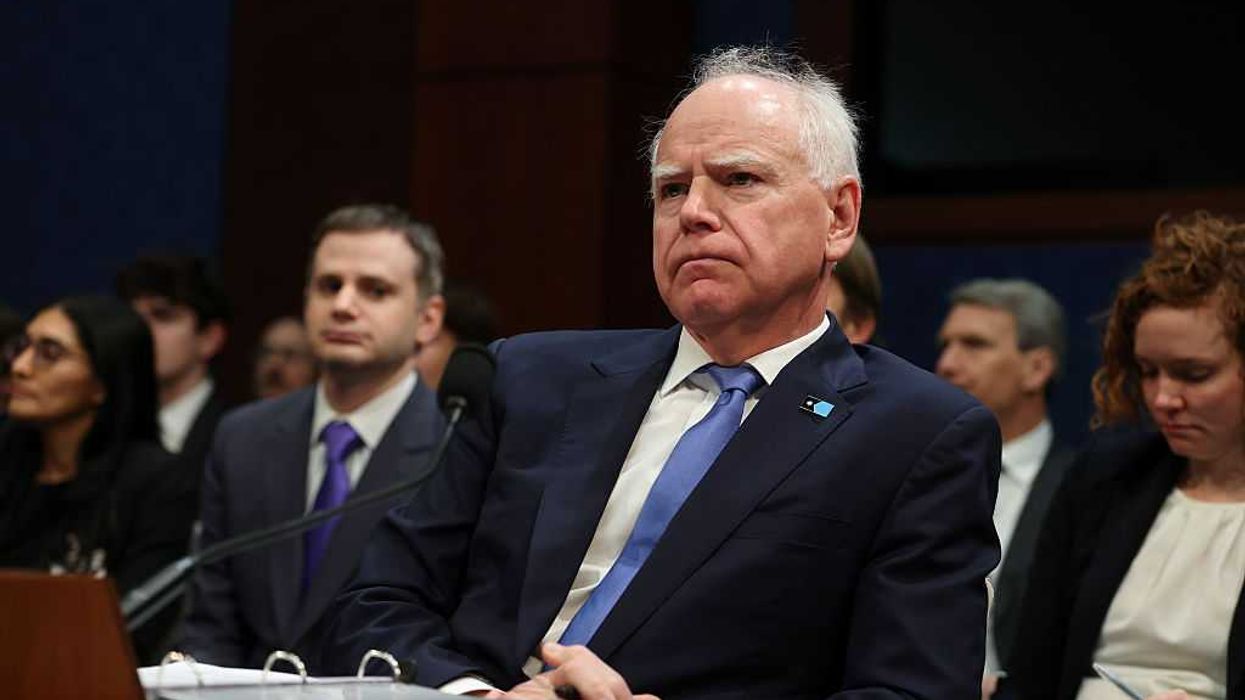
In a House Oversight Committee hearing just a few weeks ago, Walz and Attorney General Keith Ellison faced questions with a surprising lack of urgency. When asked if he felt the state’s efforts to return funds were successful, Walz denied culpability: “I can’t speak to that … I don’t have any part in that.”
Despite media outlets defending the state’s “good-faith effort” to make amends, the estimated $80 million returned still falls short of even 1% of the money stolen from taxpayers.
Similarly, Walz refused to elaborate on whether government officials who enabled fraud had been fired. During the Oversight Committee’s investigation, it was revealed that dozens of whistleblowers who reported fraud inside the Minnesota Department of Human Services were retaliated against. Minnesota DHS hired outside entities to investigate staff who fell out of line.
The reason? Dozens of whistleblowers reported that they were told not to say anything about the fraud for fear of being called “racist” or “Islamophobic.”
Not only did Walz and Ellison know about massive welfare fraud in the state, but they went to great lengths to keep it that way, afraid that cracking down on the disproportionate amount of Medicaid fraud in the Somali community would harm them politically.
RELATED: Tax-exempt hospitals are not putting their patients first
 David M. Levitt/Bloomberg/Getty Images
This level of fraud is historic. But rather than making a good-faith effort to identify fraud and recover taxpayer funds, Minnesota may become the first state to pursue the unprecedented step of suing CMS instead of using the agency’s internal appeals process. While state officials claim they are at a loss over how to satisfy CMS requirements, doubling down on fraud is doubtlessly not the solution CMS is looking for.
Vance, now tasked with developing a nationwide anti-fraud strategy, should build on CMS’ approach in Minnesota, one that directly targets the root of the problem.
Minnesota, like many states, receives a Federal Medical Assistance Percentage of 90% for adults covered under the ACA expansion. In practice, that means for every dollar the state spends, the federal government contributes nine. States that spend more get more. There’s no incentive for states to police fraud: They can’t go over budget, and the feds still pick up the tab for illegitimate claims, ultimately passing the balance on to taxpayers.
In context, CMS’ Medicaid funding pause in Minnesota functions as a blunt but effective check: no oversight, no money. Should Minnesota decide to bolster program integrity and ensure that Medicaid assistance only goes to Americans who are truly in need, it can confidently spend its cash again with the assurance of federal backing.
In the meantime, every other state would be wise to take note and get its house in order before Vance drops the hammer.
The Bishops and the Border
I worry at times, writing this column, that I may sound like a broken record, harping on immigration issues and…
When worship is interrupted, neutrality is no longer an option

Something important shifted in this country when a Sunday worship service in Minneapolis was interrupted by protesters. It was a deliberate, premeditated intrusion into a space set apart for worship.
This was not spontaneous. There was planning, agreement, and coordinated action. This sort of strategy requires a different posture.
Churches across the country are already alert. Security teams exist for a reason.
For generations, houses of worship were understood to be off-limits.When that boundary is crossed, we are no longer debating policy. We are testing whether restraint still exists and whether consequences still matter.
The line has been drawn. This is not an issue that can be treated casually or observed with indifference. Anyone who refuses to condemn the coordinated disruption of worship — or, worse, excuses it — has already chosen a side.
Moments like this tempt Christians toward outrage or bravado. But Scripture does not train the church for theatrics. It trains the church for endurance, clarity, and readiness.
This incident likely would not have unfolded the same way where I live in Montana. People here are not especially theatrical about conflict. Responsibility is assumed, and consequences are not abstract. Most folks are armed, and in many churches, that includes the pastors.
The reality beneath that observation is sobering. Churches across the country are already alert. Security teams exist for a reason. In a culture shaped by real church shootings, sudden disruption inside a sanctuary is no longer interpreted as mere protest. Provocation introduced into an environment already conditioned for worst-case scenarios increases the risk of irreversible outcomes.
Every police officer will attest that domestic calls are often the most unpredictable and volatile. Not because violence is inevitable, but because instability compresses time and judgment. When emotions are high and trust is thin, even small disruptions can escalate quickly.
Families who live with addiction or severe mental illness understand this intuitively. They remain vigilant not because they want conflict, but because unpredictability makes it necessary. Boundaries are not set because change is guaranteed, but because safety is required.
A space shaped for reverence, restraint, and peace cannot be treated as if it can absorb chaos without consequence.
In such situations, vigilance and preparedness are not aggression. They are necessary parts of responsible stewardship.
Intimidation rarely seeks hardened targets. Visibility, restraint, and hesitation make certain spaces attractive to disruption. Where ambiguity is denied, intimidation fails.
It is difficult to imagine these kinds of coordinated disruptions taking place in historically black churches. Not because those congregations are hostile, but because intimidation has never been indulged there. Those churches were forged when intrusion and disruption were never theatrical.
This is not a call to intimidation in return. It is a call to clarity.
When tensions rise, someone must lower the temperature. If one side refuses, the other is obligated to establish boundaries for safety.
Anyone who has dealt with addiction understands this principle. Change cannot be forced, but boundaries must still be set. Recovery, incarceration, or death often follow prolonged chaos. These are realities repeatedly observed when destructive behavior is indulged.
RELATED: Don Lemon ARRESTED over apparent involvement in church invasion; Jim Acosta whines
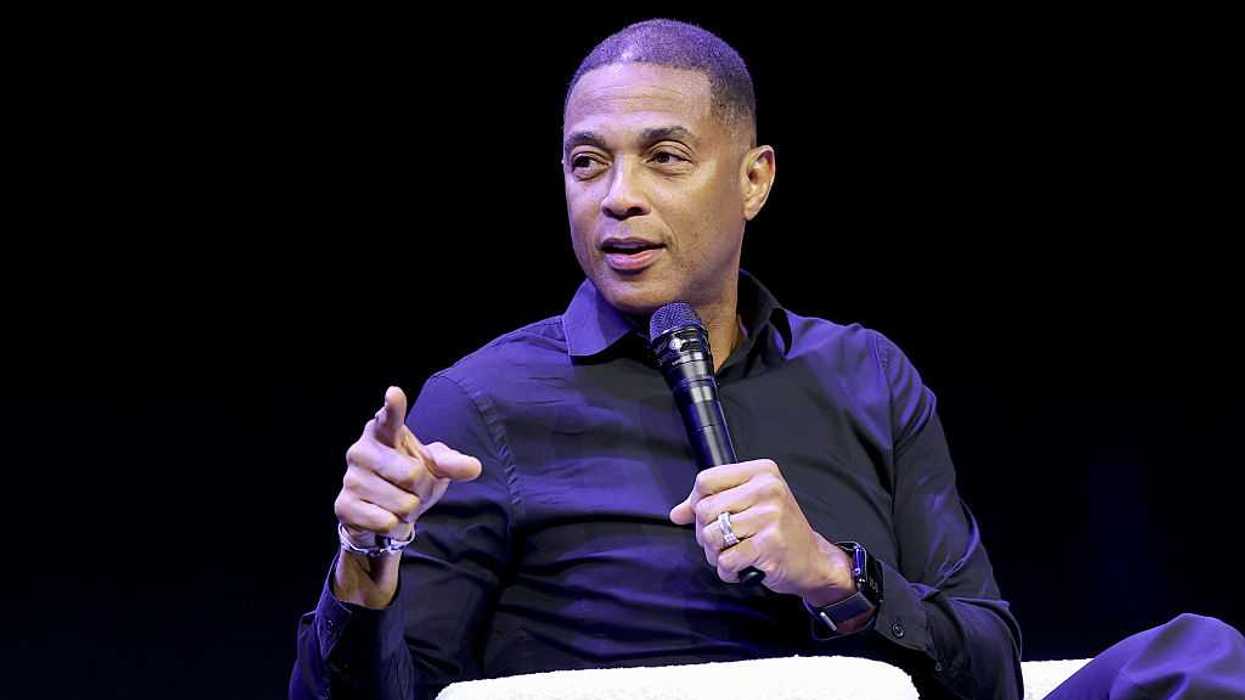 Photo by Arturo Holmes/Getty Images
The people setting boundaries are not the cause of the crisis. They are responding to it.
Scripture never promises that moments like this will not come. Jesus warned His followers that hostility would arrive. Paul urged believers not to avenge themselves, but to overcome evil with good.
Scripture states that what can be shaken will be shaken, so that what cannot be shaken may remain (Hebrews 12:27).
That truth is carried not only in Scripture, but in the church’s hymns.
The soul that on Jesus hath leaned for repose,
I will not, I will not desert to his foes.
That soul, though all hell should endeavor to shake,
I’ll never, no never, no never forsake.
There is no clenched fist in that stanza. It shows a relief from strain because vigilance has been transferred to someone stronger. Calm is possible, not because the threat is small but because God is not.
So when worship is interrupted and the lines are clearly drawn, the church does not respond with hysteria or silence. It responds with moral clarity, firm boundaries, and settled confidence grounded in an unshakable kingdom. The path for believers is steadiness shaped by truth, restraint, and trust in God rather than reaction to provocation.
The church has never endured because it intimidated back. It has endured because God does not abandon His people.
The Rise of the New Confederacy
“What has been is what will be, and what has been done is what will be done, and there is…
Church invasion suspect arrested by feds is woke Minneapolis prosecutor’s right-hand man

Attorney General Pam Bondi announced on Friday morning the arrests of several radicals who allegedly stormed Cities Church in Saint Paul, Minnesota, on Jan. 18.
One of Don Lemon’s fellow arrestees, Jamael Lydell Lundy, is a newly announced Democratic candidate for the Minnesota Senate who previously worked for Democratic Rep. Betty McCollum and now serves as the right-hand man for Mary Moriarty, Hennepin County’s Soros-backed prosecutor.
Moments prior to the church invasion, Lundy told Lemon on camera, “I’m here to support our community activists,” reported the New York Post.
‘They are troublemakers who should be thrown in jail, or thrown out of the Country.’
“I’m currently a candidate for Minnesota state Senate District 65,” Lundy told the former CNN talking head. “I feel like it’s important if you’re going to be representing people in office, that you’re out here with the people as well.”
“We all we got,” continued Lundy. “I’m actually married to an elected official; I work closely with elected officials, but direct action from the community, certainly within the lines of the law, is so important to show that we have one voice.”
In footage of the subsequent church invasion, Lundy appears fully engaged in the mob’s disruption of the Christian service and the parishioners’ worship, pumping his fist in the air and shouting near the altar.
RELATED: Don Lemon ARRESTED over apparent involvement in church invasion; Jim Acosta whines
 Photo by Arturo Holmes/Getty Images
According to Lundy’s campaign website, he is married to St. Paul City Councilwoman Anika Bowie, Minnesota Attorney General Keith Ellison’s former political director.
In his role as Moriarty’s intergovernmental relations manager, Lundy — who supported the “bananas with rice” Somali accused this week of spitting on federal agents — is responsible for interfacing with the federal government, reported the Daily Wire.
Lundy’s radicalism is in keeping with that practiced by his anti-ICE boss, who launched a project with Philadelphia District Attorney Larry Krasner and other woke prosecutors on Wednesday aimed at “collaborating to ensure federal officials are held accountable when they exceed their lawful authority.”
The non-straight prosecutor has been one of the more unhinged critics of federal agents’ enforcement of federal immigration law in Minneapolis, claiming earlier this month, for instance, “If you do not have white skin, you are in danger of being approached by ICE.”
President Donald Trump suggested those who stormed the church were “agitators and insurrectionists.”
“These people are professionals! No person acts the way they act,” continued Trump. “They are highly trained to scream, rant, and rave, like lunatics, in a certain manner, just like they are doing. They are troublemakers who should be thrown in jail, or thrown out of the Country.”
Blaze News has reached out to Moriarty’s office for comment.
Like Blaze News? Bypass the censors, sign up for our newsletters, and get stories like this direct to your inbox. Sign up here!

The Spectacle Ep. 320: Can ICE Save Minnesota From Democrat Corruption & Their Illegal Immigration Schemes?
The escalating outrage against ICE in Minnesota continues to show the Left’s ignorance of what ICE is actually doing —…
Trump’s unusual Cabinet meeting may reveal which officials are on thin ice
President Donald Trump skipped over some key Cabinet secretaries on Thursday, leaving onlookers to speculate about who may be on the outs.
During the 10th Cabinet meeting of his second term, Trump wrapped up the gathering after a prompt hour and 20 minutes. Trump made the exceedingly rare decision not to take questions at the end of the meeting, and those tuning in noticed he skipped over some high-profile officials who are currently under intense scrutiny.
‘Noem has come under fire from both Democrats and some Republicans.’
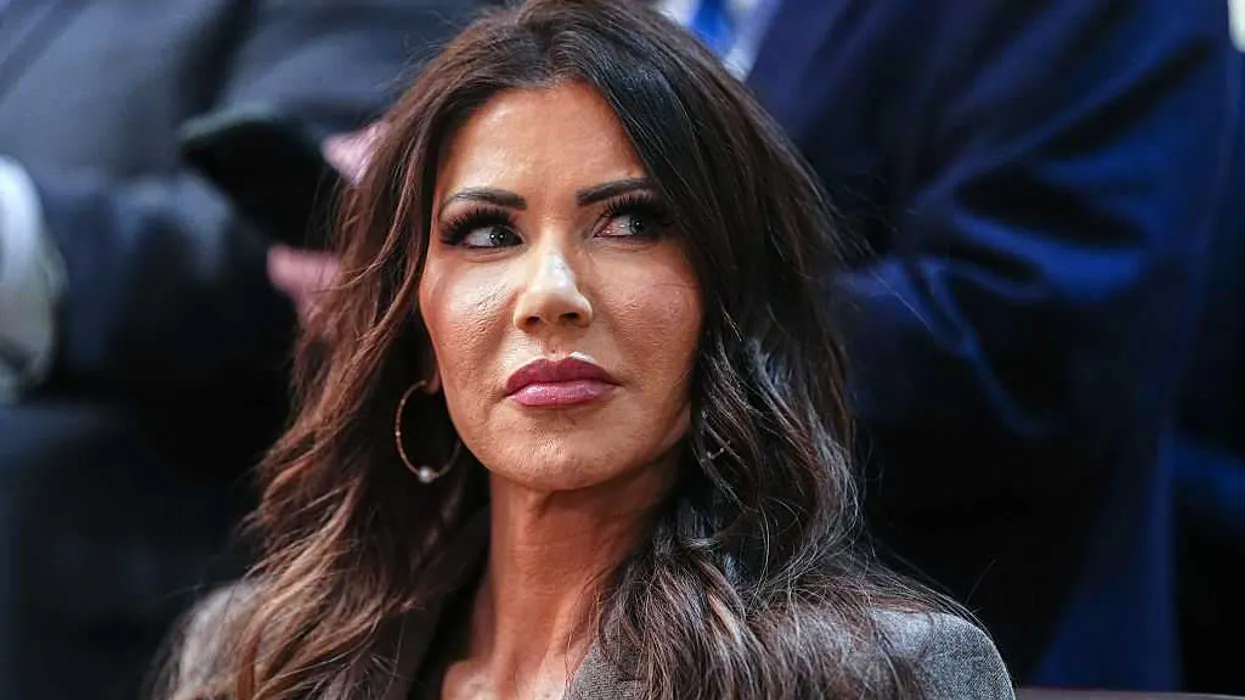
The most notable Cabinet official who seems to have been snubbed was Department of Homeland Security Secretary Kristi Noem, who is at the center of a PR firestorm following another fatal shooting of an anti-ICE agitator in Minneapolis, Minnesota.
Noem and other officials like top White House adviser Stephen Miller caught flak for their immediate categorization of Alex Pretti, calling him a “would-be assassin” who committed acts of “domestic terrorism.” Footage has since emerged of a man believed to be Pretti spitting on federal agents and kicking the taillights out of a government vehicle just days before he was fatally shot following another altercation.
RELATED: ‘Justice is coming’: Border czar Tom Homan vows to stay in Minneapolis ‘until the problem is gone’
 Yuri Gripas/CNP/Bloomberg via Getty Images
Despite these new revelations, Noem has come under fire from both Democrats and some Republicans. The Trump administration has since swapped out Noem’s leadership on the ground, reassigning Chief Greg Bovino and bringing border czar Tom Homan onto the operation.
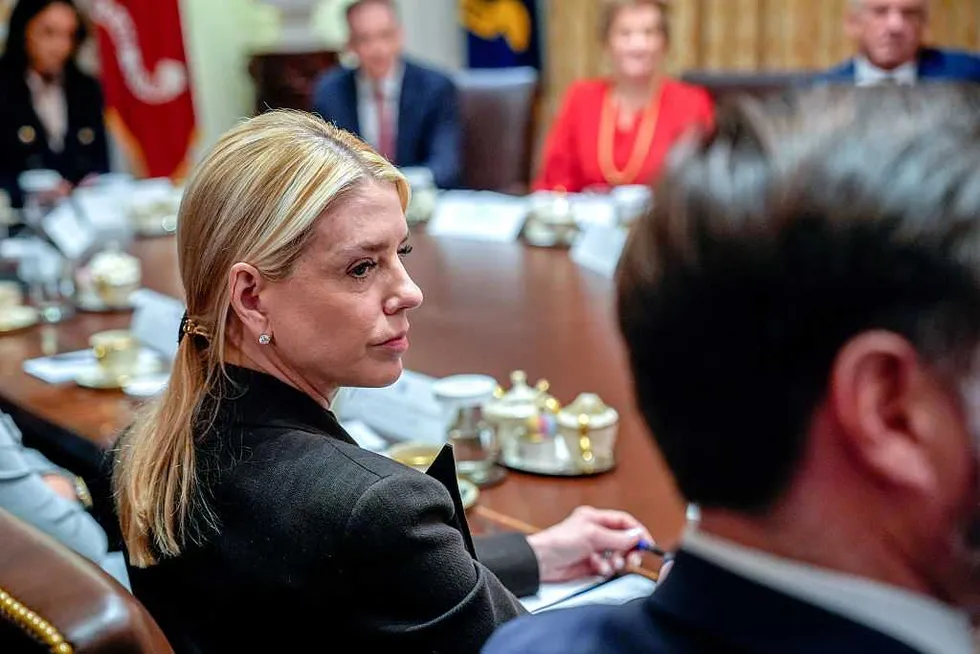
Trump also glossed over Attorney General Pam Bondi, whose first year in office has been primarily plagued by frustration over the handling of the Epstein files. Similarly, Bondi is now being criticized for the perceived inaction amid the situation in Minneapolis after she touted another “very strong letter” she sent to Democratic Gov. Tim Walz of Minnesota.
While Noem and Bondi have received negative press for their professional duties, Secretary of Labor Lori Chavez-DeRemer’s personal life has been the focal point of a recent scandal.
Multiple department staff have been put on leave in recent weeks after an inspector general’s investigation was launched into Chavez-DeRemer’s alleged misconduct. The probe alleges that two staff members engaged in “travel fraud” by scheduling professional events as an excuse for personal travel while Chavez-DeRemer reportedly had an “inappropriate” relationship with a subordinate.
Although an internal investigation is ongoing, Chavez-DeRemer’s lack of participation during the Cabinet meeting is notable.
RELATED: ‘Horrifying situation’: Some Republicans retreat following Minneapolis shooting of anti-ICE agitator
 Aaron Schwartz/CNP/Bloomberg via Getty Images
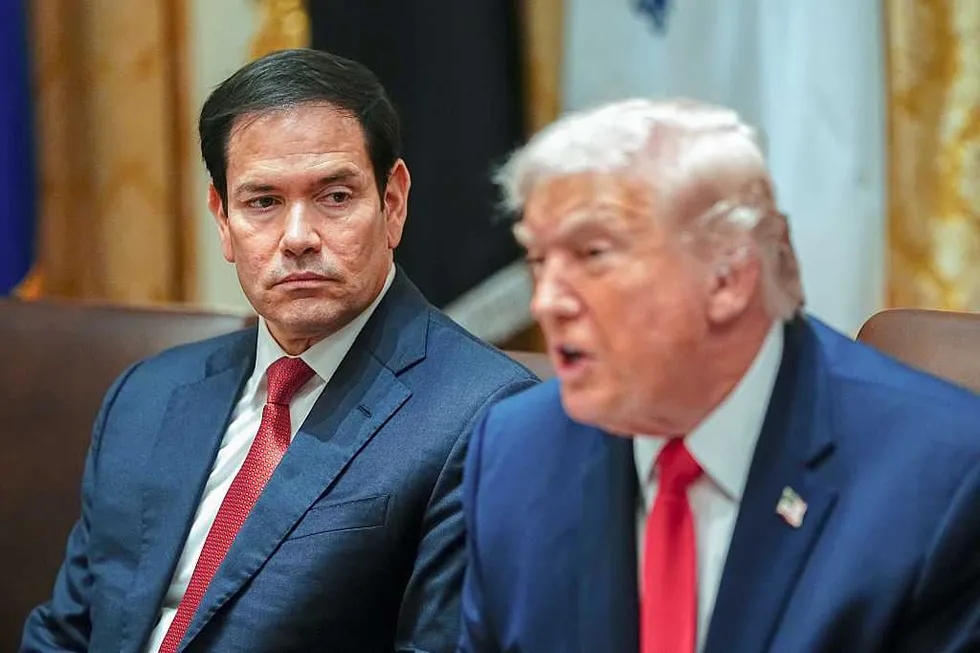
Another Cabinet member who refrained from speaking during Thursday’s meeting was Secretary of State Marco Rubio. Rubio has been center stage in the news cycle for weeks following the capture of Nicolas Maduro and as tensions in Iran escalate.
While Trump did not ask Rubio to speak, Rubio did spend hours testifying on Capitol Hill Wednesday in defense of the administration and its agenda.
Like Blaze News? Bypass the censors, sign up for our newsletters, and get stories like this direct to your inbox. Sign up here!
‘Gentle nurse’ narrative cracks: New video appears to show Pretti spit toward federal agents and kick out taillight
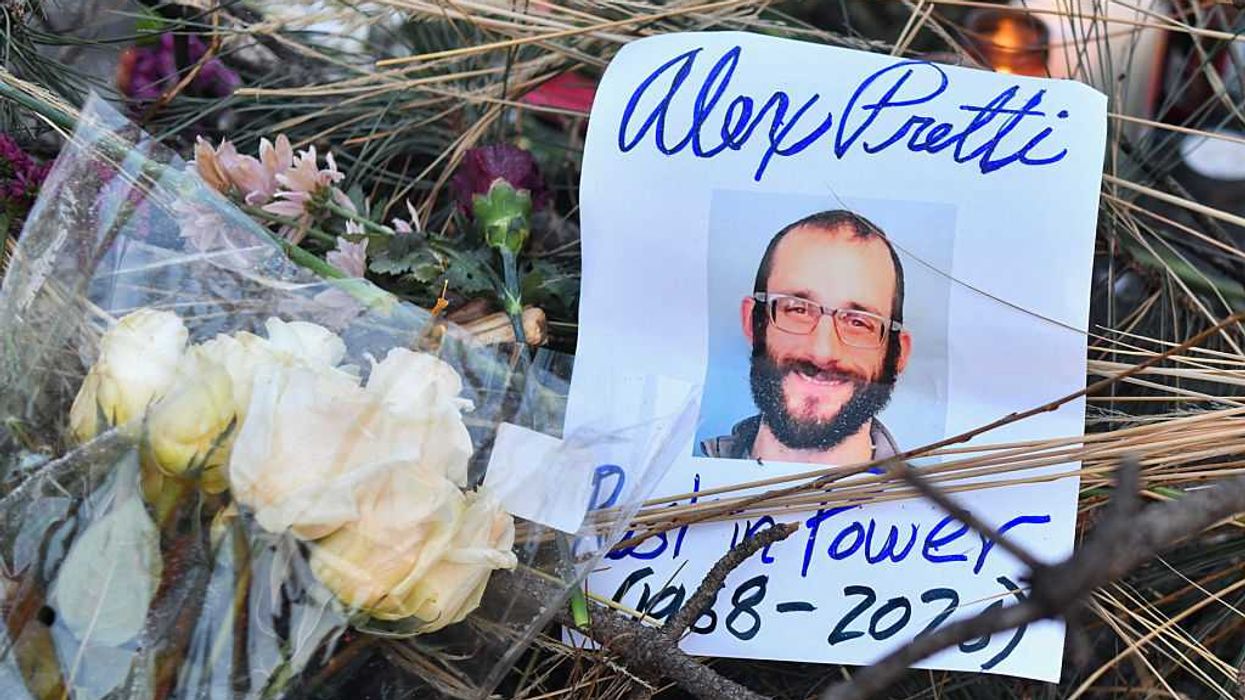
A video circulated on social media on Wednesday that appears to show Alex Pretti, a 37-year-old ICU nurse, having an altercation with federal agents in Minneapolis on January 13, a week before he was fatally shot.
The News Movement stated that it was filming a documentary about Immigration and Customs Enforcement activity in Minneapolis when it received a tip that federal agents were blocking a street. Protesters had gathered in the area.
‘Now we know that Alex Pretti was not a kindly gentle nurse … he was a CRIMINAL!!!’
In the video, a man who appears to be Pretti is seen shouting at and spitting toward an agent inside a Ford SUV. He then kicks the right taillight, shattering it and dislodging it from the vehicle.
A federal agent steps out of the rear passenger side of the vehicle to confront the man and attempts to wrestle him to the ground, but the man resists. Other agents step in to pin the man to the ground.
The News Movement reported that the agents fired tear gas and pepper balls into the crowd of protesters.
After a brief altercation, the agents release the man, who returns to his feet and moves away from the officers. What appears to be a gun is seen in the man’s waistband.
Minutes later, the federal officers climb back into their vehicle and drive away.
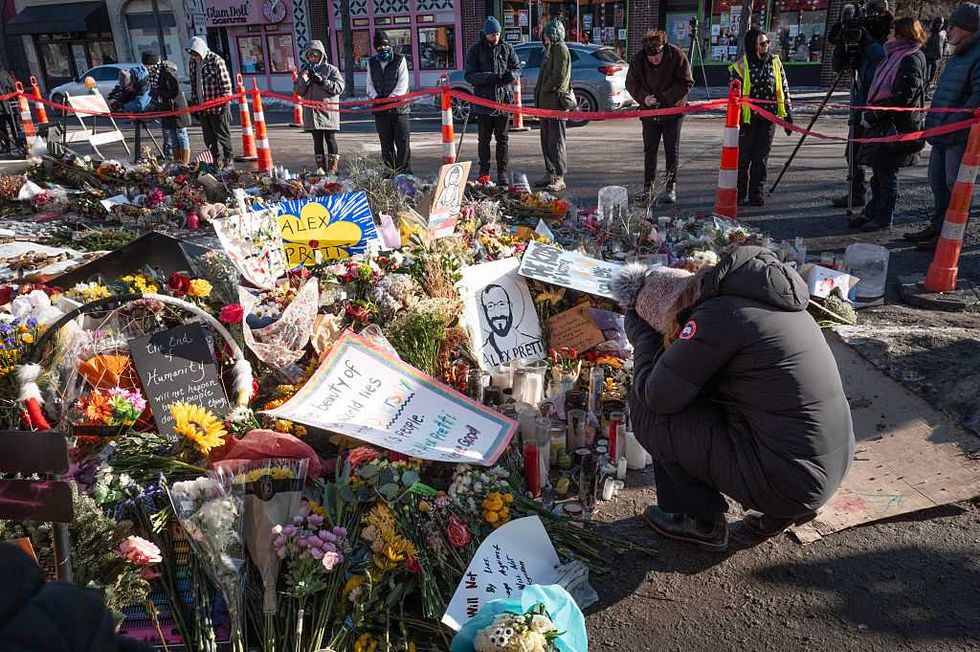 Photo by Scott Olson/Getty Images
A Department of Homeland Security spokesperson told Blaze News that the department is “reviewing this footage.”
A representative for the Pretti family confirmed to CBS News that the person in the video was Alex Pretti.
The News Movement reported that the footage was analyzed using the BBC’s facial recognition technology, which confirmed Pretti’s identity with 97% accuracy.
When reached for comment, the BBC referred Blaze News to its news clip on the shooting of Pretti, which included the News Movement’s January video.
Steve Schleicher, an attorney for the Pretti family, said in a statement obtained by the BBC, “A week before Alex was gunned down in the street — despite posing no threat to anyone — he was violently assaulted by a group of ICE agents. Nothing that happened a full week before could possibly have justified Alex’s killing at the hands of ICE on Jan. 24.”
RELATED: Alex Pretti broke a rib in a previous altercation with feds a week before he died: CNN
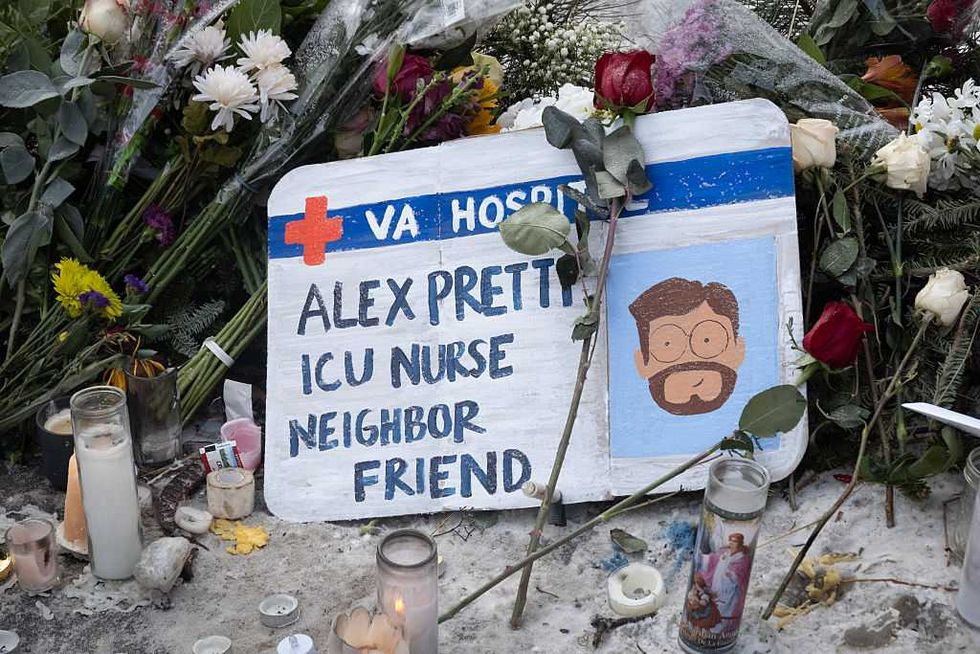 Photo by Scott Olson/Getty Images
Conservative commentators reacted to the newly surfaced video of Pretti, arguing that it shatters the left-wing narrative that he was a peaceful protester.
“This footage is so damning, that you and I both know it will never leave X,” Matt Van Swol wrote. “Now we know that Alex Pretti was not a kindly gentle nurse … he was a CRIMINAL!!! An ARMED, VIOLENT, DANGEROUS, UNHINGED criminal. HE SHOULD HAVE BEEN IN PRISON!!!!!!!”
Tim Pool stated, “WOW. Footage shows Alex Pretti ATTACKING DHS Agents. Could he have been known to the agents as they attempted to arrest him? Known violent extremist, armed, violent, actively resisting?”
“He committed 3 crimes and wasn’t arrested. He should have been in jail. Would have saved his life,” Owen Shroyer wrote.
A separate video from what appears to be the same incident captured Pretti seemingly shouting at federal agents, “F**king assault me, motherf**ker,” before he spat on and kicked the officers’ vehicle.
Like Blaze News? Bypass the censors, sign up for our newsletters, and get stories like this direct to your inbox. Sign up here!





