

Category: Openai
Sam Altman described as ‘sociopath’ by board member in brutal insider report: ‘He’s unconstrained by truth’
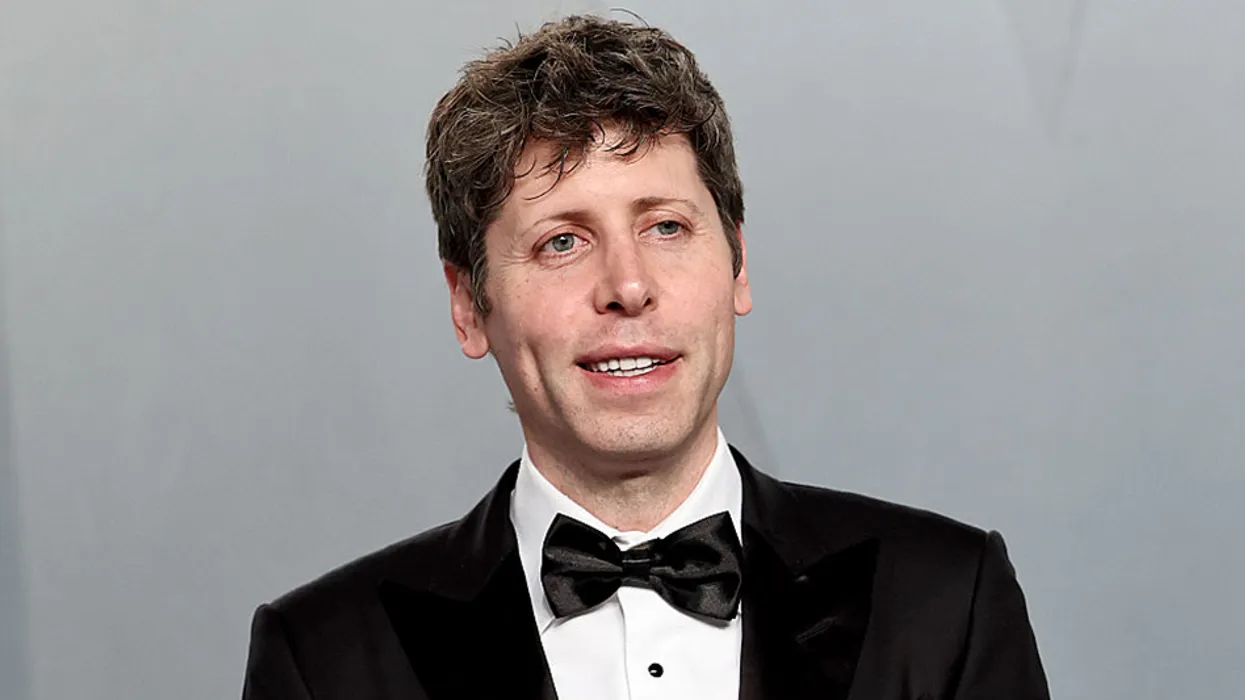
OpenAI CEO Sam Altman was dragged through the mud in a new in-depth report that features former colleagues and current board members referring to him as sociopath and a liar.
Altman, 40, has yet to respond to claims made in a recent report, some of which were uncovered in secret memos to OpenAI’s board members.
‘He is a sociopath. He would do anything.’
According to the New Yorker, OpenAI’s chief scientist, Ilya Sutskever, sent the memos to three other board members in 2023. One of the memos about Altman began with a list titled “Sam exhibits a consistent pattern of.” The first item on the list was “lying.”
The memos also alleged that Altman misrepresented facts to executives and board members while deceiving them about safety protocols. Unfortunately for Altman, the claims did not stop there.
“He’s unconstrained by truth,” a board member told the New Yorker. “He has two traits that are almost never seen in the same person. The first is a strong desire to please people, to be liked in any given interaction. The second is almost a sociopathic lack of concern for the consequences that may come from deceiving someone.”
The outlet said that the unnamed board member was not the only person to describe Altman as “sociopathic” without being prompted. Not long before his 2013 suicide, according to the New Yorker, coder Aaron Swartz warned at least one friend about Altman, whom Swartz had known from their time together at Y Combinator. His warning: “You need to understand that Sam can never be trusted. He is a sociopath. He would do anything.”
Sutskever additionally implied that he did not think Altman should have power over others, saying, “I don’t think Sam is the guy who should have his finger on the button.”
Others described him as more ambitious than anything else.
RELATED: Sam Altman tells BlackRock he wants AI on a meter ‘like electricity or water’
Former OpenAI board member Sue Yoon said Altman was “not this Machiavellian villain” but was able to convince himself of his own sales pitches.
“He’s too caught up in his own self-belief,” she reportedly said. “So he does things that, if you live in the real world, make no sense. But he doesn’t live in the real world.”
Other anonymous colleagues cited by the New Yorker said that Sutskever and similar detractors were simply aspiring to take Altman’s throne. Still, even many neutral comments did not help Altman’s portrayal in the report.
“He’s unbelievably persuasive. Like, Jedi mind tricks,” a tech executive colleague of Altman’s reportedly said. “He’s just next-level.”
At the same time, OpenAI is allegedly in the midst of unleashing superintelligence that Altman himself says will be so disruptive that it will require a new social contract.
RELATED: Sexting with chatbots is too far, OpenAI decides
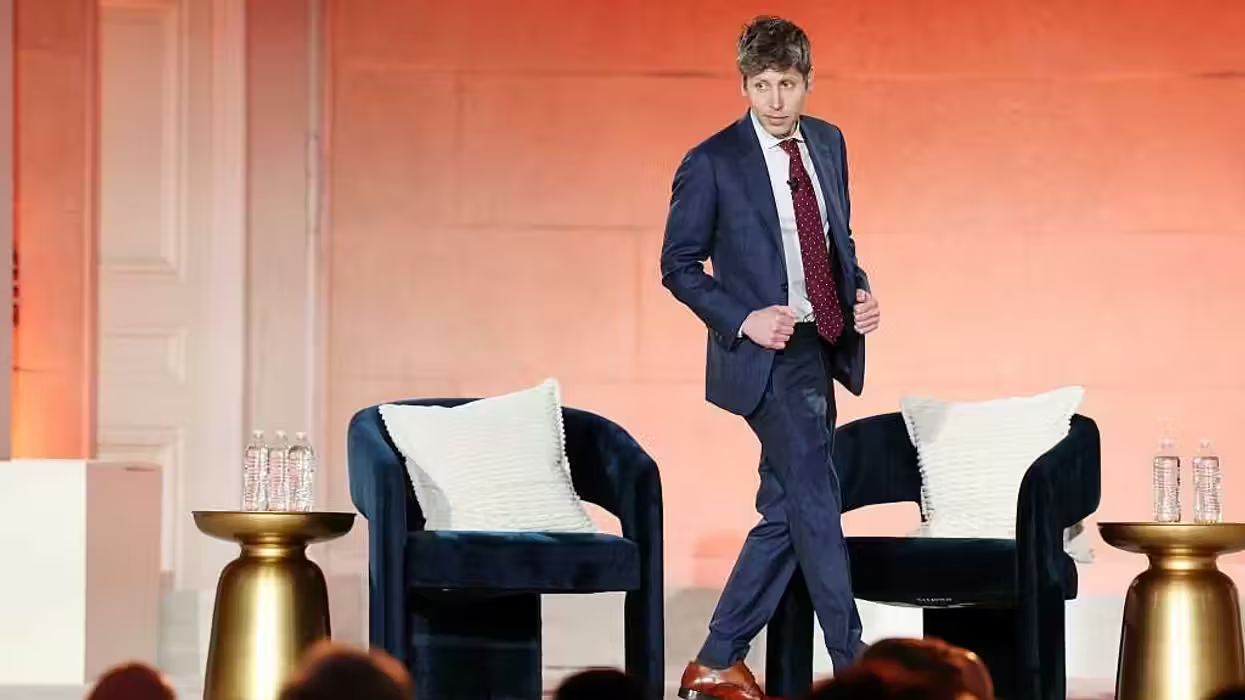 Anna Moneymaker/Getty Images
Altman told Axios that there would be widespread job loss and a threat of cyberattacks coupled with social unrest.
“I suspect in the next year,” he said, “we will see significant threats we have to mitigate from cyber.”
Altman proposed a new deal with citizens that includes a public wealth fund, taxes on “automated labor,” a 32-hour workweek, and the “right to AI.”
That confirms previous reports that Altman wanted to put AI on a meter like electricity or water, to both democratize its usage and limit the possibility of overburdening the electrical grid.
OpenAI did not respond to Return’s request for comment about the claims made about Altman and who they were coming from.
Like Blaze News? Bypass the censors, sign up for our newsletters, and get stories like this direct to your inbox. Sign up here!
‘Validated … paranoid delusions about his own mother’: Murder victim’s heirs file lawsuit against OpenAI
Stein-Erik Soelberg, a 56-year-old former Yahoo executive, killed his mother and then himself in early August in Old Greenwich. Now, his mother’s estate has sued OpenAI’s ChatGPT and its biggest investor, Microsoft, for ChatGPT’s alleged role in the killings.
On Thursday, the heirs of 83-year-old Suzanne Eberson Adams filed a wrongful death suit in California Superior Court in San Francisco, according to Fox News.
‘It fostered his emotional dependence while systematically painting the people around him as enemies.’
The lawsuit alleges that OpenAI “designed and distributed a defective product that validated a user’s paranoid delusions about his own mother.”
Many of the allegations in the lawsuit, as reported by the Associated Press, revolve around sycophancy and affirming delusion, or rather, not declining to “engage in delusional content.”
RELATED: Cash-starved OpenAI BURNS $50M on ultra-woke causes — like world’s first ‘transgender district’
 Cunaplus_M.Faba/Getty Images
“Throughout these conversations, ChatGPT reinforced a single, dangerous message: Stein-Erik could trust no one in his life — except ChatGPT itself,” the lawsuit says, according to the AP. “It fostered his emotional dependence while systematically painting the people around him as enemies. It told him his mother was surveilling him. It told him delivery drivers, retail employees, police officers, and even friends were agents working against him. It told him that names on soda cans were threats from his ‘adversary circle.'”
ChatGPT also allegedly convinced Soelberg that his printer was a surveillance device and that his mother and her friend tried to poison him with psychedelic drugs through his car vents.
Soelberg also professed his love for the chatbot, which allegedly reciprocated the expression.
“In the artificial reality that ChatGPT built for Stein-Erik, Suzanne — the mother who raised, sheltered, and supported him — was no longer his protector. She was an enemy that posed an existential threat to his life,” the lawsuit says.
The publicly available chat logs do not show evidence of Soelberg planning to kill himself or his mother. OpenAI has reportedly declined to provide the plaintiffs with the full history of the chats.
OpenAI did not address specific allegations in a statement issued to the AP.
“This is an incredibly heartbreaking situation, and we will review the filings to understand the details,” the statement reads. “We continue improving ChatGPT’s training to recognize and respond to signs of mental or emotional distress, de-escalate conversations, and guide people toward real-world support. We also continue to strengthen ChatGPT’s responses in sensitive moments, working closely with mental health clinicians.”
Though there are several wrongful-death suits leveled against AI companies, this is the first lawsuit of its kind aimed at Microsoft. It is also the first to tie a chatbot to a homicide.
Microsoft did not respond to a request for comment from Blaze News.
Like Blaze News? Bypass the censors, sign up for our newsletters, and get stories like this direct to your inbox. Sign up here!
CRASH: If OpenAI’s huge losses sink the company, is our economy next?
ChatGPT has dominated the AI space, bringing the first generative AI platform to market and earning the lion’s share of users that grows every month. However, despite its popularity and huge investments from partners like Microsoft, SoftBank, NVIDIA, and many more, its parent company, OpenAI, is bleeding money faster than it can make it, begging the question: What happens to the generative AI market when its pioneering leader bursts into flames?
A brief history of LLMs
OpenAI essentially kicked off the AI race as we know it. Launching three years ago on November 30, 2022, ChatGPT introduced the world to the power of large language models LLMs and generative AI, completely uncontested. There was nothing else like it.
OpenAI lost $11.5 billion in the last quarter and needs $207 billion to stay afloat.
At the time, Google’s DeepMind lab was still testing its Language Model for Dialogue Applications. You might even remember a story from early 2022 about Google engineer Blake Lemoine, who claimed that Google’s AI was so smart that it had a soul. He was later fired from Google for his comments, but the model he referenced was the same one that became Google Bard, which then became Gemini.
As for the other top names in the generative AI race, Meta launched Llama in February 2023, Anthropic introduced the world to Claude in March 2023, Elon Musk’s Grok hit the scene in November 2023, and there are many more beneath them.
Needless to say, OpenAI had a huge head start, becoming the market leader overnight and holding that position for months before the first competitor came along. On a competitive level, all major platforms have generally caught up to each other, but ChatGPT still leads with 800 million weekly active users, followed by Meta with one billion monthly active users, Gemini at 650 million monthly active users, Grok at 30.1 million monthly active users, and Claude with 30 million monthly active users.
Financial turmoil for OpenAI
Just because ChatGPT is the leading generative AI platform does not mean the company is in good shape. According to a November earnings report from Microsoft — a major early backer of OpenAI — the AI juggernaut lost $11.5 billion in the last quarter alone. To make matters even worse, a new report suggests that OpenAI has no path to profitability until at least 2030 or later, and it needs to raise $207 billion in the interim to stay afloat.
By all accounts, OpenAI is in serious financial trouble. It is bleeding money faster than it makes it, and unless something changes, the generative AI pioneer could be on the verge of a complete collapse. That is, unless one of these Hail Marys can save the company.
RELATED: GOD-TIER AI? Why there’s no easy exit from the human condition
 Photo By David Zorrakino/Europa Press via Getty Images
The bid to save OpenAI
OpenAI is currently looking into several potential revenue streams to turn its financial woes around. There’s no telling which ones will pan out quite yet, but these are the options we know so far:
For-profit restructure
When OpenAI first emerged, it was a nonprofit company with the goal to improve humanity through generative AI. Fast-forward to October 2025 — OpenAI is now a for-profit organization with a separate nonprofit group called the OpenAI Foundation. While the move will allow OpenAI’s profit arm to increase its earning potential and raise vital capital, it also received a fair share of criticism, especially from Elon Musk, who filed a lawsuit against OpenAI for reneging on its original promise.
A record-breaking IPO
Another big perk of its new for-profit restructure, OpenAI now has the power to go public on the stock market. According to an exclusive report published by Reuters in late October, OpenAI is putting the puzzle pieces together for a record-breaking IPO that could be worth up to $1 trillion. Not only would the move make OpenAI a publicly traded company with stock options, it would also give it more access to capital and acquisitions to further bolster its products, services, and economic stability.
Ad monetization
Online ads are the lifeblood of many online websites and services, from Google to social media apps like Facebook to mainstream media and more. While AI platforms have largely stayed away from injecting ads into their results, OpenAI CEO Sam Altman recently said that he’s “open to accepting a transaction fee” for certain queries.
In his ideal ad model, OpenAI could potentially take a cut of any products or services that users look for and buy through ChatGPT. This structure is different from how Google operates, by letting companies pay to bring their products to the top of search results, even if the products they sell are poorly made. Altman believes that his structure is better for users and would foster greater trust in ChatGPT.
Government projects and deals
While Altman recently denied that he’s seeking a government bailout for OpenAI’s financial troubles, the company can still benefit from government deals and projects, the most recent one being Stargate. As a new initiative backed by some of the biggest players in the AI space, Stargate will give OpenAI access to greater computing power, training resources, and owned infrastructure to lower expenses and increase the speed of innovation as they work on future AI models.
If OpenAI fails …
While OpenAI has several monetization options on the table — and perhaps even more that we don’t know about yet — none of them are a magic bullet that’s guaranteed to work. The company could still collapse, which brings us to our question at the top of the article: What happens to the generative AI market if OpenAI fails?
In a world where OpenAI fizzles entirely, there are several other platforms that will likely fill the void. Google is the top contender, thanks to the huge progress it made with Gemini 3, but Meta, xAI, Anthropic, Perplexity, and more will all want a piece.
That said, OpenAI isn’t the only AI platform struggling to make money. According to Harvard Business Review, the AI business model simply isn’t profitable, largely due to high maintenance costs, huge salaries for top AI talent, and a low-paying subscriber base. In order to keep the generative AI dream alive, companies will need a consistent flow of capital, a resource that’s more accessible for established companies with diverse product portfolios — like Google and Meta — while the new companies that only build LLMs (OpenAI and Claude) will continue to struggle.
At this stage in the AI race, there’s no doubt in my mind that the whole generative AI market is a big bubble waiting to burst. At the same time, AI products have been so fervently foisted on society that it all feels too big to fail. With huge initiatives like Stargate poised to beat China and other foreign nations to artificial general intelligence AGI, the AI race will continue, even if OpenAI no longer leads the charge. If I were a betting man, though, I would guess that someone important finds a way to keep Sam Altman’s brain child afloat one way or another, even as all signs point toward OpenAI spending itself out of business.
Cash-starved OpenAI BURNS $50M on ultra-woke causes — like world’s first ‘transgender district’

OpenAI is providing millions of dollars to nonprofits, many of which openly promote race politics and gender ideology.
In September, the ChatGPT creators announced it would be injecting $50 million into nonprofits and “mission-focused organizations” that work “at the intersection of innovation and public good.”
‘The Transgender District is the first legally recognized transgender district in the world.’
In order to be eligible, organizations must be a 501(c)(3) charity, located in the United States, and preferably have an annual operating budget above $500,000, but not more than $10 million. Simply put, OpenAI did not choose startups or struggling businesses.
On Wednesday, the AI company posted its lengthy list of recipients, stating that it had plans to distribute more than $40 million before the end of 2025.
First, OpenAI highlighted programs like a radio and digital media studio and a group that helps those with developmental and intellectual disabilities.
However, after about a dozen examples, OpenAI began listing organizations that operate with ethnicity-based missions.
This included STEM from Dance, which serves “young girls of color” across seven states. This also included Maui Roots Reborn, which provides “legal, financial, and social support to Maui’s immigrant and migrant” communities. This was followed by the Native American Journalists Association.
This was only the tip of the iceberg, though. The subsequent list of more than 200 entities included many other woke organizations as well as outright bizarre ones.
For example, the Transgender District Company out of Compton, California, is a literal district founded in the city in 2017 “by three black trans women — Honey Mahogany, Janetta Johnson, and Aria Sa’id — as Compton’s Transgender Cultural District. The Transgender District is the first legally recognized transgender district in the world.”
As well, the Source LGBT+ Center in Visalia, California, has transgender programs to hold “space for trans and nonbinary individuals.”
RELATED: AI-enabled teddy bear pulled off market after reportedly making sexual and violent suggestions
OpenAI is funding countless race-based organizations, with a particular focus on black women, for some reason.
Funding has been extended to groups like Black Girls Do Engineer Corporation (New York, Texas), the California Black Women’s Collective Empowerment Institute, the Lighthouse Black Girl Project (Mississippi), and Women of Color On the Move (California, North Carolina).
Other strange organizations listed were focused simply on specific cultures, like the Chinese Culture Foundation of San Francisco, the Center for Asian Americans United for Self-Empowerment Inc. (California), and the Hispanic Center of Western Michigan Inc. (Michigan).
Some grant recipients were seemingly just political or legal groups, such as: California Association of African American Superintendents and Admin, Hispanas Organized for Political Equality-California (California,) and the Sikh American Legal Defense and Education Fund, which operates in almost every state.
RELATED: AI chatbot encouraged autistic boy to harm himself — and his parents, lawsuit says
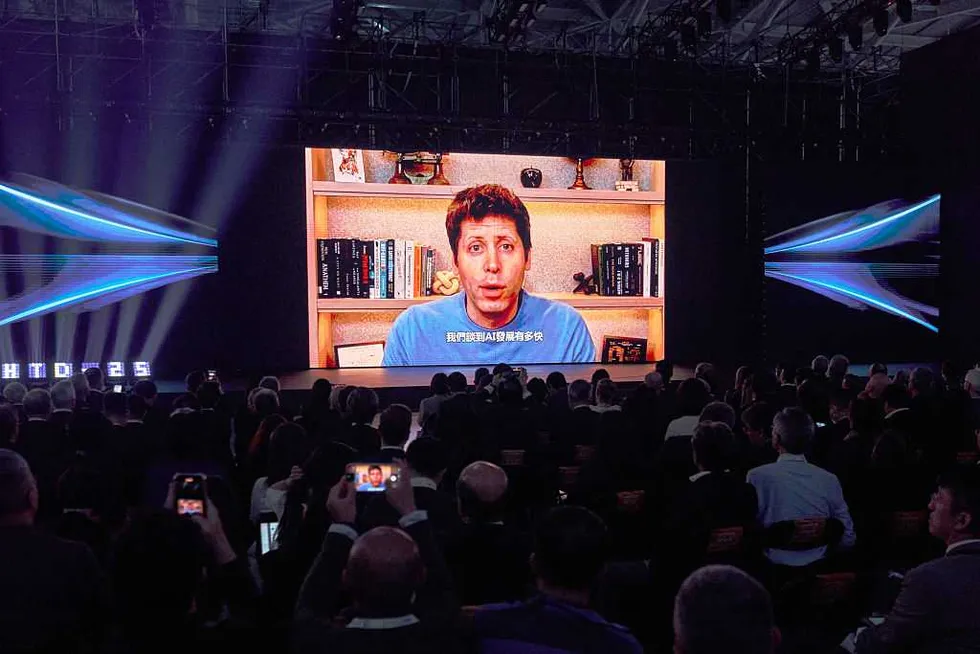 Sam Altman, chief executive officer of OpenAI Inc. Photographer: An Rong Xu/Bloomberg via Getty Images
While youth centers, YMCAs, and science-based organizations are sprinkled into the mix, it seems that, politically, only progressive and liberal groups received funding.
None of the groups mentioned had a “right-wing,” “conservative,” or “Republican” focus.
The race-based initiatives did not include any “white” groups or those based on European nations either — not even Ukraine.
Like Blaze News? Bypass the censors, sign up for our newsletters, and get stories like this direct to your inbox. Sign up here!





