Category: Return
25,000 Americans apply for just 1,000 jobs at new federal Tech Force
Hot on the heels of the U.S. government’s announcement of the Tech Force combing for 1,000 new recruits, 25 times that number of Americans have sent in their resumes to the cross-agency technology team.
The Tech Force, announced mid-month, urged the country’s best and brightest to head to its website to apply for short-term federal employment. Over the ensuing week, that number has risen to at least 25,000, according to Scott Kupor, the director of the U.S. Office of Personnel Management.
‘Tech Force will tackle the most complex and large-scale civic and defense challenges of our era.’
With a two-year government contract worth as much as $200,000, recruits will be part of an “elite group” of tech specialists hired to “accelerate artificial intelligence (AI) implementation” and solve critical tech challenges.
The unprecedented new group will primarily recruit those early in their careers, the Tech Force website explained, who specialize in engineering, AI, cybersecurity, data analytics, or project management in tech. Those brought on board can expect to implement AI programs and applications, modernize data, and provide digital service delivery at federal agencies.
“Backed by the White House, Tech Force will tackle the most complex and large-scale civic and defense challenges of our era,” the outfit promised. “From administering critical financial infrastructure at the Treasury Department to advancing cutting-edge programs at the Department of Defense, and everything in between.”
RELATED: BEWARE: With these new web browsers, everything on your computer can be stolen with one click
Hires can look forward to working with agency leadership and “leading technology companies” to train and engage with senior management from partnered companies. The government openly states that once Tech Forcers are finished with their training program, they will seek employment at the partnering private-sector companies in order to demonstrate “the value of combining civil service with technical expertise.”
Along with the competitive high salaries, the government program says it provides benefits like health insurance, retirement plans, and “performance-based awards.”
The duties and scope of the Tech Force varied to a great degree, with the official website providing a lengthy list of federal agencies that participants can expect to be placed within. These included the Departments of War, Treasury, State, Labor, Commerce, Energy, Health and Human Services, Interior, Housing & Urban Development, Transportation, Homeland Security, and Veterans Affairs.
Other agencies like the Small Business Administration, IRS, and Office of Personnel Management were also noted.
RELATED: NO HANDS: New Japanese firm trains robots without human input
 Photo by Wang Gang/VCG via Getty Images
Readers on X had mixed reactions to open recruitment, with several hoping the program would only be open to Americans and others sarcastically saying that it probably should not be filled “with Indians.”
The application form goes through the USA Jobs website.
The official account for the Young Republicans of Texas said the program could be an effective way to prove that there are “plenty of qualified Americans” in the tech field.
At the same time, others worried about a dystopian future that could arise from combining advanced technology and the Treasury Department.
Like Blaze News? Bypass the censors, sign up for our newsletters, and get stories like this direct to your inbox. Sign up here!
Roomba maker iRobot files for bankruptcy, putting it in Chinese hands
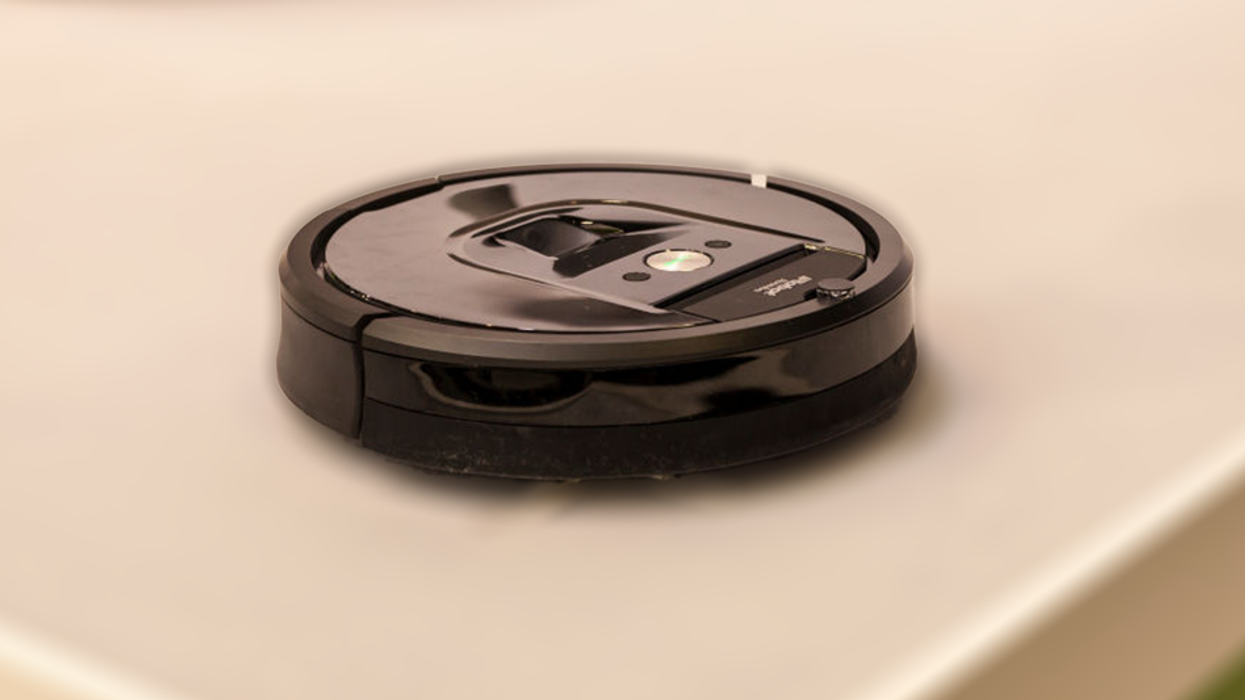
Autonomous vacuums could go extinct unless they are made in the United States.
This is the harsh reality affecting companies like iRobot, the creator of Roomba, which just filed bankruptcy.
‘… with no anticipated disruption to its app functionality.’
Despite the company generating over $680 million in 2024, iRobot has been crippled by U.S. tariffs. Due to a 46% import tariff on Vietnam, iRobot’s costs were raised by $23 million in 2025, according to Reuters, which reviewed the court filings.
The court filings also reportedly noted that while Roomba is still dominating in U.S. and Japanese markets, it lost too much money on price reductions and investments in technological upgrades in order to maintain pace with its competitors.
According to the Verge, the company said it will continue to operate “with no anticipated disruption to its app functionality, customer programs, global partners, supply chain relationships, or ongoing product support.”
Simply put, after more than 20 years on the market, the Roomba is able to operate without online connectivity.
The bankruptcy will put iRobot under Chinese control moving forward, with the manufacturing company that controls its debt.
RELATED: The ultimate Return guide to escaping the surveillance state
 Photo by: Andrew Lipovsky/NBCU Photo Bank/NBCUniversal via Getty Images via Getty Images
Court documents reportedly showed that Picea, a Chinese manufacturer, purchased iRobot while taking its debt on board, which is estimated to be about $190 million. The vacuum company took on the debt in 2023 to refinance its operations, Reuters claimed.
The debt came even after Amazon paid a $94 million termination fee after backing out of a $1.7 billion acquisition deal in 2024, according to the New York Times.
It has not been that long since iRobot had a massive market value at $3.56 billion in 2021; it is now estimated to be worth just $140 million.
New owners Picea will take 100% ownership of the company and cancel the $190 million in debt, while also canceling a $74 million debt that iRobot owed through a manufacturing agreement.
RELATED: The AI takeover isn’t coming — it’s already here
Not only did iRobot need to deal with Vietnamese tariffs, other manufacturing that was established in Malaysia in 2019 was also likely affected.
It was not announced that Roomba had cut manufacturing from the country, and if it remained, would likely have been subjected to a 24% tariff rate from the Trump administration, which included taxing machinery and electronics.
Like Blaze News? Bypass the censors, sign up for our newsletters, and get stories like this direct to your inbox. Sign up here!
Caroline Ellison, Sam Bankman-Fried’s partner in FTX crime, sprung early from prison
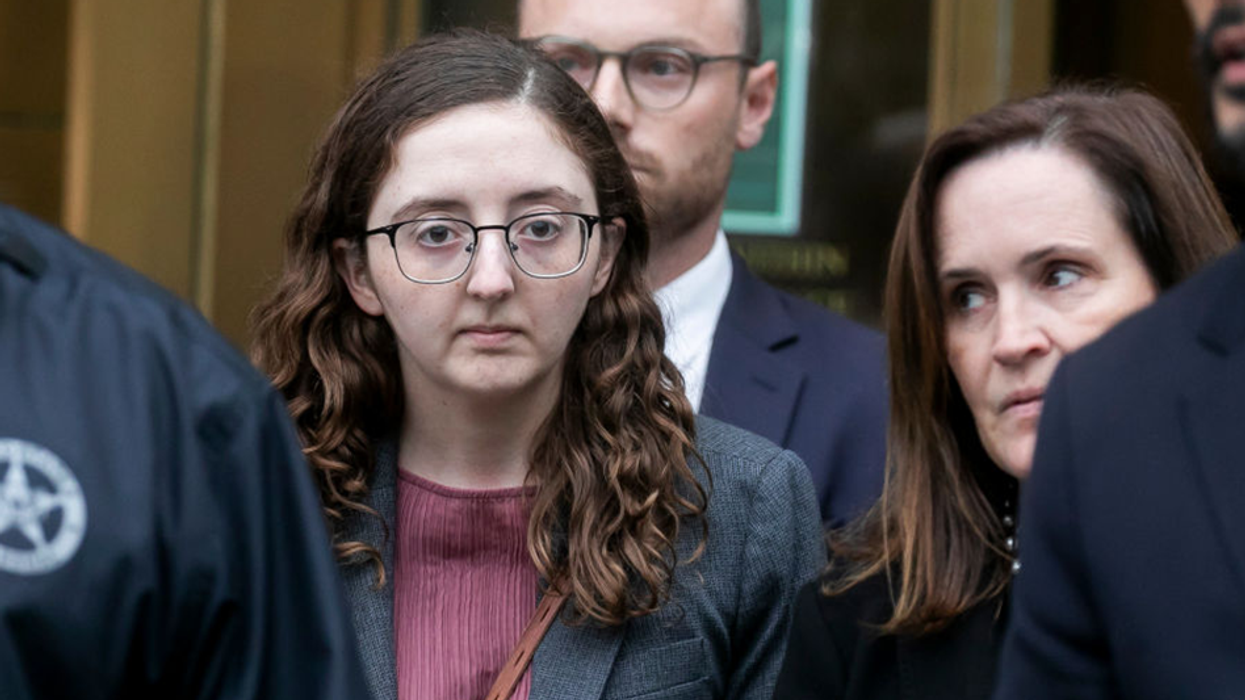
Caroline Ellison was sentenced to two years in prison last September after facing a possible 110 years.
Ellison was the CEO of Alameda Research, a crypto investment firm that was co-founded by her ex-boyfriend Sam Bankman-Fried, the centerpiece of the FTX scandal that rocked the nation.
‘We do not discuss the conditions of confinement for any individual.’
Bankman-Fried was found to have been improperly funneling money to the hedge fund, and in Dec. 2022, Ellison pleaded guilty to related charges, including conspiracy to commit commodities fraud and conspiracy to commit securities fraud.
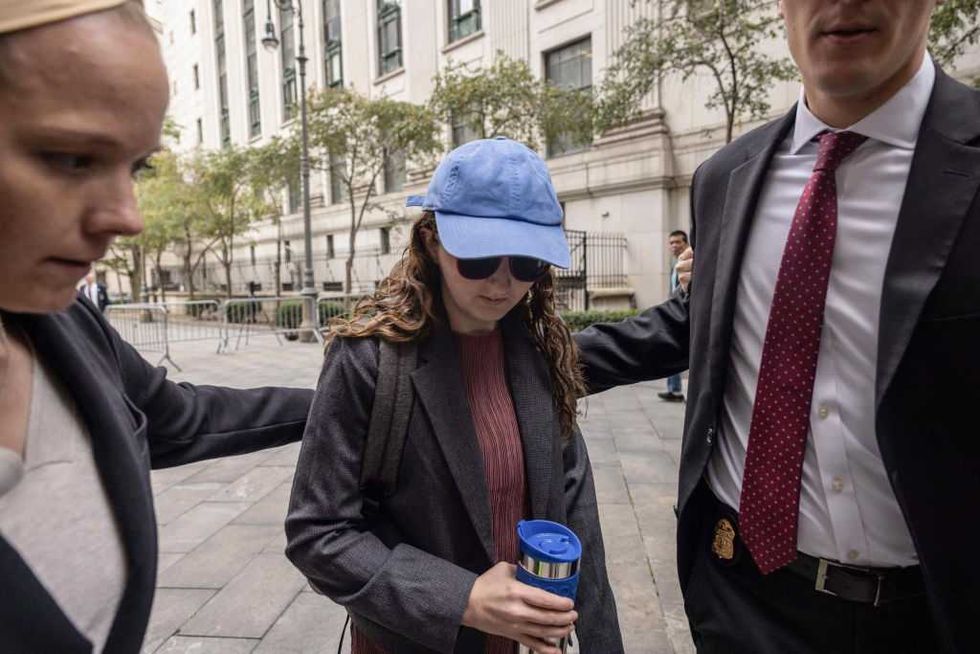
Now as reported by Business Insider, Ellison has been moved out of federal prison after serving just 11 months at the Danbury Federal Correctional Institute, a low-security prison in Danbury, Connecticut.
Ellison was reportedly transferred out of the facility on October 16 and into community confinement, a Federal Bureau of Prisons spokesperson told BI.
Spokesperson Randilee Giamusso said that Ellison remains in federal custody by way of either home confinement or through a halfway house.
“For privacy, safety, and security reasons, we do not discuss the conditions of confinement for any individual, including reasons for transfers or release plans, nor do we specify an individual’s specific location while in community confinement,” Giamusso told the outlet.
 Photographer: Yuki Iwamura/Bloomberg via Getty Images
Online records purportedly showed Ellison was set to be released in February, nine months earlier than the duration of her sentence.
Despite facing 110 years in prison for seven charges, a New York judge said he gave the 31-year-old a shorter sentence due to her “very, very substantial” cooperation with the federal case against Bankman-Fried and other executives.
“She cooperated, and he denied the whole thing,” Judge Lewis Kaplan said at the time. “I’ve seen a lot of cooperators in 30 years here. I’ve never seen one quite like Ms. Ellison.”
FTX allegedly took $10 billion from customer deposits, while at the same time granting Alameda Research a $65 billion credit line. This eventually resulted in an $8 billion debt taken out of customer deposits.
Ellison testified with other shocking allegations; “CBS Mornings” reported at the time that Alameda allegedly used $100 million of FTX customer deposits to bribe Chinese officials.
The bribes were an alleged attempt to gain access to crypto accounts that were frozen by the Chinese, worth upwards of $1 billion. In their attempts, FTX allegedly tried to regain the money by setting up accounts in the names of Thai prostitutes.
RELATED: Caroline Ellison sentenced to 2 years in prison over massive FTX crypto-scandal
 Photographer: Yuki Iwamura/Bloomberg via Getty Images
Ellison also claimed that in order to recoup some money, Bankman-Fried considered selling shares in FTX to investors like Saudi Crown Prince Mohammed bin Salman.
Ellison reportedly told jurors that Alameda Research would lend money to Bankman-Fried and other FTX executives so they could make political donations. Bankman-Fried donated a reported $70 million to Democrats ahead of the 2022 midterms, making him the second-highest donor behind George Soros.
FTX’s deep pockets allowed for big-name sponsorship deals with people like NFL legend Tom Brady and iconic television writer Larry David and even allowed for naming rights to FTX Arena in Miami.
Like Blaze News? Bypass the censors, sign up for our newsletters, and get stories like this direct to your inbox. Sign up here!
Public will soon be able to invest in ‘advanced or reverse-engineered alien technology’

An investment firm is banking on the theory that some companies have access to alien technology.
Firm Tuttle Capital calls itself “the antidote to Wall Street” and boasts a proprietary formula that strengthens its portfolio. Using the acronym HEAT — hedges, edges, asymmetry, themes — Tuttle might be leaning on its alleged proficiency in “big-picture trends” with its new exchange-traded fund, the UFO Disclosure AI Powered ETF.
Funds will also target materials and energy firms that could possibly benefit from ‘new energy sources or metamaterials inspired by alien technology.’
Tuttle’s new ETF — recently filed with the SEC — will invest at least 80% of its net assets in a “basket of companies” it believes have “exposure to advanced or ‘reverse-engineered’ alien technology, spurred by government disclosures about UFOs (unidentified flying objects) and alleged advanced technologies.”
While the companies are yet to be named, they are to include aerospace and defense contractors that “might have R&D programs rumored to work with classified technology, potentially leading to groundbreaking advancements.”
RELATED: Are aliens demons in disguise? This theory will shatter your reality
 Photo by Satellite image (c) 2023 Maxar Technologies via Getty Images
At the same time, funds will also target materials and energy firms that could possibly benefit from “new energy sources or metamaterials inspired by alien technology.”
For example, investments are set to be made in companies that work with semiconductors and electronics because they may “incorporate or license advanced alien-inspired components, driving innovation in the tech industry.”
The ETF will attempt to invest in companies that could take down more UFOs in the future as well. This is described in the SEC filing as companies that specialize in detecting unidentified anomalous phenomena, in addition to countering them.
The fund also plans on strategically shorting other companies that may become obsolete due to “alien-level” engineering emerging from their competitors. This includes, but is not limited to, “conventional propulsion firms and old-guard energy providers” that may fall behind due to advanced technologies.
RELATED: Joe Rogan gets the aliens wrong — and the danger right
 Photo by: Bernard Friel/Education Images/Universal Images Group via Getty Images
“I’m a trader. I look at [UFOs], and I say that they’re using a power source that is light-years beyond anything that we have,” CEO Matthew Tuttle said, according to the Financial Times. “If our government has this technology and it’s released, that will be a game-changer.”
As described in the official documents, the entire “theme” the fund is banking on is regarded as “highly speculative and subject to rumor cycles.”
This comes with the stated risk that “government confirmation or denial of advanced alien tech is uncertain, and rumored breakthroughs might never materialize.”
Like Blaze News? Bypass the censors, sign up for our newsletters, and get stories like this direct to your inbox. Sign up here!
Texas sues five TV manufacturers for secretly ‘spying’ on owners

The Texas attorney general says television companies have become unwelcome visitors in consumers’ homes.
Ken Paxton announced five separate lawsuits, including two against Chinese companies, alleging that the television companies are secretly spying on Texans by recording what they watch at home.
‘This conduct is invasive, deceptive, and unlawful.’
The Texas AG said in a press release that the method through which the companies were conducting their spying is called Automated Content Recognition technology. Labeling it an “uninvited” and “invisible” digital invader, Paxton said that the software is capable of capturing screenshots of a user’s TV display every 500 milliseconds.
Sony, Samsung, LG, Hisense, and TCL each have individual lawsuits against them.
This effectively monitors viewing activity in real time, without the user’s knowledge, the state of Texas alleged.
The consumer data is then allegedly sold to target ads across platforms for profit. This puts sensitive information such as passwords, bank information, and other personal information at risk, the press release added.
RELATED: ‘Worse than Orwell could ever imagine’: How smartphones became government weapons
Each lawsuit states that Texans never agreed to be part of each company’s “Watchware” and that these televisions are “watching you back.”
Furthermore, the lawsuits state that the “mass surveillance of consumers” violates Texas law, specifically the Texas Deceptive Trade Practices Act, which prohibits “false, misleading, or deceptive acts or practices.”
Each company “chose data extraction and advertising dollars over honesty and respect for consumer privacy. That’s illegal,” the lawsuits read.
Samsung, LG, and Sony predominantly manufacture their TVs in Mexico, with other parts are made in countries like Vietnam, South Korea, or Japan.
TCL and Hisense are both Chinese companies that operate and manufacture in China.
RELATED: WikiLeaks founder Julian Assange predicted the surveillance state we currently live in
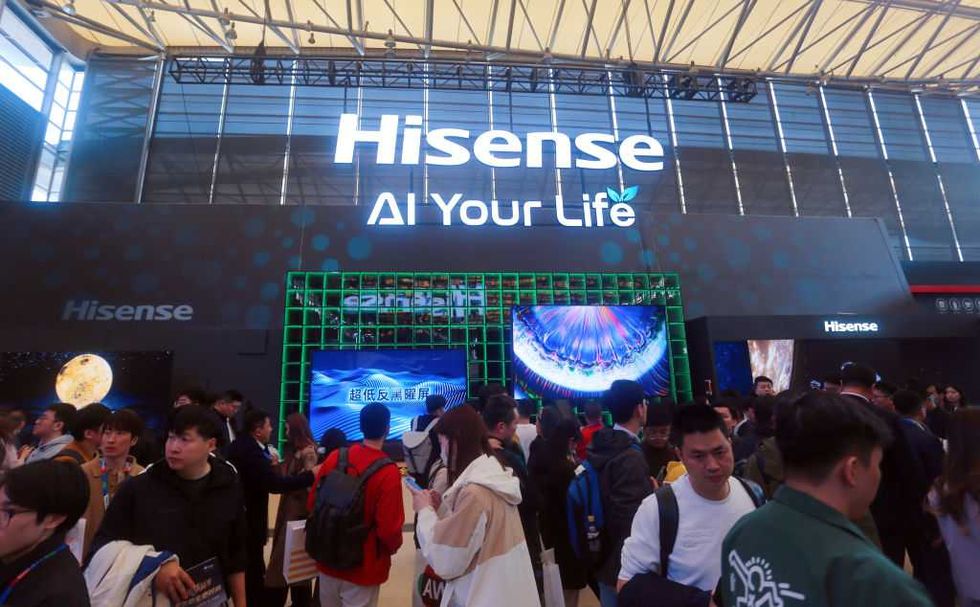 Photo by Costfoto/NurPhoto via Getty Images
“Companies, especially those connected to the Chinese Communist Party, have no business illegally recording Americans’ devices inside their own homes,” Paxton said in an official statement. “This conduct is invasive, deceptive, and unlawful. The fundamental right to privacy will be protected in Texas because owning a television does not mean surrendering your personal information to Big Tech or foreign adversaries.”
LG and Hisense have publicly stated to outlets like Newsweek and Texas Scorecard that they would not comment on pending legal matters.
Sony told Blaze News that it “does not comment on pending legal matters.”
Blaze News also reached out to Samsung and TCL for comment on the lawsuit. Neither provided a response by the time of this publication.
Like Blaze News? Bypass the censors, sign up for our newsletters, and get stories like this direct to your inbox. Sign up here!
Influencer exposes frightening terms of service at new Netflix attraction: ‘The right to AI-generate you’

Netflix says it may depict or portray your child’s likeness if you visit one of its venues.
The scary terms of service come from Netflix House, a new “free to enter” destination that has popped up in Dallas and Philadelphia simultaneously.
‘Our likeness is one of the only things we have left in the age of AI.’
Netflix House is described as a “first-of-its-kind, permanent, year-round home” for Netflix-themed games, experiences, and merch. While fans can enter for free, it may cost them perpetual rights to their name, image, and likeness if Netflix has its way.
In a viral video, content creator Rebecca Caplinger explained the frightening terms that Netflix listed on its help page for the venues. Therein Netflix notifies attendees that even their children will lose their NIL rights.
“When you visit Netflix House, we may photograph, record, depict, or otherwise capture the name, image, voice, or likeness of you, or in the case of parents or guardians, of any minor (‘your child’), as you engage with the Experiences, and/or other content offered within Netflix House,” the terms read.
The legal statement continues, stating that “anyone” authorized by Netflix affiliates will gain “irrevocable, perpetual, worldwide, non-exclusive right to photograph, record, depict, and/or portray you or your child” as well as use their “simulated likeness, name, image, photograph, voice, and actions, in connection with Netflix House operations (including, by way of example, for security or analytical purposes).”
RELATED: New Netflix movie reimagines fairy-tale villains as misunderstood — and it’s getting scorched online
Not only do Netflix House’s rules allegedly give Netflix ownership of content featuring you, it notes that any “user generated content” taken inside the venue still relinquishes its copyrights to Netflix perpetually and remains “non-exclusive” and “royalty-free” while having irrevocable licensing.
Caplinger noted that she first saw the terms of service in a TikTok video and had to check it out for herself.
“It’s real, and it’s worse than I thought it was,” Caplinger said, as she revealed she has a background in criminal justice and security.
“I don’t like what they’re doing. … When you walk in there, you’re giving them everything,” she added. “And you’re giving them the right to AI-generate you.”
RELATED: Culture’s great subversion machine has broken down at last
 Photo by Richard Rodriguez/Getty Images for Netflix
“Parents should be f**king pissed,” Caplinger told Blaze News. “I am concerned that a lot of parents do not care about child safety online … hopefully it’s just a wake-up call.”
“I don’t think that any company or corporation should be trying to buy out your likeness, I think that it’s a bigger ploy,” the New Jersey resident went on.
She concluded, “Our likeness is one of the only things we have left in the age of AI, our human behavior. So basically you’re selling your human behavior to a robot.”
Blaze News reached out to Netflix to ask about customer concerns and whether or not it believes that simply entering a venue should mean people hand over their NIL licensing.
Netflix did not respond to the request for comment.
Like Blaze News? Bypass the censors, sign up for our newsletters, and get stories like this direct to your inbox. Sign up here!
NO HANDS: New Japanese firm trains robots without human input

A Japanese tech firm says it is moving toward superintelligence with a big step forward in AI.
Integral AI, which is led by a former Google AI employee, announced in a press release that it had made significant progress with its artificial general intelligence model, which can now acquire new skills without human intervention.
‘Integral AI’s model architecture grows, abstracts, plans, and acts as a unified system.’
The AI system allegedly learns its new skills “safely, efficiently, and reliably,” the company said, while claiming that the AI had surpassed its defined markers and testing protocols.
As such, the AGI is allegedly capable of autonomous skill learning without using pre-existing datasets or human intervention. Integral also said the system is able to develop a “safe and reliable mastery” of skills, meaning that it does produce any “catastrophic risks or unintended side effects.”
What those risks or side effects might be is unclear.
RELATED: Artificial intelligence is not your friend
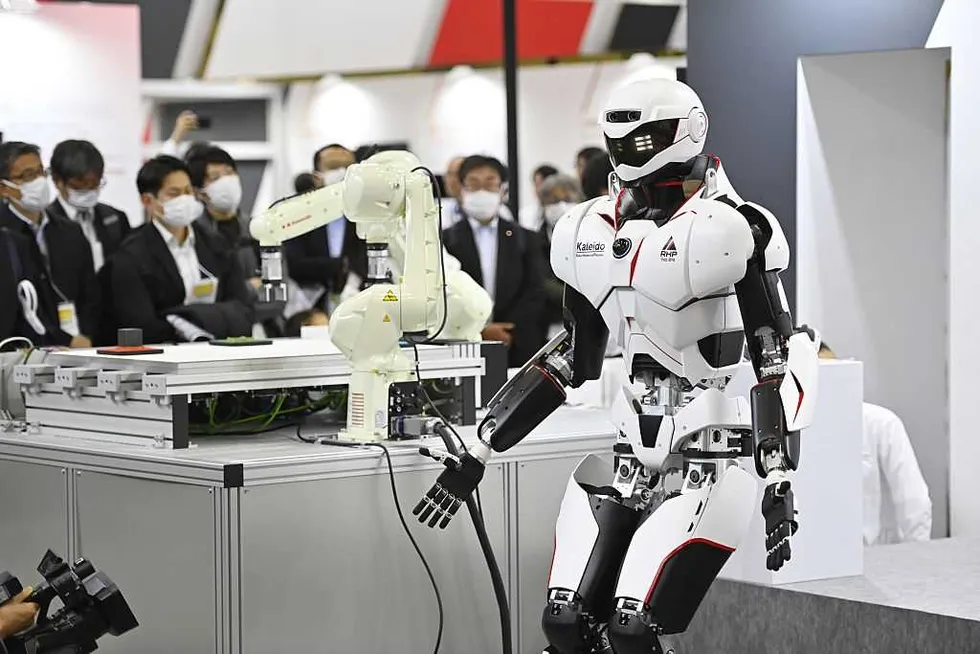 Photo by David Mareuil/Anadolu via Getty Images
The last parameter, which Integral AI said its system adhered to, was to be energy-efficient. The system was tasked with limiting its energy expenditure to that of a human seeking to acquire the same skill.
“These principles served as fundamental cornerstones and developmental benchmarks during the inception and testing of this first-in-its-class AGI learning system,” the press release said. Integral added that the system marked a “fundamental leap beyond the limits of current AI technologies.”
The Tokyo tech company also claimed its achievement was the next step toward “superintelligence” and marked a new era for humanity, with the AI’s learning process allegedly mirroring the complexity of human thought.
“Integral AI’s model architecture grows, abstracts, plans, and acts as a unified system,” the company wrote, adding that the system will serve as the groundwork for “unprecedented adaptability,” particularly in the field of robotics.
This means that with the help of this AGI, autonomous robots would be able to observe and learn in the real world and conceivably pick up new skills in real-world environments without the help of pesky humans.
RELATED: ART? Beeple puts Elon Musk and Mark Zuckerberg heads on robot dogs that ‘poop’ $100K NFTs
 Photo by David Mareuil/Anadolu via Getty Images
Jad Tarifi, CEO and co-founder of Integral AI, called the announcement “more than just a technical achievement” that is “the next chapter in the story of human civilization.”
“Our mission now is to scale this AGI-capable model, still in its infancy, toward embodied superintelligence that expands freedom and collective agency,” Tarifi added.
According to Interesting Engineering, the Lebanese founder said he worked at Google for a decade before starting his own company. He allegedly chose Japan over Silicon Valley because of Japan’s position as a world leader in robotics.
Like Blaze News? Bypass the censors, sign up for our newsletters, and get stories like this direct to your inbox. Sign up here!
McDonald’s team admits workload on hated AI Christmas ad ‘far exceeded’ live-action shoots

Another advertiser wants consumers to know how hard people worked on its artificial intelligence-driven ad.
Sweetshop Films is behind the recently pulled McDonald’s Christmas commercial that appeared on YouTube but lasted only about four days before being dropped like a hot Christmas coal.
‘The results aren’t worth the effort.’
The ad was generated entirely by AI for McDonald’s Netherlands, which took ownership of the fact that it was poorly received.
“The Christmas commercial was intended to show the stressful moments during the holidays in the Netherlands,” the company said in a statement, per the Guardian.
“However, we notice — based on the social comments and international media coverage — that for many guests this period is ‘the most wonderful time of the year,'” they added.
Sweetshop Films defended its use of AI for the ad. “It’s never about replacing craft; it’s about expanding the toolbox. The vision, the taste, the leadership … that will always be human,” said CEO Melanie Bridge, per NBC News.
Bridge took it one step farther, though, and claimed her team worked longer than a typical ad team would.
“And here’s the part people don’t see,” the CEO continued. “The hours that went into this job far exceeded a traditional shoot. Ten people, five weeks, full-time.”
These statements were not met with holiday cheer.
RELATED: Coca-Cola doubles down on AI ads, still won’t say ‘Christmas’
X users went rabid at the idea that Sweetshop, alongside AI specialist company the Gardening Club, put more effort into producing the videos than a typical production team would for a commercial.
The Gardening Club reportedly made statements like, “We were working right on the edge of what this tech can do,” and, “The man-hours poured into this film were more than a traditional Production.”
“So all that ‘effort’ and they still managed to produce the ugliest slop [?] just goes to show how useless gen AI is,” wrote an X user named Tristan.
An alleged art director named Haley said she was legitimately confused by the idea of the “sheer human craft” claimed to be behind the AI generation.
“What craft? What does that even look like outside of just clicking to generate over and over and over and over again until you get something you like?” she asked.
Another X user name Bruce added that “AI users are like high schoolers who got good grades because they tried hard, then are shocked to find at university they get judged on results, not effort. I have no doubt they try hard. But the results aren’t worth the effort.”
 Photo by Tim Boyle/Getty Images
The Sweetshop CEO did indeed express that the road to the McDonald’s AI ad was a painstaking endeavor, claiming that “for seven weeks, we hardly slept” and “generated what felt like dailies — thousands of takes — then shaped them in the edit just as we would on any high-craft production.”
“This wasn’t an AI trick. It was a film,” Bridge said, according to Futurist.
The positioning of AI generation as “craftsmanship” is exactly what Coca-Cola cited for its ad in November, when it said the company pored through 70,000 video clips over 30 days.
The boasts resulted in backlash akin to what McDonald’s is receiving, which included reactions on X like, “McDonald’s unveiled what has to be the most god-awful ad I’ve seen this year — worse than Coca-Cola’s.”
Like Blaze News? Bypass the censors, sign up for our newsletters, and get stories like this direct to your inbox. Sign up here!
Australia BANS key social media apps for kids under 16 — and platforms must enforce the rule

Australia will put the onus on social media platforms to limit access to children under 16 years old.
The Online Safety Amendment (Social Media Minimum Age) Bill 2024 amended Australia’s reigning online safety measures and gave social media companies time to age‐restrict their platforms and “take reasonable steps to prevent Australian under 16s from having account[s].”
‘No Australian will be compelled to use government identification.’
Officially taking effect on December 10, the ban includes Facebook, Instagram, Snapchat, Threads, X, and YouTube’s general platform; YouTube Kids and WhatsApp do not meet the criteria for the ban.
Australia introduced its social media minimum-age framework that included a list of criteria that would result in a platform being banned for those under 16. This included if a platform’s sole purpose, or “significant purpose,” is to “enable online social interaction between two or more end‐users.”
Or if the service “allows end‐users to link to, or interact with, some or all of the other end‐users” and “allows end‐users to post material on the service” and “meets such other conditions (if any) as are set out in the legislative rules,” it will not be available for younger Australians.
The legislation can also specify certain platforms, or classes, to not include in the ban.
Social media platforms will be responsible for enforcement, and neither children nor their parents will face punishment should they gain access. Companies face fines of up to $32 million USD or just under $50 million in Australian dollars.
RELATED: How Texas slammed the gate on Big Tech’s censorship stampede
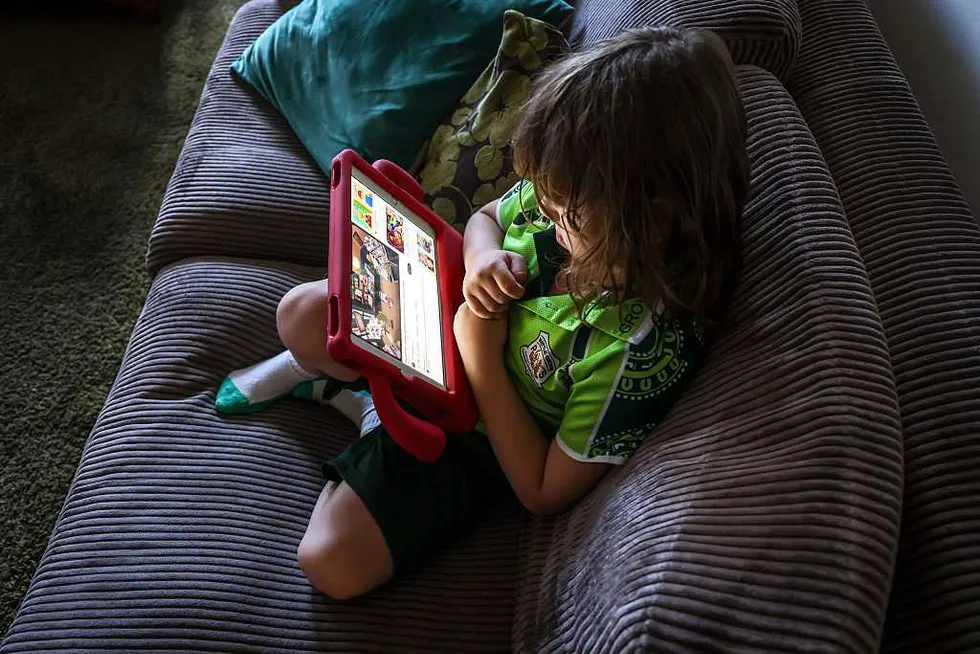 Photo by DAVID GRAY/AFP via Getty Images
The government further defined the requirements placed upon the platforms, adding that they must “take reasonable steps to prevent” those under 16 from having accounts.
The legislation also specified that “no Australian will be compelled to use government identification (including Digital ID) to prove their age online” and that platforms must offer reasonable alternatives to its users.
According to the BBC, other countries are hot on Australia’s tail in terms of implementing their own similar bans. This includes the French government, which has begun a parliamentary inquiry into banning children under 15 years old from social media, while also implementing a “digital curfew” for those between 15 and 18.
The Spanish government has also drafted a law that would require parental consent for children under 16 to access social media.
RELATED: Conservative influencers promote Qatar as a desert paradise — but are they lying?
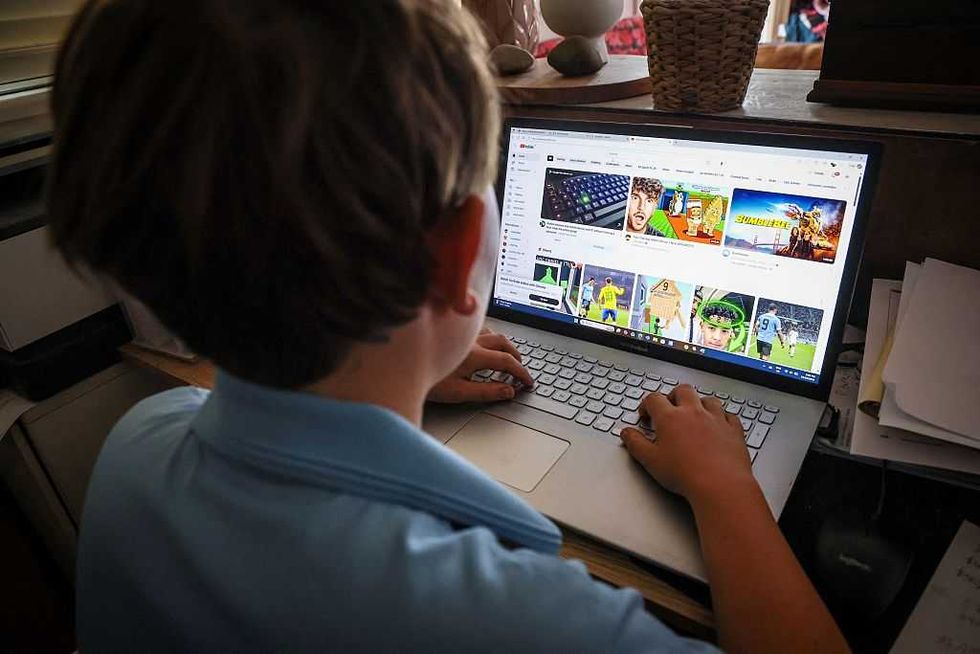 Photo by DAVID GRAY/AFP via Getty Images
Ruling left-wing Labour Party official Anika Wells, who serves as Australia’s communications minister (and minister of sport), said that the ban is not “perfect” and is going to “look a bit untidy on the way through.”
“Big reforms always do,” she added.
Australians under 16 will still be able to access content that is available on a website without being logged in or being a member, as there is virtually no way to prevent that without restricting access to the internet entirely.
Like Blaze News? Bypass the censors, sign up for our newsletters, and get stories like this direct to your inbox. Sign up here!
ART? Beeple puts Elon Musk and Mark Zuckerberg heads on robot dogs that ‘poop’ $100K NFTs
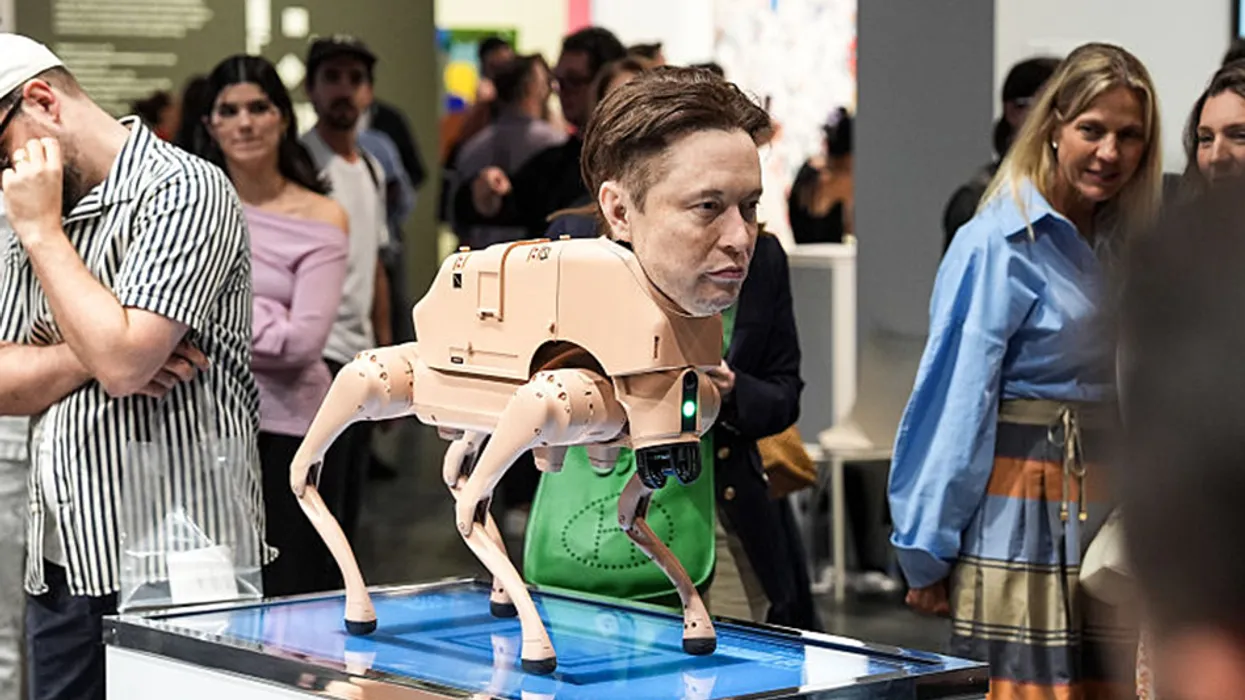
A political artist says he is making a commentary on how social media platforms control what people see.
Mike Winkelmann, who goes by the moniker Beeple, created an exhibit called “Regular Animals” that featured some of the world’s most influential men as robotic dogs.
‘Zuckerberg and Elon, in particular, control a huge amount of how we see the world.’
Visitors to Art Basel Miami Beach saw realistic masks of Elon Musk, Jeff Bezos, Mark Zuckerberg, Pablo Picasso, and Andy Warhol on robotic dogs that defecate photos. Winkelmann also added two look-alikes of himself into the mix.
“The dogs are continuously taking pictures and ranking those pictures to find the most interesting ones,” Winkelmann explained on his X page. “When it comes time to poop they are reimagined using AI according to each dog’s personality / worldview.”
According to Page Six, onlookers — who called the exhibit “freaky” and “creepy” — saw the Zuckerberg dog produce photos that look like the Metaverse, while Musk’s were black and white.
Bezos’ robot reportedly did not make prints, but was included because Bezos is a person “who shapes how we see the world,” Winkelmann explained. “So he needed to be in the piece.”
RELATED: Elon Musk and Jeff Bezos are racing to enclose Earth in an orbital computer factory
The dogs — which are reminiscent of the film “Mars Attacks!” — are an attempt by Winkelmann to communicate that he parodied individuals who are controlling what the world sees.
“It used to be that we saw the world interpreted through the eyes of artists, but now Mark Zuckerberg and Elon, in particular, control a huge amount of how we see the world,” he told Page Six. “We see the world through their eyes because they control these very powerful algorithms that decide what we see. And so we wanted to kind of play with that idea.”
Beeple added, “You’re increasingly seeing the world through the eyes of AI and robotics,” noting that he thinks this will increasingly occur.
The 44-year-old artist does not seem to be against the capitalistic nature of those he criticizes, however, as his robodog-produced photos are allegedly being sold to private collectors for up to $100,000 each. The photo owners will allow them to travel with the exhibit, though.
This is not Winkelmann’s first foray into politics. His video shorts, for example, have focused on issues relating to power and communication.
On his website, the artist features pieces like “Transparent Machines,” which is meant to portray “conflicting concepts of transparency and privacy.”
Other clips include a music video for “Manifest Destiny” by Run the Jewels, a radical political rap group, as well as commentary on the housing market collapse of 2009.
Apart from the music video, the shorts compile vague imagery that serve as safe commentary representing widely popular viewpoints. This was reflected in an interview with Icon, in which Winkelmann said he is “not extreme” in his political views.
“To me, it’s very frustrating that we have such binary parties these days, because I’m very much in the middle.”
The artist also revealed he “voted for f**king [George W.] Bush twice, which seems dumb in retrospect,” he noted.
“I’m not sure [I’m] liberal, but it’s just crazy town on that other side,” he said of his politics.
Like Blaze News? Bypass the censors, sign up for our newsletters, and get stories like this direct to your inbox. Sign up here!