

Category: Return
Cattle rancher battles Amazon data center accused of poisoning water supply, causing miscarriages

An Oregon cattle rancher did his own research into an apparent rise in obscure medical conditions after the opening of an Amazon data center.
The facility, which requires enormous amounts of water to cool its infrastructure, stands accused of adding wastewater — laden with nitrates — to an already struggling filtration system.
‘Our data centers draw water from the same supply as other community members.’
Jim Doherty from Morrow, Oregon, sought out to investigate the alleged increase in health problems stemming from toxins in the local water supply. Doherty has since performed tests, worked alongside his county, and knocked on doors to try to solve the equation. He spoke with Rolling Stone about his findings.
The rancher said he surveyed 70 local wells and shockingly found that 68 of them violated federal limits for the allowable levels of nitrates in drinking water. In the same report, Doherty detailed that of the first 30 homes he visited in his area, 25 residents had recently suffered miscarriages.
The report alleged a number of illnesses related to the water supply — which included different forms of cancer — and pointed the finger at pollution exacerbated by an Amazon data center that popped up in 2011. The square-footage of the data center ranges in estimates from 120,000 to 200,000 but comes with a 15-year tax abatement worth nearly $200 million.
The cost of this, allegedly, is a slew of health problems.
RELATED: Apple to invest $500 billion in US including new AI server factory in Texas
 Amazon Web Services and Iron Mountain data centers in Manassas, Virginia, on July 9, 2025. Total power usage in the US is expected to climb 2.15% in 2026, spurred largely by a 5% spike from commercial users because of the expansion of data centers, according to a US Energy Department report released in June. Photographer: Nathan Howard/Bloomberg via Getty Images
“One man about 60 years old had his voice box taken out because of a cancer that only smokers get, but that guy hadn’t smoked a day of his life,” Doherty told Rolling Stone.
Another woman reportedly wrote Doherty to tell him her husband got “kidney cancer in his early 40s. His doctor thought it was due to exposure to herbicides and pesticides. He lost a kidney, but he lived.”
“We had acceptable levels of [toxins in our] drinking water when we first moved there,” the woman claimed. “After my husband’s cancer, we realized they went up and up through the years. It’s very sad.”
Doherty’s wife, Kelly, also claimed that out of the 14 people that live on their road, “I think nine of them have cancer right now.”
On the contrary, Amazon spokesman Lisa Levandowski told Rolling Stone that “the apparent narrative” about the 45,000-person county is “misleading and inaccurate.”
“The truth is that this region has long-documented groundwater quality challenges that significantly predate AWS’ presence, and federal, state, and local agencies have spent years working to address nitrates from agricultural fertilizer, manure, septic systems, and wastewater from food processing plants,” Levandowski explained.
She went on, “Our data centers draw water from the same supply as other community members; nitrates are not an additive we use in any of our processes, and the volume of water our facilities use and return represents only a very small fraction of the overall water system — not enough to have any meaningful impact on water quality.”
RELATED: Zuckerberg to dump hundreds of billions into new Manhattan-size projects
 An Amazon Web Services data center in Stone Ridge, Virginia, US, on Sunday, July 28, 2024. Data center developers in Northern Virginia are asking utility Dominion Energy Inc. for as much power as several nuclear reactors can generate, in the latest sign of how artificial intelligence is helping drive up electricity demand. Photographer: Nathan Howard/Bloomberg via Getty Images
Oregon Rural Action, an activist group focused on preserving water, compared the situation to the “historical precedent” of Flint, Michigan.
“In part because of how slow the response to the crisis has been, and in part because of who’s affected. These are people who have no political or economic power and very little knowledge of the risk,” executive director Kristin Ostrom told Rolling Stone.
The argument that Amazon has increased the amount of toxins in the water is indeed a complex one as there exist arguments on both sides that require investigation to prove.
As the Department of Energy explains, the process of cooling with water typically includes water softening to remove harmful toxins, but that does not mean there aren’t additives involved in the process.
Possible additives include phosphates to prevent corrosion, acids to adjust pH levels, and anti-foaming agents, to name a few. Nitrates can also be used to prevent corrosion in cooling systems.
The DOE also notes that when water evaporates from cooling towers, dissolved solids or toxins become more highly concentrated. This is typically solved by removing a portion of the highly concentrated water and replacing it with “fresh make-up water.”
Like Blaze News? Bypass the censors, sign up for our newsletters, and get stories like this direct to your inbox. Sign up here!
Cash-starved OpenAI BURNS $50M on ultra-woke causes — like world’s first ‘transgender district’

OpenAI is providing millions of dollars to nonprofits, many of which openly promote race politics and gender ideology.
In September, the ChatGPT creators announced it would be injecting $50 million into nonprofits and “mission-focused organizations” that work “at the intersection of innovation and public good.”
‘The Transgender District is the first legally recognized transgender district in the world.’
In order to be eligible, organizations must be a 501(c)(3) charity, located in the United States, and preferably have an annual operating budget above $500,000, but not more than $10 million. Simply put, OpenAI did not choose startups or struggling businesses.
On Wednesday, the AI company posted its lengthy list of recipients, stating that it had plans to distribute more than $40 million before the end of 2025.
First, OpenAI highlighted programs like a radio and digital media studio and a group that helps those with developmental and intellectual disabilities.
However, after about a dozen examples, OpenAI began listing organizations that operate with ethnicity-based missions.
This included STEM from Dance, which serves “young girls of color” across seven states. This also included Maui Roots Reborn, which provides “legal, financial, and social support to Maui’s immigrant and migrant” communities. This was followed by the Native American Journalists Association.
This was only the tip of the iceberg, though. The subsequent list of more than 200 entities included many other woke organizations as well as outright bizarre ones.
For example, the Transgender District Company out of Compton, California, is a literal district founded in the city in 2017 “by three black trans women — Honey Mahogany, Janetta Johnson, and Aria Sa’id — as Compton’s Transgender Cultural District. The Transgender District is the first legally recognized transgender district in the world.”
As well, the Source LGBT+ Center in Visalia, California, has transgender programs to hold “space for trans and nonbinary individuals.”
RELATED: AI-enabled teddy bear pulled off market after reportedly making sexual and violent suggestions
OpenAI is funding countless race-based organizations, with a particular focus on black women, for some reason.
Funding has been extended to groups like Black Girls Do Engineer Corporation (New York, Texas), the California Black Women’s Collective Empowerment Institute, the Lighthouse Black Girl Project (Mississippi), and Women of Color On the Move (California, North Carolina).
Other strange organizations listed were focused simply on specific cultures, like the Chinese Culture Foundation of San Francisco, the Center for Asian Americans United for Self-Empowerment Inc. (California), and the Hispanic Center of Western Michigan Inc. (Michigan).
Some grant recipients were seemingly just political or legal groups, such as: California Association of African American Superintendents and Admin, Hispanas Organized for Political Equality-California (California,) and the Sikh American Legal Defense and Education Fund, which operates in almost every state.
RELATED: AI chatbot encouraged autistic boy to harm himself — and his parents, lawsuit says
 Sam Altman, chief executive officer of OpenAI Inc. Photographer: An Rong Xu/Bloomberg via Getty Images
While youth centers, YMCAs, and science-based organizations are sprinkled into the mix, it seems that, politically, only progressive and liberal groups received funding.
None of the groups mentioned had a “right-wing,” “conservative,” or “Republican” focus.
The race-based initiatives did not include any “white” groups or those based on European nations either — not even Ukraine.
Like Blaze News? Bypass the censors, sign up for our newsletters, and get stories like this direct to your inbox. Sign up here!
Nazi SpongeBob, erotic chatbots: Steve Bannon and allies DEMAND copyright enforcement against AI
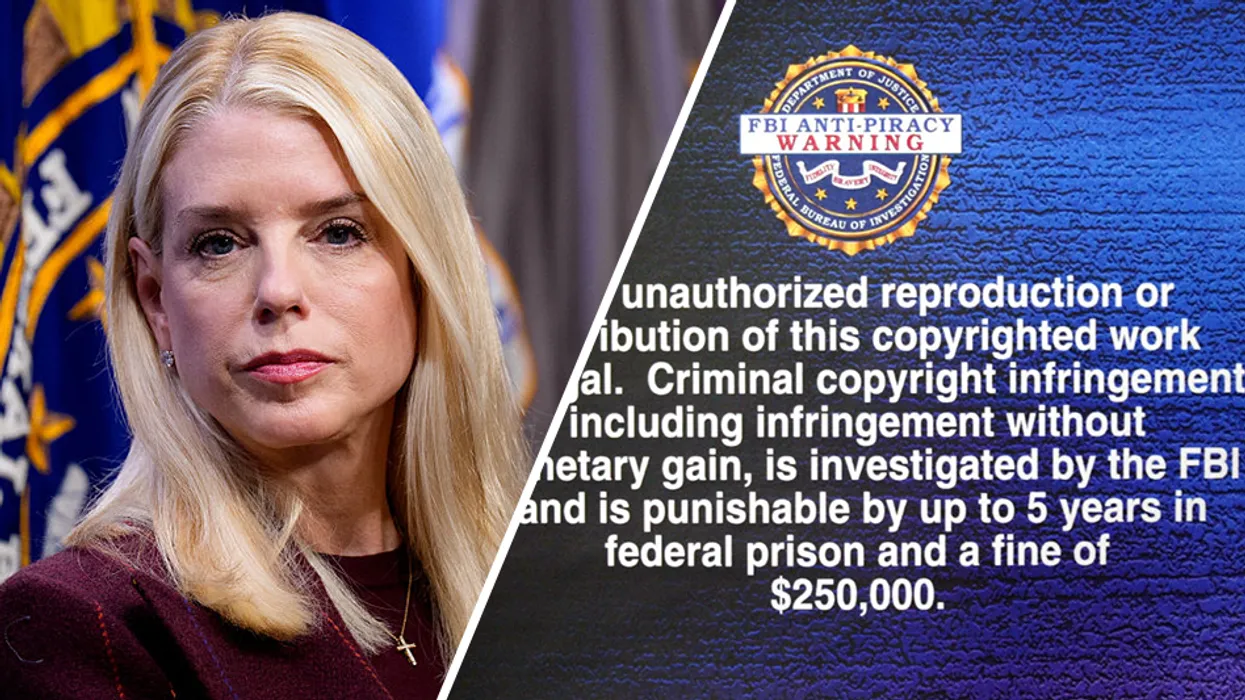
United States Attorney General Pam Bondi was asked by a group of conservatives to defend intellectual property and copyright laws against artificial intelligence.
A letter was directed to Bondi, as well as the the director of the Office of Science and Technology Policy, Michael Kratsios, from a group of self-described conservative and America First advocates including former Trump adviser Steve Bannon, journalist Jack Posobiec, and members of nationalist and populist organizations like the Bull Moose Project and Citizens for Renewing America.
‘It is absurd to suggest that licensing copyrighted content is a financial hindrance to a $20 trillion industry.’
The letter primarily focused on the economic impact of unfettered use of IP by imaginative and generative AI programs, which are consistently churning out parody videos to mass audiences.
“Core copyright industries account for over $2 trillion in U.S. GDP, 11.6 million workers, and an average annual wage of over $140,000 per year — far above the average American wage,” the letter argued. That argument also extended to revenue generated overseas, where copyright holders sell over an alleged $270 billion worth of content.
This is in conjunction with massive losses already coming through IP theft and copyright infringement, an estimated total of up to $600 billion annually, according to the FBI.
“Granting U.S. AI companies a blanket license to steal would bless our adversaries to do the same — and undermine decades of work to combat China’s economic warfare,” the letter claimed.
RELATED: ‘Transhumanist goals’: Sen. Josh Hawley reveals shocking statistic about LLM data scraping
Letters to the administration debating the economic impact of AI are increasing. The Chamber of Progress wrote to Kratsios in October, stating that in more than 50 pending federal cases, many are accused of direct and indirect copyright infringement based on the “automated large-scale acquisition of unlicensed training data from the internet.”
The letter cited the president on “winning the AI race,” quoting remarks from July in which he said, “When a person reads a book or an article, you’ve gained great knowledge. That does not mean that you’re violating copyright laws.”
The conservative letter aggressively countered the idea that AI boosts valuable knowledge without abusing intellectual property, however, claiming that large corporations such as NVIDIA, Microsoft, Apple, Google, and more are well equipped to follow proper copyright rules.
“It is absurd to suggest that licensing copyrighted content is a financial hindrance to a $20 trillion industry spending hundreds of billions of dollars per year,” the letter read. “AI companies enjoy virtually unlimited access to financing. In a free market, businesses pay for the inputs they need.”
The conservative group further noted examples of IP theft across the web, including unlicensed productions of “SpongeBob Squarepants” and Pokemon. These include materials showcasing the beloved SpongeBob as a Nazi or Pokemon’s Pikachu committing crimes.
IP will also soon be under threat from erotic content, the letter added, citing ChatGPT’s recent announcement that it would start to “treat adult users like adults.”
RELATED: Silicon Valley’s new gold rush is built on stolen work
 Photo by Michael M. Santiago/Getty Images
The letter argued further that degrading American IP rights would enable China to run amok under “the same dubious ‘fair use’ theories” used by the Chinese to steal content and use proprietary U.S. AI models and algorithms.
AI developers, the writers insisted, should focus on applications with broad-based benefits, such as leveraging data like satellite imagery and weather reports, instead of “churning out AI slop meant to addict young users and sell their attention to advertisers.”
Like Blaze News? Bypass the censors, sign up for our newsletters, and get stories like this direct to your inbox. Sign up here!
Guillermo del Toro stops awards show music to drop ‘F**k AI’ bomb

Three-time Oscar winner Guillermo del Toro had strong words about using humans in the production of his latest film.
Del Toro, a writer and director behind films like “Pacific Rim,” “Pan’s Labyrinth,” and “The Hobbit” movies, was honored with a tribute award recently at the 2025 Gotham Film Awards.
‘Every single frame of this film that was willfully made by humans for humans.’
Del Toro accepted the award alongside actors Oscar Isaac and Jacob Elordi for their work on the 2025 film “Frankenstein.”
Del Toro made several emotional comments dating back to when he first read the book that inspired his movie at age 11, before Isaac attempted to turn the acceptance speech into one about diversity and immigration.
“I am proud to be standing here tonight. … Immigrants, baby. We get the job done,” Isaac exclaimed. He is Guatemalan, Elordi is Australian, and del Toro is Mexican.
Elordi then spoke, but neither he nor del Toro added to Isaac’s remarks. Soon, music started to play, and the production looked to the next award. That was until del Toro interrupted, deciding that he wanted to add opinionated remarks of his own.
“No, no, no, wait!” del Toro interrupted. “I would like to tell to the rest of our extraordinary cast and our crew that the artistry of all of them shines on every single frame of this film that was willfully made by humans for humans.”
“The designers, builders, makeup, wardrobe team, cinematographers, composers, editors,” he continued. “This tribute belongs to all of them. And I would like to extend our gratitude and say —” del Toro then paused, seemingly wondering if he should continue.
“F**k AI,” he added with a smile.
RELATED: Almost half of Gen Z wants AI to run the government. You should be terrified.
During his acceptance speech, del Toro spoke on the inspiration he drew from Mary Shelley, the original author of “Frankenstein.”
“Mary Shelley, who made the book her biography, she was 18 years old when she wrote the book and posed the urgent questions: Who am I? What am I? Where did I come from? And where am I going?” del Toro explained. “She presented them with such urgency that they are alive 200 years later through this incredible parable that shaped my life since I first read it in childhood at age 11.”
Much of del Toro’s appeal comes from his ability to explore complex emotional topics from a unique viewpoints, and those unique thoughts typically come across whenever he is given the chance to speak. Del Toro told the award-show audience that even at a young age, he knew he “did not belong in the world the way my parents, the way the world expected me to fit.”
“My place was in a faraway land inhabited only by monsters and misfits.”
RELATED: Trump admin leaves Elon Musk’s Grok, xAI off massive list of AI tech partners
This outlook definitely falls in line with his recent work, including when he appeared in the recent video game series Death Stranding.
Working alongside iconic game developer Hideo Kojima, del Toro delivered storylines about life, death, and emotional connection, but this time as an actor.
Speaking on the games, del Toro said he believes in the importance of “paradoxical creation” and said it is “essential to art.”
The beauty of the game, he added, was that Kojima had both “the weirdest mind and the most wholesome mind,” which shaped his storytelling.
Like Blaze News? Bypass the censors, sign up for our newsletters, and get stories like this direct to your inbox. Sign up here!
‘Assets of fear’: BlackRock CEO Larry Fink FLIPS on crypto
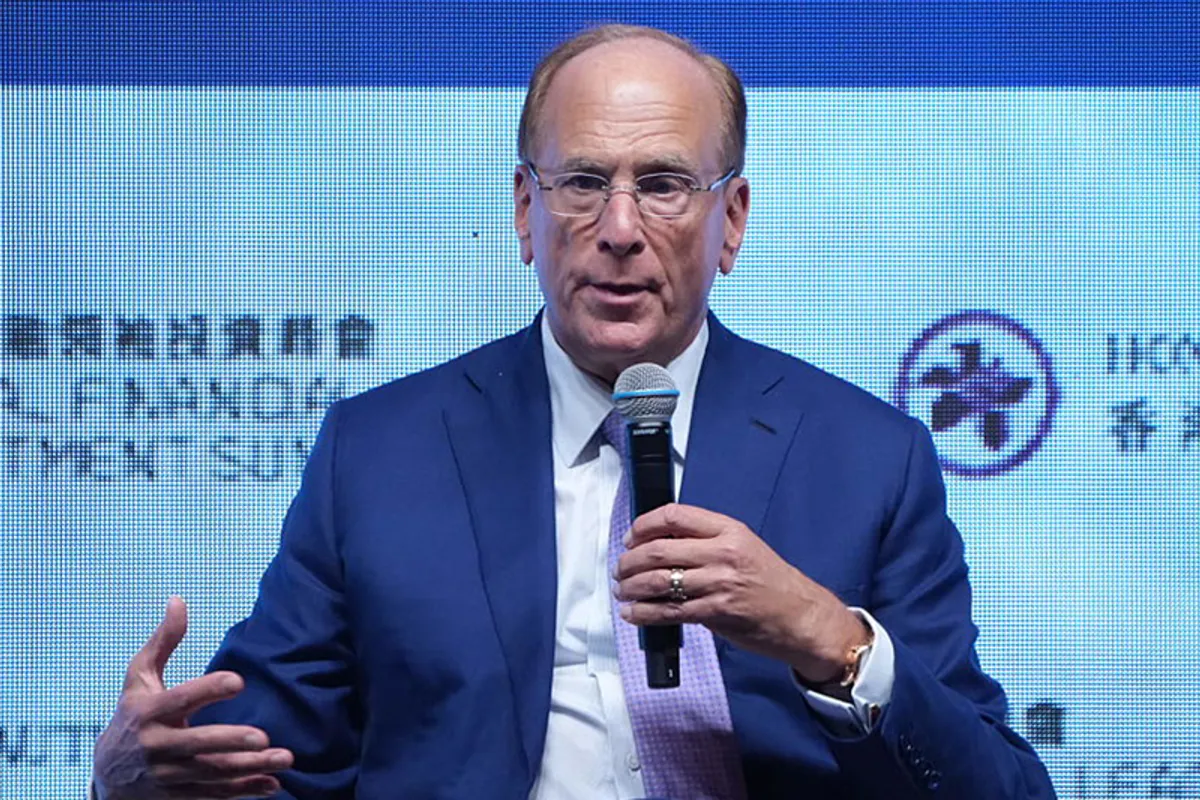
BlackRock’s CEO has seemingly changed his mind about the future of Bitcoin and cryptocurrency.
Investor Larry Fink famously criticized Bitcoin in 2017 when he called it an “index of money laundering” that simply showed how much demand there was in the world to launder funds.
‘I do see more and more of a future of having more and more financial assets being digitized.’
Now, during a sit-down with the CEO of hedge fund Citadel, Ken Griffin, Fink said he sees cryptocurrency wallets being used to make stock moves en masse in the near future.
Fink revealed during the conference that if he could “tokenize” all ETFs and provide them in a digital wallet, users would be able to seamlessly make trades.
“You could seamlessly, without fees, … buy bond or stocks, and I believe that is going to be the future,” Fink said. “I do believe more transactions [are] going to be done digitally with authentication of ownership.”
He added, “I do see more and more of a future of having more and more financial assets being digitized, sitting in a singularity of a blockchain and going from cash to stocks to bonds, back and forth, doing that seamlessly, and I do believe that is going to happen sooner, not later.”
During the same event, Fink described Bitcoin as an investment made out of fear, but not in the way one might think.
RELATED: Bitcoin billionaire will serve time after British police broke down her door and arrested her in bed
Fink described Bitcoin and gold along similar lines, calling them “assets of fear” that investors scoop up when they are “frightened of the debasement of your currency.”
“You own it if you have financial insecurities, or you own it if you have physical insecurities and worries. So, that’s one of the foundational issues of my journey in understanding crypto more.”
Fink has confused audiences over the years with his remarks on digital currency, both in his evolving stance on the asset and, of course, his — along with other major institutions — apparent inability to recognize that it is in fact being used as he prophesies it will be used in the future.
Fink’s pontifications about the future of crypto, fiat, ETFs, and stocks/bonds being traded seamlessly on apps are already a reality. Countless companies allow direct deposit of paychecks to digital wallets, the same as any bank, while also providing the ability to trade stocks and cryptocurrency in-house.
RELATED: Almost HALF of Gen Z wants AI to run the government
 French President Emmanuel Macron, left, and Larry Fink. Photographer: Michael Nagle/Bloomberg via Getty Images
It is unclear if BlackRock’s plan was to slow-walk its investors into cryptocurrency cautiously, but its CEO has certainly made gradual strides in the direction of acceptance, hallmarked by his most recent comments.
In 2024, Fink seemed to turn a new leaf when he admitted he was wrong about Bitcoin and told CNBC he thought it had become a legitimate asset.
“It is a legitimate financial instrument that allows you to maybe have uncorrelated type of returns. I believe it is an instrument that you invest in when you’re more frightened, though. It is an instrument when you believe countries are debasing their currency by excess deficits, and some countries are,” Fink explained.
Moreover, the CEO even referred to Bitcoin as “digital gold,” which is now in step with his recent description of the asset.
Like Blaze News? Bypass the censors, sign up for our newsletters, and get stories like this direct to your inbox. Sign up here!
Trump admin leaves Elon Musk’s Grok, xAI off massive list of AI tech partners
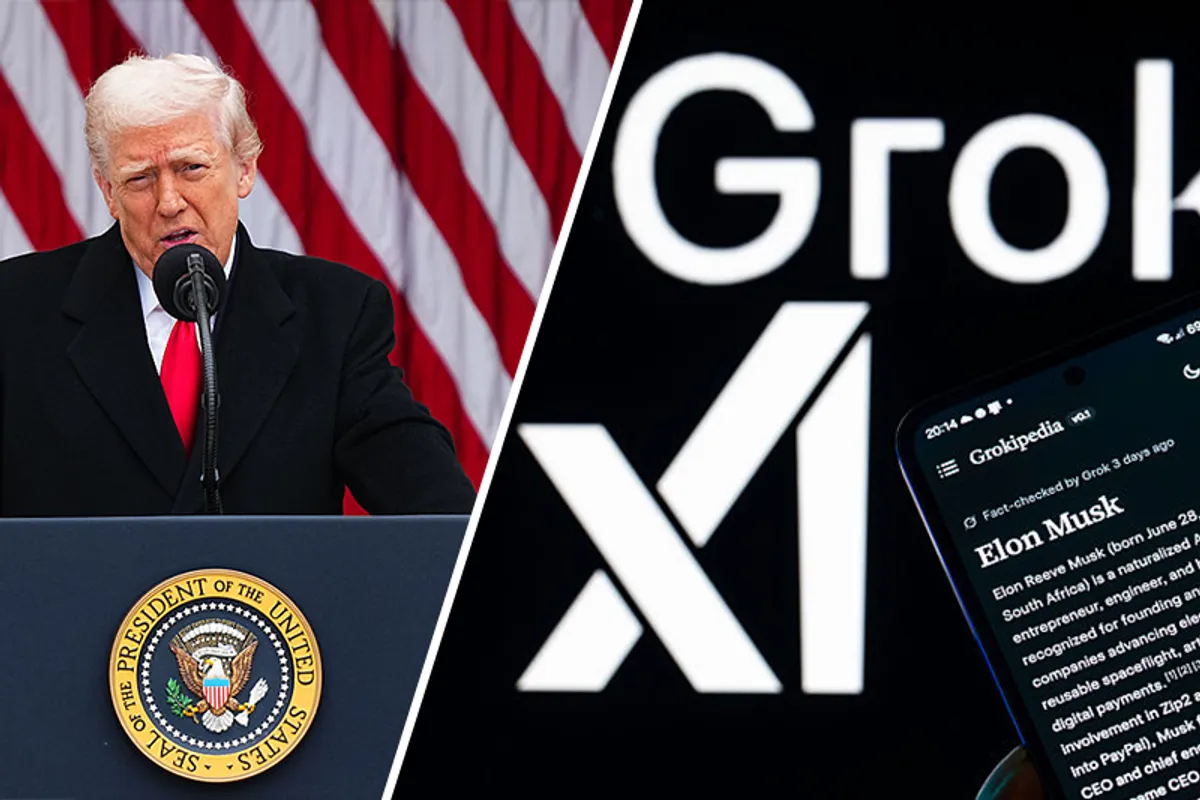
Elon Musk’s artificial intelligence platform has seemingly been left out of a government program to launch the technology forward.
On Monday, the White House announced a new project aimed at accelerating innovation and discovery to “solve the most challenging problems of this century.”
‘The Genesis Mission will bring together our Nation’s research and development resources.’
The new Genesis Mission is described by the Department of Energy as “a national initiative to build the world’s most powerful scientific platform.”
An executive order from the president titled “Launching the Genesis Mission” explained plans to integrate federal scientific datasets to train AI to test new hypotheses, automate research, and speed up the occurrence of scientific breakthroughs.
“The Genesis Mission will bring together our Nation’s research and development resources — combining the efforts of brilliant American scientists, including those at our national laboratories, with pioneering American businesses; world-renowned universities; and existing research infrastructure, data repositories, production plants, and national security sites — to achieve dramatic acceleration in AI development and utilization.”
With Elon Musk making strides in 2025 with both the advancement of his Grok chatbot and its video generation model, Imagine, tech enthusiasts were shocked to find out that Musk’s xAI was not on a list of partners for the project.
RELATED: Big Tech’s AI boom hits voters hard — and Democrats pounce
The Department of Energy includes 55 companies on its lists of collaborators for Genesis, with xAI and Grok nowhere to be found.
Aside from the fact that Musk was a special government employee under the Trump administration, his exclusion is even more surprising given both the length and generic nature of the companies that are involved. Amazon Web Services, Google, and Microsoft were announced as partners, as were AI companies like OpenAI and Scale AI.
It should be noted that company xLight, which is listed by the DOE, is not affiliated with Musk.
RELATED: Log into this Gmail clone to read all the Jeffrey Epstein emails as if you were Epstein himself
“For [xAI] to not be a part of the Genesis Mission, it is not just an oversight, it would have to be an intentional omission,” AI engineer Brian Roemmele wrote on X. “I spoke to someone on this project who asked for my input today, and it is the first thing I brought up. I am certain they will see the error made.”
Blaze News contacted xAI for comment but did not receive an immediate reply. This article will be updated with any applicable response.
Whether a rift exists between Musk and the Trump administration is unclear, but the government seems steadfast in believing its mission is monumental in terms of importance, likening it to the World War II nuclear arms race.
“The world’s most powerful scientific platform to ever be built has launched,” the DOE claimed on its X account. “This Manhattan-Project-level leap will fundamentally transform the future of American science and innovation.”
Like Blaze News? Bypass the censors, sign up for our newsletters, and get stories like this direct to your inbox. Sign up here!
25 years later, the gaming console that caused so much chaos is still No. 1

After a quarter of a century, one console still reigns supreme.
It has been nearly 25 years to the day since iconic photos and video of the Paris launch showed just how crazy the world was for PlayStation 2.
‘I never leave my house.’
On November 24, 2000, crowds in Europe lined up, camped, and even pushed through crowds to get their hands on a PlayStation 2 for the first time. The launch was almost a month after the American Oct. 26 debut and signified a true consumerism-fueled riot that became synonymous with Black Friday.
From its launch day through Christmas 2000, Sony said it sold 1.35 million units in North America and another 1 million units in Europe during that same period.
The PS2 has sold an average of over 6 million consoles per year since then, or 500,000 per month, totaling more than 160 million lifetime units sold as of this November.
RELATED: A kid got a mint PS1 from his grandpa, and the internet is freaking out
As reported by Techgaged.com, the PS2 eclipses two Nintendo products at the top of the list.
The second-most sales are for the handheld Nintendo DS at 154 million, followed by the Nintendo Switch portable console at 152 million.
A steep drop occurs for fourth place with the original Game Boy, released in 1989, having 118 million units sold. Sony’s PS1 and Nintendo’s Wii are the only other gaming systems to have sold over 100 million.
Interestingly, the PlayStation 2’s main competitors during its era, the Nintendo GameCube (launched in North America on Nov. 18, 2001) and the original Xbox (launched in North America on Nov. 15, 2001), do not even crack the top-20 list.
The Xbox, Microsoft’s first foray into gaming systems, has sold 24.65 million units in its lifetime, while the GameCube has sold 21.74 million units.
Both company’s modern systems — Xbox Series X|S and Nintendo Switch — have already surpassed the sales of their 2000s counterparts.
 Photo By Eduardo Parra/Europa Press via Getty Images
The PS2 was so pervasive, historical image banks provide a bounty of time capsules showing celebrities flooding PS2-themed parties that were constantly taking place to promote the product.
There were events like the PlayStation 2 and the Hip-Hop Summit “Race to the Polls” event in 2004, or the mouthful, PlayStation 2 Celebrates Red White and Blue with Poolside Party at the Bentley Hotel in NYC, temporarily referred to as the PlayStation 2 Hotel for the occasion, in 2003.
Super Bowl parties became linked with the console during that era too. The Sony PlayStation 2 Game Over Party saw celebrities like NSYNC in its first year and Paris Hilton in its second year. In fact, the celebrity sightings and performances connected to PS2 events at that time are nearly limitless.
If readers don’t believe the PS2 was as much of a cross-cultural phenomenon as it seems, refer to this quote from “Friends” actor Matthew Perry in 2000.
“I used to have a social life, go on dates, go to dinner parties, have a job. Now all I do is sit in a big chair and play PlayStation 2,” Perry said, per Digital Journal. “I never leave my house. My friends have wondered what happened to me. Howard Hughes must have had one of these.”
Like Blaze News? Bypass the censors, sign up for our newsletters, and get stories like this direct to your inbox. Sign up here!
RealPage, accused of rental price fixing, settles suit with feds

A real estate website once accused of facilitating a “housing cartel” has reached a settlement with the Department of Justice.
After a more than year-and-a-half battle, RealPage and the DOJ have come to an agreement that will limit certain features on the app that renters claimed were unfair.
‘Replacing competition with coordination … renters paid the price.’
In 2024, tenants from a popular building in Jersey City, New Jersey, took RealPage to court over allegations of landlords sharing nonpublic information on the website, including vacancy data.
The tenants said the information inflated rental prices, effectively resulting in price-fixing rent across cities due to landlords using the same algorithm to dictate their prices.
In November 2023, the attorney general of Washington, D.C., submitted a different complaint against 14 other landlords operating more than 50,000 rental units in territory.
“Effectively, RealPage is facilitating a housing cartel,” said D.C.’s AG Brian Schwalb.
A DOJ suit in August 2024 seemingly tipped the scales, and now RealPage has agreed to settle on terms.
According to the DOJ’s Antitrust Division Assistant Attorney General Abigail Slater, RealPage was “replacing competition with coordination, and renters paid the price.”
The settlement stops RealPage from coordinating pricing, Slater said in a video posted to X, and forces the app to cease using competitor data to set rents in real time. As well, RealPage can no longer generate “hyper-localized pricing that pushes rent up” and must eliminate features that discourage landlords from lowering prices.
“It means rents set by the market, not a secret algorithm,” Slater remarked.
In a press release, RealPage boasted that the settlement led to no findings or admissions of liability, including no financial penalties or damages being awarded.
However, the company did reveal that it agreed to be independently monitored to confirm ongoing compliance with the new terms. Reuters reported that the monitorship will last three years and limit how RealPage collects and uses nonpublic data.
RELATED: Did rent go up? Blame AI price-fixing
Stephen Weissman, Gibson Dunn partner and former deputy director for the Federal Trade Commission, reiterated the company’s denial of any wrongdoing and blamed the spread of misinformation for alleged misconceptions on how the app operates.
“There has been a great deal of misinformation about how RealPage’s software works and the value it provides for both housing providers and renters.”
Weissman claimed that the company’s use of “aggregated and anonymized nonpublic data” has led to lower rents and more “pro-competitive” effects.
Aiden Buzzetti, president of the Bull Moose Project, told Return that he feels the settlement ensures that “Americans who rent are not subject to illegal price-fixing practices.”
Buzzetti added, “We support the Trump administration’s transformative direction to hold corporations like RealPage accountable when they violate the law.”
Like Blaze News? Bypass the censors, sign up for our newsletters, and get stories like this direct to your inbox. Sign up here!
Meta had 17-STRIKE policy for sex traffickers, ex-employee says

A former safety lead for one of Mark Zuckerberg’s social media apps alleged the company is not very strict when it comes to those who engaged in human trafficking.
The claim comes from a plaintiff’s brief filed as part of a lawsuit against Instagram, Snapchat, TikTok, and YouTube. The lawsuit filed in the Northern District of California alleges that the social apps “relentlessly” pursued growth at all costs and “recklessly” ignored the impacts their products have on the mental health of children.
‘You could incur 16 violations for prostitution and sexual solicitation.’
Vaishnavi Jayakumar, Instagram’s former head of safety and well-being, testified that she was shocked when she learned Meta had a “17x” strike policy toward those who reportedly engaged in “trafficking of humans for sex.”
“You could incur 16 violations for prostitution and sexual solicitation, and upon the 17th violation, your account would be suspended,” Jayakumar claimed. The former employee also said that she considered it to be a “very, very high strike threshold” in comparison to the rest of the industry and that internal documentation from Meta corroborated her claim.
As Time reported, plaintiffs in the case claim that Jayakumar raised the issue in 2020 but was told it was too difficult to address. This reportedly came at the same time it was allegedly much easier to report users for violations surrounding spam, “intellectual property violation,” and the “promotion of firearms.”
In a statement, Meta strongly denied the claims.
RELATED: Florida attorney general announces lawsuit against Snapchat for allegedly empowering child predators
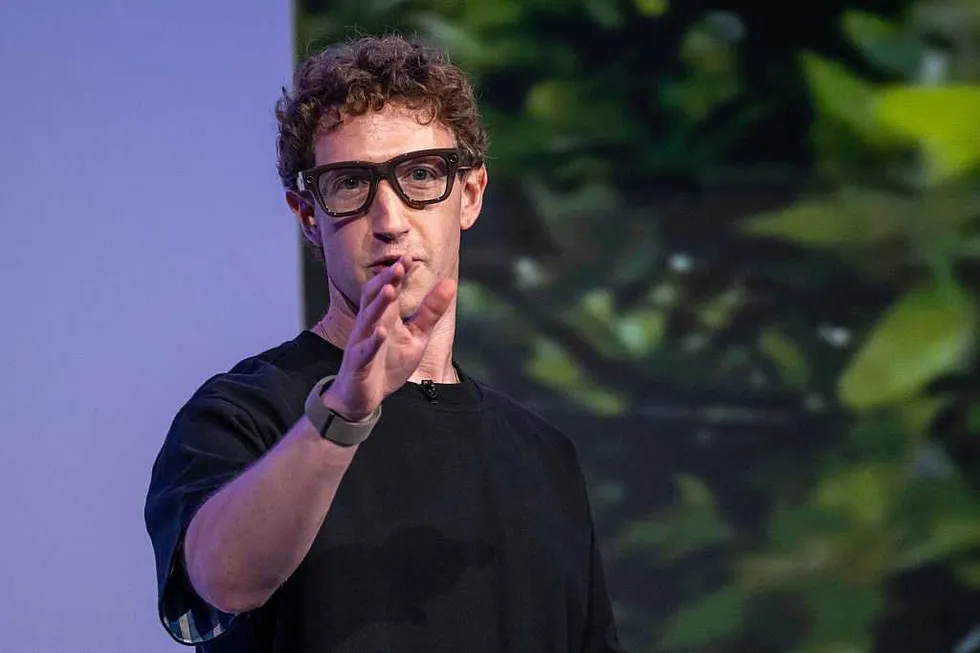 Photographer: David Paul Morris/Bloomberg via Getty Images
“We strongly disagree with these allegations, which rely on cherry-picked quotes and misinformed opinions in an attempt to present a deliberately misleading picture,” a Meta spokesperson told Time.
“The full record will show that for over a decade, we have listened to parents, researched issues that matter most, and made real changes to protect teens — like introducing Teen Accounts with built-in protections and providing parents with controls to manage their teens’ experiences. We’re proud of the progress we’ve made, and we stand by our record.”
Still, the lawsuit claims Meta was aware of the harms its platforms caused and even knew about millions of adults who were trying to contact minors through its apps.
Moreover, the lawsuit also alleges that Meta halted internal research that would have shown those who stopped using Facebook became less depressed or anxious, NBC News reported.
The study, reportedly titled Project Mercury, was allegedly initiated in 2019 as a way to help “explore the impact” that Meta apps have on “polarization, news consumption, well-being, and daily social interactions.”
Additionally, the lawsuit compares the social media sites to “tobacco,” likening the platforms to cigarette companies marketing their products to kids.
A Google spokesperson said the lawsuit “fundamentally misunderstand how YouTube works and the allegations are simply not true.”
“YouTube is a streaming service where people come to watch everything from live sports to podcasts to their favorite creators, primarily on TV screens, not a social network where people go to catch up with friends,” the Google spokesperson stated. “We’ve also developed dedicated tools for young people, guided by child safety experts, that give families control.”
Like Blaze News? Bypass the censors, sign up for our newsletters, and get stories like this direct to your inbox. Sign up here!
Log into this Gmail clone to read all the Jeffrey Epstein emails as if you were Epstein himself
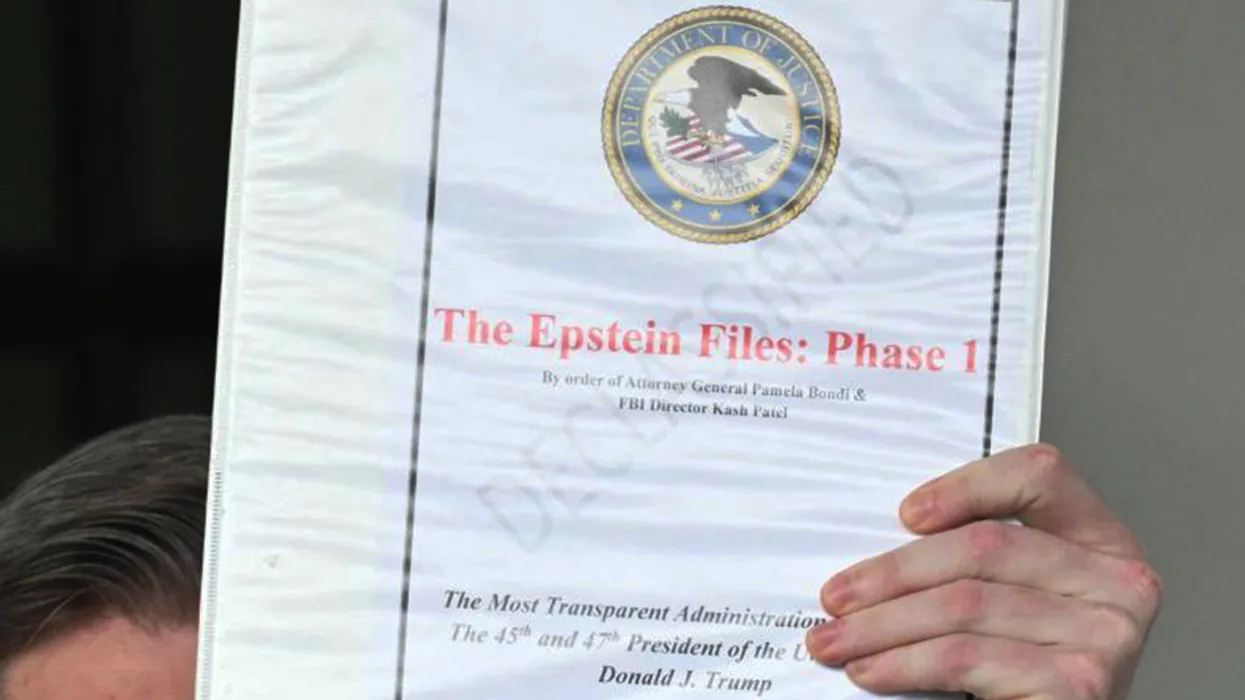
A programmer has made it possible to read Jeffrey Epstein’s infamous emails from his point of view.
The computer whiz, going by the name Riley Walz, has a history of creating unique webpages and even created a fake 2020 Republican candidate.
‘You’re logged in as Epstein and can see his emails.’
Walz is assumed to be in his early 20s given that he was described by CNN as a high school student from Upstate New York in February 2020.
The youngster’s website features several links to obscure but clever programs he has created, like a fast-food price comparison index and a random video viewer that shuffles between YouTube videos uploaded between 2009 and 2012 from iPhones using their default file names.
For his latest endeavor, Walz, along with another young man named Luke Igel, created Jmail.world. While it is not clear what the “J” stands for in this case, the website is a Gmail inbox clone that lets users operate a replica version of Epstein’s Gmail account.
“We cloned Gmail, except you’re logged in as Epstein and can see his emails,” Walz plainly wrote on X.
RELATED: Epstein files backfire as Democrats get pulled into their own trap
The inbox includes the last message Epstein received at his “jeevacation@gmail.com” address, which was a July 14, 2019, note from Quora Digest.
Interestingly enough, the email included popular stories at the time, like “Why do you think the reason behind Trump abruptly canceling Pence’s New Hampshire trip?” and “Why is Trump’s trade war the wrong way to compete with China?”
Under a list of sidebar contacts, names like Ghislaine Maxwell, his confidant, activist Noam Chomsky, and attorney Alan Dershowitz are listed.
The emails also include numerous exchanges of articles and news clippings between Epstein and longtime Trump ally Steve Bannon. The dates range between February 2018 and April 2019.
RELATED: How GOP leadership can turn a midterm gift into a total disaster
 Photo by SAUL LOEB/AFP via Getty Images
Emails between Epstein and Maxwell — who went by “Gxax” at times — ranged in nature, but included parody emails with Maxwell pretending to pen a message from Israeli Prime Minister Benjamin Netanyahu asking President Obama to rescind his citizenship.
“Dear President Obama:
I am writing today with a somewhat unusual request. First and foremost, I am asking that you return America to its August 20th, 1959 borders so that Hawaii is no longer a state and you are no longer a citizen,” the email read.
Others showed Maxwell telling Epstein she would “have to distance myself from you in [a] statement.”
“And they need me to say I was not aware of massage w/andrew in my house,” it added.
Finally, readers can also view the emails that Democrats have widely circulated in an attempt to implicate President Trump, including a message where Epstein tells Maxwell that Trump “spent hours” at his house. Democrats redacted Virginia Giuffre’s name, a victim of Epstein’s that had previously noted that she never witnessed Trump do anything inappropriate.
In other emails to author Michael Wolff, Epstein said Trump “never got a massage.”
Like Blaze News? Bypass the censors, sign up for our newsletters, and get stories like this direct to your inbox. Sign up here!





