

Category: War
How the military is computing the killing chain
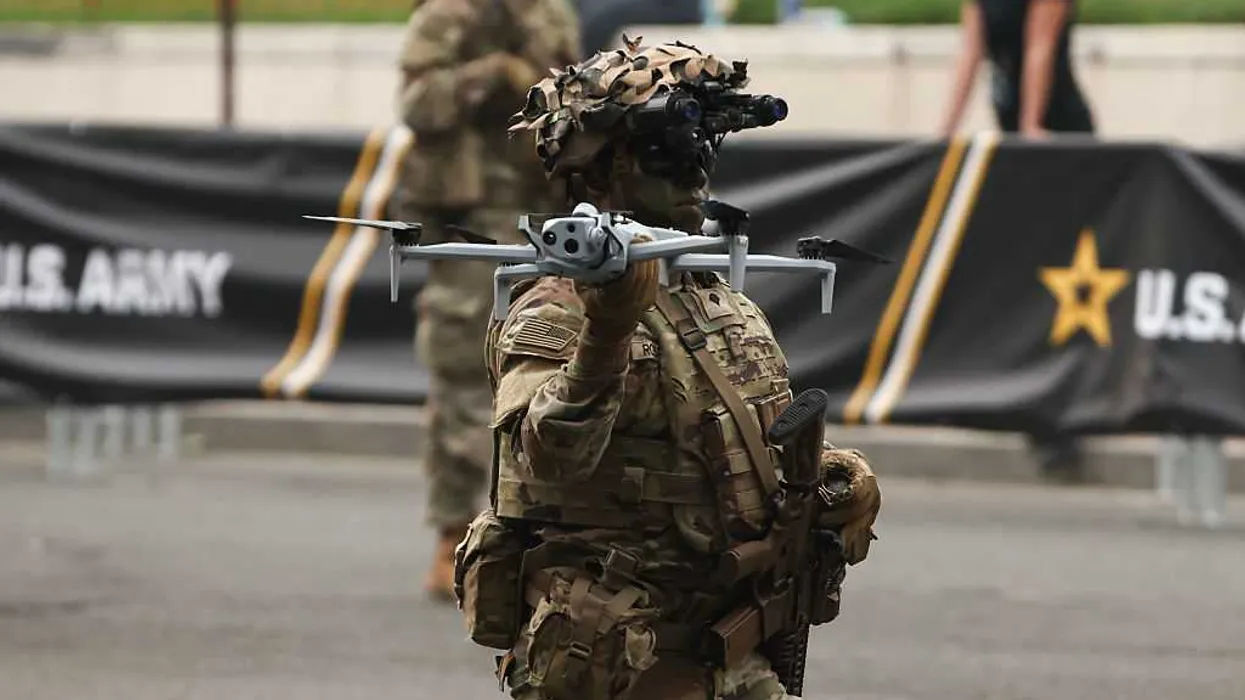
In 2025, the nomenclature caught up with the reality. For decades, the United States had operated under the fiction of a Department of Defense, a name that suggested protection, reaction, and a reluctance to engage. When Secretary Pete Hegseth signed the memoranda that would redefine the American military for the algorithmic age, the letterhead had changed. It was the Department of War again.
The revival of the old title was not merely cosmetic. It was an unapologetic signal, a shift from a defensive posture to a mission-focused one. Then between late 2025 and early 2026, Hegseth released a flurry of new memos announcing that the United States intended to become an “AI-first” war-fighting force. The language was clipped, urgent, and devoid of the hand-wringing that usually accompanies the introduction of new lethal means. The department now treats AI not as a support tool but as a core element of warfare, intelligence, and organizational power.
There is a simulation engine that alludes without irony to Orson Scott Card’s novel about child soldiers fighting insectoid aliens.
Reading through these documents, one is struck by the anxiety of the “algorithm gap,” which echoes the “missile gap” of the Cold War, with the stakes shifted from megatonnage to processing speed. The prevailing sentiment is that falling behind an adversary’s AI capabilities would be as catastrophic as falling behind in nuclear weapons. The Department of War does not intend to be a laggard. “Speed and adaptation win,” one memo states.
To achieve this speed, the Department has declared war on its own bureaucracy. The memos speak of a “wartime approach” to innovation, dismantling the risk-averse culture that has defined Pentagon procurement for half a century. The endless committees and boards have been dissolved, replaced with a “CTO Action Group” empowered to make quick calls. The ethos is that of Silicon Valley, grafting Mark Zuckerberg’s call to “move fast and break things” onto an institution whose business is to break things in a more literal sense.
The specific initiatives, what the Department calls “Pace-Setting Projects,” read like the chapter titles of a science-fiction novel. There is “Swarm Forge,” a project designed to pair elite war-fighters with technologists to experiment with drone swarms. There is “Ender’s Foundry,” a simulation engine meant to war-game against AI adversaries, a name that alludes without irony to Orson Scott Card’s novel about child soldiers fighting insectoid aliens. There is “Open Arsenal,” which promises to turn intelligence into weapons in hours rather than years.
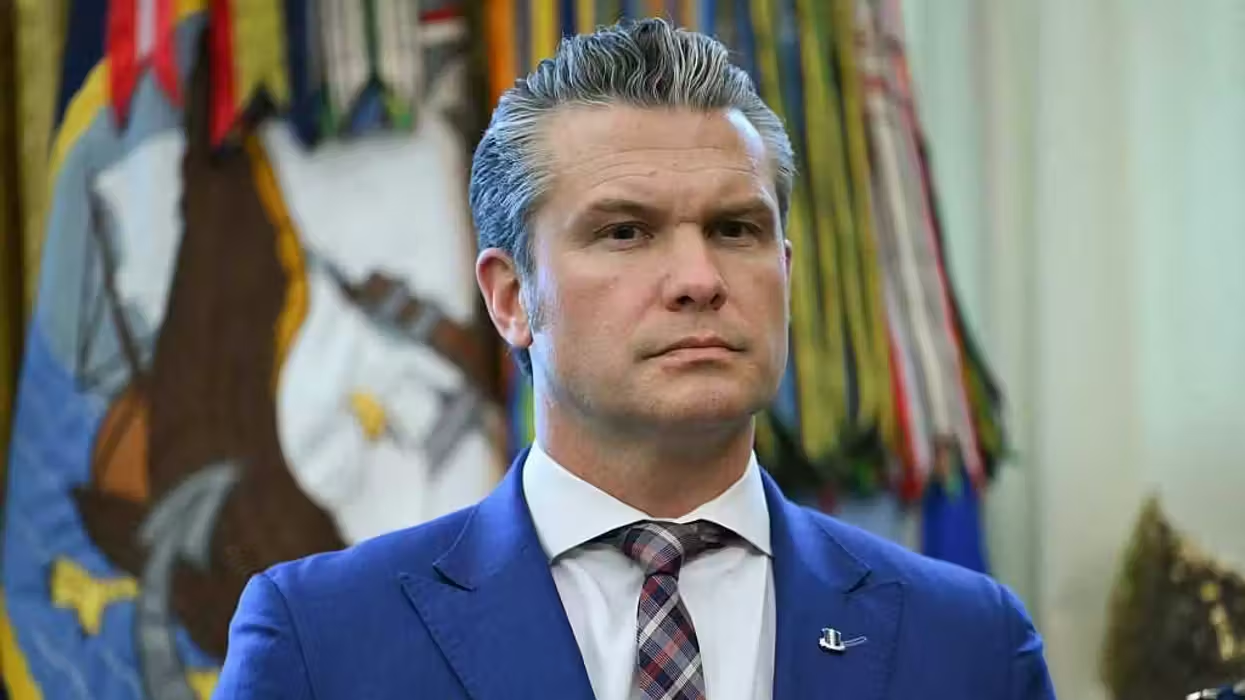 Photo by ANDREW CABALLERO-REYNOLDS / AFP via Getty Images
What is being built here is “civil-military fusion,” a concept the Chinese have long championed and which the United States is now adopting with a convert’s zeal. The Department is actively courting the private sector, mentioning commercial AI models such as Google’s Gemini and xAI’s Grok. It is bringing in tech executives to run the show, with a new chief technology officer empowered to clear bureaucratic blockers.
The transformation is not limited to the battlefield but permeates the “enterprise,” a sterile word for the three million personnel who make up the Department’s nervous system. The vision is total: Under a program called GenAI.mil, every analyst, logistician, and staff officer will be issued a secure AI assistant to draft reports and code software. The goal is to embed AI systems across war-fighting, intelligence, and support functions until the distinction between soldier and data processor dissolves. The focus is on “decision superiority,” out-thinking the opponent at every turn.
The drive for decision superiority leads to a profound shift in the role of human judgment. The memos describe “Agent Network,” a project to develop AI agents for battle management “from campaign planning to kill chain execution.” They speak of “interpretable results,” a concession to the idea that humans should know why the machine decided to fire. The momentum is toward “human on the loop,” in which a human may abort an attack, rather than “human in the loop,” in which the human must initiate it. We are entering an era of “hyper-war,” in which AI systems could escalate a conflict in seconds, before a human commander can pour a cup of coffee.
The Department is betting that American ingenuity, harnessed in code, will secure the future, that it can maintain “America’s global AI dominance” through force of will and capital. The memos outline a future in which algorithms join soldiers on the battlefield, data platforms become as crucial as tanks, and decisions are increasingly informed by machines. It is a grand experiment in efficiency. We have decided that if warfare is now a battle of algorithms, we intend to algorithmically outgun the world. The name on the building has changed to reflect the reality: We are no longer defending. We are computing the kill.
The families behind our veterans deserve more than once-a-year thanks

Every November, America pauses to thank its veterans. As Thanksgiving approaches — and as we mark Veterans and Military Families Month — it’s worth remembering that real gratitude does not begin in ceremonies. It begins in living rooms, workplaces, and communities willing to listen.
When I returned from Iraq, I believed my mission was complete. I had led soldiers through chaos during the invasion of Baghdad and made it home alive. What I didn’t expect was the second battle: reintegration. Purpose felt less defined. Connection felt harder to find. The uniform came off, but the transition demanded its own kind of discipline.
Service doesn’t end on the battlefield. It continues in the boardroom, the classroom, the town hall — and at the dinner table.
Like many veterans, I learned that coming home isn’t an ending. It’s a transfer of duty.
Service that spans generations
That duty is carried not just by veterans but by the families who stand behind them. A spouse manages a household while absorbing the worry that never quite fades. A child learns resilience from absence. A parent hopes each phone call means his son or daughter is one day closer to coming home — and able to stay.
My son is now a second lieutenant in the Army. Watching him begin his own journey reminds me that service does not stop at the edge of a battlefield. It moves through generations. Families carry it alongside us.
The meaning of gratitude
Thanksgiving offers a natural moment to reflect on gratitude — not the polite version, but the kind that demands something from us.
It demands employers who recognize leadership potential behind a résumé gap.
It demands communities willing to listen before advising.
It demands fellow veterans who know that strength includes accepting help, not just offering it.
Most of all, it demands that Americans see military families not as supporting characters but as central figures in the story of national resilience.
RELATED: Thankful for a capitalist Thanksgiving
 skynesher via iStock/Getty Images
What we owe the next generation
The wars of the last two decades lasted longer than anyone expected. Their consequences will last even longer. We owe it to the next generation — including my son’s — to show that a nation’s strength is not measured only by how it deploys its forces, but by how it welcomes them back.
As we close Veterans and Military Families Month and gather around Thanksgiving tables, we can honor veterans in a simple but meaningful way: not by assuming we understand their experience, but by inviting them to share it. Not by thanking them once a year, but by offering them roles in which their judgment, discipline, and experience make a difference.
Service doesn’t end on the battlefield. It continues in the boardroom, the classroom, the town hall — and at the dinner table.
Another historic peace imminent? Ukraine signals support for altered version of Trump’s peace plan
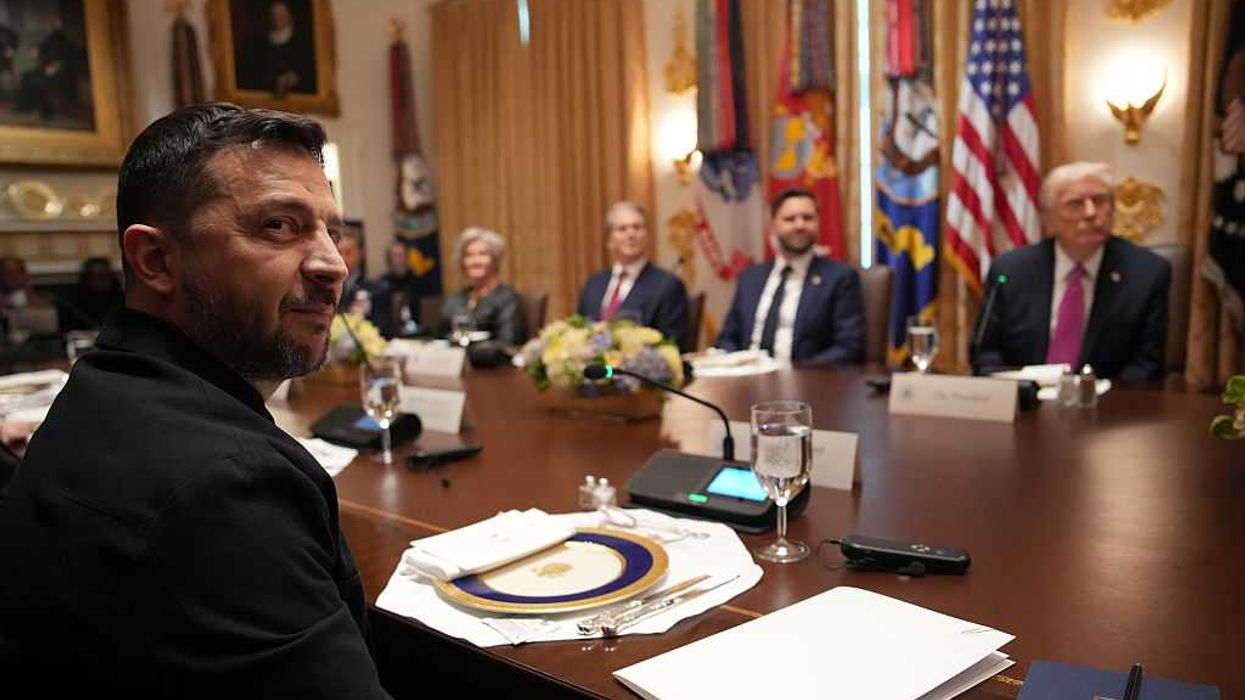
President Donald Trump has in recent months brokered peaceful resolutions between numerous warring parties, including Israel and Hamas; Azerbaijan and Armenia; Rwanda and the Democratic Republic of the Congo; Cambodia and Thailand; and India and Pakistan.
The major peace he campaigned on securing between Ukraine and Russia has, however, proven elusive.
Last week, Ukrainian President Volodymyr Zelenskyy and his government’s representative to the U.N. appeared to reject the fundamentals of the Trump administration’s 28-point plan for peace.
The plan would have: barred Ukraine from NATO, having an army exceeding 600,000 men, and acquiring nukes but provided Kyiv with a NATO-style security guarantee from the U.S.; recognized much of the occupied territory in eastern Ukraine as Russian; set the stage for an American-backed rebuilding of Ukraine; and granted full amnesty to all parties involved in the conflict.
‘Don’t believe it until you see it.’
While apparently averse to several of the 28 points, Kyiv has, however, since expressed support for an altered version of the peace plan, the details of which Trump and Zelenskyy — who has reportedly not authorized anyone but himself to discuss territorial matters — may soon iron out at the White House.
An official briefed on the negotiations told the Washington Post that Trump’s peace plan had been reduced from 28 points to 19 points by Monday. A European official briefed on the talks suggested that some of the provisions concerning European security didn’t make it to the new draft.
Ukrainian delegate Oleksandr Bevz noted, “Many of the controversial provisions were either softened or at least reshaped” to get Kyiv on board.
RELATED: Zelenskyy’s hold on power uncertain as criminal charges reach his inner circle
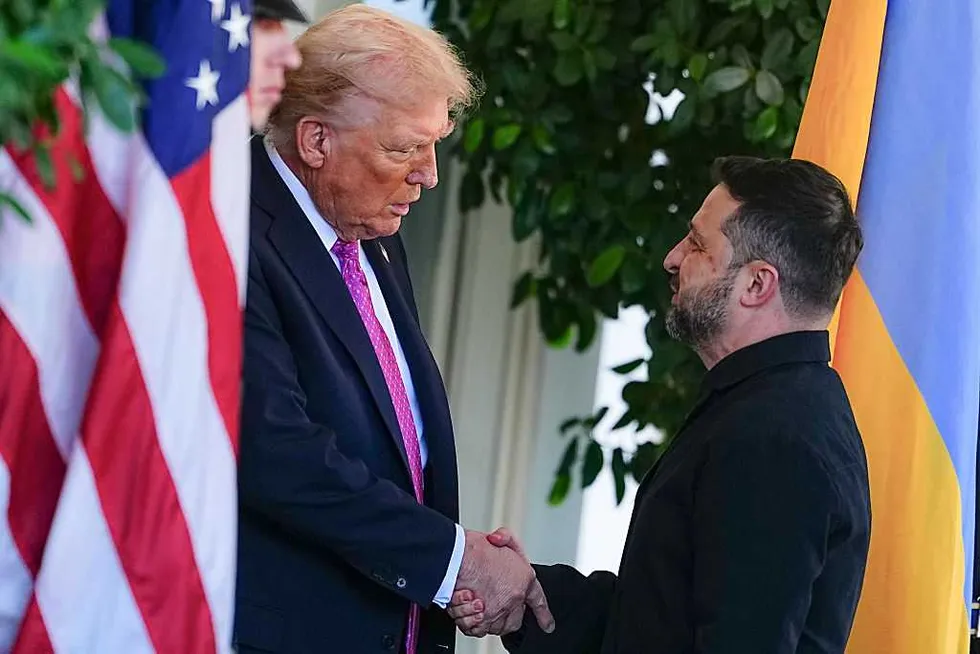 Photographer: Aaron Schwartz/Sipa/Bloomberg via Getty Images
After Ukraine’s delegation returned from Geneva, where they met over the weekend to discuss the American peace proposal with representatives of the Trump administration, Zelenskyy said in a statement on Monday evening that “now the list of necessary steps to end the war can become doable. As of now, after Geneva, there are fewer points — no longer 28 — and many of the right elements have been taken into account in this framework.”
“Our team has reported on the new draft of steps, and this is indeed the right approach,” continued Zelenskyy. “I will discuss the sensitive issues with President Trump.”
Echoing Zelenskyy, Ukraine’s national security secretary Rustem Umerov announced that the U.S. and Ukrainian delegations “reached a common understanding on the core terms of the agreement discussed in Geneva.”
Amid U.S. Army Secretary Daniel Driscoll’s meetings on Tuesday with Russian and Ukrainian officials in Abu Dhabi, which a spokesman said were “going well,” a U.S. official told CNN that “the Ukrainians have agreed to the peace deal. There are some minor details to be sorted out, but they have agreed to a peace deal.”
White House press secretary Karoline Leavitt confirmed on Tuesday that “tremendous progress towards a peace deal” has been made, adding that “there are a few delicate, but not insurmountable, details that must be sorted out and will require further talks between Ukraine, Russia, and the United States.”
Secretary of State Marco Rubio effectively said the same thing days earlier, adding, “I honestly believe we’ll get there.”
During a press conference with the Belarusian foreign minister on Tuesday, Russian foreign affairs minister Sergey Lavrov noted that Moscow “welcomed” the 28-point plan but will consider the “interim” plan produced by Washington, Kyiv, and the Europeans in the coming days.
Lavrov noted, however, that Russia expects the peace plan to adhere to the terms President Vladimir Putin discussed with Trump during their August summit in Anchorage.
“We are not hurrying. We’re not pushing our American counterparts. We have waited a long time since Anchorage,” said Lavrov. “We are only reminding them that we stick to those agreements.”
Lavrov added, “If the spirit and letter of Anchorage is erased in terms of the key understandings we have established then, of course, it will be a fundamentally different situation.”
Trump noted in a Truth Social post on Monday, “Is it really possible that big progress is being made in Peace Talks between Russia and Ukraine??? Don’t believe it until you see it, but something good just may be happening. GOD BLESS AMERICA!”
Like Blaze News? Bypass the censors, sign up for our newsletters, and get stories like this direct to your inbox. Sign up here!





