

Category: Education
When Youth Sports Stopped Being Fun
Americans love their sports — always have, always will. Back in the good ol’ days, the seasons changed, and our…
Meet the American Educational Organization Accrediting CCP Bureaucrats
In 2018, the sole accrediting body for public service programs in the United States held a workshop for schools seeking accreditation. Diversity and inclusion were all the rage in higher education, and the Network of Schools of Public Policy, Affairs, and Administration (NASPAA) spent much of the workshop explaining how schools were expected to pursue those ideals, which it described as “public service values.”
The post Meet the American Educational Organization Accrediting CCP Bureaucrats appeared first on .
The Spectator P.M. Ep. 168: University Prioritizes Hot Tubs, Steak House, and ‘Life Skills’ Over Traditional Academics
High Point University proclaims itself to be a “premier life skills university” that helps students obtain a job while providing…
Boys Need More Male Teachers
According to the American Institute of Men and Boys, men now account for just 23 percent of all U.S. elementary…
Maryland school district allegedly indoctrinates 7th graders about gender: ‘Girl, boy, both or neither’
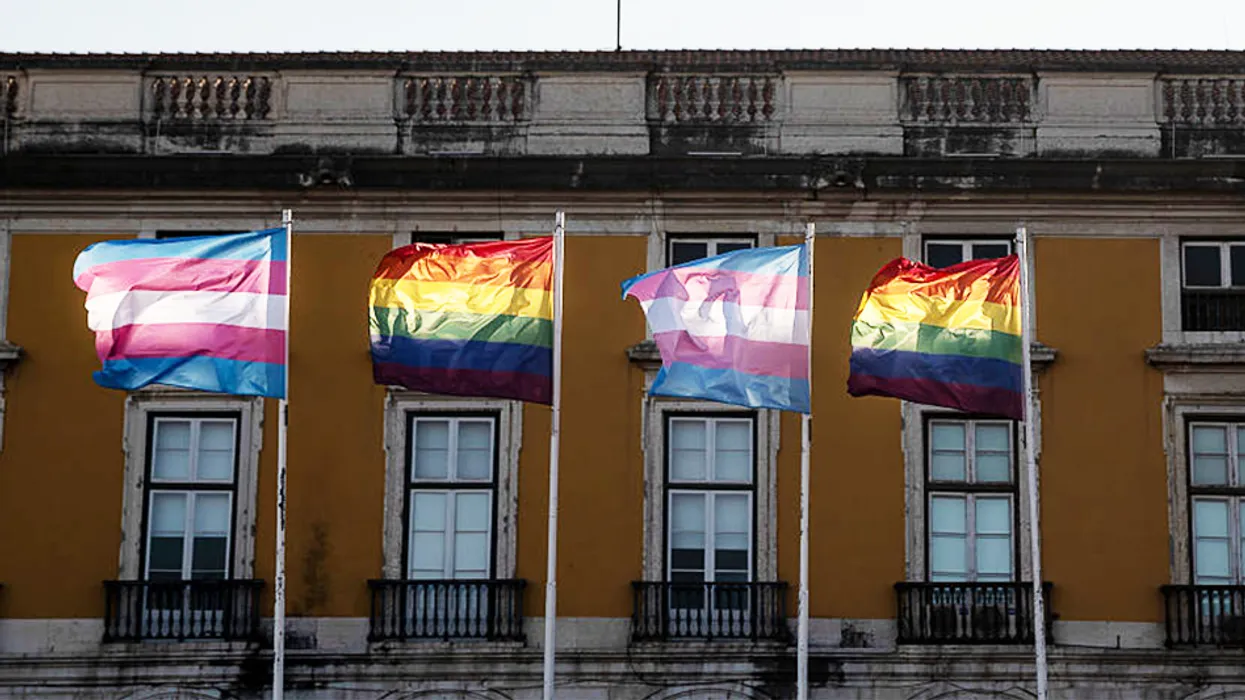
A middle school lesson is reportedly promoting the idea of “gender identity” and being “assigned” sex at birth.
Montgomery County Public Schools in Maryland allegedly has an assignment designed for grade-seven students that pulls directly from pro-transgender sources.
‘Embrace family diversity, create LGBTQ+ and gender inclusive schools.’
The alleged assignment, provided to Defending Education, asks students to match a list of terms with a list of possible definitions. The terms are “sex assigned at birth,” “gender identity,” “transgender,” “gender expression,” and “cisgender.”
One of the definitions allegedly given refers to a person’s “internal sense of being male, female, or transgender,” further explaining that is “how you feel. Girl, boy, both or neither.”
Another definition refers to an “individual’s presentation,” which includes appearance and clothing as they relate to how the individual communicates “aspects of gender or gender role,” according to a screenshot on Defending Education’s site.
A person’s sex is also referred to as what “doctors/midwives” assign to someone when they are born, while gender identity is “how you feel,” the alleged exercise indicated.
Four of the definitions directly cite a program from the Human Rights Campaign, an organization that promotes transgender surgery and hormone therapy for children.
The lesson references WelcomingSchools.org, which describes itself as the “most comprehensive bias-based bullying prevention program” in the United States, meant to provide “LGBTQ+ and gender inclusive professional development training, lesson plans, booklists and resources” for educators who have access to children.
“We uplift school communities with critical tools to embrace family diversity, create LGBTQ+ and gender inclusive schools, prevent bias-based bullying, and support transgender and non-binary students,” the website says.
Erika Sanzi, senior director of communications for Defending Education, told Blaze News in a statement that the apparent vocabulary lesson requires students to “buy into an ideology that many reject.”
“Does MCPS require that students subscribe to gender ideology in order to fulfill the district’s family life requirements for middle schoolers? Because if so, that seems like viewpoint discrimination in a public school,” Sanzi stated.
At the same time, MCPS recently introduced harsher penalties into its code of conduct, which include suspension and expulsion for incidents involving drug possession, for example.
At least one local activist group said the new rules were detrimental to “black and brown students.”
“When we talk about intersecting into experiences of these black and brown students, they intersect to then lead them to be out of the classrooms, which means less time with academic study,” said Dorien Rogers from Young People for Progress, a Maryland group.
As reported by WJLA-TV, Rogers was also disappointed that the code of conduct was written only in English. The school system told WJLA that the new rules would soon be available in six languages.
MCPS did not respond to multiple requests for comment from Blaze News.
Like Blaze News? Bypass the censors, sign up for our newsletters, and get stories like this direct to your inbox. Sign up here!
A Dome for Man
I have just finished re-reading Irving Stone’s historical novel, The Agony and the Ecstasy, on the life and times of…
Rebuild the republic one classroom at a time

The shocking assassination of Charlie Kirk at Utah Valley University puts an exclamation point on the degraded state of reasoned debate in America.
Like many in the last month or so, I’ve found myself doing a deep dive into Kirk’s YouTube channel, watching debate after debate. You learn something from watching them in full: Kirk was willing to talk to anybody, and he always brought liberals to the front of the line.
We must teach our students to be virtuous, both individually and politically.
He was pugnacious at times, but always civil. His interlocutors sometimes resorted to ad hominem attacks, and their arguments often collapsed under a steady stream of his questions and retorts. Time after time, these students lost the debate with Kirk because they simply didn’t know enough.
‘Action civics’
What causes a person to stake out a position with such confidence before mastering the evidence to support it? For many of the students who challenged Kirk, the answer is “action civics.” This pedagogical theory holds that the highest form of civic participation is protest rather than discussion. Its result is thoughtless grandstanding or worse. The antidote to this state of affairs is classical education rightly understood.
When it comes to civics, knowledge is necessary but not sufficient. Civic life requires more than a grasp of American history and government, as important as those things are. It requires us to be people formed by practice in the habit of reasoned deliberation — people who know how to disagree and be disagreed with and who are willing to change their opinions when they learn something.
Political speech — reasoned discussion about the good within a regime — allows us to improve our opinions by sharing them with others and refining them through conversation and disagreement. Civic education divorced from these practical virtues produces either performative activism or feckless intellectualizing.
These virtues can be cultivated within the classroom through classical education. Reading and discussing works from Aristotle to the Federalist allows students to wrestle with enduring questions about justice, rights, and the good life. They learn not only to discern what is right but also to pursue it amid the complexities of a changing world.
Yet the real formation comes in seminars and Socratic discussions, which are laboratories of civic practice.
After years outside of the classroom, this semester I began teaching a course on moral and political philosophy to 11th graders. These students are young, but after years in a classical school, they have some real learning under their belts. The task this year is to develop within them the habits necessary for a real seminar conversation, with Socratic discussion three days a week and a full-blown seminar on the other two.
Running a seminar
In a well-run seminar, teachers merely provide a question about a great work of literature, history, or philosophy, intervening to guide the discussion only rarely. As in life, no authority swoops in to give the right answer and make decisions for everyone else. It’s the students who lead and who learn to find their way together.
A properly run seminar allows students to disagree and be disagreed with. They are forced to humble themselves before an author and a text, to scrutinize their own opinions, and to discard error in favor of knowledge.
But it isn’t a lawless environment. Students in a well-run seminar know that they are to speak about the text and only the text. Every comment must respond to the previous speaker. Non sequiturs are not allowed, and the students don’t interrupt each other (we are still working on that last one).
If we want a citizenry capable of sustaining liberty, we cannot settle for activist training without understanding, nor abstract lectures without practice.
When they do speak, they have to ground their statements in an argument drawn from the text. If they don’t have an interpretation of the text to offer, they can ask a thoughtful question, which is often just as beneficial to the conversation as a well-reasoned argument.
Disagreement in the seminar room is an opportunity to learn that disputing someone’s argument doesn’t mean impugning their character. Most teenagers are terrified to disagree with someone their own age and even more terrified to be disagreed with. But after a few weeks, they develop thicker skin. They learn to think more about the substance of their argument and less about their social standing.
RELATED: How Charlie Kirk’s life shows the power of self-education
 skynesher via iStock/Getty Images
When the arbiter of the debate is the text itself, everyone knows that success means advancing the clearest and most correct reading. And when the text is rich and deep, it takes time, conversation, and disagreement to interpret it well.
Disagreement is an opportunity for clarification. In a well-developed seminar, it’s welcomed. What matters is not superficial civility, but the willingness to examine and revise our opinions in light of reason and fact, to argue from truth rather than feeling, and to labor toward a common understanding.
Dare to disagree
In a way, these classroom discussions on Plato and Virgil, Swift and Shakespeare, are a crash course in practical civics. Not protest, not theory, but character formation through dialogue, study, and experience — all preparing students not only to understand their country but to participate in it responsibly. In a way, classical education creates more people like Charlie Kirk.
If we want a citizenry capable of sustaining liberty, we cannot settle for activist training without understanding, nor abstract lectures without practice. We must teach our students to be virtuous, both individually and politically. Only then will they be capable of self-government — not as activists or spectators, but as citizens.
Editor’s note: This article was published originally at the American Mind.

How the Classical Education Movement Is Rescuing a Lost Generation
Last September, professors at elite American colleges finally began to admit what has been apparent for the last dozen years:…
United Nations Finally Recognizes Homeschooling — By Demanding Government Ruin It

 Homeschooling embodies the basic American principles of self-governance, freedom, and the presumption that families know what is best for their children.





