

Category: Entertainment
‘The Case for Miracles’: A stirring road trip into the heart of faith

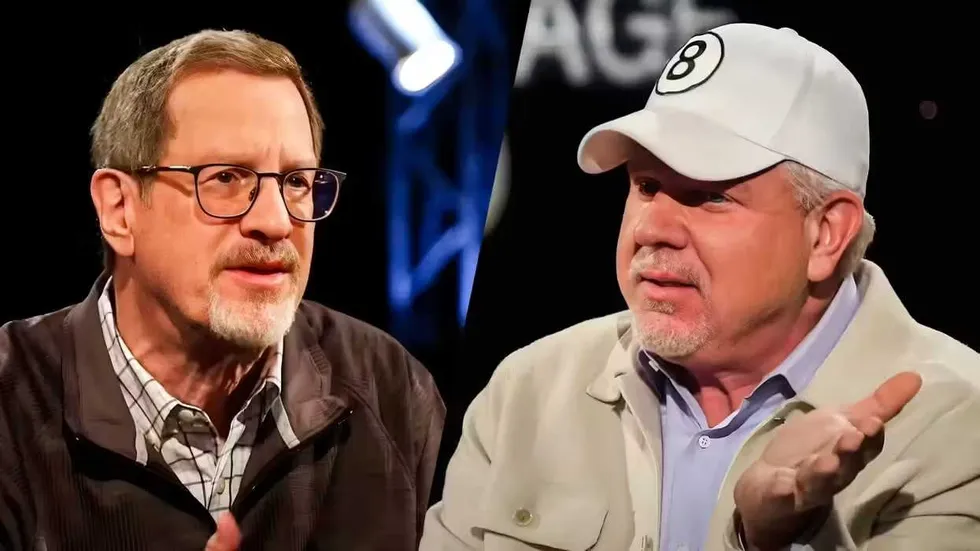
Lee Strobel doesn’t mind those who question his midlife Christian conversion.
Strobel’s shift from an atheist to rock-ribbed Christian came to life in 2017’s “The Case for Christ.” The film, based on his life story, showed how Strobel’s efforts to debunk the resurrection of Jesus Christ as the legal editor of the Chicago Tribune had the opposite effect.
‘There is evidence that points — compelling [evidence] — to the truth of biblical miracles and contemporary supernatural encounters. I’m not afraid of that.’
He says his shoe-leather reporting confirmed the resurrection. Looking back, Strobel tells Align his change of heart ruffled some professional feathers.
“After I became a Christian at the Chicago Tribune, somebody told me later that they overheard somebody in the newsroom say, ‘What happened to Strobel? He became a Jesus freak, like, overnight,’” Strobel says, laughing.
Miracle miles
Now, Strobel is back on the big screen with “The Case for Miracles,” in select theaters Dec. 15-18 via Fathom Entertainment. The film finds Strobel and director Mani Sandoval hitting Route 66 in an old Ford Bronco to swap stories and reflect on modern-day miracles.
Among the most poignant? A young woman with severe multiple sclerosis who is able to leave her hospice bed following a crush of community prayers.
It’s part travelogue, part documentary, and Strobel only wishes he had time to share even more remarkable stories on-screen.
“We had to leave out so many good ones. … We had another case documented by medical researchers … a guy who was healed from a paralyzed stomach,” he says. “He was prayed for, felt an electric shock go through him, and for the first time was able to eat normally.”
“He’s fine to this day,” he adds. “It’s the only case in history of its kind of [someone] spontaneously healed from this stomach paralysis.”
Meeting in the middle
Strobel says the film offers two very different perspectives on modern-day miracles given the key players involved.
“Mani grew up in a Pentecostal home. There was an anticipation that the miraculous would take place,” he says. “I was an atheist [growing up].”
The film is based on Strobel’s 2018 book of the same name, but he hopes the Fathom Entertainment release reaches a broader audience beyond his loyal readers.
“I think that cinema is the language of young people,” he says. “If we want to share this account, this evidence of the miraculous with a young generation, what better way than on the big screen? Among younger people, there’s something about a film that register deeply with them. … We should seize opportunities to communicate to those outside the faith.”
RELATED: Lee Strobel’s top supernatural stories to challenge your atheist friends
 Blaze Media
Creative control
And the timing couldn’t be better. Faith-friendly films and TV shows are all the rage in today’s pop-culture landscape. Think the groundbreaking series “The Chosen,” along with the upcoming “Passion of the Christ” sequel from Mel Gibson.
Both Netflix and Prime Video are producing faith-friendly content, and recent hits like “Jesus Revolution” flexed the power of spiritual stories.
“It satisfies me on a creative level when I see films that deal with very important topics, like the existence in God, in a way that’s creative and that aren’t going to make people cringe but sit forward in their seat and anticipate what’s coming next,” he says.
And that creative explosion has only begun, Strobel predicts.
“In three, four, or maybe five years, we’re gonna see stuff where we say, ‘Oh, I never thought of doing that,’” he says of the genre.
The incredible made credible
Strobel isn’t a filmmaker by trade. He’s a busy writer, having penned more than 40 books that have been translated into 40 languages.
Strobel, like the late Charlie Kirk, doesn’t mind interacting with skeptics on- or off-screen. He welcomes it. The book on which “The Case for Miracles” is based starts with an extended dialogue with noted atheist Michael Shermer.
Strobel eventually befriended Shermer, who has a cameo in the film version of “Miracles.”
“I let him have his say,” he says of their early exchanges. Strobel is confident in his faith and the miracles he sees flowing through it.
“There is evidence that points — compelling [evidence] — to the truth of biblical miracles and contemporary supernatural encounters,” he says. “I’m not afraid of that.”
For Strobel, a miracle requires four key elements:
- Solid medical documentation;
- Multiple, credible eyewitnesses who have no motive to deceive;
- A lack of natural explanation; and
- An association with prayer.
Meet all four requirements, he says, “and maybe something miraculous is going on.”
Strobel doesn’t mind that some of his former colleagues may question his religious conversion. He’s comforted by the fact that he has company in that regard.
“I’ve seen so many journalists coming to faith. … I think God is stirring something in the culture right now,” he says.

‘Bell’-buster: Joy Reid tries to cancel classic Christmas ‘Jingle’
“Truth. Justice. Whatever.”
Hollywood’s disdain for America is official with the poster tagline for this summer’s “Supergirl.”
‘I don’t care for Owen Wilson, and I don’t care for Matthew Lillard.’
How the industry embraced the problematic “girl” part of the name is a debate for another day. Just know that Hollywood hasn’t been cozy with the classic Superman slogan, “Truth, justice, and the American way,” for some time. The 2006 Brandon Routh reboot infamously ditched that last part, as did this year’s James Gunn version.
Now to show us that this Supergirl can’t even, the phrase is purposely imploded. And to be fair, the results come off better here, if only because the newest Supergirl is a rebel without a cause (or home planet).
Those offended by ditching “the American way” may be more outraged by the accompanying trailer. It looks as gloopy as this past summer’s “Superman” reboot, but with half the gravitas and action.
Prediction: Superhero fatigue goes nuclear in 2026 …
Jay Zzzzzz
Slackers never grow up. They just stay in their parents’ basements indefinitely.
That isn’t true for Jay and Silent Bob. The slacker heroes from Kevin Smith’s imagination refuse to call it a career. They’ve appeared in two features as the key attractions and several Smith movies like the “Clerks” franchise and “Mallrats.”
Now Smith is warning us there’s a third Jay and Silent Bob film in the works. “Jay and Silent Bob: Store Wars” will start production next year. But will anybody show up?
“Jay and Silent Bob Reboot” made under $5 million in 2019. Smith’s last film, “The 4:30 Movie,” didn’t earn enough for BoxOfficeMojo to include its figures.
Smith may have come of age during the ‘90s via “Clerks” and “Chasing Amy,” but his devoted flock has done nothing but shrink since then. Bigly.
Smith, 55, and co-star Jason Mewes, 51, may seem too old to keep cracking pot jokes, but Smith deserves credit for finding enough cash in his sofa to keep his franchise afloat …
Pulp Friction
Quentin Tarantino can’t get criticism out of his system.
The former video store clerk was set to make “The Movie Critic” his 10th and final film, but he got cold feet and went back to the proverbial drawing board. Since then, he’s been criticizing … everything, including specific movie stars.
That’s an unofficial no-no in celebrity circles, but Tarantino is out of you-know-whats apparently.
The director recently slammed actor Paul Dano (“The Batman,” “Love and Mercy”), dubbing the actor “weak sauce” and worse, as part of that now-infamous “Bret Easton Ellis Podcast” interview.
Hollywood stars rallied around Dano, saying he was far better than what the mercurial director dubbed him. Tarantino also shredded two more stars as part of that conversation.
“I don’t care for Owen Wilson, and I don’t care for Matthew Lillard.”
Wilson has yet to publicly respond, but Lillard did just that at a recent Comic-Con-style event, the GalaxyCon in Columbus, Ohio.
“Eh, whatever. Who gives a s**t,” Lillard said before revealing that he actually does give a bleep.
“It hurts your feelings. It f**king sucks,” he said. “And you wouldn’t say that to Tom Cruise. You wouldn’t say that to somebody who’s a top-line actor in Hollywood.”
So far, Lillard’s former co-star Scooby Doo has no comment …
RELATED: These are the definitive recordings of 35 favorite Christmas carols: Don’t argue, just listen
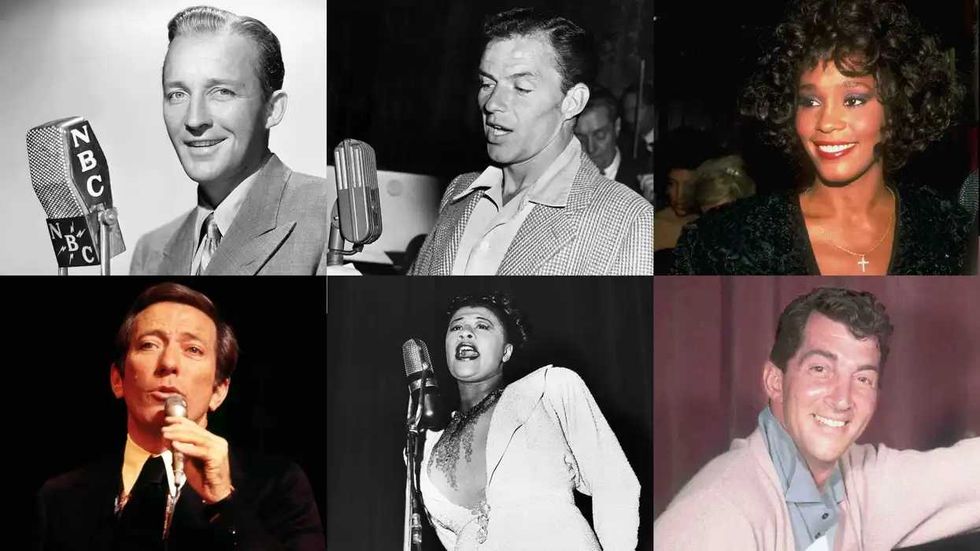 Photo credits, clockwise from top left: NBCU Photo Bank/NBCUniversal via Getty Images via Getty Images; Hulton-Deutsch Collection/CORBIS/Corbis via Getty Images; Robin Platzer/The LIFE Images Collection via Getty Images/Getty Images; Silver Screen Collection/Getty Images; George Rinhart/Corbis via Getty Images; David Redfern/Redferns
‘Jingle’ jerk
The war on “Baby, It’s Cold Outside” is over, and the good guys won. The song continues to play every Christmas season despite a woke attempt to cancel it. The less problematic “remake” by John Legend and Kelly Clarkson was quickly forgotten.
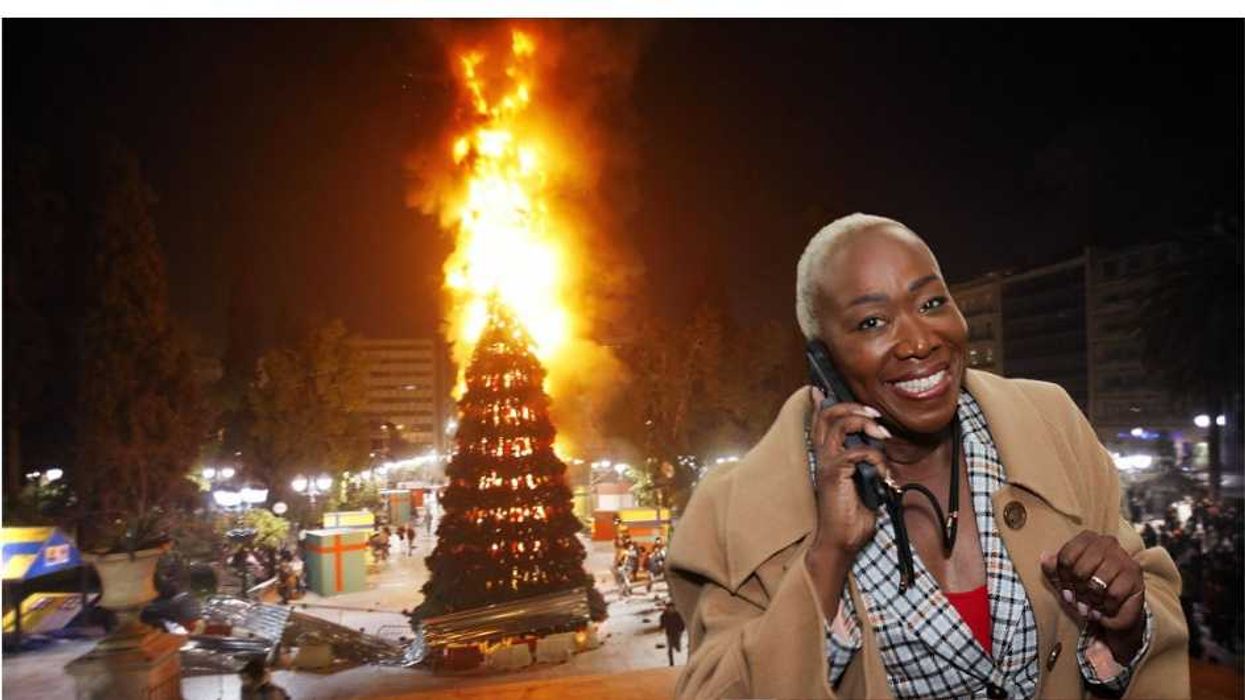
Now former MSNBC host Joy Reid is declaring war on … “Jingle Bells.” And you’ll never guess why. Just kidding.
The song’s writer, James Lord Pierpont, allegedly penned the ditty for racially charged reasons, according to Reid. To her credit, if anyone knows about racially charged topics, it’s a former TV personality who sees racism around every corner.
To her, Elvis Presley’s nickname, “The King,” is racist.
She used a Massachusetts plaque as her “proof” of the song’s racial components, along with Pierpont’s days fighting for the Confederacy. The song’s lyrics appear as benign then as they do now.
Maybe she could record her own version of the song, a la Legend and Clarkson, and watch it follow eight-track tapes, pagers, and MSNBC into the dustbin of history.
Dinesh D’Souza’s new documentary faces anti-Zionism head-on
I must admit to having a complicated relationship with Dinesh D’Souza’s documentaries.
As much as I have enjoyed several of them, I find that they falter in a few ways: They often lack staying power, offering little incentive to return to them after the moment has passed; they are too self-referential — filtering every issue through D’Souza’s own perspective; and they are preoccupied with energizing sympathetic audiences rather than persuading skeptical ones.
Where the film is likely to receive its fiercest pushback is on the subject of eschatology — the theology of the end times.
This last flaw is especially frustrating. Catering to the conservative base is easy, but with D’Souza’s resources and backing, his films could be far sharper — and far more enduring — if they focused on timeless themes rather than re-litigating the 2020 election or attacking whoever happens to be running for president that year.
Chasing the ‘Dragon’
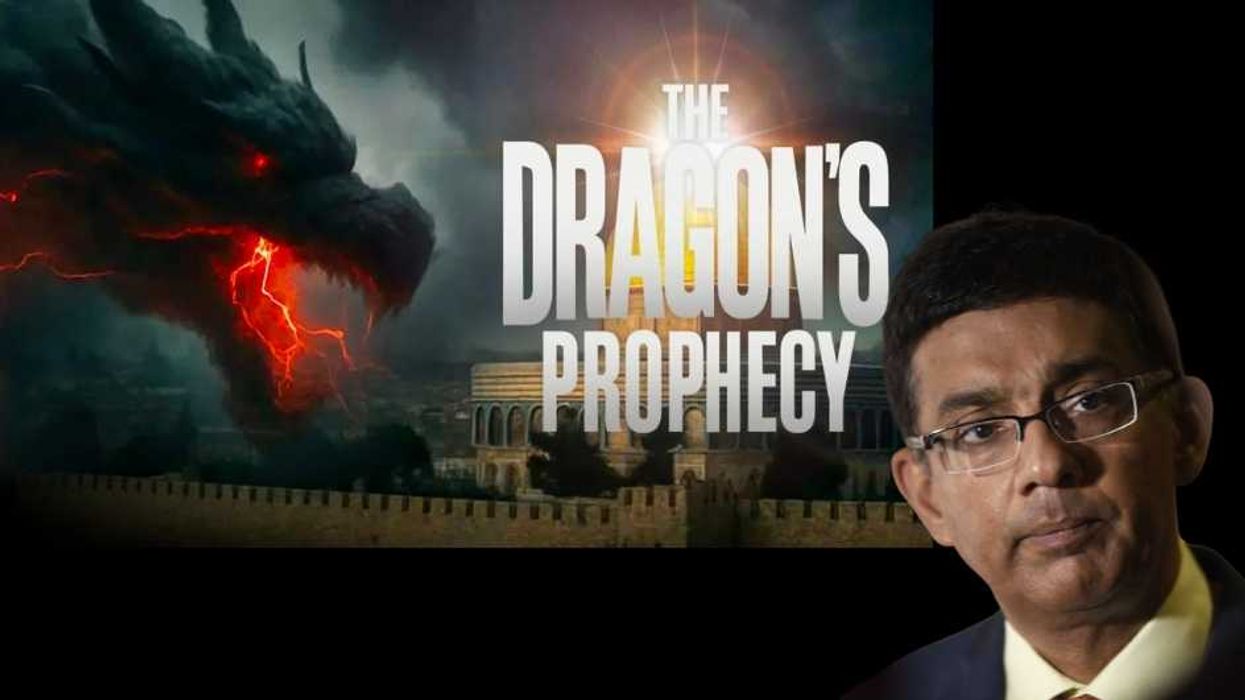
It was with this in mind that I went into D’Souza’s newest effort, “The Dragon’s Prophecy.” A loose adaptation of the Jonathan Cahn book of the same name, the Angel Studios production examines the fallout of the October 7 terrorist attacks and the subsequent two-year war between Israel and Hamas (which effectively ended with a ceasefire on October 10).
Sharpness, at least, is not a problem this time. The film arrives at a harrowing moment. Tucker Carlson is condemning “Christian Zionism” as heresy; New York City has just elected a mayor who wants to arrest the prime minister of Israel; and bipartisan resentment toward American Jews hasn’t been this pronounced since Pat Buchanan implicitly blamed them for supporting the Gulf War.
Anti-Zionism — and its adjacent anti-Semitism — is enjoying a fashionable resurgence, while support for the Israeli government sits at an all-time low.
D’Souza confronts these trends head-on. He calls out Carlson — as well as the far-left bloc of House Democrats known as “the Squad” — by name, even integrating footage from Carlson’s combative June interview with Ted Cruz. The result is a forthright defense of Israel, one that bluntly characterizes Hamas as rapists, murderers, and terrorists — and depicts the group’s atrocities in unflinching detail, including phone calls in which militants boast to their parents about their killings.
Intentional shock
It’s a grisly watch. The film includes insurgents shooting dogs and civilians, and it lingers on the aftermath of violence. But the shock is intentional. As Ambassador Mike Huckabee tells D’Souza, the war is “an eternal battle between good and evil,” with Israel on the side of the angels and Hamas aligned with “the Dragon.”
Amid this devastation, D’Souza wanders the Holy Land and laments that Israel is a place where “nothing is ever solved or resolved,” a region with “no solutions and no idea what the problems even are.” Yet his moral clarity never wavers. He even calls the construction of the Islamic Dome of the Rock on the Temple Mount “the true colonialism.”
His mission is to locate meaning in the conflict. To that end, he speaks with Jewish victims, archeologists uncovering evidence of ancient Israelite history, and Prime Minister Benjamin Netanyahu, who uses the occasion to swat at his American critics and to praise Donald Trump.
Disputed dispensation
Where the film is likely to receive its fiercest pushback is on the subject of eschatology — the theology of the end times.
Because D’Souza’s target audience is predominantly Christian, the most vocal critics may be anti-dispensationalists, whose views have become increasingly common among Catholics and mainline Protestants. They correctly note that dispensationalism is a 19th-century American theological development and that the popular notion of a “rapture” is relatively recent.
As the Protestant theologian Brian Mattson writes, “In the grand historical sweep of Christian theology, Dispensationalism is a new arrival.” He explains that its architects argued that salvation unfolds across distinct dispensations, meaning that God’s promises to Israel remain intact for ethnic Jews even as the New Testament opens salvation to Gentiles. “God has two separate ‘tracks’ for the salvation of humanity,” he writes. Thus the national promises to Israel persist in perpetuity.
This is the framework behind the “Left Behind” franchise — 16 books and five films — and it places the modern state of Israel at the center of Revelation in a way that traditional Christian readings do not.
There are legitimate biblical critiques of dispensationalism, just as there are bad-faith motives for attacking it. Mattson notes that many Gen Z “America First” Catholic converts now regard Israel as an unnecessary “foreign entanglement,” while others deploy “heresy” language as a thin veil for anti-Semitism.
RELATED: Haunting play ‘October 7’ lets Hamas terror survivors speak
 Phelim McAleer
End-times evidence
Still, D’Souza’s film is thoroughly dispensationalist. Israel’s present turmoil is portrayed as evidence that the end times are near, that evil is intensifying, and that God is making Himself more visible through signs and miracles. The fate of Israel, in this reading, is inseparable from the fate of the world.
The film’s second half is a series of interviews with Israeli archeologists who discuss evidence for figures like King David and Pontius Pilate, treating their discoveries as confirmations of Scripture. When combined with commentary from a Messianic Jew such as Jonathan Cahn, the Israeli-Gaza conflict becomes a mystical drama between cosmic good and cosmic evil.
That argument rests on a contested theological system. However one responds to the film’s defense of Israel, it must be filtered through the angular lenses of American dispensationalism — a hurdle many viewers may be unwilling to clear.
Centrist appeal
There are smaller criticisms as well: The film appears to lean heavily on AI-generated imagery, which raises its own questions about execution. But in the main, the film is preaching to the broad American center — those who support Israel without belonging to either extreme.
Despite these theological quirks, the film ultimately does something I have long wished D’Souza’s documentaries would do: It speaks clearly and with conviction about an issue that possesses lasting moral weight.
Israel will remain a defining struggle for decades. October 7 is only one chapter of that broader conflict. In taking it on, D’Souza presents a moral argument to a conservative audience that is increasingly drifting from him. Whether one agrees with his conclusions or not, he is operating on the level of enduring questions of faith rather than the transitory skirmishes of electoral politics. For once, he isn’t simply preaching to the choir.
Culture’s great subversion machine has broken down at last
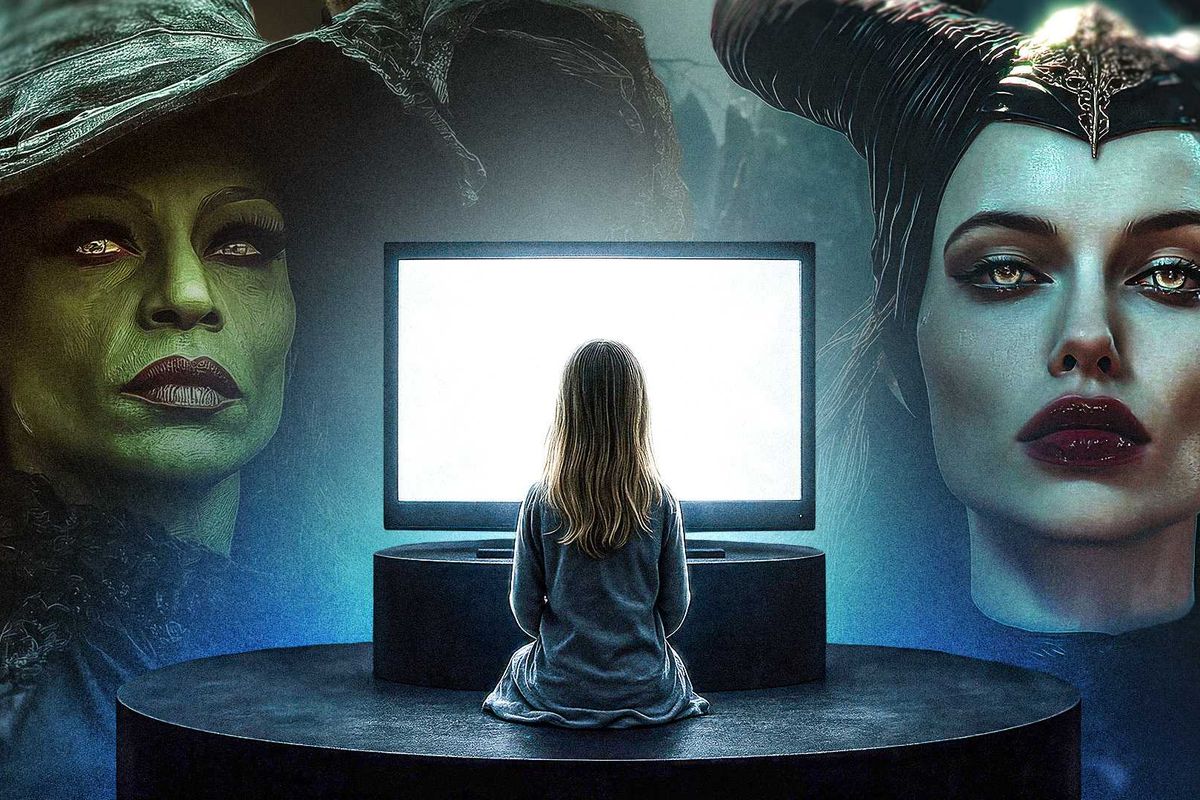
Netflix just announced its next animated children’s film, “Steps,” a Cinderella inversion in which the evil stepsisters are the real heroes. Shocking, I know. The platform is also releasing “Queen of Coal,” a film about a “transgender woman” overcoming the patriarchy in his small Argentinian town.
Reports of the demise of wokeness were premature. Its adherents remain committed to pushing it across every domain of society. What’s notable is how boring it has all become. Deconstruction has been the default mode of modern culture, but it is running out of things to deconstruct. The transgression has lost its power as the taboo fades, and in that exhaustion, something new — perhaps something true — stirs.
The revolution brought destruction, but its exhaustion brings new possibilities.
Some call Friedrich Nietzsche the first postmodernist for announcing that “God is dead.” Whether he was a precursor or ground zero, the genealogy of the movement clearly flows from his work. You can argue about whether he unleashed several horrors into the world or merely acknowledged their arrival, but Nietzsche at least understood the seriousness of his claim. He understood that having the blood of God on your hands was not a clever academic parlor trick — it was monstrous.
With the creator of the universe declared dead, modern man felt free to dismantle the order that once bound him. The sacred bonds of hierarchy were shattered. Postmodernism launched its assault on the good, the beautiful, and the true. And breaking sacred bonds releases immense energy. The leftist revolution that consumed the West drank deeply from it.
The church, the community, the family, marriage, gender roles, gender itself — each time the left destroyed one of these natural structures, it seized the power trapped inside and wielded it against its enemies.
Deconstruction reaches its natural end
But deconstruction has a natural end point. Transgression requires something sacred to violate. As I have written before, you eventually reach the point where there is nothing left to transgress.
When every movie, show, novel, game, and song “subverts” the traditional Christian norm, the subversion becomes the norm. That’s why these Netflix offerings feel so lifeless: They all follow the same trajectory toward the same inversion.
Fifty years ago, critics complained that stories were predictable because the squeaky-clean hero always triumphed. Today they are predictable because the villain is always a misunderstood victim of bigotry who deserves to win. The inversion isn’t clever or subversive. It’s the boring status quo.
The death of who?
So what happens when postmodernism has inverted every hierarchy, mocked every sacred symbol, and squeezed the last drop of power out of attacking Christianity?
The philosopher Alexander Dugin offers a compelling answer. If modernity was the death of God, the end of postmodernism is the exhaustion of subversive secular culture. At that point, new possibilities appear. Instead of proclaiming that “God is dead,” people start asking, “The death of who?” The old order fades so completely that secular man forgets what he was rebelling against.
Meanwhile, the promise of becoming like gods and remaking the world in our own image begins to sour. We see the consequences of rejecting the good, the beautiful, and the true — and find them unbearable.
A postmodern moral wasteland
Postmodern man has lived his entire life in a world re-engineered from the top down by “experts.” When he cast God from His throne, man imagined he would shape the world through his own individual will. But the modern secular man discovers instead a moral wasteland. He finds that he is captive not to his own liberated self, but to darker forces once held at bay by the divine order he dismantled.
He no longer remembers what that order looked like — or why he rebelled against it. And in that moment, the opportunity to rediscover the spiritual returns.
RELATED: We’re not a republic in crisis. We’re an empire in denial.
 Blaze Media Illustration
The revolution brought destruction, but its exhaustion brings new possibilities. People have forgotten the object of their rebellion, and now they look at the miserable world secular man has made. They crave something more.
Order, duty, faith, meaning. These begin to look far more promising than the ugly, pointless chaos modern man created for himself. People once again thirst for a world where the good guy wins and God reigns.
God never died — modernity did
The truth is that God never died. Christ died and rose again. Modern man tried to replace the divine with science and reason, but the Lord is the source of reason itself. He cannot be dethroned by His own creations.
As deconstruction loses its revolutionary energy and becomes stale, the desire to re-embrace sacred order returns. J.R.R. Tolkien captured this when he wrote: “Evil cannot create anything new. It can only spoil and destroy what good forces invented or created.” Eventually evil runs out of things to spoil. A barren, thirsty culture begins searching for the living water only divine truth can provide.
Ready for revival
Modern culture is bankrupt, and everyone feels it. The attempts at transgression now read as hollow conformity to a corrupted system. We are not the masters of our own world or our own truth — and thank God for that.
We do not have to live in the nihilistic abyss we created. The natural order waits just beneath the surface, ready to re-emerge in a cultural revival.
The creative future will not come from a relativistic Hollywood clinging to the corpse of deconstruction. It will come from those willing to embrace the transcendent — from those who understand that the world is held together not by our will to power, but by the truth and beauty of our Creator.
Something to Hold Against Donald Trump
In many ways, Trump is outperforming the expectations many of us had for his second term. Things are going reasonably…





