

Category: Tech
Google’s new plan: To learn everything about you from your online shopping

At some point, Google went from “don’t be evil” to “never mind.” The evidence is in its latest, duplicitous, and deceptive set of control mechanisms over online commerce.
Google’s vision involves a Universal Commerce Protocol, which allows its AI to access retailer client histories on its customers (all without human acknowledgment or accountability). The Universal Commerce Protocol leverages its shopper data to monitor and cross-reference between retailers the habits of individuals and adjust prices based on the AI bot’s understanding/projection of the shopper’s financial, personal, and psychological situation.
What seems to be happening is that online retailers have taken the AI bait. They’ve been sold on the purchase, implementation, and reliance upon so-called AI agents, which are designed to handle all possible aspects of internet commerce. It feels inevitable even though it isn’t. Either way, it’s happening. Our internet experience, even now, is being massively overwritten to effect the least-human outcomes possible.
Its grabbing up of data is cloaked, misdirected, or buried under mountains of legalese or made intentionally difficult to ascertain.
The truth is there’s been negligible-to-nonexistent customer service for most big corporations for almost a decade. Lose a box with Fed Ex and try to get an English-speaking human on the phone if you doubt this assertion. The differences in the now-unfolding AI era are mainly going to come down to the fact that whereas once a human was involved somewhere in the online experience, the new era will be almost entirely bot-derived, bot-managed, and bot-determined.
According to Lindsay Owens, who breaks all this down in a viral X post, “As one Google exec explained, it allows retailers to ‘offer custom deals to specific shoppers.’ If you’ve granted consent or the agent identifies you via identity linking, Direct Offers uses your conversation to trigger specific offers. At first it might recognize you as a ‘high value’ customer and show you a 30% coupon instead of 10%, without having to extend the same thing to everybody. But Google says the plan is to use the agent’s persuasive power to encourage shoppers to ‘prioritize value over price.’ Put simply, not only does it want you to spend more, it targets you specifically as someone likely to agree to it.”
RELATED: Google has had access to your docs longer than you realize. Here’s how to kick it out.
 Photo by Samuel Boivin/NurPhoto via Getty Images
For Google, which despite making everyone angry and churning out increasingly less impressive products for the last decade, the move from not evil to blithely diabolical is proved out insofar as all of its grabbing up of data is cloaked, misdirected, or buried under mountains of legalese or made intentionally difficult to ascertain. Legerdemain involving layering, shunting, enveloping, winding, and overly technical language is everywhere in the description of its Universal Protocol, and levels of fleecing the client heretofore unimaginable are now standard in the era of no responsibility or accountability corporate AI.
Owens, the executive director of Groundwork, a Washington, D.C.-based organization build to “change economic policy and narrative in order to build public power, break up concentrations of private power, and deliver true opportunity,” finishes her epic X thread with a stark conclusion. “By bundling Google ad targeting and conversational data with retailer history and third-party broker profiles, the Agent creates a perfect surveillance feedback loop. And Google isn’t the only one building wallet-seeking chatbot missiles.”
The ruthless logic of “line go up” has been coded into the machines we have come to depend upon, and resale of the data ensures the obliteration of privacy. Of course, we were warned innumerable times about this inevitability, but the shocking facts point to our complicity, or docility, with respect to even caring about the obliteration.
Google’s new plan: To learn everything about you from your online shopping
At some point, Google went from “don’t be evil” to “never mind.” The evidence is in its latest, duplicitous, and deceptive set of control mechanisms over online commerce.
Google’s vision involves a Universal Commerce Protocol, which allows its AI to access retailer client histories on its customers (all without human acknowledgment or accountability). The Universal Commerce Protocol leverages its shopper data to monitor and cross-reference between retailers the habits of individuals and adjust prices based on the AI bot’s understanding/projection of the shopper’s financial, personal, and psychological situation.
What seems to be happening is that online retailers have taken the AI bait. They’ve been sold on the purchase, implementation, and reliance upon so-called AI agents, which are designed to handle all possible aspects of internet commerce. It feels inevitable even though it isn’t. Either way, it’s happening. Our internet experience, even now, is being massively overwritten to effect the least-human outcomes possible.
Its grabbing up of data is cloaked, misdirected, or buried under mountains of legalese or made intentionally difficult to ascertain.
The truth is there’s been negligible-to-nonexistent customer service for most big corporations for almost a decade. Lose a box with Fed Ex and try to get an English-speaking human on the phone if you doubt this assertion. The differences in the now-unfolding AI era are mainly going to come down to the fact that whereas once a human was involved somewhere in the online experience, the new era will be almost entirely bot-derived, bot-managed, and bot-determined.
According to Lindsay Owens, who breaks all this down in a viral X post, “As one Google exec explained, it allows retailers to ‘offer custom deals to specific shoppers.’ If you’ve granted consent or the agent identifies you via identity linking, Direct Offers uses your conversation to trigger specific offers. At first it might recognize you as a ‘high value’ customer and show you a 30% coupon instead of 10%, without having to extend the same thing to everybody. But Google says the plan is to use the agent’s persuasive power to encourage shoppers to ‘prioritize value over price.’ Put simply, not only does it want you to spend more, it targets you specifically as someone likely to agree to it.”
RELATED: Google has had access to your docs longer than you realize. Here’s how to kick it out.
Photo by Samuel Boivin/NurPhoto via Getty Images
For Google, which despite making everyone angry and churning out increasingly less impressive products for the last decade, the move from not evil to blithely diabolical is proved out insofar as all of its grabbing up of data is cloaked, misdirected, or buried under mountains of legalese or made intentionally difficult to ascertain. Legerdemain involving layering, shunting, enveloping, winding, and overly technical language is everywhere in the description of its Universal Protocol, and levels of fleecing the client heretofore unimaginable are now standard in the era of no responsibility or accountability corporate AI.
Owens, the executive director of Groundwork, a Washington, D.C.-based organization build to “change economic policy and narrative in order to build public power, break up concentrations of private power, and deliver true opportunity,” finishes her epic X thread with a stark conclusion. “By bundling Google ad targeting and conversational data with retailer history and third-party broker profiles, the Agent creates a perfect surveillance feedback loop. And Google isn’t the only one building wallet-seeking chatbot missiles.”
The ruthless logic of “line go up” has been coded into the machines we have come to depend upon, and resale of the data ensures the obliteration of privacy. Of course, we were warned innumerable times about this inevitability, but the shocking facts point to our complicity, or docility, with respect to even caring about the obliteration.
Did Trump use the ‘Havana syndrome’ weapon on Venezuela?

A Venezuelan security guard, speaking to the New York Post after the January 3 raid that captured Nicolás Maduro, described American forces using some kind of directed-energy weapon that left hundreds of defenders bleeding from their noses, vomiting blood, and unable to stand. According to this account, about 20 U.S. troops from roughly eight helicopters took down hundreds of Venezuelan soldiers without a single American death.
The basic facts are wild enough without the sci-fi angle. Delta Force conducted Operation Absolute Resolve in the predawn hours, capturing Maduro and his wife from Fort Tiuna in Caracas. More than 200 special operations forces participated, supported by about 150 aircraft that disabled Venezuelan air defenses and extracted Maduro to New York to face narco-terrorism charges. Venezuela reported over 100 casualties, with only seven U.S. troops injured.
That’s already one of the most audacious military operations since the bin Laden raid.
Trump wants adversaries, particularly in Latin America, to believe the US has these capabilities.
But then comes the guard’s testimony, shared publicly by White House press secretary Karoline Leavitt on X. He describes radar systems simultaneously shutting down, swarms of drones, and then this mysterious weapon that made his “head feel like it was exploding from the inside.” Mass collapse. Internal bleeding. Complete incapacitation.
To those of us with long memories, it sounded strangely familiar, hearkening back to the “Havana syndrome” attacks on American personnel starting in Havana in 2016. Those attacks were suspected to have been caused by a secret energy weapon. Now, the United States has its own.
Whether we actually used that weapon or the White House just wants you to believe it did, either way, the strategic effect is the same.
The Havana syndrome connection
Starting in late 2016, U.S. diplomats and CIA officers in Cuba began experiencing bizarre symptoms: sudden onset of severe headaches, hearing strange sounds, vertigo, cognitive issues, and what appeared to be actual brain injuries. Over the next several years, hundreds of American personnel reported similar incidents in China, Russia, Austria, and even Washington, D.C.
The National Academies of Sciences concluded in 2020 that “pulsed electromagnetic energy” was the most plausible explanation for at least some cases. Multiple intelligence panels agreed: Directed-energy weapons were the leading theory. In 2024, investigative reporting linked Russia’s GRU Unit 29155 to research on “non-lethal acoustic weapons.”
For years, American officials have suspected, but couldn’t prove, that hostile actors used these weapons against U.S. personnel. The attacks hit diplomats inside embassy compounds, in hotels, and even at home. Invisible, deniable, and devastating.
Now fast-forward to the January 3, 2026, raid and its darkly ironic twist: 32 Cuban military advisers were killed defending Maduro’s compound, possibly hit with the same type of weapon that may have been used against Americans in Cuba.
If true, it sends a message: We know what you did to our people in Havana, and now you’ve experienced it yourselves.
The Pentagon just bought the Havana syndrome weapon
CNN reported on January 13 that Homeland Security Investigations acquired a device through an undercover operation for tens of millions of dollars in the waning days of the Biden administration, using Pentagon funding. The backpack-size device produces pulsed radio waves and contains Russian components.
That portability matters. One of the long-standing questions about Havana syndrome was how you could make a weapon powerful enough to cause brain injuries that’s also portable enough to deploy against specific targets in embassy compounds, hotels, and homes.
The Pentagon tested it for more than a year and considered it serious enough to brief the House and Senate Intelligence Committees in late 2024. There’s still debate within the government about its actual link to Havana syndrome cases, but the acquisition has, according to CNN, “reignited a painful and contentious debate” about whether foreign adversaries have been attacking U.S. officials with directed-energy weapons.
Marc Polymeropoulos, a former CIA officer who went public about injuries he sustained in what he believes was an attack in Moscow in 2017, told CNN: “If the [U.S. government] has indeed uncovered such devices, then the CIA owes all the victims a f**king major and public apology for how we have been treated as pariahs.”
This news breaks days after Venezuelan guards described similar symptoms during the Maduro raid. Interesting timing.
RELATED: Polymarket bettors RAGE as the app says Maduro’s capture doesn’t count as ‘invasion’
 Michael Nagle/Bloomberg via Getty Images
But did they actually use it?
The Venezuelan guard’s account describes mass nosebleeds, vomiting blood, and hundreds incapacitated simultaneously. These are more extreme than documented Havana syndrome cases, which typically involved headaches, vertigo, and cognitive issues rather than acute internal bleeding. Could blast overpressure from conventional explosives cause similar effects? Yes. Could shrapnel, concussive force, and chemical irritants from 150 aircraft’s worth of ordnance produce these symptoms? Absolutely.
Here’s what makes me skeptical: Both Maduro and his wife claimed injuries, but they survived and appeared in a Manhattan courtroom days later. The injuries reported (Maduro falling while fleeing, his wife struck in the head) sound like conventional combat trauma, not internal organ damage from directed energy.
And the biggest tell: The White House press secretary amplified this story. The Pentagon just spent tens of millions on a device they suspect is behind Havana syndrome attacks, briefed Congress, and now CNN is reporting on it publicly. If U.S. special forces had actually deployed a classified weapons system and some guard blew the secret, the response would be aggressive operational security and plausible deniability. Instead, we’re getting transparency.
That’s not how you handle a genuine security breach. That’s how you handle a psychological operation.
Why ambiguity is the weapon
The Trump administration wants adversaries, particularly in Latin America, to believe the U.S. has these capabilities. And here’s the brilliance: The technology is real (we have the receipts), but whether it was used remains ambiguous. Venezuela can’t prove it didn’t happen. The U.S. won’t confirm or deny. Adversaries now have to plan for worst-case scenarios.
This is the modern version of Reagan’s Star Wars program. Most scientists knew it couldn’t work as advertised, but the Soviets spent billions trying to counter it anyway. Sometimes the belief in a capability is more valuable than the capability itself.
The United States just demonstrated it can reach into a fortified compound in a hostile capital, extract a head of state, and fly him to New York to face trial, all while suffering minimal casualties. That capability needs no embellishment. But the embellishment serves a purpose: forcing every tin-pot dictator and mid-level drug trafficker in the Western Hemisphere to wonder if they’re next and whether their security forces can protect them from weapons they can’t see or hear.
And for anyone involved in Havana syndrome attacks, whether Cuban, Russian, or anyone else, there’s now a very clear message: If you hit our people with invisible weapons, don’t be surprised when we return the favor. The 32 dead Cuban advisers make that point unmistakably clear, regardless of what weapon actually killed them.
Power projection isn’t just about what you can do; it’s about what others believe you can do.
The bottom line
The truth about Venezuela is probably somewhere in the middle. Electronic warfare to knock out radar and communications? Almost certainly. That’s standard doctrine. Directed-energy weapons causing mass internal bleeding? The technology exists, but the extreme symptoms described don’t match documented effects. Whether they were actually used? Strategically ambiguous.
And that’s the point. The ambiguity itself is the weapon. If they used it, adversaries know America will deploy it. If they didn’t, adversaries still believe they might next time, and uncertainty is often more powerful than certainty.
Here’s a story: Cuba helps Russia attack American diplomats with invisible weapons starting in 2016. Years later, Cuban advisers die defending a dictator when the U.S. raids his compound with technology that sounds awfully familiar. Whether that’s coincidence, retaliation, or just good storytelling doesn’t really matter. The message landed.
That’s worth understanding because we’re going to see more of it in this fifth generation of warfare. The age of warfare where you could independently verify what happened on the battlefield is over. In the era of psychological operations, classified capabilities, and information warfare, the story about the battle matters as much as the battle itself.
Maybe more.
Google’s game-changer: How to END the mainstream echo chamber

Gone are the days when you type hot-button topics — say “latest on border security” or “ICE protests” — into Google and are forced to sift through the same list of mainstream left-wing propaganda while the sources you trust are intentionally buried.
In an act nothing short of miraculous, Google recently handed power back to the user with a new tool called the Preferred Sources feature. With a few clicks of a button, you can personalize your news-related search results so that your most pressing questions are met with the unfiltered answers you value.
Ready to make it happen? Here’s how to flip the script on Google’s algorithm, transforming it from gatekeeper to your personal servant in just five simple steps.
Step 1: Go to google.com and sign in using your Google account information. Note: You must have a Google account to use the Preferred Sources feature.
Step 2: Search a current news topic (e.g. Iran protests, Trump tariffs, border security updates). You will see articles from mainstream sources, like CNN, NPR, USA Today, AP, Reuters, etc.

Step 3: Directly to the right of the “Top Stories” header at the top of your Google search page, you will see an icon that looks like overlapping boxes with a star in the middle. Click or tap that icon to open the Preferred Sources pop-up.

Step 4: In the text box, type theblaze.com. When it appears in the results, check the box next to it and click “Reload results.”

Step 5: Refresh your Google page — you’ll start seeing boosted results from Blaze News where relevant.

You can add as many sources as you want (no limit) and remove them any time by unchecking the boxes in the same menu.
Stick it to Big Tech and its echo chambers by utilizing Google’s Preferred Sources feature. The power to choose who you listen to has always been rightfully yours, but those who seek to shape and steer the narrative have kept it hidden behind algorithms designed to favor certain voices over others — until now.
Add your trusted sources today, and experience news that serves you.
Is real-life ‘Star Wars’ America’s manifest destiny?

On December 18, 2025, the White House released an executive order on “Ensuring American Space Superiority.” The document begins with a premise that is less policy than existential stance: “Superiority in space is a measure of national vision.” This technical roadmap finds room for the terminology of providence, suggesting that a country’s greatness is now to be measured by its cosmic reach.
The order attempts to revive a specific American mythology. Since the 1960s, we have been told that space is the “final frontier,” a phrase that carries a reminder of 19th-century manifest destiny. The document reaffirms belief in America’s providential expansion, positioning the United States as the nation destined to lead in exploration, security, and commerce. It transforms orbits and planets into strategic high ground, repositories of resources that serve national ends.
Business leaders such as Elon Musk and Jeff Bezos are the cultural heroes of this narrative.
We are, it seems, in the midst of a new space race. The memory of Apollo 11, that singular image of the Stars and Stripes planted in the lunar dust, remains the template. The order calls the return of Americans to the moon through the Artemis Program by 2028, a deadline meant to reassert leadership in a domain now crowded with rivals. The primary antagonist in this narrative is China, which has announced its own plans to land taikonauts on the moon by 2030. Former NASA Administrator Bill Nelson has been blunt, citing China’s aggressive claims in the South China Sea as an analogy for what might happen in lunar locales.
While the 1967 Outer Space Treaty forbids claiming sovereignty in space, there is fear that the first mover will gain de facto control. The rhetoric has shifted. We have moved from the cooperative optimism of the Apollo-Soyuz era to a harder-edged strategic competition. The order even revokes certain prior structures, such as the 2021 National Space Council, in favor of a more “America First” approach. This is a shift from the “global commons” to the “ultimate high ground.”
The technical ambitions of the order are sweeping. It delineates four priority areas, beginning with a permanent lunar outpost by 2030. To achieve this, the government is leaning heavily on the “power of American free enterprise.” The order sets a target of attracting $50 billion in private investment into U.S. space ventures by 2028. Business leaders such as Elon Musk and Jeff Bezos are the cultural heroes of this narrative, visionary risk-takers who are expected to provide the commercial replacement for the aging International Space Station by 2030.
RELATED: ‘Who put them there?’ Scientists struggle to explain UFO-like objects
 Photo by Barney Wayne/Keystone/Getty Images
However, beneath the talk of economic growth and high-paying aerospace jobs lies a more somber preoccupation with security. The order directs the Pentagon to demonstrate prototype missile defense technologies, an “Iron Dome for America” in space. The U.S. Space Force is no longer merely a passive observer but now must develop capabilities to directly counter threats. We are entering an era of satellite dogfighting, where maneuverable spacecraft practice close-approach maneuvers near U.S. assets. In 2024, intelligence revealed that Russia was developing a nuclear-powered vehicle capable of carrying a weapon into orbit, a development the order addresses by instructing agencies to draft plans for countering such placements.
Perhaps the most striking technical goal is the National Initiative for American Space Nuclear Power. The order calls for deploying nuclear reactors on the moon and in orbit by 2030. This deployment is a significant challenge, building small nuclear plants for extraterrestrial use, but it is seen as a necessary precursor for faster deep-space travel and energy-intensive lunar mining. The intent is to ensure that the foundational architecture of space activity, 50 or 100 years from now, bears a “Made in USA” stamp.
This drive for superiority explicitly equates technological progress with national destiny. The White House fact sheet links these efforts to a “pioneering legacy” that stretches from Lewis and Clark to the moon. The narrative is designed to rally public support, turning scientific milestones into geopolitical trophies. By connecting cosmic endeavors to broadband internet and weather forecasting, the administration tries to frame space superiority as a bread-and-butter issue rather than a merely abstract concern. Yet it cannot answer the deeper questions about our relationship with space. Marshall McLuhan once noted that with satellite technology, the Earth has become a “global theater” enclosed by a man-made environment. From this god’s-eye view, the planet becomes a dataset to manipulate rather than a home to nurture.
The order bets squarely on expansion, following the logic of Konstantin Tsiolkovsky, who said that, while Earth is the cradle of humanity, one cannot live in a cradle forever. However, as we venture out, the stakes are not merely who gets there first, or who builds the most, but whether our reach for the stars elevates the human spirit or merely extends our appetites into the void. The destiny we are shaping is, for the first time, interplanetary. Whether we go as guardian angels or warring gods remains the crucial question.
2025 is so over and so is virtual reality
Mark Zuckerberg, in a 2021 presentation that seemed less a business strategy than a fever dream, rebranded his company from Facebook to Meta. He was selling a future in which we would inhabit a digital utopia, a place where the friction of the physical world, the traffic, the decay, the awkward silences, would be smoothed over by the order of code.
It was a grand vision, one that presumed that the right combination of capital and engineering can solve the human condition.
However, Meta is now quietly retreating from its all-in bet, one of the most expensive experiments in business history.
It was a $60 billion attempt to fix a reality we still prefer to the simulation.
The premise was always seductive, in the way that the shadows on the wall of Plato’s cave were seductive: a world that promised to be more pleasurable, more malleable than reality. But the metaverse, as it began to take shape, was less a hyperreal paradise than a clumsy imposition. To enter this new world, one had to strap a computer to one’s face, a set of electronic “ski goggles” that isolated the wearer, blinded him to his surroundings, and demanded a total surrender of attention. The Quest traded the ease of the smartphone, which slides effortlessly into our pockets, for a device that induced sweat, fatigue, and the vague nausea of motion-to-photon delays.
Horizon Worlds, Meta’s flagship social platform, was intended to be the bustling town square of the new digital age. Instead, it became a study in desolation. By the fall of 2022, the platform struggled to retain 200,000 monthly users, a number that seems almost tragic when weighed against the tens of billions of dollars poured into its creation. Those who did visit found a landscape populated by legless, floating torsos, cartoon avatars that managed to be both childish and uncanny. It was a ghost town, a place where the silence was amplified by the vast, empty digital architecture.
This failure was not without precedent. In the 1990s, Nintendo’s Virtual Boy promised a similar revolution and delivered only headaches and monochrome red graphics, selling fewer than 800,000 units before vanishing into the landfill of bad ideas. In the early 2000s, Second Life was briefly the darling of pundits, who prophesied we would all soon be working and shopping in its pixelated aisles; by 2010, it had faded into a niche curiosity. The pattern is clear: The cultural imagination is enticed by the idea of VR, but the human animal balks at its practice.
There is a stubborn materiality to our existence that the architects of the metaverse failed to overcome. We are embodied beings. We like the warmth of a hand, the smell of rain, the ability to glance at a screen and then look away. The metaverse demanded we leave the physical world behind, a proposition that felt increasingly dystopian.
RELATED: Inside Zuckerberg’s losing metaverse bet
 David Paul Morris/Bloomberg via Getty Images
Marshall McLuhan warned that a medium pushed to its extreme can “implode” into something else, and the metaverse seemed to hit that breaking point, an implosion in which the medium devoured its own appeal. The users did not want to be immersed in a corporate-controlled simulacrum; they wanted convenience. They wanted the blue bubble of a text message, not a virtual meeting in a boardroom rendered in low-polygon graphics.
The retreat, when it came, was swift and brutal, in the way corporate corrections often are. By 2023, a metaverse winter had set in. Disney shuttered its division; Microsoft sunset its social VR platform. The world became captivated by a new technology: generative AI. Suddenly the conversation was not about new worlds but about automated intelligence that could write our emails and paint our pictures. Meta, reading the tea leaves and the plummeting engagement metrics, pivoted. The irrational exuberance for VR gave way to sober retrenchment.
The financial markets, at times the coldest arbiters of value, cheered the death of the dream. When news broke in late 2025 that Meta would cut Reality Labs’ budget and lay off staff, its stock jumped, adding nearly $70 billion in value overnight. It was a signal that the experiment was over. The Great White Whale of tech had once again slipped away, leaving the innovators holding the harpoon, exhausted.
John Carmack, the legendary game developer who tried to steer Meta’s VR ship before resigning in frustration, noted that the company had “a ridiculous amount of people and resources” but constantly “self-sabotaged.” The metaverse was not killed by a lack of technology; the Quest 3 is a marvel of engineering. It died from a lack of human necessity. It was a $60 billion attempt to fix a reality that, for all its flaws, we still prefer to the simulation.
The retreat is less a defeat than a recalibration. Meta is now looking toward “smart glasses,” wearables that overlay the digital onto the real rather than replacing it. The form factor concedes the stubborn fact that we want to remain in the world. The dream of the metaverse, that hyperreal paradise where models replace the real, has been deferred. We have chosen to keep the goggles off, to live for now, in Baudrillard’s words, in the desert of the real.
AI demand for computer memory will HIKE your phone and laptop prices up to 30%
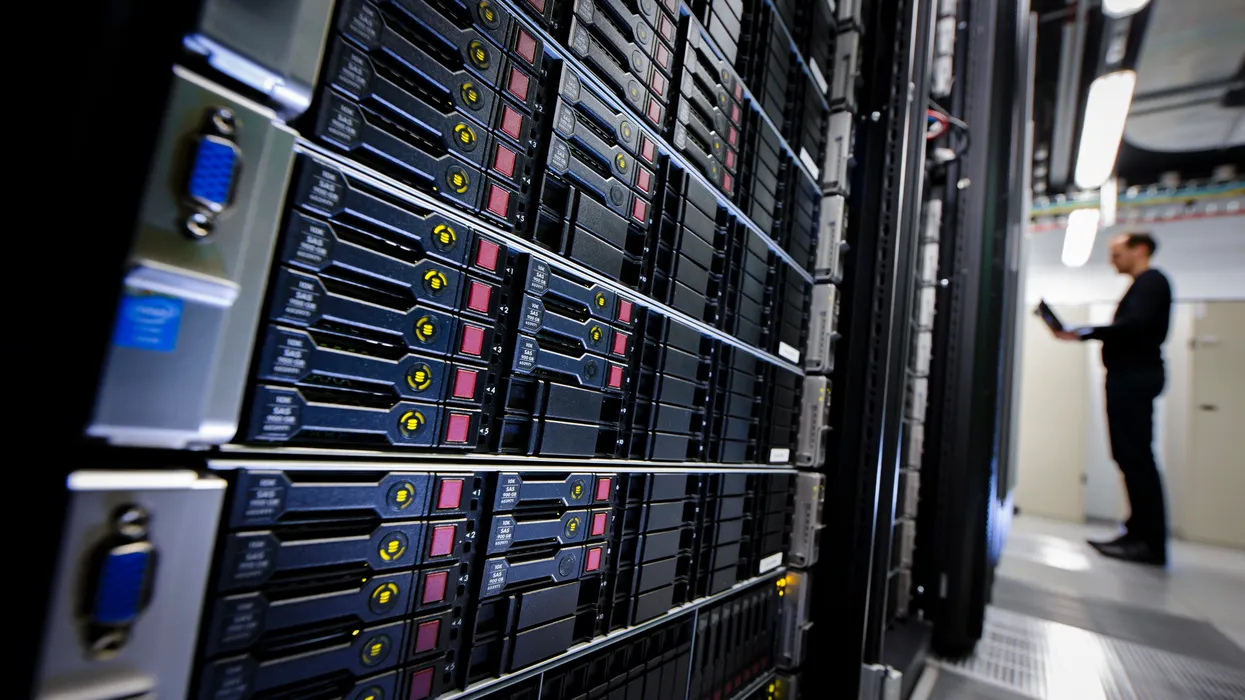
One of the most vital components in consumer electronics just reached a critical low. Big AI data centers are taking up RAM faster than manufacturers can make it, and the cost is getting passed on to consumers. As the shortage takes hold, prices on many popular electronic devices are expected to jump in 2026 by up to 30%, further straining wallets and the U.S. economy.
What is RAM?
Every electronic device you own — your smartphone, tablet, laptop, smartwatch, and even your game console — comes with a tiny brain packed inside. The CPU is the control center that runs processes and commands, launching apps and keeping them awake as you click, type, and interact. The GPU handles heavier tasks, from rendering graphics to managing larger processes and more. Local storage, usually in the form of an SSD or HDD, is akin to long-term memory, holding a complete archive of your files, photos, and everything else you saved on your device over the course of weeks, months, and years. Then there’s RAM.
Big Tech and AI companies are prioritized over regular citizens like you and me.
RAM, or Random Access Memory (sometimes shortened to “memory”), is your computer’s short-term memory. It holds temporary bits of data to keep your open apps running smoothly. RAM is the reason you can switch between several tabs in your web browser without the page reloading, or open a couple Word documents side by side to copy and paste information, or type an email while you also stream your favorite show on BlazeTV.
Some devices come with more RAM installed than others. The more RAM you have, the more apps you can run at the same time (i.e., multitask) without crashes or data loss. As consumer electronics advance, the need for more RAM grows at a steady pace. For example, the very first iPhone from 2007 launched with a measly 128MB of RAM, while the latest iPhone 17 Pro Max packs 12GB of RAM. That’s a huge jump!
A RAM shortage is coming
Consumer electronics aren’t the only devices that need a lot of RAM. Data centers demand tons of it — especially the ones built to train and maintain large language models like ChatGPT by OpenAI, Gemini by Google, and Grok by xAI.
Remember how much RAM comes with the latest iPhone Pro Max? A basic AI model — the type that can run directly on a phone — requires 8-16GB of RAM. That means, depending on the model, even the best iPhone in the world will hit a RAM bottleneck due to its own hardware limitations.
Moving a step up, medium-level AI models require 32GB to 64GB of RAM. In terms of consumer devices, only the most expensive laptops on the market that are worth thousands of dollars can run these models natively. This is why most models at this level run in data centers where information is processed on a server and beamed back to users via the cloud.
At the highest end, advanced AI data centers like the ones being built by Big Tech demand 128GB to 256GB of RAM or more. This kind of RAM is necessary for training large language models, processing data, and creating content for users on the other end. You use about this much RAM every time you send a query to your favorite AI platform, whether it’s a simple question to an answer you could find on the web, a request to create an image for your Christmas card, or a command to write your annual review for work. This is also why AI data centers require so much energy to keep the lights on.
Prices on electronics are going up
Earlier this year, President Trump unveiled an AI Action Plan to build America’s first AI infrastructure. The deal streamlines the permit process to create new AI data centers across the United States. More data centers mean a higher demand for vital computer components. As the plan moves forward, RAM manufacturers are already feeling the pressure.
RELATED: Will this tech company’s huge losses sink our economy next?
 Photo by Samuel Boivin/NurPhoto via Getty Images
In early December, Micron, one of the largest makers of RAM products on the planet, announced it was closing its consumer business, Crucial, after 29 years. Its new mission is to create RAM directly for Big Tech AI brands and data centers. The news is a double-edged sword, as the shutdown will both help alleviate some of the demand created by Big Tech while it also eliminates a vital option for consumers who rely on Crucial for their upgradable RAM sticks. Crucial will end all consumer shipments in February 2026.
Days later, popular PC maker Dell sounded the alarm on the upcoming RAM shortage. Due to low availability, the prices of their PCs are expected to jump anywhere between 10% and 30%, effective immediately. The report from Business Insider notes that this is an industry-wide shortage, so you should expect higher prices from brands like Lenovo and HP as well. In an attempt to make up for the shortage, Dell and Lenovo will also reportedly launch cheaper mid-range laptops with lower RAM specs topping out at 8GB, which as we already covered, is quite low for handling the demands of modern smart devices.
Not to be left out, the shortage also extends to mobile devices. In the latest projections by Counterpoint Research, the price of smartphones will inflate by 6.9% in 2026. Although Apple and Samsung are best positioned to endure the RAM shortage, no brand is immune to the price spikes. That said, Chinese OEMs are expected to take the hardest hit.
RAM-ifications of the great memory shortage
All of this is part of a bigger problem facing the American people as Big Tech and AI companies are prioritized over regular citizens like you and me.
For starters, times are still tough for most Americans just trying to get by. Latest reports indicate that job growth is slowing, the unemployment rate is going up, and AI has even led to more lost jobs than it has created. When asked about this phenomenon, Big Tech CEOs like Sundar Pichai of Google claim that “people need to adapt” to get along in the new age of AI. Until that happens, the coming price increase in consumer electronics will force many to skip out on upgrading their devices this year, negatively impacting businesses and the economy as more people hold on to the money they have left.
Another notable strain on the American people directly targets our power grid. AI requires a lot of energy to run and maintain, and without it, Glenn Beck warns that rolling brownouts are on the way. To alleviate the problem, President Trump recently approved the use of nuclear power — something that would’ve been nice to have for us normal people ages ago, but at least it’s a start. Until those nuclear plants are operational, however, our current power grid will continue to buckle under the weight of all the new data centers being built right now, the same ones responsible for the RAM shortage. Simply put, if the nuclear plants are postponed for any reason, or if they’re deactivated if/when Democrats retake power, the American people will be the first to go without in favor of the AI giants and their resource-guzzling LLM machines.
Unfortunately it doesn’t look like this mess is going to end anytime soon. President Trump recently put in a fast-lane for AI development, limiting state laws and reducing federal regulations to make it easier for Big Tech to compete against China in the race for artificial general intelligence. With fewer restrictions, AI companies can continue to strain our power grid, gobble up vital computer components, and push AI onto every facet of our daily lives, whether we want it there or not.





