Category: Family
America’s Cultural Chasm: Family v. Individualism
The future of humanity rests not upon government, but with the family. A principle that is as bold as it…
Cooking to Scare Friends and In-Laws
New Year’s Eve celebrations vary by latitude. In Spain, we eat 12 grapes as the clock strikes midnight — one…
Holiday stress? Here’s one way to handle it.
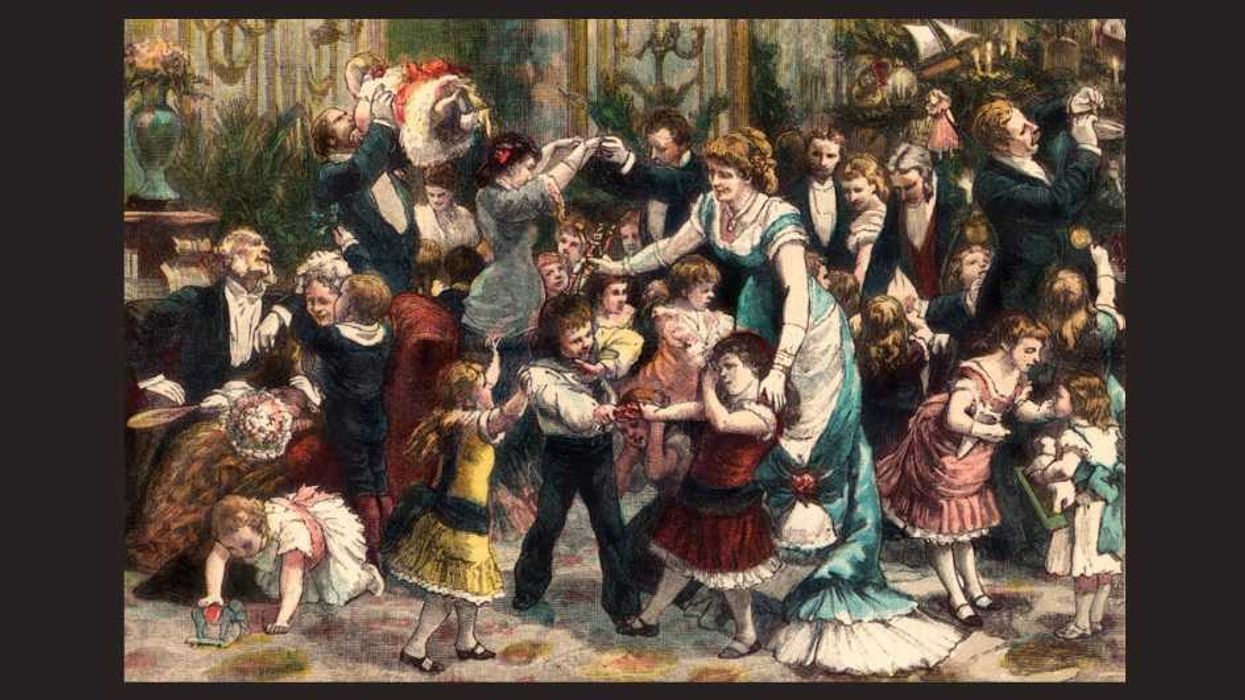
Holidays are tough. It’s not fun to say it, and it feels like failing to admit it, but they are.
But why? Why are they tough? Why are the days that are supposed to be full of joy instead oddly stressful — and too often fraught with bickering, arguing, and disappointment?
We want things to go perfectly on the day that is supposed to go perfectly — and when they don’t, our disappointment lands harder than it would on a random Tuesday in March.
It seems inevitable, almost as if it’s another tradition. Someone snaps about something small, then someone takes offense to something else, and then there’s an argument or a fight or just a weird feeling in the air that wasn’t there before.
Too many cooks
It could be in the kitchen, especially when dinner is nearing. Mom, Grandma, and maybe a daughter or two are in there helping. A bystander pokes his or her head in and offers a “helpful” comment. One of the chefs responds with an eye-roll. A certain stifling quiet — not a good quiet — descends.
Or it could be at the dinner table: Someone lobs a political point knowing that it will rub another guest the wrong way, but he “needs to say something.” Then someone else feels compelled to answer, and another after that, until the whole thing cascades and suddenly the arguments are spilling over into dessert.
Moms are disappointed in their sons and daughters because they just want everybody to get along for one day when everyone is home. “Can you just not talk about that?” Dads are tired of having the same argument, so they zone out. Sons and daughters are mad because no one takes them seriously. They are in college and know more than they used to, but think they know more than they really do.
Family feud
These things happen in families. Not all, of course. Some excel at sweeping every irritation under the rug and maintaining a serene, passive surface at all times. A few are even perfect — or as close as anyone gets — and enjoy holidays filled with nothing but gladness. But most families, in one way or another, run into moments like the ones above or something close to them.
These points of conflict and stress are only a few of the familiar moments that surface when families gather for the holidays. There are countless other paths to confrontation, disappointment, or quiet unease. Sometimes the friction is subtle — simmering unnoticed for months — and it’s only during the holidays that anything finally bubbles up and over.
At bottom, our stress and disappointment come down to expectations, especially the impossible kind.
A holiday is supposed to matter more than an ordinary day. It’s supposed to be more enjoyable, more memorable, more special. That’s a crude way of putting it, but it’s the truth we all feel somewhere deep down, even if we would never say it out loud.
Moms want the meal to be flawless and everyone to get along. Dads want to relax. Kids home from wherever they have been want to share what they have learned and maybe earn a little more respect.
Perfect storm
We want things to go perfectly on the day that is supposed to go perfectly — and when they don’t, our disappointment lands harder than it would on a random Tuesday in March. Greater disappointment feels like a greater failure, and that casts a shadow over the day or at least over our memory of it.
Our expectations rise so high that disappointment becomes almost guaranteed.
That’s why the holidays are tough. It’s not that being around the people you love is hard or that it’s impossible to stay on your best behavior and avoid a spat with your sister or cousin. The holidays are tough because we want things to be the way they ought to be — the way we imagine they could be, the way we wish we could be. Admitting that the holidays are tough stings a little, because to acknowledge it feels like confessing a kind of failure.
I don’t know how to eliminate holiday disappointment entirely, but I do know the first step toward easing it: accepting that our holidays will never be perfect. Hopes run high, tensions run high, and something will inevitably go awry. We’re human. And that’s okay. Maybe our bar shouldn’t be so high. Maybe we ought to grade the day on a curve. Maybe a B- really is an A. Maybe we can forgive ourselves for not living inside a Hallmark movie.
Holidays aren’t perfect. Neither are we. And that’s okay.
The Left Brainwashed Young Women To Want Stuff And A Career Over A Husband And Family
 By having fewer children, the left will lose political power and the ability to shape the future of society with their preferences.
Copy Our Neighborhood Pie Night Tradition If You Want To Build A Better Community

 In an age where the idols of dissociation and personal comfort demand empty reverence, it is healthy to remind our souls that we are embodied creations living in specific places and communities.
Do you really have ADHD — or do they want to medicate you into conformity?

Everybody has a diagnosis these days.
Not just adults — kids too. It doesn’t matter if you’re 8 or 38, there’s someone somewhere waiting to explain away whatever’s different about you.
Perhaps you find your work excruciatingly boring and hard to care about precisely because it is excruciatingly boring and hard to care about.
It’s not a quirk of your personality or a flaw in your character or a wound in your soul. It’s a illness. Never mind that the symptoms are vague or the evidence that it’s a discrete medical condition are lacking — a pharmaceutical cure will fix it.
Just pop this pill, and you will be like everyone else. Isn’t that what you want?
All the rage
All the kids these days have ADHD or autism. Which often makes me wonder if any of them do. Or if these conditions exist at all.
Autism certainly seems real in its extreme forms, but I am not at all convinced that it’s at the far end of a continuum. I don’t really think being a little “on the spectrum” is a thing. Those people are just a little weird and need stronger guidance on how to get on in life.
I have a friend who was an engineer at Google. He told me half the people he worked with claimed to be “on the spectrum,” and according to him, it was all bull. They didn’t have medical problems; they had personal problems. They were guys who never learned how to interact normally, so they just ended up being kind of weird and rude.
As for ADHD, it’s so obscenely overdiagnosed that it’s essentially fake at this point. The market has been so oversaturated by ridiculous and erroneous diagnoses that whenever I hear about another kid with ADHD, it tells me more about the doctors and the “system” and less about the kid.
Boys will be boys
Are some kids better at sitting down at a desk for three hours at a time? Sure. Are more girls than boys better at doing it? Yes. Is there a gender factor here when it comes to diagnosis? Absolutely.
Boys don’t learn the same way girls do. But much of modern education ignores this fact. So when boys fidget or get bored, it gets chalked up to ADHD. This is more or less common knowledge by now. So the only thing a boy being diagnosed with ADHD tells me is that he doesn’t get enough recess.
Of course, there are extreme cases. There are kids who genuinely don’t seem to be able to focus at all. Something like actual ADHD exists in a small number of boys, but that doesn’t negate the broader truth: Instead of seeing people as individuals with different strengths and weaknesses, we decide to overmedicate when someone isn’t exactly like everyone else.
My mom worked with special ed kids. Some of them had mild disabilities, some more extreme. In some cases, it was clear they would need supervised care their entire lives. But in other cases, it wasn’t clear just what, if anything, was wrong — besides a certain learned helplessness reinforced by doctors and parents.
Pill and chill
Nowadays ADHD diagnoses aren’t just for kids; adults are getting in on it too. Believe it or not, an increasing amount of men and women, especially women, in their 30s and 40s are discovering that they too have ADHD — a discovery that inevitably “explains everything.” My wife sees reels on Instagram all the time, along with ads selling various solutions.
What’s that? You couldn’t focus at your computer, clicking on an excel spreadsheet, sending pointless emails for seven hours at a time? Shocking. No, you don’t need ADHD medication. You need to do something else with your life. Perhaps you find your work excruciatingly boring and hard to care about precisely because it is excruciatingly boring and hard to care about.
Overmedicalization and overdiagnosis is a deep problem in our society. Not just because the result is an increase in prescription drug use, but because the individual human being is lost or suffocated a little bit at a time. Everyone is different. Everyone has skills, and everyone has weaknesses. Everyone learns in a different way, and everyone focuses on different things too.
RELATED: Drugged for being boys: The TRUTH behind the ADHD scam
 Blaze Media
Free agency
Some people are just a little awkward, a little weird, a little absent-minded, or a little dry. Sure, they should try to meet society halfway in some reasonable sense — but that happens through early teaching, parental guidance, community expectations, and personal effort, not through a pill you pop every day. For most of the 20th century, we relied far more on those nonmedical supports.
All the pill-popping flattens our individualism and undercuts our own agency as humans. It presupposes that one cannot make oneself better, one cannot work to act right, and that one doesn’t have any control. This is a lie. Yes, of course, there are people who suffer with truly debilitating problems who need medication, and they should get that medication. But it is a small fraction of the population. Most people can make themselves better when they set their minds to it.
Don’t get me wrong. I’m not anti-psychiatry. I’m not into alternative medicine or any of the hippie stuff. I’m not denying that there are people with problems who are helped most effectively with medication. I’m thankful for the blessings of modern medicine and the advancements we continue to see every year.
But we have a problem with overdiagnosis in our country. We have a problem with losing sight of the individual. We have a problem with people who want to give up their agency and turn it all over to a pill, and we are worse off because of it.
‘Something has gone terribly wrong’: Marriage is in ‘disastrous’ decline — perhaps because of women
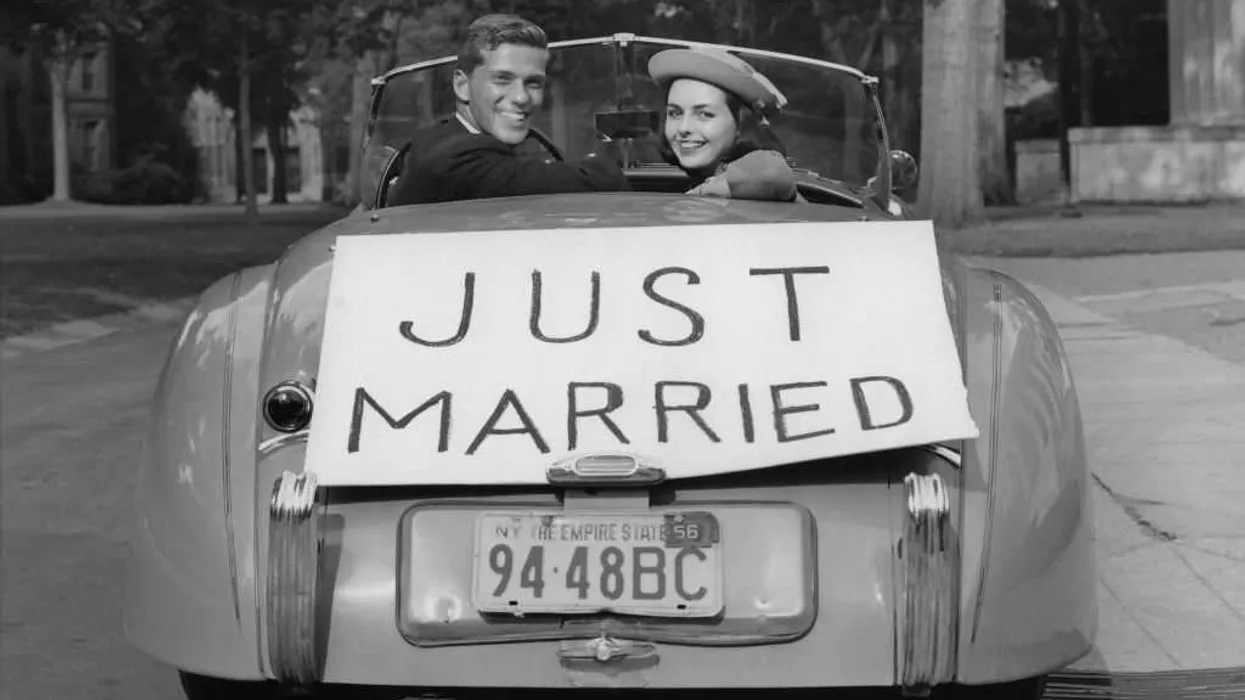
The marriage rate has been in decline for decades, dropping from 10.6 per 1,000 people in 1980 to 6.1 in 2023. Last year, American adults were less likely to be married than at nearly any other time since the Census Bureau began logging marital status in 1940, with married couples heading only 47.1% of U.S. households.
The apparent aversion to marriage is bad news for American children, who perform better in school and are far less likely to end up in prison or depressed when raised by married parents, as well as for American adults who tend to see better health outcomes, be happier, and live longer when espoused.
‘Devaluing marriage and motherhood has consequences.’
Recent Pew Research Center analysis of survey data from the University of Michigan suggests that this decline may continue — especially if young women’s growing resistance to marriage goes unremedied.
Whereas 20 years prior, 80% of 12th graders said that they were most likely to choose marriage in the long run, only 67% of 12th graders polled in 2023 indicated that they want to get married someday. Another 24% said they don’t know if they’ll get married, up from 16% in 1993.
This drop appears to have been largely driven by shifting views among girls.
In 1993, 83% of girls and 76% of boys said that they wanted to get married. In 2023, only 61% of girls said they wanted to get married — a drop of 22% — while 74% of boys indicated they wanted to ultimately tie the knot.
RELATED: Family or fallout — experts assess the threats now facing the nuclear family
 Photo by STRINGER/AFP via Getty Images
Pew indicated that there was also a precipitous drop in the percentage of 12th graders who indicated they wanted to have kids if they marry.
Whereas in 1993, 82% said they wanted to have kids, in 2023, only 73% indicated they wanted to welcome new life into this world. Even more dramatically, the percentage of those who said they would “very likely” want to have kids if married dropped from 64% in 1993 to 48% in 2023.
“It’s almost like decades of devaluing marriage and motherhood has consequences,” wrote the Alabama Policy Institute.
Katy Faust, founder of the children’s advocacy group Them Before Us, stated, “More than almost anything else trending, this terrifies me. Because of the nature of our bodies women have historically pursued marriage more. What kind of disastrous, antihuman messaging are young women being flooded with to return these kinds of results?”
RELATED: Domestic extremist or: How I learned to stop worrying and love the mom
 Photo by Lambert/Getty Images
Dr. Brad Wilcox, professor of sociology at the University of Virginia and director of the National Marriage Project, said the anti-nuptial trend among young women and adolescent girls was “disastrous.”
Wilcox underscored that this trend reflects a particularly raw deal for women, highlighting a recent YouGov survey of U.S. women, ages 25 to 55, fielded by the Institute for Family Studies and the Wheatley Institute, which found that married women with children are:
- more likely (19%) to report being “very happy” than both unmarried women with children (13%) and unmarried women without children (10%);
- more likely (47%) to report that life has felt enjoyable most or all of the time in the past 30 days than both unmarried women with children (40%) and unmarried women without children (34%);
- less likely (11%) to report being lonely most or all of the time in the past 30 days than both unmarried women with children (23%) and unmarried women without children (20%);
- more likely (51%) to receive physical affection than both unmarried women with children (29%) and unmarried women without children (17%); and
- more likely (28%) to report their lives have a clear sense of purpose than both unmarried women with children (25%) and unmarried women without children (16%).
Turning Point USA spokesman Andrew Kolvet said of the Pew report, “Something has gone terribly wrong.”
Like Blaze News? Bypass the censors, sign up for our newsletters, and get stories like this direct to your inbox. Sign up here!
When fathers fall, grace asks more of us
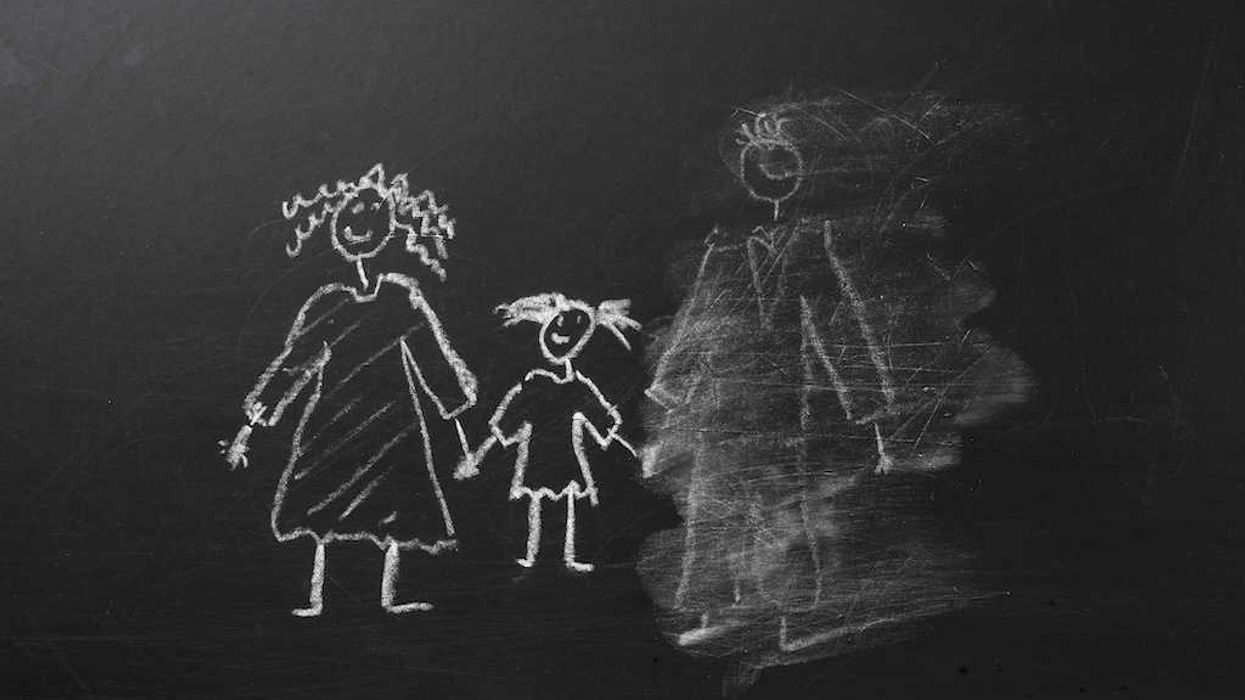
Families gather for all sorts of reasons — Thanksgiving, Christmas, weddings, funerals. And sometimes that’s when the fireworks start. There’s an old joke that any family gathering where the cops aren’t called is a successful one. Beneath the laughter sits a truth most families know. When people with long memories sit at the same table, old hurts rise right alongside the cranberry sauce.
Sin fractured families long before politics did. It divides hearts, poisons conversations, and leaves scars that last for generations. Every family bears some of that damage, and nowhere does the fracture cut deeper than between fathers and children.
Every father fails in some way, and those failures bring deep sadness. Grief isn’t a sin. Derision and resentment are.
A caller once told me about his alcoholic father, who had been abusive for years. The caller was 52, yet when he talked about being around his father, his voice broke. “Every time I’m around him,” he said, “I feel like I’m 9 years old.” The man’s father had fallen and now needed care, but the wounds had not healed. His wife and children were watching, waiting to see what he would do. His father was still drinking, still choosing the same path.
I told him, “You’ve made sure your father has food and care, but you’re not required to be subservient. Your family counts on you. Your father continues to make destructive choices, and you can’t change that. Your family’s well-being cannot come at the expense of his demands. He may not make it — but you have to.”
That conversation stayed with me. It reminded me how hard it is to see a parent’s weakness and not respond in anger or disgust or fear. We want to fix it, mock it, punish it, or walk away. Yet scripture gives us a different picture of what honor can look like when a father’s failings are laid bare.
After the flood, Noah planted a vineyard, drank too much, and passed out naked in his tent. His son Ham saw him exposed and mocked his shame. His brothers, Shem and Japheth, took a blanket, walked backward, and covered him.
It wasn’t easy. I imagine Shem and Japheth groaning at the sight of their father — maybe with tears in their eyes. Some fathers decline; some abandon; but every father fails in some way, and those failures bring deep sadness. Grief isn’t a sin. Derision and resentment are.
What do we do when we see our fathers in their weakness? When bitterness stirs, when old wounds reopen, when the urge to expose feels justified? The man who once loomed large now looks small. He wielded power over a child but appears diminished, not just by age but by the perspective that comes with time. That truth can stir anger or sorrow — or offer release.
In the garden, when Adam and Eve sinned, they saw their own nakedness for the first time and tried to cover it with leaves. The first act of grace in scripture was God covering their shame with garments He made Himself. Blood was shed to make those coverings — a quiet foreshadowing of what grace would one day cost.
That moment wasn’t about modesty. It was mercy. God did for them what they could not do for themselves. He covered their shame. From that moment on, grace has always moved toward covering — not humiliating.
At the cross, the story reached its fulfillment. The Son of God allowed Himself to be stripped bare. He bore the nakedness that belonged to us. What began in Eden with God covering human shame ended on Calvary with Christ carrying it. We were clothed in mercy because the innocent one was exposed.
Jesus told another story about a father and his sons. One rebelled and returned in disgrace. The other stayed but grew proud and resentful. Both disrespected their father — one through sin, the other through scorn. Yet the father ran to meet the prodigal and later went out to plead with the older son. He carried the same heart as Shem and Japheth. He covered shame, and even resentment, with grace.
RELATED: What we lose when we rush past pain
 O2O Creative via iStock/Getty Images
Caregiving brings old wounds to the surface fast, and the holidays push them even closer to the edge. Many caregivers know this. They spend their days covering weakness — with blankets, patience, or prayer. They honor parents who can’t return the favor, who may not even recognize them anymore. Sometimes they protect in spite of, not because of. Some fathers, like that caller’s, won’t change. But we can.
At some holiday tables, people say, “Please pass the turkey,” when what they really want to say is, “Why can’t you?” or “Why didn’t you?” Those moments expose the gap between what we feel and what we’re called to.
Some fathers failed in ways that make reconciliation impossible. Honoring them does not mean returning to harm, pretending nothing happened, or carrying the weight of their failures. Their shame is not ours to bear. But we’re also not given permission to parade it.
So we honor the office, tell the truth, and set safe boundaries. We refuse to be shaped by their sin and trust God to deal with what belongs to Him. And because grace covers us, we can choose dignity over bitterness — even when fathers fall.
Embryos Don’t Belong in Jewelry
In Victorian Europe, hairwork jewelry was a popular means of remembering the departed. Family or friends would snip lockets of…
What Nick Fuentes Gets Wrong About Women
It’s generally true in politics that coalitions win elections. Unfortunately, it’s also true that those coalitions are rarely united by…