

Category: Israel
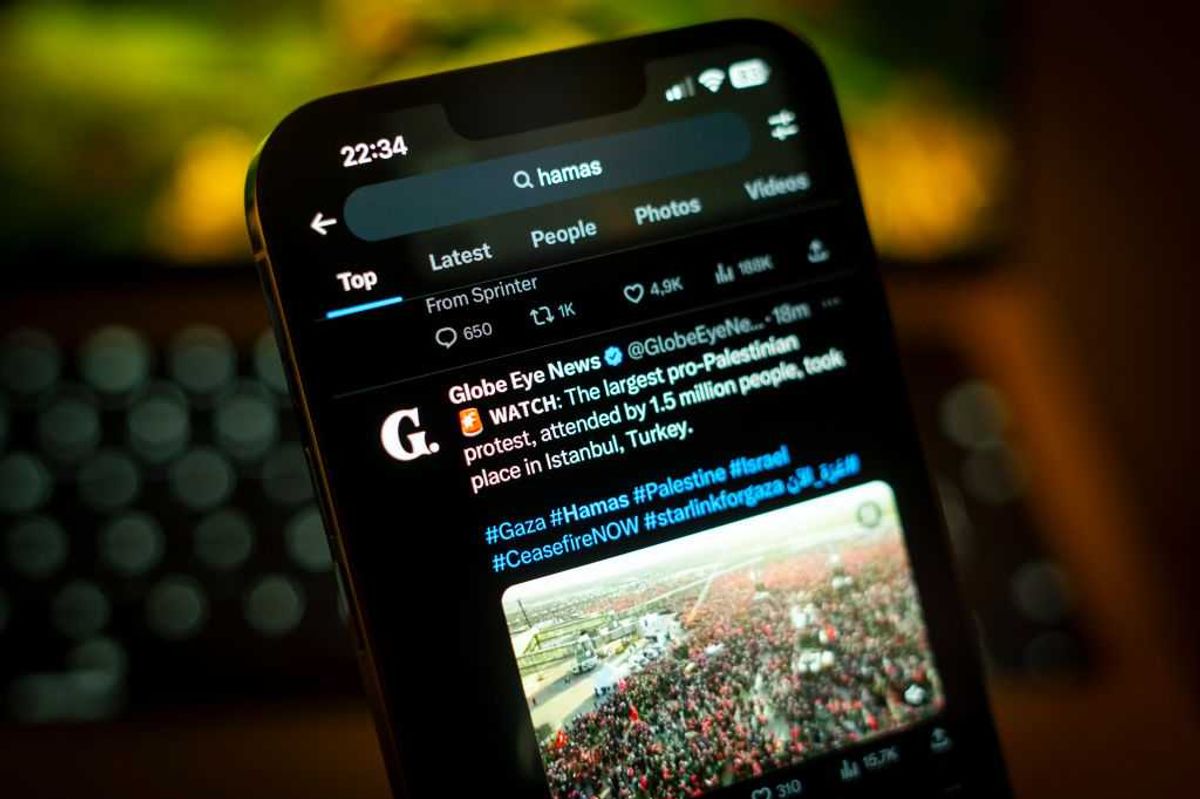
Hamas floods the feeds to sway clueless Westerners
As President Donald Trump toured Israel and the region celebrating his newly brokered Gaza ceasefire agreement last month, several Israeli families received unexpected video calls from their loved ones still held captive in Gaza.
After more than two years without information, many suddenly found themselves staring at the faces they feared they might never see again. “I love you! I can’t wait to see you already!” cried one shocked mother.
In a post-truth environment, Hamas has learned how to set the terms of debate, frame Israeli actions, and pressure global institutions.
Behind each hostage stood a Hamas militant in a green headband and full face covering. Before release, the militant gave a command in broken Hebrew: “Post this on social media. Put this in the news.”
It was a scene both surreal and deliberate. For Hamas, the call was not simply a gesture ahead of a ceasefire. It was the final stroke in a propaganda campaign the group has refined into a core battlefield strategy.
Across the war, Hamas moved far beyond the low-tech, grainy videos of earlier terror groups, like al-Qaeda 25 years ago. Borrowing lessons from Russia, China, Iran, and ISIS, it adopted a multi-platform media operation built on drone footage, high-definition body cameras, Telegram networks, curated databases, and a constellation of Instagram influencers.
The goal was simple: Demoralize Israelis, energize supporters, and sway public opinion abroad — especially in the United States and Europe, where diplomatic pressure could yield concessions no battlefield victory could deliver.
Instagram combatants
Influencers became frontline assets. Saleh Aljafarawi, a 27-year-old Instagram personality, chronicled rubble tours and took selfie videos with children and activists, overlaying them with music to evoke sympathy. His content racked up millions of views.
Motaz Azaiza, another influencer, surged to more than 16 million Instagram followers while documenting scenes on the ground and conducting street interviews. A graphic video credited to him — viewed more than 100 million times and widely disputed — showed what appeared to be bleeding toddlers pulled from wreckage.
Hamas-aligned Telegram channels such as Gaza Now and Al Aqsa TV amplified their posts around the clock. Western media outlets often ran these images uncritically, including allegedly starving children later shown to have congenital conditions unrelated to the conflict.
But the visual blitz was only one part of the strategy. Hamas understood that controlling the premises of the debate mattered as much as controlling the images. That is why organizations such as the United Nations Office for the Coordination of Humanitarian Affairs relied heavily on casualty numbers supplied by the Hamas-run Gaza Ministry of Health. Those tallies — widely framed as disproportionately civilian — drove international diplomatic pressure on Israel and fueled student protests across American campuses.
‘Broadcast the images’
A recently declassified memo from Hamas leader Yahya Sinwar revealed the strategic logic behind the group’s media doctrine. Mixed among military instructions were orders to create “heart-breaking scenes of shocking devastation,” including directives for “stepping on soldiers’ heads” and “slaughtering people by knife.” Body-camera footage from the Oct. 7 massacre reflected that intent.
To execute the strategy, Sinwar empowered a spokesman known as Abu Obaidah, who was killed in an Israel Defense Forces strike last year. Under his direction, Hamas expanded its propaganda arm from roughly 400 operatives during the 2014 conflict to more than 1,500. Every battalion and brigade gained its own deputy commander for propaganda, each trained in field filming, livestreaming, and rapid editing inside decentralized “war rooms.”
One category of production featured Israeli hostages forced to deliver scripted messages from tunnel captivity, urging Israelis to protest their government. These videos were released with trilingual subtitles and high-end visual effects. They accelerated domestic pressure inside Israel to accept a deal on terms favorable to Hamas.
During the January 2025 exchange, Hamas choreographed the release events with precision. Operatives filmed every moment with high-definition lenses as hostages were paraded before Red Cross representatives and instructed to wave to crowds. Slogans appeared in Arabic, Hebrew, and English — some tailored to Israeli politics (“we are the day after”), others crafted for Western activists (“Palestine — the victory of the oppressed”).
Iran funds roughly $480 million annually in state propaganda efforts through its IRIB broadcaster. It is reasonable to assume Hamas directs a significant share of its estimated $2 billion budget into communications.
RELATED: The genocide that isn’t: How Hamas turned lies into global outrage
 Photo by ZAIN JAAFAR/AFP via Getty Images
Perception shapes policy
The investment has paid off. A Quinnipiac poll found that half of Americans — and 77% of Democratic voters — believe Israel committed a “genocide” in Gaza. A Cygnal survey shows Israel at -21 net favorability among voters younger than 55. Younger Americans, who consume more social media, are almost three times more likely than older voters to view Hamas favorably.
Substance remains another story. A majority of Americans — 56% — oppose or remain ambivalent toward the two-state plan frequently cited by foreign governments and activist groups.
But perception is shaping policy. Hamas has become a dominant force in the narrative battle, feeding imagery, statistics, and talking points directly into Western media ecosystems. In a post-truth environment, the group has learned how to set the terms of debate, frame Israeli actions, and pressure global institutions.
Israel and its allies cannot afford to treat communications as an afterthought. Effective messaging is a force multiplier — not a cosmetic accessory. It frames the battlefield, shapes public opinion, and constrains diplomatic options.
The war showed that Hamas understands this. It is time its opponents understood it too.
Trump Admin Revokes Visa From South African Official Who Spearheaded ‘Genocide’ Case Against Israel
The Trump administration on Thursday revoked the visa of Naledi Pandor, the South African official who spearheaded a genocide case against Israel at the International Court of Justice, spoke by phone with former Hamas leader Ismail Haniyeh shortly after Oct. 7, 2023, and repeatedly offered support for terrorism, a senior State Department official exclusively confirmed to the Washington Free Beacon.
The post Trump Admin Revokes Visa From South African Official Who Spearheaded ‘Genocide’ Case Against Israel appeared first on .
Stop asking questions shaped by someone else’s script
The search for truth has always required something very much in short supply these days: honesty. Not performative questions, not scripted outrage, not whatever happens to be trending on TikTok, but real curiosity.
Some issues, often focused on foreign aid, AIPAC, or Israel, have become hotbeds of debate and disagreement. Before we jump into those debates, however, we must return to a simpler, more important issue: honest questioning. Without it, nothing in these debates matters.
Ask questions because you want the truth, not because you want a target.
The phrase “just asking questions” has re-entered the zeitgeist, and that’s fine. We should always question power. But too many of those questions feel preloaded with someone else’s answer. If the goal is truth, then the questions should come from a sincere desire to understand, not from a hunt for a villain.
Honest desire for truth is the only foundation that can support a real conversation about these issues.
Truth-seeking is real work
Right now, plenty of people are not seeking the truth at all. They are repeating something they heard from a politician on cable news or from a stranger on TikTok who has never opened a history book. That is not a search for answers. That is simply outsourcing your own thought.
If you want the truth, you need to work for it. You cannot treat the world like a Marvel movie where the good guy appears in a cape and the villain hisses on command. Real life does not give you a neat script with the moral wrapped up in two hours.
But that is how people are approaching politics now. They want the oppressed and the oppressor, the heroic underdog and the cartoon villain. They embrace this fantastical framing because it is easier than wrestling with reality.
This framing took root in the 1960s when the left rebuilt its worldview around colonizers and the colonized. Overnight, Zionism was recast as imperialism. Suddenly, every conflict had to fit the same script. Today’s young activists are just recycling the same narrative with updated graphics. Everything becomes a morality play. No nuance, no context, just the comforting clarity of heroes and villains.
Bad-faith questions
This same mindset is fueling the sudden obsession with Israel, and the American Israel Public Affairs Committee in particular. You hear it from members of Congress and activists alike: AIPAC pulls the strings, AIPAC controls the government, AIPAC should register as a foreign agent under the Foreign Agents Registration Act. The questions are dramatic, but are they being asked in good faith?
FARA is clear. The standard is whether an individual or group acts under the direction or control of a foreign government. AIPAC simply does not qualify.
Here is a detail conveniently left out of these arguments: Dozens of domestic organizations — Armenian, Cuban, Irish, Turkish — lobby Congress on behalf of other countries. None of them registers under FARA because — like AIPAC — they are independent, domestic organizations.
If someone has a sincere problem with the structure of foreign lobbying, fair enough. Let us have that conversation. But singling out AIPAC alone is not a search for truth. It is bias dressed up as bravery.
RELATED: Antifa burns, the media spin, and truth takes the hits
 Photo by Philip Pacheco/Anadolu Agency/Getty Images
If someone wants to question foreign aid to Israel, fine. Let’s have that debate. But let’s ask the right questions. The issue is not the size of the package but whether the aid advances our interests. What does the United States gain? Does the investment strengthen our position in the region? How does it compare to what we give other nations? And do we examine those countries with the same intensity?
The real target
These questions reflect good-faith scrutiny. But narrowing the entire argument to one country or one dollar amount misses the larger problem. If someone objects to the way America handles foreign aid, the target is not Israel. The target is the system itself — an entrenched bureaucracy, poor transparency, and decades-old commitments that have never been re-examined. Those problems run through programs around the world.
If you want answers, you need to broaden the lens. You have to be willing to put aside the movie script and confront reality. You have to hold yourself to a simple rule: Ask questions because you want the truth, not because you want a target.
That is the only way this country ever gets clarity on foreign aid, influence, alliances, and our place in the world. Questioning is not just allowed. It is essential. But only if it is honest.
Want more from Glenn Beck? Get Glenn’s FREE email newsletter with his latest insights, top stories, show prep, and more delivered to your inbox.
Far-Left Mamdani Ally Launches Primary Challenge Against Hakeem Jeffries
New York City councilman Chi Ossé (D), a democratic socialist from Brooklyn and ally of Mayor-elect Zohran Mamdani (D.), launched a primary challenge against House minority leader Hakeem Jeffries (D., N.Y.) on Monday, setting up a fight between the highest-ranking Democrat in the House and a left-wing extremist.
The post Far-Left Mamdani Ally Launches Primary Challenge Against Hakeem Jeffries appeared first on .
Obscure Belgian Nonprofit That Filed More Than 1,000 ICC Cases Against Israeli Soldiers Has Ties to Hezbollah, Report Alleges
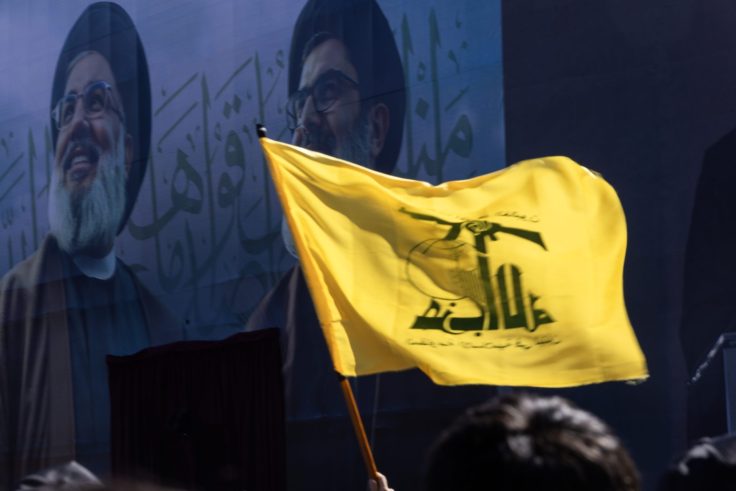
An obscure Belgian nonprofit that has single-handedly filed more than 1,000 complaints against Israeli soldiers at the International Criminal Court (ICC) bills itself as a neutral legal entity crusading against “war crimes and human rights violations perpetrated by the Israeli state.” According to a new watchdog report, though, one of its co-founders has openly identified himself as a former Hezbollah terrorist, and the organization itself is entrenched within Hezbollah’s financing network across multiple continents.
The post Obscure Belgian Nonprofit That Filed More Than 1,000 ICC Cases Against Israeli Soldiers Has Ties to Hezbollah, Report Alleges appeared first on .
Allie Beth Stuckey responds to Candace Owens’ podcast call-out

Since the murder of Turning Point USA founder Charlie Kirk, conservative firebrand Candace Owens has been commenting on numerous conspiracy theories surrounding Kirk’s death. She has made it clear that she believes the FBI’s current narrative — that Kirk was allegedly killed by lone gunman and radical leftist Tyler Robinson — isn’t the truth.
Owens, a vocal Israel critic, speculates that Kirk’s assassination was a targeted political hit involving TPUSA insiders, military contractors, and various “Zionist” influences and that Robinson is merely the fall guy in a calculated scheme.
While some have cheered on Owens as a truth-seeker, many have criticized her as recklessly divisive and harmful to Kirk’s grieving friends and family, while she offers little evidence. These include BlazeTV host Allie Beth Stuckey, who has defended TPUSA against Owens’ allegations.
Stuckey’s initial criticism avoided naming Owens and instead focused on debunking claims about TPUSA’s role — specifically that the last-minute booking of the Utah Valley University event points to internal foul play.
In an X thread from November 6, Stuckey shared her experience scheduling TPUSA events with Charlie.
In addition, she posted a series of Instagram stories (now expired) urging her audience not to “outsource critical thinking” to other people. Without naming Owens, Stuckey said, “If you are implicating a real person in a murder plot, you better be 100% sure that it is true and backed by hard evidence.”
Owens, on the November 11 episode of her podcast “Candace,” played these Instagram reels and addressed Allie directly: “It was Charlie’s real life, Allie. That was Charlie’s real life when you saw him sitting there and he got shot. … I feel like that’s the part you’re missing because you’re so worried about the surrounding cast of characters who have been literally caught lying.”
She went on to accuse Stuckey of not genuinely caring about justice for Charlie: “He’s not here any more. Maybe you’re not worried about him, but I am. I’m actually worried, and I want to know what happened to Charlie Kirk.”
On yesterday’s episode of “Relatable,” Allie responded to Candace directly. With grace, tact, and biblical clarity, she offered a measured rebuke rooted in Scripture.
“[It was] my friend too who was shot in the neck, whom you have seen me talk about and reference several times over the past few weeks and just, you know, what that mentorship meant to me,” says Stuckey, adding that it “makes [her] sad.”
“I’ve thought really hard, like how do I respond in a way that is actually edifying, that lifts you up and doesn’t just tear down and get down in the mud? … There’s a part of me that does just want to go tit for tat … but I just know that that will lead to a never-ending back-and-forth,” she adds.
Stuckey admits that she “can’t compete” with Owens’ claims to have “secret sources” in the government and in TPUSA, nor can she claim that Charlie visited her in a dream, as Owens purports.
“I don’t have any special insight at all. … If I were to reveal all of the texts to each other [Kirk and Allie] that we have over the years, you wouldn’t find anything juicy — no gossip, no hidden clues, no secret signals. So I just won’t go there,” she says.
“So I’m instead going to do three things: I am going to give us direction from Scripture on what godly truth-seeking looks like, and I’m going to analyze the weight of our words, and then I just want to share the arrows with a few of my friends.”
Biblical truth-seeking
“Christians are called to sift. We are called to discern. We are called to weigh what is being said — both how it’s being said and the content of what is being said — against objective truth, against logical truth, and most importantly against biblical truth,” says Stuckey.
She points to the Bereans in Acts 17 — Jewish believers who were praised as “more noble” because they eagerly received Paul’s teaching but examined the Scriptures daily to verify if his words were true — as the biblical model for truth-seeking. “They didn’t just listen to Paul and Silas. … They examined the word of God to see if what they were saying matched,” she says, urging listeners to do the same.
When filtering ideas through the lenses of objectivity and logic, Stuckey suggests asking questions such as, “Is there evidence?” “Who is the source?” “What is the other potential side of this argument?” “What are the other possible conclusions that one could draw?” And “Is someone being falsely accused?” It is critical, she argues, to gather as much evidence as possible before drawing conclusions.
“Investigation and truth-seeking are really important, but there is a difference between investigation and truth-seeking versus salacious, innuendo-driven drip campaign,” she warns.
‘Words matter’
Words, says Stuckey, don’t just have earthly implications; they also have eternal ones. She points to Jesus’ words in Matthew 12:36 — “I tell you, on the day of judgment people will give account for every careless word they speak” — as well as Solomon’s in Proverbs 18:21: “Death and life are in the power of the tongue.”
“Words are really important to Christianity. They’re really important to God. We read over and over again, whether it’s in these passages or the book of James, how much our tongue can do in creating real-life impact and how much our words matter,” she says, advising against “[stirring] up suspicion” and “[pointing] fingers.”
From the commandment in Exodus not to bear false witness against our neighbor to Ephesians’ edict to “let no corrupting talk” come from our mouths, the Bible is clear that our words, especially when aimed at other people, deeply matter to God.
Stuckey acknowledges that her response to Owens will inevitably result in “a fresh set of arrows” for her too, but she refuses to fan the flames of conspiracy theory while hard evidence is sparse.
“I think that we have to trust that those closest to Charlie — that Erika, that those in his life who loved him way more than we ever did, who knew him way better than we ever did — that they want truth more than anyone, that they want justice more than anyone, and that they are asking the right questions,” she says.
Despite Owens’ accusation, this stance is “not a lack of caring” for Charlie or truth, she says.
“It is trusting the Lord, but also trusting the people who knew Charlie and loved him.”
To hear Allie’s full response to Candace Owens, watch the episode above.
Want more from Allie Beth Stuckey?
To enjoy more of Allie’s upbeat and in-depth coverage of culture, news, and theology from a Christian, conservative perspective, subscribe to BlazeTV — the largest multi-platform network of voices who love America, defend the Constitution, and live the American dream.
Architect of South Africa’s ‘Genocide’ Case Against Israel, Supporter of ‘Armed Struggle,’ Slated To Enter US This Week

The South African official who spearheaded a case against Israel at the International Court of Justice (ICJ), arguing it was guilty of genocide, is scheduled to enter the United States on Thursday. The official, Naledi Pandor, spoke by phone with former Hamas leader Ismail Haniyeh shortly after Oct. 7, 2023, and has supported Islamist terrorism.
The post Architect of South Africa’s ‘Genocide’ Case Against Israel, Supporter of ‘Armed Struggle,’ Slated To Enter US This Week appeared first on .
You can’t follow Jesus and despise the people who brought us Jesus
America suffers from more than political unrest. We are in a spiritual drought — a values famine so deep that even the conservative movement, once grounded in virtue, now splinters under the weight of ego and bitterness. Too many voices compete for authority on the right, but too few echo the one voice that matters: God’s.
This isn’t about pundits or personalities. It’s about the soul of our movement and the substance of our faith. Somewhere along the way, many conservatives forgot a truth written plainly in Scripture: It is Christian to love and support the Jewish people.
If we can’t love our spiritual cousins — the people through whom our faith was born — what are we even defending? What good is a ‘Christian’ movement that forgets the Christian part?
When Jesus was asked which commandment was greatest, He didn’t hedge: “‘Love the Lord your God with all your heart and with all your soul and with all your mind.’ This is the first and greatest commandment. And the second is like it: ‘Love your neighbor as yourself.’ All the Law and the Prophets hang on these two commandments” (Matthew 22:37–40).
Two commandments. No asterisks, no exemptions for those who worship differently or descend from another people. Jesus didn’t love selectively. He loved sacrificially.
The roots of the faith — and the movement
Conservatism, at its best, has always drawn strength from virtue — faith, family, freedom, and responsibility. Yet we’re watching parts of the movement trade virtue for venom. Courage has been confused with cruelty, boldness with bitterness, and orthodoxy with outrage.
That confusion has allowed an old poison to re-emerge: open hostility toward Jews and Israel. It comes disguised in respectable terms like “nationalism,” “authentic Christianity,” or “anti-globalism.” But strip away the labels and you find something that bears no resemblance to Christ.
Scripture leaves no doubt: “I will bless those who bless you, and whoever curses you I will curse” (Genesis 12:3). That was God’s covenant with Abraham — the father of Israel and of faith itself. You cannot claim to follow the God of Abraham while despising Abraham’s descendants.
Christian Zionism isn’t a modern political fad. It’s the natural outflow of biblical belief. The early church didn’t view itself apart from Israel; it saw itself grafted into the same vine. “Do not consider yourself to be superior to those other branches,” Paul wrote. “If you do, consider this: You do not support the root, but the root supports you” (Romans 11:18).
Jesus was born a Jew, lived as a Jew, and died under a sign that read “King of the Jews.” The apostles were Jewish. The first believers were Jewish. The Old Testament — the foundation of Christian morality — was written by Jews. To despise the Jewish people is to despise the very tree that bore the Savior.
Love commands courage
Christ’s command in John 13:34 is unmistakable: “Love one another. As I have loved you, so you must love one another.” If we can’t love our spiritual cousins — the people through whom our faith was born — what are we even defending? What good is a “Christian” movement that forgets the Christian part?
The world starves for grace. Our culture feasts on outrage, cynicism, and suspicion. The church’s mission — and the conservative movement’s moral responsibility — is not to mirror that chaos but to model something better.
We talk about “saving America,” but no nation can be saved if it forgets how to love its neighbor. America’s founders drew moral strength from Scripture because they understood that the deepest revolutions begin not in politics but in the human heart.
Jesus didn’t build walls between people — He built bridges to their hearts. He dined with tax collectors, healed Roman soldiers, and forgave His executioners. He chose compassion over contempt.
When He met the Samaritan woman at the well, He didn’t belittle her faith — He offered her living water. When Christ told the parable of the Good Samaritan, He made the hero an outsider despised by His own people. Love, He showed us, knows no boundary.
If Jesus could forgive the people who nailed Him to a cross, surely we can love the people through whom God gave us His Son.
Truth without love is just noise
Love does not mean silence. The same Jesus who preached mercy also overturned the tables of corruption. Scripture commands believers to “have nothing to do with the fruitless deeds of darkness, but rather expose them” (Ephesians 5:11).
Today a dangerous strain cloaks hatred in holiness. It mistakes cruelty for conviction and turns “truth-telling” into a license to dehumanize. But righteousness without love is rebellion, not faith.
Standing against that spirit isn’t weakness. It’s obedience. Jesus rebuked the Pharisees for pride and hypocrisy, warning that “many will say to Me on that day, ‘Lord, Lord,’ … Then I will tell them plainly, ‘I never knew you’” (Matthew 7:22–23). Faith without love is empty. Theology without mercy is just noise.
A call back to first principles
We are not only in a culture war; we are in a crisis of the soul. Civility has been replaced by performance. Grace by grudges. Authenticity by algorithms. Too many of our debates aim to win arguments rather than save souls.
Differences are inevitable. Divisions are a choice. We can disagree passionately and still love deeply. That is the mark of maturity — and the essence of Christianity. “If you love those who love you, what reward will you get?” Jesus asked in Matthew 5:46. Real love begins where comfort ends.
RELATED: This crisis in churches is real. Will Christians fight back?
 Photo by John Greim/Contributor via Getty Images
The conservative movement must decide: Will we reflect Christ or merely invoke His name when it’s convenient? Will we unite around truth or fracture around pride? Anti-Jewish rhetoric isn’t just politically foolish — it’s spiritually corrosive.
It isn’t “based.” It’s blasphemous.
Winston Churchill once said, “We make a living by what we get. We make a life by what we give.” What we need now are not louder voices but larger hearts. Not more outrage, but more grace. Not more warriors in the comments section, but more witnesses in the world.
It’s time to return to first principles: Love God. Love your neighbor. Those two commandments are enough to heal a movement — and maybe even a nation.
The next time someone claims to speak for Christianity while spewing hate, open your Bible. The truth is written in red.
Jesus didn’t call us to divide. He called us to love. And love, real love, always points back to the cross — and to the people through whom God brought the Savior of the world.
‘Fake News’: US Confirms Aid Is Flowing Into Gaza, Contradicting Hamas Propaganda
The United States and Israel are moving an average of 674 humanitarian aid trucks through Gaza each day, delivering more than 15,000 loads of commercial goods and medicine since the ceasefire began on Oct. 10, according to figures compiled by the U.S.-led Civil-Military Coordination Center, the multinational body running the operations, and shared with the Washington Free Beacon. They contradict Hamas claims that Israel has hampered aid distribution in Gaza—and reports from anti-Israel media outlets relying on the terror outfit to make the same argument.
The post ‘Fake News’: US Confirms Aid Is Flowing Into Gaza, Contradicting Hamas Propaganda appeared first on .





