

Category: Movies
Rejoice, Jared Leto fans! Time to fall asleep on your couch watching ‘Tron: Ares’

This week, “Tron: Ares,” the blockbuster that wasn’t, makes its final bid for profitability — hitting the streaming services, complete with a bonus deleted scene. As Hollywood continues its messy quest to restore its lost glory, what better time for a postmortem?
“Tron: Ares” tells us much. This trilogy-completing movie should have been a layup. With the film, Disney had a great existing piece of intellectual property and a time that could not have been better for a sequel. You can’t go a day on the internet without hearing about AI, surveillance, data centers, hacking, and other topics that the “Tron” universe is uniquely qualified to address.
I need to defend Jared Leto for a second.
The question was: Could Disney pull off a sequel to a pair of movies released in 1982 and 2010 while delivering a quality film that made compelling points on the future of Big Tech and the ever-changing interplay between AI and humanity? The Disney modus operandi is usually to serve up a disappointing experience of woke talking points, lazy writing, and uninspired filmmaking. “Tron: Ares” offered the studio the chance to buck that trend.
The centerpiece of the “Tron” universe is a digital world called the Grid. For the uninitiated, this alternate world, existing inside computer systems, appears as a neon-lit, mirror-smooth alternative to our own. Computer programs inhabit humanoid forms and live in strict, hierarchical societies.
Its well-crafted lore merits a catch-up. In the original “Tron” movie (1982), brilliant programmer Kevin Flynn is attempting to hack into the system of his former employer, ENCOM, to prove that another employee, Ed Dillinger, plagiarized Flynn’s work to get ahead at the company. Flynn ends up getting transported onto the Grid via particle laser and battles the Master Control Program that is attempting to influence the real world. He is successful, proves that Dillinger plagiarized his work, and ends up as CEO of ENCOM. The franchise gets its title from a program named Tron, which fights alongside Flynn.
In “Tron: Legacy” (2010), Kevin Flynn expands his Grid and ends up getting stuck there, vanishing from the real world. His son Sam has inherited control of ENCOM, now a top tech company, but refuses to step into a leadership role. He goes looking for his father and ends up having his own adventure on the Grid, working alongside his father to outwit Clu, the program that betrayed his father and took control of the Grid. His father sacrifices himself to allow Sam to escape back to the real world along with Quorra, a female “isomorphic algorithm.” That is, a computer program manifested onto the Grid without any human contribution. Sam and Quorra end the film setting out to make the world a better place with the grid technology.
High concept, low plot
Here’s where the slapdash takes over from the archetypal. “Tron: Ares” picks up 15 years later with a healthy dose of the now-classic Disney bait and switch. Forget Sam, Quorra, Tron, or any of the popular characters from the previous installments. Sam, in a “somehow, Palpatine returned”-level move, has “left ENCOM for personal reasons.” Instead, we are introduced to his replacement: Eve Kim (Greta Lee). The bait and switch, along with other now-classic Disney tropes, is present throughout the film, but more on that later.
Let’s break down the plot. (Warning: inevitable spoilers below.)
RELATED: Bad performance or bad politics? A list of the most hated actors
 Photo by Jean Catuffe/GC Images
There are two massive tech companies: ENCOM Technologies, now run by Eve Kim, and Dillinger Systems, run by Julian Dillinger, the grandson of Ed Dillinger from the first movie. These companies have figured out how to use particle lasers to bring things from the Grid into the real world. They basically just 3D-print tanks, ships, trees, people, anything at all, using nothing but electricity. How does that actually work? Never mentioned.
These Grid creations only last 29 minutes before disintegrating into dust and reappearing on the Grid. Eve Kim is determined to solve this problem by finding the permanence code, which Kevin Flynn supposedly hid somewhere. She holes up in Flynn’s old hideout in Alaska and starts looking for it while her male assistant, Seth Flores (Arturo Castro), sits around eating breakfast burritos and complaining that she doesn’t pay enough attention to him. Meanwhile, Dillinger Systems is presenting its new Master Control Program, Ares (Jared Leto). Julian Dillinger leaves out the fact that Ares only lasts 29 minutes, for which he is reprimanded by his mother (Gillian Anderson), who provides the conscience and competence at Dillinger.
Eve finds the permanence code and successfully tests it, then gets a call from ENCOM’s necessarily diverse CTO Ajay Singh (Hasan Minhaj). He tells Eve that Dillinger has hacked ENCOM’s server and caused all sorts of damage. Basically, Julian learned that Eve has the permanence code, and he wants to get his toxic white hands on it.
The rest of the movie is a series of action scenes strung together by the bare bones of a story. Ares is sent into the real world to get the code from Eve. He comes close, forcing her to destroy the flash drive, but fails when he hits his 29-minute shot clock. Eve is then transported onto the Grid when another Dillinger agent shoots her with a particle gun. Once there, the code can be extracted from her now-digital mind. This process would kill her, but Julian orders Ares to proceed. Ares, who has shown signs of straying from his programming, goes rogue and helps her to escape, asking for the permanence code in return so that he can live in the real world. Eve agrees, and the rest of the movie is basically them running around trying to get the code (remember, Eve destroyed the drive, so now they have to find it again) before Dillinger’s new MCP, Athena (Jodie Turner-Smith), catches them.
They end up finding a way to access it on Kevin Flynn’s old computer and send Ares onto the original Grid from the first “Tron” movie. Once there, he meets Kevin Flynn, or rather some sort of aspect or memory of him — it is never made clear — and gets the permanence code after Flynn determines that he is suitably curious (or something) enough to become human. Meanwhile, Athena is determined to catch Eve and brings a few Grid vehicles into the real world for a rather underwhelming final battle.
Things wrap up when Ares arrives back in the real world just in time to save Eve, while Ajay and Seth hack the Dillinger mainframe and shut it down, disabling Athena, whose sympathetic death scene feels like a DEI box-check. The film concludes with Eve using the permanence code to lead ENCOM in transforming various industries and Ares wandering the world under cover, learning how to live among humans.
The good, the bad, and the utterly predictable
There are three main takeaways from this film, but first I need to defend Jared Leto for a second. I know there are plenty of reasons, professional and otherwise, for people to dislike Leto, and I’m not necessarily disagreeing with them. However, I thought his performance in this film was quite good. The physical choices he makes in portraying his AI character add a subtle, uncanny-valley aspect to Ares. The best part of the performance, though, is the vocal work. Leto manages to give a digital quality to Ares’ speech without resorting to crude robotic tones. He uses careful pitch and tone changes and curates his pauses to give the effect of an LLM responding to a prompt, without losing the organic quality of human voice and speech. It is very well done, and the delivery works perfectly with the dialogue written for his character.
I’ve seen a lot of complaints about the acting in “Tron: Ares,” and some of it is warranted. However, as is so often the case, people are blaming the actors when a large part of the problem is bad dialogue. Seriously, you try turning the line “I don’t like sand; it’s coarse and rough and irritating, and it gets everywhere. Not like here. Here everything is soft and smooth” into an earnest, romantic phrase. The acting in “Tron: Ares” is mostly fine, and in Leto’s case, it is very impressive. Sure, it’s not all amazing, but the dialogue is clearly the bigger issue. The exception is the portion written for Ares. I suppose feeding prompts into ChatGPT actually worked in that case.
Another issue is the Disney tropes that permeate the film. They didn’t bother me that much because they are so worn out at this point. There is, of course, the IP bait and switch, in which a studio baits an audience with a familiar IP, character, etc. and then switches it out for a DEI replacement. Throwing out the entire Flynn family and replacing them with a diverse CEO girlboss is the relevant example here. If you’re still falling for this move in A.D. 2025, let me just say, as a longtime “Star Wars” fan, you wouldn’t last an hour in the asylum where they raised me.
Like any modern Disney movie, “Ares” adheres to what we might call the CCCC: color and chromosome competence correlation. Eve is a woman of color and therefore exceedingly competent and driven. Her Hispanic assistant, Seth, is light enough to be belittled for his manhood, but diverse enough to be portrayed as a competent force for good. Ajay, the CTO, is an Indian man. His complexion is darker than Seth’s, making him more competent. The film makes certain we know it is Ajay who actually manages to get into the Dillinger mainframe. However, being Indian means he is not dark enough to be excluded from male penalties. Therefore, he gets a personality that is Kash Patel turned tech bro, and part of his competence and drive are outsourced to his female assistant, Erin.
The CCCC applies across the moral spectrum. Julian Dillinger might be an evil tech villain, but he is also a white man and cannot, therefore, be competent or have real authority. These qualities are supplied by his mother, Elisabeth. Athena, the program who takes over as the Dillinger MCP, is played by a black woman (get it — Black Athena?) and is therefore competent and driven. Her failure is not her fault, but the result of Ajay truth-nuking the Dillinger Grid. In “Ares,” these tropes were too worn out to be troubling; they were just boring. I’m tired of being able to predict films after a passing glance at the principal characters.
Like the tropes, the film’s treatment of AI is just boring. The “Tron” universe is full of interesting AI potential, but “Ares” doesn’t go for any of them. The permanence code, which is a double helix as opposed to regular binary code (maybe I’m just a tech neophyte, but I thought that was cool), is never explained or explored. There is no real attempt to look at what the 3D-printed Grid creations actually are and what makes them work. If you can digitize a person’s mind by bringing him onto the Grid, that opens up all kinds of fascinating possibilities. “Ares” does not explore any of these paths. Rather, it goes for the same old “what if AI started becoming human” line that is pretty worn out at this point. Gareth Edwards’ “The Creator” did the whole “you should empathize with AI when it acts human” routine much better, but it isn’t very convincing in that film, either. In “Tron: Ares,” the wasted potential just makes the result more frustrating, which brings us to the final point and the biggest issue I have with the film.
At the end of the day, “Tron: Ares” is slop. It is content conceived and designed to be just that and nothing more. AI could have written this film, which might be by design (in which case, my apologies, Jesse Wigutow, I was not familiar with your game), but I don’t think so. It is not just the lack of explanations or the fact that anyone with an IQ above room temperature could predict the entire film after 10 minutes. Everything in this film feels like it was cut and pasted from a general template for “popular high-budget sci-fi movie.”
Who will take these missed opportunities?
So what went wrong? Well, leaving aside the obvious “don’t be woke” talking point, the main issue was misunderstanding the sort of IP the filmmakers were dealing with. At its core, “Tron” is a story about computers, not just a sci-fi universe of shiny alternate realities. Ignoring this fact robs “Ares” of the necessary thematic continuity for any good sequel. Instead, the film relies on cheap nostalgia and throwaway references, refusing to use the unique set of tools it has to tell a compelling story.
To take just one example, the ability to digitize the human mind — that alone offers a more compelling and relevant story. If you can digitize the human person, storing people on the grid, what does that say about the human soul? What does it mean for surveillance, incarceration, and memory? In a time of privacy concerns and AI data-farm controversies, a computer server with the ability to store, alter, or destroy human consciousness — not to mention the capacity for independent evolution and generation — sets up a whole list of compelling questions, themes, and plot points.
If you want to understand what I’m getting at, compare the soundtrack — an album by Nine Inch Nails that sounds more like GPT — to the “Tron: Legacy” soundtrack by Daft Punk, a now-legendary, pitch-perfect expression of the computer/reality synthesis that the franchise just couldn’t live up to.
The soundtrack isn’t the only place where “Tron: Ares” is a downgrade from “Legacy.” So let me offer some advice: If you find yourself looking to stream an AI-themed sci-fi movie, just watch “Tron: Legacy.” It’s not perfect, but the soundtrack is great, the CGI holds up well, and the writing and acting actually bear the mark of real human beings.
Macaulay Culkin just revealed his secret plot for another ‘Home Alone’ movie

Beloved former child star Macaulay Culkin revealed he has an “elevator pitch” idea about another possible “Home Alone” movie.
Culkin is currently making the rounds on his “A Nostalgic Night with Macaulay Culkin” tour and revealed during a recent stop that — unlike “Home Alone” director Chris Columbus — he is not opposed to doing a sequel to the Christmas movie.
‘I’m not completely allergic to it, the right thing.’
Culkin admitted he “wouldn’t be completely allergic” to reprising his role as Kevin McCallister, Variety reported, but said any form of a sequel would “have to be just right.”
At that point, the 45-year-old divulged he “kind of had this idea” on how a new movie could play out.
Like father, like son?
“I’m either a widower or a divorcee. I’m raising a kid and all that stuff. I’m working really hard, and I’m not really paying enough attention, and the kid is kind of getting miffed at me, and then I get locked out. [Kevin’s son] won’t let me in … and he’s the one setting traps for me,” the actor explained.
RELATED: ‘Wet Bandit’ Marv Records Plea for Help to Old Partner Harry After Seeing Kevin McCallister Video
 (Photo by Jacek Boczarski/Anadolu Agency via Getty Images)
The star said that the iconic “Home Alone” house would be “some sort of metaphor for” the relationship between him and his son, with his character trying to “get let back into son’s heart.”
He added, “That’s the closest elevator pitch that I have. I’m not completely allergic to it, the right thing.”
Keep the change
The comments are the latest sign that the once publicity-shy Culkin has embraced his child-star past.
In 2018, Culkin became Kevin for a Google Assistant ad, using the app to make purchases and manage the thermostat in his house.
Culkin also appeared in a series of videos for YouTube channel Cinemassacre around that same time, playing and reviewing the video games that featured his on-screen characters.
RELATED: Male, 58, points gun at 12-year-old girls singing Christmas carols door-to-door, police say
‘That thing I did’
In 2025, Culkin said that he has been showing his own children his old movies recently and that he was no longer bothered by the idea that his films are still popular.
“I think for a while, you know, when you’re a teenager and [in] your 20s and stuff like that, it’s like, ‘Ah, just they keep on talking about that thing I did.’ Now, it’s like, ‘Oh! They’re still talking about that thing I did.’ … I enjoy my legacy,” he told Yahoo Entertainment.
For Christmas season 2025, Culkin also paid homage to his “Home Alone” role in a commercial for an in-home care service.
1990’s “Home Alone” and 1992’s “Home Alone 2: Lost in New York” have grossed more than $450 million over their lifespan.
“Home Alone 3,” which did not feature Culkin, grossed just $30 million.
‘A House of Dynamite’: Netflix turns nuclear war into an HR meeting
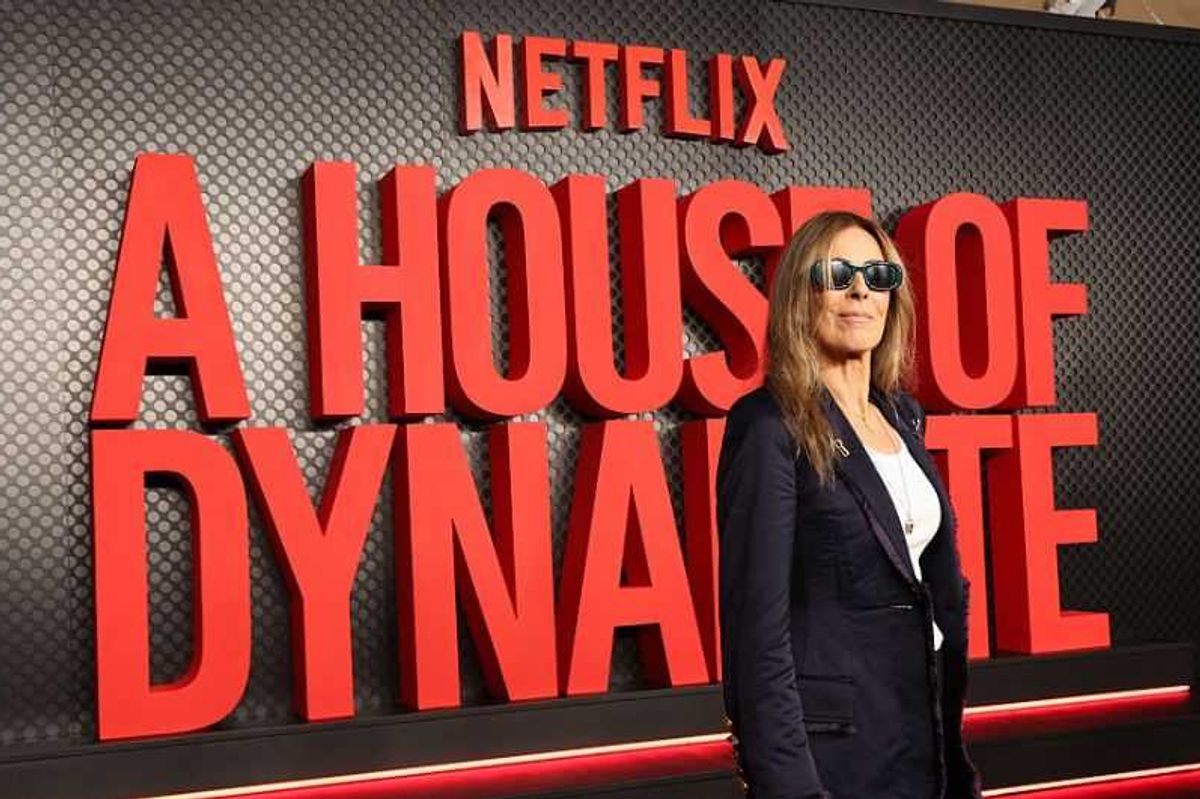
Netflix’s thriller “A House of Dynamite” very much wants to teach us something about the folly of waging war with civilization-ending weapons. The lesson it ends up imparting, however, has more to do with the state of contemporary storytelling.
The film revolves around a high-stakes crisis: an unexpected nuclear missile launched from an unspecified enemy and aimed directly at Big City USA. We get to see America’s defense apparatus deal with impending apocalypse in real time.
It seems the best Ms. Bigelow, Mr. Oppenheim, and the team at Netflix can offer up is a lukewarm ‘nukes are bad, mmkay?’
Triple threat
“Revolves” is the operative word here. The movie tells the same story three times from three different vantage points — each in its own 40-minute segment. From first detection to the final seconds before detonation, we watch a bevy of government elites on one interminable red-alert FaceTime, working out how to respond to the strike.
This is the aptly named screenwriter Noah Oppenheim’s second disaster outing for the streamer; he recently co-created miniseries “Zero Day,” which features Robert De Niro investigating a nationwide cyberattack.
That series unspooled a complicated and convoluted conspiracy in the vein of “24.” “A House of Dynamite” clearly aims for something more grounded, which would seem to make accomplished Kathryn Bigelow perfect for the job.
And for the film’s first half-hour she delivers, embedding the viewer with the military officers, government officials, and regular working stiffs for whom being the last line of America’s defense is just another day at the office … until suddenly it isn’t. The dawning horror of their situation is as gripping as anything in “The Hurt Locker” or “Zero Dark Thirty.”
Then it happens two more times.
On repeat
In Shakespeare’s “Twelfth Night,” Duke Orsino laments a repetitive song growing stale: “Naught enters there of what validity and pitch soe’er, but falls into abatement and low price.”
Or put another way, the tune, not realizing its simple beauty, sings itself straight into worthlessness.
And somehow, this manages to be only part of what makes “A House of Dynamite” so unappealing. Our main characters — including head of the White House Situation Room (Rebecca Ferguson), general in charge of the United States Northern Command (Tracy Letts), and the secretary of defense (Jared Harris) — offer no semblance of perspicacity, stopping frequently to take others’ feelings into account before making decisions, all while an ICBM races toward Chicago. From liftoff to impact in 16 minutes or less, or your order free.
Missile defensive
So thorough is this picture of incompetence that the Pentagon felt compelled to issue an internal memo preparing Missile Defense Agency staff to “address false assumptions” about defense capability.
One can hardly blame officials when, in the twilight of the film, we’re shown yet another big-screen Obama facsimile (played by British actor Idris Elba) putting his cadre of sweating advisers on hold to ring Michelle, looking for advice on whether his course of action should be to nuke the whole planet or do nothing. The connection drops — she is in Africa, after all, and her safari-chic philanthropy outfit doesn’t make the satellite signal any stronger. He puts the phone down and continues to look over his black book of options ranging “from rare to well done,” as his nuclear briefcase handler puts it.
And then the movie ends. The repetitive storylines have no resolution, and their participants face no consequences. The single ground missile the U.S. arsenal managed to muster up — between montages of sergeants falling to their knees at the thought of having to do their job — has missed its target.
Designated survivors — with the exception of one high-ranking official who finds suicide preferable — rush to their bunkers. The screen fades to black, over a melancholy overture. Is it any wonder that audiences felt cheated? After sitting through nearly two hours of dithering bureaucrats wasting time, their own time had been wasted by a director who clearly thinks endings are passé.
No ending for you
If you find yourself among the unsatisfied, Bigelow has some words for you. In an interview with Bulletin of the Atomic Scientists, she justified her film’s lack of a payoff thusly:
I felt like the fact that the bomb didn’t go off was an opportunity to start a conversation. With an explosion at the end, it would have been kind of all wrapped up neat, and you could point your finger [and say] “it’s bad that happened.” But it would sort of absolve us, the human race, of responsibility. And in fact, no, we are responsible for having created these weapons and — in a perfect world — getting rid of them.
Holy Kamala word salad.
RELATED: Phones and drones expose the cracks in America’s defenses
 Photo by dikushin via Getty Images
Bigelow-er
For much of her career, director Kathryn Bigelow has told real stories in interesting ways that — while not always being the full truth and nothing but the truth — were entertaining, well shot, and depicted Americans fulfilling their manifest destiny of being awesome.
That changed with Bigelow’s last film, 2017’s “Detroit,” a progressive, self-flagellating depiction of the 1967 Detroit race riots (final tally: 43 deaths, 1,189 injured) through the eyes of some mostly peaceful black teens and the devil-spawn deputy cop who torments them. “A House of Dynamite” continues this project of national critique.
But what, exactly, is the point? It seems the best Ms. Bigelow, Mr. Oppenheim, and the team at Netflix can offer up is a lukewarm “nukes are bad, mmkay?” This is a lecture on warfare with the subtlety of a John Lennon song, set in a world where the fragile men in charge must seek out the strong embrace of their nearest girlboss.
It’s no secret that 2025 carries a distinct “end times” energy — a year thick with existential threats. AI run amok, political fracture edging toward civil conflict, nuclear brinkmanship, even the occasional UFO headline — pick your poison. And it’s equally obvious that the internet, not the cinema, has become the primary arena where Americans now go to see those anxieties mirrored back at them.
“A House of Dynamite” is unlikely to reverse this trend. If this is the best Hollywood’s elite can come up with after gazing into the void, it’s time to move the movie industry to DEFCON 1.
‘The Naked Gun’ creator David Zucker bashes ‘frightened’ Hollywood elites

Legendary “Airplane!” director David Zucker has a theory about why today’s movies are flopping so badly — and the folks in charge aren’t going to like it.
“The studios are very frightened people afraid to take risks,” the director told Align, stroking his chin. “I wrote an article … about the 9% rule. There’s 9% of people who just don’t have a sense of humor. There’s like zero sense of humor. So the studios are being guided by those people.”
‘There’s 9% of people who just don’t have a sense of humor.’
According to Zucker — whose cinematic pedigree includes comedies like “The Naked Gun,” “BASEketball,” and “Top Secret!” — cancel culture is still alive and well in the film biz, pushed by overly cautious studio brass.
Cracked rearview
“It’s like driving looking through the rearview mirror,” Zucker said — an attitude that leads to unfunny films that repackage old ideas with jokes that don’t land.
Zucker didn’t have to look far to find an example: the recent “The Naked Gun” reboot, which went ahead without his involvement.
RELATED: ‘Trey didn’t have a car’: ‘Airplane!’ director David Zucker on humble origins of ‘South Park’ empire
Blocked calls
Zucker recalled the confusion he felt when he learned Paramount had no intention of consulting him on “The Naked Gun” reboot, despite having pages upon pages of jokes already written. Instead, the studio went with “Family Guy” creator Seth MacFarlane, who came in and took over.
Zucker attempted to explained the debacle:
“I’m excluded from it. I called him. He didn’t return my calls, refused to meet with me. So I don’t know. I don’t know what’s going on, but that’s Hollywood.”
Still he said MacFarlane did contact him after the movie finished production and spent “10 minutes just telling me how much he idolized [my movies], hard to get mad at a guy who keeps telling you what a genius you are.”
‘Painful’ viewing
Despite all the flattery, Zucker said he had no intentions of ever seeing the new version of “The Naked Gun,” recalling his experience watching “Airplane II: The Sequel,” with which he also had no involvement.
“If your daughter became a prostitute, would you go watch her work?” he asked. “So you know, it’s painful. It would be painful to sit through. It’s somebody else doing our movie, and they don’t know what they’re doing.”
RELATED: ‘The Naked Gun’ remake is laugh-out-loud funny? Surely, you can’t be serious
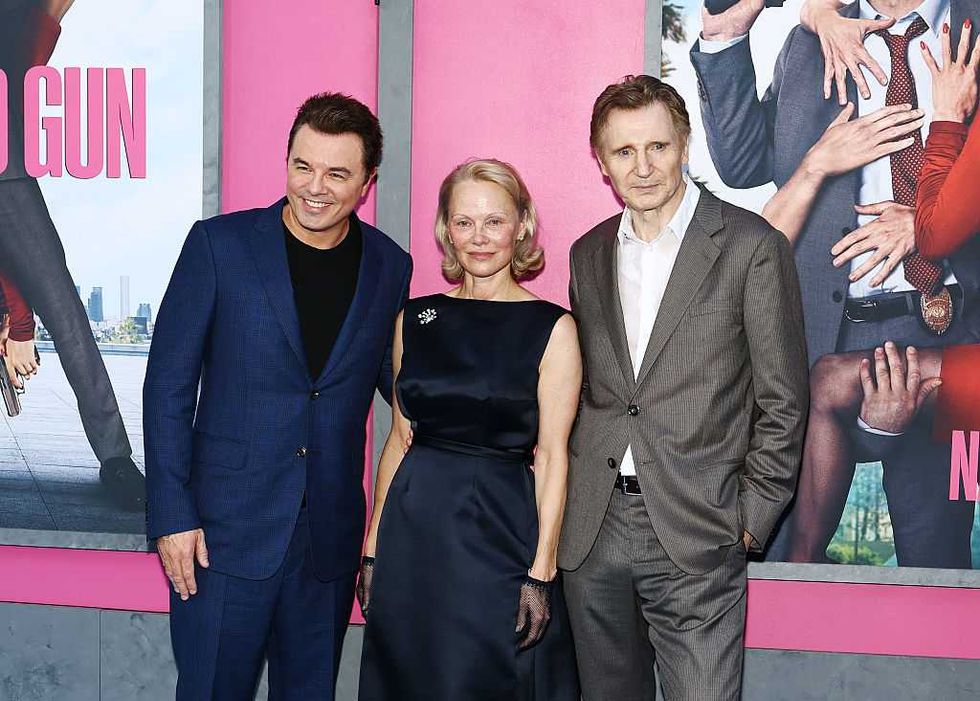 (L-R) Seth MacFarlane, Pamela Anderson, and Liam Neeson attend ‘The Naked Gun’ New York Premiere on July 28, 2025. Photo by Arturo Holmes/WireImage
In Zucker’s view, Hollywood’s risk-averse approach is especially obvious in comedies. “If you do a comedy that’s not funny, you can’t hide,” he noted, adding that the new “The Naked Gun” “must have been excruciating to sit through.”
It’s safe to say Zucker won’t be lining up for the upcoming “Spaceballs” reboot either. Not that he was a huge fan of the 1987 original, which he dismissed as “an attempt to copy ‘Airplane!'”
“You can’t do stuff that’s 10, 20 years old … puns [that] were fresh in 1982,” he laughed.
As for his own movies, Zucker said he hopes to advance the pun-filled, slapstick comedy genre he helped popularize — with his next project offering a fresh, humorous spin on film noir.
’Trey didn’t have a car’: ‘Airplane!’ director David Zucker on humble origins of ‘South Park’ empire

The creators of “South Park” didn’t always know it would become a hit — let alone one of the longest-running shows in the history of television.
Just ask Hollywood veteran David Zucker, who hired Trey Parker and Matt Stone shortly before the duo — and the foul-mouthed kids they created — became household names.
‘They were also unsure of if “South Park” would ever work.’
Zucker — who directed seminal spoof comedy “Airplane!” along with his brother Jerry and the late Jim Abrahams — recalled that when he first met the University of Colorado grads in the mid-1990s, they were still very much struggling filmmakers.
Ride share
“They came to my office and I met with these guys, and Trey didn’t have a car,” Zucker said.
Despite their precarious finances, the duo already had a feature film under their belt — 1993’s “Cannibal! The Musical” — as well as animated short “The Spirit of Christmas,” which would soon land them a deal for “South Park.”
Impressed with their talents, Zucker hired Parker and Stone to do a video for Universal executives commemorating the studio’s recent purchase by Canadian beverage giant Seagram.
The duo turned in “Your Studio and You,” a side-splitting send-up of 1950s industrial videos crammed with cameos by the likes of Steven Spielberg, Sylvester Stallone, and Michael J. Fox.
Hedging their bets
Zucker remembered the young newcomers in 1997 when casting the leads for his longtime passion project, “BASEketball.” By then Parker and Stone had made a second film, “Orgazmo,” a comedy about a Mormon missionary (Parker) turned porn star turned superhero. With a $25 million budget and major studio backing, Zucker’s project represented a major step up.
And while the two were then deep in production on the show that would launch their careers, they assumed it would die a quick death once it aired. So they agreed to star in “BASEketball.”
“They were also unsure of if ‘South Park’ would ever work,” said Zucker. “This was a hedge against, you know, Trey having to get his car fixed.”
Upon premiering in August 1997, “South Park” was an instant hit, requiring Parker and Stone to shoot “BASEketball” while simultaneously maintaining their grueling TV schedule.
RELATED: ‘Naked Gun’ creator David Zucker offers ‘Crash’ course in comedy
Rookie year
While Zucker had already written a script for “BASEketball” — inspired by an actual sport he and some friends “invented on my driveway” during the 1980s — he relied on his Gen X collaborators to punch it up for the younger “South Park” fan base.
“They probably wrote about a third of it, and you know, a lot of that stuff, because I didn’t know what kind of language went on between … 20-somethings,” Zucker explained. Both the actors were in their late 20s at the time.
One of Parker and Stone’s most significant additions to the script was helping with the “psych-outs” — tasteless insults “baseketball” players hurl at an opponent in hopes of making him miss a shot.
All-star lineup
Such tactics were never used by the real-life players, whom Zucker described as “all these guys who later became, you know, heads of studios and heads of agencies” — a roster including director Peter Farrelly (“There’s Something About Mary” and “Dumb and Dumber”), former CAA head David “Doc” O’Connor, and former Fox Television Group chair Gary Newman.
RELATED: ‘South Park’ roasted Trump — and the White House is not happy
 1998: “South Park” creators Trey Parker and Matt Stone star in the movie “BASEketball.” Getty Images
Zucker noted that he is emphasizing the “psych-out” element in a new “BASEketball” pitch: a reality show featuring teams of comedians playing the sport while tearing each other down.
As for his old “BASEketball” buddies, Zucker said he recently visited their office to get a 10-minute preview of their new movie, “Whitney Springs,” a live-action comedy musical starring rapper Kendrick Lamar as a black man working as a slave re-enactor at a living history museum who discovers his white girlfriend’s ancestors “owned” his ancestors.
“They showed me 10 minutes of it, and it looks great,” said Zucker.

The Spectacle Ep. 294: Hollywood’s Low Box Office Turnout Was Not So Spooky
Hollywood had nothing but cobwebs in the theaters this Halloween, as the box office reportedly received its lowest earnings for…
Seven Chillers Without Drillers for Halloween
Halloween is a uniquely fun holiday because it turns Man’s most unwanted emotion, fear, into a source of entertainment, with…
‘Last Days’ brings empathy to doomed Sentinel Island missionary’s story


It would be easy to demonize John Allen Chau, the Christian missionary who died while trying to bring the Bible to a remote tribe. The 26-year-old could have introduced new diseases to the North Sentinel Island community, causing serious harm. He also vowed to invade a community that craves isolation above all.
Now imagine a Hollywood film capturing Chau’s short, dramatic life. The industry isn’t known for sympathetic close-ups on faith, to be generous.
‘Whenever we go into places where we’re not comfortable, the first thing is, “I have to impose my point of view. Here’s my worldview.”‘
Yet veteran director Justin Lin (“Star Trek Beyond,” the “Fast & Furious” franchise) took a less expected path in bringing the young man’s life to theaters.
 Justin Lin. Photo: Giles Keyte
Quick to judge
“Last Days” stars Sky Yang as John, a determined Christian who vowed to do something remarkable with his life. He risked everything to travel to the North Sentinel Island, hoping to share Jesus Christ’s message.
The story ended tragically, but Lin’s film portrays Chau as a kind-hearted lad whose complicated life led him to his fate. Lin isn’t a Christian, but he treated the material with care and empathy. That wasn’t his first reaction.
“It’s very easy to judge and dismiss. That’s what I did when the story broke,” Lin told Align of the initial news reports, the kind of “hot take” that swiftly decried Chau’s fateful decision. “It didn’t sit well with me that I was so quick to judge and dismiss him.”
A father’s story
An Outside Magazine feature on Chau’s life had a powerful effect on the filmmaker. The story shared Chau’s father’s perspective on his late son, among other details.
That rocked Lin.
“I have a teenage son. As a parent, I know exactly what he was going through, how you’re trying to impart your wisdom, make sure they’re not going through any hardships,” he said. “What I learned from that article was that if you do it on your timeline, and your son is not ready, you just miss each other.”
The project didn’t involve fast cars or intergalactic travel, but the change of pace spoke to the veteran filmmaker.
“I really wanted to try something different,” added Lin, even if he wouldn’t have the kind of blockbuster budget at his back.
“It’s going to be a run-and-gun, small crew,” he imagined before reading more from the real Chau’s diary. “In John’s writing, he was clearly inspired by adventure novels and Hollywood films. … I’m going to honor that and be the signpost for our film. … It’s an intimate story, but it has to feel like a big Hollywood film.”
He called in some professional favors to give the film a Tinsel Town sheen that otherwise might not have been feasible.
RELATED: Pistol-packing rabbi targets anti-Semitism in action flick ‘Guns & Moses’
 Still courtesy Pictures from the Fringe
Fresh perspectives
Lin approached Chau’s faith delicately, while acknowledging the dubious decisions he made along the way. A mid-film romance ends unexpectedly, for example, allowing for fresh perspectives on Chau’s quest.
That balance came via an extensive effort on the director’s part.
“Whenever we go into places where we’re not comfortable, the first thing is, ‘I have to impose my point of view. Here’s my worldview.’ I made that commitment early on to say, ‘No,’” he said. “Taking three years of my life [for this film] … was to connect with his humanity.”
More with less
“Last Days” looks as lush as a $100+ million film, the kind that Lin routinely delivers. He didn’t have those resources nor an A-list cast to bring John Chau’s life to the big screen. Yang is a minor revelation, while Ken Leung’s turn as the young man’s father is heartbreaking.
Lin has a knack for doing more with less.
“I made a credit card movie for $250,000, and that movie opened the door and gave me all these opportunities,” said Lin of “Better Luck Tomorrow,” his 2002 breakthrough made by maxing out his personal credit limit. The film earned $3.8 million theatrically, a tidy sum given the budget. Hollywood swiftly came calling.
“Last Days” may have an indie sensibility, but Lin still felt the pressure to “nudge” the film in certain directions. The real Chau refused to be “boxed in” by society, yet the film industry tried to do just that with the film.
“Can you make this a Christian movie?” he recalled of the behind-the-scenes chatter about “Last Days.” … I didn’t understand or even appreciate that kind of nudge. … ‘If you really wanna be marketable, you should do more of this.’ Those conversations for me ended very quickly.”
“That is a challenge with independent films … the temptation. … ‘If I give you all this money, can you cast my son?’ Those are all choices you encounter,” he said.
Lin will find himself on more familiar ground with the upcoming “BRZRKR,” based on the Boom! Studios comic book co-created by Keanu Reeves. The “John Wick” star served as an angel investor in “Last Days.”
“I didn’t grow up wanting to make action movies, but I ended up enjoying the process,” he admitted.
The public got a sneak peek at “Last Days” during the Sundance Film Festival earlier this year, months before its Oct. 24 theatrical rollout. The post-screening Q and A left him hopeful he had accomplished what he had set out to do with the film.
“Five minutes in, they could find a common bridge in [the film],” Lin recalled. “We need that now more than ever.”





