

Category: China
Glenn Beck: Iran’s regime is crumbling — and the REAL villain isn’t China
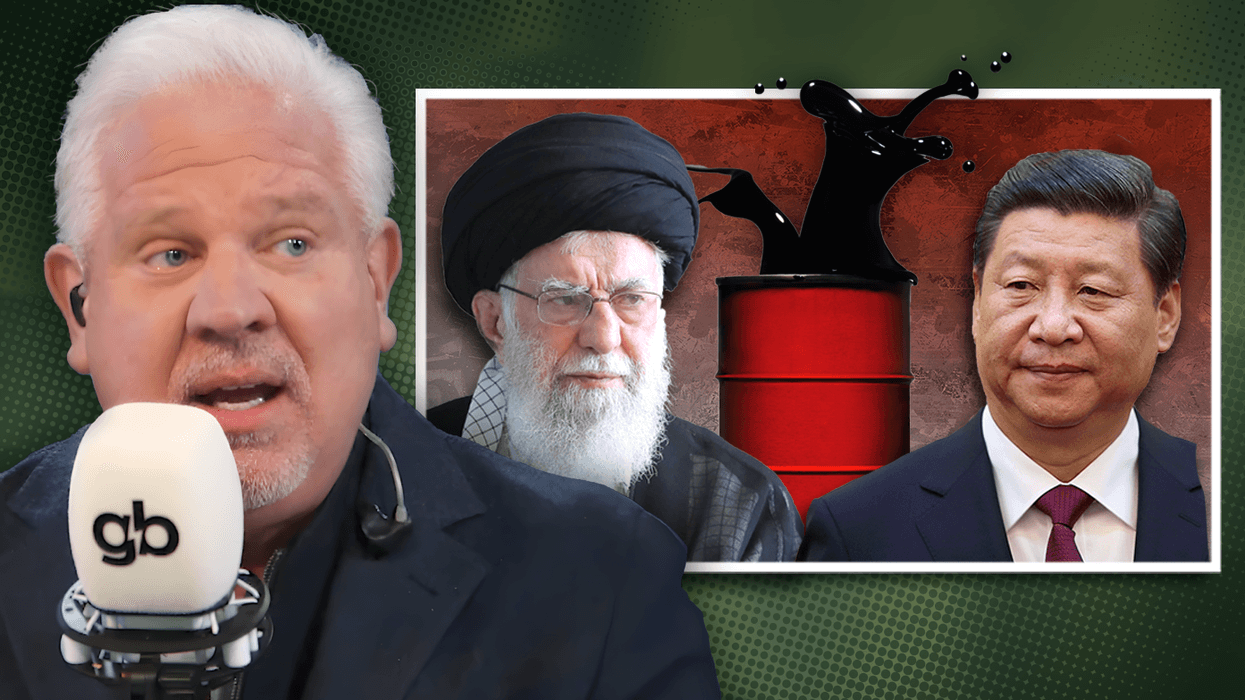
Iran’s streets continue to erupt in one of the most intense nationwide uprisings since the 1979 revolution. Thousands have been killed, tens of thousands arrested, and a brutal regime crackdown with live fire, mass detentions, and a near-total internet blackout has largely smothered visible protests for now. And yet whispers of regime fragility grow louder.
But there’s more to this story than meets the eye. Iran’s real vulnerability, says Glenn Beck, lies not in its inability to squash a protest movement but in its oil-dependent economy, propped up by shadowy deals that could unravel overnight.
Glenn breaks it down brilliantly with a simple, chilling apple farmer analogy that exposes how global banks and China’s “teapot” refineries have kept the regime afloat through sanction-skirting barter schemes … until the buyer suddenly says “no more.”
Glenn’s story begins with an apple farmer named Mo and an apple buyer named Ming.
“[Mo] starts out small. He has a few trees, a few crates. He works hard and everything, and he reinvests all the time. He plants more trees. He buys more land. He takes out loans for trucks and storage and refrigeration,” Glenn begins.
His business keeps growing and then “one day something incredible happens. A massive single grocery chain [run by Ming] picks up Mo’s apples — not a few apples, all of the apples. Which is good because what I didn’t tell you about Mo is he thinks he’s a good guy, but he’s pissed every other apple store off in the world,” he continues.
Ming tells Mo his plans to “refine” the apples into “apple cider and apple juice.” Mo, thrilled that now “demand is guaranteed,” expands even more.
“The trucks are financed. The warehouses are leased. The future looks locked in,” says Glenn.
But then one day, everything comes to a screeching halt. Suddenly “Ming says, ‘Yeah, we can’t take any more apples. We’re at capacity.”’
This news wrecks Mo’s world – without Ming, there’s nothing to keep his business empire afloat.
Almost immediately, apples begin to pile up, and the trucks loaded with supplies are parked. Then “the police are like, ‘Why are all these trucks on the sides of the roads?’ … Then they realize, ‘Wait a minute, you don’t have a license to ship apples. In fact, you don’t have a license on this truck,”’ Glenn continues.
It turns out Mo hasn’t been making any money from his apple farm because Ming has been paying him in equipment and infrastructure the entire time. Mo’s business collapses immediately because he never actually owned anything.
“The banks did,” says Glenn — not because they trusted Mo but because they trusted Ming, who took out the insurance policies.
“Ming is actually the refinery in China, and Mo is the oil in Iran,” he finally reveals.
The banks and insurance companies knew that China couldn’t legally purchase Iranian oil because there’s an embargo on it. But they were perfectly fine with a barter system — where China provided goods, services, and infrastructure in exchange for oil. As long as there was “no money changing hands,” the banks would sign.
This prospect is already enough to give Glenn “a brain aneurysm,” but sadly the story takes an even darker turn.
“The farmer Mo — he has sons, and each one ran a different part of his farm,” he says, returning to his analogy.
Ming’s sudden decision to bail stirs up tension in Mo’s family.
“One son says, ‘Sell the land while it’s worth something.’ Another says, ‘No, hold on — the store might come back.’ Another one says, ‘No, you know what? I’m not with either of you’ and starts moving equipment out of the barn in the middle of the night, and he’s just going to get onto a plane and disappear at some point,” says Glenn.
“This is when countries go down because each son stops asking how do we save the farm, and they start asking how do I get out before it collapses. The farm doesn’t change hands in a ceremony. It just empties out.”
It starts with Mo’s sons, then the farm workers, and then the security team. Protests erupt outside Mo’s gates, and he is forced to cope with the fact that his apple farm has rotted from the inside out.
“This is what’s happening in Iran,” says Glenn.
To hear more of his analysis, watch the video above.
Want more from Glenn Beck?
To enjoy more of Glenn’s masterful storytelling, thought-provoking analysis, and uncanny ability to make sense of the chaos, subscribe to BlazeTV — the largest multi-platform network of voices who love America, defend the Constitution, and live the American dream.
Antitrust panic helped kill an American robotics pioneer
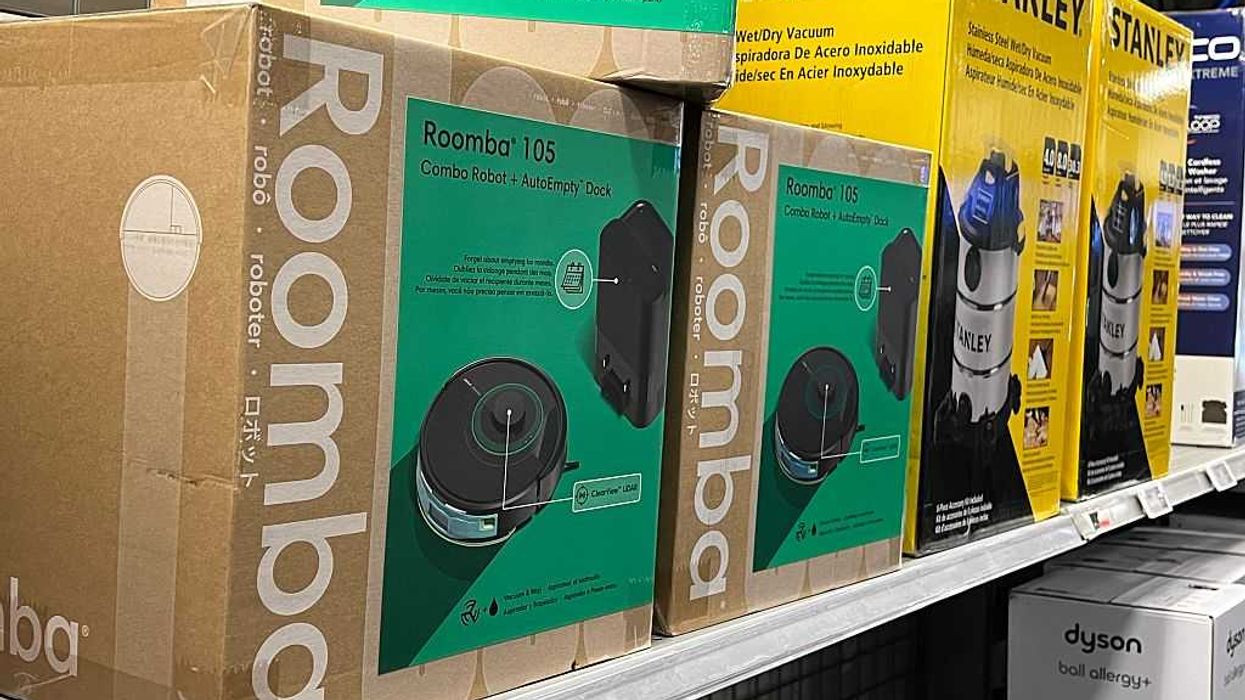
Antitrust regulators claim to protect competition. Their decision to block Amazon’s acquisition of iRobot did the opposite. It helped drive an American robotics pioneer into bankruptcy last December and pushed it into the arms of a Chinese creditor.
Antitrust law is supposed to defend consumers and prevent monopoly abuse. In this case, regulators killed a deal that could have kept iRobot alive, preserved American jobs, and strengthened a U.S. company facing brutal Chinese competition. Instead, the collapse of the acquisition forced iRobot into a court-supervised restructuring in which Shenzhen Picea Robotics — its largest Chinese creditor and key supplier — will take the company’s equity and cancel roughly $264 million in debt.
Ultimately, the acquisition’s collapse pushed iRobot into a deal with its largest Chinese creditor.
iRobot began in 1990, founded by roboticists from the Massachusetts Institute of Technology. The company built military and space exploration products before it introduced the Roomba in 2002, the device that turned home robotics into a household category. For years, iRobot stood as a rare American success story in consumer robotics.
Then the market shifted. Chinese manufacturers poured in with cheaper models, tighter supply chains, and rapid iteration. iRobot’s share price peaked in 2021, then slid hard over the next year. The company sought a lifeline and found one in Amazon, which agreed to acquire iRobot for roughly $1.7 billion.
That deal made strategic sense. iRobot needed capital, scale, and distribution power to compete against Chinese rivals such as Roborock, Ecovacs, Dreame, and Xiaomi. Amazon could have provided all three. Consumers likely would have seen faster innovation, deeper device integration, and lower prices, while iRobot kept more of its footprint and engineering talent intact.
Regulators saw a different story. The European Commission objected on antitrust grounds and signaled it would block the acquisition. The commission argued the deal could restrict competition in robot vacuum cleaners by allowing Amazon to disadvantage rival products on its marketplace. American critics piled on, including Sen. Elizabeth Warren (D-Mass.), who framed the acquisition as an attempt to buy out competition, along with privacy fears about Roomba’s mapping technology.
Facing regulatory opposition, Amazon and iRobot terminated the agreement in January 2024. Amazon’s general counsel, David Zapolsky, warned that the decision would deny consumers faster innovation and more competitive prices, while leaving iRobot weaker against foreign rivals operating under very different regulatory constraints.
The warnings proved accurate. After the deal collapsed, iRobot announced deep cost-cutting, including a 31% workforce reduction. The company shifted more production to Vietnam to compete on cost. Chinese brands continued to eat the market.
By December 2025, iRobot filed for Chapter 11 bankruptcy protection and announced a restructuring deal that hands control to Shenzhen Picea Robotics. According to iRobot’s own announcement, Picea will acquire the equity of the reorganized company through the court process and cancel about $264 million in debt.
RELATED: Why Trump must block Netflix’s Warner Bros. takeover
 Photo by Mandel NGAN/AFP via Getty Images
That outcome should haunt every regulator who claimed to defend competition. Regulators blocked an American acquisition and ended up delivering a storied American company to a Chinese creditor. They did not preserve a competitor. They helped bury it.
The iRobot collapse exposes a central problem with modern antitrust enforcement: Officials often substitute fear-driven hypotheticals for real-world consequences. They imagine a future in which Amazon squeezes competitors and consumers pay more. They ignore the present in which Chinese firms gain market power, American companies lose ground, and U.S. workers pay the price.
Markets discipline failure quickly. Regulators rarely pay for their mistakes. They can block a deal, watch a company fall apart, and declare victory because they prevented a theoretical harm.
This case produced the opposite of the intended result. Regulators killed a merger that could have strengthened an American company against Chinese competition. They weakened competition in the robot vacuum market by removing one of the few U.S.-based pioneers from the field. They also shrank the number of meaningful paths forward for iRobot until only one remained: a takeover by the company’s Chinese lender and supplier.
Policymakers should learn the right lesson. Antitrust action should not operate as a reflex against size or success. Regulators should measure outcomes, not slogans. If officials claim they protect competition, they should not celebrate decisions that end in bankruptcy and foreign control.





