Category: Housing prices
If voters don’t feel relief, the economy isn’t fixed

The concerns of many Americans about their economic well-being may be at the highest level since the Great Depression. Politico recently reported that 46% of Americans say their cost of living is the worst that they can remember, including over one-third of Trump voters. Nothing better exemplifies this than the many “30-somethings” who are unable to purchase a home.
Financial anxieties center around affordability, which is the proxy for evaluating whether the economy is meeting the public’s needs. Affordability is the degree to which households can responsibly pay for essential goods and services.
In the end, the nation’s affordability dilemma is about the confidence people have in the country’s economic future.
Gregg Ip, an economic commentator for the Wall Street Journal, says that affordability cannot be measured solely by economic data, but must also account for perceptions of financial security.
President Trump opined that concerns about affordability are a “hoax” created by Democrats for political purposes. Most Americans would disagree. While the runaway inflation of the Biden presidency has moderated, widespread concerns about affordability persist. According to a recent Politico poll, nearly half of the nation found the cost of their groceries, health care, utilities, and housing to be unaffordable. About half of the respondents said food costs are difficult to manage, and more than a quarter skipped medical appointments because of the cost.
In the 2026 midterm elections, it will be incumbent upon Republicans and Democrats to make an affordability agenda “job one.” These agendas should be the yardstick voters use to cast their vote for members of Congress and state officials.
The U.S. affordability crisis is multidimensional, requiring a dual-track strategy that combines structural reforms with immediate and affordable relief for the most vulnerable citizens. Each party’s affordability agenda should demonstrate when households will realize cost-of-living relief, avoid another round of inflation, provide market incentives for innovation, supply expansion and productivity gains, demonstrate distributional fairness, and stress choice over federal mandates.
Restoring an affordable economy will require that failed federal policies be reversed and the president and Congress focus on fixing long-term root causes.
To make goods and services more affordable, public policies should aim at increasing private-sector housing construction, modernizing domestic energy regulations, expanding production, encouraging competition in the health care insurance market, avoiding deficit spending that can rekindle inflation, rolling back regulations that increase consumer and business expenses, and devolving social and educational programs to the states to tailor taxpayer-friendly solutions to local challenges.
The nation’s affordability dilemma is not only about the price of goods and services. It concerns the relationship between costs, income, and the perception of financial security. In the end, it is about the confidence people have in the country’s economic future.
RELATED: All I want for Christmas is for Vivek Ramaswamy to stop embarrassing the GOP
 Photo by Jon Cherry/Getty Images
When households and businesses feel “squeezed,” they lose faith that public or private institutions are protecting their interests. A September 2025 poll conducted by the Pew Research Center found that just 17% of Americans trusted the federal government to do the “right thing” most of the time. Similarly, the July 2025 Gallup survey reported that less than 30% of Americans had confidence in U.S. institutions.
The major impediments to addressing the high cost of living are deep ideological divides over causes and solutions. Progressives emphasize government mandates and regulations, subsidies, and deficit spending. Conservatives stress fiscal restraint and market-driven solutions. Adopting common-sense economic reforms requires compromise and the rejection of left and right extremism driven by grievances and rage.
There is no more important issue for voters than which candidates and parties will boldly tackle the affordability challenge. Success will be influenced by policies that encourage business investment and innovation and workers keeping more of their income.
Editor’s note: This article was originally published by RealClearPolitics and made available via RealClearWire.
The party that made life more expensive wants credit for noticing
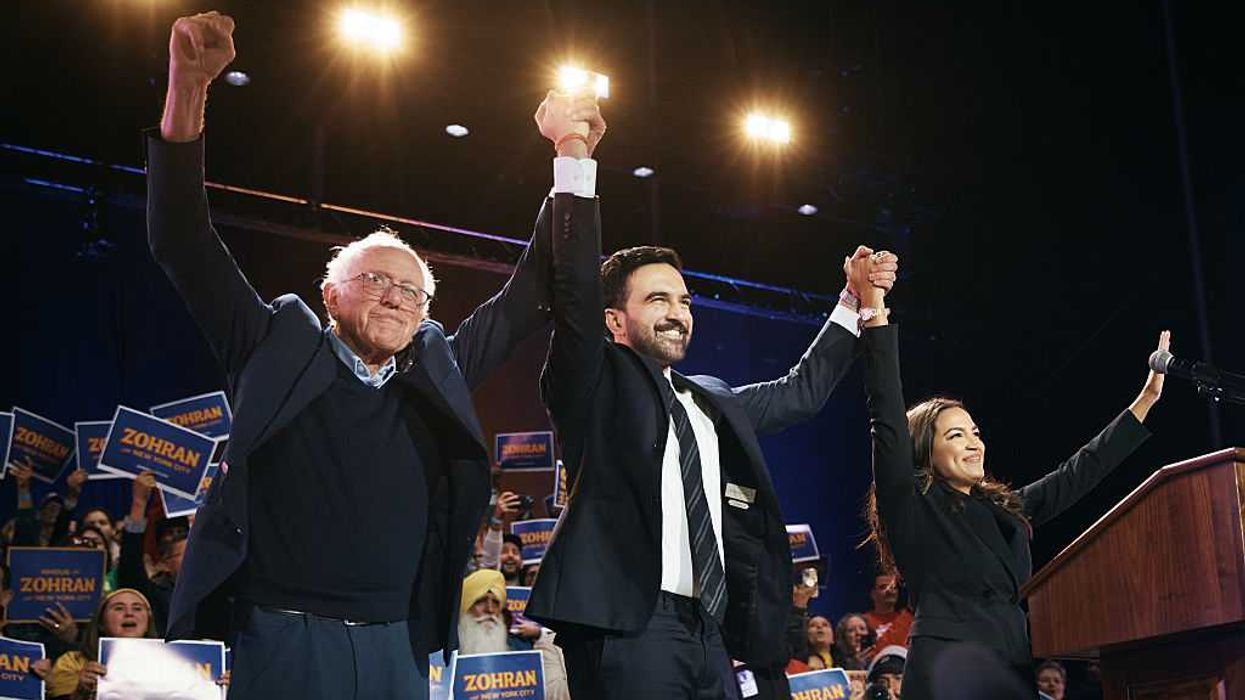
Having identified a problem they created, Democrats are now blaming “affordability” on Republicans. It is a striking display of audacity — the very definition of chutzpah.
For more than a year, Democrats have struggled to find a message that resonates because they keep recycling losing ones. They have lashed out at immigration enforcement —storming ICE facilities, attacking ICE officers, and defending violent illegal aliens.
Democrats are now left with a single strategy: campaigning on the consequences of their own incompetence and hoping voters forget who caused them.
They voted for the largest tax increase in U.S. history by opposing the extension of the 2017 tax rates under the Tax Cuts and Jobs Act.
They continue to cling to climate alarmism even as the rest of the world moves on.
They remain soft on crime, opposing President Trump’s deployment of the National Guard in cities where criminals run rampant and law-abiding citizens live in fear.
And in a final act of desperation, they triggered the longest federal government shutdown in history — before caving and achieving nothing.
Same issues. Same failure to connect.
The results speak for themselves. Democrats’ favorability sits at an abysmal 32.5%, well below Republicans’ 38.2% and far below President Trump’s 43.8%.
Then came Zohran Mamdani, the neophyte New York Democratic Socialist who toppled Democrats’ old guard in consecutive elections — first Mayor Eric Adams, then former Gov. Andrew Cuomo. Mamdani did what Democrats have always done: promise voters lots of free stuff. Only he did it on a far grander scale — buses, housing, child care, grocery stores.
Faced with his success, Democrats opted for the familiar response: If you can’t beat ’em, join ’em. They sanitized Mamdani’s socialism, rebranded it as “affordability,” and declared it their new cause.
That affordability is now Democrats’ issue should surprise no one. After all, they caused the crisis they now loudly lament.
Start with New York City, where affordability has collapsed most dramatically. According to Visual Capitalist’s ranking of America’s least affordable cities, Manhattan is No. 1, Brooklyn ranks sixth, and Queens seventh. In fact, the top 10 least affordable cities are overwhelmingly governed by Democrats and located in Democrat-dominated states: New York, Hawaii, California, and Massachusetts. By contrast, nine of the 10 most affordable cities are in Republican-dominated states.
The reasons are no mystery. They are the left’s preferred policies: high taxes that drive up the cost of living and chase out taxpayers; rent control that discourages new construction and fuels homelessness; and excessive regulation and litigation that inflate the cost of everything they touch.
The same pattern holds at the state level. U.S. News and World Report lists the 10 least affordable states, and the top six are California, New Jersey, Hawaii, Massachusetts, Washington, and New York. Nine of the 10 are blue states. Florida — the lone red-state exception — also boasts the No. 1 economy, ranks second in education, levies no state income tax, and continues to attract new residents in large numbers. Meanwhile, all 10 of the most affordable states are Republican-led.
RELATED: The socialist spell: Why modern minds keep falling for an old lie
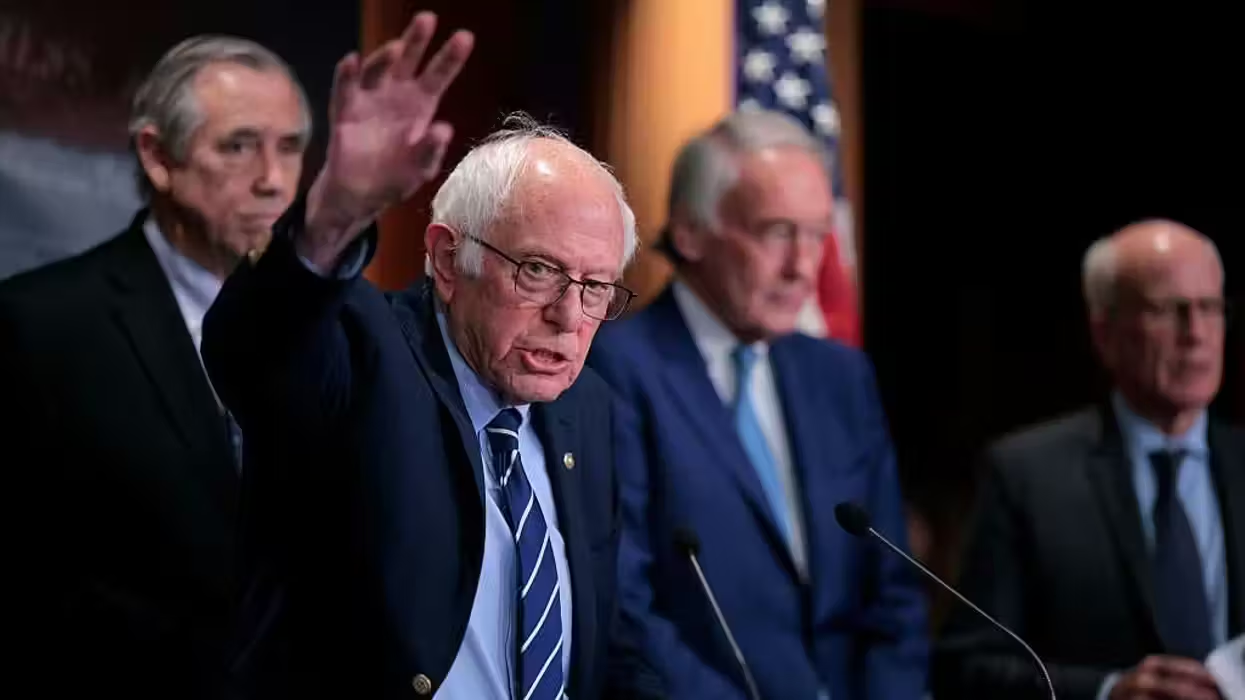 Photo by Chip Somodevilla/Getty Images
What about inflation? Isn’t that a national problem?
Yes, but inflation didn’t materialize out of thin air. It began under the Biden administration, reaching a 40-year high of 9.1% in June 2022. CPI-U inflation was just 1.4% when Biden took office in January 2021. By March, it had nearly doubled. By June, it had surged to 5.4%. By December, it hit 7%. A year later, it still stood at 6.5%. Inflation did not fall below 3% until July 2024 — the 43rd month of Biden’s presidency.
Excessive Democrat spending fueled this surge. From fiscal years 2021 through 2024, the Congressional Budget Office shows cumulative deficits of $8.9 trillion, driven by roughly $8 trillion in spending above the pre-pandemic baseline. The only reason Democrats didn’t spend more is that members of their own party balked.
Inflation works like weight gain: it comes on fast and comes off slowly. Even when the rate of inflation declines, prices remain higher. There is no economic Ozempic. Americans are still paying the price for four years of Democratic fiscal gluttony.
None of this has stopped Democrats from claiming “affordability” as their issue — or from demanding more of the same policies that caused the crisis in the first place: higher spending, higher taxes, and more regulation.
Stripped of winning ideas, Democrats are now left with a single strategy: campaigning on the consequences of their own incompetence and hoping voters forget who caused them.
Liz Warren hustles Trump with a housing bill from hell
What is it about the National Defense Authorization Act that makes it a dumping ground for every dumb liberal pet project?
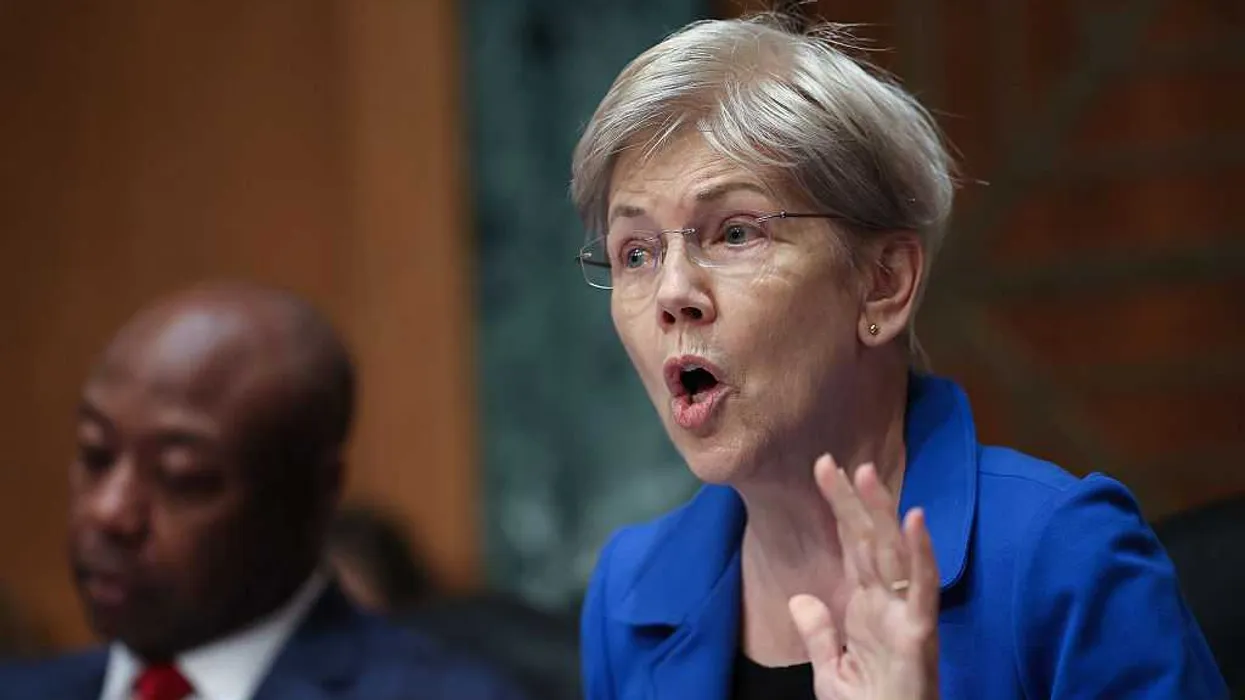
First the Trump administration pushed an AI data-center amnesty that would have stripped states of authority over massive, power-hungry facilities. Then lawmakers tried to slip in Sen. Elizabeth Warren’s housing bill, a package built to subsidize Section 8 tenants and builders and to fuel the very forces driving the current housing bubble. After a backlash, both provisions came out of the NDAA. Now congressional leaders plan to pass the Massachusetts Democrat’s housing bill on its own.
The real crisis comes from government debt and the inflation it fuels. This is not a shortage of lumber or land. It is a monetary chokehold created by government policy.
Earlier this year, Senate Banking Committee Chairman Tim Scott (R-S.C.) worked with Warren to move S. 2651, an omnibus housing package that expands every federal program Trump previously vowed to cut. They attached the legislation to the Senate’s NDAA, then lobbied House conservatives to adopt it in their version of the defense bill. At the last minute, House leaders stripped the language. The House Financial Services Committee now plans to mark up the bill next week.
Here’s the trouble: The bill misdiagnoses the housing crisis. It treats high prices as a supply shortage instead of a government-fueled asset bubble and inflationary pricing distortion.
The result is predictable. Its 40 provisions would expand Section 8, loan subsidies, “affordable housing” grants, and even looser mortgage programs for people priced out of the market. Every one of these items pours accelerant on the factors that drove the 2008 bubble and the post-COVID spike.
Government subsidies for overbuilding and for buyers who cannot afford homes created the crisis. Yet like a dog returning to its vomit, Scott, the president, and Senate Democrats are endorsing Warren’s 2020 campaign platform to revive the same model. The bill promises builders and activist groups federal cash in exchange for regulatory concessions. The trade-off is disastrous.
Section 202 creates a new federal grant program to fund local housing projects in designated zones — a warmed-over version of the community-engineering schemes Obama’s Department of Housing and Urban Development pushed a decade ago.
Meantime, Section 209 establishes a $200 million yearly fund at HUD to award “innovative housing reforms” to localities that reshape zoning to favor dense, subsidized units.
Conservatives would call these incentives an invitation to replicate failed urban policies in red suburbs. The bill rewards grifting nonprofits and community organizers who treat federal housing programs as political infrastructure.
At the same time, the administration is pushing rules that limit red-state zoning authority to clear the way for data-center construction while promoting Section 8 expansion with new incentives and zoning guidance. It revives, in effect, Obama’s Affirmatively Furthering Fair Housing regime — the same racial-gerrymandering tool Trump killed in his first term. Supporting the Scott-Warren bill would revive it in practice.
Worse, the bill rests on a false premise. America doesn’t have a housing shortage. According to Redfin, as of October sellers outnumbered buyers by 36.8% — about 529,000 more sellers — the largest gap since 2013. Census data shows about 148 million housing units for roughly 134 million households, a surplus of around 14 million units. When Trump took office, the vacancy count stood near 11 million, yet prices were far more affordable.
The real crisis comes from government debt and the inflation it fuels. Construction costs surged with inflation. Interest rates spiked to service that debt, creating an interest-rate cliff that locked millions of homeowners into sub-3% mortgages. They cannot sell without doubling their monthly costs. High rates froze the existing inventory in place. This is not a shortage of lumber or land. It is a monetary chokehold created by government policy.
RELATED: Why the kids are not all right — and Boomers still pretend nothing’s wrong
 Photo by Andrew Lichtenstein/Corbis via Getty Images
Federal housing policy adds another layer. Fannie Mae and Freddie Mac long prioritized “access to credit” over price stability. By guaranteeing high-risk loans and encouraging low down payments, they allow buyers to bid more than their incomes justify. Subsidized credit lifts prices for sellers, not buyers.
S. 2651 makes the problem worse by expanding the Community Development Block Grant and similar programs, encouraging activist groups and corporate developers to overbuild units no one can afford without subsidies. That process pushes prices upward and strengthens corporate buy-ups of suburban neighborhoods.
The administration previously acknowledged these distortions. In Trump’s FY 2021 budget, the Office of Management and Budget proposed eliminating CDBG and the HOME Investment Partnerships Program, arguing that states and localities were better positioned to address affordability challenges. This new bill reverses that logic entirely.
The Federal Reserve’s rate whiplash — a decade of near-zero borrowing costs followed by sudden hikes — froze supply by trapping owners inside artificially cheap mortgages. Washington’s policies created the gridlock. The inventory exists. Monetary policy quarantined it.
What the administration needs to do is allow prices to fall back toward alignment with median incomes. That adjustment would restore affordability without new federal intervention. Instead, the FHFA is pushing lower credit-score requirements for subsidized mortgages. That mistake will repeat the pattern of enticing families into overpriced homes they cannot sustain.
Housing policy should stop trying to prop up inflated prices. The market must correct. A federal “solution” built around 40 expansionary programs will intensify the crisis, not solve it. Doing nothing would spur more affordability than this bipartisan blunder.