Category: Return
Pressed on Greenland, Trump tells Davos the US has weapons he ‘can’t even talk about’

President Donald Trump is dropping more hints about the technology used to capture Venezuela’s former communist leader Nicolas Maduro.
During his speech at the World Economic Forum in Davos, Switzerland, the president discussed his thoughts on Greenland as a strategic military location against China and Russia.
After saying how “stupid” the United States was to give the territory back to Denmark after World War II, Trump said the world is in greater danger with Greenland exposed.
‘They weren’t able to fire one shot at us.’
“Now our country and the world face much greater risks than it did ever before because of missiles, because of nuclear, because of weapons of warfare that I can’t even talk about,” Trump began. He then started discussing the weapons used in the capture of Maduro.
“Two weeks ago, they saw weapons that nobody ever heard of. They weren’t able to fire one shot at us. They said, ‘What happened?’ Everything was discombobulated. They said, ‘We’ve got them in our sights. Press the trigger.’ And nothing happened,” he told his fellow world leaders.
The president added that Venezuelan defense forces could not fire any anti-aircraft missiles, saying there was “one that went up about 30 feet and crashed down right next to the people that sent it.”
“They said, ‘What the hell is going on?'” the president added.
Much speculation has been given to the types of advanced technology U.S. forces used in Operation Absolute Resolve, including directed-energy weapons.
One of Maduro’s security guards described American troops as shooting with “such precision and speed; it felt like each soldier was firing 300 rounds per minute.”
The security guard described the Americans launching a “sonic weapon or whatever it was,” which was like a “very intense sound wave,” and he “felt like” his head “was exploding from the inside.”
“We all started bleeding from the nose. Some were vomiting blood,” he recalled.
RELATED: Did Trump use the ‘Havana syndrome’ weapon on Venezuela?
As for the unresponsive defense systems Trump described as “made by Russia and by China,” reports have claimed that telecommunications towers were among the first targets destroyed by American forces. A Russian-made surface-to-air missile system was also destroyed in airstrikes, others reported.
“So they’re going to go back to the drawing boards,” Trump remarked.
Much of what the United States has revealed about its weapons systems is already advanced, such as helmet technology that provides a sort of X-ray vision, supported by an interconnected drone and communications network, as well as anti-drone energy weapons.
Trump was eager to explain America’s need to acquire Greenland due to it being an “undefended” and “key strategic location” between the United States, Russia, and China.
“We need it for strategic national security and international security,” Trump said as the room remained dead silent.
The president also dismissed notions that the real reason to take Greenland was to acquire rare-earth minerals, saying the real rarity lies with processing and that Greenland’s minerals are buried deep under ice.
Like Blaze News? Bypass the censors, sign up for our newsletters, and get stories like this direct to your inbox. Sign up here!
Did Trump use the ‘Havana syndrome’ weapon on Venezuela?

A Venezuelan security guard, speaking to the New York Post after the January 3 raid that captured Nicolás Maduro, described American forces using some kind of directed-energy weapon that left hundreds of defenders bleeding from their noses, vomiting blood, and unable to stand. According to this account, about 20 U.S. troops from roughly eight helicopters took down hundreds of Venezuelan soldiers without a single American death.
The basic facts are wild enough without the sci-fi angle. Delta Force conducted Operation Absolute Resolve in the predawn hours, capturing Maduro and his wife from Fort Tiuna in Caracas. More than 200 special operations forces participated, supported by about 150 aircraft that disabled Venezuelan air defenses and extracted Maduro to New York to face narco-terrorism charges. Venezuela reported over 100 casualties, with only seven U.S. troops injured.
That’s already one of the most audacious military operations since the bin Laden raid.
Trump wants adversaries, particularly in Latin America, to believe the US has these capabilities.
But then comes the guard’s testimony, shared publicly by White House press secretary Karoline Leavitt on X. He describes radar systems simultaneously shutting down, swarms of drones, and then this mysterious weapon that made his “head feel like it was exploding from the inside.” Mass collapse. Internal bleeding. Complete incapacitation.
To those of us with long memories, it sounded strangely familiar, hearkening back to the “Havana syndrome” attacks on American personnel starting in Havana in 2016. Those attacks were suspected to have been caused by a secret energy weapon. Now, the United States has its own.
Whether we actually used that weapon or the White House just wants you to believe it did, either way, the strategic effect is the same.
The Havana syndrome connection
Starting in late 2016, U.S. diplomats and CIA officers in Cuba began experiencing bizarre symptoms: sudden onset of severe headaches, hearing strange sounds, vertigo, cognitive issues, and what appeared to be actual brain injuries. Over the next several years, hundreds of American personnel reported similar incidents in China, Russia, Austria, and even Washington, D.C.
The National Academies of Sciences concluded in 2020 that “pulsed electromagnetic energy” was the most plausible explanation for at least some cases. Multiple intelligence panels agreed: Directed-energy weapons were the leading theory. In 2024, investigative reporting linked Russia’s GRU Unit 29155 to research on “non-lethal acoustic weapons.”
For years, American officials have suspected, but couldn’t prove, that hostile actors used these weapons against U.S. personnel. The attacks hit diplomats inside embassy compounds, in hotels, and even at home. Invisible, deniable, and devastating.
Now fast-forward to the January 3, 2026, raid and its darkly ironic twist: 32 Cuban military advisers were killed defending Maduro’s compound, possibly hit with the same type of weapon that may have been used against Americans in Cuba.
If true, it sends a message: We know what you did to our people in Havana, and now you’ve experienced it yourselves.
The Pentagon just bought the Havana syndrome weapon
CNN reported on January 13 that Homeland Security Investigations acquired a device through an undercover operation for tens of millions of dollars in the waning days of the Biden administration, using Pentagon funding. The backpack-size device produces pulsed radio waves and contains Russian components.
That portability matters. One of the long-standing questions about Havana syndrome was how you could make a weapon powerful enough to cause brain injuries that’s also portable enough to deploy against specific targets in embassy compounds, hotels, and homes.
The Pentagon tested it for more than a year and considered it serious enough to brief the House and Senate Intelligence Committees in late 2024. There’s still debate within the government about its actual link to Havana syndrome cases, but the acquisition has, according to CNN, “reignited a painful and contentious debate” about whether foreign adversaries have been attacking U.S. officials with directed-energy weapons.
Marc Polymeropoulos, a former CIA officer who went public about injuries he sustained in what he believes was an attack in Moscow in 2017, told CNN: “If the [U.S. government] has indeed uncovered such devices, then the CIA owes all the victims a f**king major and public apology for how we have been treated as pariahs.”
This news breaks days after Venezuelan guards described similar symptoms during the Maduro raid. Interesting timing.
RELATED: Polymarket bettors RAGE as the app says Maduro’s capture doesn’t count as ‘invasion’
 Michael Nagle/Bloomberg via Getty Images
But did they actually use it?
The Venezuelan guard’s account describes mass nosebleeds, vomiting blood, and hundreds incapacitated simultaneously. These are more extreme than documented Havana syndrome cases, which typically involved headaches, vertigo, and cognitive issues rather than acute internal bleeding. Could blast overpressure from conventional explosives cause similar effects? Yes. Could shrapnel, concussive force, and chemical irritants from 150 aircraft’s worth of ordnance produce these symptoms? Absolutely.
Here’s what makes me skeptical: Both Maduro and his wife claimed injuries, but they survived and appeared in a Manhattan courtroom days later. The injuries reported (Maduro falling while fleeing, his wife struck in the head) sound like conventional combat trauma, not internal organ damage from directed energy.
And the biggest tell: The White House press secretary amplified this story. The Pentagon just spent tens of millions on a device they suspect is behind Havana syndrome attacks, briefed Congress, and now CNN is reporting on it publicly. If U.S. special forces had actually deployed a classified weapons system and some guard blew the secret, the response would be aggressive operational security and plausible deniability. Instead, we’re getting transparency.
That’s not how you handle a genuine security breach. That’s how you handle a psychological operation.
Why ambiguity is the weapon
The Trump administration wants adversaries, particularly in Latin America, to believe the U.S. has these capabilities. And here’s the brilliance: The technology is real (we have the receipts), but whether it was used remains ambiguous. Venezuela can’t prove it didn’t happen. The U.S. won’t confirm or deny. Adversaries now have to plan for worst-case scenarios.
This is the modern version of Reagan’s Star Wars program. Most scientists knew it couldn’t work as advertised, but the Soviets spent billions trying to counter it anyway. Sometimes the belief in a capability is more valuable than the capability itself.
The United States just demonstrated it can reach into a fortified compound in a hostile capital, extract a head of state, and fly him to New York to face trial, all while suffering minimal casualties. That capability needs no embellishment. But the embellishment serves a purpose: forcing every tin-pot dictator and mid-level drug trafficker in the Western Hemisphere to wonder if they’re next and whether their security forces can protect them from weapons they can’t see or hear.
And for anyone involved in Havana syndrome attacks, whether Cuban, Russian, or anyone else, there’s now a very clear message: If you hit our people with invisible weapons, don’t be surprised when we return the favor. The 32 dead Cuban advisers make that point unmistakably clear, regardless of what weapon actually killed them.
Power projection isn’t just about what you can do; it’s about what others believe you can do.
The bottom line
The truth about Venezuela is probably somewhere in the middle. Electronic warfare to knock out radar and communications? Almost certainly. That’s standard doctrine. Directed-energy weapons causing mass internal bleeding? The technology exists, but the extreme symptoms described don’t match documented effects. Whether they were actually used? Strategically ambiguous.
And that’s the point. The ambiguity itself is the weapon. If they used it, adversaries know America will deploy it. If they didn’t, adversaries still believe they might next time, and uncertainty is often more powerful than certainty.
Here’s a story: Cuba helps Russia attack American diplomats with invisible weapons starting in 2016. Years later, Cuban advisers die defending a dictator when the U.S. raids his compound with technology that sounds awfully familiar. Whether that’s coincidence, retaliation, or just good storytelling doesn’t really matter. The message landed.
That’s worth understanding because we’re going to see more of it in this fifth generation of warfare. The age of warfare where you could independently verify what happened on the battlefield is over. In the era of psychological operations, classified capabilities, and information warfare, the story about the battle matters as much as the battle itself.
Maybe more.
Is Zuckerberg’s Metaverse ending? Meta decimates staff, sours on VR.

Mark Zuckerberg’s Metaverse may not be the next big thing after all.
It hasn’t been that long since the Metaverse was the place to be, with celebrities like Snoop Dogg saying he would start a new record label and social media giants the Nelk Boys promising fans exclusive experiences.
Several sources are reporting that Reality Labs, Meta’s division that works on virtual reality headsets, smart glasses, and wristbands, is dumping around 10% of its workforce.
‘About 80% of users are reportedly under the age of 16 years old.’
The New York Times reports this could amount to somewhere around 1,000-1,500 employees and “disproportionately” affect those who work on the Metaverse and virtual-reality-based social media networking. Bloomberg’s report echoed similar numbers and said Meta is cutting back on virtual reality investments. A Meta spokesperson told Return the Bloomberg report is accurate.
CEO Zuckerberg may no longer think his prized avatar world is the future. He reportedly wants money reallocated from VR goggles and the Metaverse toward his wearables division, to push smart glasses and wristband computing.
For example, Meta is famously partnered with Ray-Ban glasses for video recording and AI integration into the user’s point of view.
RELATED: Zuckerberg names ex-White House deputy Meta’s new president — and Trump LOVES it
It is difficult to gauge the active users in the Metaverse. In 2022, the internet was rife with stories of barren online wastelands such as Decentraland and Sandbox’s $1.3 billion disaster that was garnering fewer than 1,000 daily active users.
As Blaze News reported in December, Meta had recently revealed it spent $77 billion on its overall VR strategy that included Meta Quest hardware (headsets) and Meta Horizon, its Metaverse social platform.
“We said last month that we were shifting some of our investment from Metaverse toward wearables,” a Meta spokesperson told Return. “This is part of that effort, and we plan to reinvest the savings to support the growth of wearables this year.”
Current estimates have the active user count for the Metaverse, overall, at somewhere between 400 and 600 million. About 80% of users are reportedly under the age of 16 years old, and half of all users are under 13.
Last year, the company said it had significant growth in sales for its VR headsets and increased payment volume on its platform by 12%. This came with a 10% overall increase in monthly time spent on its media apps, Meta’s VP of Metaverse content, Samantha Ryan, wrote in 2024.
RELATED: Charlie Kirk murder online role play banned from Grand Theft Auto: ‘Tasteless, unacceptable’
Still, Zuckerberg has made it clear that the company is shifting toward its wearable technology and AI, including what it takes to power it.
With plans to build new massive data centers, Zuckerberg has promised to deliver “personal superintelligence,” confirming in recent remarks that the company will continue to “invest in and finance Meta’s AI and infrastructure.”
The company says it will focus on experiences with mobile phones for the Metaverse, instead of VR headsets.
Like Blaze News? Bypass the censors, sign up for our newsletters, and get stories like this direct to your inbox. Sign up here!
Charlie Kirk murder online role play banned from Grand Theft Auto: ‘Tasteless, unacceptable’

The online world for Grand Theft Auto V is seeing a rare instance of censorship despite its usually anything-goes environment.
GTA Online is the game’s online platform, which has thrived for more than a dozen years since its original 2013 release.
‘Tasteless, unacceptable, and inappropriate.’
In December, publisher Rockstar Games launched a feature that allows players to design and publish their own missions online for other users to play. At this point in the game’s lifespan, this was about the only thing that users could not yet do.
It only took a few days for this feature to be immediately taken to its limits, though, as at least one user took it upon themselves to recreate the murder of Charlie Kirk, which happened on September 10, 2025.
A user named “Yaarpen98” created a mission titled “We are Charlie Kirk,” in which the gamer is meant to go on a rooftop and shoot a person standing in front of school under a fruit stand.
YouTuber ICER relayed fan reactions to the created mission, saying it had users split, with half of the fans saying it was simply dark humor and an example of player freedom. The other half of fans, he explained, described the mission as “tasteless, unacceptable, and inappropriate.”
He added some have argued that “players have crossed a line that even the developers should not tolerate.”
RELATED: Honor Charlie and put America first at the ballot box in 2026
As reported by Variety, Rockstar Games has banned missions of this nature and added “Charlie Kirk” to its list of prohibited terms through its “profanity filter.” Furthermore, the developers will change the name of this tool to something that reflects how it will be used to flag content violations, not just profanity.
Rockstar’s community guidelines already prohibit showcasing “violent extremism,” which includes “glorification or promotion of real-world terrorist, extremist, or criminal organizations and their ideologies.”
This rule has already been allegedly enforced in regard to rapper and producer Sean “Diddy” Combs, after missions that recreated a raid on his home were removed.
RELATED: Conor McGregor removed from Hitman video game after losing sexual assault case
 Photo by Trent Nelson/The Salt Lake Tribune/Getty Images
A user named “Vexnyllith” said he created a mission that had authorities raiding the home of a “celebrity” known for “hosting parties and is wanted for serious crimes.”
The user said he also created a mission called “Diddy Disciples,” but both missions were removed. He then vowed to create a new series of missions and advised fans to follow him.
The mission creation feature is similar to that of Hitman Online, which also sparked controversy when UFC fighter Conor McGregor was removed from the game over real-life legal troubles.
Like Blaze News? Bypass the censors, sign up for our newsletters, and get stories like this direct to your inbox. Sign up here!
Parents brag about ‘rehearsing’ their kids for ICE raids — even though they’re citizens

Liberals have gathered online to describe how they are preparing their young children for alleged raids on their homes by Immigration and Customs Enforcement.
In many cases, those making the statements reveal that because they are white, they are likely not in danger of being approached by law enforcement, but they feel the need to discuss the disaster plans with their kids anyway.
‘I’m currently rehearsing with my 3 1/2 year old what to do, and where to hide.’
The bizarre stories have been posted on Reddit’s “Twin Cities” page, which refers to Minneapolis and St. Paul, Minnesota.
First reported by independent journalist Andy Ngo, one thread in particular drew some rather questionable responses from other readers.
“I’m currently rehearsing with my 3 1/2 year old what to do, and where to hide, if someone we don’t know comes to our door,” the thread read, while clarifying, “I am a white, blonde, blue-eyed, U.S. citizen.”
This encouraged others to share similar stories, like one reader who qualified that while he is a “U.S. Air Force veteran and white male,” he still believes that this fact “doesn’t matter” because of the area he lives in.
“[ICE agents are] in every store and on nearly all corners, going door to door and breaking every constitutional right. I’ll stand my ground. But I also realize the freedom/privilege I still have that others around me do not,” he explained.
RELATED: Blocking ICE with ‘micro-intifada’: Good’s group taught de-arrest, cop-car chaos before her death
 Photo by Bryan Cox/U.S. Immigration and Customs Enforcement via Getty Images
A self-described “white woman” who is married to a Hispanic U.S. citizen said she is still taking precautions to “keep us all safe.”
She added that it was “so f**king sad” that she has to have “this conversation” — about potential ICE raids — with her 3-year-old child.
Similarly a reader named Steve described his family as “pale Midwest white.”
Still Steve claimed he had to speak with his 6-year-old son to explain “why people in our neighborhood and city are feeling scared.”
In response, the child allegedly replied, “But there are a lot of friends in my class with different colored skin. Will they be OK? Can I help them?”
Steve’s sentiment that his family is in danger was checked by a fellow “white” however. User “AStrawberryGhost” wrote that if Steve does not live with any noncitizens then, “This isn’t about you.”
“I’m also in very little danger and [I’m] also distressed anyway, so I do get it and I’m not trying to make you feel ashamed,” the user began. “I’m saying that you actually have more power than you imagine right now and you might feel better if you used it!” the Reddit user decried.
RELATED: ICE agent POV video in Renee Good shooting — who does it absolve?
 Christopher Dilts/Bloomberg via Getty Images
These strange posts exist alongside other astonishing ideas pushed on the same page.
For example, one user cited a post about a man who claimed he was detained by ICE and asked if he would give up any names of protest organizers in exchange for legal protections. This prompted the writer to plainly state that those who are arrested should not reveal any information that could damage their cause, under any circumstances.
“Do not share the names of organizers,” “Do not share the names of ANY family, friends, or neighbors,” and “Do not share any information. You can plead the 5th,” the user wrote.
“ICE are lying to find more people to arrest and deport,” they added.
At least one Reddit user contributed a post about Anne Frank, directly comparing the enforcement of immigration law to the Holocaust during World War II.
“83 years ago today in Germany … and today in the twin cities,” the post read, alongside a photo of Frank.
The post evoked many replies about how conservatives are unlikely to know the history of Nazi Germany.
Like Blaze News? Bypass the censors, sign up for our newsletters, and get stories like this direct to your inbox. Sign up here!
Utah police report claims officer shape-shifted into a frog

There is a perfectly reasonable explanation for why, on paper, a local Utah police officer allegedly turned into a frog.
The claim comes from the Heber City Police Department in Heber City, Utah, where officers are reportedly looking to save time on their paperwork, as writing police reports typically takes personnel between one and two hours per day.
‘I’m not the most tech-savvy person, so it’s very user-friendly.’
In order to save on man-hours, Heber City PD began testing new software that can take bodycam footage and generate a police report based on the audio and video.
The new artificial intelligence program did not take long to malfunction though, as just a few weeks into its trial in December, a police report stated that one of the local officers had shape-shifted into a frog during an investigation. It turns out the software picked up on audio that was playing on a TV screen present during the incident.
“The bodycam software and the AI report-writing software picked up on the movie that was playing in the background, which happened to be ‘The Princess and the Frog,'” Sergeant Rick Keel told FOX 13 News, referring to the 2009 animated Disney film.
Keel then stressed, “That’s when we learned the importance of correcting these AI-generated reports.”
 Photo by Michael Kovac/FilmMagic
The department reportedly began testing two AI programs in early December, named Draft One and Code Four.
Draft One comes from company Axon, founded by American Rick Smith. On its website, Axon promises to “revolutionize real-time operations,” but is responsible for generating the Disney-themed police report. The program reportedly works for both English and Spanish languages — and apparently for princesses too.
Blaze News reached out to Axon for comment.
Sgt. Keel told reporters that he has saved about six to eight hours per week since employing AI to do his paperwork.
“I’m not the most tech-savvy person, so it’s very user-friendly,” he said.
Code Four, however, was created by two MIT dropouts who are just 19 years old: George Cheng and Dylan Nguyen. That program also claims it can transform “bodycam to reports in seconds.”
Code Four reportedly costs $30 per officer, per month.
 Photo by Scott Brinegar/Disney Parks via Getty Images
According to Dexerto, AI policing programs have already caused issues elsewhere in the United States. For example, the outlet reported last October that armed police officers swarmed a 16-year-old student outside of a high school in Baltimore after an AI gun-detection system falsely claimed the boy had a firearm.
It turned out after police arrived on scene that the teen was actually holding a bag of Doritos.
Blaze News reported on the increased use of AI monitoring software in schools in early 2024, when an Arkansas district announced it would use over 1,500 cameras at its schools.
Like Blaze News? Bypass the censors, sign up for our newsletters, and get stories like this direct to your inbox. Sign up here!
Ted Cruz pelted with insane AI memes as X bans unpaid users from editing pics with Grok

Sen. Ted Cruz (R-Texas) can thank his own legislation for putting a stop to deepfakes on Grok and X.
Cruz introduced the Take It Down Act in early 2025, aimed at stopping online publication of “intimate visual depictions of individuals,” both authentic and computer-generated.
‘These unlawful images … should be taken down and guardrails should be put in place.’
According to the BBC, an usual trend of asking xAI tool Grok to artificially remove people’s clothing from their photos has permeated across the website and has even extended to victimizing children, according to the Guardian.
In response, X owner Elon Musk announced consequences for anyone inappropriately uploading content.
“Anyone using Grok to make illegal content will suffer the same consequences as if they upload illegal content,” Musk wrote.
X’s safety team followed suit, saying it would take action against “illegal content,” including permanently suspending accounts and working with law enforcement.
When Cruz made note of the unlawful images and praised X for addressing the issue, he was hit with a string of bizarre attempts to use Grok against him.
RELATED: The early social media reviews of Cruz’s 2028 POTUS trial balloon are in
“These unlawful images … should be taken down and guardrails should be put in place,” Cruz wrote.
What followed were remarks like users asking Grok to put “Ted Cruz on his knees” in front of Israeli Prime Minister Benjamin Netanyahu; in this case, Grok obliged.
Other obvious violations of the Take It Down Act included generated photos of Cruz naked, photos of body parts in his mouth, and multiple AI photos of him wearing a dress, sometimes while wearing a yarmulke.
One user even posted an AI video of Cruz saying he was upset with Tucker Carlson for not wanting to date him.
RELATED: Elon Musk’s xAI inks new deal with War Department
 Photo by Alex Slitz/Getty Images
On January 6, however, Cruz himself posted an AI-generated video regarding “Trump’s Venezuela Magic,” which showed President Trump making former Venezuelan leader Nicolas Maduro magically appear onstage.
Despite others taking issue with his own usage of AI generation, Cruz’s post is unlikely to be against his own drafted bill because it does not contain “intimate visual depictions.”
Additionally Variety reported that X has now limited AI image editing to paid users only.
U.K. Prime Minister Keir Starmer has rung alarm bells over the controversy, advocating for “all options to be on the table” in terms of legal punishment and a possible ban of the platform.
Like Blaze News? Bypass the censors, sign up for our newsletters, and get stories like this direct to your inbox. Sign up here!
Microsoft CEO: AI ‘slop’ is good for you — or at least for your ‘human potential’

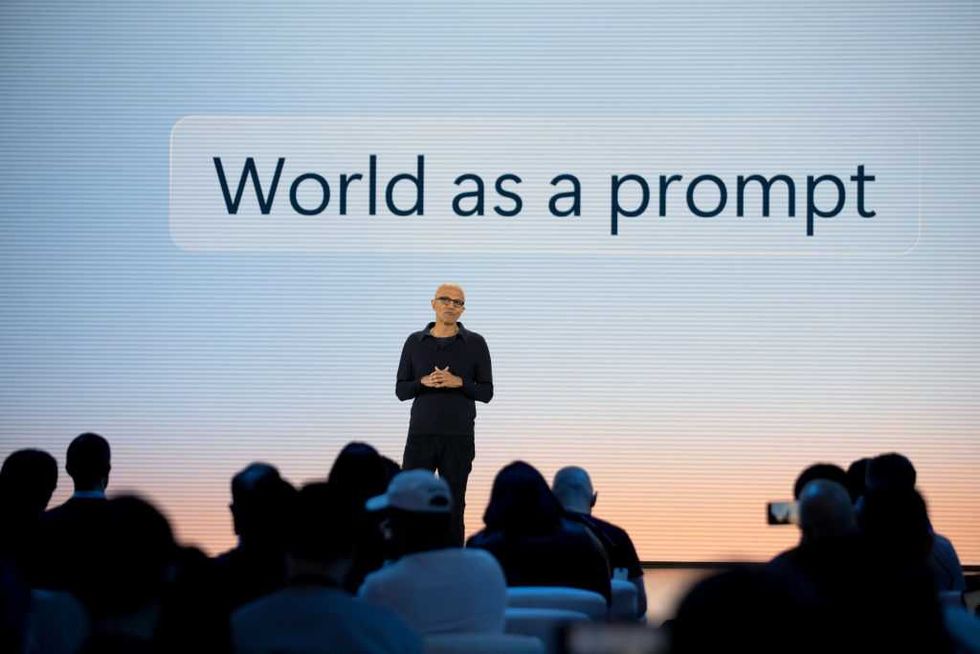
Microsoft CEO Satya Nadella says the general public is looking at artificial intelligence through the wrong lens.
In a recent blog post, the India-born executive told readers to start viewing AI platforms as “bicycles for the mind.”
‘While AI can improve efficiency, it may also reduce critical engagement.’
Nadella explained that he prefers users would think of AI “as a scaffolding for human potential vs. a substitute” for human labor.
This scaffolding should be used to achieve goals, not replace humans in their roles, he continued, before saying debates around AI should not include an argument as to whether or not something is “slop.”
“We need to get beyond the arguments of slop vs. sophistication and develop a new equilibrium in terms of our ‘theory of the mind’ that accounts for humans being equipped with these new cognitive amplifier tools as we relate to each other. This is the product design question we need to debate and answer.”
“Slop” was named as Merriam-Webster’s Word of the Year for 2025 and was defined as “digital content of low quality that is produced usually in quantity by means of artificial intelligence.”
With this definition in mind, it is no wonder that Nadella would rather his users shy away from using such a term.
RELATED: CRASH: If OpenAI’s huge losses sink the company, is our economy next?
The blog post, titled “Looking Ahead to 2026,” envisioned a world where it is not even considered to not integrate AI into regular tasks.
Society must account for AI’s “‘jagged’ edges” and enable rich and safe “tools use” to advance to proper “scaffolds,” Nadella claimed.
Consistently using this term to imply assistance in man-made projects en masse, Nadella described the use of AI as necessary in the face of “scarce energy, compute, and talent” resources.
“If Nadella wants people to stop referring to AI output as slop, then the AIs should be improved so they no longer produce slop,” said Josh Centers, a tech expert from Chapter House.
Interestingly enough, the very same slop that generative AI models have produced recently have actually not enhanced human thinking, according to studies. As PC Gamer noted, Microsoft even co-authored a study that showed reliance on AI models can reduce independent problem-solving capabilities.
“Surprisingly, while AI can improve efficiency, it may also reduce critical engagement, particularly in routine or lower-stakes tasks in which users simply rely on AI, raising concerns about long-term reliance and diminished independent problem-solving,” the paper revealed.
RELATED: ROTTEN APPLE? Top execs bail on CEO Tim Cook as woked-up tech giant fumbles lead
 Chona Kasinger/Bloomberg via Getty Images
The study also noted that AI tools “appear to reduce the perceived effort required for critical thinking tasks among knowledge workers, especially when they have higher confidence in AI capabilities.”
Content creator Kabrutus — who represents a community of more than 470,000 disenfranchised gamers — has heavily criticized AI when it does churn out “slop.”
“I think Nadella’s main goal on wanting us to stop using the term ‘slop’ to refer to their AI is because he realizes AI is perceived as something very negative on many different fronts,” he said.
He added, “Nadella is trying to make people stop using this term while the ‘AI culture’ is still small, because it’s easier. Once AI gets HUGE, and pretty much everybody calls it ‘slop,’ it will be impossible to revert the situation.”
“Why is he so worried about it?” the Brazilian asked. “Because AI is going to be one of the flagships of ‘his’ company in the near future, and if people perceive AI as ‘slop’ it will be much harder to sell them AI-based products, right?”
Meanwhile, Lewis Brackpool, U.K. director of investigations for Restore Britain, said he sees slop as something that defines “meaningless, talentless content creation that numbs the brain” and is plastered all over social media.
Brackpool explained that asking people not to use the term “slop” seems like “a marketing tool to prevent criticism of a product that could hurt sales numbers” and act as a coping mechanism for a company because “their product likely sucks.”
Like Blaze News? Bypass the censors, sign up for our newsletters, and get stories like this direct to your inbox. Sign up here!
Microsoft gets 400 million AI subscribers in ‘overnight’ switch

Paid Microsoft subscribers can now be considered artificial intelligence users.
The massive change comes as Microsoft has officially changed its flagship Microsoft 365 suite to be integrated with AI.
‘Genius move. Rebrand Office, instantly “acquire” 400M AI users.’
Microsoft announced the official shift in a support post, revealing it is now integrating its Copilot AI app into programs like Word, Excel, PowerPoint, as well as PDF services.
“The Microsoft 365 Copilot app is your everyday productivity app for work and life that helps you find and edit files, scan documents, and create content on the go,” the company wrote.
With an estimated 430 million paid user licenses for Microsoft 365 worldwide as of mid-2025, the company can now say it has by far the most AI subscribers, with OpenAI reaching just 5 million last August. At the same time, Grok itself estimates it has about 1.4 million paid users.
RELATED: 2025 is so over and so is virtual reality
Microsoft has been talking about the integration for at least a year, stating in January 2025 that Copilot was the “top reason” subscribers chose to pay for Microsoft 365.
Along with taking the creation of slideshows and to-do lists off a user’s plate, the Copilot app was boasted as being involved in nearly every daily task. This included using Copilot to “analyze your budget,” “create a recipe,” or read a user’s emails for them and provide a summary.
At the same time, Microsoft said that it does not use “prompts, responses, or file content (such as Word documents or Excel spreadsheets)” from users to train its AI models.
 Photo by Ying Tang/NurPhoto via Getty Images
User reactions were mixed when responding to the change in a viral X post by Ask Perplexity. The account has over 385,000 followers, and the post was seen more than 2 million times.
“400 million users just became ‘AI users’ overnight,” the account wrote.
“They laughed at me when I said I was gonna use bootleg Windows 8 forever,” one woman replied, seemingly looking to avoid the AI integration.
A self-proclaimed IT professional said, “It seems like every day I see more and more negative changes for Microsoft.”
However, many others applauded the move. For example, Katya Fuentes, who lists herself as working for an AI company, said Microsoft’s shift was “all upside.”
“Genius move. Rebrand Office, instantly ‘acquire’ 400M AI users,” she claimed.
At least one response offered an alternative to Microsoft’s mandatory AI infusion. LibreOffice, a document and spreadsheet competitor, added: “If anyone wants, you know, an actual office suite, we’re here.”
Like Blaze News? Bypass the censors, sign up for our newsletters, and get stories like this direct to your inbox. Sign up here!
Elon Musk’s xAI inks new deal with War Department
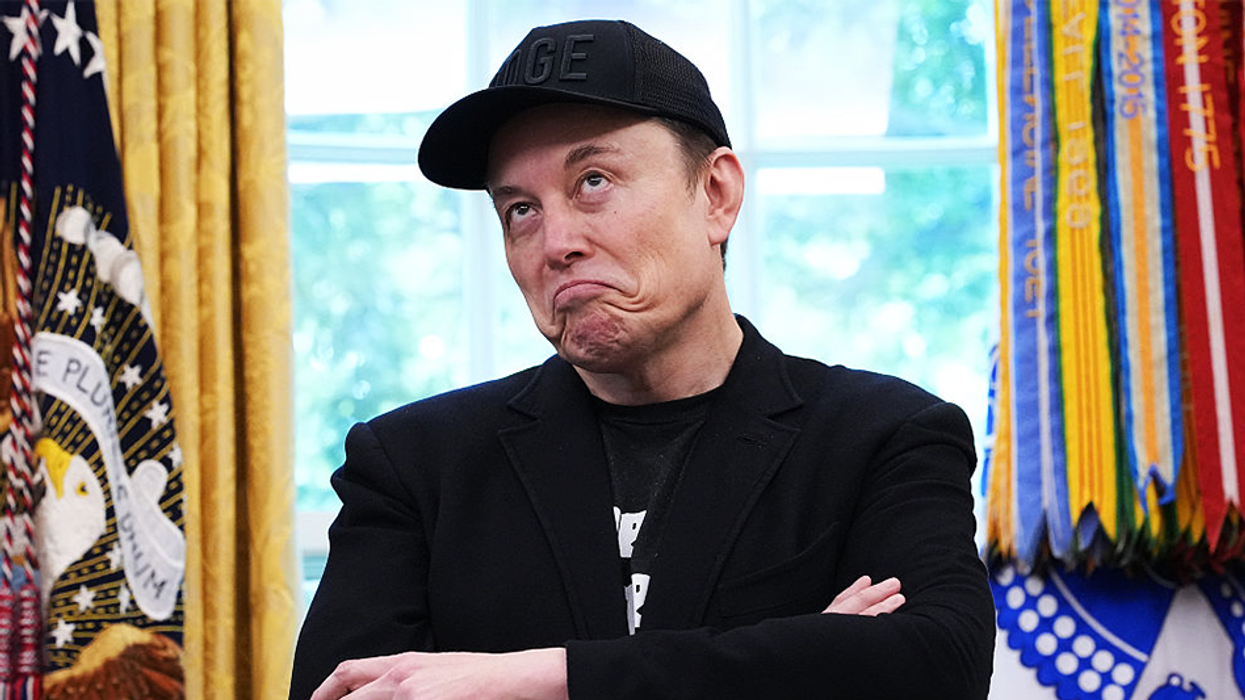
Hot on the heels of a highly publicized dinner with Donald and Melania Trump, Elon Musk will continue his work with the federal government through a new agreement that will affect the daily workflows of Department of War employees.
Last July, Musk’s xAI entered a $200 million contract with the Pentagon to adopt advanced AI capabilities for sectors like national defense. Now, both the DOW and xAI are shedding light on some of the details surrounding their partnership in other areas.
‘xAI will make available a family of government-optimized foundation models.’
In late December, the DOW announced its internal AI platform would be expanded to include xAI for “frontier-grade” capabilities.
“This initiative will soon embed xAI’s frontier AI systems, based on the Grok family of models, directly into GenAI.mil. Targeted for initial deployment in early 2026,” a press release stated.
This will enable the “secure handling” of “Controlled Unclassified Information” in the daily workflows of government employees, who will also gain access to “global insights” on X, which will allegedly provide a “decisive information advantage.”
However, there is no indication what those insights include.
RELATED: DOGE didn’t die — it moved to the states
 Photo by Didem Mente/Anadolu via Getty Images
The xAI company announced in its own statement that it would be providing access to its AI models, “agentic tools, research platform, and API,” unlocking real-time insights.
The systems can be embedded into the daily work of the DOW’s some 3 million military and civilian employees, “from the Pentagon to the tactical edge.”
“xAI will make available a family of government-optimized foundation models to support classified operational workloads,” the press release added.
The DOW has also entered into contracts with other advanced technology companies like EdgeRunner AI and Palmer Luckey’s Anduril.
RELATED: Gavin Newsom ridicules Elon Musk over his trans-identifying son — and Musk responds
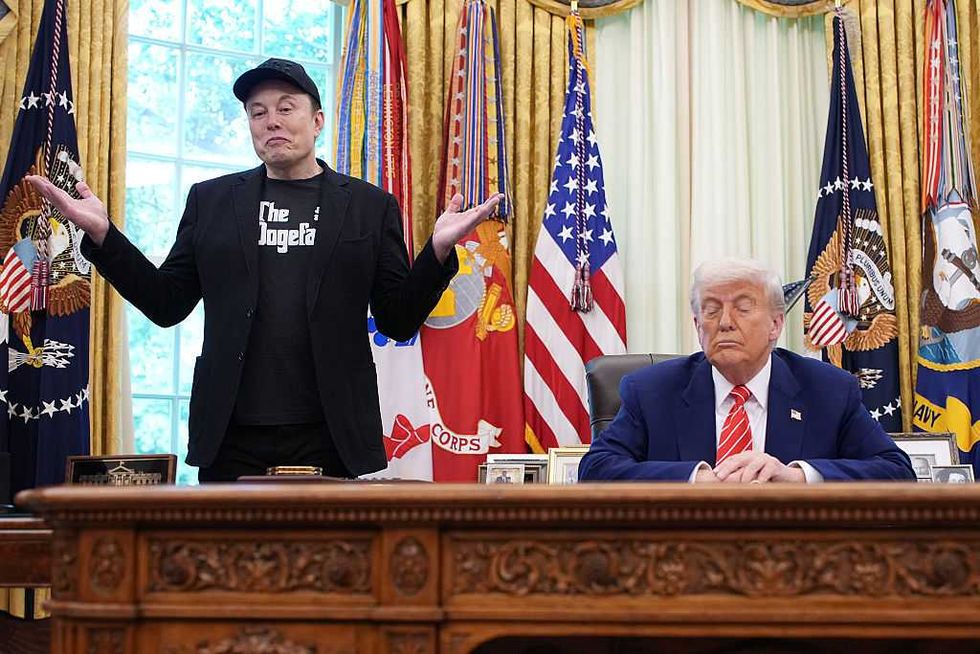 Photo by Kevin Dietsch/Getty Images
The expanded partnership between the DOW and Musk came just days after xAI announced a new artificial voice generation application.
The Grok Voice Agent API operates essentially as a search engine optimizer that acts as a voice for a chatbot. The company released a series of sample voices, which “speak dozens of languages, call tools, and search realtime data.”
The product is currently being rolled out in Teslas to relay vehicle status, search directions, and control navigation.
Like Blaze News? Bypass the censors, sign up for our newsletters, and get stories like this direct to your inbox. Sign up here!