

Day: January 25, 2026
Meet the longtime biz partner of Ilhan Omar’s husband as questions swirl over her skyrocketing net worth
William Hailer, the longtime business partner of Ilhan Omar’s husband Tim Mynett, established the two companies federal investigators are probing after their evaluations skyrocketed.
Vance calls Minneapolis unrest ‘engineered chaos’ after deadly shooting
JD Vance calls Minneapolis unrest “engineered chaos” after ICE shooting kills nurse Alex Pretti. Gov. Tim Walz demands federal withdrawal from city.
How the Oct 7 Hamas terror attacks exposed long-running concerns about UNRWA, new film charges
Tracing UNRWA from 1949 to today, the film examines refugee policy, weak oversight and alleged links to Hamas control in Gaza, raising questions about the agency’s role and accountability.
‘SNL’ mocks ICE in ‘Weekend Update’ after cutting Minneapolis segment in previous episode
“Saturday Night Live” cast member Michael Che took aim at immigration enforcement on Saturday, as well as Vice President JD Vance, with jokes about ICE during the “Weekend Update” segment.
Noem says she grieves for family after CBP-related shooting in Minneapolis, vows thorough investigation
Homeland Security Secretary Kristi Noem vows thorough investigation into Border Patrol-related death of Alex Pretti, 37, while defending agent’s actions.
Travelers slam hotels for eliminating bathroom doors
Hotels are ditching bathroom doors for sliding panels and open designs, leaving travelers shocked and demanding their privacy back in guest rooms.
Hollywood legend Tippi Hedren, 96, makes rare appearance for birthday celebration with family
Tippi Hedren makes rare public appearance at 96th birthday celebration with family members after reportedly being diagnosed with dementia two years ago.
When The Greatest Evil Returns
I have been sitting here for about an hour now avoiding writing this post. Church is cancelled this morning because of the massive winter storm, so here I sit with this news and only prayer to comfort me. It wasn’t supposed to happen again, but it has.
The post When The Greatest Evil Returns appeared first on The Hugh Hewitt Show.
Why Canada’s Chinese EV bet is a big mistake

Canada’s decision to slash tariffs on Chinese electric vehicles is being sold as a pragmatic trade adjustment. In reality, it looks more like a self-inflicted wound to the country’s auto industry, workforce, and long-term economic sovereignty.
Lower prices today may come at the cost of lost manufacturing tomorrow — along with vehicles that struggle with quality and cold-weather reliability in a country where winter is not a minor inconvenience but a defining reality.
A vehicle that looks competitive on paper may tell a very different story after several Canadian winters.
Under an agreement announced earlier this month, Canada will allow up to 49,000 Chinese EVs into the country each year at a tariff of just 6.1%, down from the 100% rate imposed in 2024.
Officials emphasize that this represents less than 3% of the domestic market. But auto markets are shaped at the margins. Even a relatively small influx of aggressively priced vehicles can disrupt pricing, undercut domestic producers, and discourage future investment.
Under pressure
Canada’s auto sector is deeply integrated with the United States, with parts, vehicles, and labor flowing across the border daily. That system has supported hundreds of thousands of well-paying jobs for decades. Introducing low-cost Chinese imports into that ecosystem does not simply add consumer choice; it destabilizes a supply chain already under pressure from regulatory mandates, rising costs, and declining market share.
That pressure is already visible. The combined market share of General Motors, Ford, and Stellantis in Canada has fallen from nearly 50% to roughly 36%. These companies are not just brands on a dealership lot. They are employers, investors, and anchors for entire communities. When their market position erodes, the consequences ripple outward through plant closures, canceled expansion plans, and lost supplier contracts.
Cold comfort
Supporters argue that Chinese EVs will make electric vehicles more affordable, accelerating adoption and helping Canada meet emissions targets. But affordability without durability is a hollow promise. Many Chinese EVs entering global markets have yet to prove themselves in extreme climates. Cold weather is notoriously hard on batteries, reducing range, slowing charging times, and increasing mechanical stress — conditions Canadian winters deliver in abundance.
Reports from colder regions already using Chinese EVs raise concerns about performance degradation, software issues, and inconsistent build quality. Battery thermal management systems that perform adequately in mild climates can struggle in deep cold. Door handles freeze, sensors fail, and range estimates become unreliable. These are not minor inconveniences when temperatures plunge and drivers depend on their vehicles for safety as much as transportation.
Quality concerns extend beyond climate performance. Chinese automakers have made rapid progress, but speed has often come at the expense of long-term durability testing. Western manufacturers spend years validating vehicles under extreme conditions precisely because failure carries real consequences. A vehicle that looks competitive on paper may tell a very different story after several Canadian winters.
Cheap creep
There is also the question of what happens to Canada’s manufacturing base as these imports gain a foothold. History offers a clear lesson. When markets are flooded with low-cost vehicles produced under different labor standards and supported by state-backed industrial policy, domestic production suffers. Plants close, jobs disappear, and skills erode — losses that are extraordinarily difficult to reverse.
Europe offers a cautionary example. In the rush to meet climate targets, policymakers opened the door to inexpensive Chinese vehicles, only to see domestic automakers squeezed between regulatory costs and subsidized foreign competition. The result has been declining investment, layoffs, and growing concern about long-term competitiveness. Canada risks repeating that mistake but without Europe’s scale or leverage.
 Tom Williams/CQ-Roll Call, Inc via Getty Image
Spy game
The geopolitical implications cannot be ignored. Modern EVs are data-collecting machines, equipped with cameras, sensors, GPS tracking, and constant connectivity. U.S. officials have repeatedly warned that Chinese-built vehicles pose national security risks. Whether or not those fears are fully realized, perception matters. The United States has already signaled that Chinese EVs will not be allowed across its border, even temporarily.
That leaves Canadian consumers in a difficult position. A vehicle purchased legally in Canada could become a barrier to travel, commerce, or even family visits. The idea that a car could determine whether a driver can cross the world’s longest undefended border should give policymakers pause. Instead the Carney government appears willing to accept that risk as collateral damage.
Realism over resentment
Some Canadians, frustrated by U.S. tariffs and rhetoric, may view this pivot toward China as an act of defiance. But trade policy driven by resentment rather than realism rarely ends well. Replacing dependence on the United States with dependence on China does not restore sovereignty; it simply shifts leverage from one superpower to another, often with fewer shared values and less transparency.
President Donald Trump has made his position clear. He is open to Chinese companies building vehicles in North America if they invest in domestic factories and employ domestic workers. What he opposes are imports that bypass production, undermine jobs, and introduce security risks. Canada’s deal does nothing to address those concerns. Instead it places Canadian workers and consumers squarely in the crossfire.
The promise of cheaper EVs may sound appealing in the short term, but the long-term costs are becoming harder to ignore. Lost manufacturing jobs, weakened supply chains, unresolved quality and cold-weather issues, and strained relations with Canada’s largest trading partner are not abstract risks. They are predictable outcomes.
Canada built its auto industry through integration, investment, and a commitment to quality. Undermining that foundation for a limited influx of low-cost imports is not a strategy. It is a gamble — and one Canadian workers, manufacturers, and drivers are likely to lose.
The reform every society needs: Stop mistaking shock for success
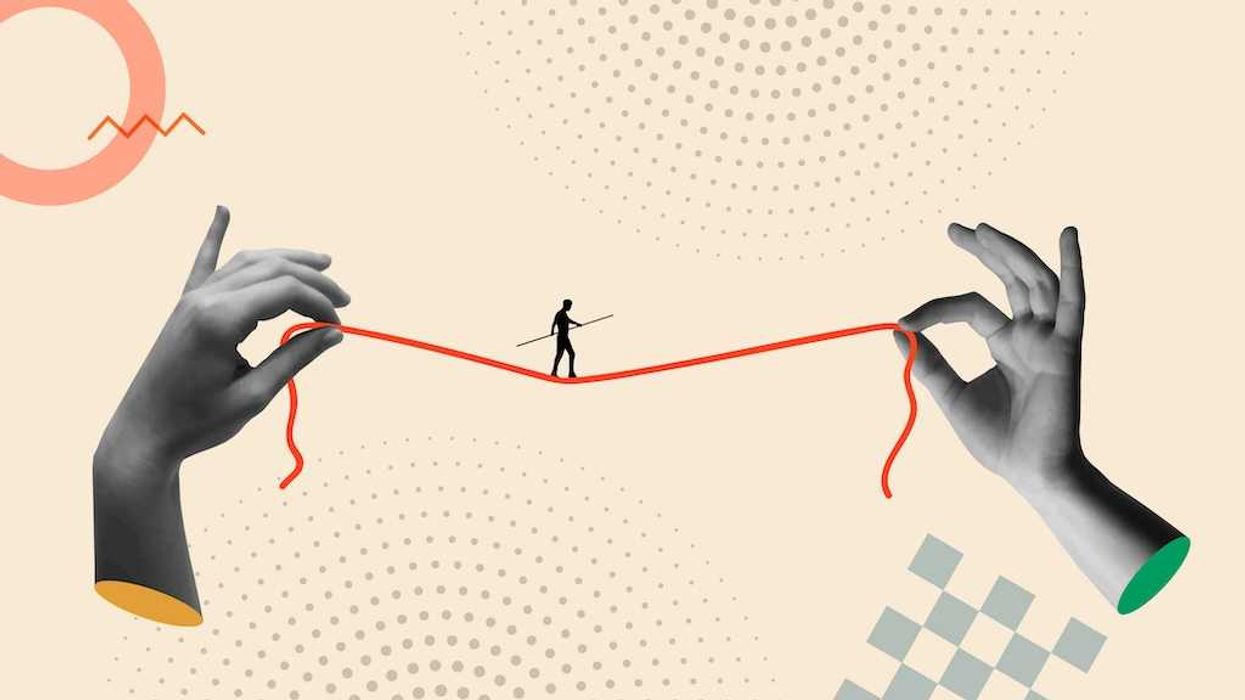
Years ago, I worked in a large office building with a woman who walked with a terrible limp. Not a slight hitch, but a pronounced, jarring gait caused by a car accident that left her with significant bone loss in one leg. She was a delightful person, but no one could ignore the limp. It shaped how she moved through the world and, at times, how the world responded to her.
She lived that way for more than 25 years.
Liberation may begin with a D-Day assault or a precision, middle-of-the-night special-forces strike, but rehabilitation always moves slower.
Then one morning, everything changed.
She walked into the office upright and steady. No limp. No sway. Her posture looked different. Her face looked different. The transformation was so striking, people stopped what they were doing just to stare.
An orthotist had fitted her with a lift for her shoe. For the first time in decades, her body was aligned.
It felt dramatic. It felt hopeful.
Three weeks later, she showed up at work limping again.
When I asked what happened, she looked down and said quietly, “It was too painful.”
For years, that story stayed with me. I assumed she should have pushed through the discomfort. If she really wanted to walk straight, I thought, she would have endured the pain. I put the burden on her.
Decades later, while talking with the man who makes my wife’s prosthetic legs — who is also a certified orthotist — I mentioned the story. He didn’t hesitate.
“That was the orthotist’s fault.”
With that degree of limb difference, he explained, correction must happen in small increments over time. You do not force a body that has adapted to damage for decades into alignment overnight. The shock alone can undo the good you intend. Pain, in that case, isn’t weakness. It’s warning.
The problem was never the goal of walking straight. It was the pace. The change looked impressive, but it couldn’t last.
Had she been guided wisely, she might still be walking straight today.
That realization reshaped how I think about far more than posture and gait.
RELATED: Do not pass the plow: The danger of declaring a golden age without repentance
 Photo by Philippe LOPEZ / AFP via Getty Images
We talk a lot about sustainability, but the word often gets treated as corporate jargon. In real life, it means something simpler: Can you keep going without being damaged by the very solution meant to help you?
The question isn’t whether disruption can be endured for a season. The question is what happens when it lasts long enough to reshape the body, the household, or even a culture itself.
The longer misalignment persists, the more people adjust to it. Not because it’s right, but because it becomes familiar.
I think of family caregivers who, like that woman, adapt to dysfunction. They normalize exhaustion. They compensate for imbalance. What once felt untenable becomes routine. The standard slowly drops, and despair and resentment find room to grow.
This pattern doesn’t stop with individuals.
It shows up in institutions and nations, especially those emerging from long seasons of corruption, fear, or misrule. The fraud being uncovered in Minnesota will not be corrected quickly. Venezuela didn’t unravel overnight, and it won’t be restored all at once. Iran won’t shed decades of tyranny through slogans or spectacle. Systems deformed over time don’t heal on announcement alone.
Liberation may begin with a D-Day assault or a precision, middle-of-the-night special-forces strike, but rehabilitation always moves slower. Hard ground is taken a little at a time. Institutions get rebuilt inch by inch. The work costs money. It lacks glamour. No one escapes it.
Trying to fix everything at once is like forcing a damaged body into alignment without preparation. The result may look decisive, but it often collapses under its own weight.
This is where leadership gets tested.
Not by how loudly change is declared, but by whether it can be endured.
RELATED: When human worth becomes conditional, caregiving becomes impossible
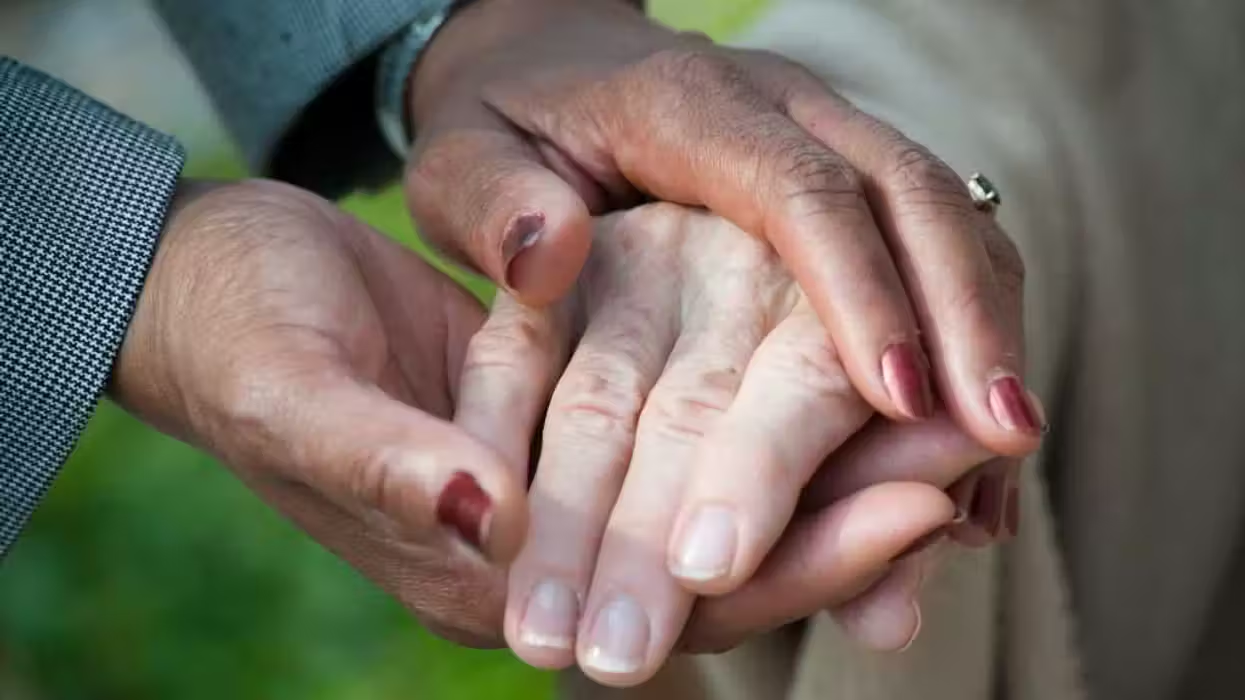 Photo by: Edwin Remsburg/VW Pics via Getty Images
Real leadership doesn’t just name what’s wrong. It requires patience and competence. It understands limits. It moves deliberately. It produces progress people can live with — and live inside — over time.
People can endure difficult change when it leads somewhere stable. What they can’t endure is repeated pain with no lasting gain.
A deliberate pace doesn’t mean abandoning the goal. Real leadership — whether for a caregiver or a nation — recognizes the trauma that brought us here. It refuses to confuse speed with progress. It commits instead to patient steps that straighten what has been bent without breaking what remains.
That kind of leadership doesn’t rush healing. It makes healing possible.
For caregivers, for communities, and for nations, alignment imposed too quickly can injure the very people it claims to help. Alignment applied with patience, competence, and resolve can change a life permanently.
That woman wanted to walk straight. She simply needed someone wise enough to guide her there.





