

Category: Social services
The return of Drag Queen Story Hour?

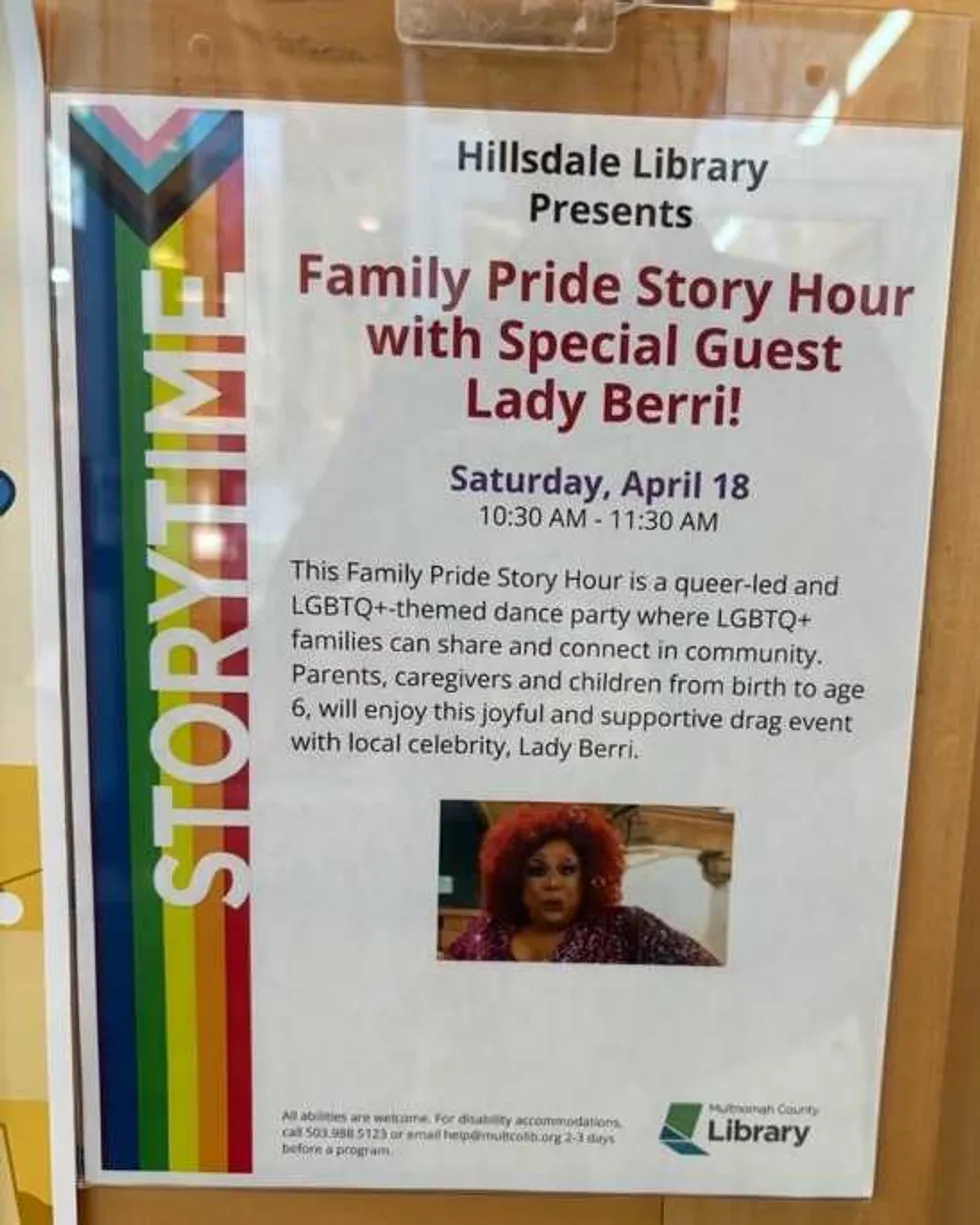
I was at my local library recently when I saw something odd on the bulletin board. It looked like a poster for a Drag Queen Story Hour.
They can’t be doing that again? I thought to myself.
Much of drag comedy focuses on the fact that as hard as they try, most men can’t actually pull off impersonating a woman.
In case you don’t remember, Drag Queen Story Hour was one of the most bizarrely inappropriate events ever to appear at your local library.
When these “story hours” first began to proliferate in the late 2010s, the idea of drag queens reading books to very small children set off one of the fiercest battles of the culture wars.
Because it was so transgressive, outrageous, and effective as a way of infuriating the general populace, the proponents of DQSH doubled down on it. They kept pushing it. They founded an NGO. They rammed it down our throats.
 Blake Nelson
Queen’s gambit
The way DQSH worked: Libraries would hire a professional drag queen to read books to children ages 3 to 11. It was presented to the public as a “fun twist” on the idea of a kindly grandmother or librarian reading to the kids.
The drag queens they hired were adult men from the local area, men who were otherwise employed performing “drag shows” at nightclubs, bars, and private events.
These men dressed up like women — more specifically, super-sexualized women (prostitutes). Then they went on stage and told raunchy stories and sexually explicit jokes. Sometimes they sang songs and did pratfalls, all of which were of a sexual nature.
The understanding was that a drag show would feature explicit sexual content. Which is why they were performed in 21-and-over establishments.
That is, until Drag Queen Story Hour came along. And someone decided that drag queens belonged in libraries, reading to children.
Live, love, laugh
Part of the appeal of drag queens is the humorous sight of a chubby, stubbly, middle-aged man wearing lipstick, mascara, and gigantic false eyelashes. Much of drag comedy focuses on the fact that as hard as they try, most men can’t actually pull off impersonating a woman. And the results of their clumsy failures are often very funny.
Drag shows — or something like them — have appeared in many cultures throughout history. The humor of men pretending to be women is universal. Everyone finds those situations funny.
Everyone, that is, except for 4-year-olds, who might not understand this style of humor just yet. And don’t need to.
The fact is that it would be hard to predict how a small child would react to a professional drag queen in person.
Oh, sure, a child who has been coached and prepped by a progressive parent might enjoy it. But your average child? Especially those under the age of 6? They might be traumatized.
And then doubly so when the adults they usually trust (parents, teachers, librarians) tell them not to be afraid, that it is wrong to feel uncomfortable, that if they have any negative feelings whatsoever about “Miss Wiggles” — who is 6’2″, wearing ghoulish makeup, and pretending to be a woman — they are committing a grave moral sin.
Some small children are frightened by the sight of their own parents dressed up in Halloween costumes. Think of what an encounter with “Sashay D. Lite” might do to them.
RELATED: My search for America’s last decent public libraries
 Joe McNally/Getty Images
Properly checked and vetted
Some conservatives raised the issue that some of these performers might be predators of some kind.
This was met with attacks and smears that conservatives were homophobic, transphobic bigots, hatemongers, etc. Besides, all the drag queens would, of course, be thoroughly screened and vetted.
And yet at a Houston library in 2019, one of the drag queens reading stories to children was found to be a registered child sex offender.
So except for that guy. Everyone else had been properly checked and vetted.
Culture war, wins and losses
Looking back at the original battle over Drag Queen Story Hour … who actually won?
In my mind, the general public did. Obviously a large majority of people believed DQSH was a bad idea. And the libraries stopped doing it.
But here I was, in my local library, staring at a poster with a Pride flag. And a drag queen. With the words Story Hour on it.
Looking closer, I saw they had changed the name. Now it was called Family Pride Story Hour. It would be specifically for LGBTQ families. A drag queen would be reading the stories. And then there would be a dance.
The suggested age for children attending? “Birth to six years old.”
No rest for the wicked
Ahhh. Those sneaky leftists. They couldn’t let this go. Subjecting infant children to the most grotesque adults they could find was too good a strategy to abandon.
What better way to divide and conquer? To confound and demoralize? They want us to fight over the drag queens again!
My advice is: Don’t do it. Don’t give them what they want. Talk to your librarians ahead of time. Talk to your library’s supervisor.
But be aware: If Family Pride Story Hour is coming to my town, it might well be coming to yours.
My search for America’s last decent public libraries
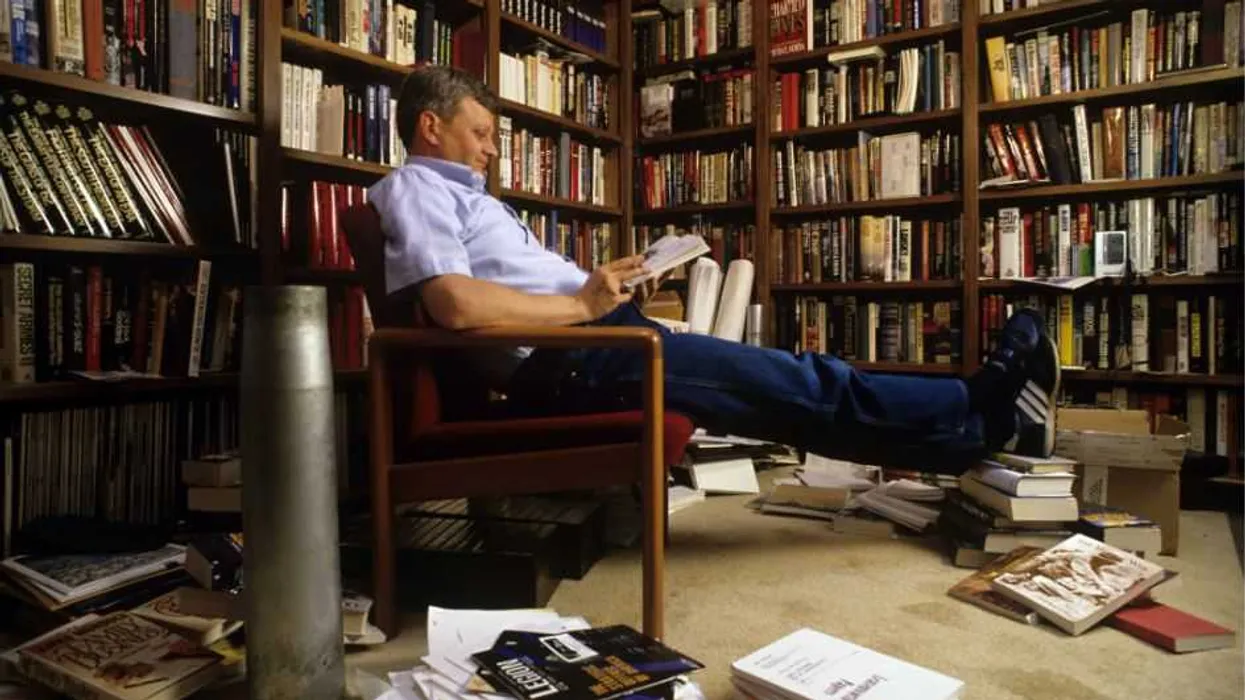
As an avid library-goer, I’ve watched with interest how American libraries continue to shift and evolve in our new “post-book” world.
That’s right, one thing you notice in libraries these days: There are fewer books. And the ones they do have are checked out less often.
She shrugged and said, ‘Libraries are for everyone. I’m not allowed to tell them to turn their phone down.’
If you can’t find the book you want, you can always reserve it through the library system’s website. But increasingly, those books are not located in a branch library. They are in a warehouse somewhere. In a state of storage.
When you receive these stored books, they often look strange and sickly. Like they haven’t seen sunlight in a while. Like they belong in a museum, an artifact from the past.
Into the future
A couple of years ago, I visited several recently completed public libraries in major North American cities: Seattle, Phoenix, Salt Lake City, Calgary, among others. I noticed these libraries had been specifically designed in anticipation of a decline in book-reading.
These new buildings had “craft” areas, or recording studios, or computer labs. They had conference rooms, where they held workshops for seniors to help them use their smartphones, or instruct young people on how to start a business.
Most of these new libraries were socialistic in nature. They were becoming places where people could access social programs and government assistance. You could sign up for job training. You could get help with your taxes.
Prisons and psych wards
Another thing I noticed: The designers and architects of these libraries seemed to believe that rampant homelessness was not a passing trend. In their minds, this was a permanent situation, which libraries would need to accommodate and serve.
Because of this, many contemporary libraries look and feel very different from the classic library environment.
They had removed old, comfortable furniture and replaced it with unbreakable plastic chairs and tables. Reading lamps were gone, with harsh overhead LED lighting taking their place. Charging stations and sleeping lounges were favored over cozy study nooks. Couches or armchairs were made of odor-resistant, easily disinfected fabrics. Outdoor areas were constructed so they could be hosed down.
Because of these changes, many new libraries often looked like a cross between a prison and a psych ward. They’d been designed to house unclean, unpredictable, occasionally violent, and sometimes incontinent humans.
Shhhhhhhh!
One recent incident I found interesting: I was in a local library, and a patron was watching a TV show very loudly on his phone.
A librarian appeared to see what the noise was. I looked at her like, “Can you say something to that person?”
She shrugged and said, “Libraries are for everyone. I’m not allowed to tell them to turn their phone down.”
She wasn’t allowed? I thought to myself.
“But you,” she said, looking at me. “You can say something.”
Looking at the TV-watching patron, I didn’t feel inclined to confront him. But how could it be that the librarian wasn’t allowed to intervene?
In search of the ‘luxury library’
Like I said, I love libraries. I love the quiet. I love the atmosphere. I love being around other studious types like myself.
I’ve kept tabs on the libraries in my own city, frequently visiting some of my old favorites, to check on which ones are making progress and which ones are getting worse. (They’re all getting worse.)
But recently, I stopped doing that. I don’t go to the big central library building anymore. I have seen enough during recent years to know what that looks like.
Now what I do — at home and in other cities I visit — is figure out where the wealthiest parts of town are, and I find small regional libraries in those areas.
In such places, you have the best chance of finding the “original library experience.” Peace. Quiet. Clean carpets. Comfortable chairs.
You encounter kind, thoughtful librarians (as opposed to the PTSD librarians you encounter in the war-zone libraries).
Actual families visit these places. Moms with their kids. Teenagers after school.
There’s no need for armed security at the front door. There are no Narcan canisters rolling around in the bathroom.
What about the children?
But even these places are subject to change, as they continue to expand their purview.
In one such “luxury library” I frequent, the library has become a kind of part-time nursery school. During certain hours, one half of the building fills up with small children. There are toys and games and little play areas set up for them.
Because this small library is basically one giant room, I am exposed to the screams and cries of the children. They run around. Occasionally, I find them hiding under my table as I work.
I don’t mind the children at all. I don’t have children of my own and always enjoy their antics. And the library has to do something with that space, don’t they?
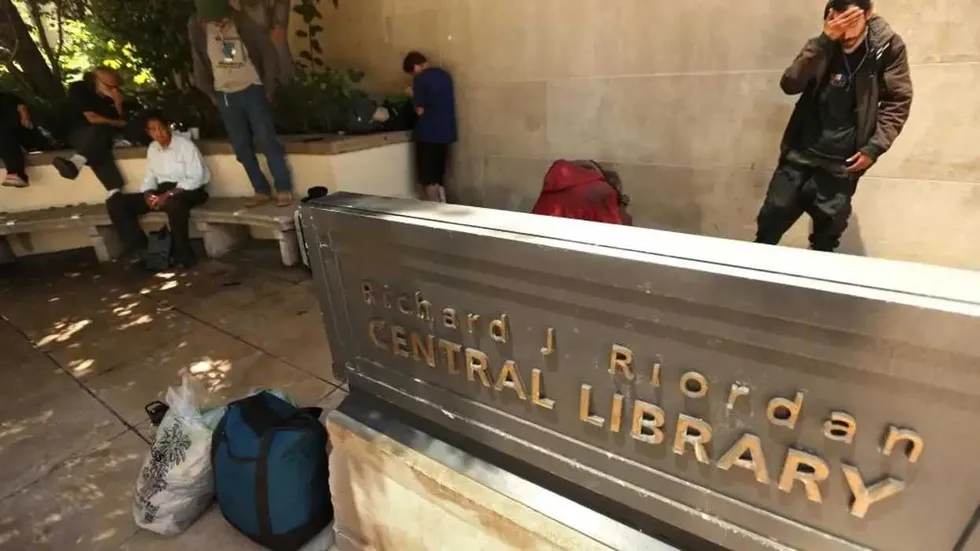
RELATED: When did America’s public libraries become homeless encampments?
 Genaro Molina/Getty Images
Still searching
Even in these wealthy neighborhoods, it’s clear that the libraries are struggling to find ways to remain relevant to their communities.
They have my sympathies. I don’t want libraries to go away. But what purpose will they serve going forward?
I’d prefer that libraries not become another arm of the “nanny state,” full of progressive propaganda and social activism. (“Drag Queen Story Hour” is trying to make a comeback at one library in my city.)
And what about the homeless? Is it really the fate of our great American library system to become a charging station and nod-out zone for drug addicts and street people?
But such is the nature of our socialist society. Tiny enclaves of luxury. Prisons and psych wards for everybody else.
The only solution I have found is to seek out these “luxury libraries” — and make full use of them. And I recommend that others do the same.
My search for America’s last decent public libraries
As an avid library-goer, I’ve watched with interest how American libraries continue to shift and evolve in our new “post-book” world.
That’s right, one thing you notice in libraries these days: There are fewer books. And the ones they do have are checked out less often.
She shrugged and said, ‘Libraries are for everyone. I’m not allowed to tell them to turn their phone down.’
If you can’t find the book you want, you can always reserve it through the library system’s website. But increasingly, those books are not located in a branch library. They are in a warehouse somewhere. In a state of storage.
When you receive these stored books, they often look strange and sickly. Like they haven’t seen sunlight in a while. Like they belong in a museum, an artifact from the past.
Into the future
A couple of years ago, I visited several recently completed public libraries in major North American cities: Seattle, Phoenix, Salt Lake City, Calgary, among others. I noticed these libraries had been specifically designed in anticipation of a decline in book-reading.
These new buildings had “craft” areas, or recording studios, or computer labs. They had conference rooms, where they held workshops for seniors to help them use their smartphones, or instruct young people on how to start a business.
Most of these new libraries were socialistic in nature. They were becoming places where people could access social programs and government assistance. You could sign up for job training. You could get help with your taxes.
Prisons and psych wards
Another thing I noticed: The designers and architects of these libraries seemed to believe that rampant homelessness was not a passing trend. In their minds, this was a permanent situation, which libraries would need to accommodate and serve.
Because of this, many contemporary libraries look and feel very different from the classic library environment.
They had removed old, comfortable furniture and replaced it with unbreakable plastic chairs and tables. Reading lamps were gone, with harsh overhead LED lighting taking their place. Charging stations and sleeping lounges were favored over cozy study nooks. Couches or armchairs were made of odor-resistant, easily disinfected fabrics. Outdoor areas were constructed so they could be hosed down.
Because of these changes, many new libraries often looked like a cross between a prison and a psych ward. They’d been designed to house unclean, unpredictable, occasionally violent, and sometimes incontinent humans.
Shhhhhhhh!
One recent incident I found interesting: I was in a local library, and a patron was watching a TV show very loudly on his phone.
A librarian appeared to see what the noise was. I looked at her like, “Can you say something to that person?”
She shrugged and said, “Libraries are for everyone. I’m not allowed to tell them to turn their phone down.”
She wasn’t allowed? I thought to myself.
“But you,” she said, looking at me. “You can say something.”
Looking at the TV-watching patron, I didn’t feel inclined to confront him. But how could it be that the librarian wasn’t allowed to intervene?
In search of the ‘luxury library’
Like I said, I love libraries. I love the quiet. I love the atmosphere. I love being around other studious types like myself.
I’ve kept tabs on the libraries in my own city, frequently visiting some of my old favorites, to check on which ones are making progress and which ones are getting worse. (They’re all getting worse.)
But recently, I stopped doing that. I don’t go to the big central library building anymore. I have seen enough during recent years to know what that looks like.
Now what I do — at home and in other cities I visit — is figure out where the wealthiest parts of town are, and I find small regional libraries in those areas.
In such places, you have the best chance of finding the “original library experience.” Peace. Quiet. Clean carpets. Comfortable chairs.
You encounter kind, thoughtful librarians (as opposed to the PTSD librarians you encounter in the war-zone libraries).
Actual families visit these places. Moms with their kids. Teenagers after school.
There’s no need for armed security at the front door. There are no Narcan canisters rolling around in the bathroom.
What about the children?
But even these places are subject to change, as they continue to expand their purview.
In one such “luxury library” I frequent, the library has become a kind of part-time nursery school. During certain hours, one half of the building fills up with small children. There are toys and games and little play areas set up for them.
Because this small library is basically one giant room, I am exposed to the screams and cries of the children. They run around. Occasionally, I find them hiding under my table as I work.
I don’t mind the children at all. I don’t have children of my own and always enjoy their antics. And the library has to do something with that space, don’t they?
RELATED: When did America’s public libraries become homeless encampments?
Genaro Molina/Getty Images
Still searching
Even in these wealthy neighborhoods, it’s clear that the libraries are struggling to find ways to remain relevant to their communities.
They have my sympathies. I don’t want libraries to go away. But what purpose will they serve going forward?
I’d prefer that libraries not become another arm of the “nanny state,” full of progressive propaganda and social activism. (“Drag Queen Story Hour” is trying to make a comeback at one library in my city.)
And what about the homeless? Is it really the fate of our great American library system to become a charging station and nod-out zone for drug addicts and street people?
But such is the nature of our socialist society. Tiny enclaves of luxury. Prisons and psych wards for everybody else.
The only solution I have found is to seek out these “luxury libraries” — and make full use of them. And I recommend that others do the same.
Trump administration halts visas for 75 nations whose people gobble up American welfare

The Trump administration delivered some bad news on Wednesday to would-be migrants from the third world hoping to exploit American beneficence.
The U.S. State Department announced that it is pausing immigrant visa processing from 75 countries “whose migrants take welfare from the American people at unacceptable rates.” The pause will apparently remain in effect until “the U.S. can ensure that new immigrants will not extract wealth from the American people.”
‘Pause migration from all Third World Countries to allow the US system to fully recover.’
“The pause impacts dozens of countries — including Somalia, Haiti, Iran, and Eritrea — whose immigrants often become public charges on the United States upon arrival,” said the department.
The Center for Immigration Studies indicated in a report last month than in Minnesota, approximately 54% of Somali-headed households received food stamps and 73% of Somali households had at least one member on Medicaid. By way of comparison, the figures for native households were 7% and 18%, respectively.
The report noted further that 89% of Somali households with children received some form of welfare in the Gopher State.
President Donald Trump recently referred to these statistics on Truth Social and highlighted statistics regarding the high welfare participation rates of other immigrant communities.
 Photo by Alex Wong/Getty Image
On Jan. 4, Trump shared a graph titled “Immigrant Welfare Recipient Rates by Country of Origin,” which provided damning insights into the apparent overreliance of various immigrant communities on the generosity of the American taxpayer.
The chart indicated, for example, that the the percentage of immigrant households from Bhutan that received assistance was 81.4%; Yemen was 75.2%; Somalia was 71.9%; the Marshall Islands was 71.4%; the Dominican Republic was 68.1%; Afghanistan was 68.1%; Congo was 66%; and Iraq was 60.7%.
Trump vowed on Nov. 27 to “end all Federal benefits and subsidies to noncitizens of our Country” and to “permanently pause migration from all Third World Countries to allow the US system to fully recover.”
The visa processing pause will go into effect on Jan. 21.
It will reportedly also impact the following countries: Afghanistan, Albania, Algeria, Antigua and Barbuda, Armenia, Azerbaijan, Bahamas, Bangladesh, Barbados, Belarus, Belize, Bhutan, Bosnia, Brazil, Burma, Cambodia, Cameroon, Cape Verde, Colombia, Cote d’Ivoire, Cuba, Democratic Republic of the Congo, Dominica, Egypt, Ethiopia, Fiji, Gambia, Georgia, Ghana, Grenada, Guatemala, Guinea, Iraq, Jamaica, Jordan, Kazakhstan, Kosovo, Kuwait, Kyrgyzstan, Laos, Lebanon, Liberia, Libya, Macedonia, Moldova, Mongolia, Montenegro, Morocco, Nepal, Nicaragua, Nigeria, Pakistan, Republic of the Congo, Russia, Rwanda, Saint Kitts and Nevis, Saint Lucia, Saint Vincent and the Grenadines, Senegal, Sierra Leone, South Sudan, Sudan, Syria, Tanzania, Thailand, Togo, Tunisia, Uganda, Uruguay, Uzbekistan, and Yemen.
“We are working to ensure the generosity of the American people will no longer be abused,” said the State Department.
Like Blaze News? Bypass the censors, sign up for our newsletters, and get stories like this direct to your inbox. Sign up here!





