

Day: December 3, 2025
Bondi blasts discrimination lawsuit from immigration judge: ‘Last time I checked, I’m a woman too’
The lawsuit accuses the Justice Department of illegally violating her protections under Title VII of the Civil Rights Act, as well as her First Amendment protections.
The Gaslighting That Is Going On
So, the GOP held the 7th district Tennessee special election, preserving its narrow margin in the House. The reporting is fascinating. Fox, “With some votes still being counted, Van Epps was headed towards a nine-point victory.” Mediaite, “Van Epps, a former Army helicopter pilot, secured Tennessee’s 7th District with barely 54% of the vote, defeating Behn in a district Trump carried by 22 points just last year. ” One report – a decent victory, the other it was a very near thing. Which was it?
The post The Gaslighting That Is Going On appeared first on The Hugh Hewitt Show.
How Texas slammed the gate on Big Tech’s censorship stampede

Texas just sent a blunt message to Silicon Valley: You don’t get to censor Texans and then run home to California.
In a world where Big Tech routinely decides who may speak and who must be silenced, Defense Distributed v. YouTube, Google, and Alphabet has become a defining moment in the national fight over digital free expression. The shock isn’t the censorship at issue; it’s the fact that Big Tech — for once — lost.
In a time when Americans are desperate for leaders willing to stand up to media and tech conglomerates, Texas showed what real resolve looks like.
Defense Distributed, a Texas company, committed the unpardonable offense of promoting the constitutional right to keep and bear arms.
Our videos and ads — some of them simply announcing court victories — were throttled, suppressed, or removed by YouTube and Google. None of this surprised us. These platforms built vast empires on controlling information and burying viewpoints that fall outside their ideology.
Texas prepared for this fight
The surprise is that Texas saw this coming and armed itself for the conflict. HB 20 — now Chapter 143A of the Texas Civil Practice and Remedies Code — directly prohibits viewpoint-based censorship by major platforms. The law doesn’t hint, suggest, or politely advise. It states outright: Social media companies may not censor Texans for their viewpoints, and lawsuits brought under this chapter stay in Texas courts no matter what boilerplate corporate contracts say.
So when Defense Distributed filed suit, YouTube and Google reached for their favorite escape route: forum-selection clauses that force nearly every challenger into California courts, where Big Tech enjoys home-field advantage. It’s a delay tactic, a cost-inflation tactic, a shield against accountability — and it almost always works.
But Texas slammed that door shut before they reached it.
No escape
HB 20 doesn’t merely frown on these clauses; it voids them. The statute declares that any attempt to waive its protections violates Texas public policy — public policy the law describes as “of the highest importance.” The legislature anticipated Big Tech’s usual playbook and locked the gates years in advance.
The federal court recognized this. Judge Alan Albright ruled that transferring the case to California would directly undermine Texas’ strong public policy. Under federal law, courts cannot enforce a forum-selection clause that contradicts a state’s deeply rooted interests — especially when the legislature spells those interests out with the clarity found in HB 20.
Silicon Valley does not hear the word “no” very often. Big Tech’s money, influence, and political allies usually clear the path. But in a federal courtroom in the Lone Star State, Texas’ commitment to protecting its citizens from ideological censorship outweighed Silicon Valley’s customary dominance. The court refused to let YouTube and Google drag the case back to California.
The fight stayed in Texas — exactly where the legislature intended.
A national shift and a model for states
The timing matters. Americans now understand that Big Tech can shape elections, suppress dissent, and curate truth itself. HB 20 was mocked by the press, attacked by activists, and targeted by corporate lobbyists from the moment it passed. Yet today, it stands as one of the most potent legal tools in the country’s fight against digital censorship.
HB 20 is no longer just a statute; it is proof that a state with conviction can push back and win.
RELATED: Big Tech CEOs should leave policy to the politicians
 Photo by Win McNamee/Getty Images
This victory is more than a procedural ruling. It affirms that Big Tech’s era of unchallenged authority is not inevitable. Defense Distributed didn’t merely keep our lawsuit in Texas; we preserved the principle that powerful corporations cannot hide their censorship behind “terms of service” fine print.
Texas drew a line in the sand, and — for once — Silicon Valley stopped.
In a time when Americans are desperate for leaders willing to stand up to media and tech conglomerates, Texas showed what real resolve looks like. This ruling promises that citizens still have a fighting chance, that speech still matters, and that even the world’s largest corporations remain subject to the laws of a state determined to defend its people.
Leftists melt down after Idaho bar announces month of free beer if you help ICE find, deport illegal aliens

The Old State Saloon in Eagle, Idaho, achieved national prominence last year when it launched what it deemed “Heterosexual Awesomeness Month.”
The punch line? The plucky watering hole chose June for its 30 days of celebrating all things straight — which, of course, immediately ignited fuses dangling from left-wing noggins given that June has long been Pride Month and all.
‘WE ARE PLANNING A HUGE PROTEST THIS WEEKEND AT UR POS SALOON! GOD DOESN’T LIKE UGLY AND Y’ALL GOING STRAIGHT TO HELL!’
Well, the Old State Saloon once again is managing to poke at the left — this time offering free beer for a month to all those who help Immigration and Customs Enforcement capture and deport illegal immigrants.
The bar’s Saturday X post reads, “ALERT: Anyone who helps ICE identify and ultimately deport an illegal from Idaho gets FREE BEER FOR ONE MONTH at Old State Saloon!”
On the same day, the Department of Homeland Security reposted the saloon’s offer with a humorous GIF underscoring how floored the agency is with the promotion helping its cause — and the repost has received a whopping 3.7 million views. The Old State Saloon replied, “Let’s go! Deport them all!”
Part of the deal, however, is that those who want to claim the month-long sudsy prize must “send a detailed email with any evidence, photos, videos, summary of events, dates, and times” to deportations@oldstatesaloon.com.
One person asked the bar, “Hold up! Is there a limit per month? Limit on months?” Old State replied, “2/day for one month” and “at our discretion, may award multiple months to one person if multiple illegals are deported.”
 Photographer: Yuvraj Khanna/Bloomberg via Getty Images
The bar on Sunday announced its “first big winner” of the free beer offer: Ryan Spoon, vice chair of the Ada County Republican Central Committee in Idaho. Spoon told Newsweek he “had a free Moon Dog Amber Ale” and “a great chat with the owner, Mark Fitzpatrick, whom I also consider a friend.”
More from the magazine:
Spoon previously made headlines when he publicly called for immigration raids on state Representative Stephanie Mickelsen’s farm, alleging the employment of undocumented workers. Days later, immigration agents visited Mickelsen Farms, leading to the arrest of one employee.
With all the attention the bar’s offer of free beer is generating, it should come as no surprise that a wave of left-wing backlash has been quickly growing.
But the Old State Saloon isn’t backing down from any of it — in fact, the bar is reposting on its X page the nasty feedback it has been receiving. The missives range from what clearly are fake one-star reviews — aimed at lowering the bar’s average customer scores — to some interestingly worded threats.
One of them read: “I hope you get swatted like all the sad little MAGAT bitches who think they’re doing something right. You’re not, you racist piece of s**t. I’ll be dancing a jig in a week when your busted-up s**thole is closed forever. Maybe I’ll stop by first [to] see if a cleansing fire might be the ticket.”
“U RACIST ASSHOLES!” another message read. “WE ARE PLANNING A HUGE PROTEST THIS WEEKEND AT UR POS SALOON! GOD DOESN’T LIKE UGLY AND Y’ALL GOING STRAIGHT TO HELL! BITCHES.”
Old State offered the following reply: “You better hurry up because according to all your criminal friends, Old State Saloon will be burned down by then! Let’s be real: You aren’t going to do anything. But you sounded pretty tough for a minute there.”
What’s more, on the day after the launch of the free beer campaign, Old State actually took things to another level, noting that the month of December is now “Merry Snitchmas” and a collection of new specials is on tap: “Manly American Mondays — all American citizen males who support ICE get one free beer! Ladies’ ‘I’m Telling’ Tuesdays — BOGO for American woman willing to tell ICE about any illegals, to get them deported. Wednesday: American heterosexual couples get 10% off their entire bill. Get married and make American babies, if at all possible!”
Like Blaze News? Bypass the censors, sign up for our newsletters, and get stories like this direct to your inbox. Sign up here!
We built abundance and lost the thing that matters

We have built a world overflowing with noise, convenience, and endless choice, yet something essential has slipped out of reach. You can sense it in the restless mood of the country, the anxiety among young people who cannot explain why they feel empty, in the angry confusion that dominates our politics.
We have more wealth than any nation in history, but the heart of the culture feels strangely malnourished. Before we can debate debt, or elections, we must confront the reality that we created a world of things, but not a world of purpose.
You cannot survive a crisis you refuse to name, and you cannot rebuild a world whose foundations you no longer understand.
What we are living through is not just economic or political dysfunction. It is the vacuum that appears when a civilization mistakes abundance for meaning.
Modern life is stuffed with everything except what the human soul actually needs. We built systems to make life faster, easier, more efficient — and then wondered why those systems cannot teach our children who they are, why they matter, or what is worth living for.
We tell the next generation to chase success, influence, and wealth, turning childhood into branding. We ask kids what they want to do, not who they want to be. We build a world wired for dopamine rather than dignity, and then we wonder why so many people feel unmoored.
When everything is curated, optimized, and delivered at the push of a button, the question “what is my life for?” gets lost in the static.
The crisis beneath the headlines
It is not just the young who feel this crisis. Every part of our society is straining under the weight of meaninglessness.
Look at the debt cycle — the mathematical fate no civilization has ever escaped once it crosses a threshold that we seem to have already blown by. While ordinary families feel the pressure, our leaders respond with distraction, with denial, or by rewriting the very history that could have warned us.
You cannot survive a crisis you refuse to name, and you cannot rebuild a world whose foundations you no longer understand.
We have entered a cultural moment where the noise is so loud that it drowns out the simplest truths. We are living in a country that no longer knows how to hear itself think.
So people go searching. Some drift toward the false promise of socialism, some toward the empty thrill of rebellion. Some simply check out. When a culture forgets what gives life meaning, it becomes vulnerable to every ideology that offers a quick answer.
The quiet return of meaning
And yet, quietly, something else is happening. Beneath the frustration and cynicism, many Americans are recognizing that meaning does not come from what we own, but from what we honor. It does not rise from success, but from virtue. It does not emerge from noise, but from the small, sacred things that modern life has pushed to the margins — the home, the table, the duty you fulfill, the person you help when no one is watching.
The danger is assuming that this rediscovery happens on its own. It does not.
Reorientation requires intention. It requires rebuilding the habits and virtues that once held us together. It requires telling the truth about our history instead of rewriting it to fit today’s narratives. And it requires acknowledging what has been erased: that meaning is inseparable from God’s presence in a nation’s life.
RELATED: A nation without trust is a nation on borrowed time
 Denis Novikov via iStock/Getty Images
Where renewal begins
We have built a world without stillness, and then we wondered why no one can hear the questions that matter. Those questions remain, whether we acknowledge them or not. They do not disappear just because we drown them in entertainment or noise. They wait for us, and the longer we ignore them, the more disoriented we become.
Meaning is still available. It is found in rebuilding the smallest, most human spaces — the places that cannot be digitized, globalized, or automated. The home. The family. The community.
These are the daily virtues that do not trend on social media but that hold a civilization upright. If we want to repair this country, we begin there, exactly where every durable civilization has always begun: one virtue at a time, one tradition at a time, one generation at a time.
Want more from Glenn Beck? Get Glenn’s FREE email newsletter with his latest insights, top stories, show prep, and more delivered to your inbox.
Flock Safety: Is any driver safe from its AI-powered surveillance?
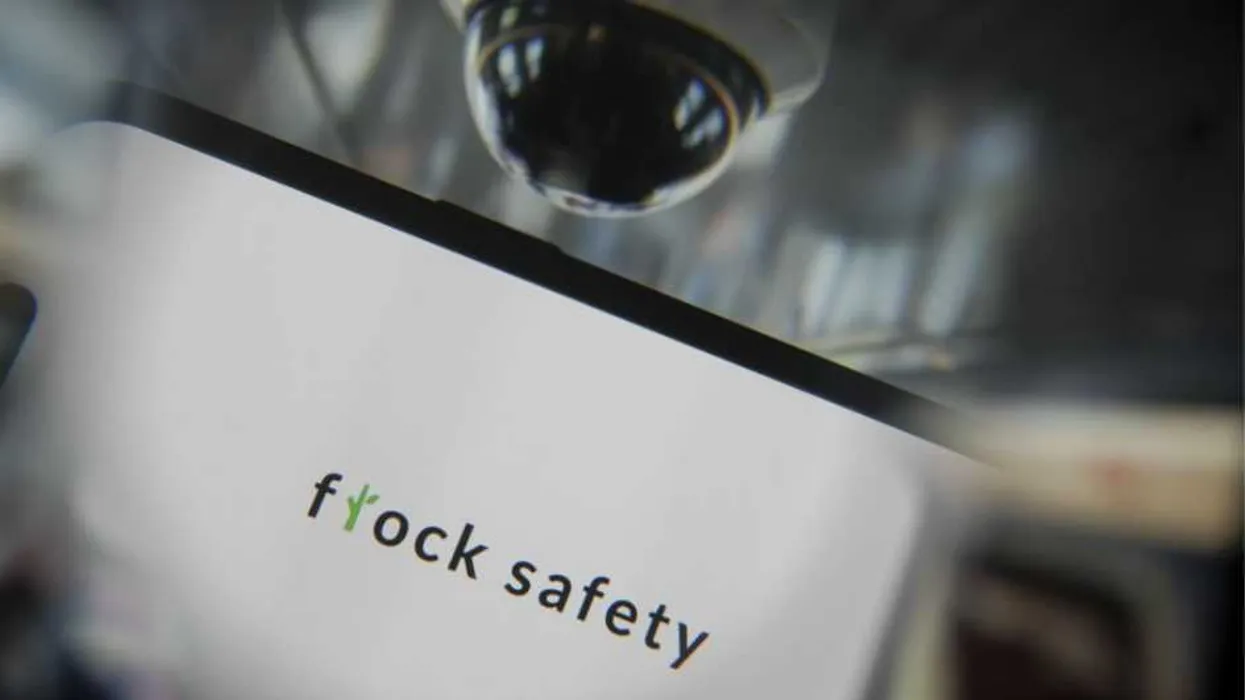
Buckle up, America — because if you’re driving anywhere in this country, you’re already under surveillance.
I’m not talking about speed traps or red-light cameras. I’m talking about Flock Safety cameras, those sleek, solar-powered, AI-driven spies perched on poles in your neighborhood, outside your kid’s school, at the grocery store, and along every major road.
The Institute for Justice has filed a federal lawsuit arguing that Flock effectively builds detailed, warrantless movement profiles of ordinary people.
These cameras are not just reading your license plate. They’re building a digital DNA profile of your vehicle — make, model, color, dents, bumper stickers, roof racks, even temporary tags — and logging where you’ve been, when, and with whom you’ve traveled.
And guess who has 24/7 access? Your local police, HOAs, apartment complexes, and private businesses — all without a warrant, without your consent, and often without you even knowing they exist.
Worse than you think
I’ve been warning drivers for decades about government overreach, from cashless tolls to black-box data recorders. But Flock Safety? This is next-level.
Founded in 2017 in Atlanta, Flock has exploded into a $3.5 billion surveillance empire with over 900 employees and a single goal: blanket every city in America with cameras. As of 2024, it has already deployed 40,000 to 60,000 units across 42 states in more than 5,000 communities. That’s not a pilot program. That’s a national tracking grid.
Here’s how it works — and why it should terrify every freedom-loving American.
Pure surveillance tools
Flock’s Falcon and Sparrow cameras don’t enforce speed or traffic laws. They’re pure surveillance tools.
Mounted on utility poles, traffic signals, or private property, they use automated license plate recognition (ALPR) and Vehicle Fingerprint™ technology to capture high-resolution images of your vehicle’s rear, including the license plate with state, number, and expiration, plus the make, model, year, color, and unique identifiers like dents, decals, roof racks, spare tires, even paper plates. They record the time, date, and GPS location, using infrared imaging for 24/7 operation, even at 100 mph from 75 feet away.
The data is uploaded instantly via cellular networks to Flock’s cloud servers, stored for 30 days, and accessible through a web portal by any approved user. That includes police departments across state lines through Flock’s TALON investigative platform. Drive from Georgia to New York, and every Flock camera you pass logs your journey. No warrant needed in most states.
RELATED: Why states are quietly moving to restrict how much you drive
 F8 Imaging/Getty Images
Staggering scale
The scale is staggering. Milwaukee has 219 cameras with 100 more planned. Riverside County, California, uses 309 cameras to scan 27.5 million vehicles monthly. Norfolk, Virginia, has over 170 units. Raleigh, North Carolina, has 25 and counting.
Nationwide, Flock claims it logs over one billion vehicle scans per month. These cameras cost $2,500 per year per unit, are solar-powered with no wiring required, and can be installed in hours. HOAs love them, schools want them, police can’t get enough, and new units go up daily, often without public notice or approval.
Flock CEO Garrett Langley loves to brag about Flock’s crime-stopping potential. But what he doesn’t mention is that you’re tracked whether you’re a criminal or not.
No opting out
There’s no true opt-out for the public — every passing car is still scanned and logged — but some neighborhoods and agencies use Flock’s SafeList feature to avoid nuisance alerts. SafeList doesn’t exempt anyone from being recorded. It simply tells the system not to flag certain familiar plates (residents, staff, permitted vehicles) as suspicious. The camera still captures the vehicle, stores the image, and makes it searchable; it just won’t trigger an alert for those approved plates.
Flock cameras can photograph more than a license plate — sometimes the interior of a car, passengers, or bumper stickers — but this varies by angle and lighting, and the system is not designed to gather facial images.
Privacy nightmare
This is a privacy nightmare. The ACLU and Electronic Frontier Foundation call it mass surveillance. A small-town cop in Ohio can search your plate and see everywhere you’ve driven in Florida. Rogue officers have abused ALPR before, stalking exes, journalists, activists. Data breaches? Flock says its cloud is secure, but we’ve heard that before.
A 2024 Norfolk, Virginia, ruling initially held that Flock’s system amounted to a Fourth Amendment search requiring a warrant. But that decision was later reversed on appeal. Meanwhile, the Institute for Justice has filed a federal lawsuit arguing that Flock effectively builds detailed, warrantless movement profiles of ordinary people. If that case succeeds, it would be a true game-changer.
Yes, finding a kidnapped child or stolen car is good. But at what cost? This creates a chilling effect: Will you avoid a protest, a church, a gun shop, a clinic, knowing you’re being logged? This isn’t safety. This is control.
Fighting back
So what can you do right now? Start by finding the cameras — contact your police, city council, or HOA and ask where the Flock cameras are and who has access.
Demand transparency: Push for public hearings, warrant requirements, data deletion after 24 hours, and no sharing outside your jurisdiction. Support the fighters like the ACLU, EFF, and Institute for Justice. Spot the cameras yourself — look for black poles with tilted solar panels and a small camera box.
It’s time to post your opinions on X, call your reps, show up at meetings — let’s stop the surveillance.
Flock’s CEO dreams of a camera in every U.S. city. But liberty isn’t free, and it shouldn’t come with a tracking device.
Drop your thoughts below — I read every comment. Share this information with every driver you know. Because if we don’t fight now, soon there’ll be nowhere left to hide.

Alden Richards hopes to direct Dingdong Dantes, Marian Rivera in a project

Alden Richards hopes to focus on directing following his directorial debut this year — and he has two artists in mind that he wants to direct.
OFW in Lebanon hopes Pope Leo”s peace message lingers amid fears of new war

Loren Capobres said the world stood still when she kissed Pope Leo’s hand this week in Lebanon, but hopes his message for peace will linger after his departure, leading to better working conditions and a lasting peace in the country.
NCAA: Benilde”s Charles Tiu hopes program consistency can help quench Blazers’ long title drought

Despite a consistent basketball program, an NCAA championship title has remained elusive for the Charles Tiu-coached De La Salle-College of Saint Benilde.





