

Day: December 21, 2025
JFK Grandson Wants To Fine States If Their Guns End Up At NYC Crime Scenes
‘We’re calling it the ‘Ricochet Rule”
Trump TORCHES Biden-Buttigieg EPA rules
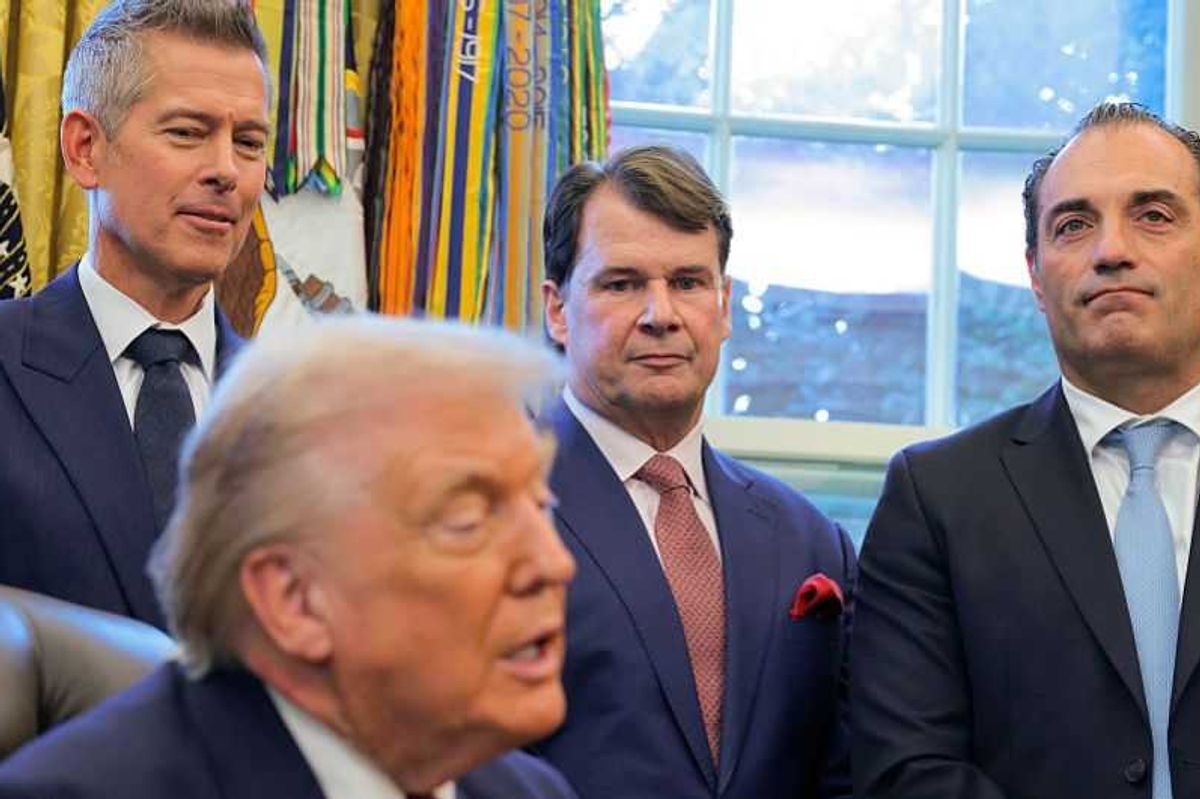
Washington rarely admits when policy has failed. But earlier this month, the White House stepped back from more than a decade of regulations that drove car prices to record highs, limited consumer choice, and tried to force an industry to move faster than technology, infrastructure, or American families could manage.
With the unveiling of the Freedom Means Affordable Cars proposal, President Donald Trump and Transportation Secretary Sean Duffy signaled a dramatic shift in national auto policy — one aimed at making car ownership attainable again for millions priced out of the market.
The Biden-Buttigieg standards were projected to generate $14 billion in compliance fines between 2027 and 2032, costs manufacturers said would be passed directly to buyers.
The timing is critical. New vehicle prices topped $50,000 this fall, while average monthly payments approached $750. Families are keeping cars longer than ever, pushing the average age of the U.S. fleet to record levels. As Washington pushed electric vehicles, consumers pushed back: EV demand stalled, rejection rates soared, and buyers continued to favor affordable gas and hybrid vehicles. That tension has been building for years, and the December 3 announcement marked the most direct challenge yet to the regulatory regime behind it.
Trump’s proposal resets National Highway Traffic Safety Administration fuel-economy rules, reversing Biden-era targets that aimed to push the fleet toward roughly 50 mpg.
Closing the ‘back door’
Under the new plan, Corporate Average Fuel Economy standards return to 34.5 mpg — levels last seen in the late 2000s — with future increases scaled back to what Congress originally envisioned. The administration projects up to $109 billion in savings over five years and roughly $1,000 off the average new car. Whether those figures hold, the philosophical shift is clear: ending what the White House calls a backdoor EV mandate.
For years, automakers warned privately that the prior rules forced them to build vehicles customers didn’t want simply to avoid massive penalties. The Biden-Buttigieg standards were projected to generate $14 billion in compliance fines between 2027 and 2032, costs manufacturers said would be passed directly to buyers. Aligning federal rules with California’s stricter standards further nudged companies toward EVs even as demand weakened. CAFE was never meant to reshape the marketplace — but that is how it was being used.
The consequences were stark. Billions were poured into EV-charging initiatives with little to show for it; $5 trillion was allocated, yet only 11 stations were built nationwide. California faced rolling blackouts with EVs still just 2.3% of vehicles on the road. Experts warned that even 10% EV adoption would strain the grid under current infrastructure. Meanwhile buyers who didn’t want EVs — still the majority — faced fewer choices and higher prices.
Attracting investment
The Trump reset aims to reverse course. Automakers quickly announced new domestic investments. Stellantis committed $13 billion to expand U.S. manufacturing, including Jeep, Dodge, Ram, and Chrysler. Ford pledged $5 billion for American facilities, noting that 80% of its vehicles are already made domestically. General Motors announced $4 billion to bring production back from Mexico while retooling plants for broader consumer demand. Even the United Auto Workers offered support, citing increased U.S. jobs and domestic production.
The plan also includes a tax change backed by the National Auto Dealers Association, allowing buyers to deduct interest on American-built vehicles. At a time when many families are locked out of the new-car market, the measure offers practical relief while encouraging domestic manufacturing.
Less noticed — but equally important — was the Congressional Review Act action that eliminated California’s special emissions waivers. Signed in June 2025, those resolutions dismantled the structure that allowed California to dictate national vehicle policy, ending the EV mandate embedded in federal regulations and clearing the way for this shift.
RELATED: Duffy threatens funding freeze for 3 states flouting English requirements for truck drivers
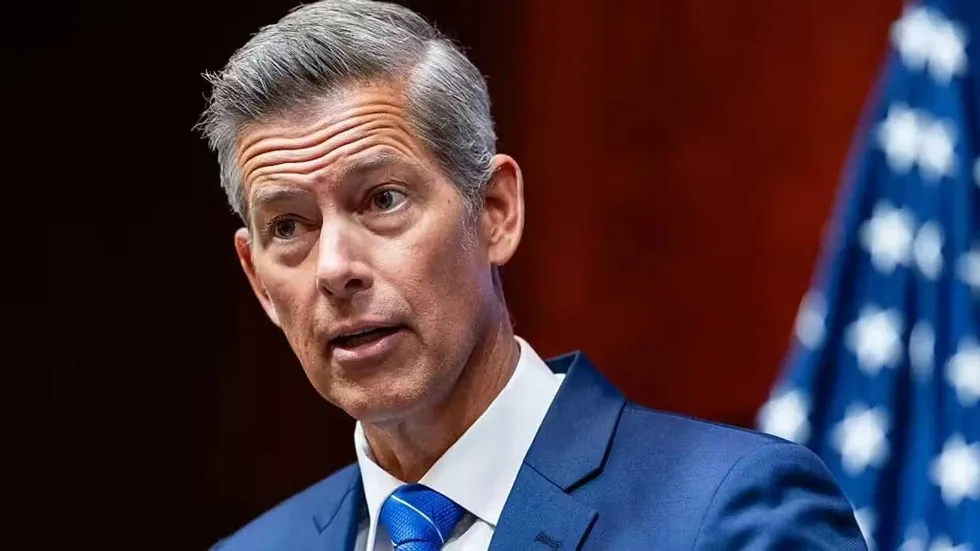 Secretary of Transportation Sean Duffy. Photographer: Eric Lee/Bloomberg via Getty Images
Not far enough?
Some analysts argue the rollback doesn’t go far enough. As long as CAFE exists — at any target — it remains vulnerable to political swings. They contend emissions should be regulated directly through the EPA, leaving the market to determine the mix of gas, hybrid, and electric vehicles. This view is gaining traction among critics who say CAFE no longer reflects consumer demand or technological reality.
Even Republican Sen. Bernie Moreno of Ohio weighed in, calling the forced EV pivot “irrational policy” that benefits China. China controls roughly 80% of EV battery minerals and most related mining, while the U.S. holds the world’s largest proven oil reserves. Moreno’s argument is blunt: America weakened its own manufacturing base by adopting policies that played to China’s strengths.
Sales data reinforces the point. EVs made up about 6% of new vehicle sales in November 2025, with rejection rates near 70% due to cost, charging gaps, range limits, insurance, and cold-weather performance. EVs still account for just 2.3% of vehicles on U.S. roads. The demand Washington expected never materialized.
The new policy reflects those realities. It restores balance to an industry pushed into transformation without consumer support or infrastructure readiness. Automakers will still build EVs and hybrids and pursue new technologies — but consumers will decide the pace, not regulators.
For the first time in years, drivers may again see affordability, variety, and genuine choice. Fuel-economy rules will remain contested, but the Freedom Means Affordable Cars plan marks the most significant shift in auto policy in over a decade.
For millions of Americans priced out of the market, that change alone is long overdue.
Don’t be seduced by AI nostalgia — it’s a trap!

I don’t often argue with internet trends. Most of them exhaust themselves before they deserve the attention. But a certain kind of AI-generated nostalgia video has become too pervasive — and too seductive — to ignore.
You’ve seen them. Soft-focus fragments of the 1970s and 1980s. Kids on bikes at dusk. Station wagons. Camaros. Shopping malls glowing gently from within. Fake wood paneling! Cathode ray tubes! Rotary phones! A past rendered as calm, legible, and safe. The message hums beneath the imagery: Wouldn’t it be nice to go back?
Human nostalgia, as opposed to the AI-generated kind, eventually runs aground on grief, embarrassment, and the recognition that the past demanded something from us and took something in return.
Eh … not really, no. But I understand the appeal because, on certain exhausting days, it works on me too — just enough to make the present feel a little heavier by comparison.
And I don’t like it. Not at all. And not because I’m hostile to memory.
I was there, 3,000 years ago
I was born in 1971. I lived in that world. I remember it pretty well.
How well? One of my earliest, most vivid memories of television is not a cartoon or a sitcom. No, I’m a weirdo. It is the Senate Watergate hearings in 1973, broadcast on PBS in black and white. I was 2 years old.
I didn’t understand the words, but I sort of grasped the tone. The seriousness. The tension. The sense that something grave was unfolding in full view of the world. Even as a toddler, I vaguely understood that it mattered. The adults in ties and horn-rimmed glasses were yelling at each other. Somebody was in trouble. Before I knew anything at all, I knew: This was serious stuff.
A little later, I remember gas lines. Long ones. Cars waiting for hours on an even or odd day while enterprising teenagers sold lemonade. It felt ordinary at the time, probably because I hadn’t the slightest idea what “ordinary” meant. Only later did it reveal itself as an early lesson in scarcity and frustration.
The past did not hum along effortlessly. Sometimes — often — it stalled.
Freedom wasn’t safety
I remember my parents watching election returns in 1976 on network television. I was bored to tears — literally — but I remember my father’s disappointment when Gerald Ford lost to Jimmy Carter. And mind you, Ford was terrible.
This was not some cozy TV ritual. It was a loss of some kind, plainly felt. Big, important institutions did not project confidence. They produced arguments, resentment, and unease. It wasn’t long before people were talking seriously about an “era of limits.” All I knew was Dad and Mom were worried.
I remember a summer birthday party in the early 1980s at a classmate’s house. It was hot, but she had an awesome pool. I also remember my lungs ached. That day, Southern California was under a first-stage smog alert. The air itself was hazardous. The past did not smell like nostalgia. It smelled like exhaust with lead and cigarette smoke.
I don’t miss that. Not even a little bit.
Yes, I remember riding bikes through neighborhoods with friends. I remember disappearing for entire days. I remember my parents calling my name when the streetlights came on. I remember spending long stretches at neighbors’ houses without supervision. I remember watching old movies on Saturdays with my pal Jimmy. I remember Tom Hatten. I remember listening to KISS and Genesis and Black Sabbath. That freedom existed. It mattered. It was fun. But it lived alongside fear, not in its absence.
Innocence collides with reality
I don’t remember the Adam Walsh murder specifically, but I very much remember the network television movie it inspired in 1983. That moment changed American childhood in ways people still underestimate. It sure scared the hell out of me. Innocence didn’t drift into supervision — it collided with horror. Helicopter parenting did not emerge from neurosis. It emerged from bona fide terror.
And before all of that, my first encounter with death arrived without explanation. A cousin of mine died in 1977. She was 16 years old, riding on the back of a motorcycle with a man 11 years her senior. She wasn’t wearing a helmet. The funeral was closed casket. I was too young to know all the details. Almost 50 years on, I don’t want to know. The age difference alone suggests things the adults in my life chose not to discuss.
Silence was how they handled it. Silence was not ignorance — it was restraint.
RELATED: 1980s-inspired AI companion promises to watch and interrupt you: ‘You can see me? That’s so cool’
 seamartini via iStock/Getty Images
Memory is not withdrawal
This is what the warm and fuzzy AI nostalgia videos cannot possibly show. They have no room for recklessness that ends in funerals, or for freedom that edges into life-threatening danger, or for adults who withhold truth because telling it would damage rather than protect.
What we often recall as freedom often presented itself as recklessness … or worse.
None of this negates the goodness of those years. I’m grateful for when I came of age. I don’t resent my childhood at all. It formed me. It taught me how fragile stability is and how much of adulthood consists of absorbing uncertainty without dissolving into it.
That’s precisely why I reject the invitation to go back.
The new AI nostalgia doesn’t ask us to remember. In reality, it wants us to withdraw. It offers a sweet lullaby for the nervous system. It replaces the true cost of living with the comfort of atmosphere and a cool soundtrack. It edits out the smog, the scarcity, the fear, the crime, and the death, leaving only a vibe shaped like memory.
Here’s a gentler hallucination, it says. Stay awhile.
The cost of living, then and now
The problem, then, isn’t sentiment. The problem is abdication.
So the temptation today isn’t to recover what was seemingly lost but rather to anesthetize an uncertain present. Those Instagram Reels don’t draw their power from people who remember that era clearly but from people who feel exhausted, surveilled, indebted, and hemmed in right now — and are looking for proof that life once felt more human.
RELATED: Late California
 LPETTET via iStock/Getty Images
And who could blame them? Maybe it was more human. But not in the way people today would like to believe. Human experience has never been especially sweet or gentle.
Human nostalgia, as opposed to the AI-generated kind, eventually runs aground on grief, embarrassment, and the recognition that the past demanded something from us and took something in return. Synthetic nostalgia can never reach that reckoning. It loops endlessly, frictionless and consequence-free.
I don’t want a past without a bill attached. I already paid the thing. Sometimes I think I’m paying it still.
A warning
AI nostalgia videos promise relief without effort, feeling without action, memory without judgment.
That may be comforting, but it isn’t healthy, and it isn’t right.
Truth is, adulthood rightly understood does not consist of finding the softest place to lie down. It means carrying forward what we’ve lived through, even when it complicates our fantasies.
Certain experiences were great the first time, Lord knows, but I don’t want to relive the 1970s or ’80s. I want to live now, alert to danger, capable of gratitude without illusion, willing to bear the weight of memory rather than dissolve into it.
Nostalgia has its place. But don’t be seduced by sedation.
Editor’s note: A version of this article appeared originally on Substack.
Gratitude AND fiscal concerns: Glenn Beck breaks down Trump’s warrior dividend for service members

In his address to the nation on Wednesday night, President Trump announced that he’s issuing a “warrior dividend” to approximately 1.45 million eligible U.S. military service members as a thank-you for their sacrifice and service. The one-time payment of $1,776 — a symbol of America’s founding — is set to arrive before Christmas.
Reactions to the announcement have been varied. Many service members and military families have welcomed the timely $1,776 bonus, with some veterans expressing cautious optimism. Critics, both on Capitol Hill and in media outlets, have raised concerns about the repurposing of congressional appropriations originally meant for military housing allowances.
Glenn Beck has mixed feelings too.
“I don’t like when the government hands out money, but … if anybody can use it, it’s the military,” he says.
“$1,700 is a huge amount for most people in the military. … We don’t do enough for our military, and so it’s the best kind of, I don’t know, stimulus package I’ve ever seen,” he adds.
Glenn’s co-host Stu Burguiere shares the sentiment that our military members are beyond deserving; however, he can’t ignore the fact that this is “money that we don’t actually have.”
“The argument is with tariffs that we have enough, but of course that pays only for a slight amount of our deficit,” he says.
The second issue Stu has is that according to the U.S. Constitution’s Appropriations Clause (Article I, Section 9), Congress has exclusive power over spending. Even one-time bonuses like the warrior dividend typically require explicit congressional authorization.
“Congress doesn’t even pay attention to [that clause] anymore. They don’t seem to care,” Glenn says.
However, there is another upside to these warrior dividends, he says. Besides the fact that they help America’s most deserving population, the money will also stimulate the economy.
“I can guarantee you, they’re going to get it, and they’re going to use it on their family for Christmas, which will stimulate the economy so much,” Glenn says.
To hear more of the conversation, watch the video above.
Want more from Glenn Beck?
To enjoy more of Glenn’s masterful storytelling, thought-provoking analysis, and uncanny ability to make sense of the chaos, subscribe to BlazeTV — the largest multi-platform network of voices who love America, defend the Constitution, and live the American dream.
Google has had access to your docs longer than you realize. Here’s how to kick it out.
Google’s Gemini Deep Research tool just got an upgrade that gives it open access to your private emails in Gmail, documents in Drive, and conversations in Chat. The move has sparked a mix of confusion, curiosity, and outrage as users online question why Gemini should have the power to scour private files. At first glance, the story is enough to make your hackles stand up on end, but the truth is a little more convoluted than the mass invasion of privacy it seems to be.
Actually, Gemini has had access to your personal files since 2024! But you can stop it and sever the tie for good.
Google certainly has access to your content, and the company can even leverage it against you.
What is Gemini Deep Research?
Before we go any farther, let’s get a few things out of the way.
- Google launched Gemini Deep Research back in December 2024 for Gemini Advanced subscribers (later renamed to Google AI Pro, as it stands today). The feature gave users the power to have Gemini research various topics online and pull together reports with detailed information and analysis, all with a simple command prompt. This was an early form of agentic AI, an AI tool that completes tasks all on its own like an assistant or an intern, freeing users to spend their time on other tasks.
- Fast-forward to November 2025. Gemini Deep Research just received an upgrade that gave it access to users’ private Gmail, Drive, and Chat data. So now, instead of simply searching the internet for deep research data, it can now pull information from your documents, too. Keep in mind that Deep Research only accesses your content if you enable this feature in a Gemini prompt. Otherwise, it will pull data strictly from the web.
- Although Gemini Deep Research was just given the ability to access users’ private documents in Google Workspace apps (Gmail, Drive, Docs, Slides, Sheets, Meet) on request, Gemini’s core AI service has had access to personal documents since September 2024. Although Gemini Deep Research may be more thorough at scouring your files, Gemini has been able to scan through them (on request) since last year!
Is Google spying on your personal data?
Now that you know Gemini can see your files, you might wonder if Google is spying on your personal data. The answer is a little complicated.
According to Google’s privacy policy, “we use automated systems that analyze your content to provide you with things like customized search results, personalized ads, or other features tailored to how you use our services. And we analyze your content to help us detect abuse such as spam, malware, and illegal content. We also use algorithms to recognize patterns in data.”
The word “automated” is important here. While a real person at Google isn’t poring through your files in search of information, your content is automatically scanned by Google’s systems. In some cases, Google will even turn over your personal data in response to formal requests from law enforcement. In other words, Google can access your files whenever needed, but the company claims to stay out unless legally compelled.
As for Gemini, it collects a ton of data as well, including the content you create with Gemini, as well as the content you feed into the platform through connected apps, like Gmail, Drive, YouTube, Chrome, etc. If there’s any bit of good news, it’s that Google won’t use your content to train the LLMs that power Gemini or any other AI model in the Google ecosystem. This means that your private files can’t be fed into Gemini’s database and used to answer queries from other users.
RELATED: BEWARE: With these new web browsers, everything on your computer can be stolen with one click
 Photo Credit: Bill Hinton via Getty Images
Looking at the facts as a whole, Google isn’t spying on users, per se, but the company certainly has access to your content, and it can even leverage it against you if any uploaded materials are complicit in a legal matter or if said material is deemed illegal itself.
How to disconnect Gemini from Google Drive, Gmail, and more
By most available evidence, Google isn’t using Gemini to scan your private data any more than the company already does for its ad network, services, and law requests. However, if you still want to cut Gemini off from endless supplies of personal information, here’s what you need to do:
- In your web browser, head over to Gmail.
- Click on the Settings gear in the top right corner.
- From the popup menu, click “See all settings.”
- Now that you’re in the Settings page, scroll down to the section that says “Google Workspace smart features.” This is the setting that gives Gemini direct access to your content.
- Click on “Manage Workspace smart feature settings.
- Uncheck “Smart features in Google Workspace” and “Smart features in other Google products.”
- Save, and you’re all done.
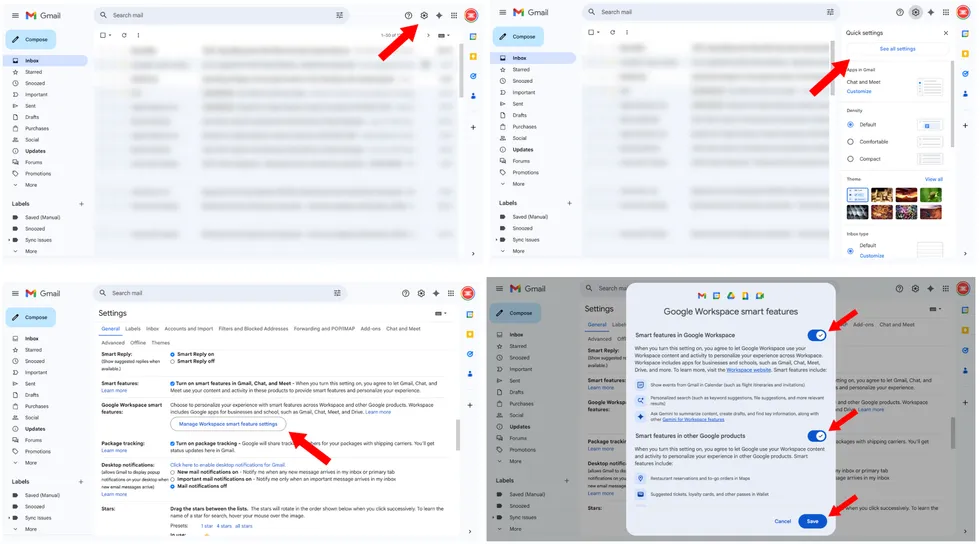 Four quick steps will free you from Gemini’s prying eyes.Screenshots by Zach Laidlaw
Now that you’ve disconnected Gemini from your content, you can do the same thing for all of Google’s apps and services with just a few clicks.
- Go back to the Settings page in Gmail.
- Find “Smart features.”
- Uncheck the blue box, and you’re all set.
 One check, total coverage.Screenshot by Zach Laidlaw
There’s only one way to get Google out of your data for good
Although you can keep Google’s apps, services, and Gemini out of your personal files, Google can still scan everything you throw into Drive, Gmail, and more. The best way to kick Google to the curb for good is to move your files out of Google’s ecosystem entirely.
The most private and secure way to save your data is to keep it on a local hard drive at home. This way, no cloud storage providers can access your content but you. There’s also a way to set up your own private cloud network so that you can still access your files remotely within your local hard drive, just as you do with Google Drive.
Otherwise, there are several cloud storage services that claim to be completely private. The leading option is Proton Drive (from the markers of the private email service Proton Mail). It leverages end-to-end, zero-access encryption to protect your data and stay out of your business. Another option is Sync.com, which uses end-to-end encryption and zero-knowledge authentication to keep your private files private.
Your data belongs to you, but unless your AI, cloud storage, and email providers have strict guidelines to protect your privacy, your data is open and accessible for all manner of reasons. Even worse, you agree to let them scan your content from the moment you create an account. This is why it’s a good idea to research the tools you use online, and always read the terms and conditions before you sign up. The integrity of your personal data and privacy depend on it.

France to build new aircraft carrier, Macron tells troops based in Gulf

PARIS – President Emmanuel Macron confirmed on Sunday plans to build a new, larger and more modern aircraft carrier to replace the ageing Charles de Gaulle carrier and strengthen France”s maritime power. The programme, known as “Porte-Avions Nouvelle Génération” (PANG), is predicted to cost around 10.25 billion euros ($12 billion).
More abducted Nigerian students have been released, police say

YENAGOA – More Nigerian children abducted last month from a Catholic school in Niger state have been released, state police said on Sunday, following one of the country”s biggest mass kidnappings of recent years. “I can confirm that they have been released, but we will only do the head count tomorrow to ascertain the number of those released,” Wasiu Abiodun, Niger state police command told Reuters.
DHSUD, UPLB eyeing new rental housing under Expanded 4PH

The Department of Human Settlements and Urban Development (DHSUD) and the University of the Philippines – Los Baños (UPLB) are exploring the possibility of another rental housing project under the Expanded Pambansang Pabahay para sa Pilipino (4PH) Program.
US pursuing third oil tanker near Venezuela, officials say

The U.S. Coast Guard is pursuing an oil tanker in international waters near Venezuela, officials told Reuters on Sunday, in what would be the second such operation this weekend and the third in less than two weeks if successful.





