

Author: mfnnews
Records Show Anti-DEI Republican Helped Install Ideology At Texas Health Center
‘Structurally racist, ableist, heteronormative, sexist, and cis-sexist’
Ilhan Omar, Democrats Demand ICE Leave Minnesota After Man Fatally Shot By Border Patrol
‘Get ICE out of Minnesota NOW’
DHS: Armed suspect fatally shot by federal agent in Minneapolis; suspect ‘violently resisted’ disarming attempt

The Department of Homeland Security said an armed suspect was fatally shot Saturday by a federal agent in Minneapolis and that the suspect “violently resisted” a disarming attempt.
DHS indicated a firearm and two magazines were recovered.
‘They have encouraged these reckless confrontations and attacks on our agents and officers.’
“At 9:05 AM CT, as DHS law enforcement officers were conducting a targeted operation in Minneapolis against an illegal alien wanted for violent assault, an individual approached US Border Patrol officers with a 9 mm semi-automatic handgun,” DHS said.
“The officers attempted to disarm the suspect but the armed suspect violently resisted,” DHS added. “Fearing for his life and the lives and safety of fellow officers, an agent fired defensive shots. Medics on scene immediately delivered medical aid to the subject but was pronounced dead at the scene.”
DHS also said “the suspect also had 2 magazines and no ID — this looks like a situation where an individual wanted to do maximum damage and massacre law enforcement.”
RELATED: Vance crushes false narrative about ICE ‘arresting’ 5-year-old boy
 Gun that the Department of Homeland Security says fatally shot suspect was carrying Saturday in Minneapolis.Image source: Department of Homeland Security
“About 200 rioters arrived at the scene and began to obstruct and assault law enforcement on the scene, crowd control measures were deployed for the safety of the public and law enforcement,” DHS also said.
Minneapolis Police Chief Brian O’Hara said the fatally shot man was 37 years old, the Associated Press reported, adding that the chief “urged people to remain peaceful and not to destroy the city.” O’Hara said there was limited information about the shooting and called on people to leave the area and said it’s “not sustainable,” the AP added.
Democrat Minnesota Gov. Tim Walz as well as Democrat U.S. Sens. Amy Klobuchar and Tina Smith of Minnesota seized on the shooting as another opportunity to demand the ouster of U.S. Immigration and Customs Enforcement from the Gopher State.
Walz, who indicated that he has spoken with the White House, stated, “Minnesota has had it. This is sickening. The President must end this operation. Pull the thousands of violent, untrained officers out of Minnesota. Now.”
Klobuchar wrote, “To the Trump administration and the Republicans in Congress who have stood silent: Get ICE out of our state NOW.”
“Another catastrophic shooting in Minneapolis by federal agents,” wrote Smith. “ICE must leave now so MPD can secure the scene and do their jobs.”
In the wake of the shooting, the Border Patrol Union suggested a shooting likely would have been defensive and condemned the incendiary rhetoric spread in recent weeks by politicians and the liberal media.
“Border Patrol agents are trained extremely well to protect themselves, their fellow agents, and innocent third parties. When a supposed ‘peaceful’ protester brings a weapon (such as a loaded handgun) and brandishes it, there are going to severe consequences and repercussions,” said the union.
“We have pleaded with and warned the media and the politicians that their irresponsible, hate-filled and false rhetoric is going to get people unnecessarily hurt, or worse, killed when they portray our agents and officers as the aggressors,” continued the union. “They have encouraged these reckless confrontations and attacks on our agents and officers who are performing their lawful duties and enforcing the laws that Congress has put on the books.”
Editor’s note: This story was edited after publication to include the age of the fatally shot individual as well as commentary from the Minneapolis Police Chief.
This is a developing story; updates may be added.
Like Blaze News? Bypass the censors, sign up for our newsletters, and get stories like this direct to your inbox. Sign up here!
Trump ‘needs to be honest’: Tariffs, the court, and a housing market built on lies

The Supreme Court’s latest delay in its tariff case is fueling speculation that justices are trying to craft a behind-the-scenes compromise to avoid market shock — even if it means quietly curbing presidential trade authority.
But Daniel Horowitz explains that the tariff ruling may be less important than the remedy itself, especially as another crisis tightens its grip on Americans: a frozen, inflated housing market that government policy continues to prop up instead of letting it reset.
“I think what they’re trying to do is two things. … One is, they want to do it with as little disruption as possible. So they’re trying to think how that remedy works. And number two, I think particularly maybe for Thomas and Alito, they’re trying to figure out how not to get involved in a political question,” Horowitz tells BlazeTV host Steve Deace on the “Steve Deace Show.”
“And that’s really where I am. As you well know, I don’t believe the court should ever be the arbiter of a fundamental political disagreement. If it’s a problem, Congress should oppose and deal with it,” he continues.
Trump has also announced his plan to go after residential homes being bought up by global corporations like BlackRock, which sounds great to everyday Americans, but Horowitz believes the solution is even simpler.
“It was announced, no more, you know, BlackRock owning of homes, residential, you know, mass production of, or acquisition, I should say, of residential homes, things of that nature,” Deace says.
“This is a primary thing that the young male demographic that voted our way in the last election cares about. It’s a primary driver of the current situation in the economy. Not to mention the fact it’s the greatest source for individual liquidation that exists right now to the average American,” he continues.
“We’re sitting on all this liquid that could go back into the economy if we can get the housing market moving. What should they be doing, do you think?” Deace asks.
“Very simple. Let the bubble pop. And I know it sounds very simplistic, but it’s something that they refuse to do, and everything that they’re proposing will further fuel it. Corporate ownership is a symptom of the problem, not the problem,” Horowitz responds.
“The president needs to be honest with people. The biggest problem with the president economically is he doesn’t understand the mutual exclusivity of things. So, he wants insurance to cover everything, but he wants premiums to go down, right? He wants the welfare state, but he doesn’t want inflation. He wants seniors to have a checking account in the form of fake housing on unrealized gains, but he wants young people to be able to afford them,” he continues.
“If you want to actually get the economy back to what we all said we did, which is a broad-based income economy rather than an asset bubble, you’ve got to pull the plugs on all the things doing this. And it’s the exact opposite of what the president is saying,” he adds.
Want more from Steve Deace?
To enjoy more of Steve’s take on national politics, Christian worldview, and principled conservatism with a snarky twist, subscribe to BlazeTV — the largest multi-platform network of voices who love America, defend the Constitution, and live the American dream.
Tomahawks look tough. Grid disruption actually wins.
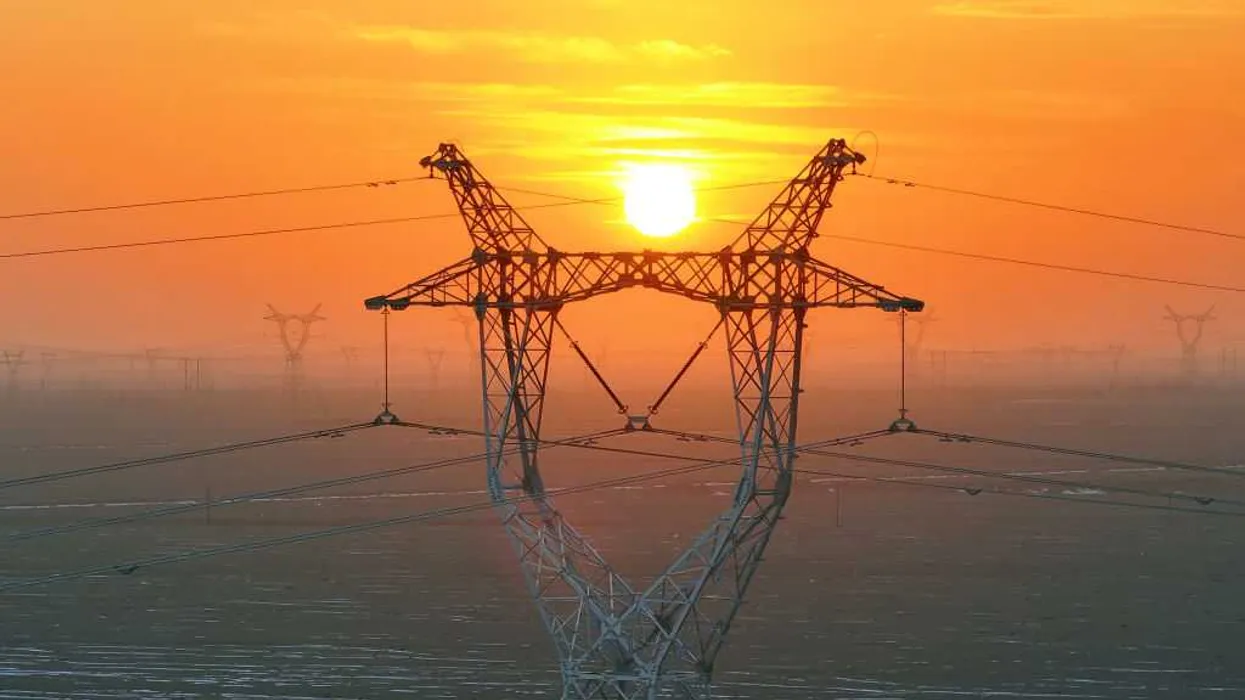
As President Trump proposes a ceasefire-in-place to stop the meat grinder in Ukraine, Vladimir Putin appears to be doing what he does best: stalling. With the U.S. busy juggling Iran, Venezuela, and even Greenland, Putin likely figures he can drag this war out long enough to wear Ukraine down and force a surrender through attrition.
Meanwhile Volodymyr Zelenskyy is brooding over not getting Tomahawk cruise missiles — weapons that could strike deep inside Russia.
The goal is irritation, disruption, and humiliation — repeated so often that people start cursing the Kremlin for creating this mess.
But instead of fixating on Tomahawks, Zelenskyy should look at the position Putin is now in. It has a historical parallel worth taking seriously.
Putin resembles Czar Nicholas II in 1917.
In both cases, Russian treasure has poured into a black hole while generals kept ordering “meat attacks” that chewed through manpower by the hundreds of thousands. In 1917, the loss of blood and money turned the nobility against the czar and set the stage for the Kerensky Revolution.
Putin’s oligarchs now sit where the czar’s nobility once sat: close enough to power to profit and close enough to disaster to panic.
Ukraine should exploit that.
A weapon of mass disruption
The goal shouldn’t be a dramatic strike that makes Russians rally around “Mother Russia.” A Tomahawk barrage would do exactly that. It would unify the country behind Putin and hand him the cleanest propaganda gift imaginable.
Ukraine needs something else: a way to transfer the misery and frustration of war to the Russian public — especially in Moscow and other major cities — without creating a patriotic surge.
Russia’s population is insulated by propaganda. Ukraine should attack the insulation, not the borders.
Winter brings slower movement and fewer offensives. That gives Ukraine an opening to run a low-cost, high-annoyance campaign modeled on a little-remembered British operation from World War II.
RELATED: Pressed on Greenland, Trump tells Davos the US has weapons he ‘can’t even talk about’
 Photo by Chip Somodevilla/Getty Images
The British Royal Navy called it Operation Outward. Today strategists would call it a “cost-imposing” campaign: something cheap to launch that forces the enemy to spend far more to stop it.
The Royal Navy released nearly 100,000 weather balloons. About half carried incendiary bomblets. The rest dragged long wire strands designed to short out power lines and cause disruption across the German electrical grid. German forces had to waste time and resources trying to counter a swarm of cheap devices drifting across their territory.
Because winds in the northern hemisphere generally move west to east, the Germans couldn’t retaliate in kind.
(The Japanese later tried something similar against the United States with the Fu-Go balloons, launching roughly 9,300 of them toward the U.S. and Canada. They forced America to divert resources even though the overall damage remained limited.)
Ukraine’s geography makes this concept even more attractive. Ukraine sits southwest of Russia. That means a balloon campaign drifting into western Russia would give Moscow no easy, low-cost way to respond with the same trick.
And unlike the World War II version, Ukraine wouldn’t need incendiaries. The point isn’t to burn Russian cities or kill civilians. The last thing Ukraine needs is to create martyrs and rally Russians around Putin.
The goal is irritation, disruption, and humiliation — repeated so often that people start cursing the Kremlin for creating this mess.
The cost math
Peter Rosato of Kaymont Consolidated Industries, a major weather balloon manufacturer, estimates that an eight-foot diameter balloon costs about $5 to $7. A hydrogen generator could inflate them for only pennies more.
Using the British model, the balloon could carry a simple ballast mechanism that slowly lowers it while trailing a long tether: roughly 700 feet of hemp cord, tied to a thinner steel wire around 300 feet long. That wire drags across power infrastructure and can short out lines, forcing repairs and outages.
The British saw real success disrupting the German electrical grid. They also forced the Nazis to waste valuable fighter flight hours trying to shoot down balloons — an expensive response to a cheap threat.
Ukraine could buy 100,000 balloons at roughly $5 each and — even after adding wire and other components — build a unit for under $1 million.
Unlike the British, Ukraine also wouldn’t need the same complex altitude-control system used to guide balloons across the English Channel, France, and the Low Countries into Germany. A long, contiguous border allows Ukrainian launches to drift into Russian territory without the same navigation demands.
To improve the results, Ukraine could tweak the design. A better unreeling mechanism might outperform a simple trailing wire. A Ukrainian electrical grid specialist and a meteorologist familiar with conditions in the northeastern border region near Shostka could help optimize launch times for maximum impact.
Make it a war Russians can’t ignore
This isn’t just disruption. It’s information warfare.
The point is not only to knock out power lines but to make the disruption visible — balloons everywhere across western Russia, especially near Moscow — as proof that Putin cannot protect his own people from the consequences of his war.
Modern realities require modern execution. Ukraine couldn’t run this from fixed-launch sites. Russian reconnaissance drones would find them, and artillery or kamikaze drones would destroy them.
The operation would need to move.
A vehicle-borne launch system makes the most sense: military trucks large enough to carry inflated eight-foot balloons, gas tanks, uninflated balloons, payloads, communications gear, a generator, and basic workshop tools.
And for safety, Ukraine would likely need to use helium instead of hydrogen. Hydrogen is cheaper, but the risk of accidental detonation inside a truck is too high.
RELATED: The fastest way to stop Iran’s killers … without firing a single shot
 Antonina Satrevica / Getty Images
Night launches would also matter. To avoid detection, the trucks and equipment would need to be compatible with night-vision operations.
Now picture the outcome.
Imagine 1,000 yellow-and-blue balloons drifting into Russia every day, dragging wires across electrical lines.
Imagine the manpower, equipment, and aircraft Russia would have to divert from the front to hunt them down — at night — every night — for the next hundred nights.
And for the final touch, imagine the optics when Russian crews find one of these balloons in daylight, wires draped across a shorted power line, with a huge portrait of Vladimir Putin half-naked on a horse and the Russian phrase for “I did that!”
That kind of mockery lands differently when you’re freezing in the dark because of Putin’s war.
Ukraine doesn’t need Tomahawks to hit Russia where it hurts. It needs a cheap, persistent campaign that turns irritation into anger — and turns anger into political pressure on the regime that started this catastrophe.
Alex Eala hopes to inspire people with her journey

For Alex Eala, this is only the beginning of her journey — and talk of legacy is not something she is focused on just yet.
Imee on BBM”s illness: ‘He”s uncared for in the Palace”
_2026_01_25_00_31_11.png)
Sen. Imee Marcos on Saturday said President Ferdinand Marcos Jr. fell ill because no one in Malacañang was purportedly taking care of him.
Elizabeth Smart reveals her kidnapper tried to abduct her teen cousin as his ‘next wife’
Elizabeth Smart reveals her captor Brian David Mitchell planned to kidnap her cousin Olivia Wright as his second “wife” during her nine-month captivity.
Pritzker urges ‘unified response’ from Democrat, Republican governors after Border Patrol shoots armed man
Illinois Gov. JB Pritzker and New York Gov. Kathy Hochul slammed thee Trump administration after Border Patrol shot an armed man in Minneapolis.
Trump cites armed suspect, lack of police support following fatal Border Patrol shooting in Minneapolis
President Donald Trump reacted on Truth Social after a Border Patrol agent fatally shot an armed U.S. citizen in Minneapolis, blaming local leaders for failing to support federal agents.





