Author: mfnnews
Vance crushes false narrative about ICE ‘arresting’ 5-year-old boy

An image was circulated widely this week showing a visibly upset preschooler wearing an oversized hat and Spider-man backpack standing in the company of federal immigration agents. Evidently loath to investigate the circumstances surrounding the photo and what it actually depicts, Democrats and other radicals rushed to condemn U.S. Immigration and Customs Enforcement.
Minneapolis Mayor Jacob Frey (D), for instance, suggested ICE had treated the boy like a criminal, while twice-failed presidential candidate Kamala Harris wrote that he “is just a baby. He should be at home with his family, not used as bait by ICE and held in a Texas detention center. I am outraged, and you should be too.”
‘No one thinks that makes any sense.’
New York Rep. Alexandria Ocasio-Cortez (D) went a step further, accusing ICE of “kidnapping 5-year-olds and using them as bait” and suggesting the agency should be defunded.
The liberal media didn’t appear particularly eager to correct Democrats’ false narrative, which was incubated by woke officials with Columbia Heights Public Schools, where the child was reportedly enrolled.
During his visit to Minneapolis on Thursday, Vice President JD Vance gave the press a reality check, noting that anti-ICE propagandists glossed over some critical information about the incident.
“I actually saw this terrible story while I was coming to Minneapolis,” said the vice president.
“And I see this story, and I’m a father of a 5-year-old — actually, a 5-year-old little boy. And I think to myself, ‘Oh my God, this is terrible. How do we arrest a 5-year-old?'”
“Well I do a little bit more follow-up research, and what I find is that the 5-year-old was not arrested; that his dad was an illegal alien; and when they went to arrest his illegal alien father, the father ran,” said Vance.
 Photo by Jim Watson – Pool/Getty Images
Vance told the Minneapolis crowd, “So the story is that ICE detained a 5-year-old. Well what are they supposed to do? Are they supposed to let a 5-year-old child freeze to death? Are they not supposed to arrest an illegal alien in the United States of America?”
The Department of Homeland Security indicated that when ICE attempted to arrest the boy’s father, Adrian Alexander Conejo Arias, in the Minneapolis suburb of Columbia Heights on Jan. 20, the illegal alien from Ecuador “fled on foot — abandoning his child.”
Marcos Charles, the assistant director of enforcement and removal operations for ICE, indicated on Friday that after the illegal alien ditched his little boy and was arrested, ICE officers “stayed with the child. They cared for him, took him to get something to eat from a drive-thru restaurant, and spent hours ensuring he was taken care of. Again my officers did that. Not his father.”
Charles noted further that people inside the illegal alien’s apparent residence refused to open the door for the young boy and take him back.
According to DHS Assistant Secretary Tricia McLaughlin, the boy’s alleged mother was inside the house and would not let him in even after officers assured her that she wouldn’t be taken into custody.
Marc Prokosch, a lawyer representing the family, indicated during a press conference on Thursday that the boy and his father were reunited and are being kept together at the Dilley Immigration Processing Center, a family holding center in Dilley, Texas.
“Parents are asked if they want to be removed with their children, or ICE will place the children with a safe person the parent designates. This is consistent with past administration’s immigration enforcement,” said DHS.
The vice president further suggested that the argument that ICE cannot arrest illegal aliens who have children is unworkable given that’d mean “every single parent is going to be completely given immunity from ever being the subject of law enforcement.”
“That doesn’t make any sense. No one thinks that makes any sense,” said Vance.
Like Blaze News? Bypass the censors, sign up for our newsletters, and get stories like this direct to your inbox. Sign up here!
Tim Walz supporters urged to ‘rush’ donations to his legal fund amid DOJ probe
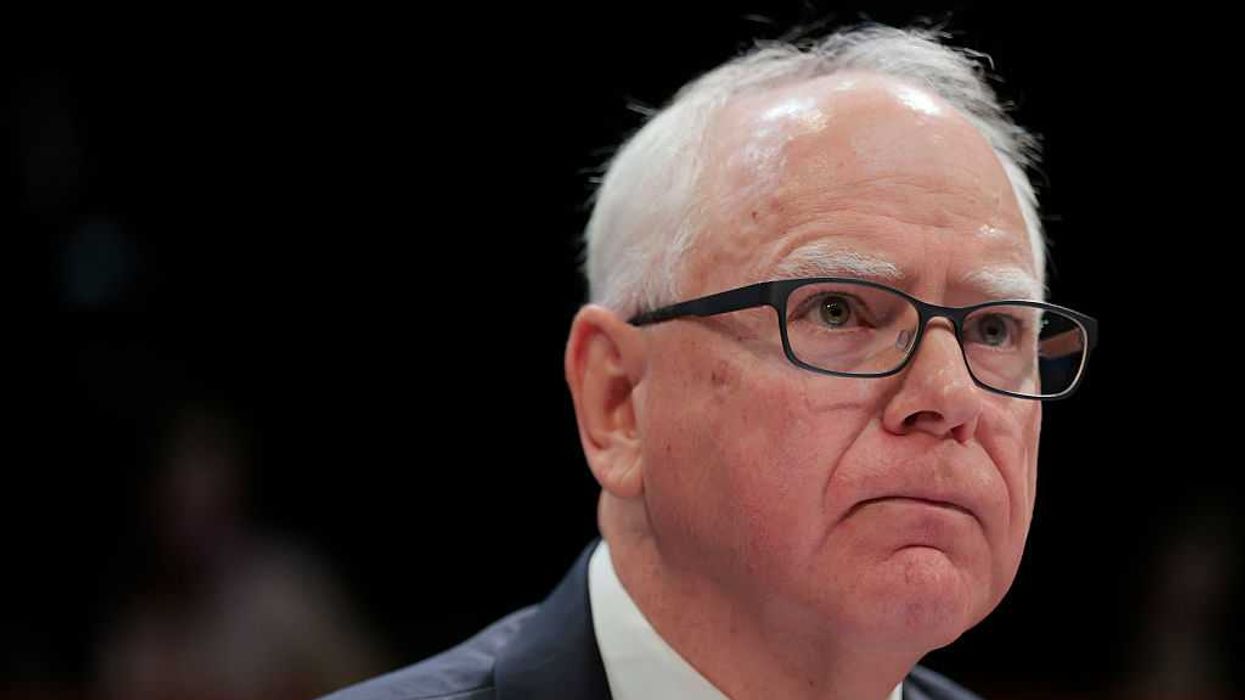
President Donald Trump’s Department of Justice opened an investigation into Minnesota Gov. Tim Walz, and now the Democrat’s supporters are being urged to “rush” donations to his legal defense fund.
‘If you’re with me, please rush a donation to our legal defense fund and help ensure we can keep fighting for accountability, transparency, and justice.’
Reports surfaced last week that President Donald Trump’s Department of Justice is investigating Walz, Minneapolis Mayor Jacob Frey, and others for potentially violating a conspiracy statute related to statements they made about the deployment of federal immigration agents to the Minneapolis region.
Walz issued a statement following the reports, accusing the Trump administration of “weaponizing the justice system,” adding that “threatening political opponents is a dangerous, authoritarian tactic.”
Frey similarly accused the Trump administration of weaponizing the federal government “to intimidate local leaders for doing their jobs.”
The DOJ issued subpoenas on Tuesday to several Democratic officials, including Walz and Frey.
 Tim Walz, Gwen Walz. Photo by Stephen Maturen/Getty Images
The subpoenas, which both Walz and Frey confirmed they received, were connected to the DOJ’s investigation into whether the officials conspired to impede federal officers from carrying out their duties, according to CBS News.
On Friday, Alpha News reporter Liz Collin shared screenshots of an alleged Walz campaign notification, encouraging supporters to donate to the governor’s legal fund.
RELATED: Justice Dept. slaps Gov. Tim Walz, AG Ellison, Minneapolis Mayor Frey with subpoenas: Report
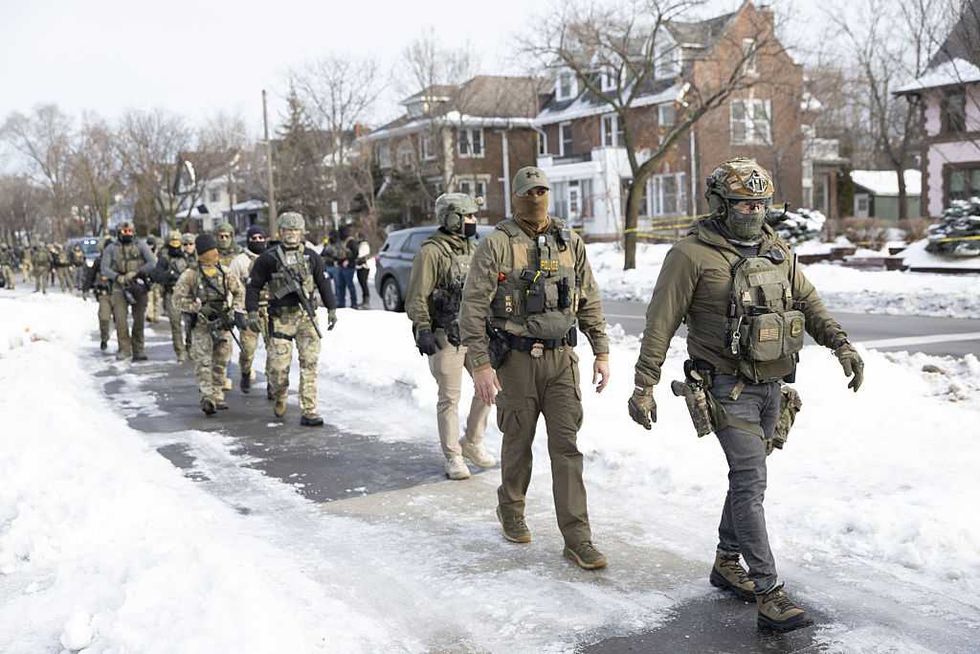 Photo by Christopher Juhn/Anadolu via Getty Images
“Last week, the federal government opened an investigation into me. … My job is to defend Minnesotans and the rule of law, and I’m sure as hell not backing down. But the road ahead is long, difficult, and expensive,” it reads.
“If you’re with me, please rush a donation to our legal defense fund and help ensure we can keep fighting for accountability, transparency, and justice,” the message reads, featuring a link that redirects to an Act Blue webpage where supporters can donate.
“BREAKING: The DOJ is investigating Tim Walz on baseless charges. Donate now to aid his fight,” the webpage states.
Blaze News has reached out to Walz’s office for comment.
Like Blaze News? Bypass the censors, sign up for our newsletters, and get stories like this direct to your inbox. Sign up here!

Fire hits residential area in Makati City

A fire hit a residential area in Barangay Tejeros in Makati City early Saturday.
Archaeologist believes he’s closing in on lost tomb of legendary Egyptian queen: ‘Could happen soon’
Egyptian archaeologist Zahi Hawass believes he’s closing in on Queen Nefertiti’s tomb in the Valley of the Kings, calling it the century’s greatest find.
Shoveling snow could pose dangerous health risk for one group, experts warn
Snow shoveling creates hidden heart strain similar to cardiac stress tests. Learn safer techniques and warning signs to protect your cardiovascular health.
Doctors say 3 small lifestyle shifts could extend life by nearly a decade
Conversation starters, celebrity health reveals, healthy living hacks and medical cautions: Here’s what you missed in Fox News Health this week
Trump’s pardon of House Dem Cuellar back in the spotlight as Cuellar’s brother faces indictment
Webb County Sheriff Martin Cuellar Jr., brother of Trump-pardoned Rep. Henry Cuellar, was indicted. The DOJ alleges he used staff, resources and funds for a COVID cleaning business.
Trump pushes ‘Trump-a-palooza’ midterm convention as GOP braces for tough elections
Republicans make history as the RNC greenlights a first-ever midterm convention to boost Trump and GOP candidates ahead of crucial 2024 presidential elections.
Chaos in Syria sparks fears of ISIS prison breaks as US rushes detainees to Iraq
Syria chaos sparks ISIS security crisis as 150 detainees relocated to Iraq amid prison breaks. Kurdish forces withdraw from detention facilities.