

Category: 2026 midterm election
Six questions Trump and conservatives can no longer dodge in ’26
For conservatives, January 2025 felt like an auspicious moment to be alive. Donald Trump sat atop the world with a bully pulpit larger than any media outlet and the power to drive virtually any narrative he chose. Yet instead of using that power, we spent the year arguing over the power the GOP supposedly lacked.
Almost no legislation was passed. Many of the most transformational policies Trump enacted through executive action now sit mired in the courts.
Where is our Mamdani?
Fast-forward to January 2026. The economy looks grim. Democrats are crushing Republicans in special elections. It feels like a different universe.
Republicans tend to operate on a familiar two-year cycle. After a victory, the first year involves explaining why campaign promises cannot be fulfilled. The second year, ending in November elections, turns into defensive posturing: As disappointed as voters may be, they must remember that Democrats represent instant political death.
The implication stays constant. Voters must dutifully back the GOP, ignore the fact that Republicans currently hold power, and politely bypass the primary process out of fear of weakening resistance to Democrats.
As we enter the new year, we have reached the “rally around the GOP to stop the Democrats” phase of the cycle once again.
But reality intrudes. No matter how faithfully the base rallies, Republicans will likely lose in November because of the economy. Absent a dramatic national reset, Democrats will retake the House, probably with a substantial majority.
That makes the present moment decisive. With trifecta control still intact for now, Republicans must use what power they have to improve daily life, enact changes harder to undo, and reinforce red-state America so the coming blue wave does not obliterate the remaining red firewall.
Whether Republicans break free from their familiar cycle of election-failure theater comes down to the answers to these six questions.
1. Will the red firewall hold?
Republicans will likely lose the House and surrender residual power in battleground states such as Georgia and Arizona. Independents have abandoned the GOP, and that trend will accelerate as economic conditions worsen.
The question is whether Republicans will give their voters something worth turning out for. Base turnout alone will not flip purple territory, but it could stop the bleeding deep into red states and keep races such as the Iowa and Ohio governorships out of reach.
This past year made clear that Republicans are losing races they never should have had to defend. A deeper economic downturn would push that line even farther.
2. How toxic do AI data centers become — and will Republicans notice?
By the end of 2025, opposition to data centers surged across ideological lines. Communities worry about water use, power strain, housing values, and secondary effects.
Democrats have begun embracing that resistance as Trump elevates data centers and tech interests as pillars of his economic agenda. Will this issue fracture Republicans’ coalition or even force a break with Trump?
3. What will Republicans do with health care?
Democrats engineered a trap that forces Republicans to address health care, the single largest driver of deficits, inflation, and household pain.
Obamacare made unsubsidized insurance unaffordable for most Americans. Democrats then timed the expiration of expanded subsidies to land on Trump’s watch, ensuring that voters blame him rather than the law’s architects.
Anything Trump does — or refuses to do — will be pinned on him. That reality argues for pushing a genuinely free-market repeal-and-replace that lowers costs. History suggests that outcome remains unlikely. I’m not holding my breath, anyway.
4. Will Trump finally ignore a lawless court?
Could a powerless judge issue a ruling so egregious that it would prompt Trump to defy it at long last?
I am not holding my breath on that one, either.
RELATED: The courts are running the country — and Trump is letting it happen
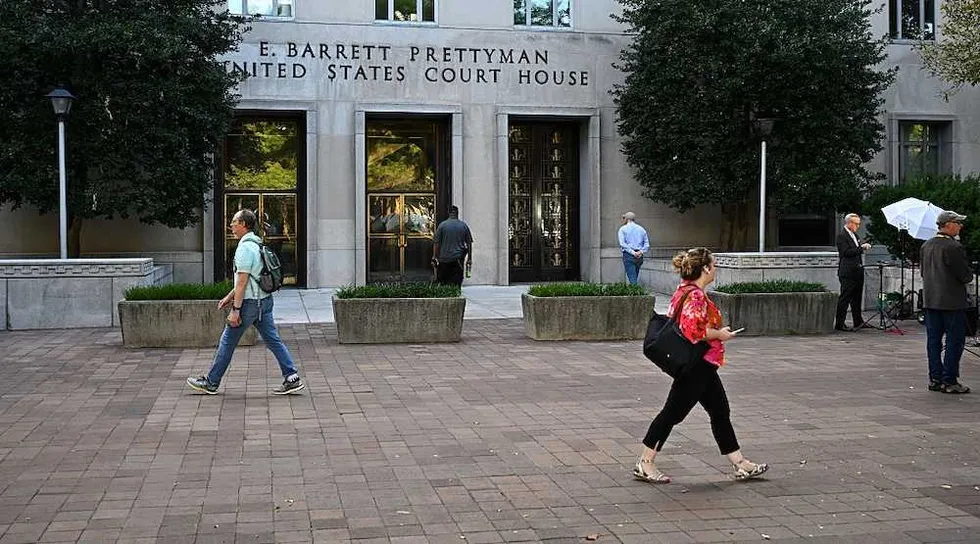 Photo by Graeme Sloan/Bloomberg via Getty Images
5. Will Trump clear the decks on his promises dating back to 2015?
Democrats will likely control one or both chambers for the remainder of Trump’s term. Regardless of strategy, they probably win the midterms.
That means Trump has nothing to lose by executing fully on his original agenda now. Immigration moratoria, judicial reform, welfare devolution, bans on the Council on American-Islamic Relations and Antifa — these changes should be forced through every “must-pass” bill available.
An all-out approach carries policy upside and political clarity.
6. Will Trump stop making bad primary endorsements?
This year’s primaries matter far more than the general election. They will determine whether red states have leaders willing to defend their prerogatives when Democrats reclaim federal power.
If Trump continues endorsing lackluster governors and candidates such as Byron Donalds in Florida, Greg Abbott in Texas, and Brad Little in Idaho, conservatives will have nowhere to retreat when figures like Zohran Mamdani dominate national politics.
RELATED: Trump’s agenda faces a midterm kill switch in 2026
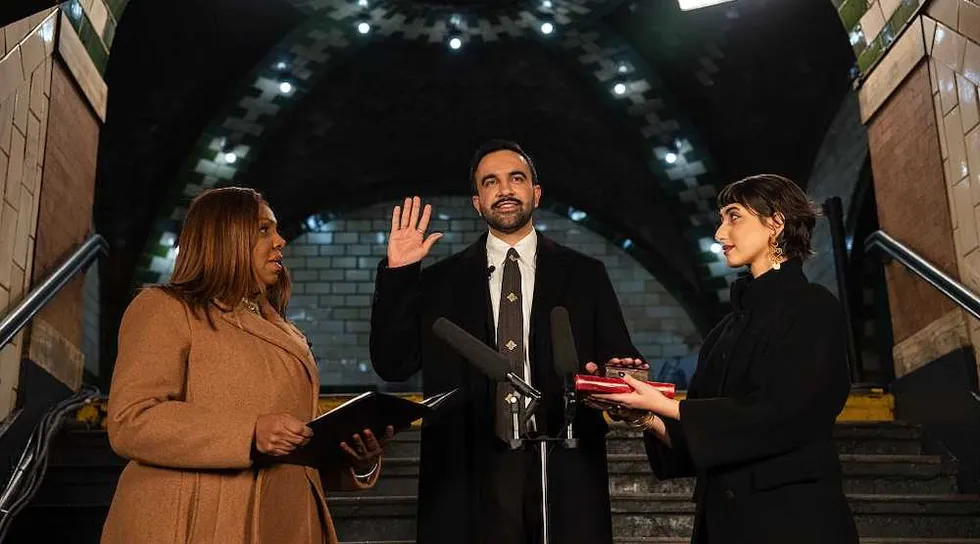 Photo by Amir Hamja-Pool/Getty Images
Mamdani’s takeover of New York and his appointment of Ramzi Kassem — a 9/11 al-Qaeda defense lawyer — as chief counsel drew outrage on the right. At his inauguration, Mamdani declared, “We’ll replace the frigidity of rugged individualism with the warmth of collectivism.”
Rather than merely lamenting how Marxists consolidate power in deep-blue America, conservatives should let that example ignite action where they actually govern. If the left can floor the gas pedal in its strongholds, why can’t we?
Where is our Mamdani?
This moment demands urgency. GOP power has become a “use it or lose it” proposition. Trump must finally become the right-wing disruptor his supporters were promised.
If he cannot — or will not — then Republicans deserve to go the way of the Whigs.
Trump’s agenda faces a midterm kill switch in 2026
Ten months ahead of November’s midterms, political and economic crosscurrents are colliding. Which of these conflicting trends prevail will greatly shape the next two years. And possibly even longer.
Midterm elections are always important. Besides gauging the country’s political mood, they have proven integral to maintaining America’s political equilibrium.
For good or ill, incumbent presidents and their party own the economy. The question is: Which economy will Republicans own?
They are the “ebb” to the “flow” of America’s political tide. Historically, every four years a large tide of voters go to the polls and elect a president. Then every two years, the large voter flow ebbs back, and the president’s party suffers accordingly.
This midterm is particularly important to Trump because he has proven susceptible to being baited by his opponents. After 2018, Rep. Nancy Pelosi (D-Calif.) returned to the House speakership and unrelentingly harassed Trump over the last two years of his first term. These distractions and obstructions — especially during COVID — were undoubtedly a factor in Trump’s narrow 2020 Electoral College defeat.
Today’s political crosscurrents are pronounced. We know the president’s party historically loses seats. The last two two-term presidents, George W. Bush and Barack Obama, suffered congressional losses averaging 22 House seats and 7.5 Senate seats.
Such losses would hand Democrats control of Congress, giving them a House majority larger than Republicans’ narrow edge and a Senate majority bigger than the GOP’s current six-seat margin. Such outcomes would end Trump’s legislative agenda, and Democrats could set their own. To understand the potential impact, play back the recent funding impasse when Democrats shut the government down for the longest period ever — despite lacking control of either chamber.
While Trump would be able to veto Democratic legislation and Republican numbers would be ample to uphold his vetoes, Democrats would have a formal hand in shaping the political agenda. This could greatly help their 2028 presidential prospects.
RELATED: Republicans are letting Democrats lie about affordability
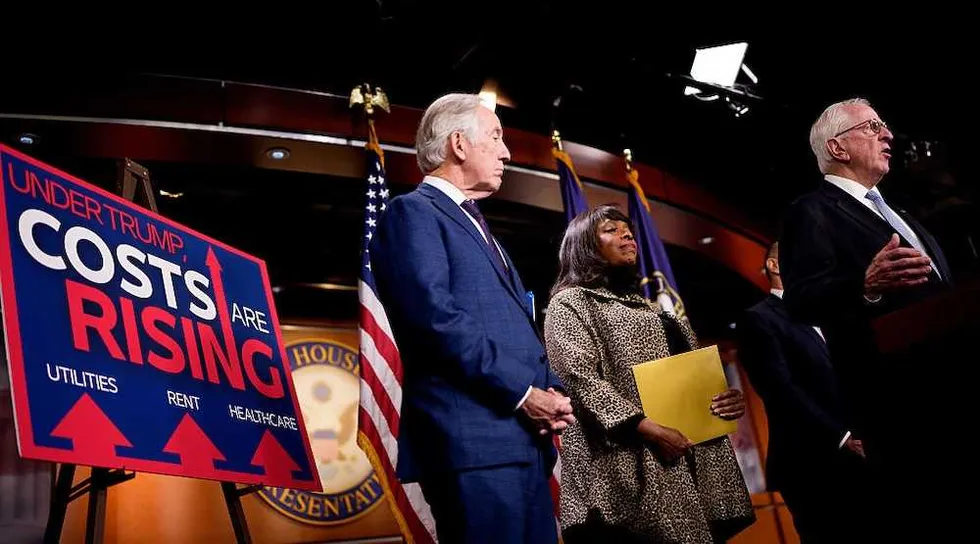 Photo by Andrew Harnik/Getty Images
Current politics are blunting the historical midterm flow, however. Trump is divisive, with just a 43.4% favorable rating; however, his job approval rating of 43.1% is higher than Obama’s (42.4%) at the same point in his second term. Further, Democrats are in abysmal shape with just a 32.5% favorability rating.
The current 2026 political map is also favorable to Republicans. While they have more seats (22 to 13) to protect in the Senate, the toss-up seats are evenly split: Republicans with Maine and North Carolina; Democrats with Georgia and Michigan. Mid-decade House redistricting efforts are also likely to favor Republicans somewhat; if the Supreme Court should allow race to be disregarded in drawing House districts when it rules on the Louisiana case currently before it, then even more redistricting could occur and amount to an even greater Republican advantage.
Today’s economic crosscurrents are equally pronounced. For good or ill, incumbent presidents and their party own the economy. The question is: Which economy will Republicans own?
At the micro level, the growing issue is “affordability.” Nationally, this is an overhang of inflation that surged during Biden’s administration and peaked at 9.1% in June 2022 — a 40-year high.
Locally, affordability played well in New York City (which has been plagued by Democratic policies of rent control and excessive taxation, regulation, and litigation) in 2025’s mayoral race. It also played well in Virginia, where it linked powerfully into the record-long government shutdown. Democrats are therefore seizing on the issue with some success — particularly in the establishment media — and are trying to nationalize it.
At the macro level, the economy is a different story. Despite “expert” predictions that Trump’s tariffs, green agenda rollback, attack on illegal immigration, and reduction in government would combine to wreck the economy, the reverse has occurred. In Trump’s first two full quarters in office, GDP is averaging over 4% growth: up 3.8% in the second quarter and 4.3% in the third. Inflation has also been moderate — 2.7% in November — certainly not the spike experts predicted and a far cry from the previous four years.
RELATED: Conservatives face a choice in ’26: realignment or extinction
 MediaProduction via iStock/Getty Images
So politically, depending on your perspective, Republicans look to outperform historically. Their Senate majority looks safe for now, with the chance that Republicans could even gain a seat or two. By contrast, Republicans’ House majority looks vulnerable; this could be offset slightly by current mid-decade redistricting efforts. Yet even just half the average loss of the last two administrations in their second midterms would mean an 11-seat swing and a 226-209 Democratic majority.
Economically, the question is whether the micro or the macro prevails. Can the micro become a national mood outside Democratic areas, or will the macro of strong GDP growth and moderate inflation have time to prevail? Expect political midterm fortunes to respond accordingly.
What is certain is that the midterms will shape the last two years of Trump’s second term. And possibly determine who will run and who will win the presidency in 2028.
Editor’s note: This article was originally published by RealClearPolitics and made available via RealClearWire.





