

Category: Abide
Malcolm Muggeridge: Fashionable idealist turned sage against the machine
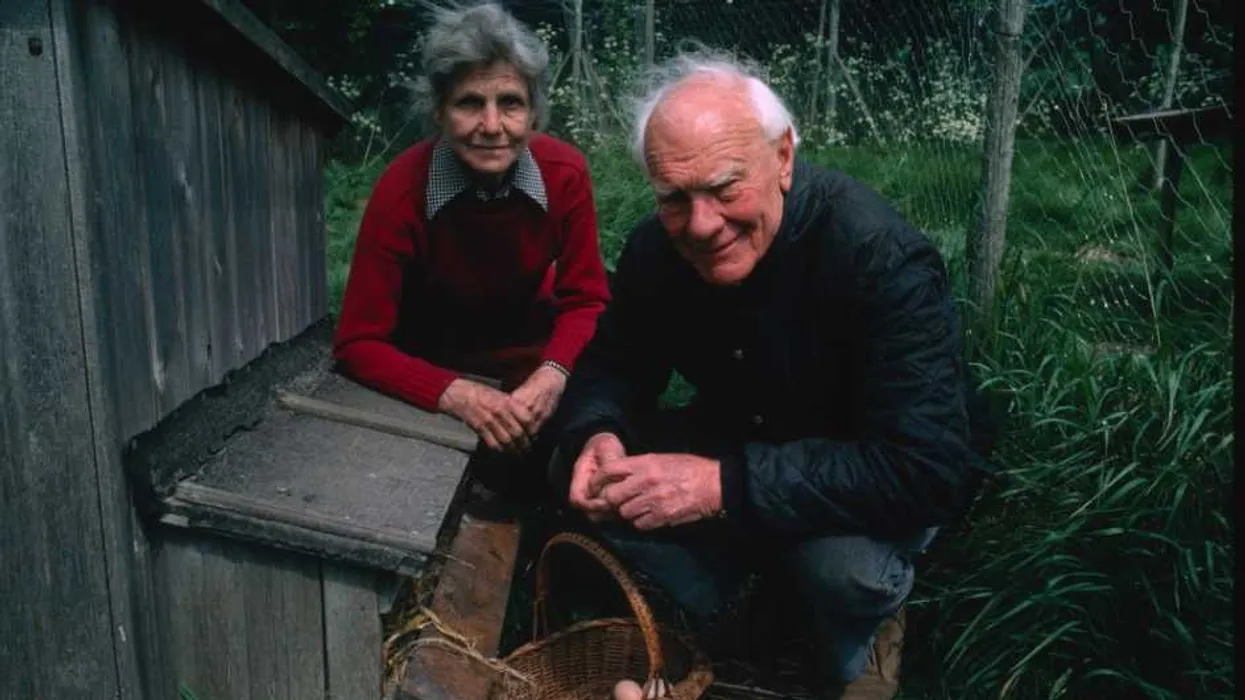
“The depravity of man is at once the most empirically verifiable reality and the most intellectually resisted fact.”
The name of the man who made this pronouncement may not mean much to many readers now. Yet the world he warned about has arrived all the same, whether his name is remembered or not.
When Malcolm Muggeridge — a British journalist and broadcaster who became a public figure in his own right — died in 1990, many of his fears still felt abstract. The moral strain was visible, but the structure was holding. Progress was spoken of with confidence, and freedom still sounded uncomplicated.
‘I never knew what joy was until I gave up pursuing happiness.’
Today, those assumptions lie in pieces. What he distrusted has hardened into dogma. What he questioned has become unquestionable. We are living amid the consequences of ideas he spent a lifetime probing.
Theory meets reality
Muggeridge was never dazzled by modern promises. He distrusted grand schemes that claimed to perfect humanity while refusing to reckon with human nature. That suspicion wasn’t a pose; it was learned. As a young man, he flirted with communism, drawn in by its certainty and its language of justice. Then he went to Moscow. There, theory met reality.
What he encountered was not liberation but deprivation. Hunger was rationalized as hope. Cruelty came wrapped in benevolent language. Compassion was loudly proclaimed and quietly absent. The experience cured him of fashionable idealism for life. It also taught him something harder to accept: Evil often enters history announcing itself as virtue, and the most dangerous lies are told with complete sincerity.
That lesson stayed with him. In an age once again thick with certainty, that insight feels uncomfortably current.
Pills and permissiveness
Yet Muggeridge’s critique extended beyond politics. At heart, he believed the modern crisis was spiritual. God had become an embarrassment, sin a diagnosis, and responsibility something to be displaced by grievance. Pleasure, once understood as a byproduct of order, was recast as life’s purpose. The result, he argued, wasn’t freedom but loss.
This realism shaped his opposition to the sexual revolution. Long before its consequences were obvious, he warned that freedom severed from restraint wouldn’t liberate people so much as hollow them out. He mocked the belief that pills and permissiveness would deliver happiness. What he anticipated instead was loneliness, instability, and a culture increasingly medicated against its own dissatisfaction.
Muggeridge also understood the media with unsettling clarity. As a journalist and broadcaster, he watched newsrooms trade substance for spectacle and truth for approval. When entertainment becomes the highest aim, he warned, reality soon becomes optional.
By the end of his career, Muggeridge had dismantled nearly every modern promise. Fame proved thin. Desire disappointed. Professional success brought no lasting peace. Skepticism could clear the ground, but it could not explain why nothing worked.
A skeptic stands down
When after more than a decade of exploring Christianity, Muggeridge finally entered the Catholic Church in 1982, the reaction among his peers was disbelief bordering on embarrassment. This was not the impulse of a sentimental seeker but of one of Britain’s most famous skeptics — a man who had mocked piety, distrusted enthusiasm, and made a career of puncturing illusions.
Friends assumed it was a late-life affectation, a theatrical flourish from an aging contrarian. Muggeridge himself knew better. He had not converted because Christianity felt safe or consoling, but because, after a lifetime of alternatives, it was the only account of reality that still made sense.
As he had written years before in “Jesus Rediscovered,” “I never knew what joy was until I gave up pursuing happiness.”
That sentence captures the logic of his conversion. Muggeridge did not arrive at faith through nostalgia or temperament. Christianity did not flatter him. It named pride, lust, and cruelty plainly, then offered grace without euphemism. It explained the world he had already seen — and himself within it.
RELATED: Chuck Colson: Nixon loyalist who found hope in true obedience
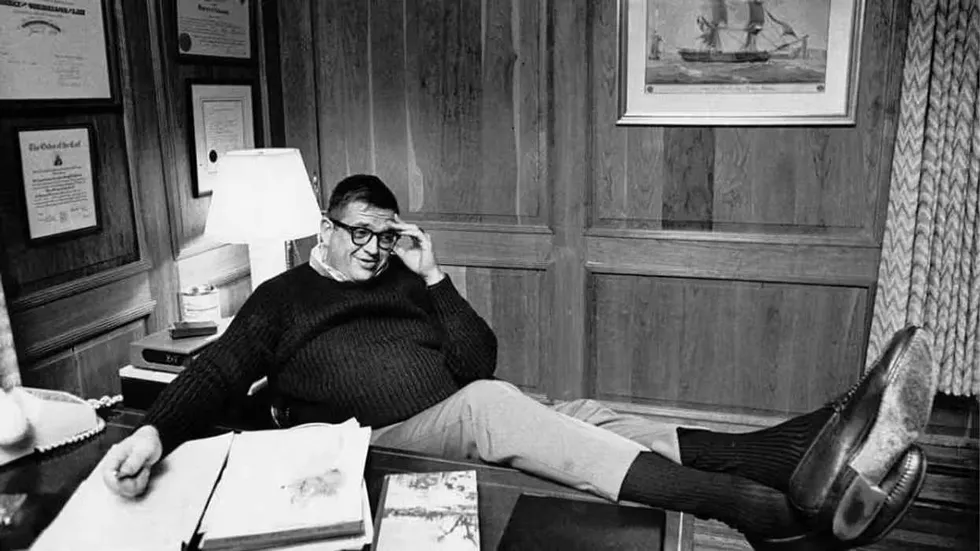 Washington Post/Getty Images
Truth endures
His Catholicism was not an escape from seriousness but its culmination. He believed human beings flourish within limits, not without them; that desire requires direction; that pleasure without purpose corrodes. Christianity endured, he argued, not because it was comforting but because it was true.
After his conversion, Muggeridge did not soften. He sharpened. The satire retained its bite. The warnings grew more direct. But they were no longer merely critical. Skepticism had given way to clarity — not because he had abandoned reason, but because he had finally stopped pretending it was enough.
More than three decades after his death, Muggeridge’s voice sounds less like commentary than like counsel. The world he warned about has arrived. What remains is the stubborn relevance of faith grounded in reality — and the freedom that comes only when truth is faced, rather than fled.
Biden’s faith attacks backfire: Support for religious liberties soars to record high under Trump, new report shows
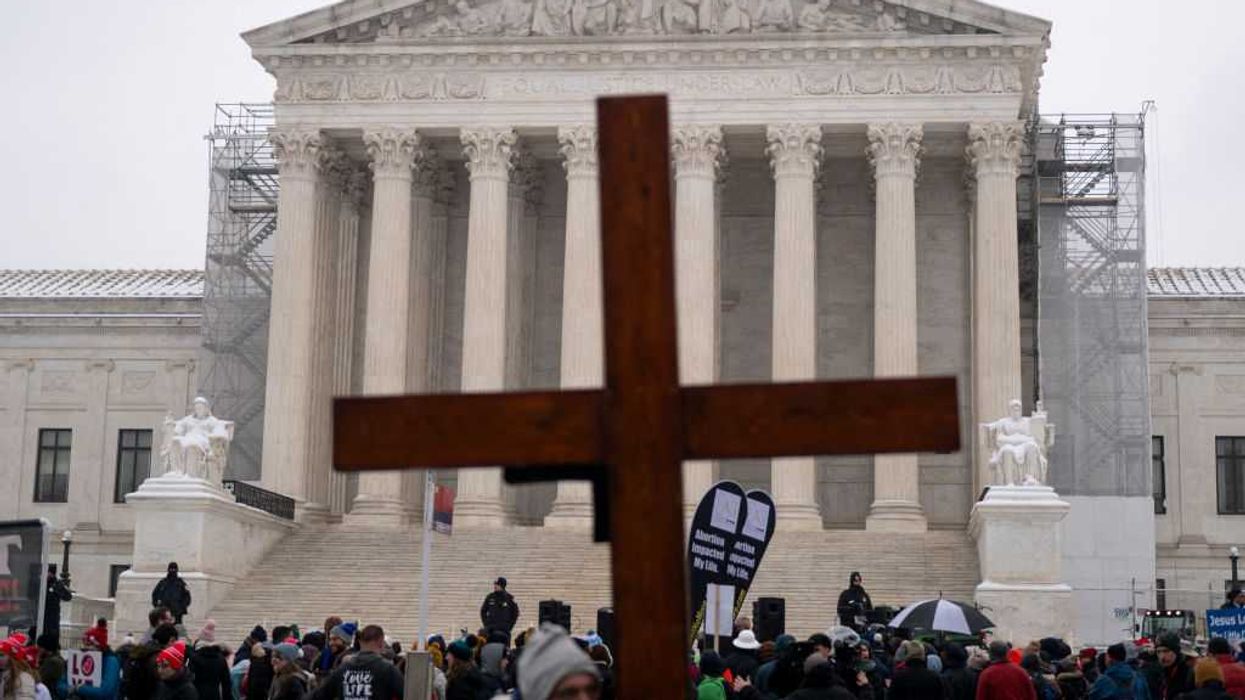
Against a backdrop of mounting attacks on churches, the Biden administration worked ardently to curb religious liberties wherever they came into conflict with the left’s radical agenda.
For example:
- the Biden Equal Employment Opportunity Commission implemented a rule requiring employers — including Christian organizations — to accommodate workers’ efforts to abort their unborn children;
- the EEOC attempted to force Christians to pay for employees’ sex-rejection mutilations;
- the Biden Department of Health and Human Services attempted to bar Christian providers who hold biblical and scientifically grounded views about sex and marriage from the foster-care system; and
- under Biden, a Catholic, the FBI characterized conservative Catholics as potential domestic terrorists and proposed to infiltrate Catholic churches as “threat mitigation.”
It’s clear from the Becket Fund for Religious Liberty’s latest Religious Freedom Index that unlike the administration voted out of power in 2024, the American people overwhelmingly — and increasingly — support religious liberties.
‘Our nation still believes that our first freedom belongs at the heart of our culture; not as a source of conflict, but as a foundation for overcoming it.’
Over the past six years, Becket has tracked public opinion on religious freedom. The legal group’s index for 2025 published on Friday registered the highest cumulative score for public support of religious freedom to-date — 71 on a scale from 0 to 100 where 0 indicates complete opposition to religious liberty and 100 indicates robust support.
This amounts to a dramatic shift, especially when compared to 2020, when the composite score was 66.
Whereas in 2020, 52% of respondents agreed that religious freedom is inherently public and that Americans should be able to share their faith in public spaces, that number jumped to 57% in the latest RFI.
There was an even bigger shift when it came to support for parents’ ability to opt out of public school curricula they believe to be inappropriate — a jump from 63% in 2021 to 73% in 2025.
RELATED: 6 ways I’m using 2026 to deepen my relationship with God
 Photo by ANOEK DE GROOT/AFP via Getty Images
When asked specifically about the Supreme Court’s June 2025 ruling in Mahmoud v. Taylor, 62% of respondents signaled support for the high court’s decision to side with the Maryland parents who wanted to protect their children from LGBT propaganda in Montgomery County Public Schools.
On the question of whether public funding for education should be available to all families, including those who choose religious schools, 77% of respondents said they were mostly or completely in favor.
The report noted that “although this year’s Index found that Americans have cooled on the benefits of religion to society and are skeptical of institutions, they unify around the simple principles of religious freedom for all, even in difficult cases that invite scrutiny or controversy.”
A clear majority, 58%, of Americans said they support the right of a Christian baker to decline to make cakes that conflict with her sincere religious views.
Sixty-one percent of respondents said that the First Amendment’s guarantee of the free exercise of religion should protect Catholic priests from having to break the seal of confession as would have been required by Washington state Democrats’ now-enjoined Senate Bill 5375.
There was markedly less support for the Christian counselor in the case Chiles v. Salazar who challenged Colorado’s prohibition on so-called “conversion therapy” for non-straight youth. Only 47% expressed support for her ability to provide talk therapy to children to help them overcome their gender dysphoria.
“Year after year, the Index has made clear that religious liberty remains one of our most cherished values,” Mark Rienzi, president and CEO of Becket, said in a statement obtained by Blaze News.
“Even amid deep divisions, our nation still believes that our first freedom belongs at the heart of our culture; not as a source of conflict, but as a foundation for overcoming it,” continued Rienzi. “The work before us is to see that freedom protected for our children and theirs in the years to come.”
Like Blaze News? Bypass the censors, sign up for our newsletters, and get stories like this direct to your inbox. Sign up here!
Chuck Colson: Nixon loyalist who found hope in true obedience
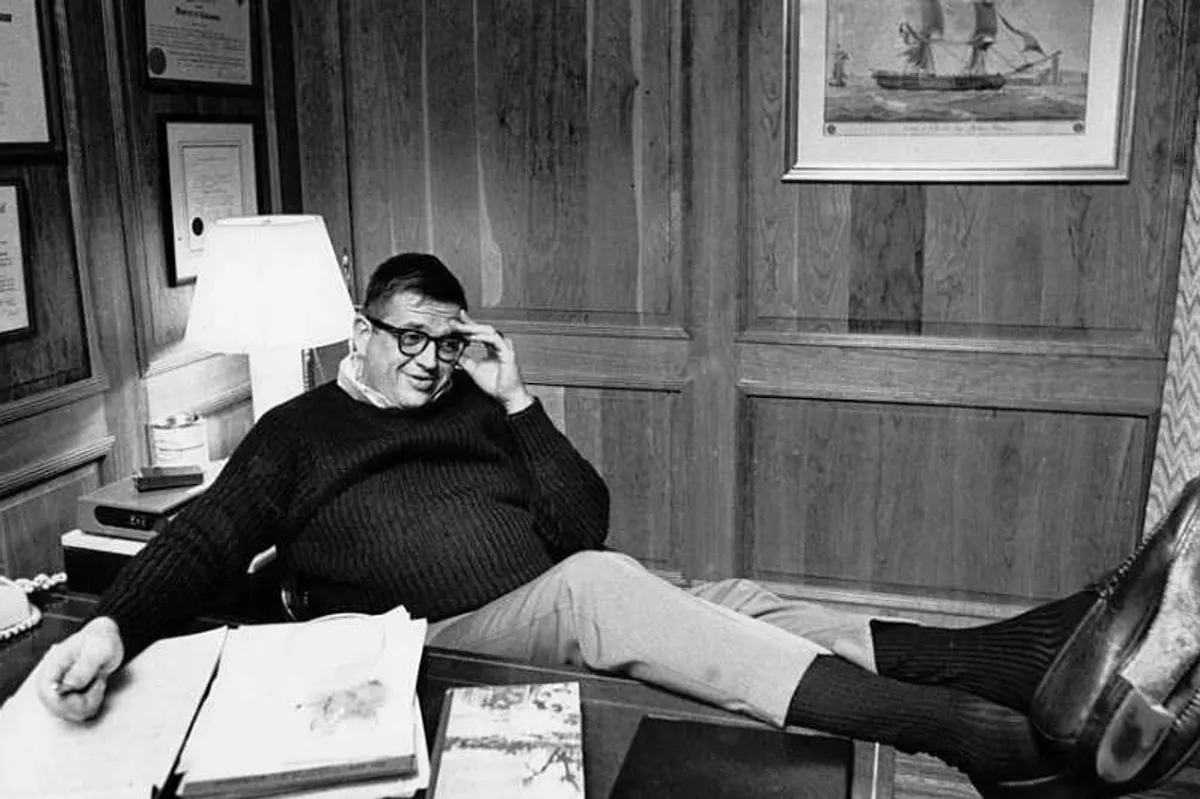
Long before he turned his life over to God, Chuck Colson burned with faith.
While working as an assistant to Massachusetts Senator Leverett Saltonstall (R), he met Richard Nixon — then vice president — and, by his own later admission, instantly became “a Nixon fanatic.” That loyalty, unwavering and severe, would become the defining feature of his life. It was also what made him so effective — and so dangerous.
For the first time in his adult life, Colson was forced to confront who he was without title, access, or leverage.
Hopelessly devoted
Colson’s devotion was not opportunistic. It was total. He believed loyalty was a virtue, even when it demanded cruelty. Years later, he would boast that he would “walk over my own grandmother” to re-elect Nixon. The line was meant to shock, but it also clarified something essential: Colson understood obedience as a moral good, independent of mercy or restraint. Colson was not a cynic pretending to believe. He was a believer who believed too much.
In Washington, that made him useful. He became the administration’s enforcer — a man willing to apply pressure, intimidate enemies, and blur lines. Politics, as Colson practiced it, was not persuasion. It was war. And war required soldiers willing to do what polite men would not.
Hatchet man
When Daniel Ellsberg leaked the Pentagon Papers, the government moved to prosecute him under the Espionage Act of 1917. For Colson, however, the embarrassment Ellsberg caused his mentor merited more than official retribution — it called for something more underhanded.
Colson’s instinct was not rebuttal but destruction: He supported efforts to smear Ellsberg as unstable and dangerous, a campaign that helped create the climate in which Nixon operatives burglarized Ellsberg’s psychiatrist’s office.
When Watergate collapsed the Nixon presidency, Colson collapsed with it. As legal consequences closed in, a friend pressed a copy of “Mere Christianity” into his hands and forced him to confront what power had allowed him to evade.
He pleaded guilty to obstruction of justice and became the first Nixon aide to get jail time. By then, the obedience he had given so freely had nowhere left to land.
Accustomed to command
Colson entered federal prison as a man accustomed to command. Early on, he braced himself for contempt from guards who knew who he was. Instead, one offered something worse: indifference — the unmistakable message that he was not special here and should act accordingly.
It was a small moment, but a decisive one. For the first time in his adult life, Colson was forced to confront who he was without title, access, or leverage. He was not feared or in control. He wasn’t even useful.
And so he began to learn a fundamental lesson of Christianity, one that power obscures: We are not self-sustaining. The first step toward obedience, Colson would later say, is realizing who you are when everything else is stripped away — and how dependent you are on grace you did not earn.
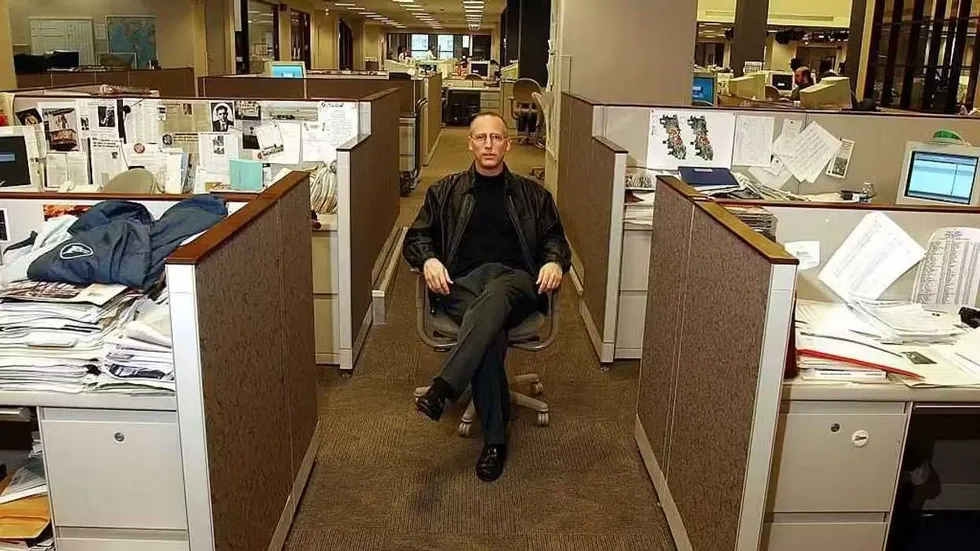 Scott Adams in 2002. Phil Velasquez/Chicago Tribune/Tribune News Service via Getty Images
Surprised by truth
After his release, Colson avoided the obvious paths. He did not rehabilitate his reputation through commentary. He did not return to politics as a chastened insider. Instead, he committed the remainder of his life to prisoners — men for whom dependence was not temporary.
“Christianity is not about becoming respectable,” Colson later said. “It is about becoming obedient.” Colson’s instinct for loyalty made him a quick study. But his newfound faith didn’t soften his nature as much as it reordered it toward something worthier.
To the end, Colson remained intense, structured, demanding, and — as those who doggedly proclaim the truth tend to be — dangerous.
3 healthy habits to bring you closer to God in 2026

As Christians, when we consider New Year’s resolutions, we often think about reading the Bible more, praying more often, or maybe getting more involved in our church. Those are all wonderful things worthy of pursuing.
Rather than taking time to expound on those, however, I’d like to commend three other resolutions that may not make the usual lists.
Our bodies and souls are integrally connected, and each significantly influences the other.
These are practical — maybe even commonsensical — but given the times in which we live, they’re easy to neglect, with the result that we flourish less than we could.
1. Practice attention management
We hear a great deal about time management these days, but rarely about attention management. Americans spend multiple hours each day on their phones, with teens devoting more than nine hours(!) and adults more than four hours daily. We’re awash in a sea of texts, emails, videos, games, and alerts. If we’re not careful, these can become an endless series of distractions that divert our attention from more important things.
They can also subtly mold us in the shape of the secular culture that produces much of what we consume. As theologian Jason Thacker writes, “Following Jesus in a digital age requires … having our eyes wide open and seeing how technology is subtly shaping us in ways often contrary to our faith. We need to learn how to ask the right questions about our relationship with technology, examining it with clear eyes grounded in the Word of God.”
It takes some intentionality to guard our hearts from the often counter-Christian messages coming through our screens, but we have to make it a priority because “everything [we] do flows from” our hearts (Proverbs 4:23). We can use technology in many beneficial ways, but we must also “examine everything” and “hold firmly to that which is good” (1 Thessalonians 5:21) while avoiding obstacles to our spiritual growth.
2. Get more sleep
There’s an old saying among pastors that “sometimes the most spiritual thing you can do is take a nap.” After all, we’re not just souls or minds, but also physical beings, by God’s design. Christians are sometimes tempted to view our physical nature in a negative light, but this reflects a Gnostic view that sees the spiritual as good and the material as bad or inferior. This is alien to Scripture, however, which tells us that we are “fearfully and wonderfully made” (Psalm 139:14). As John W. Kleinig argues in his book “Wonderfully Made: A Protestant Theology of the Body”:
The body matters much more than we usually imagine it does. It matters because it locates us in time and space here on earth. It matters because we live in it and with it. It matters because through it we interact with the world around us, the people who coexist with us, and the living God who keeps us physically alive in it.
Our bodies are temples of the Holy Spirit (1 Corinthians 6:19). In order to keep them healthy and functioning properly, adults need between seven and nine hours of sleep each day. A lack of sufficient sleep can lead to heart disease, hormonal imbalances, reduced immune response, and a lack of mental focus, among other problems.
Since blue light from our phone and computer screens can make it harder to get deep, restful sleep, this is another good reason to limit screen time, especially close to bedtime.
Get enough sleep, and you’ll likely notice greater energy, optimism, and an increased capacity to exhibit the fruit of the Spirit (Galatians 5:22-23). Our bodies and souls are integrally connected, and each significantly influences the other.
3. Cultivate friendships
Even before the Covid-19 pandemic, half of U.S. adults reported feelings of loneliness, with 58% worrying that no one in their life knows them well. We live in a hyper-individualistic society that often views other people as obstacles to our personal agendas. Yet God designed us to live in close connection with other humans, especially fellow believers. The writer of Hebrews instructed his readers not to give up “meeting together, as some are in the habit of doing, but encouraging one another” (Hebrews 10:25). Like Christians in the early church, we should “[devote ourselves] to … fellowship” (Acts 2:42).
Since we’ve been noting how some of these resolutions affect our physical health, it’s remarkable that chronic loneliness is more dangerous than smoking 15 cigarettes a day! Thus, author Justin Earley observes that “friendship will make or break your life.” We can see the wisdom of God’s statement in Genesis that “it is not good for the man to be alone” (Genesis 2:18).
RELATED: 6 ways I’m using 2026 to deepen my relationship with God
 Heritage Images/Getty Images
The quality of our friendships also makes a big difference. We’ve all seen groups of people sitting together in some public place, not interacting with one another, but engrossed in their phones. “This is what community often looks like in the digital age,” writes pastor Jay Kim. “Lonely individuals falling prey, over and over again, to the great masquerade of digital technology” that lulls us “into a state of isolation via the illusion of digital connection.”
As Kim goes on to note, while we can communicate digitally, we can only commune in person. Communication is about the exchange of information, while communing involves the exchange of presence. Communing is the more difficult task because it “requires more of us: more of our attention, empathy, and compassion.”
So this year, I encourage you to practice attention management, get enough sleep, and intentionally look for opportunities to begin new friendships and deepen old ones. It will take some deliberate effort, and every relationship will have growing pains, but the greater depth of fellowship will be worth it. As a saying often attributed to 18th-century evangelist George Whitefield goes, “No man is the whole of himself. His friends are the rest of him.”
A version of this essay originally appeared in the Worldview Bulletin Substack.
Growing up in the Hebrew Roots movement — and why I eventually had to leave
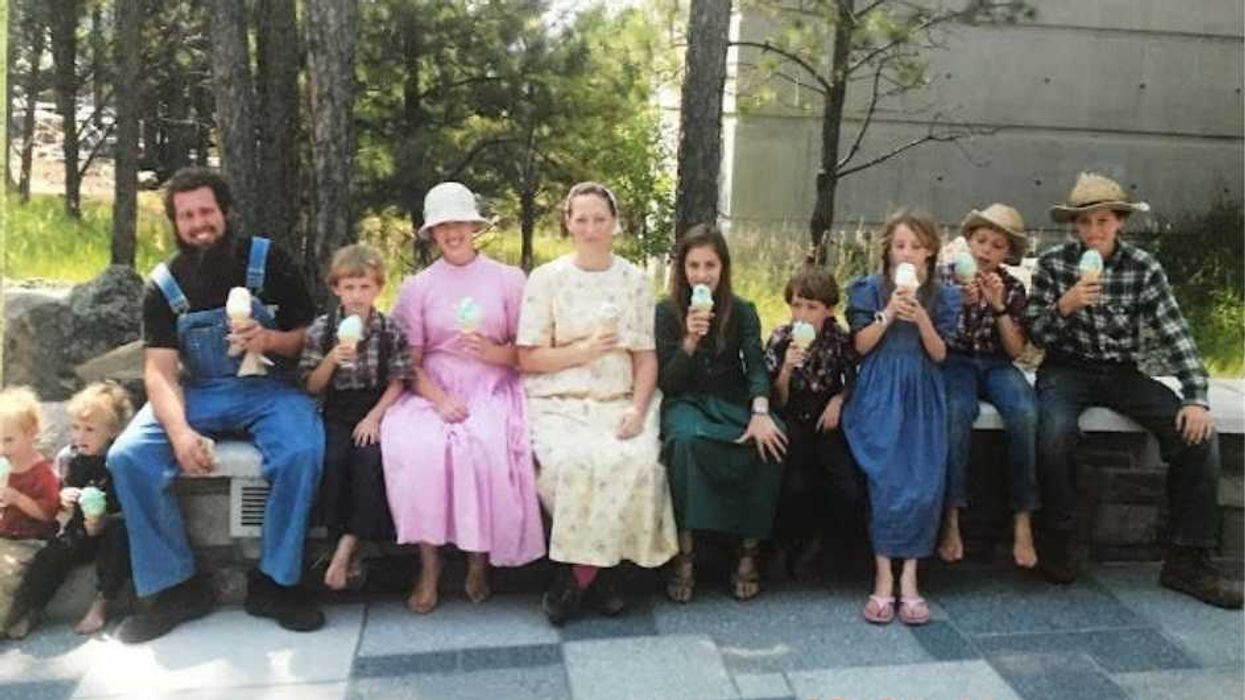
Several years before my husband and I met, one of his friends told him, “Modern youth are hungry for truth, and they are looking to the oldest forms of traditional orthodoxy to find it. This leaves them with two main choices: Catholicism or Hebrew Roots.”
My husband hadn’t heard of Messianics before this, or he had heard just enough to scoff at the idea of marrying someone who “pretended to be a Jew.” Nevertheless, his friend’s statement stuck with him. Who were these Protestants LARPing as Jews that they could draw intelligent youth in search of truth away from Catholicism?
We were all encouraged to study our Bibles for ourselves and to test one another. When the family home-churched together, it was always lively.
Relishing the chaos
Some would call us Judaizers.
We are certainly not ordinary Protestants. In fact, my family and most Messianics I grew up with believed that the Catholic Church is the whore of Babylon and the Protestant churches are her daughters. Most Christians were “too Catholic” in our opinion because they went to church on Sunday and celebrated Christmas, two practices instituted by Catholicism.
Despite how odd Messianics might be, they are too disorganized to be classified as a cult. There are somewhere around 200,000-300,000 Hebrew Roots people with no central figure, and there are countless groups within the movement. Some of them are self-identifying Torah followers who may lead isolated lives or fellowship at home with a few like-minded people. Others are members of organized Messianic denominations.
The movement has very few real Jews in it, and for the most part Messianic believers reject modern-day Jewish practices. Instead we endeavor to interpret the Old Testament as literally as possible. This, of course, is nearly an impossible feat and the main cause for disunity in the Hebrew Roots movement.
Perhaps what makes this expression of group interesting is the fact that it is a movement that can’t really be defined as a whole, and yet all the members of it believe that the truth they have is absolute, even though all their like-minded compatriots disagree with them on how to execute this truth. To those raised in the movement, the disorder and chaos are natural and even relished. To those watching from the outside, I can only imagine how bizarre we appear.
Family tradition
My mom chose my name because it was old-fashioned. Most of the rest of the family didn’t like it and tried to give me various nicknames. But my parents named me perfectly.
Keturah — meaning a sacrificial aroma/incense — may be strange-sounding, but it also uniquely fits in all the worlds I’m most interested in. It is both a Jewish and an Amish name and, oddly, has a deep Catholic meaning. It has served me well in the secular world, too, with its unique sound. My name has made it possible for me to blend in among both Christian hippies and woke misfits.
I never considered how odd it was that my great-grandfather basically invented the religion I grew up with (with heavy modifications made by my grandfather). What should have been a red flag — why did nobody figure this out before my great-grandfather? — was instead championed as proof of our righteousness.
My great-grandfather had been a Pentecostal pastor. But he started reading his Bible one day. This led him to preaching on things that his congregation was not ready for, because “the ways of the world were too comfortable.” He left his church, took another wife (his first wife left him with their three children because his beliefs were getting strange), and began a road ministry that my grandfather eventually took over.
I was often told the story of the Rechabites, a family who were saved from being utterly wiped out because they obeyed the words of their great-grandfather. My great-grandfather, too, had left us an inheritance, and if we cherished it, we would be saved from the horrors of the world. I believed this.
RELATED: Deliverance requires memory — and America is forgetting
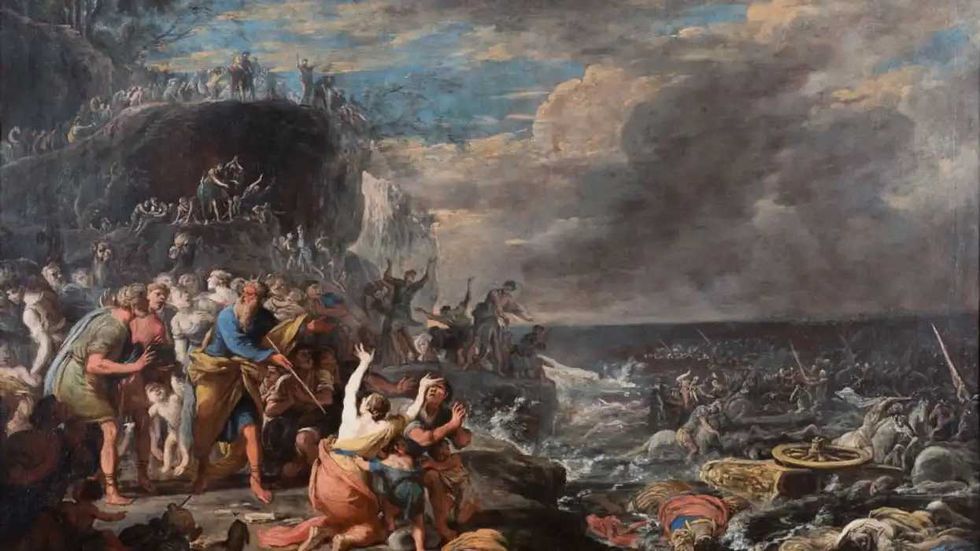 Photo by Heritage Images/Getty Images
Lively debate
I was neither brainwashed nor raised in a cult. There is nothing more American than leaving the beaten path to make your own way, especially when it comes to religion.
The women in my family are too mouthy and bratty, myself included, for the family to ever have fallen into true patriarchal suppression. We were all encouraged to study our Bibles for ourselves and to test one another. When the family home-churched together, it was always lively.
Even I, at the ages of 10 through 14, would get pulled into the heated dialogue with religious opinions of my own, carefully researched and passionately presented. I was obsessed with writing theological essays during those years.
We were not cosplaying as Jews any more than Amish are LARPing as peasants. We were more interested in what the Bible had to say than the traditions of modern-day Jews. In fact, anything that was “traditional” must be too much like Catholicism. We didn’t want to follow customs, but the law of Yahweh.
Although my great-grandfather and grandfather invented our faith, there was room for fluidity. It has changed much over the years. My great-grandfather kept the Saturday Sabbath and refused welfare for his family although they were poor and had 13 children. They did not eat pork, but ate according to Leviticus 11. We call this eating kosher, but it’s more accurately referred to as eating “clean.”
My grandfather started using the “Sacred Names” to refer to God when my father was young and warned against “calling upon the name of Jesus” because Jesus, he argued, was another form of Zeus. We argued over whether to spell the Messiah’s name Yahshua or Yeshua. We never referred to God as “God” or “the Lord” because those, too, were pagan names. It was always “Father” or “Yahweh.”
Which Sabbath?
When I was 9 years old, my grandfather realized that Saturday was not the true Sabbath. He had discovered an idea called the Lunar Sabbath.
The Sabbath is determined by the phases of the moon. At the end of the month when the moon goes dark, the Sabbath is two or three days long until the new moon appears and resets the Sabbath. And so Sabbath might be on a Tuesday one month and then Wednesday or Thursday the next month. If it were cloudy, it might be difficult to see the moon, and sometimes we would be keeping Sabbath wrong for a week or so until we were able to clearly see what the sky said. It was also difficult for making plans and having social relationships.
When I was 14, I sat down and did a long study on the Sabbath using encyclopedias, various Bibles, and concordances. After three months I presented my research to my family. I explained the pros and cons for the Lunar Sabbath, Saturday Sabbath, and Sunday Sabbath. I had become convinced that Sunday was still not the true Sabbath and that we should stop doing the Lunar Sabbath and revert to Saturday. My parents and siblings could not argue with my evidence. We voted. After five years of living by the moon, we unanimously agreed to revert back to Saturday Sabbath.
This situation taught me several things: We were not a cult, but most of my family was intellectually incapable of interpreting scripture for themselves. It was cool that my family changed after my research. But also why hadn’t they studied this properly at the start? I was 14 years old, and yet I had convinced my parents to make a major theological change. This both inflated my ego and left me feeling insecure and unstable because I was truly alone and could not go to my parents for answers about God.
This is part one of a two-part essay. Part 2 will appear next week. It was adapted and edited for length from an essay that first appeared on the Substack Polite Company.
‘The Case for Miracles’: A stirring road trip into the heart of faith

Lee Strobel doesn’t mind those who question his midlife Christian conversion.
Strobel’s shift from an atheist to rock-ribbed Christian came to life in 2017’s “The Case for Christ.” The film, based on his life story, showed how Strobel’s efforts to debunk the resurrection of Jesus Christ as the legal editor of the Chicago Tribune had the opposite effect.
‘There is evidence that points — compelling [evidence] — to the truth of biblical miracles and contemporary supernatural encounters. I’m not afraid of that.’
He says his shoe-leather reporting confirmed the resurrection. Looking back, Strobel tells Align his change of heart ruffled some professional feathers.
“After I became a Christian at the Chicago Tribune, somebody told me later that they overheard somebody in the newsroom say, ‘What happened to Strobel? He became a Jesus freak, like, overnight,’” Strobel says, laughing.
Miracle miles
Now, Strobel is back on the big screen with “The Case for Miracles,” in select theaters Dec. 15-18 via Fathom Entertainment. The film finds Strobel and director Mani Sandoval hitting Route 66 in an old Ford Bronco to swap stories and reflect on modern-day miracles.
Among the most poignant? A young woman with severe multiple sclerosis who is able to leave her hospice bed following a crush of community prayers.
It’s part travelogue, part documentary, and Strobel only wishes he had time to share even more remarkable stories on-screen.
“We had to leave out so many good ones. … We had another case documented by medical researchers … a guy who was healed from a paralyzed stomach,” he says. “He was prayed for, felt an electric shock go through him, and for the first time was able to eat normally.”
“He’s fine to this day,” he adds. “It’s the only case in history of its kind of [someone] spontaneously healed from this stomach paralysis.”
Meeting in the middle
Strobel says the film offers two very different perspectives on modern-day miracles given the key players involved.
“Mani grew up in a Pentecostal home. There was an anticipation that the miraculous would take place,” he says. “I was an atheist [growing up].”
The film is based on Strobel’s 2018 book of the same name, but he hopes the Fathom Entertainment release reaches a broader audience beyond his loyal readers.
“I think that cinema is the language of young people,” he says. “If we want to share this account, this evidence of the miraculous with a young generation, what better way than on the big screen? Among younger people, there’s something about a film that register deeply with them. … We should seize opportunities to communicate to those outside the faith.”
RELATED: Lee Strobel’s top supernatural stories to challenge your atheist friends
 Blaze Media
Creative control
And the timing couldn’t be better. Faith-friendly films and TV shows are all the rage in today’s pop-culture landscape. Think the groundbreaking series “The Chosen,” along with the upcoming “Passion of the Christ” sequel from Mel Gibson.
Both Netflix and Prime Video are producing faith-friendly content, and recent hits like “Jesus Revolution” flexed the power of spiritual stories.
“It satisfies me on a creative level when I see films that deal with very important topics, like the existence in God, in a way that’s creative and that aren’t going to make people cringe but sit forward in their seat and anticipate what’s coming next,” he says.
And that creative explosion has only begun, Strobel predicts.
“In three, four, or maybe five years, we’re gonna see stuff where we say, ‘Oh, I never thought of doing that,’” he says of the genre.
The incredible made credible
Strobel isn’t a filmmaker by trade. He’s a busy writer, having penned more than 40 books that have been translated into 40 languages.
Strobel, like the late Charlie Kirk, doesn’t mind interacting with skeptics on- or off-screen. He welcomes it. The book on which “The Case for Miracles” is based starts with an extended dialogue with noted atheist Michael Shermer.
Strobel eventually befriended Shermer, who has a cameo in the film version of “Miracles.”
“I let him have his say,” he says of their early exchanges. Strobel is confident in his faith and the miracles he sees flowing through it.
“There is evidence that points — compelling [evidence] — to the truth of biblical miracles and contemporary supernatural encounters,” he says. “I’m not afraid of that.”
For Strobel, a miracle requires four key elements:
- Solid medical documentation;
- Multiple, credible eyewitnesses who have no motive to deceive;
- A lack of natural explanation; and
- An association with prayer.
Meet all four requirements, he says, “and maybe something miraculous is going on.”
Strobel doesn’t mind that some of his former colleagues may question his religious conversion. He’s comforted by the fact that he has company in that regard.
“I’ve seen so many journalists coming to faith. … I think God is stirring something in the culture right now,” he says.
Jehovah’s Witnesses: Worshipping with the most hated denomination
After attending a somewhat run-of-the-mill novus ordo Mass with only a few redeeming qualities, my husband and I decided to visit another church in Nevada that is possibly one of the most hated and misunderstood Christian denominations — even with the Latter-day Saints and Seventh-day Adventists.
It was both his and my first time attending a Jehovah’s Witness church.
‘I personally don’t want to go to heaven, but want to remain on Earth when we’re resurrected. I want to live among the animals and trees and plants and not rule over others.’
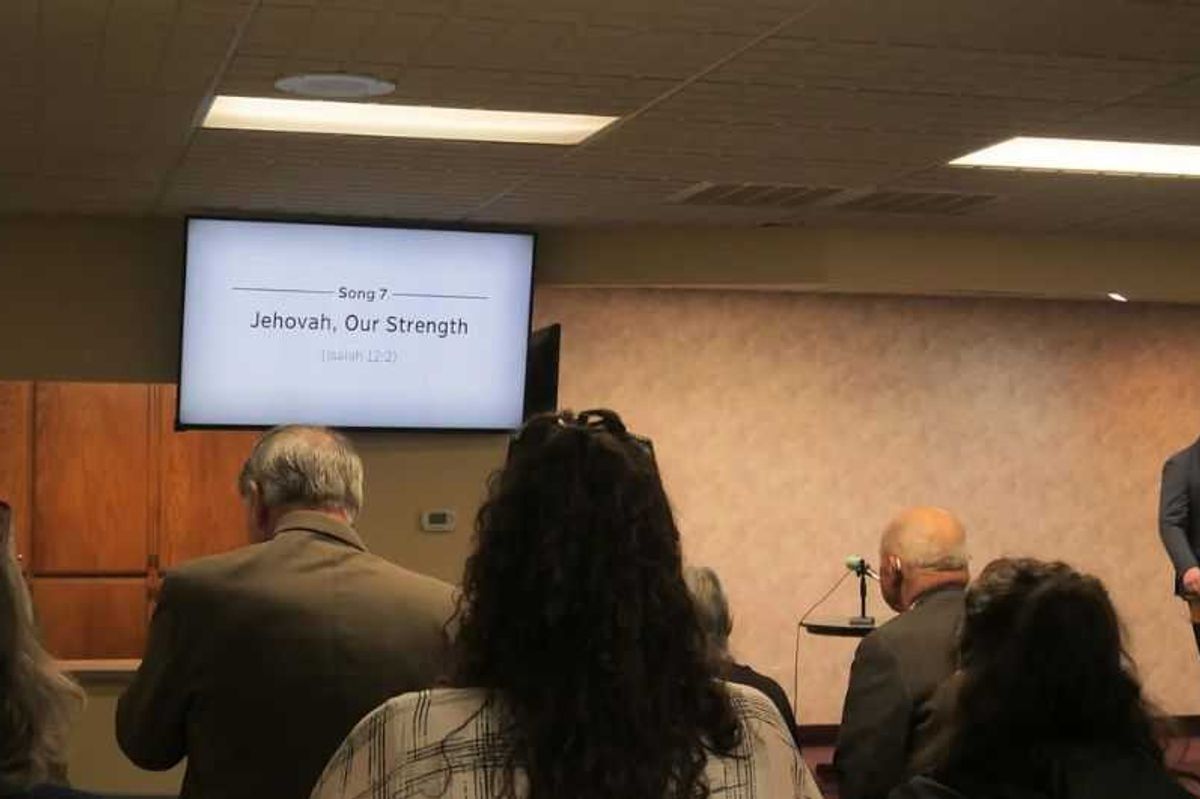
We walked 40-some minutes to the Kingdom Hall of Jehovah’s Witnesses and were greeted warmly, even though we were two minutes late and the congregation had already begun singing the first hymn. The setting might have been bland, but I felt I had achieved a bucket-list goal.
For years I’d tried to visit a Kingdom Hall. The Jehovah’s Witnesses were one of the last churches to reopen nationwide after COVID, offering online meetings for nearly two and a half years, until summer of 2022. Even after that, many remained closed for another year, and a large portion still host hybrid Zoom/in-person gatherings for the immune-compromised.
Kingdom Hall
To many, the inside of the meeting hall would appear no different from a conservative Protestant church. Most women wore skirts or business suits; the men were in full suits. The carpet was gray, the walls plain, decorated with a few pictures of flowers. There were no windows.
Rows of theater chairs faced a pulpit. Though the Jehovah’s Witnesses do not have ordained ministers, any baptized man may teach from Scripture. On the day we visited, a guest speaker from Idaho — tailored suit, bright red tie — delivered a sermon much like any Protestant pastor’s, citing extensive Bible verses to support his points. There was no American flag, unsurprising given JW pacifism. Jehovah’s Witnesses do not vote, and while they don’t forbid self-defense, they register as conscientious objectors during drafts. They believe that those who live by the sword will die by the sword (Matthew 26:52).
RELATED: Church-hopping: Confessions of an itinerant worshipper
 Keturah Hickman
The sermon
The message, titled “Is There in Fact a True Religion from God’s Standpoint?” began with statistics: 85% of the world identifies as religious, 31% Christian, across 45,000 denominations — with a new one forming every 2.2 days. “But how does Jehovah want to be worshipped?” he asked.
He read from Mark 7:6-7 and James 1:26, then cited Solomon: True religion is to fear God and keep His commandments (Ecclesiastes 12:13). More verses followed — Isaiah 48:17-18, Micah 6:8, Matthew 7:16 — arguing that true belief and conduct must fit like a well-tailored suit, not mismatched pieces.
He condemned most Christian denominations for justifying slavery so that men might Christianize pagan souls for the kingdom of God. He pointed out that the Jehovah’s Witnesses never supported such horrid beliefs. (He failed to mention that slavery was already abolished by the time they came along.) He warned against fatalism, ancestor worship, and faith in human institutions. “If a religion permits or promotes practices the Bible condemns, it is not true,” he said, citing Colossians 3:10, John 8:32, James 3:17-18, and others.
“Truth is found in the word of God,” he concluded. “When we love the word, we are peaceable.”
The sermon ended with the JW hymn “My Father, My God and Friend (Hebrews 6:10).”
All along the Watchtower
After the hymn, an elder read from “The Watchtower,” the denomination’s monthly study magazine. Before the group was called Jehovah’s Witnesses, it was the Watch Tower Society, founded by Charles Taze Russell in 1881.
The article that day was “Jehovah Heals the Brokenhearted” (Psalm 147:3). The elder read each paragraph aloud, then passed the microphone for congregants — men and women, in person or on Zoom — to share reflections.
Here are some highlights.
- Satan wants us to wallow in our feelings. Jehovah wants us to defy Satan and serve Him. When we do that, He sees us and is moved to help us.
- Jehovah doesn’t keep track of our sins, but only of the good we do.
- Jehovah does not put a time limit on our prayers as if it were a therapy session. We can pray to Him for as long as we like, and He’ll keep listening.
- The Son’s sacrifice forgives our past sins so we can move ahead into the future.
- We can comfort each other by being gentle and genuine.
- We are not to blame for how others hurt us.
It was repetitive but sincere — an hour-long group meditation on comfort and resilience.
The service ended with another hymn. There was no tithe, and communion is held only once a year for those who believe they are among the 144,000 destined for heaven.
The congregants
Afterward, several congregants welcomed us. One woman, Linda, about 70, explained that she had converted from Protestantism before marrying.
“There aren’t many differences between us and other churches,” she said, “except that we don’t teach what other places teach.”
“Such as?”
“We teach that Jehovah is Almighty God and that Jesus is His son and our Messiah. And we don’t believe in hellfire,” she said. “You can’t really find that idea in the Bible.”
I asked her if that meant that she believes everyone goes to heaven or if they just die.
She said, “The Bible says 144,000 go to heaven to be kings and priests to be the government of the kingdom of heaven that will come to Earth. I personally don’t want to go to heaven, but want to remain on Earth when we’re resurrected. I want to live among the animals and trees and plants and not rule over others.”
Linda gave me a small Bible — I gladly accepted it because it was lightweight and would fit perfectly into my backpack, and until now I had only been able to carry a New Testament. She explained to me that the Jehovah’s Witnesses didn’t approve of many of Scofield’s notes in the KJV and that their version had more accurate cross-references. I love having various versions of the Bible to read through, so there was no complaint from me!
She invited us to join her husband and friends at a cafe for a late lunch. And so we went with about 20 other congregants. I sat by a woman just a little older than I. Ozzy had been raised in the Jehovah’s Witnesses and had spent much of her youth as a traveling nanny. She told me that nearly six years ago she had married a Grace Baptist Church man and had a daughter with him. They eventually divorced. “I’m just grateful my daughter is learning about God in both homes she’s raised in,” she said.
Although Ozzy did not speak ill of her ex-husband, it was clear that she thought her expression of faith was more valid than his. So I asked her what was different between the two theologies, in her opinion.
“That’s a good question,” Ozzy said. “Not much.”
Then she added:
Except how we define the Trinity — you know, you can’t find that word in the Bible. I’ve searched every translation of the Bible, so I know. We both believe in the concept, though JW is more literal and bases their definition on how the Bible describes it. We believe that the Father, the Son, and the Holy Spirit are three separate entities united by a common will. Grace Bible Church is more Catholic when they talk about the Trinity.
After a day with them, I found them sincere and Bible-focused, hardly cult-like. They loved God, quoted Scripture freely, and treated us with warmth — even when I somewhat aggressively asked about one of their more infamous beliefs.
“I have heard that your church does not allow people to get blood transfusions and that this has caused many people to die.”
“Yes, we believe blood is sacred and not to be spilled in war nor ingested for any reason,” Linda responded. “But blood can be divided into four components, and it is okay to receive any of those minor fractions.
“Most people don’t even need blood transfusions as much as they used to,” she added, noting that “scientists have discovered that there are healthier ways to fill a low blood count with supplements and iron.”
Are the Witnesses a cult?
I’m not sure what makes a group a cult any more. Some say it’s when people follow a man rather than the Bible — but the Jehovah’s Witnesses have no central figure. They encourage personal Bible study.
Interestingly, 65% of members are converts — adults who join by conviction, not birth. While many leave, those who stay do so deliberately. Angry ex-members exist in every religion, and that alone doesn’t define a cult.
Much of JW doctrine is nothing your average Protestant would quarrel with: anti-abortion but pro-birth-control, personal responsibility for family size, and no institutional oversight (beyond guidance from JW Broadcasting in New York). There’s also no enforcement mechanism for rules on blood transfusions or holidays.
There are 8.6 million Jehovah’s Witnesses worldwide, compared to 15.7 million Jews, 17 million Mormons, and 22 million Seventh-day Adventists. Many Protestants single out the denomination’s rejection of transfusions, but the Jehovah’s Witnesses are neither faith healers nor anti-medicine. They are pacifists but politically moderate and scientifically literate.
Charles Taze Russell
Jehovah’s Witnesses founder Charles Taze Russell was raised Presbyterian. At age 13 he left his church to embark upon a kind of quest for the truth, for a time backsliding into unbelief.
Known for writing Bible verse on fences as a way to evangelize, he founded a group called the Bible Student Movement in 1879. Much like Mormons, the Two by Twos, and the Jim Roberts Group, his group grew by sending out pairs of men to preach the word of God directly from the Bible.
Despite Russell’s zeal, his life was riddled with scandal. He divorced his wife after she demanded a larger editorial influence on “The Watch Tower.” He sued for libel often, occasionally winning — one time the jury mockingly ruled in his favor but gave him only one dollar, and so he filed an appeal and received $15,000.
After wrongly predicting the end of the world numerous times, Russell died in 1931. The group split apart. Approximately a quarter of the members remained faithful to Russell’s successors and began calling themselves Jehovah’s Witnesses.
Their use of the name “Jehovah” also irritates critics, though it appears in the King James Bible (Exodus 6:3; Psalm 83:18; Isaiah 12:2; 26:4).
Their rejection of the Nicene Trinity remains the sharpest point of division — a doctrine codified by the Catholic Church and later adopted by nearly all of Protestantism. It’s an irony of history: Protestants who define themselves against Rome still use Rome’s creed as the boundary of belief. Disagreement with that doctrine, however, does not make a faith a cult.
The trend to schism
One striking point from the sermon stayed with me: Every 2.2 days a new denomination is created.
Until the 16th century, Christianity had only a handful of branches. Now there are 45,000. The JW speaker said it is because everyone seeks truth; I think it’s because we’ve forgotten love.
As Paul wrote in 1 Corinthians 13: “If I have all faith so as to move mountains but do not have love, I am nothing.”
What merit is truth without love? God does not honor self-righteous division. This, perhaps, was Martin Luther’s and Henry VIII’s greatest sin — their pride tore Christ’s body into pieces.
Protestants readily maintain friendly regard for Judaism, which does not accept Christ’s divinity, while showing far less tolerance for groups such as Jehovah’s Witnesses, Mormons, or Adventists — who profess Jesus as Lord and Redeemer.
For this reason, I urge believers: Visit all churches. Seek unity where possible. Not to follow fads, but to love the whole body of Christ — even the Jehovah’s Witnesses.
Bishop raises hell after woke priest allows homosexual ABC broadcaster to receive Eucharist beside his ‘husband’

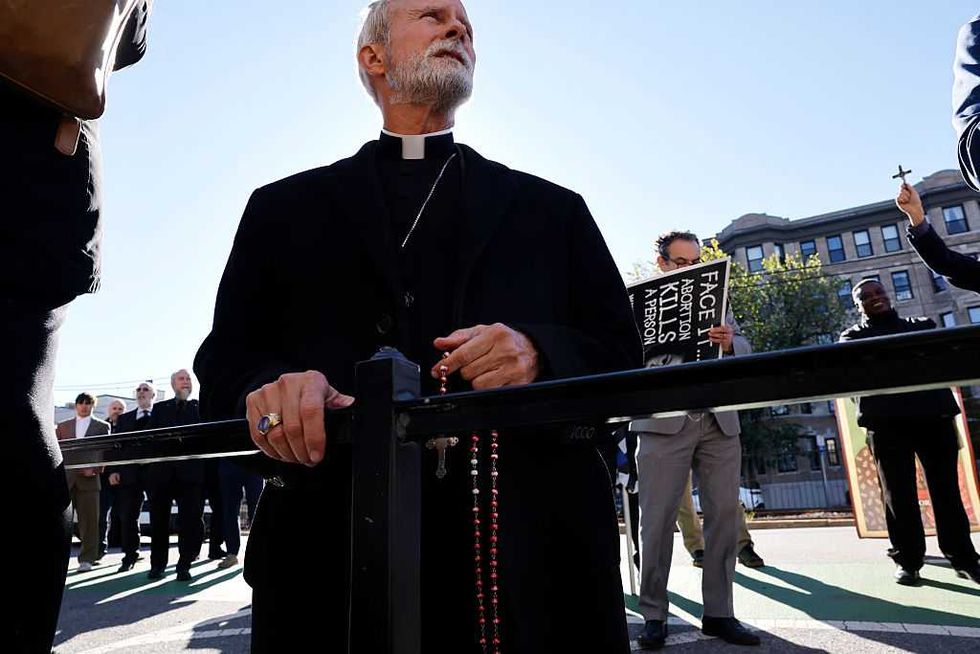
Bishop Joseph Strickland, the cleric removed from his office in Tyler, Texas, in 2023 by the late Pope Francis, urged his colleagues gathered on Wednesday for the U.S. Conference of Catholic Bishops’ plenary assembly to address the matter of a woke priest’s apparent willingness to run afoul of the church’s custom and to turn a hallowed Catholic ceremony into a non-straight spectacle.
Gio Benitez, a homosexual ABC News correspondent who is “married” to a man, apparently decided after Pope Francis’ passing last year to make his way back to the Catholic Church. Benitez, who was allegedly baptized in secret at the age of 15, was confirmed at St. Paul the Apostle’s Church in New York City on Nov. 8.
‘Here we are talking about doctrine.’
“My Confirmation Mass was a very small gathering of family and friends who have quietly been with me on this journey,” Benitez wrote on Instagram. “I found the Ark of the Covenant in my heart, stored there by the one who created me… exactly as I am.”
The ABC News correspondent also received holy communion from the church’s woke pastor, Rev. Eric Andrews, at the highly publicized mass where LGBT activist Fr. James Martin was a concelebrant and where Benitez’s “husband” served as his sponsor.
Blaze News reached out to Rev. Andrews for comment, but did not receive a response.
While the Catholic Church holds that homosexual acts are “acts of grave depravity,” “intrinsically disordered,” “contrary to the natural law,” and “can under no circumstances” be approved, the Catechism states that homosexual persons must nevertheless “be accepted with respect, compassion, and sensitivity.”
RELATED: New head of US Catholic Bishops said he would deny communion to pro-abortion politicians
 Bishop Joseph Strickland. Photo by Craig F. Walker/Boston Globe via Getty Images
The church has also made clear that Catholics with same-sex attraction who are chaste can “participate fully in the spiritual and sacramental life of the Catholic faith community.”
However, those who regularly engage in sexual activity or are partners in a committed homosexual relationship that includes regular sexual relations are not to receive holy communion or serve in public ministries.
“Receiving the sacrament is the ultimate expression of our Catholic faith, an intensely personal matter between communicant and priest,” wrote the late and posthumously exonerated Cardinal George Pell. “It’s not a question of refusing homosexuals or someone who is homosexually oriented. The rule is basically the same for everyone.”
“If a person is actually engaged in — by public admission, at any given time — a practice contrary to Church teaching in a serious matter, then that person is not entitled to receive Holy Communion,” continued Pell. “This would apply, for example, to a married person openly living in adultery. Similarly, persons who openly declare themselves active homosexuals take a position which makes it impossible for them to receive Holy Communion.”
During a USCCB discussion of doctrine on Wednesday, Bishop Strickland raised the matter of Benitez’s highly publicized reception of holy communion while flanked by his “husband.”
“I don’t know how many of us have seen on the social media priests and others gathered, celebrating the confirmation of a man living with a man openly,” said Strickland. “It just needs to be addressed. Father James Martin once again involved. Great pictures of all of them smiling.”
Bishop Strickland and Martin have traded barbs over the years, largely around Martin’s subversive LGBT activism and apparent efforts to liberalize the Catholic Church’s stance on such matters.
Martin — who shared an article titled “Gio Benitez, Openly Gay ABC Anchor, Joins the Catholic Church” on social media this week with the caption “Happy to be a part of your journey!” — has made no secret of his activism. For instance, he took issue with the Supreme Court’s June 2025 decision to let parents opt their children out of lessons featuring LGBT propaganda and insinuated that homosexual persons aren’t really bound by church teaching.
“Here we are talking about doctrine,” continued Strickland. “I just thought I need to raise that issue. I know it’s not part of any agenda, but this body gathered, we need to address it.”
The panel, focused on updated ethical and religious directives for Catholic health care services, did not take up Strickland’s concern.
The Catholic Herald noted that Strickland’s tenure as bishop of Tyler was “marked by a reputation for directness, a strong emphasis on Eucharistic devotion, and a willingness to challenge trends in the wider Church that he believed risked undermining the clarity of Catholic teaching.”
Like Blaze News? Bypass the censors, sign up for our newsletters, and get stories like this direct to your inbox. Sign up here!
Church-hopping: Confessions of an itinerant worshipper
I have been church-hopping since the summer of 2020. This means that a lot of “concerned evangelicals” have felt justified in asking, “What are you searching for?”
That first summer, I claimed to be searching for holy ground. However, I already knew that this was wherever a saint steps — wherever God speaks to us and we listen in prayer.
We had spent a wonderful evening with an elderly Latter-day Saints couple who found us hitchhiking, then brought us home to ‘show us some literature.’
I have never been searching for anything as much as I have been interested to see what it is that others claim to have found. It thrills me to see that it is all pretty much the same, in minor degrees. Some pastors are more boring than others. Everyone makes claims about the “other” churches in town. Everyone has their rituals, their deeds, the words that are not works. And very few are curious about the others.
“Seek and ye shall find,” they murmur among themselves in the territory of their home church, patting one another on the back because they somehow found truth without seeking it. Why aren’t the others seeking it? They’d be here among them if they sought — if they loved the truth as they loved the Bible.
Not all. Only the majority. Maybe not even that many — only a few loud ones.
I, too, among them, also vocal, a little charismatic, a little opinionated, forgetting what it means to seek before you find.
The world is not our home
Now I have dragged my husband in on the game of flirting with the appearance of universalism. And yet we are no more universalist than Paul or St. Francis of Assisi or C.S. Lewis. We are curious, alive, and nonplussed by the promissory comforts of the world. This world is not our home, and neither is a single building.
And yet, if you seek, ye shall find. It matters not that my intentions were no different from those of an atheist — to attend, to observe, to write. I am relating to the woman at the front of the church who is not Catholic but is hired to sign the sermon and songs for the deaf attendees, thus hearing every word of the priest and chorus more thoroughly than any of the parishioners and finding that her job has morphed into a spiritual awakening.
I am finding community, kindred spirits, truth outside my understanding of it, and a narrow path. I am becoming less curious as a larger passion consumes my heart and soul.
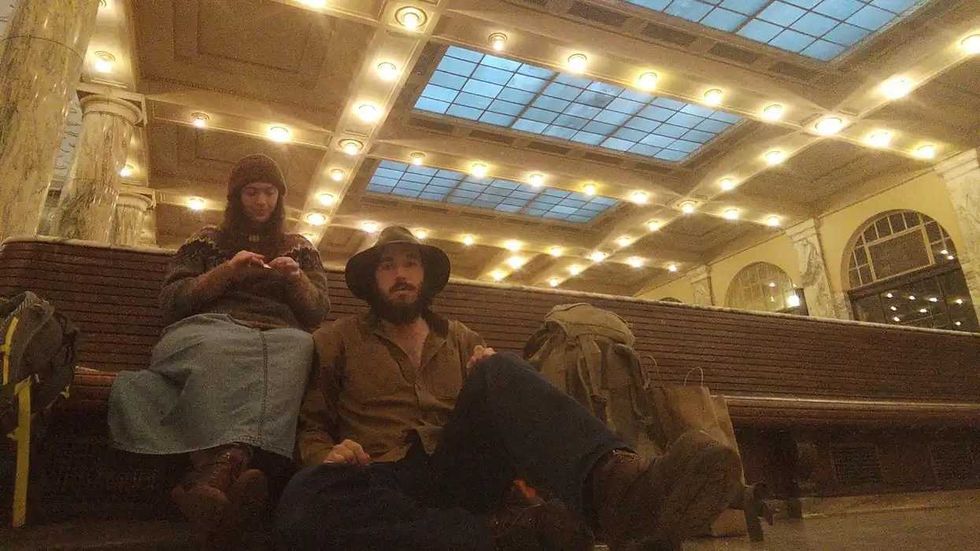
We intended to attend Mass while on our honeymoon — something difficult to do when you have no agency over where you will be day to day, as hitchhikers reliant upon the goodwill of strangers and public transit. We joked about putting up a cardboard sign, our thumbs in the air, “TAKE US TO CHURCH.” Maybe someday.
Instead we went where we could.
RELATED: The USA Rail Pass: Across America by train
 A.M. Hickman
A church for widows
The first place was an Anglican church in Newfoundland that seemed to be run by little old ladies — 30 of them, to be precise, scattered in the pews, in the choir, and at the altar. There were only five men, all of them seated. This did not bode well, we thought.
But it was truly a church for widows, a church that was doing its very best to remain active, putting on plays and picnics even though there were no young people or children. The Spirit was there with those little old ladies. It was comforting them, pushing them forward even though they had lost much. It was reminding them of all that awaited them in paradise. And they were ready.
They gave us cookies and greeted us with forgetful, motherly smiles, as if we were not mere strangers but apparitions of heavenly promises. We were their reminder to keep hoping, and they were our nudge toward charity. We sat, we witnessed, and we listened.
Seventh-day supper
After that we found different Catholic churches to pray in, which somehow always seemed to be far away when Sunday came around. There was a large one — a shrine — on the border of Quebec, Labrador, and Newfoundland, then another a little farther into Quebec, in an Inuit village. This one hearkened to the traditions of these people, too. How beautiful, I remember thinking, the way the Church uses each people’s specific culture and history to express the truth.
Then we walked by a window that sported “Seventh-day Adventist” in a French-Canadian Maine town. It was a Thursday, and we had already determined to stay in town for a French-Acadian Mass on Sunday.
“Let’s go there,” I told my husband. “It might be a little frustrating, but it’ll be a good experience for you.”
He agreed, and so we brought ourselves and our backpacks there Saturday morning. The church was new — it looked more like a Main Street business because of its location and the large windows. There were only six or so people inside.
“Can we join you all?” I asked. “No, I am not Seventh-day Adventist, but I’ve attended many services because my family keeps Sabbath on Saturday.”
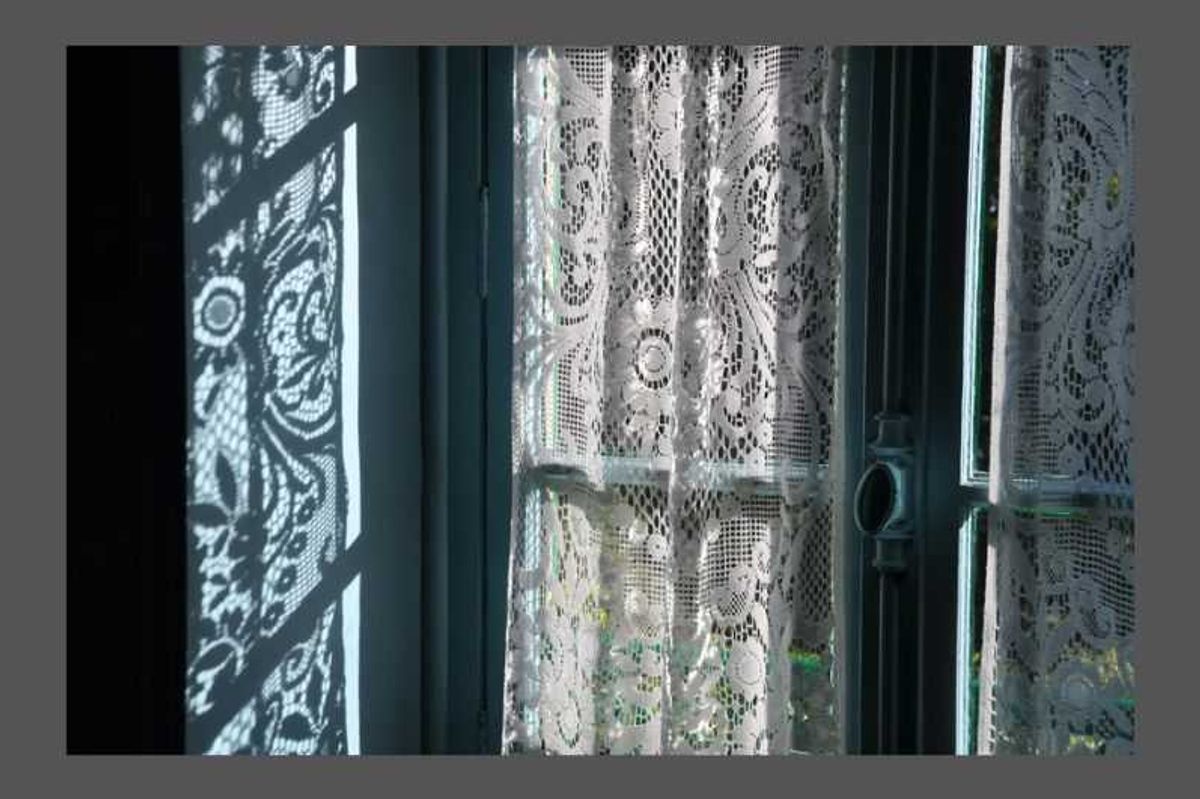
We put our bags in front of a pile of unopened boxes of “The Great Controversy,” and they handed us a booklet on Romans and two pens. The room was ugly, like a warehouse, except for the lace curtains in the windows.
For the next two hours, we “studied the Bible,” mostly discussing how wonderful Jesus is and what it means to pray — how often we should pray and what makes prayer sincere — and how all Protestant churches are basically Catholic because they acknowledge the authority of Rome and the pope to change the Sabbath from Saturday to Sunday.
The church service was bland, hard to follow. I tatted a lace bookmark to try to keep awake. The speaker was likeable, but he droned on about a Bible story, not really recounting it accurately. I don’t think that was the point of his speaking, though — they were simply allowing him a moment to speak, because he was a man and the church had few members and needed participation from everyone in order to keep the spirit alive.
They did not give us cookies, but something better — a meal of various bean and rice dishes. There was fresh homemade hummus, too.
Nine out of Ten
As we ate, everyone continued to ramble on about how awful it was that other churches didn’t care to follow all of the Ten Commandments.
“Evangelicals want the Ten Commandments in schools, and yet they do not want them in their churches.”
“If children came home from school and refused to do their homework on Saturday, most Christian parents would not be happy.”
“There’s a church in town that has the Ten Commandments hanging on the outside of their building,” the pastor began.
So I talked to them about it and asked them why they don’t care about the fourth commandment. Oh, boy! The pastor said he’d get back to me, and let me tell you, oh boy, oh boy, that he finally decided that he could piecemeal a bunch of verses today and how he thinks he can prove that Jesus wants us to keep all the commandments now except that one.
That night the pastor let us stay in his house, and as he showed us all his proof for Saturday Sabbath and how the Catholic Church has duped nearly all mainstream churches, Andy finally confessed, “I am a Roman Catholic, and I believe the Church had the authority to change the Sabbath to distinguish us from the Jewish faith.”
The man started. Then he said, “Well, I think Jesus will save Catholics, too, even though they are only keeping nine of 10 of God’s commandments. But they will be judged for disregarding the Sabbath Day.”
We were friends now.
Answered prayers
In the middle of Maine, we attended one other church. All the days leading up to it were edifying. We had spent a wonderful evening with an elderly Latter-day Saints couple who found us hitchhiking, then brought us home to “show us some literature.” It was not the “Book of Mormon.” They handed us a glass of orange juice and a box of raisins and played old 1960s and 1970s love songs for us, then told us their love story — of how they had a temple wedding in Switzerland; of their 14 children, 88 grandchildren, and 17 great-grandchildren.
After we played a game of cards, they brought us to our destination, where we stayed with a Quaker-esque hippie Christian family. This family brought us to their church the next day.
It was as if God was answering our longing for Mass. Although the church was small and non-denominational, it felt how an early church might feel or how a Catholic service might feel if it were in someone’s home. They prayed and sang some of the songs you’d hear in a Catholic church, along with songs from an Assemblies of God or Baptist-type non-denominational church. They said the Apostles’ Creed together and took communion as a Catholic church does, with everyone coming up front and receiving it in long lines from the pastor.
The sermon was sound — like a homily — and did not feel as scattered with pieces of scripture as many non-denominational church services are. We were spellbound. If it weren’t for how modern everyone seemed to be dressed, I would have thought we had been transported to an era before the Reformation.
Shared roots
After it was over, I asked the pastor if their church had any Catholic influence.
He laughed and said no, that if there were ex-Catholic members, they would probably oppose these traditional Orthodox inclusions. No, these were things he had included because from his studies and experiences, he had come to believe that there was a lot that Protestantism lost when it spurned tradition and ritualism, and he was slowly trying to incorporate it back into church. “It’s in our roots, too.”
I talked to his wife and told her about my Living Room Academy (she had heard of it) and how it was partially inspired by my travels in woke circles when I realized that many lesbians and liberal women were doing a better job of being women and passing on beauty and skills than Christian women. Her eyes opened wide. “You’re right.” I’ve heard that since we left, she has decided to open her own iteration of the Living Room Academy for the girls in their church.
What I loved about their church was that they didn’t seem to be stuck in their bubble. Their church wasn’t really their “home” as much as it was them trying to find out what home means by looking to the past and looking to paradise. They seem to be doing a very good job at making it work — their church was filled with children, happy-looking teenagers, and a diversity of fashion from very beautiful dresses to jeans with frilly purses. There seemed to be room for expression of faith.
Coming home
After that we finally made it to a Mass in Fitchburg, Massachusetts. And I must admit, it kind of felt like coming home.
I hadn’t realized how much I had come to love attending Catholic churches with my husband. There are still many questions I have had to sort through about the Church and whether or not I can in good conscience submit myself to its authority. However, being there, surrounded by the beauty of the type that God requested when He detailed the temple He wanted from the Jews, feels like being at home … in paradise.
Everything else feels so earth-like, so business-minded and corporate and mechanical. Even though the “music” of mainstream churches claims to have more life in the show, there’s nothing quite like the chorus in a cathedral. And while you might get a good sermon in a Protestant church, you’re not going to hear near as much scripture read as is read at Mass.
Most Protestants would complain if they had to sit through half of what is read — they want a Bible verse that corroborates a sermon. Meanwhile, you might get about 15 minutes of rich preaching at a Mass — the rest is pure scripture.
It’s almost a hobby now — I will certainly never stop church-hopping, comparing and pondering. I want our children to have these experiences. So many wonderful conversations have sprung up between my husband and me because of these visits, and we are finding ourselves growing more spiritually aligned because of it.
And so I will continue to exhort anyone of any faith: Visit the churches around you, no matter their denomination. Every church has something to offer you and will give you an opportunity to practice humility and charity.
Editor’s note: A version of this essay earlier appeared on the Polite Company Substack.
Why spanking a child is not cruel but Christian

I recently read a new book so steeped in self-righteousness that I contemplated watching a few Barack Obama speeches as a palate cleanser.
“The Myth of Good Christian Parenting,” by Marissa Franks Burt and Kelsey Kramer McGinnis, is less a work of theology than a sermon for soft parents — a long sigh bound in paperback. Every page drips with condescension, assuring readers that discipline is outdated, obedience is oppressive, and spanking is somewhere between a sin and a war crime.
Children don’t need friends with car keys. They need moral architects. The parents who fear offending their children will soon be ruled by them.
Their thesis is that corporal punishment has no biblical or moral grounding. Modern parenting should replace the rod with reasoning, the command with conversation. It’s the kind of argument that sounds enlightened until you remember what actual children are like.
RELATED: Blue state punishes Christian parents — but progressive lie crumbles in the process
 D-Keine/iStock/Getty Images
Swat analysis
Children, bless them, are beautiful little anarchists. Left to their own devices, they’d eat cookies for breakfast, lunch, and dinner, go to bed once a month, and discover that the toilet doubles nicely as a Jacuzzi for Legos. They’re not wicked, but they are wild. Civilization begins at the moment a parent says no — and means it. A gentle talk about “boundaries” might work on a golden retriever, but toddlers are not guided missiles of rational thought. They’re tiny tyrants with juice boxes.
That’s why spanking, properly understood, isn’t cruelty but calibration. It reminds a child that choices have consequences, that freedom comes with form. Scripture puts it bluntly: He who spares the rod hates his son. That’s not an endorsement of violence but a defense of reality. Actions have outcomes. Cause meets effect. Love, in its purest form, isn’t permissive; it’s corrective.
Of course, the definition of “violence” has never been more expansive than it is today. Everything is violence now — words, glances, even silence. The modern parent can wound a child simply by saying “no.”
When language is warped like that, meaning vanishes. A light swat becomes indistinguishable from abuse, and firmness becomes indistinguishable from fascism. The result is a generation of parents too frightened of headlines to raise human beings.
What we’ve bred instead are families where authority is on paternity leave and discipline forgot to clock in. Many parents seem desperate to be liked by their children, as if approval were the same as affection. But children don’t need friends with car keys. They need moral architects. The parents who fear offending their children will soon be ruled by them.
The discipline of faith
I was spanked as a boy — not beaten, but spanked. There’s a world of difference. I hated it at the time, naturally. But I can see now that it taught something far bigger than compliance. It taught that love sometimes hurts, that boundaries aren’t barriers but guardrails. My father didn’t enjoy it, but he did it because he believed my soul mattered more than my sulking. And years later, I thank him for it.
Contrast that with the new model — the “gentle parenting” gospel that treats structure as sadism and guidance as grievance. It produces parents negotiating with toddlers like diplomats in Geneva. “Would you like to stop screaming now, sweetheart, or in five minutes?” Meanwhile, the child is scaling the curtains, painting the dog, and testing Newton’s patience.
Spanking, done calmly and rarely, is not about pain but proportion. It communicates that wrong choices carry a cost and that the world won’t rearrange itself to spare your feelings. A child who learns that lesson young grows into an adult who doesn’t need therapy to survive a stern email.
Built on boundaries
The irony is that those now crusading against corporal discipline owe their manners to generations who believed in it. The men and women who built the schools, churches, and laws of the modern West were, without exception, raised in homes where clear boundaries existed. They understood that mercy means nothing without justice and love means little without limits.
None of this means children should live in fear. The Christian view of discipline is inseparable from affection. The same hand that corrects should comfort. The difference between abuse and authority lies in motive. The abuser strikes to dominate; the parent disciplines to direct. The point isn’t punishment but perspective, to shape the will without breaking the spirit.
But today, even perspective is suspect. To say a child is wrong is to commit ideological heresy. Every tantrum is “performance art,” every shriek “a statement.” The modern household has become a democracy of one, and its ruler is 4 years old.
When people hear “spanking,” they imagine red faces and raised voices. But in most Christian homes, it’s quieter — a moment of consequence followed by conversation and reconciliation. It’s the living metaphor of moral cause and effect. Pain passes; lessons remain.
Theology of the tap
A society that forgets that truth doesn’t raise children. If anything, it raises dependents. Kids who mistake correction for cruelty will grow into adults allergic to accountability. They won’t admire their parents’ wisdom; they’ll diagnose it.
There’s nothing barbaric about a well-timed swat on the backside. What’s barbaric is a generation raised without consequences, now stunned to learn that the world still has them.
So no, spanking isn’t the enemy of Christian parenting — it’s one of its oldest allies. It has absolutely nothing to do with humiliation and everything to do with humility.
I read “The Myth of Good Christian Parenting” and discovered the real myth: that you can raise grown-ups without ever acting like one. I hated being spanked when I was six. But watching parents haggle over chores like diplomats and negotiate bedtime like hostage situations, I now consider it an early rescue mission — and, in many ways, an act of mercy.





