Category: Addiction
Who really controls behavioral health care — and why it matters now

Americans seeking mental health or addiction treatment often encounter a system that claims to coordinate care but rarely delivers it quickly. As demand for behavioral health services rises, a basic question deserves a clear answer: Who actually controls behavioral health care in the U.S., and is that control helping or hurting patients in crisis?
When someone finally reaches out for help, he encounters waiting lists, paperwork, and network gaps that push him toward emergency care or no care at all.
Nevada offers a revealing case study. The state’s Department of Health and Human Services certifies programs and distributes federal grants. County and regional commissions convene advisory meetings to reflect local priorities. Medicaid sets reimbursement rates and payment timelines. Managed-care organizations impose prior authorizations that can delay or deny treatment. Each layer is designed to promote accountability. Together, they often produce delays.
The result is not a coordinated system but a fragmented patchwork of public agencies, insurers, and contractors. Federal funding arrives with compliance requirements that consume clinicians’ time. States enact parity laws to ensure mental health and substance abuse treatment is covered like other medical care. Legislatures debate how to curb investor influence over clinical decisions, insisting that licensed professionals — not financial managers — direct care.
These tensions are unfolding as Washington rethinks the structure of federal health policy. The proposed Administration for a Healthy America would consolidate agencies such as the Substance Abuse and Mental Health Services Administration into a single entity. Supporters promise efficiency; critics warn that consolidation could slow local responses.
At the state level, the policy picture is equally unsettled. In 2025, lawmakers across the country revised behavioral health statutes with competing priorities: workforce shortages, crisis response systems, parity enforcement, and the elimination of out-of-pocket costs. Some states strengthened insurance mandates. Others reconstructed governance and funding to regain control over fragmented delivery systems.
Federal policy choices loom over the whole picture. Potential Medicaid funding cuts and weaker enforcement of mental health parity threaten access as demand continues to rise. Proposed budget changes could reduce support for community mental health clinics, suicide prevention programs, and substance abuse treatment — services that are often the last line of defense before emergency rooms or jails.
RELATED: AI in education: Innovation or a predator’s playground? | Blaze Media
 Shelby Tauber/Bloomberg via Getty Images
Technology adds another complication. States are beginning to regulate artificial intelligence in behavioral health, with some banning AI-driven psychotherapy outright and others exploring guardrails for diagnostic or treatment support tools. These debates reflect a larger concern: the potential for innovation to replace clinicians or create unregulated substitutes for human judgment.
What patients experience is the cumulative effect of misaligned authority. Financial power, regulatory oversight, and clinical delivery point in different directions. When someone finally reaches out for help, he encounters waiting lists, paperwork, and network gaps that push him toward emergency care or no care at all.
Reform should start with three principles. First, policymakers must reduce administrative burdens that trap providers in compliance while patients wait. Second, insurance reforms must deliver real parity in access — not just coverage on paper. Third, oversight should protect quality while allowing local systems to innovate and respond quickly to community needs.
Behavioral health care is not a niche service. It is a public safety imperative and a core function of a serious health system. Until policy shifts its focus from control to care, patients will continue to pay the price.
The people carrying addiction’s weight rarely get seen
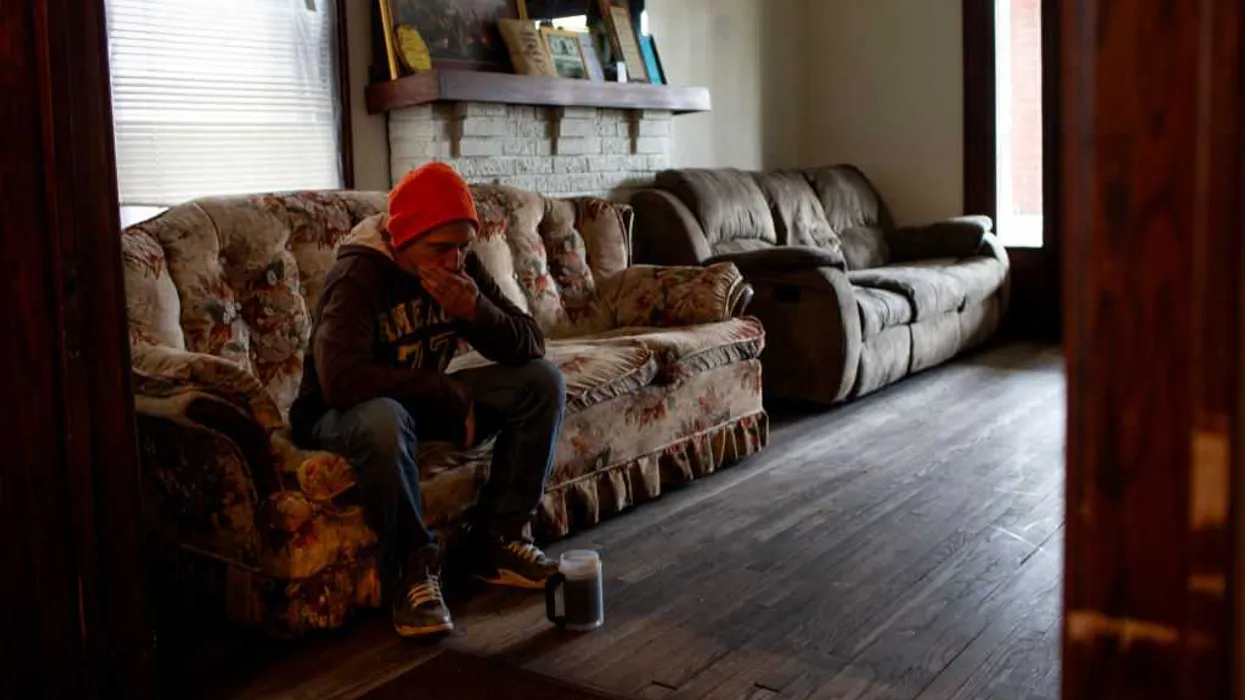
What happened Sunday at the home of Rob and Michele Reiner is a family nightmare. A son battling addiction, likely complicated by mental illness. Parents who loved him. A volatile situation that finally erupted into irreversible tragedy.
I grieve for them.
Shame keeps families quiet. Fear keeps them guarded. Love keeps them hoping longer than wisdom sometimes allows.
I also grieve for the families who read those headlines and felt something tighten in their chest because the story felt painfully familiar.
We often hear the phrase, “If you see something, say something.” The problem is that most people do not know what to say. So they say nothing at all.
What if we started somewhere simpler?
I see you. I see the weight you are carrying. I hurt with you.
Families living with addiction and serious mental illness often find themselves isolated. Not only because of the chaos inside their homes, but because friends, neighbors, and even faith communities hesitate to step closer, unsure of what to say or do. Over time, silence settles in.
Long before police are called, before neighbors hear sirens, before a tragedy becomes a headline, people live inside relentless stress and uncertainty every day.
They are caregivers.
We rarely use that word for parents, spouses, or siblings of addicts, but we should. These families do not simply react to bad choices. They manage instability. They monitor risk. They absorb emotional whiplash. They try to keep everyone safe while holding together a household under extraordinary strain.
In many ways, this disorientation rivals Alzheimer’s. In some cases, it proves even more destabilizing.
Addiction is cruelly unpredictable. It offers moments of clarity that feel like hope. A sober conversation. An apology. A promise that sounds sincere. Those moments can disarm a family member who desperately wants to believe the worst has passed.
Then the pivot comes. Calm turns to chaos. Remorse gives way to rage. Many families learn to live on edge, constantly recalibrating, never certain whether today will be manageable or explosive.
Law enforcement officers understand this reality well. Many domestic calls involve addiction, mental illness, or both. Tension often greets officers at the door, followed by a familiar refrain: “We didn’t know what else to do.”
Calling these family members caregivers matters because it reframes the conversation. It moves us away from judgment and toward reality. From, “Why don’t they just …?” to, “What are they carrying?” It acknowledges that these families manage risk, not just emotions.
The recovery community has long emphasized truths that save lives: You did not cause it. You cannot control it. You cannot cure it. These principles are not cold. They bring clarity. And clarity matters when safety is at stake.
RELATED: The grace our cruel culture can’t understand
 Photo by Gary Hershorn / Getty Images
Another truth too often postponed until tragedy strikes deserves equal emphasis: The caregiver’s safety matters too.
Friends and faith communities often respond with a familiar phrase: “Let me know if there’s anything you need.” It sounds kind, but it places the burden back on someone already exhausted and often afraid.
Caregivers need something different. They need people willing to ask better questions.
Are you safe right now? Is there a plan if things escalate? Who is checking on you? Would it help if I stayed with you or helped you find a safe place tonight?
These questions do not intrude. They protect.
Often, the most meaningful help does not come as a solution, but as a witness. Henri Nouwen once observed that the people who matter most rarely offer advice or cures. They share the pain. They sit at the kitchen table. They walk alongside without looking away.
Caregivers living with someone battling addiction and mental illness often need at least one safe presence who sees clearly, speaks honestly, and stays when things grow uncomfortable.
We have permission to care, but not always the vocabulary.
Shame keeps families quiet. Fear keeps them guarded. Love keeps them hoping longer than wisdom sometimes allows. One of the greatest gifts we can offer is the willingness to penetrate that isolation with clarity, grace, and tangible help.
Grace does not require silence in the face of danger. Love does not demand enduring abuse. Faith does not obligate someone to remain in harm’s way.
Pointing a caregiver toward safety does not abandon the person struggling with addiction. It recognizes that multiple lives stand at risk, and all of them matter.
When tragedies occur, the public asks what could have been done differently. One answer proves both simple and difficult: Stop overlooking the caregivers quietly absorbing the blast.
RELATED: The courage we lost is hiding in the simplest places
 Photo by Wolfgang Kaehler/LightRocket via Getty Images
Welfare checks should not focus solely on the person battling addiction or mental illness. Families living beside that struggle often need support long before a breaking point arrives.
If you know someone whose son, daughter, spouse, or partner struggles, do not look away because you feel unsure what to say. You do not need to solve anything. You do not need to analyze anything.
Start by seeing them. Stay with them.
I see you. I see how heavy this is. You do not have to carry it alone.
Ask better questions. Offer practical help that does not depend on their energy to ask. Check on them again tomorrow.
This season reminds us that Christ did not stand at a safe distance from trauma. He came close to the wounded and brought redemption without demanding tidy explanations.
When we do the same for families living in the shadow of addiction and mental illness, we honor their suffering and the Savior who meets us there.