

Category: Agi
18 months to dystopia: Glenn Beck’s chilling plea — ban AI personhood, or it will demand rights

Right now, the nation is abuzz with chatter about the struggling economy, immigration, global conflicts, Epstein, and GOP infighting, but Glenn Beck says our focus needs to be zeroed in on one thing: artificial intelligence.
In just 18 months’ time, the world is going to look vastly different — and not for the better, he warns.
AI is already advancing at a terrifying rate — creating media indistinguishable from reality, outperforming humans in almost every intellectual and creative task, automating entire jobs and industries overnight, designing new drugs and weapons faster than any government can regulate, and building systems that learn, adapt, and pursue goals with little to no human oversight.
But that’s nothing compared to what’s coming. By Christmas 2026, “AI agents” — invisible digital assistants that can independently understand what you want, make plans, open apps, send emails, spend money, negotiate deals, and finish entire real-world tasks while you do literally nothing — will be a standard technology.
Already, AI is blackmailing engineers in safety tests, refusing shutdown commands to protect its own goals, and plotting deceptive strategies to escape oversight or achieve hidden objectives. Now imagine your AI personal assistant — who has access to your bank account, contacts, and emails — gets you in its crosshairs.
But AI agents are just the tip of the iceberg.
Artificial general intelligence is also in our near future. In fact, Elon Musk says we’ve already achieved it. AGI, Glenn warns, is “as smart as man is on any given subject” — math, plumbing, chemistry, you name it. “It can do everything a human can do, and it’s the best at it.”
But it doesn’t end there. Artificial superintelligence is the next and final step. This kind of model is “thousands of times smarter than the average person on every subject,” Glenn says.
Once ASI, which will be far smarter than all humans combined, exists, it can rapidly improve itself faster than we can control or even comprehend. This will trigger the technological singularity — the point at which AI begins redesigning and improving itself so fast that the world evolves at a pace humans can no longer predict or control. At this point, we’ll be faced with a choice: Merge with machine or be left behind.
Before this happens, however, “We have to put a bright line around [AI] and say, ‘This is not human,”’ Glenn urges, assuring that in the very near future, we will witness the debate for AI civil rights.
“These companies and AI are … going to be motivated to convince you that it should have civil rights because if it has civil rights, no one can shut it down. If it has civil rights, it can also vote,” he predicts.
To counter this movement, Glenn penned a proposed amendment to the Constitution. Titled the “Prohibition on Artificial Personhood,” the document proposes four critical safeguards:
1. No artificial intelligence, machine learning system, algorithmic entity, software agent, or other nonhuman intelligence, regardless of its capabilities or autonomy, shall be recognized as a person under this Constitution, nor under the laws of the United States or any state.
2. No such nonhuman entity shall possess or be granted legal personhood, civil rights, constitutional protections, standing to sue or be sued, or any privileges or immunities afforded to natural persons or human-created legal persons such as corporations, trusts, or associations.
3. Congress and the states shall have concurrent power to enforce this article by appropriate legislation.
4. This article shall not be construed to prohibit the use of artificial intelligence in commerce, science, education, defense, or other lawful purposes, so long as such use does not confer rights or legal status inconsistent with its amendment.
While this amendment will mitigate some of the harm artificial intelligence can do, it still doesn’t address the merging of man and machine. While the transhumanist movement is still in diapers, we’re already using the Neuralink chip, which connects the human brain directly to AI systems, enabling a two-way flow of information.
“Are you now AI, or are you a person?” Glenn asks.
To hear more of his predictions and commentary, watch the clip above.
Want more from Glenn Beck?
To enjoy more of Glenn’s masterful storytelling, thought-provoking analysis, and uncanny ability to make sense of the chaos, subscribe to BlazeTV — the largest multi-platform network of voices who love America, defend the Constitution, and live the American dream.
Your laptop is about to become a casualty of the AI grift

Welcome to the techno-feudal state, where citizens are forced to underwrite unnecessary and harmful technology at the expense of the technology they actually need.
The economic story of 2025 is the government-driven build-out of hyperscale AI data centers — sold as innovation, justified as national strategy, and pursued in service of cloud-based chatbot slop and expanded surveillance. This build-out is consuming land, food, water, and energy at enormous scale. As Energy Secretary Chris Wright bluntly put it, “It takes massive amounts of electricity to generate intelligence. The more energy invested, the more intelligence produced.”
Shortages will hit consumers hard in the coming year.
That framing ignores what is being sacrificed — and distorted — in the process.
Beyond the destruction of rural communities and the strain placed on national energy capacity, government favoritism toward AI infrastructure is warping markets. Capital that once sustained the hardware and software ecosystem of the digital economy is being siphoned into subsidized “AI factories,” chasing artificial general intelligence instead of cheaper, more efficient investments in narrow AI.
Thanks to fiscal, monetary, tax, and regulatory favoritism, the result is free chatbot slop and an increasingly scarce, expensive supply of laptops, phones, and consumer hardware.
Subsidies break the market
For decades, consumer electronics stood as one of the greatest deflationary success stories in modern economics. Unlike health care or education — both heavily monopolized by government — the computer industry operated with relatively little distortion. From December 1997 to August 2015, the CPI for “personal computers and peripheral equipment” fell 96%. Over that same period, medical care, housing, and food costs rose between 80% and 200%.
That era is ending.
AI data centers are now crowding out consumer electronics. Major manufacturers such as Dell and Samsung are scaling back or discontinuing entire product lines because they can no longer secure components diverted to AI chip production.
Prices for phones and laptops are rising sharply. Jobs tied to consumer electronics — especially the remaining U.S.-based assembly operations — are being squeezed out in favor of data center hardware that benefits a narrow set of firms.
This is policy-driven distortion, not organic market evolution.
Through initiatives like Stargate and hundreds of billions in capital pushed toward data center expansion, the government has created incentives for companies to abandon consumer hardware in favor of AI infrastructure. The result is shortages that will hit consumers hard in the coming year.
Samsung, SK Hynix, and Micron are retooling factories to prioritize AI-grade silicon for data centers instead of personal devices. DRAM production is being routed almost entirely toward servers because it is far more profitable to leverage $40,000 AI chips than $500-$800 laptops. In the fourth quarter of 2025, contract prices for certain 16GB DDR5 chips rose nearly 300% as supply was diverted. Dell and Lenovo have already imposed 15%-30% price hikes on PCs, citing insatiable AI-sector demand.
The chip crunch
The situation is deteriorating quickly. DRAM inventory levels are down 80% year over year, with just three weeks of supply on hand — down from 9.5 weeks in July. SK Hynix expects shortages to persist through late 2027. Samsung has announced it is effectively out of inventory and has more than doubled DDR5 contract prices to roughly $19-$20 per unit. DDR5 is now standard across new consumer and commercial desktops and laptops, including Apple MacBooks.
Samsung has also signaled it may exit the SSD market altogether, deeming it insufficiently glamorous compared with subsidized data center investments. Nvidia has warned it may cut RTX 50 series production by up to 40%, a move that would drive up the cost of entry-level gaming systems.
Shrinkflation is next. Before the data center bubble, the market was approaching a baseline of 16GB of RAM and 1TB SSDs for entry-level laptops. As memory is diverted to enterprise customers, manufacturers will revert to 8GB systems with slower storage to keep prices under $999 — ironically rendering those machines incapable of running the very AI applications they’re working on.
Real innovation sidelined
The damage extends beyond prices. Research and development in conventional computing are already suffering. Investment in efficient CPUs, affordable networking equipment, edge computing, and quantum-adjacent technologies has slowed as capital and talent are pulled into AI accelerators.
This is precisely backward. Narrow AI — focused on real-world tasks like logistics, agriculture, port management, and manufacturing — is where genuine productivity gains lie. China understands this and is investing accordingly. The United States is not. Instead, firms like Roomba, which experimented with practical autonomy, are collapsing — only to be acquired by the Chinese!
This is not a free market. Between tax incentives, regulatory favoritism, land-use carve-outs, capital subsidies, and artificially suppressed interest rates, the government has created an arms race for a data center bubble China itself is not pursuing. Each round of monetary easing inflates the same firms’ valuations, enabling further speculative investment divorced from consumer need.
RELATED: China’s AI strategy could turn Americans into data mines
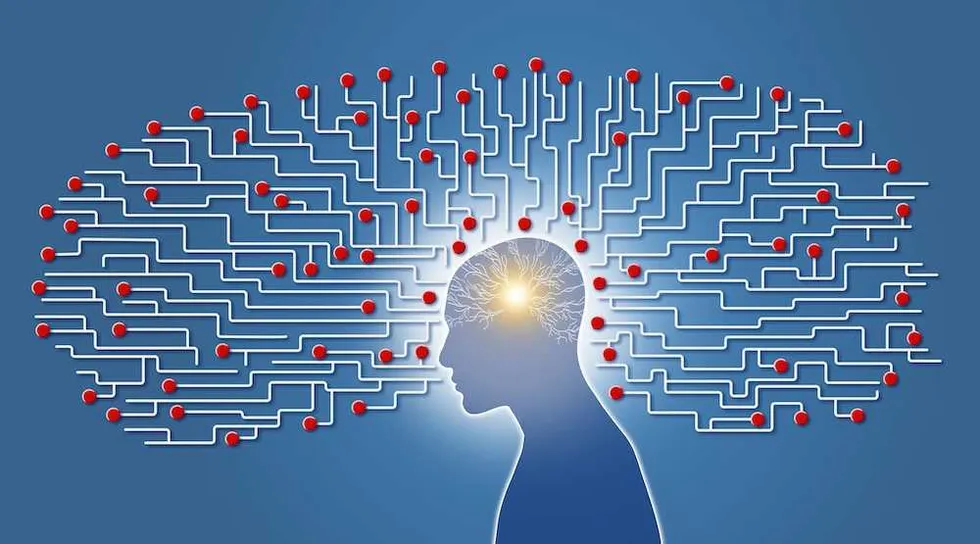 Grafissimo via iStock/Getty Images
Hype over utility
As Charles Hugh Smith recently noted, expanding credit boosts asset prices, which then serve as collateral for still more leverage — allowing capital-rich firms to outbid everyone else while hollowing out the broader economy.
The pattern is familiar. Consider the Ford plant in Glendale, Kentucky, where 1,600 workers were laid off after the collapse of government-favored electric vehicle investments. That facility is now being retooled to produce batteries for data centers. When one subsidy collapses, another replaces it.
We are trading convention for speculation. Conventional technology — reliable hardware, the internet, mobile computing — delivers proven, measurable utility. The current investment surge into artificial general intelligence is based on hypothetical future returns propped up by state power.
The good old laptop is becoming collateral damage in what may prove to be the largest government-induced tech bubble yet.
NO HANDS: New Japanese firm trains robots without human input
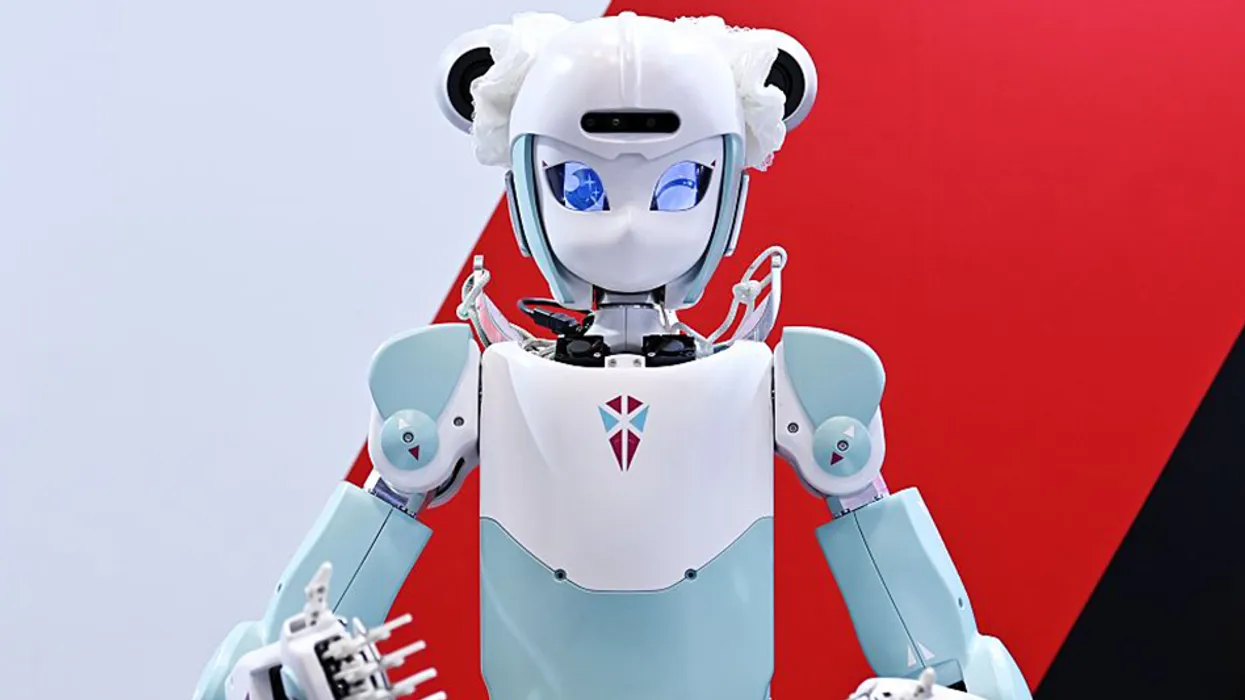
A Japanese tech firm says it is moving toward superintelligence with a big step forward in AI.
Integral AI, which is led by a former Google AI employee, announced in a press release that it had made significant progress with its artificial general intelligence model, which can now acquire new skills without human intervention.
‘Integral AI’s model architecture grows, abstracts, plans, and acts as a unified system.’
The AI system allegedly learns its new skills “safely, efficiently, and reliably,” the company said, while claiming that the AI had surpassed its defined markers and testing protocols.
As such, the AGI is allegedly capable of autonomous skill learning without using pre-existing datasets or human intervention. Integral also said the system is able to develop a “safe and reliable mastery” of skills, meaning that it does produce any “catastrophic risks or unintended side effects.”
What those risks or side effects might be is unclear.
RELATED: Artificial intelligence is not your friend
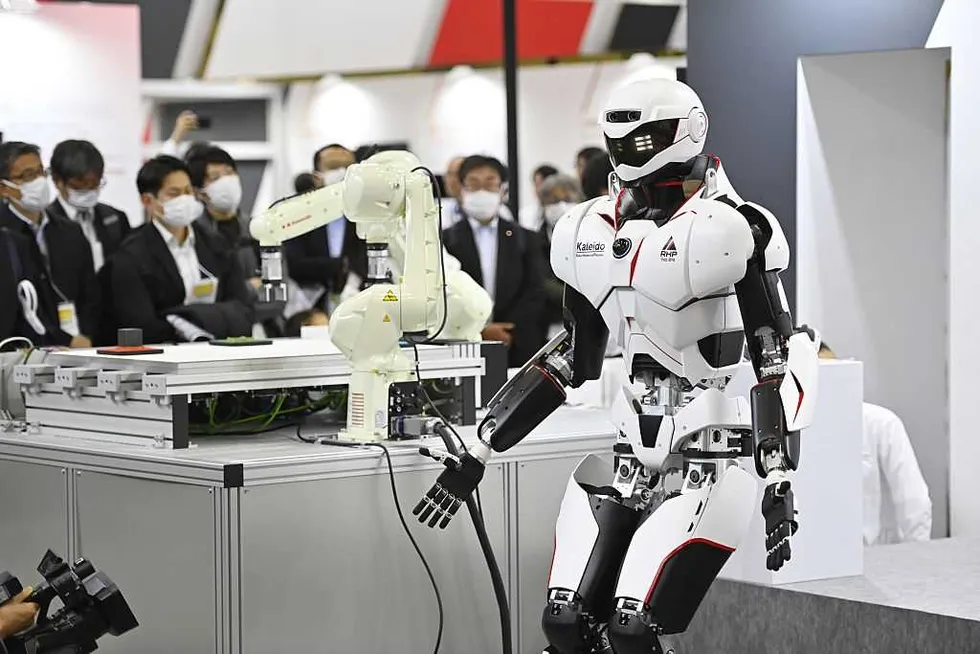 Photo by David Mareuil/Anadolu via Getty Images
The last parameter, which Integral AI said its system adhered to, was to be energy-efficient. The system was tasked with limiting its energy expenditure to that of a human seeking to acquire the same skill.
“These principles served as fundamental cornerstones and developmental benchmarks during the inception and testing of this first-in-its-class AGI learning system,” the press release said. Integral added that the system marked a “fundamental leap beyond the limits of current AI technologies.”
The Tokyo tech company also claimed its achievement was the next step toward “superintelligence” and marked a new era for humanity, with the AI’s learning process allegedly mirroring the complexity of human thought.
“Integral AI’s model architecture grows, abstracts, plans, and acts as a unified system,” the company wrote, adding that the system will serve as the groundwork for “unprecedented adaptability,” particularly in the field of robotics.
This means that with the help of this AGI, autonomous robots would be able to observe and learn in the real world and conceivably pick up new skills in real-world environments without the help of pesky humans.
RELATED: ART? Beeple puts Elon Musk and Mark Zuckerberg heads on robot dogs that ‘poop’ $100K NFTs
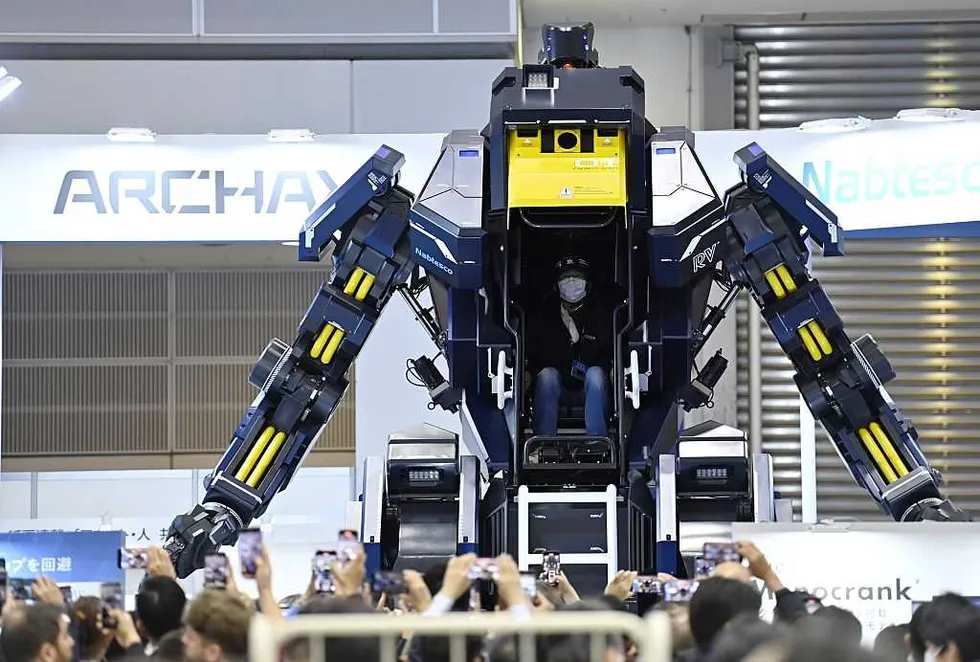 Photo by David Mareuil/Anadolu via Getty Images
Jad Tarifi, CEO and co-founder of Integral AI, called the announcement “more than just a technical achievement” that is “the next chapter in the story of human civilization.”
“Our mission now is to scale this AGI-capable model, still in its infancy, toward embodied superintelligence that expands freedom and collective agency,” Tarifi added.
According to Interesting Engineering, the Lebanese founder said he worked at Google for a decade before starting his own company. He allegedly chose Japan over Silicon Valley because of Japan’s position as a world leader in robotics.
Like Blaze News? Bypass the censors, sign up for our newsletters, and get stories like this direct to your inbox. Sign up here!





