Category: Allie beth stuckey
Santa Claus: Innocent Christmas fun or counterfeit Jesus?
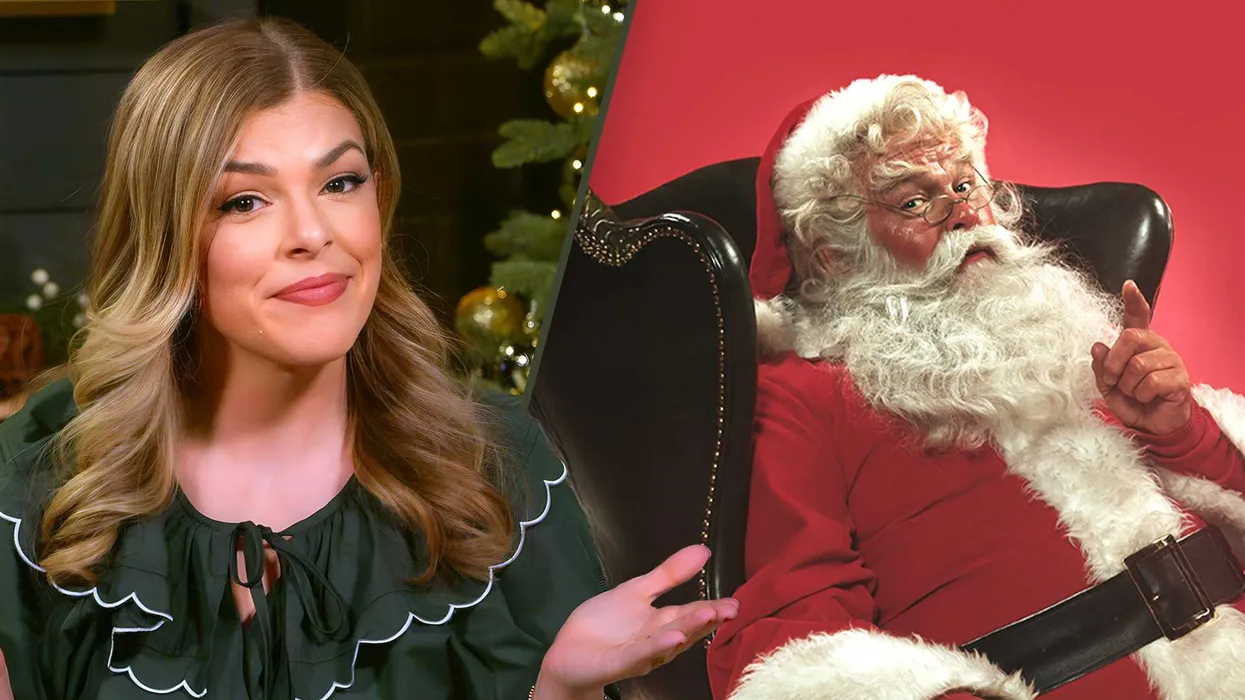
Jesus is the reason for the season, but more often than not, it’s Santa who takes front and center stage. A 2,000-year-old baby offering an intangible gift just can’t compete with the big, red-suited, jolly man and his sleigh full of toys in the mind of a child.
That’s one of several reasons Allie Beth Stuckey doesn’t do Santa with her three kids.
On this episode of “Relatable,” Allie presents a compelling case for ditching the man in the red hat and putting Jesus back on the throne of Christmas where He belongs.
Santa invites confusion
While Allie acknowledges that Santa is a “Christian liberty issue,” meaning “we have freedom as Christians to disagree,” she feels personally convicted to forgo the tradition to avoid confusing her children.
Santa “is a form of deceit,” she says.
“We want our kids to trust us … and it can cause this kind of dissonance or confusion in a child when we tell them that someone is real, is giving them gifts, is watching them … is taking a tally of the good deeds they do, the bad deeds they do … and then allocating gifts in accordance to their behavior — and then to tell them one day that that system of morality around Christmastime doesn’t exist,” she argues.
“I do believe that that causes, even if just for a moment, mistrust between the parent and child” and “confusion about what is actually true … about the mysterious and supernatural realm.”
But “causing mistrust through deceit” isn’t even the biggest issue, she says. Santa can also cause “theological confusion” in developing children.
Santa and God have a lot in common, Allie explains. Both see us when we’re sleeping, know when we’re awake, and know if we’ve been bad or good, but the key difference is Santa takes his gifts away when we fail to be good, whereas God, infinite in grace and mercy, does not dangle salvation as a carrot in front of us to keep us behaving.
Santa “is a legalistic form of Christ” and a “counterfeit form of God,” says Allie.
And then there’s the flip side of this pitfall. Children might view God as a kind of Santa Claus, who gives them material gifts in exchange for obedience or good deeds, turning Him from the perfect and holy king of kings and the savior of humanity into a “feel-good” bringer of happiness.
In either case, the similarities between the two figures can deeply confuse malleable children who are still learning to distinguish between fact and fiction, while simultaneously sowing distrust between them and their parents.
Santa distracts from Jesus
Allie’s second reason for ditching St. Nick is that he draws the focus away from Christ.
“Santa Claus is the one who will give you all of your immediate desires and will fulfill all of the temporary pleasure that you long for because he is giving you something in the form of a tangible gift. … It’s no wonder that we as people, but especially children, have such a hard time actually focusing on Christ — the real gift-giver,” she says.
To Santa sympathizers who argue that his mysterious nature “makes Christmas really magical” and stimulates children’s imaginations, Allie says that we can still foster imagination in our kids without lying to them.
And further, “The reality is that there is already a beautiful mystery of Christmas that no one truly understands,” she says. “We are natural people who were intersected by the supernatural when Jesus became Emmanuel, God with us, made flesh. That is the mystery of Christmas.”
“And so why would we create a counternarrative to that? A cheapened narrative, a legalistic narrative that gives all of the wrong lessons about morality and about what saves you and about what satisfies you and about what fulfills you?” she asks.
But Santa doesn’t just distract kids from the true Christmas story; he also distracts parents, who are stressed and spread thin trying to maintain the Santa narrative through elaborate gift displays, Elf on the Shelf, staging half-eaten cookies, and dodging pesky questions from their kids.
“It seems like when that starts to be the taker of our joy or the source of our stress and our energy and not discipling our kids and telling them what the advent, the coming of the Lord, actually means in their lives, well, then we have veered into idolatry,” Allie warns.
To hear the rest of her argument, as well as ways Christians can still incorporate Santa into their Christmas season without losing focus on what matters, watch the full episode above.
Want more from Allie Beth Stuckey?
To enjoy more of Allie’s upbeat and in-depth coverage of culture, news, and theology from a Christian, conservative perspective, subscribe to BlazeTV — the largest multi-platform network of voices who love America, defend the Constitution, and live the American dream.
The viral country anthem that has girlboss Twitter melting down and trad women cheering
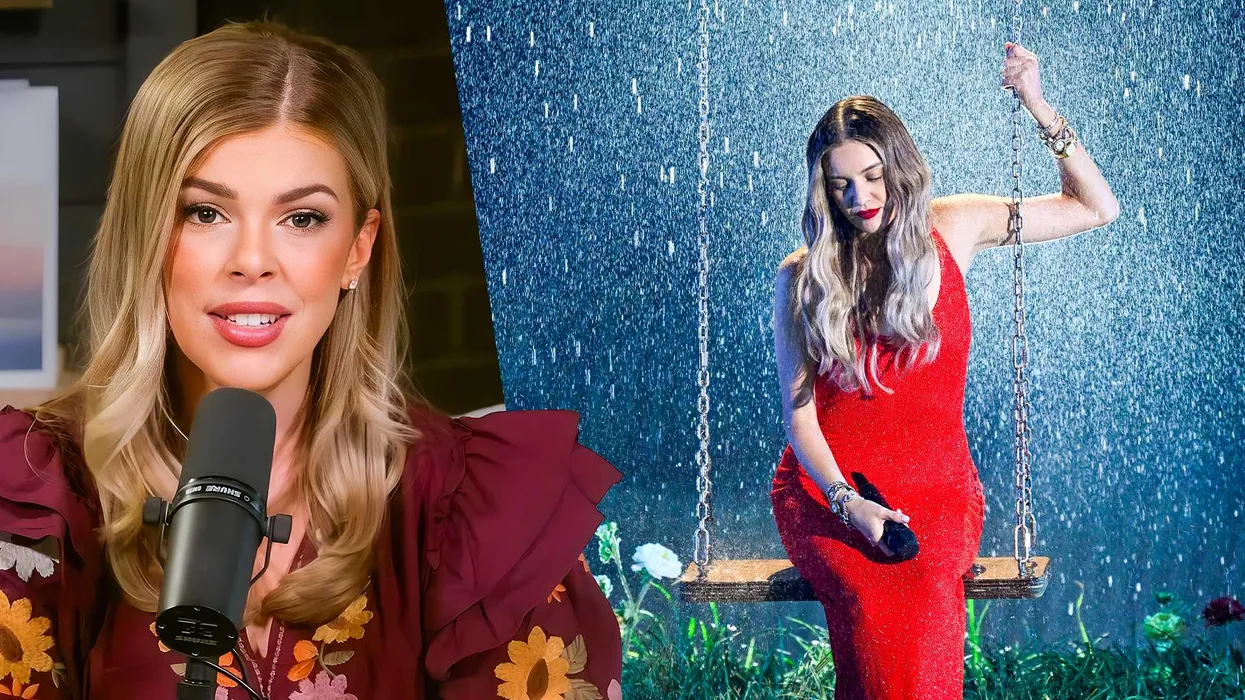
On November 7, country music artist Kelsea Ballerini released a single titled “I Sit in Parks.” The two-minute track is a heart-wrenching lamentation of the forsaking of motherhood for career aspirations — a rare message from the secular music world.
The chorus: “Did I miss it? By now is it / A lucid dream? Is it my fault / For chasin’ things a body clock / Doesn’t wait for? I did the d**n tour / It’s what I wanted, what I got / I spun around and then I stopped / And wondered if I missed the mark.”
Ballerini, a 32-year old divorcee with no children, vulnerably admits in the ballad that she chose the freedom to pursue her music career over becoming a mother — a decision that causes her intense regret and pain.
The song has garnered a ton of attention — triggering the girlboss feminist crowd and delighting pro-natalists who hope the feminist stronghold keeping young women single, childless, and on the hamster wheel of careerism is finally beginning to crack.
Allie Beth Stuckey, BlazeTV host of “Relatable,” falls into the latter category, believing the song indicates a positive cultural shift.
“I can see how this vulnerability is speaking to what a lot of people feel. This is certainly not Christian, but it’s kind of reflecting this trend that we’re seeing among a lot of young people … wanting to go back to tradition, wanting to go back to church, wanting to go back to marriage, wanting to actually have children,” she says.
The lie so many young women fall for, Allie explains, is that motherhood isn’t for everyone. Feminist dogma convinced them that being a mom is burdensome and a hindrance to personal ambition. The essential truth it leaves out, however, is that while one can reject motherhood, one cannot reject the motherhood instinct. It is wired into women by God and will always be a central piece of their nature.
“This motherhood instinct that we all have when we’re little girls — it doesn’t go away,” says Allie. “We take care of our pets; we take care of our dolls; we take care of our flowers because that is the instinct that God has given us in general as women.”
Even the women who say they never want a husband or children can’t escape the pull of motherhood. It’s usually just channeled toward their “fur babies,” houseplants, businesses, or elsewhere. And it leaves them deeply unfulfilled.
Allie acknowledges that marriage and childbearing aren’t God’s plan for everyone, but motherhood nonetheless is. That instinct to cultivate and nurture can be and should be channeled toward people in some capacity via ministry, mentorship, or mission work. That’s the only thing that will fill the motherhood cup if marriage and having children aren’t in the cards.
Ballerini’s “I Sit in Parks” is a bleak and honest picture of what happens when women forsake motherhood altogether or channel it in unhealthy directions: a deep loneliness that hollows women out.
To hear more of Allie’s analysis, watch the episode above.
Want more from Allie Beth Stuckey?
To enjoy more of Allie’s upbeat and in-depth coverage of culture, news, and theology from a Christian, conservative perspective, subscribe to BlazeTV — the largest multi-platform network of voices who love America, defend the Constitution, and live the American dream.
Throwback: 15 utterly UNHINGED things libs labeled ‘racist’

“Every facet of the coffee industry, in fact, is rooted in racism. From the moment the whites viciously stole coffee from black and brown people to the present-day Karen sipping her morning cup of white supremacy, whites have been able to drink the fruits of our labor and our culture with impunity.”
What you just read is an actual quote from an article published in 2023 — back when literally everything was labeled racist by the woke mafia.
In this throwback Allie Beth Stuckey piece, we remember some of the most ridiculous things the critical race theory-obsessed left has used to label white people racists over the years. And sadly, coffee isn’t even close to the most absurd one on the list.
Picnics
A 2020 article from the Philadelphia Inquirer posited that “picnics” were racist because there was once a time when “Southern white people made lynchings a regular occurrence at picnics.”
If you are going to continue using the word “picnic,” then you need to make sure “that history is being talked about,” author Elizabeth Wellington wrote.
“That’s not what people think of when they’re thinking of going out to a park, laying a blanket down, and eating some sandwiches,” scoffed Allie.
Brain pairings (like peanut butter and jelly sandwiches)
Speaking of sandwiches, PB&Js are apparently the perfect metaphor for “implicit bias” against black males in America, according to a video released by the New York Times in 2016.
Social psychologist and management professor at the New York University Stern School of Business Dolly Chugh argued, “I somehow know that if you say peanut butter, I’m gonna say jelly. That’s an association that’s been ingrained in me. … In many forms of media, there’s an overrepresentation of black men and violent crime being paired together.”
Dairy
In 2022, a KFF Health News article reported that 28 civil rights and child advocacy groups — including one led by Al Sharpton — sent a letter to the USDA accusing the National School Lunch Program of “dietary racism.”
Their reasoning? Offering only cow’s milk, ignoring non-dairy alternatives, was racist because children of color apparently have higher rates of lactose intolerance.
Bicycling
A 2021 article from the Washington Post argued that American cycling is racist because a really long time ago, black people were excluded from bicycling clubs.
And then, of course, there’s the issue of racist white cops. “For black Southerners, the cost, dangers and white policing of cycling mobility combined with the weakening of its middle‑class status, meant that the popularity of the bicycle declined within the black community,” author Nathan Cardon wrote.
Equestrianism
If a piece of equipment doesn’t fit you properly, the designers are obviously racist against you. At least that’s the position the New York Times took in a front-page article from 2023 titled “Black equestrians want to be safe. But they can’t find helmets.”
In it, author McKenna Oxenden condemned racist manufacturers of equestrian equipment for not making helmets that accommodate certain black hairstyles, like dreadlocks.
“Is a helmet going to be safe if it’s like six inches off of your skull? No, it’s not. I don’t think it has anything to do with you being black,” Allie retorted.
Recreational running
In 2020, Medium published an article titled “Running is too white. It doesn’t need to be,” in which author Ryan Fan complained that America’s recreational running community is “too white.”
There was only one possible explanation for that, said Fan: systemic inaccessibility and exclusion. All those white runners just make people of color feel unsafe and unwelcome.
“We can do better. We have to,” he pleaded.
“Agree. I don’t like running, so running is too white. And it is because I am an ally that I choose not to,” Allie joked.
National parks
In 2020, ABC published a melodramatic article titled “America’s national parks face existential crisis over race.” In it, authors Stephanie Ebbs and Devin Dwyer reported that national park visitors were “overwhelmingly white” — 77% compared to 23% of non-whites.
The piece quoted then-Associate Director of the Sierra Club Joel Pannell, who fretted that this racial disparity in park visitors spelled doom for the country’s national parks (many of which have been going strong for over a century).
“If we don’t address this … then we’re going to risk losing everything,” he lamented.
“Not enough black people are going outside, so that’s the problem,” Allie mocked.
STD names
In 2022, NPR published an article titled “Critics say ‘monkeypox’ is a racist name. But it’s not going away anytime soon.” In the piece, author Bill Chappell quoted several critics upset about the name monkeypox, as it apparently stigmatizes the black and LGBTQ+ communities.
“There is a long history of referring to blacks as monkeys. Therefore, ‘monkeypox’ is racist and stigmatizes black people,” said global health advocate Ifeanyi Nsofor, ignoring the fact that the virus’ name was coined after it was originally discovered in lab monkeys in 1958.
Energy
Yes, energy — the stuff that powers the world — is “inherently racist,” suggested a 2022 article from Utility Dive.
Author Robert Walton reported that environmental justice advocates were up in arms because the U.S. energy sector is supposedly structurally racist due to historical policies like redlining and discriminatory infrastructure, which have disproportionately burdened low-income and communities of color with high costs and pollution.
Highways
In 2021, the Washington Times published a piece titled “When highways are racist,” in which author Cheryl Chumley lambasted Biden’s Department of Transportation for weaponizing civil rights laws to block a Houston highway project under the absurd pretext that infrastructure can be racist.
Ballet
A 2021 article from Marie Claire bemoaned the art of ballet as structurally white supremacist. Author Chloe Angyal argued that ballet — its aesthetics, history, and culture — is inherently racist because it reinforces a narrow, European ideal that marginalizes dancers of color.
“Ballet is not just white. It is white on purpose,” Angyal complained.
“There’s just not enough black people going up on their tiptoes,” Allie jeered.
Camping
Pitching a tent and roasting some marshmallows under the stars isn’t as innocent as it sounds, said Fast Company writer Elizabath Segran in a 2021 article called “The unbearable whiteness of camping.”
The monopoly white people apparently have on the outdoors all goes back to our colonial roots when colonizers took Indigenous land and turned it into “wilderness” for white recreation, she argued. Those mean ol’ white settlers romanticized themselves as “pioneers” while condemning Native people as “savages” for living out in nature, only to turn around and make nature an element of white culture.
Fast-forward a few hundred years and that same stigma still keeps non-whites from venturing outdoors. Patagonia jackets are too expensive; REI ads are too pale; and black people are apparently disproportionally targeted when they brave the elements.
Philosophy
Much of the genius that came from some of the greatest thinkers of the Enlightenment and German Idealist philosophy has bias baked into it, argued Aeon writer Avram Alpert in a 2021 piece titled “Philosophy’s systemic racism.” Ideas from the likes of Jean-Jacques Rousseau and Georg Wilhelm Friedrich Hegel must be “decolonized,” meaning we must expose how their core logic secretly ranks non-Europeans as irrational “savages” who need white reason to evolve, then flip the script to affirm that people of color already have their own internal progress — no European “uplift” required.
Organized pantries
Those little spice jars with the labels and the matching containers for your pasta and rice? Yeah well, they’re racist, said Associate Professor of Marketing at Loyola University Jenna Drenten.
Dubbing the trend of having aesthetically pleasing cupboards “pantry porn,” Drenten wrote, “Cleanliness has historically been used as a cultural gatekeeping mechanism to reinforce status distinctions based on a vague understanding of ‘niceness’: nice people, with nice yards, in nice houses, make for nice neighbors. What lies beneath the surface of this anti-messiness, pro-niceness stance is a history of classist, racist, and sexist social structures.”
“So you hear that black people? This professor doesn’t think that you can organize your pantry; you need to make it messy in order to really be pro-black and anti-racist,” laughed Allie.
This throwback to the peak-woke era — when coffee was cultural theft and PB&J pairings were microaggressions — proves one thing: The fever has broken, but the receipts still make us laugh.
Want more from Allie Beth Stuckey?
To enjoy more of Allie’s upbeat and in-depth coverage of culture, news, and theology from a Christian, conservative perspective, subscribe to BlazeTV — the largest multi-platform network of voices who love America, defend the Constitution, and live the American dream.
Allie Beth Stuckey responds to Candace Owens’ podcast call-out
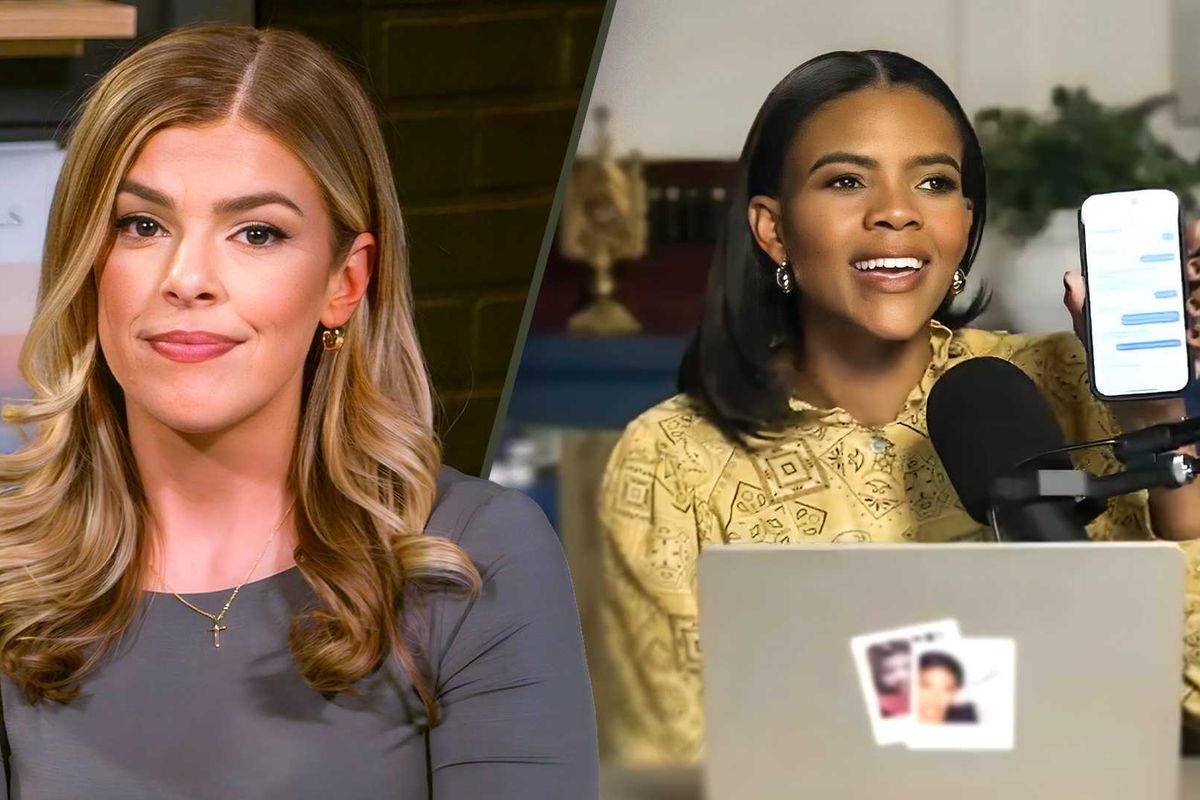
Since the murder of Turning Point USA founder Charlie Kirk, conservative firebrand Candace Owens has been commenting on numerous conspiracy theories surrounding Kirk’s death. She has made it clear that she believes the FBI’s current narrative — that Kirk was allegedly killed by lone gunman and radical leftist Tyler Robinson — isn’t the truth.
Owens, a vocal Israel critic, speculates that Kirk’s assassination was a targeted political hit involving TPUSA insiders, military contractors, and various “Zionist” influences and that Robinson is merely the fall guy in a calculated scheme.
While some have cheered on Owens as a truth-seeker, many have criticized her as recklessly divisive and harmful to Kirk’s grieving friends and family, while she offers little evidence. These include BlazeTV host Allie Beth Stuckey, who has defended TPUSA against Owens’ allegations.
Stuckey’s initial criticism avoided naming Owens and instead focused on debunking claims about TPUSA’s role — specifically that the last-minute booking of the Utah Valley University event points to internal foul play.
In an X thread from November 6, Stuckey shared her experience scheduling TPUSA events with Charlie.
In addition, she posted a series of Instagram stories (now expired) urging her audience not to “outsource critical thinking” to other people. Without naming Owens, Stuckey said, “If you are implicating a real person in a murder plot, you better be 100% sure that it is true and backed by hard evidence.”
Owens, on the November 11 episode of her podcast “Candace,” played these Instagram reels and addressed Allie directly: “It was Charlie’s real life, Allie. That was Charlie’s real life when you saw him sitting there and he got shot. … I feel like that’s the part you’re missing because you’re so worried about the surrounding cast of characters who have been literally caught lying.”
She went on to accuse Stuckey of not genuinely caring about justice for Charlie: “He’s not here any more. Maybe you’re not worried about him, but I am. I’m actually worried, and I want to know what happened to Charlie Kirk.”
On yesterday’s episode of “Relatable,” Allie responded to Candace directly. With grace, tact, and biblical clarity, she offered a measured rebuke rooted in Scripture.
“[It was] my friend too who was shot in the neck, whom you have seen me talk about and reference several times over the past few weeks and just, you know, what that mentorship meant to me,” says Stuckey, adding that it “makes [her] sad.”
“I’ve thought really hard, like how do I respond in a way that is actually edifying, that lifts you up and doesn’t just tear down and get down in the mud? … There’s a part of me that does just want to go tit for tat … but I just know that that will lead to a never-ending back-and-forth,” she adds.
Stuckey admits that she “can’t compete” with Owens’ claims to have “secret sources” in the government and in TPUSA, nor can she claim that Charlie visited her in a dream, as Owens purports.
“I don’t have any special insight at all. … If I were to reveal all of the texts to each other [Kirk and Allie] that we have over the years, you wouldn’t find anything juicy — no gossip, no hidden clues, no secret signals. So I just won’t go there,” she says.
“So I’m instead going to do three things: I am going to give us direction from Scripture on what godly truth-seeking looks like, and I’m going to analyze the weight of our words, and then I just want to share the arrows with a few of my friends.”
Biblical truth-seeking
“Christians are called to sift. We are called to discern. We are called to weigh what is being said — both how it’s being said and the content of what is being said — against objective truth, against logical truth, and most importantly against biblical truth,” says Stuckey.
She points to the Bereans in Acts 17 — Jewish believers who were praised as “more noble” because they eagerly received Paul’s teaching but examined the Scriptures daily to verify if his words were true — as the biblical model for truth-seeking. “They didn’t just listen to Paul and Silas. … They examined the word of God to see if what they were saying matched,” she says, urging listeners to do the same.
When filtering ideas through the lenses of objectivity and logic, Stuckey suggests asking questions such as, “Is there evidence?” “Who is the source?” “What is the other potential side of this argument?” “What are the other possible conclusions that one could draw?” And “Is someone being falsely accused?” It is critical, she argues, to gather as much evidence as possible before drawing conclusions.
“Investigation and truth-seeking are really important, but there is a difference between investigation and truth-seeking versus salacious, innuendo-driven drip campaign,” she warns.
‘Words matter’
Words, says Stuckey, don’t just have earthly implications; they also have eternal ones. She points to Jesus’ words in Matthew 12:36 — “I tell you, on the day of judgment people will give account for every careless word they speak” — as well as Solomon’s in Proverbs 18:21: “Death and life are in the power of the tongue.”
“Words are really important to Christianity. They’re really important to God. We read over and over again, whether it’s in these passages or the book of James, how much our tongue can do in creating real-life impact and how much our words matter,” she says, advising against “[stirring] up suspicion” and “[pointing] fingers.”
From the commandment in Exodus not to bear false witness against our neighbor to Ephesians’ edict to “let no corrupting talk” come from our mouths, the Bible is clear that our words, especially when aimed at other people, deeply matter to God.
Stuckey acknowledges that her response to Owens will inevitably result in “a fresh set of arrows” for her too, but she refuses to fan the flames of conspiracy theory while hard evidence is sparse.
“I think that we have to trust that those closest to Charlie — that Erika, that those in his life who loved him way more than we ever did, who knew him way better than we ever did — that they want truth more than anyone, that they want justice more than anyone, and that they are asking the right questions,” she says.
Despite Owens’ accusation, this stance is “not a lack of caring” for Charlie or truth, she says.
“It is trusting the Lord, but also trusting the people who knew Charlie and loved him.”
To hear Allie’s full response to Candace Owens, watch the episode above.
Want more from Allie Beth Stuckey?
To enjoy more of Allie’s upbeat and in-depth coverage of culture, news, and theology from a Christian, conservative perspective, subscribe to BlazeTV — the largest multi-platform network of voices who love America, defend the Constitution, and live the American dream.
3 lies your therapist is telling you
We live in an era of mental health awareness. Therapy has exploded into a multi-billion-dollar industry, with the United States accounting for roughly half of global mental health spending. Nearly a quarter of the U.S. population, including children, has at least one mental health diagnosis.
One might think that more awareness and therapy = healthier, happier people.
But sadly, that’s not the case at all. We’re actually in the throes of a mental health crisis that’s getting worse, not better.
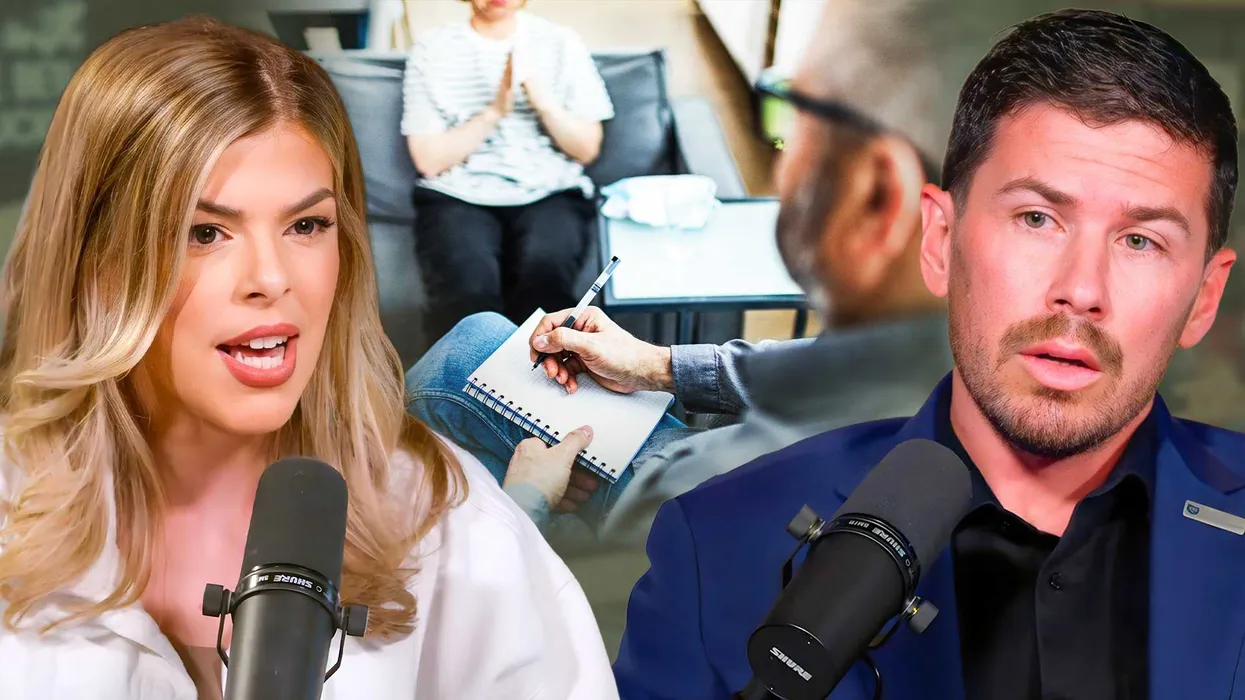
According to Dr. Greg Gifford — pastor, licensed biblical counselor, and author of “Lies My Therapist Told Me” — therapy culture has become an issue as big as the conditions it claims to treat.
The problem? The secular world doesn’t understand the human soul as God designed it.
In this fascinating interview with Allie Beth Stuckey, BlazeTV host of “Relatable,” Dr. Gifford lists three common lies secular therapists tell their clients.
Lie #1: Brain = Mind
In the world of secular therapy, the mind and brain are deeply interconnected. An ailing mind is indicative of an ailing brain. That’s why mental health issues are often linked to “chemical imbalances.”
But Dr. Gifford says the mind and brain are vastly different. Unlike the physical brain, the mind, which is synonymous with our spirit or soul, is “immaterial” and “will continue to exist after [the] brain has deceased.” In Romans 12:2, we are told God renews not the brain but the mind. For the Christian being sanctified, this happens even as the brain organ is deteriorating with age.
The brain, says Dr. Gifford, is “the control center of your outer man. … It’s not determining my thoughts. It is more like a filter … of what is happening in my thinking.”
Unfortunately, the default perspective of the Western world is that “everything has a medical explanation,” which means we rarely question “what’s happening in my inner person in my soul.” The result is that people with mind/soul issues leave the psychiatrist’s office with medication that treats the brain.
And even worse, these drugs are prescribed even though no actual medicine — brain scans, deficiency testing, or otherwise — was practiced.
Lie #2: Medicine is the answer
When we understand the distinction between the mind and the brain, it becomes clear that soul problems need soul answers — not the psychotropic medications the secular world leans on.
“Start to develop a worldview that the solutions are coming from the scripture, not from the secular therapeutic,” says Gifford.
Even if we are experiencing physical symptoms that point to physical issues, that doesn’t mean our minds aren’t a factor — or even a root cause — in our distress. As the Holy Spirit cultivates in us the fruits of the Spirit, our bodies are impacted as well. Peace can regulate a palpitating heart. Joy can boost serotonin levels in the brain.
Further, there is freedom in knowing our bodies cannot make us sin. The Spirit “can direct the mind no matter what’s happening in our physiology,” says Allie.
Lie #3: Your struggles aren’t sin
Repentance is a cornerstone in the Christian walk. “What does repentance mean practically?” asks Gifford. “Change of mind, not change of brain.”
Secular therapy often frames anxiety, depression, or relational conflicts as innocent “disorders” or traumas — biological glitches or environmental bad luck — with no call to examine the heart. The lie? Your pain isn’t tied to sin, rebellion, or a hardened mindset, so you don’t need to repent and turn to God’s word for real renewal.
But Gifford warns this skips the soul surgery only scripture can provide, leaving people stuck in symptom loops rather than being transformed.
For those who need support, he suggests “[finding] somebody who would use God’s word as the source and authority to really help [you] with the root of what’s going on.”
To hear more of the conversation, watch the full interview above.
Want more from Allie Beth Stuckey?
To enjoy more of Allie’s upbeat and in-depth coverage of culture, news, and theology from a Christian, conservative perspective, subscribe to BlazeTV — the largest multi-platform network of voices who love America, defend the Constitution, and live the American dream.
Allie Beth Stuckey on ‘Fox & Friends’: Charlie Kirk ‘was such an encourager of so many of us’

What made Charlie Kirk such a force to be reckoned with?
That was one of topics up for discussion Monday when BlazeTV’s Allie Beth Stuckey joined “Fox & Friends” co-hosts Ainsley Earhardt and Griff Jenkins before headlining that evening’s Turning Point USA tour stop at Louisiana State University in Baton Rouge.
‘He really was an anomaly. God just blessed him with amazing work ethic and persistence and energy.’
“He was so generous with his time,” the “Relatable” host recalled, noting that the slain activist miraculously managed to balance traveling nonstop, raising a young family, scaling TPUSA into a national juggernaut, and igniting a movement that reached millions — all while still making time for others:
He could’ve been doing a million other very important things, but he would take the time every day to text his friends, to text his colleagues, to send Bible verses, to say, “Hey, keep going,” “I saw this article,” or, “I saw you talk about this topic. You did such a good job.”
He was such a champion, such an encourager of so many of us, and that is going to continue to bless me for the rest of my life.
‘Keep slugging’
Jenkins asked Stuckey what she anticipated seeing at the Baton Rouge TPUSA event, especially in the wake of LSU’s Charlie Kirk tribute back in September.
“It makes me think of when we heard Charlie’s widow, Erika, talk about, ‘You have no idea what you’ve done,’ and you hear Andrew Kolvet, Charlie’s producer, talk about that he hopes that the TPUSA events are going to be bigger than ever before. Is that what you anticipate seeing tonight?” Jenkins asked.
“Oh, absolutely,” Stuckey said.
And her instincts were spot-on.
The sold-out Baton Rouge event — hosted by the local TPUSA chapter — drew a massive 1,600 attendees, far exceeding expectations. Lines wrapped around the block, and doors opened early to accommodate the surging crowd of young conservatives eager to honor Kirk’s legacy and rally in support of faith, family, and freedom. The vibe was electric and defiant, pulsing with patriotic fervor as chants of “USA!” and “Charlie Kirk!” erupted from a packed house.
Stuckey inspired and challenged the crowd with a powerful speech on “five of Charlie Kirk’s most controversial truths,” motivating students with Charlie’s favorite phrase of encouragement: “Keep slugging.”
‘He really was an anomaly’
Earhardt told Stuckey she found it “amazing” to hear from so many people all that Kirk had done for them. “I’m hearing you say he would text you, encourage you,” she marveled.
“He also had to fundraise. He also had a family. He was traveling. He was contacting so many people and really pouring into their lives. How did he balance it all? How did he have time to do it?”
“I have no idea,” was Stuckey’s candid response.
“You know, I’ve joked a few times that, in true Charlie fashion, he is giving all of his friends and his team a whole lot of work. … Gosh, it’s taken at least a dozen of us to make up for Charlie’s speaking engagements and all of the different obligations that he had on his show and everywhere,” she laughed.
“He really was an anomaly. God just blessed him with amazing work ethic and persistence and energy because, of course, God knew that his time was tragically short. And he had a lot to accomplish, and he did.”
In the end, Charlie didn’t just create a movement — he multiplied one.
“Even though he was the center of it, it’s far beyond him,” Stuckey said.
The Charlie effect
And she’s right. Since his tragic death, Charlie’s American Comeback Tour, which was rebranded as This Is the Turning Point Tour to honor his legacy, has experienced an explosion in participation. Campus events see massive, exceeding-expectations turnouts. Thousands are left outside as arenas fill to bursting. Patriotic chants fueled by grief-turned-determination electrify the atmosphere.
Interest in TPUSA membership has also dramatically increased, with the organization receiving more than 120,000 requests to start local chapters since the founder’s martyrdom.
The Charlie effect is real — and it’s fueling a nationwide revival.
“He left a legacy that really multiplied, and that speaks to who he was as a person but also just where we are as a country right now. People have woken up, and people are ready to step off the sidelines and come into the arena, and I say let’s go,” Stuckey urged.
Allie Beth Stuckey delivers bold speech on Charlie Kirk’s “5 most controversial truths” at TPUSA LSU stop
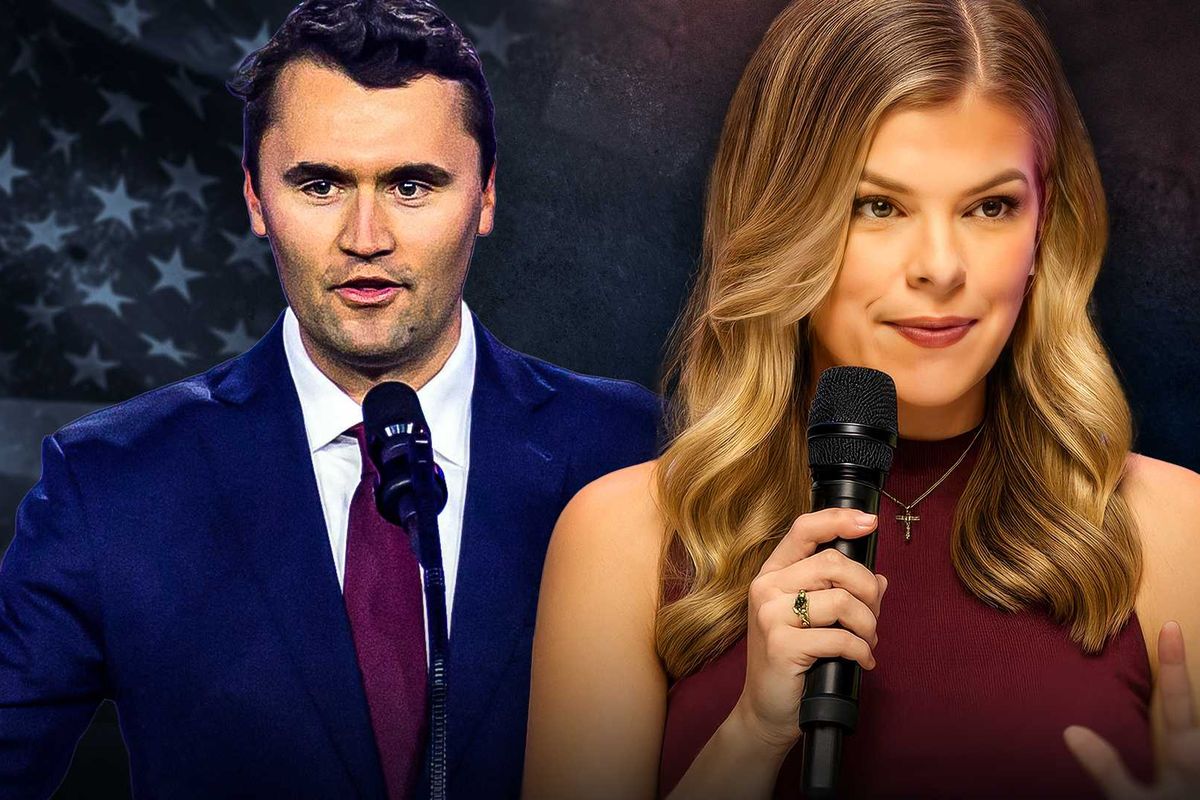
On October 27, conservative firebrand and BlazeTV host Allie Beth Stuckey, star of the hit Christian podcast “Relatable,” commanded the stage at Turning Point USA’s Baton Rouge, Louisiana, tour stop, where over 1,500 cheering college students packed the Raising Canes River Center Theatre to capacity.
Allie opened by encouraging the crowd with her favorite Charlie-ism — the phrase he used to encourage her with when the media tried to smear her: “Keep slugging.”
“I want you to think of that phrase every minute of every day. The only thing that you can do with the grace and the power of God is to keep slugging — first for the honor and the glory of Jesus Christ, but also in honor of Charlie Kirk,” she said as students stood to their feet and applauded.
She then launched into an inspiring speech titled “5 of Charlie Kirk’s Most Controversial Truths.”
Truth #1: Feminism has failed women
While the feminist movement claims to be pro-women and pro-equality, it’s actually worked to women’s detriment. Instead of making women equal to men, the feminist movement sought to make women the same as men.
“It has fed us this lie that in order to be respected, that we women have to talk like men, that we have to act like men, that we have to be like men,” Allie said.
But that required forsaking the very things that make us women — primarily being moms and wives, which the feminist industrial complex has demonized by pushing abortion, sexual liberation, and gender abolitionism.
Feminism has “left each and every one of its followers lonelier and more broken,” said Allie, who then reminded the women in the audience the truth about who they are.
“Your value, your worth comes from the God who created you. … You were made in God’s image, and your equal worth, your inherent worth, comes from that reality. It doesn’t come from feminism. … You can be strong, and you can be courageous, and you can be brilliant, and you can be hardworking, and you do not need to act like a man to do that.”
Truth #2: Porn has weakened men
Pornography, Allie candidly explained, doesn’t just harm men; it harms everyone and everything we ought to hold dear: women, children, marriage, and psychological and physical safety. Porn “objectifies women and children,” “commercializes sex,” “glorifies violence,” “creates addiction and shame,” “destroys marriages,” “ruins your perception of other people,” and has become “the legal loophole for sex trafficking,” she warned.
“Men, we need you, and we need your masculinity, and we need your strength, and we need your boldness, and we need your courage, and we need those things to be harnessed for good,” Allie pleaded.
“We need really strong men, and porn makes you weak.”
Truth #3: Merit always trumps DEI
The fear of oppression based on skin color, gender, or any other trait is a hardship Americans today don’t have to worry about.
“And so, we should not be doling out punishments or doling out rewards based on what people look like, based on their sex, based on how they identify. That is actually called partiality, and the Bible calls it a sin,” Allie declared.
The truth was, is, and will always be that nothing in life is “fair.”
“There are different circumstances surrounding our births, different economic situations, different kinds of parents, different kinds of springboards that we’re given, different kinds of setbacks, a different set of strengths, a different set of weaknesses, different kind of personality, different connections that we all make,” Allie said.
Man’s futile attempt to level the playing field in the name of diversity, equity, and inclusion only creates more of the evils, like racism and sexism, it supposedly aims to eradicate.
Allie, echoing Charlie, clarified that “what matters across the board is excellence. What matters across the board is hard work. None of us is entitled to anything … so we should only reward that which someone works for through her own talents and efforts.”
Truth #4: America is a Christian nation
Leftists who are threatened by Judeo-Christian principles that challenge every progressive narrative often try to erase America’s deeply religious heritage. They pretend Enlightenment-based ideals, not Christian doctrine, are the bedrock of the nation’s foundation.
But that’s a lie.
While, yes, our founders passionately believed in free speech and expression — core Enlightenment ideas — these values didn’t contradict or eclipse their commitment to God.
“From the Declaration of Independence to all of our founding documents, all of the founders at the very least understood that it was the direction of providence, the Creator of the universe, the giver of all rights, that laid the foundation for this country, is the source of liberty, and the author of morality,” Allie said.
“America makes no sense without Christianity. America makes no sense without the recognition, as we read in the Declaration of Independence, that we were given certain unalienable rights … given to us by a Creator whose power transcends the government, and therefore, the government cannot arbitrarily take those rights away,” she declared. “That is the foundation on which our country is built.”
Truth #5: Jesus is the only way to Heaven
This particular truth — the central message of the gospel — is the one that got Charlie killed and the one that makes him a martyr, Allie said.
She then shared the good news of salvation through Jesus with those in the crowd who aren’t believers. “By grace through faith, if you believe in that gospel, you won’t die, but you’ll have eternal life,” she encouraged.
“Charlie was first an evangelist, he was first an apologist before he was a political activist or an organizer, and he shared that gospel. He died for that gospel because he believed it to be true. And he wanted you to know that it’s true. And I want you to know that it’s true.”
Allie ended with this powerful reminder: “One day Jesus is coming back, and there will be no more politics. There will be no more debate. There will be no more division.”
“But he’s not here yet, which means that in the meantime … we’ve got work to do. And that might look different for every single one of us, but let me tell you what I tell my audience all the time. … Do the next right thing in faith with excellence and for the glory of God.”
To hear Allie’s full speech, watch the video above.
Want more from Allie Beth Stuckey?
To enjoy more of Allie’s upbeat and in-depth coverage of culture, news, and theology from a Christian, conservative perspective, subscribe to BlazeTV — the largest multi-platform network of voices who love America, defend the Constitution, and live the American dream.