

Category: Amazon
Amazon BAILS on its cashierless grocery stores, betting you’d rather have crazy-fast delivery
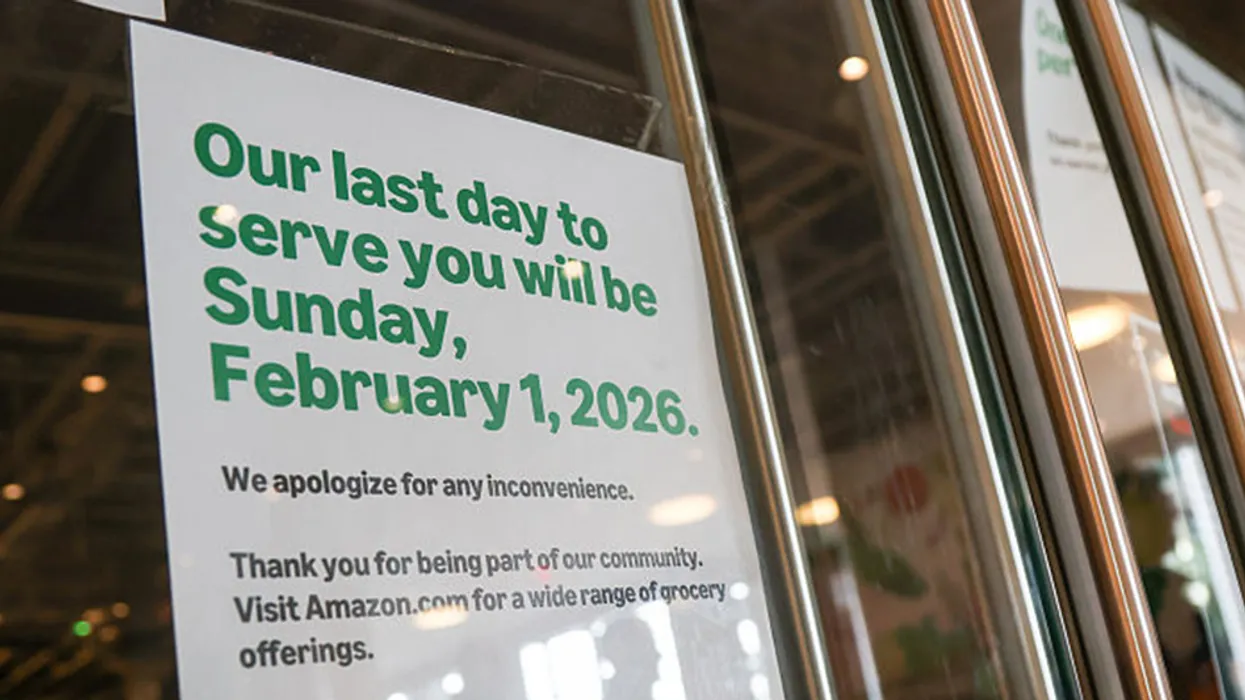
What once cost Amazon over $13 billion is now turning into a big headache for the tech company.
Back in 2017, Amazon acquired Whole Foods for a price tag of $13.7 billion with the intention of making its own brick-and-mortar grocery stores under the brands Amazon Fresh and Amazon Go.
‘Fresh groceries now make up nine of the top 10 most-ordered items.’
Amazon Go was meant to be the future: a cashierless and seamless Amazon experience where shoppers simply scan on their way out. In fact, the stores mirror a mid-2000s IBM commercial about online commerce.
By 2023, expansion had been slowed, with some locations closing, CoStar reported at the time, and Amazon taking out a $720 million impairment charge.
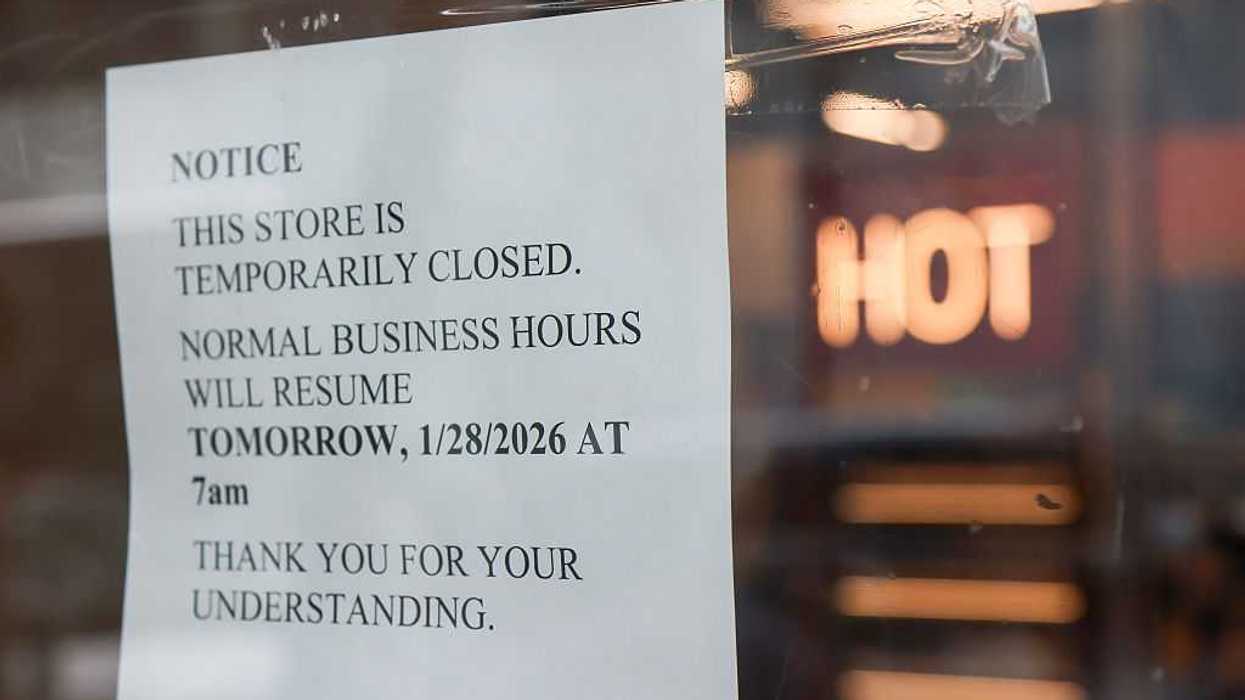
On Tuesday, Amazon announced it is fully closing all Amazon Fresh and Amazon Go locations. Although some will be retrofitted to become Whole Foods Market stores, Amazon is making a big shift toward grocery delivery.
RELATED: Cattle rancher battles Amazon data center accused of poisoning water supply, causing miscarriages
 Michael Nagle/Bloomberg via Getty Images
Amazon said in its press release that it already offers grocery deliveries in 5,000 cities and towns, with several thousand receiving same-day deliveries. Same-day service seems to be the company’s core expansion project for 2026.
The shift appeared to be a profit-driven move after sales through same-day deliveries increased by 40x since January 2025.
“Fresh groceries now make up nine of the top 10 most-ordered items in areas where perishable groceries are available for Same-Day Delivery,” Amazon explained.
 Michael Nagle/Bloomberg via Getty Images
At the same, Amazon says it will be “taking convenience even further” with the introduction of an “ultra-fast” delivery option that brings thousands of “essential items,” including fresh food, to customers in 30 minutes or less. The offer is essentially a mobile convenience store experience.
While Fresh and Go may have not been the shining stars Amazon hoped they would be, its investment in Whole Foods Market has certainly paid off. The company boasted 40% sales growth since 2017, year-over-year increases in customer traffic, and expansion from around 460 locations in 2017 to over 550 currently.
Like Blaze News? Bypass the censors, sign up for our newsletters, and get stories like this direct to your inbox. Sign up here!
Antitrust panic helped kill an American robotics pioneer
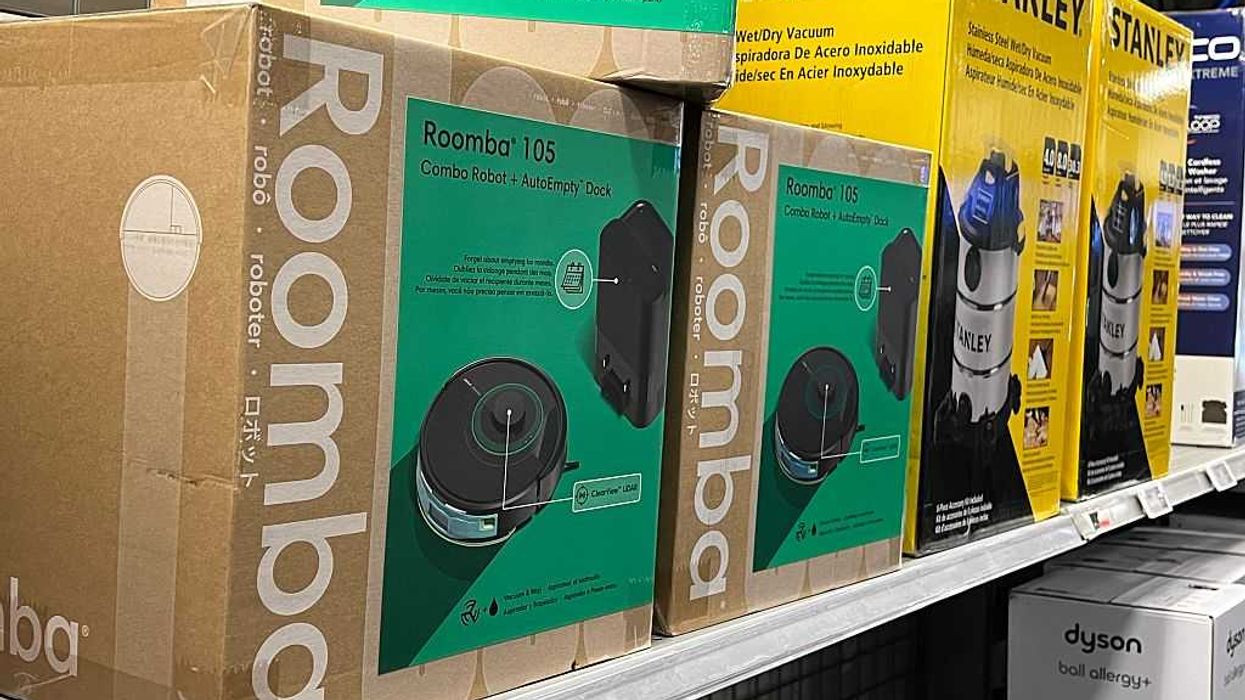
Antitrust regulators claim to protect competition. Their decision to block Amazon’s acquisition of iRobot did the opposite. It helped drive an American robotics pioneer into bankruptcy last December and pushed it into the arms of a Chinese creditor.
Antitrust law is supposed to defend consumers and prevent monopoly abuse. In this case, regulators killed a deal that could have kept iRobot alive, preserved American jobs, and strengthened a U.S. company facing brutal Chinese competition. Instead, the collapse of the acquisition forced iRobot into a court-supervised restructuring in which Shenzhen Picea Robotics — its largest Chinese creditor and key supplier — will take the company’s equity and cancel roughly $264 million in debt.
Ultimately, the acquisition’s collapse pushed iRobot into a deal with its largest Chinese creditor.
iRobot began in 1990, founded by roboticists from the Massachusetts Institute of Technology. The company built military and space exploration products before it introduced the Roomba in 2002, the device that turned home robotics into a household category. For years, iRobot stood as a rare American success story in consumer robotics.
Then the market shifted. Chinese manufacturers poured in with cheaper models, tighter supply chains, and rapid iteration. iRobot’s share price peaked in 2021, then slid hard over the next year. The company sought a lifeline and found one in Amazon, which agreed to acquire iRobot for roughly $1.7 billion.
That deal made strategic sense. iRobot needed capital, scale, and distribution power to compete against Chinese rivals such as Roborock, Ecovacs, Dreame, and Xiaomi. Amazon could have provided all three. Consumers likely would have seen faster innovation, deeper device integration, and lower prices, while iRobot kept more of its footprint and engineering talent intact.
Regulators saw a different story. The European Commission objected on antitrust grounds and signaled it would block the acquisition. The commission argued the deal could restrict competition in robot vacuum cleaners by allowing Amazon to disadvantage rival products on its marketplace. American critics piled on, including Sen. Elizabeth Warren (D-Mass.), who framed the acquisition as an attempt to buy out competition, along with privacy fears about Roomba’s mapping technology.
Facing regulatory opposition, Amazon and iRobot terminated the agreement in January 2024. Amazon’s general counsel, David Zapolsky, warned that the decision would deny consumers faster innovation and more competitive prices, while leaving iRobot weaker against foreign rivals operating under very different regulatory constraints.
The warnings proved accurate. After the deal collapsed, iRobot announced deep cost-cutting, including a 31% workforce reduction. The company shifted more production to Vietnam to compete on cost. Chinese brands continued to eat the market.
By December 2025, iRobot filed for Chapter 11 bankruptcy protection and announced a restructuring deal that hands control to Shenzhen Picea Robotics. According to iRobot’s own announcement, Picea will acquire the equity of the reorganized company through the court process and cancel about $264 million in debt.
RELATED: Why Trump must block Netflix’s Warner Bros. takeover
 Photo by Mandel NGAN/AFP via Getty Images
That outcome should haunt every regulator who claimed to defend competition. Regulators blocked an American acquisition and ended up delivering a storied American company to a Chinese creditor. They did not preserve a competitor. They helped bury it.
The iRobot collapse exposes a central problem with modern antitrust enforcement: Officials often substitute fear-driven hypotheticals for real-world consequences. They imagine a future in which Amazon squeezes competitors and consumers pay more. They ignore the present in which Chinese firms gain market power, American companies lose ground, and U.S. workers pay the price.
Markets discipline failure quickly. Regulators rarely pay for their mistakes. They can block a deal, watch a company fall apart, and declare victory because they prevented a theoretical harm.
This case produced the opposite of the intended result. Regulators killed a merger that could have strengthened an American company against Chinese competition. They weakened competition in the robot vacuum market by removing one of the few U.S.-based pioneers from the field. They also shrank the number of meaningful paths forward for iRobot until only one remained: a takeover by the company’s Chinese lender and supplier.
Policymakers should learn the right lesson. Antitrust action should not operate as a reflex against size or success. Regulators should measure outcomes, not slogans. If officials claim they protect competition, they should not celebrate decisions that end in bankruptcy and foreign control.
Antitrust panic helped kill an American robotics pioneer
Antitrust regulators claim to protect competition. Their decision to block Amazon’s acquisition of iRobot did the opposite. It helped drive an American robotics pioneer into bankruptcy last December and pushed it into the arms of a Chinese creditor.
Antitrust law is supposed to defend consumers and prevent monopoly abuse. In this case, regulators killed a deal that could have kept iRobot alive, preserved American jobs, and strengthened a U.S. company facing brutal Chinese competition. Instead, the collapse of the acquisition forced iRobot into a court-supervised restructuring in which Shenzhen Picea Robotics — its largest Chinese creditor and key supplier — will take the company’s equity and cancel roughly $264 million in debt.
Ultimately, the acquisition’s collapse pushed iRobot into a deal with its largest Chinese creditor.
iRobot began in 1990, founded by roboticists from the Massachusetts Institute of Technology. The company built military and space exploration products before it introduced the Roomba in 2002, the device that turned home robotics into a household category. For years, iRobot stood as a rare American success story in consumer robotics.
Then the market shifted. Chinese manufacturers poured in with cheaper models, tighter supply chains, and rapid iteration. iRobot’s share price peaked in 2021, then slid hard over the next year. The company sought a lifeline and found one in Amazon, which agreed to acquire iRobot for roughly $1.7 billion.
That deal made strategic sense. iRobot needed capital, scale, and distribution power to compete against Chinese rivals such as Roborock, Ecovacs, Dreame, and Xiaomi. Amazon could have provided all three. Consumers likely would have seen faster innovation, deeper device integration, and lower prices, while iRobot kept more of its footprint and engineering talent intact.
Regulators saw a different story. The European Commission objected on antitrust grounds and signaled it would block the acquisition. The commission argued the deal could restrict competition in robot vacuum cleaners by allowing Amazon to disadvantage rival products on its marketplace. American critics piled on, including Sen. Elizabeth Warren (D-Mass.), who framed the acquisition as an attempt to buy out competition, along with privacy fears about Roomba’s mapping technology.
Facing regulatory opposition, Amazon and iRobot terminated the agreement in January 2024. Amazon’s general counsel, David Zapolsky, warned that the decision would deny consumers faster innovation and more competitive prices, while leaving iRobot weaker against foreign rivals operating under very different regulatory constraints.
The warnings proved accurate. After the deal collapsed, iRobot announced deep cost-cutting, including a 31% workforce reduction. The company shifted more production to Vietnam to compete on cost. Chinese brands continued to eat the market.
By December 2025, iRobot filed for Chapter 11 bankruptcy protection and announced a restructuring deal that hands control to Shenzhen Picea Robotics. According to iRobot’s own announcement, Picea will acquire the equity of the reorganized company through the court process and cancel about $264 million in debt.
RELATED: Why Trump must block Netflix’s Warner Bros. takeover
Photo by Mandel NGAN/AFP via Getty Images
That outcome should haunt every regulator who claimed to defend competition. Regulators blocked an American acquisition and ended up delivering a storied American company to a Chinese creditor. They did not preserve a competitor. They helped bury it.
The iRobot collapse exposes a central problem with modern antitrust enforcement: Officials often substitute fear-driven hypotheticals for real-world consequences. They imagine a future in which Amazon squeezes competitors and consumers pay more. They ignore the present in which Chinese firms gain market power, American companies lose ground, and U.S. workers pay the price.
Markets discipline failure quickly. Regulators rarely pay for their mistakes. They can block a deal, watch a company fall apart, and declare victory because they prevented a theoretical harm.
This case produced the opposite of the intended result. Regulators killed a merger that could have strengthened an American company against Chinese competition. They weakened competition in the robot vacuum market by removing one of the few U.S.-based pioneers from the field. They also shrank the number of meaningful paths forward for iRobot until only one remained: a takeover by the company’s Chinese lender and supplier.
Policymakers should learn the right lesson. Antitrust action should not operate as a reflex against size or success. Regulators should measure outcomes, not slogans. If officials claim they protect competition, they should not celebrate decisions that end in bankruptcy and foreign control.
Cattle rancher battles Amazon data center accused of poisoning water supply, causing miscarriages
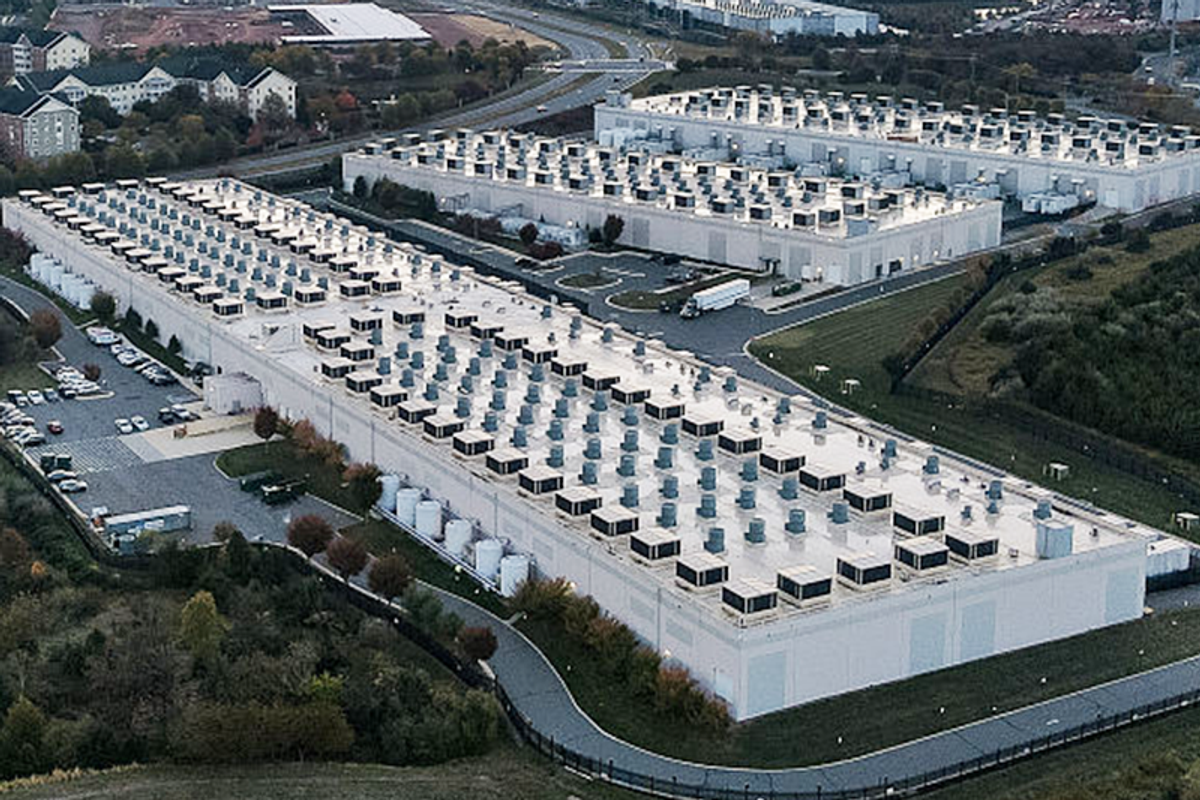
An Oregon cattle rancher did his own research into an apparent rise in obscure medical conditions after the opening of an Amazon data center.
The facility, which requires enormous amounts of water to cool its infrastructure, stands accused of adding wastewater — laden with nitrates — to an already struggling filtration system.
‘Our data centers draw water from the same supply as other community members.’
Jim Doherty from Morrow, Oregon, sought out to investigate the alleged increase in health problems stemming from toxins in the local water supply. Doherty has since performed tests, worked alongside his county, and knocked on doors to try to solve the equation. He spoke with Rolling Stone about his findings.
The rancher said he surveyed 70 local wells and shockingly found that 68 of them violated federal limits for the allowable levels of nitrates in drinking water. In the same report, Doherty detailed that of the first 30 homes he visited in his area, 25 residents had recently suffered miscarriages.
The report alleged a number of illnesses related to the water supply — which included different forms of cancer — and pointed the finger at pollution exacerbated by an Amazon data center that popped up in 2011. The square-footage of the data center ranges in estimates from 120,000 to 200,000 but comes with a 15-year tax abatement worth nearly $200 million.
The cost of this, allegedly, is a slew of health problems.
RELATED: Apple to invest $500 billion in US including new AI server factory in Texas
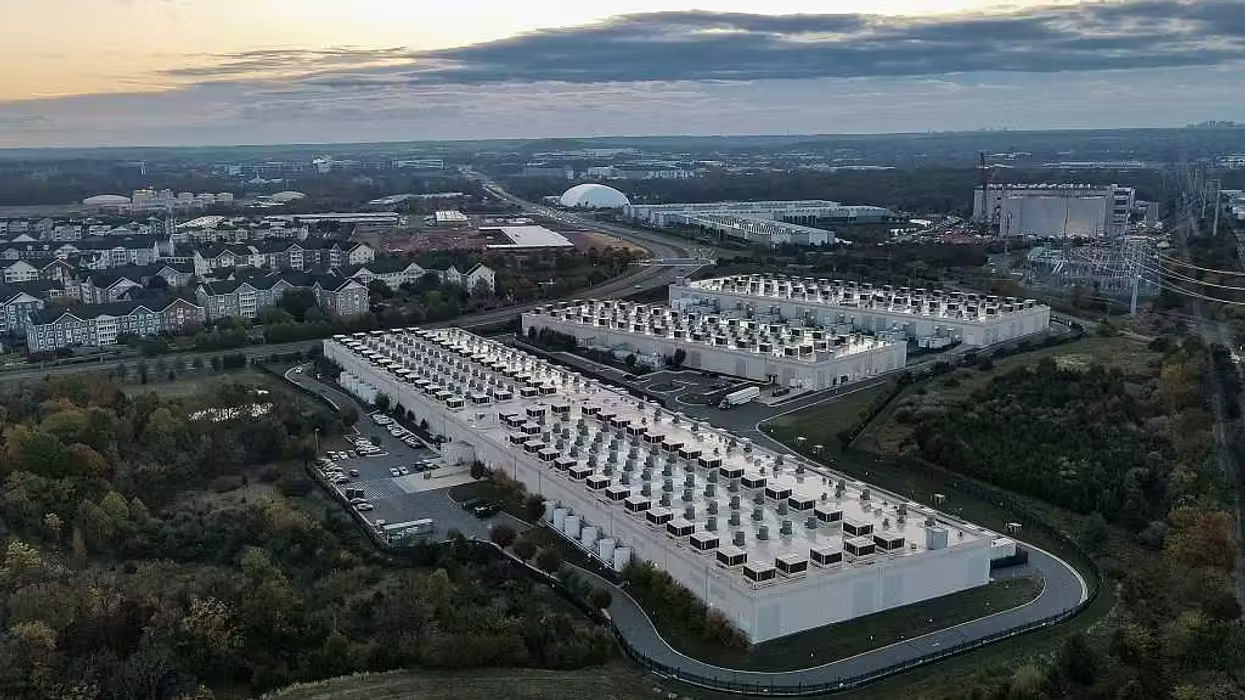
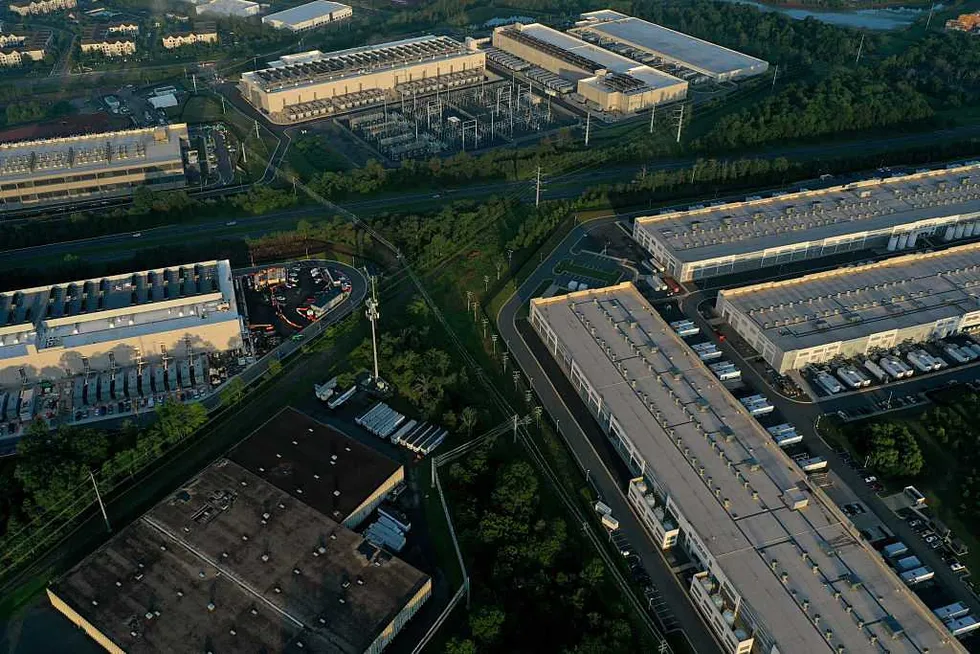 Amazon Web Services and Iron Mountain data centers in Manassas, Virginia, on July 9, 2025. Total power usage in the US is expected to climb 2.15% in 2026, spurred largely by a 5% spike from commercial users because of the expansion of data centers, according to a US Energy Department report released in June. Photographer: Nathan Howard/Bloomberg via Getty Images
“One man about 60 years old had his voice box taken out because of a cancer that only smokers get, but that guy hadn’t smoked a day of his life,” Doherty told Rolling Stone.
Another woman reportedly wrote Doherty to tell him her husband got “kidney cancer in his early 40s. His doctor thought it was due to exposure to herbicides and pesticides. He lost a kidney, but he lived.”
“We had acceptable levels of [toxins in our] drinking water when we first moved there,” the woman claimed. “After my husband’s cancer, we realized they went up and up through the years. It’s very sad.”
Doherty’s wife, Kelly, also claimed that out of the 14 people that live on their road, “I think nine of them have cancer right now.”
On the contrary, Amazon spokesman Lisa Levandowski told Rolling Stone that “the apparent narrative” about the 45,000-person county is “misleading and inaccurate.”
“The truth is that this region has long-documented groundwater quality challenges that significantly predate AWS’ presence, and federal, state, and local agencies have spent years working to address nitrates from agricultural fertilizer, manure, septic systems, and wastewater from food processing plants,” Levandowski explained.
She went on, “Our data centers draw water from the same supply as other community members; nitrates are not an additive we use in any of our processes, and the volume of water our facilities use and return represents only a very small fraction of the overall water system — not enough to have any meaningful impact on water quality.”
RELATED: Zuckerberg to dump hundreds of billions into new Manhattan-size projects
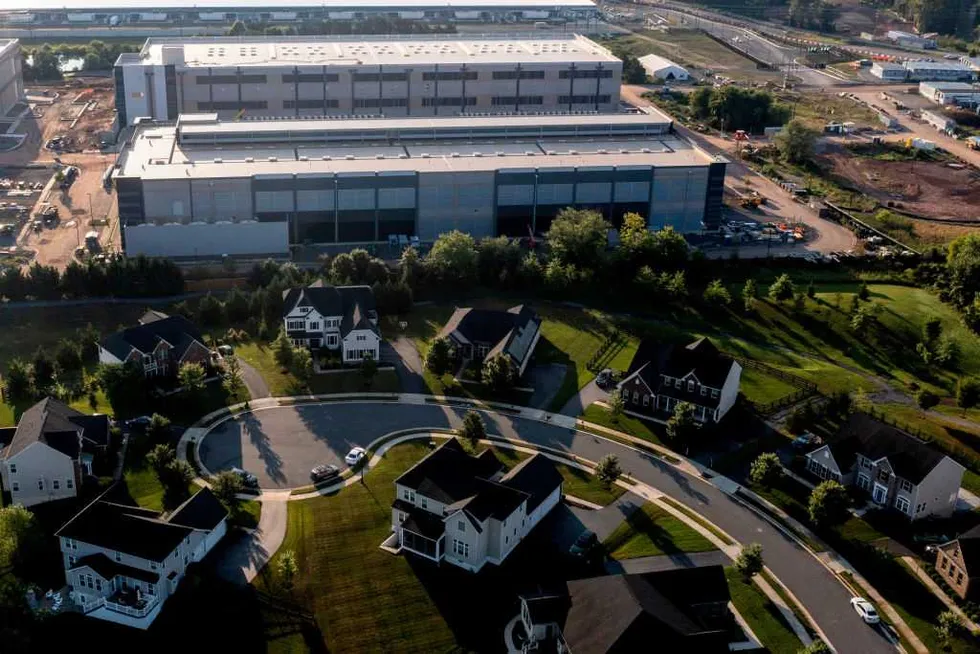 An Amazon Web Services data center in Stone Ridge, Virginia, US, on Sunday, July 28, 2024. Data center developers in Northern Virginia are asking utility Dominion Energy Inc. for as much power as several nuclear reactors can generate, in the latest sign of how artificial intelligence is helping drive up electricity demand. Photographer: Nathan Howard/Bloomberg via Getty Images
Oregon Rural Action, an activist group focused on preserving water, compared the situation to the “historical precedent” of Flint, Michigan.
“In part because of how slow the response to the crisis has been, and in part because of who’s affected. These are people who have no political or economic power and very little knowledge of the risk,” executive director Kristin Ostrom told Rolling Stone.
The argument that Amazon has increased the amount of toxins in the water is indeed a complex one as there exist arguments on both sides that require investigation to prove.
As the Department of Energy explains, the process of cooling with water typically includes water softening to remove harmful toxins, but that does not mean there aren’t additives involved in the process.
Possible additives include phosphates to prevent corrosion, acids to adjust pH levels, and anti-foaming agents, to name a few. Nitrates can also be used to prevent corrosion in cooling systems.
The DOE also notes that when water evaporates from cooling towers, dissolved solids or toxins become more highly concentrated. This is typically solved by removing a portion of the highly concentrated water and replacing it with “fresh make-up water.”
Like Blaze News? Bypass the censors, sign up for our newsletters, and get stories like this direct to your inbox. Sign up here!
Amazon wants Warner Bros. so it can rule your screen
Last month, Warner Brothers Discovery put itself up for sale, triggering what could become a bidding war for one of America’s most iconic studios. Days later, reports emerged that Amazon plans to make a run at the company, immediately raising the stakes.
Consumers and regulators should treat every Big Tech bidder with skepticism, but Amazon’s interest demands special scrutiny. The world’s largest online retailer has a long record of distorting markets, crushing rivals, and cozying up to foreign adversaries — most notably China. Letting Amazon absorb yet another major media asset would tighten its grip on an entertainment industry already buckling under corporate consolidation.
Why would antitrust officials hand Amazon even more power in a sector already suffocating under concentration?
Amazon may be a household name, but it is not an America-first company. It bullies smaller retailers, copies their ideas, and funnels profits and supply-chain leverage through China. That behavior undermines the ingenuity and fair competition that built the U.S. economy.
Amazon already wields enormous influence over media. Last year, Prime Video topped U.S. streaming charts for the third straight year. Amazon controls a sprawling production studio, reinforced by its 2022 purchase of MGM. It holds high-dollar sports rights, including “Thursday Night Football” and an 11-year deal with the NBA.
Amazon doesn’t need Warner Brothers Discovery to survive. It wants the company to force more Americans into its digital universe, dominate an even larger share of the market, and use that dominance to trap users and raise prices. Buying competitors beats out-competing them — a classic monopolist playbook that burdens consumers and smothers innovation.
A Warner Brothers takeover would give Amazon exactly what it wants: a massive content library, the third-largest streaming platform, and a lineup of lucrative cable properties. With the deal sealed, Amazon would control more than a third of the streaming video on demand market — roughly 50% more than its nearest rival.
Why would antitrust officials hand Amazon even more power in a sector already suffocating under concentration? They likely won’t.
FTC Chairman Andrew Ferguson and the Justice Department’s antitrust chief, Gail Slater, have made clear that they intend to protect small businesses and consumers from predatory corporate behavior.
The Trump administration has backed those promises with action. Within nine months of taking office, the FTC forced Amazon to pay $2.5 million for trapping customers in Prime subscriptions. Ferguson’s vow to ensure that “Amazon never does this again” shows that this White House will not give repeat offenders a free pass.
RELATED: Stop feeding Big Tech and start feeding Americans again
 Lexi Critchett/Bloomberg via Getty Images
The regulatory terrain also looks dramatically different from 2022, when Amazon bought MGM — an acquisition the Biden administration should have challenged and likely would challenge today. After that merger, the FTC rewrote its merger and acquisition guidelines to strengthen oversight. President Trump kept those rules and appears ready to use them.
Some critics claim Amazon earned goodwill with the administration by contributing to White House renovation projects. That accusation doesn’t survive contact with the facts. Candidate Trump warned about Amazon’s “huge antitrust problem” as early as 2016. The company has grown eightfold since then. Trump hasn’t softened.
And Amazon hardly functioned as a friend of the right. The company backed Joe Biden heavily in 2020, donating nearly $2.3 million to his campaign. Biden’s FTC did not treat Amazon kindly either, suing the company for “anticompetitive and unfair strategies to illegally maintain its monopoly power.” That case remains unresolved.
The sale of Warner Brothers Discovery will shape the future of American media — either by giving the company a fighting chance to innovate and compete, or by cementing Big Tech control over what Americans watch, read, and hear. If Amazon tries to tighten that grip, I expect the Trump administration to step in.
Let’s hope the sale doesn’t force the administration’s hand.





