Category: Americans
Liberal reporter frustrates American tennis stars by asking the same tired question
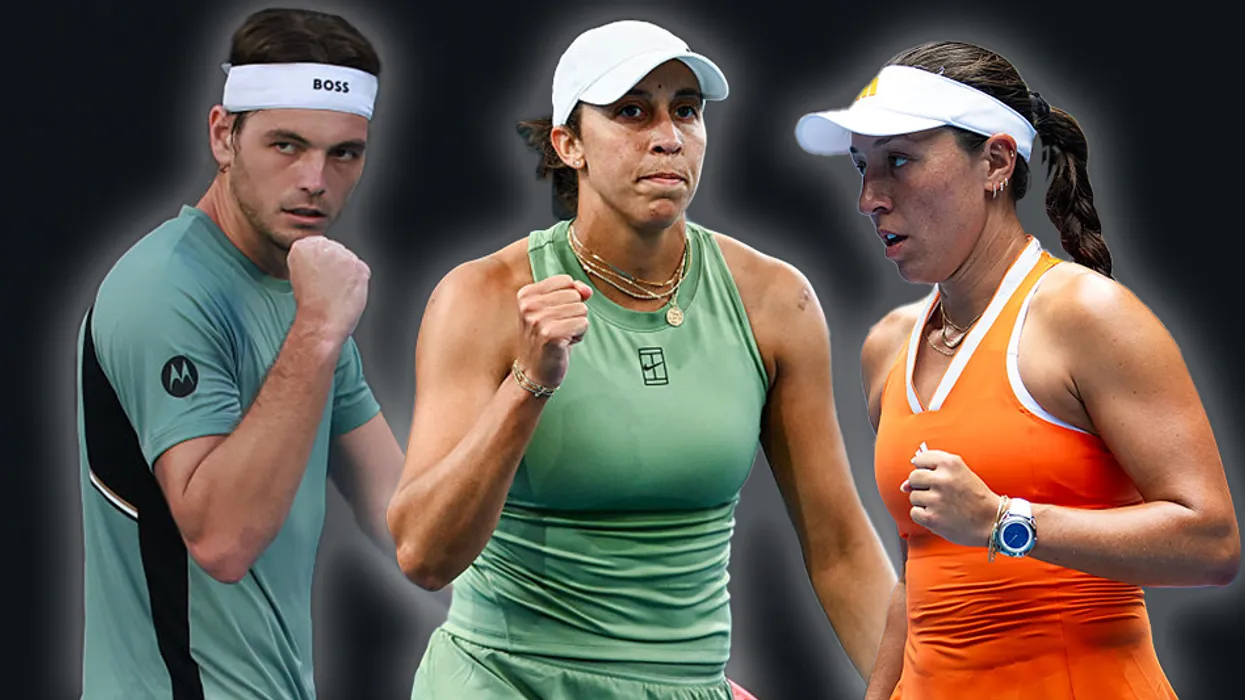
The Australian Open has become about politics instead of tennis, thanks to one reporter’s questions.
As men and women have won matches at the tournament in Melbourne, Australia, a male reporter has consistently popped up to ask players about their feelings about current U.S. politics.
‘We are very diverse, we are a home of immigrants.’
“I’ve been asking a lot of the American players just how it feels to play under the American flag right now. And I’m curious how you feel,” the man asked No.4-ranked Amanda Anisimova on Wednesday, with noted vocal fry.
Anisimova was praised for shutting the questions down, but it turns out the same reporter has asked the same divisive question to at least four other American tennis players.
The Women’s Tennis Association’s No.6-ranked Jessica Pegula faced almost the same question on Wednesday, though more specifically about living in Florida.
Pegula’s answer likely won’t please nationalists as much as Anisimova’s did.
“Personally Florida’s been, I think, OK. I think Florida, there’s a big melting pot of different people from all over, in Florida,” the 31-year-old went on. “So I feel like especially me being in South Florida, near Miami, I mean, there’s people of all over the country that come to move to Florida, and there’s a lot of international people that are there. I don’t know if that’s maybe why you kind of get a lot of different cultural differences in a good way honestly.”
The reporter, who is alleged by several outlets such as Breitbart and Yahoo to likely be the Athletic’s Owen Lewis, has not publicly confirmed he has asked the questions despite sharing that he has been in Australia covering the event.
Next up was men’s No.9-ranked Taylor Fritz from California, who on Thursday had just completed a second-round win. Fritz buried his head in his hands as he answered the question, albeit reluctantly.
“Not sure what we’re, like, specifically talking about, but there is a lot going on in the U.S., and I don’t know, I feel like whatever I say here is going to get put in a headline, and it’s going to get taken out of context,” he groaned. “So I’d really rather not do something that’s going to cause a big distraction for me in the middle of the tournament.”
On Thursday, No.9-ranked female Madison Keys from Illinois faced the reporter. Her reaction was much more progressive than her compatriots, saying, “I’m not a fan of divisiveness, and I think the beauty of the U.S. is we are a mixing pot.”
“We are very diverse, we are a home of immigrants. And I hope that we can get back to those values,” she added.
No.3-ranked woman and Florida native Coco Gauff took it a step further by bringing race politics into the mix with her response.
Gauff initially said she feels “a bit fatigued talking about it.”
She then claimed, “It is hard, also I think, being a black woman in this country and having to experience things, even online.”
She argued that “marginalized communities” are being affected, and the only thing she can do is “donate and speak out.”
Gauff then cited the fact that she posted a Martin Luther King Jr. video online recently and said, “We must keep moving forward,” as an example of her activism.
Like Blaze News? Bypass the censors, sign up for our newsletters, and get stories like this direct to your inbox. Sign up here!
The one virtue America lost — and desperately needs back

Faith is everything to me. I believe in Jesus Christ as my personal Savior, and I’m not shy about saying so. Many Americans feel uncomfortable talking about faith, and many others insist religion should stay out of the public square. I disagree. As a Christian, I want more people to know Jesus, who loves them more than they can imagine.
But I also know that people walk different spiritual paths. Some pray differently. Some worship a different god. Others reject religion altogether. America now holds more faith traditions — and more people with no faith — than at any point in our history. That diversity can spark friction, and as politics fills the void left by declining religious belief, many have turned ideological loyalties into a kind of substitute religion.
America’s diversity guarantees disagreement. It always has. But even in conflict, we can find places to unite.
The risk is obvious: These differences can push us toward a breaking point. The warning signs already surround us. In a moment like this, we need grace.
What grace demands
In Christianity, grace is God’s love poured out freely. Eternal life is His gift — not because we earn it or because we are good, but because God is good.
On Earth, grace takes a more practical form. It means giving each other the benefit of the doubt. It means forgiving mistakes. It means choosing generosity instead of suspicion. And it means approaching someone else’s beliefs with curiosity rather than contempt.
For reasons I still struggle to understand, Americans have stopped trying to understand one another.
Last year, I hosted a meeting of community, business, and faith leaders in my hometown of Grand Rapids, Michigan. The agenda was full of topics that normally light a fuse: poverty, economic exclusion, racial tensions. Before we began, I admitted that some of the terms we would use carried heavy baggage and that I might say something imperfectly myself. I asked only one thing: a little grace.
That simple request set the tone for the whole day. People pushed through the hard conversations and started looking for solutions. We found common ground in places no one expected. The debate stayed calm because everyone extended grace before they demanded it.
I wish that spirit were more common today.
Why grace is hard — and necessary
Too many people explode at the first sign of disagreement. They judge others more harshly than they judge themselves. They dismiss someone with a different view as beyond redemption. The unspoken thought is always the same: Why bother? They won’t listen to me, so why should I listen to them?
RELATED: Dear Christian: God didn’t call you to be a ‘beautiful loser’
 Photo by Beata Zawrzel/NurPhoto via Getty Images
It’s a natural impulse, but grace calls us to something higher. It reminds us that the person across from us carries the same human frailties we do.
Grace does not mean surrendering your convictions. It does not ask you to dilute what you believe or pretend serious disagreements don’t matter. It simply asks you to respect the strength of someone else’s convictions, even when you oppose them. It asks you to accept that everyone is imperfect — including you. And because each of us hopes for forgiveness when we stumble, grace asks that we extend that same forgiveness to others.
America’s diversity guarantees disagreement. It always has. But even in conflict, we can find places to unite. Recovering that unity starts with a simple choice: showing each other a little grace.