

Category: Apple
Congress takes aim at online harms — and misses the center mass

On December 11, 18 child online safety bills took a significant step toward becoming law. The package — each bill addressing, in some way, the harms children face online — passed out of a House subcommittee on a mostly party-line vote. The legislative bundle is, overall, a somewhat milquetoast mix of meaningful wins and frustrating defeats for child safety advocates. Still, it represents real progress. For those who have long pushed for action, the ball has finally moved down the field.
The bills vary dramatically in scope. Some, like the Assessing Safety Tools for Parents and Minors Act, would simply mandate an analytical report on the efforts technology companies are making to protect children. Others, such as the App Store Accountability Act — which would require app stores to determine whether a user is a minor and, if so, prohibit downloads without parental consent — are far more consequential, fundamentally changing how app stores operate.
Advancing 18 bills signals that one of the longest-standing objections to action — whether social media actually harms children — has effectively collapsed.
There are also bittersweet elements. The most well-known and controversial bill, the Kids Online Safety Act, is included in the package — but in a significantly watered-down form. The original version, introduced by Sen. Marsha Blackburn (R-Tenn.), passed the Senate with more than 90 votes. But House GOP leadership raised constitutional concerns, arguing that the bill placed undue pressure on social media companies to regulate speech.
House Majority Leader Steve Scalise (R-La.), one of the bill’s most prominent opponents, warned that it would “empower dangerous people.” Other critics likened KOSA to the British Online Safety Act — a far more draconian law than its American counterpart. (The most recent Senate version of KOSA focuses on disabling addictive features and restricting minors’ access to dangerous content.)
These concerns forced substantial revisions. Most notably, the bill now includes a sweeping pre-emption clause barring states from regulating anything that “relates” to KOSA — effectively nullifying existing and future state-level efforts to protect children online.
Equally disappointing is what failed to make the cut.
Some excluded proposals were undeniably radical, such as the RESET Act, which would have barred minors from creating or maintaining social media accounts altogether. But another bill left behind — the App Store Freedom Act — was critical to restoring competition and accountability in the app ecosystem.
That legislation would have challenged the Apple-Google duopoly, which controls more than 90% of app store purchases in the United States. As long as those two companies dominate the marketplace, meaningful reform will remain elusive. Unsurprisingly, both firms opposed the bill, arguing that it would “endanger” children by allowing downloads from unvetted third-party stores.
Rep. Kat Cammack (R-Fla.), the bill’s sponsor, blasted that claim, noting that Apple has long permitted minors to download TikTok — a platform run by a Chinese company with well-documented national security concerns.
RELATED: Schools made boys the villain. The internet gave them a hero.
 Image by Alexandr Muşuc via iStock / Getty Images
Despite its importance, the App Store Freedom Act was removed from the package. Even so, the remaining legislation still marks a major victory for those focused on protecting children online.
Here’s why.
First, advancing 18 bills signals that one of the longest-standing objections to action — whether social media actually harms children — has effectively collapsed.
For years, lawmakers debated whether digital platforms were the problem or whether other factors deserved the blame. A steady stream of studies, headlines, and internal leaks showing that social media companies knew their products damaged adolescent mental health helped put that question to rest.
Second, the breadth of the package ensures that something will happen. Even the weakest provisions — those requiring studies or reports — will energize advocates and help bring order to what remains a digital Wild West for children and families.
The legislative fight is far from over. The bills must still clear committee, pass the House, and survive the Senate. But momentum is clearly shifting toward reform.
It’s time to finish the fight.
Conservative Principles Lost in Tech Regulation
Consequences unintended, though not unforeseen, lurk within many of the most popular proposals in technology policy. In their haste to…
Apple rolls out digital ID, says users get ‘privacy and security’
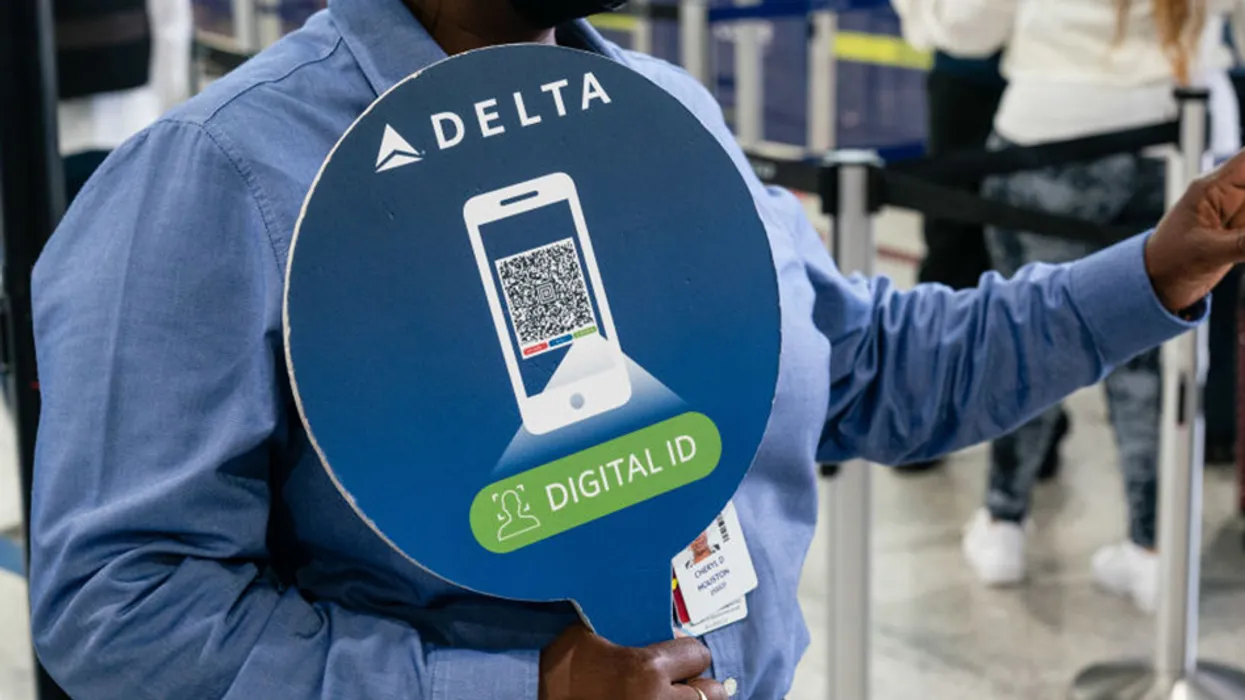
Digital identification is the latest frontier in privacy and data protection, according to its newest purveyor.
Apple rolled out support for digital ID in its Apple Wallet this week, boasting that users can provide a plethora of personal data in order to add their digital identifiers to their phones.
‘Biometric authentication using Face ID and Touch ID helps make sure that only you can view and use your Digital ID.’
In order to be eligible for the privilege of digital ID, Apple requires users to have the following:
- an iPhone 11 or newer or an Apple Watch Series 6 or newer.
- the latest software version.
- an Apple account with two-factor authentication turned on.
- a valid U.S. passport.
- a device with the region set to the United States.
If meeting the prerequisites, users must scan their passports into their phones, in addition to providing another live photo.
The photo and information must then be authenticated with Face ID or Touch ID.
Digital ID users can present their e-documents at TSA checkpoints for boarding domestic flights and at select businesses, Apple wrote in a blog post.
RELATED: UK government makes digital ID mandatory to get a job: ‘Safer, fairer and more secure’
TSA lists digital ID as being supported in at least 16 different states for domestic air travel, as well as Puerto Rico. Apple ID particularly is eligible in most participating states, including Arizona, California, Colorado, Georgia, Hawaii, Iowa, Maryland, Montana, New Mexico, and Ohio.
States like Arkansas, Louisiana, New York, and Virginia only support a state-sponsored digital ID.
“Digital ID in Apple Wallet takes advantage of the privacy and security features already built into iPhone and Apple Watch to help protect against tampering and theft,” Apple claimed.
“Your Digital ID data is encrypted. Apple can’t see when and where you use your Digital ID, and biometric authentication using Face ID and Touch ID helps make sure that only you can view and use your Digital ID,” the company added.
The justification for digital ID on the grounds of increased privacy and security mirrors reasoning used by the U.K. government during its recent introduction of mandatory digital ID for its citizens.
RELATED: Can anyone save America from European-style digital ID?
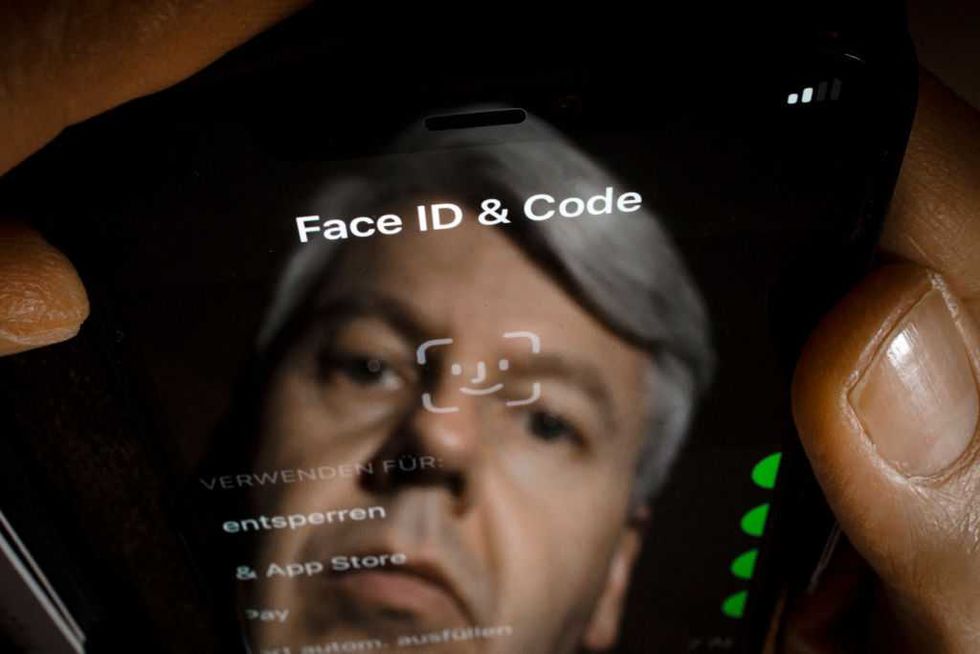 Photo Illustration by Thomas Trutschel/Photothek via Getty Images
“This government will make a new, free-of-charge digital ID mandatory for the right to work by the end of this parliament. Let me spell that out: You will not be able to work in the United Kingdom if you do not have digital ID,” U.K. Prime Minister Keir Starmer announced in September.
The leader stated that the digital ID would help crack down on illegal employment and immigration, before adding a moral justification to his argument.
“Because decent, pragmatic, fair-minded people, they want us to tackle the issues that they see around them. And, of course, the truth is we won’t solve our problems if we don’t also take on the root causes.”
As Blaze News previously reported, the digital ID movement seemingly started in the U.K. around 2004. At that time, the BBC published a report criticizing the government and the IDs as a “badly thought out” means of fighting organized crime and terrorism.
Since then, the idea has long been perpetuated by the World Economic Forum, the yearly gathering of government officials and international businessmen who discuss global policy and reform.
The WEF published “A Blueprint for Digital Identity” in 2016, citing the Aadhaar program, a government ID from India. The initiative was meant to “increase social and financial inclusion” for Indians. The Unique Identification Authority of India holds a database of user information “such as name, date of birth, and biometrics data that may include a photograph, fingerprint, iris scan, or other information.”
Over 1 billion Indians have enrolled in the program for the 12-digit identity number.
In 2023, the WEF promoted a report on reimagining digital ID.
Like Blaze News? Bypass the censors, sign up for our newsletters, and get stories like this direct to your inbox. Sign up here!





