

Category: Artificial intelligence
Dear Globalists, AI Won’t Defeat Christianity
This year’s meeting of liberal elites in Davos, Switzerland, was supposed to be banal. You can always tell when meetings…
Melania’s bold AI message to America’s youth: ‘Use AI as a tool, but do not let it replace your personal intelligence’
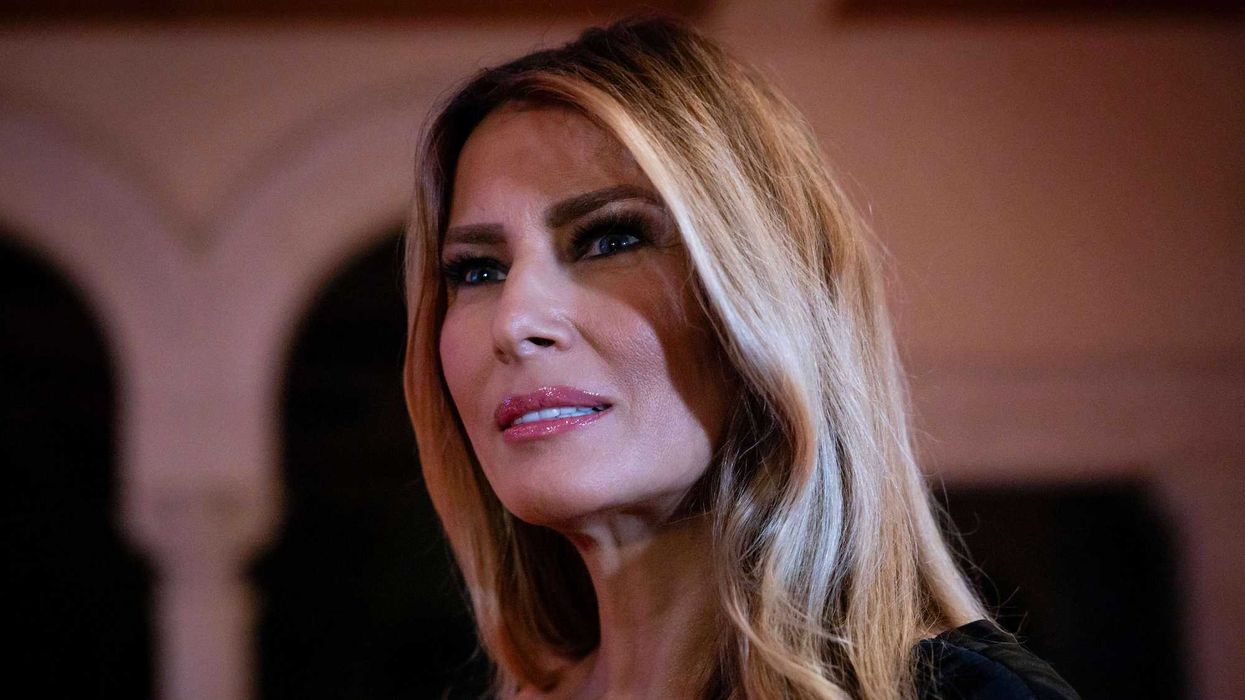
Appearing at the “Zoom Ahead: AI for Tomorrow’s Leaders” virtual event from the White House on Friday, Melania Trump addressed the rapid advancement of AI technology, highlighting both its current capabilities and the potential risks and opportunities it may present in the future.
Thanking Zoom founder Eric Yuan for hosting the event, the first lady praised the company’s leadership in the tech space and connected the discussion to what she described as her broader “mission.”
Mrs. Trump said AI has expanded access to creative tools in ways that were previously unimaginable, allowing young people to explore fields such as film, fashion, art, and music.
“Your support directly advances my mission to prepare America’s next generation to use AI to enhance their education and ultimately their careers,” Mrs. Trump said.
She told the audience they were “fortunate” to be living in what she repeatedly described as “the age of imagination,” a new era shaped by artificial intelligence.
“The age of imagination is a new era, powered by artificial intelligence, where one’s curiosity can be satisfied almost magically in seconds,” she said.
RELATED: AI isn’t killing writers — it’s killing mediocre writing
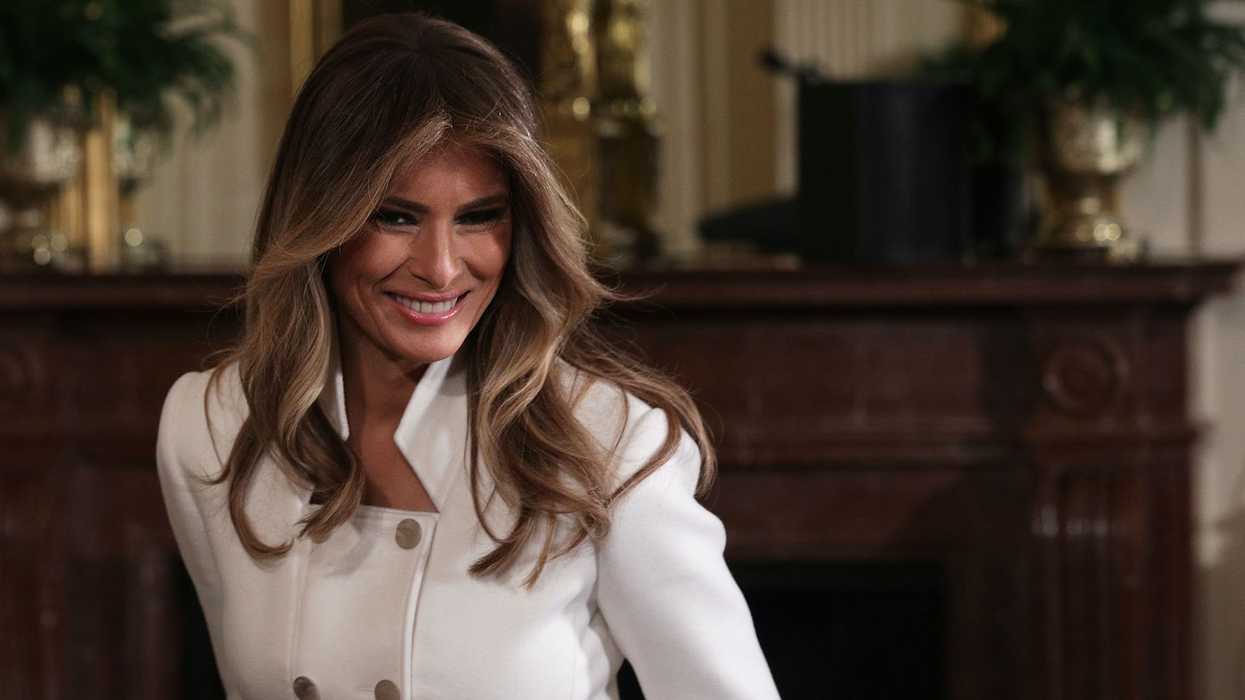 Photo by Alex Wong/Getty Images
Mrs. Trump said AI has expanded access to creative tools in ways that were previously unimaginable, allowing young people to explore fields such as film, fashion, art, and music from their own homes.
“For the first time in history, the young girl dreaming of becoming a fashion designer and the young boy who wants to stand up his school animated superhero series can do so from their own home,” Trump said.
She emphasized that curiosity has always been central to human progress, pointing to writers, scientists, architects, and artists who challenged unanswered questions and the status quo.
“Every giant at some point in time questions the status quo,” she said. “Their singular vision pushes humanity in a new direction.”
She noted, however, that the power of the technology actually lies in the human “imagination.”
“Artificial intelligence provides all the tools needed to implement your creative vision today,” she said.
“But what do you need to start? You need to harness your imagination.”
She encouraged students and creators to focus on developing the ability to ask meaningful questions and to think critically beyond the information AI can provide.
RELATED: Can artificial intelligence help us want better, not just more?
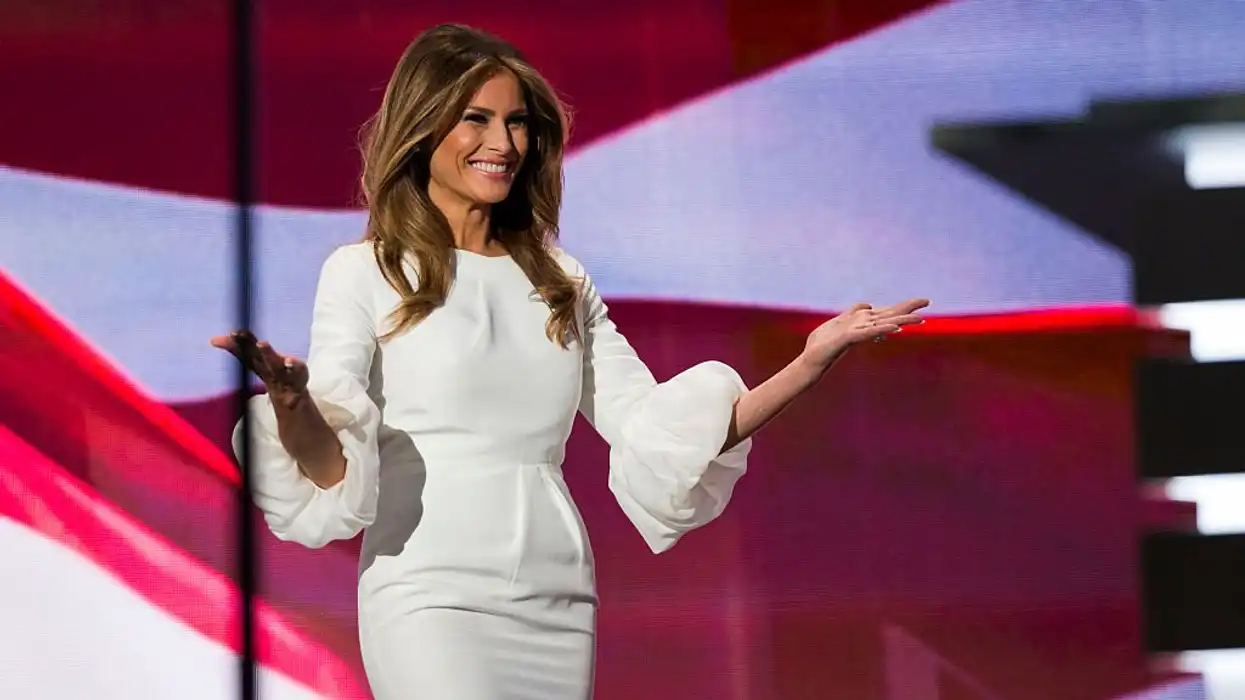 Brooks Kraft/Getty Images
The first lady stressed that while AI can generate content, it cannot replace human purpose.
“Although artificial intelligence can generate images and information, only humans can generate meaning and purpose,” she said.
She concluded by urging the audience to treat AI as a tool rather than a shortcut, encouraging intellectual honesty and personal responsibility in how the technology is used.
“Use AI as a tool, but do not let it replace your personal intelligence,” Mrs. Trump said.
Like Blaze News? Bypass the censors, sign up for our newsletters, and get stories like this direct to your inbox. Sign up here!
Melania’s bold AI message to America’s youth: ‘Use AI as a tool, but do not let it replace your personal intelligence’
Appearing at the “Zoom Ahead: AI for Tomorrow’s Leaders” virtual event from the White House on Friday, Melania Trump addressed the rapid advancement of AI technology, highlighting both its current capabilities and the potential risks and opportunities it may present in the future.
Thanking Zoom founder Eric Yuan for hosting the event, the first lady praised the company’s leadership in the tech space and connected the discussion to what she described as her broader “mission.”
Mrs. Trump said AI has expanded access to creative tools in ways that were previously unimaginable, allowing young people to explore fields such as film, fashion, art, and music.
“Your support directly advances my mission to prepare America’s next generation to use AI to enhance their education and ultimately their careers,” Mrs. Trump said.
She told the audience they were “fortunate” to be living in what she repeatedly described as “the age of imagination,” a new era shaped by artificial intelligence.
“The age of imagination is a new era, powered by artificial intelligence, where one’s curiosity can be satisfied almost magically in seconds,” she said.
RELATED: AI isn’t killing writers — it’s killing mediocre writing
Photo by Alex Wong/Getty Images
Mrs. Trump said AI has expanded access to creative tools in ways that were previously unimaginable, allowing young people to explore fields such as film, fashion, art, and music from their own homes.
“For the first time in history, the young girl dreaming of becoming a fashion designer and the young boy who wants to stand up his school animated superhero series can do so from their own home,” Trump said.
She emphasized that curiosity has always been central to human progress, pointing to writers, scientists, architects, and artists who challenged unanswered questions and the status quo.
“Every giant at some point in time questions the status quo,” she said. “Their singular vision pushes humanity in a new direction.”
She noted, however, that the power of the technology actually lies in the human “imagination.”
“Artificial intelligence provides all the tools needed to implement your creative vision today,” she said.
“But what do you need to start? You need to harness your imagination.”
She encouraged students and creators to focus on developing the ability to ask meaningful questions and to think critically beyond the information AI can provide.
RELATED: Can artificial intelligence help us want better, not just more?
Brooks Kraft/Getty Images
The first lady stressed that while AI can generate content, it cannot replace human purpose.
“Although artificial intelligence can generate images and information, only humans can generate meaning and purpose,” she said.
She concluded by urging the audience to treat AI as a tool rather than a shortcut, encouraging intellectual honesty and personal responsibility in how the technology is used.
“Use AI as a tool, but do not let it replace your personal intelligence,” Mrs. Trump said.
Like Blaze News? Bypass the censors, sign up for our newsletters, and get stories like this direct to your inbox. Sign up here!
Blame Everyone for Grok’s Perverted Porn Problem
Humanity has an unfortunate tendency toward perversion. Given a tool capable of mediocre goods and banal evils, we (as a…
Microsoft CEO: AI ‘slop’ is good for you — or at least for your ‘human potential’
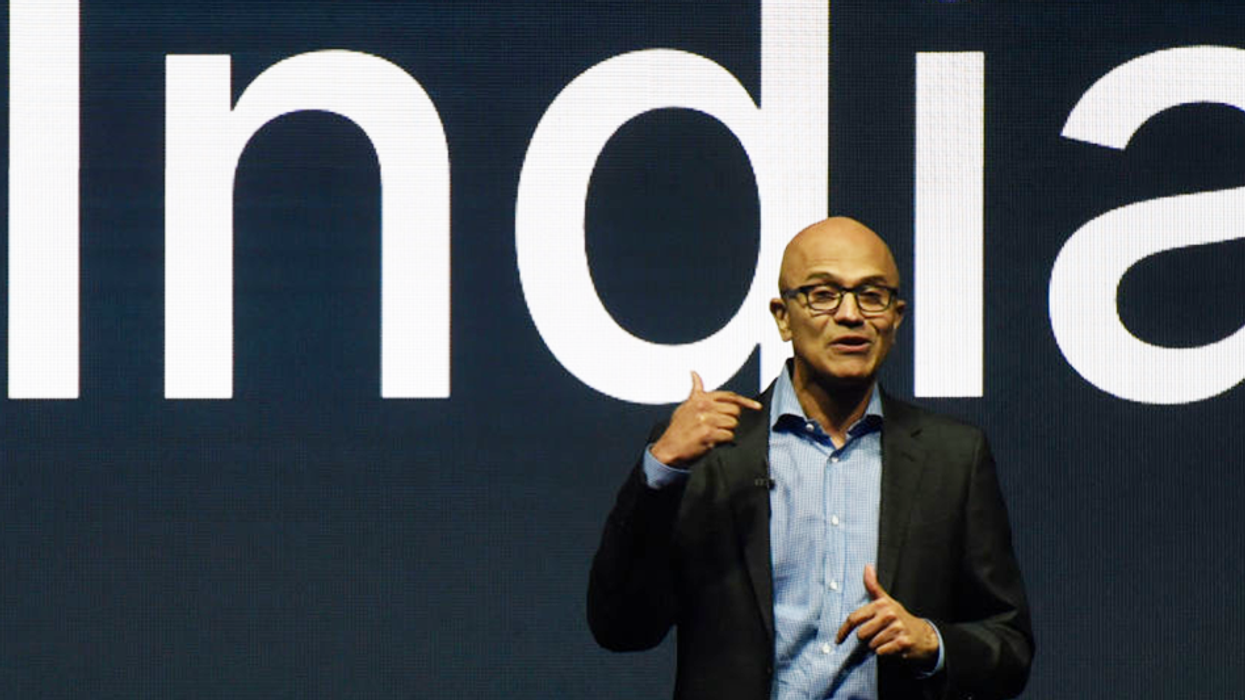
Microsoft CEO Satya Nadella says the general public is looking at artificial intelligence through the wrong lens.
In a recent blog post, the India-born executive told readers to start viewing AI platforms as “bicycles for the mind.”
‘While AI can improve efficiency, it may also reduce critical engagement.’
Nadella explained that he prefers users would think of AI “as a scaffolding for human potential vs. a substitute” for human labor.
This scaffolding should be used to achieve goals, not replace humans in their roles, he continued, before saying debates around AI should not include an argument as to whether or not something is “slop.”
“We need to get beyond the arguments of slop vs. sophistication and develop a new equilibrium in terms of our ‘theory of the mind’ that accounts for humans being equipped with these new cognitive amplifier tools as we relate to each other. This is the product design question we need to debate and answer.”
“Slop” was named as Merriam-Webster’s Word of the Year for 2025 and was defined as “digital content of low quality that is produced usually in quantity by means of artificial intelligence.”
With this definition in mind, it is no wonder that Nadella would rather his users shy away from using such a term.
RELATED: CRASH: If OpenAI’s huge losses sink the company, is our economy next?
The blog post, titled “Looking Ahead to 2026,” envisioned a world where it is not even considered to not integrate AI into regular tasks.
Society must account for AI’s “‘jagged’ edges” and enable rich and safe “tools use” to advance to proper “scaffolds,” Nadella claimed.
Consistently using this term to imply assistance in man-made projects en masse, Nadella described the use of AI as necessary in the face of “scarce energy, compute, and talent” resources.
“If Nadella wants people to stop referring to AI output as slop, then the AIs should be improved so they no longer produce slop,” said Josh Centers, a tech expert from Chapter House.
Interestingly enough, the very same slop that generative AI models have produced recently have actually not enhanced human thinking, according to studies. As PC Gamer noted, Microsoft even co-authored a study that showed reliance on AI models can reduce independent problem-solving capabilities.
“Surprisingly, while AI can improve efficiency, it may also reduce critical engagement, particularly in routine or lower-stakes tasks in which users simply rely on AI, raising concerns about long-term reliance and diminished independent problem-solving,” the paper revealed.
RELATED: ROTTEN APPLE? Top execs bail on CEO Tim Cook as woked-up tech giant fumbles lead
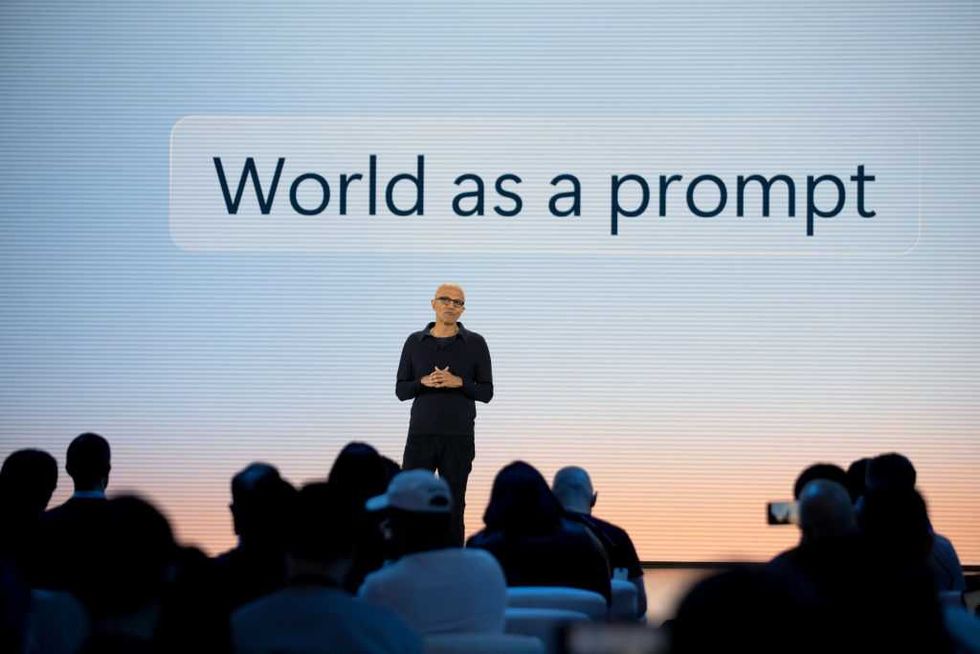 Chona Kasinger/Bloomberg via Getty Images
The study also noted that AI tools “appear to reduce the perceived effort required for critical thinking tasks among knowledge workers, especially when they have higher confidence in AI capabilities.”
Content creator Kabrutus — who represents a community of more than 470,000 disenfranchised gamers — has heavily criticized AI when it does churn out “slop.”
“I think Nadella’s main goal on wanting us to stop using the term ‘slop’ to refer to their AI is because he realizes AI is perceived as something very negative on many different fronts,” he said.
He added, “Nadella is trying to make people stop using this term while the ‘AI culture’ is still small, because it’s easier. Once AI gets HUGE, and pretty much everybody calls it ‘slop,’ it will be impossible to revert the situation.”
“Why is he so worried about it?” the Brazilian asked. “Because AI is going to be one of the flagships of ‘his’ company in the near future, and if people perceive AI as ‘slop’ it will be much harder to sell them AI-based products, right?”
Meanwhile, Lewis Brackpool, U.K. director of investigations for Restore Britain, said he sees slop as something that defines “meaningless, talentless content creation that numbs the brain” and is plastered all over social media.
Brackpool explained that asking people not to use the term “slop” seems like “a marketing tool to prevent criticism of a product that could hurt sales numbers” and act as a coping mechanism for a company because “their product likely sucks.”
Like Blaze News? Bypass the censors, sign up for our newsletters, and get stories like this direct to your inbox. Sign up here!
Microsoft gets 400 million AI subscribers in ‘overnight’ switch

Paid Microsoft subscribers can now be considered artificial intelligence users.
The massive change comes as Microsoft has officially changed its flagship Microsoft 365 suite to be integrated with AI.
‘Genius move. Rebrand Office, instantly “acquire” 400M AI users.’
Microsoft announced the official shift in a support post, revealing it is now integrating its Copilot AI app into programs like Word, Excel, PowerPoint, as well as PDF services.
“The Microsoft 365 Copilot app is your everyday productivity app for work and life that helps you find and edit files, scan documents, and create content on the go,” the company wrote.
With an estimated 430 million paid user licenses for Microsoft 365 worldwide as of mid-2025, the company can now say it has by far the most AI subscribers, with OpenAI reaching just 5 million last August. At the same time, Grok itself estimates it has about 1.4 million paid users.
RELATED: 2025 is so over and so is virtual reality
Microsoft has been talking about the integration for at least a year, stating in January 2025 that Copilot was the “top reason” subscribers chose to pay for Microsoft 365.
Along with taking the creation of slideshows and to-do lists off a user’s plate, the Copilot app was boasted as being involved in nearly every daily task. This included using Copilot to “analyze your budget,” “create a recipe,” or read a user’s emails for them and provide a summary.
At the same time, Microsoft said that it does not use “prompts, responses, or file content (such as Word documents or Excel spreadsheets)” from users to train its AI models.
 Photo by Ying Tang/NurPhoto via Getty Images
User reactions were mixed when responding to the change in a viral X post by Ask Perplexity. The account has over 385,000 followers, and the post was seen more than 2 million times.
“400 million users just became ‘AI users’ overnight,” the account wrote.
“They laughed at me when I said I was gonna use bootleg Windows 8 forever,” one woman replied, seemingly looking to avoid the AI integration.
A self-proclaimed IT professional said, “It seems like every day I see more and more negative changes for Microsoft.”
However, many others applauded the move. For example, Katya Fuentes, who lists herself as working for an AI company, said Microsoft’s shift was “all upside.”
“Genius move. Rebrand Office, instantly ‘acquire’ 400M AI users,” she claimed.
At least one response offered an alternative to Microsoft’s mandatory AI infusion. LibreOffice, a document and spreadsheet competitor, added: “If anyone wants, you know, an actual office suite, we’re here.”
Like Blaze News? Bypass the censors, sign up for our newsletters, and get stories like this direct to your inbox. Sign up here!
‘Frankenstein’ director’s AI warning: It’s here to ‘debase’ our humanity
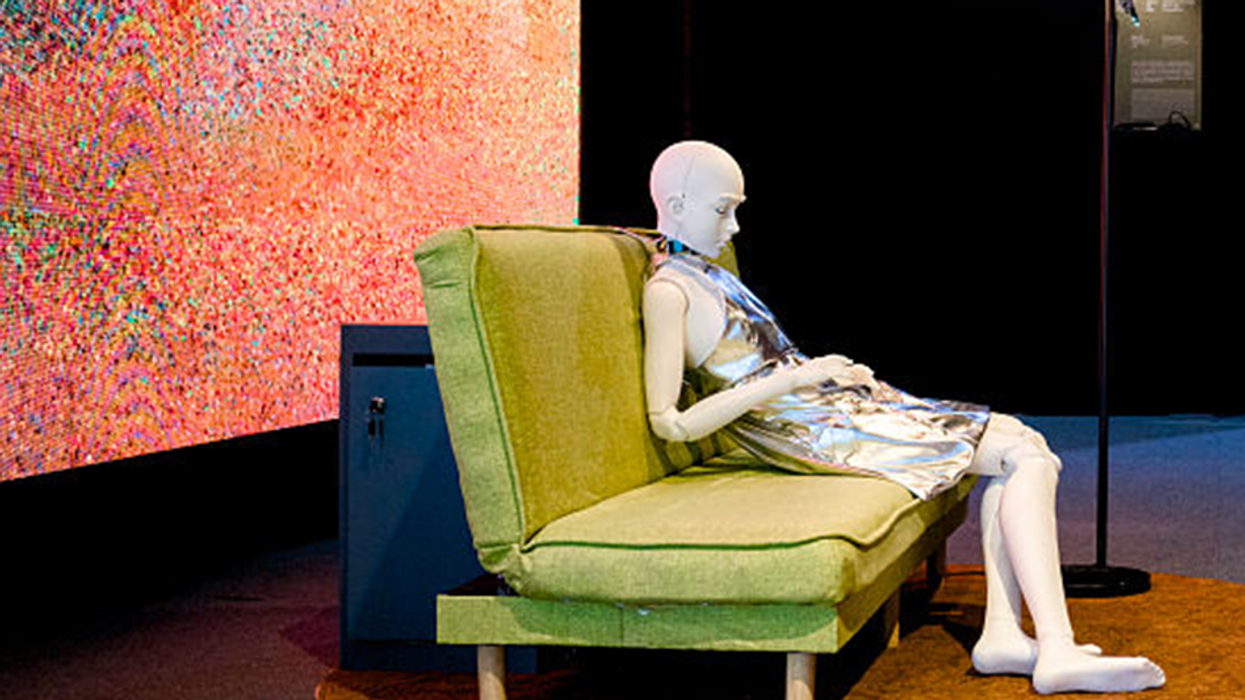
Art created by artificial intelligence is an attempt to reduce a society’s sense of humanity, according to one Hollywood director.
This sort of treatment of art is “always a prelude to fascism,” the director also warned.
‘That is always the prelude to fascism.’
No ifs, ands, or bots
While accepting an honor from Variety at its 10 Directors to Watch and Creative Impact Awards, filmmaker Guillermo del Toro continued his recent onslaught against the use of artificial intelligence for art.
“Be kind, be involved, and believe in your art,” del Toro said, emphasizing that when art is minimalized, bad times are ahead.
“In a time where people tell you art is not important, that is always the prelude to fascism. Always. When they tell you it doesn’t matter, when they tell you a f**king app can do art, you say, ‘Well, if it’s that easy and if it’s that unimportant, why the f**k do they want it so bad?'”
The director answered his own question, warning that the reduction of art to a line of code removes a certain degree of humanity.
“The answer is because they think they can debase everything that makes us a little better, a little more human. And that, in my book and in my life, includes monsters.”
RELATED: Guillermo del Toro stops awards show music to drop ‘F**k AI’ bomb
 Photo by Emma McIntyre/Getty Images
Monster high
Del Toro’s tirade came on the heels of similar remarks last month at the 2025 Gotham Film Awards, where he made a point of announcing that his widely praised “Frankenstein” was “willfully made by humans for humans.”
After praising the movie’s “designers, builders, makeup, [and] wardrobe” teams, the director paused and added, “F**k AI.”
The 61-year-old — one of the most prominent Hollywood power players to speak out against the dangers of AI — also hinted at why he prefers to work in the horror/fantasy genre: “Sometimes the world gets so complicated, you can only explain it with the power of monsters.”
“We are in a time like that right now,” he added.
RELATED: The Oscars will leave TV — and may never come back
‘Death’ wish
Despite his anti-AI stance, del Toro is far from a techno-phobe.
In 2023, he praised Japanese video game auteur Hideo Kojima’s “paradoxical creation” and his ability to “break the barrier between cinema and games.”
Del Toro appears as the character Deadman in Kojima’s 2019 game “Death Stranding,” as well as its 2025 sequel.
Elon Musk’s xAI inks new deal with War Department
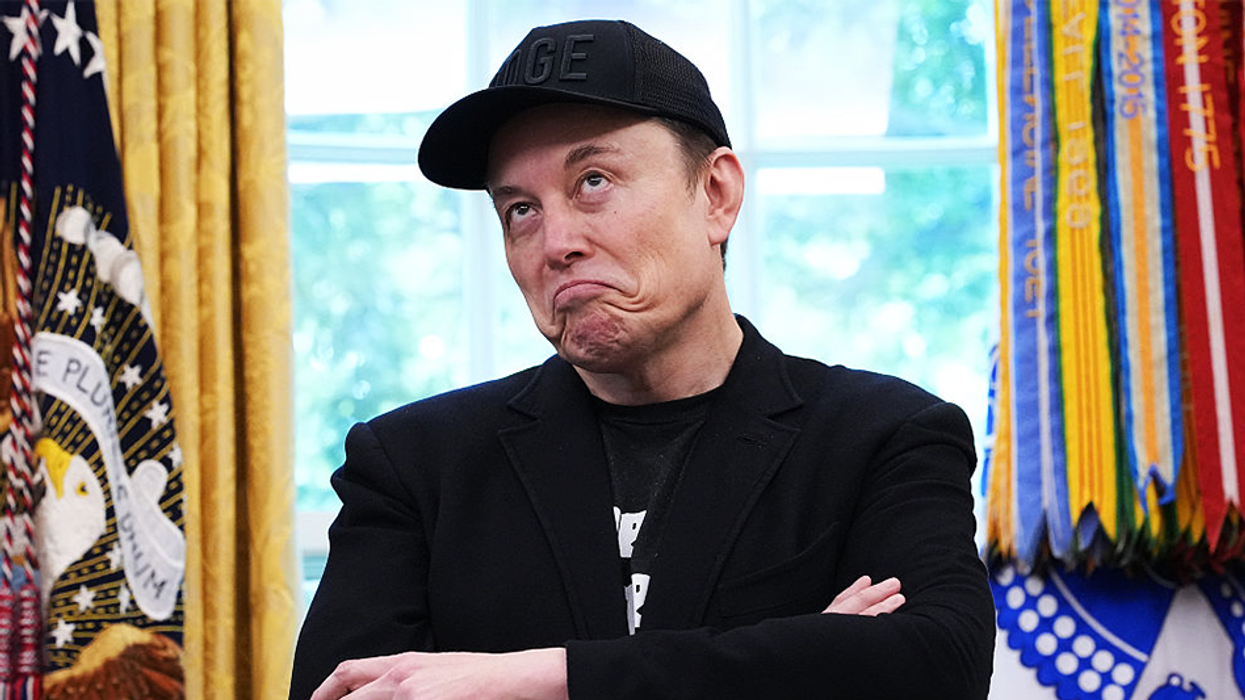
Hot on the heels of a highly publicized dinner with Donald and Melania Trump, Elon Musk will continue his work with the federal government through a new agreement that will affect the daily workflows of Department of War employees.
Last July, Musk’s xAI entered a $200 million contract with the Pentagon to adopt advanced AI capabilities for sectors like national defense. Now, both the DOW and xAI are shedding light on some of the details surrounding their partnership in other areas.
‘xAI will make available a family of government-optimized foundation models.’
In late December, the DOW announced its internal AI platform would be expanded to include xAI for “frontier-grade” capabilities.
“This initiative will soon embed xAI’s frontier AI systems, based on the Grok family of models, directly into GenAI.mil. Targeted for initial deployment in early 2026,” a press release stated.
This will enable the “secure handling” of “Controlled Unclassified Information” in the daily workflows of government employees, who will also gain access to “global insights” on X, which will allegedly provide a “decisive information advantage.”
However, there is no indication what those insights include.
RELATED: DOGE didn’t die — it moved to the states
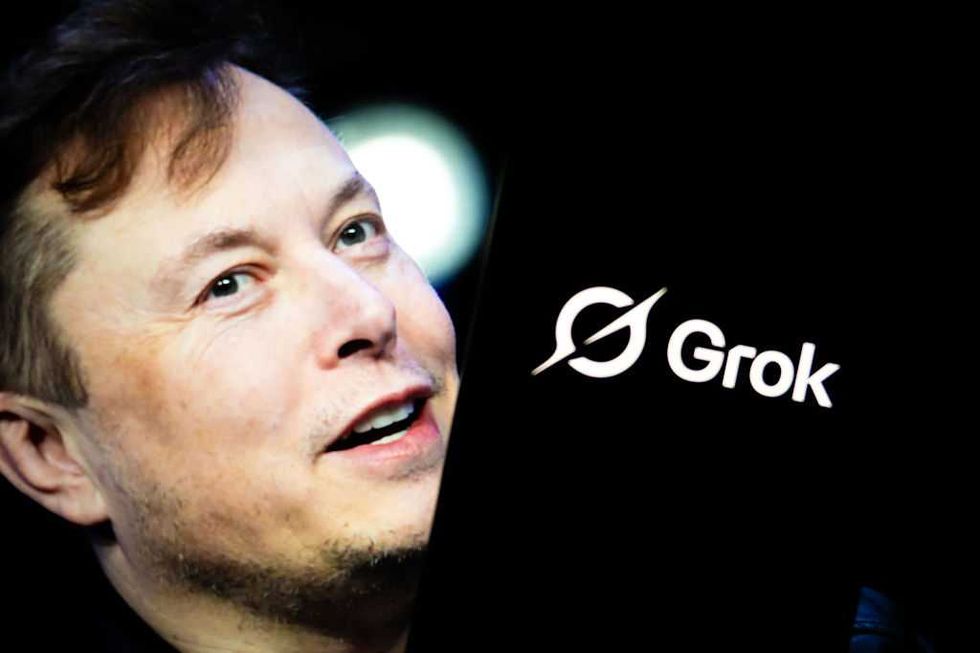 Photo by Didem Mente/Anadolu via Getty Images
The xAI company announced in its own statement that it would be providing access to its AI models, “agentic tools, research platform, and API,” unlocking real-time insights.
The systems can be embedded into the daily work of the DOW’s some 3 million military and civilian employees, “from the Pentagon to the tactical edge.”
“xAI will make available a family of government-optimized foundation models to support classified operational workloads,” the press release added.
The DOW has also entered into contracts with other advanced technology companies like EdgeRunner AI and Palmer Luckey’s Anduril.
RELATED: Gavin Newsom ridicules Elon Musk over his trans-identifying son — and Musk responds
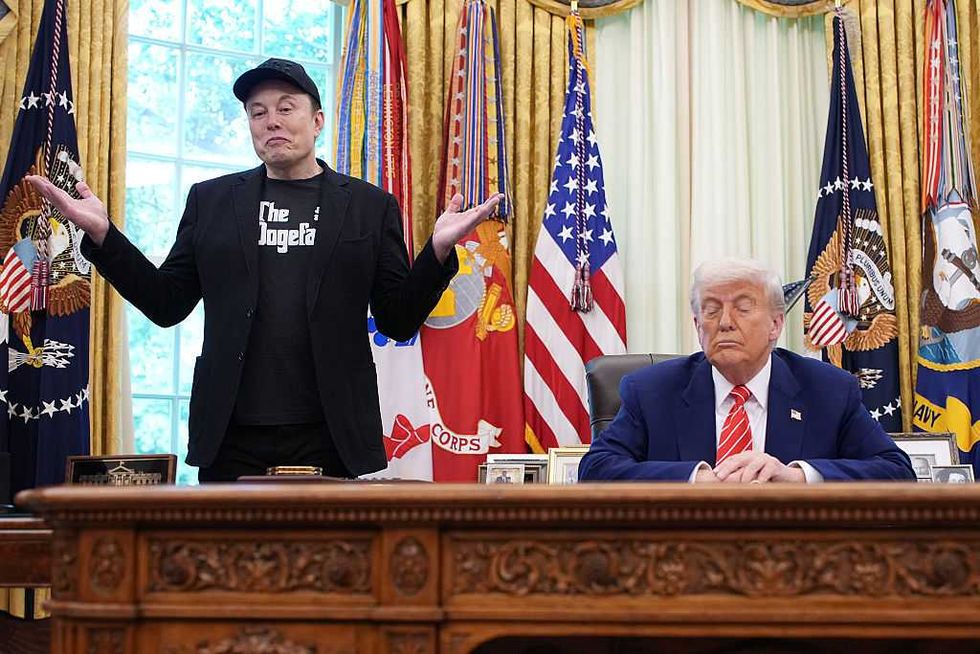 Photo by Kevin Dietsch/Getty Images
The expanded partnership between the DOW and Musk came just days after xAI announced a new artificial voice generation application.
The Grok Voice Agent API operates essentially as a search engine optimizer that acts as a voice for a chatbot. The company released a series of sample voices, which “speak dozens of languages, call tools, and search realtime data.”
The product is currently being rolled out in Teslas to relay vehicle status, search directions, and control navigation.
Like Blaze News? Bypass the censors, sign up for our newsletters, and get stories like this direct to your inbox. Sign up here!





