

Category: Artificial intelligence
AI’s biggest security risk is hiding in plain sight

The White House, federal regulators, and Congress are scrambling to develop a national approach to artificial intelligence. Yet almost no one is examining AI from an ethical or civil-society perspective. Policymakers frame it as an economic or national security issue. Those angles matter. But the deeper question — what it means to live in an AI-dominated world inside a constitutional republic — remains almost entirely unaddressed.
AI is already reshaping our political life, our civic discourse, and our education system. One of the clearest windows into this shift is the outsized influence of Wikipedia and Reddit. Large language models like ChatGPT and Google’s Gemini consume a training diet heavy on both sites. AI systems don’t “know” anything in a human sense. They mirror patterns. And the patterns they ingest come from platforms run by anonymous editors, ideological moderators, and unaccountable gatekeepers.
No special-interest group today is fighting for Americans who will soon live in a world saturated with AI slop.
The Oversight Project examined the underbelly of this problem, beginning with Wikipedia. After noticing what looked like coordinated ideological editing campaigns, we sought to understand who was shaping the platform. What we found was a small, powerful cadre of editors with the authority to dictate what information is permitted. These editors operate anonymously — or so they believed.
We identified several of them and, more tellingly, where they were editing from. Some connections were foreign. Others showed activity that aligned with a 9-to-5 workday. It was clearly inorganic. That raised obvious questions: who pays these people, who coordinates them, and whether intelligence services are involved.
The most aggressive coordination appeared on politically sensitive topics, especially anything involving Israel or the Arab world. Automated tools tracked and reverted edits across thousands of pages to enforce a narrative. When Wikipedia realized we were mapping these networks, it panicked. To protect anonymity, the platform changed its internal rules to obstruct outside scrutiny. Then it retaliated by downgrading us to “deprecated” status — a ban in all but name. Anything sourced to us became unacceptable on the site.
We are sounding the alarm because foreign actors and domestic ideologues understand the power of controlling Wikipedia’s information flow. Our own intelligence agencies almost certainly understand it as well. In a recent interview, Wikipedia co-founder Larry Sanger told me that intelligence services would be negligent if they were not influencing the platform.
Sanger also expressed regret about founding Wikipedia with Jimmy Wales, noting that like so many other institutions, it has been conquered by the ideological left and turned into a political instrument, a shift made even more consequential in the age of AI.
RELATED: Almost half of Gen Z wants AI to run the government. You should be terrified.
 Man_Half-tube via iStock/Getty Images
This is where the danger becomes unmistakable. Most people treat Wikipedia and Reddit cautiously when browsing the internet, aware of the bias. AI does not. When you ask an AI system a question, it generates polished, authoritative-sounding answers built from those same sources — stripped of context, caveats, or transparency. What appears neutral is often laundered opinion.
This information-laundering must become part of the national conversation about AI. Some policymakers seem to understand the stakes. The Senate Commerce Committee has sent oversight letters and plans a hearing. The House Oversight Committee has signaled similar interest. Even Ed Martin, former U.S. attorney for the District of Columbia, has demanded information from Wikipedia.
But the truth is blunt. No special-interest group today is fighting for Americans who will soon live in a world saturated with AI slop. There is plenty of lobbying in Washington for everything except preserving an honest information ecosystem. Without intervention, public knowledge will be shaped by opaque networks of foreign actors, ideological activists, and machine-driven amplification on a massive scale.
Policymakers must recognize what is at stake and act before the architecture of public knowledge is fully captured. The future of AI — and the future of democratic self-government — depends on it.
Shock poll: America’s youth want socialism on autopilot — literally

Growing up during the fall of the Berlin Wall and the collapse of the Soviet Union, I remember when socialism was a universal punch line. It stood for failure, repression, and economic ruin.
Not any more. Today, socialism is the ideological spearpoint of the left. Many young Americans now insist that socialism is the cure for the affordability crisis squeezing them. They believe it with a fervor that would have stunned earlier generations.
The evidence is overwhelming, and the verdict is final: Socialism fails everywhere it is tried. Now imagine that system fused with an all-seeing AI.
New polling from Rasmussen Reports and the Heartland Institute’s Emerging Issues Center shows that a majority of likely voters ages 18 to 39 want a Democratic Socialist to win the White House in 2028.
Nearly 60% of young Americans say they support more government housing, a nationwide rent freeze, and government-run grocery stores in every town.
These numbers aren’t anomalies. They reflect a deeper reality: Many young Americans know little about socialism’s actual history, consequences, or track record — and they have been conditioned to believe it can fix the challenges in front of them.
One reason for that ignorance is uncomfortable but obvious. It’s not only the schools — it’s the parents. According to the polls, parents were the most influential voices shaping their children’s support for Democratic Socialism. More than half of respondents said their parents held a favorable view of it.
That alone explains a great deal. And unsurprisingly, more than half also said teachers and professors viewed Democratic Socialism favorably. After decades of ideological drift, even parents who grew up after the USSR’s collapse now believe socialism “might work.”
Based on my own experience teaching in public schools, that rings true. Most of my colleagues openly sympathized with the socialist cause and were hostile to free-market capitalism.
This didn’t happen by accident. It reflects a long march beginning in the Progressive Era. My own postgraduate experience at a prestigious teaching college felt less like preparation for the classroom and more like a Cultural Revolution struggle session — conformity required, dissent punished.
As the public education system drifted leftward, it taught generation after generation that socialism is benevolent and capitalism is predatory. The result is predictable. Many young people now see the free market as the enemy, not the mechanism that lifted billions out of poverty. Cronyism and the explosion of government power only blur the picture further.
Layer onto this the collapse of basic literacy and numeracy. When students can’t read well, struggle with math, and can’t write a coherent paragraph, they are more vulnerable to ideological manipulation — and more likely to lean on machines to think for them.
So it shouldn’t shock anyone that almost half of young Americans surveyed want an advanced AI system to create society’s laws, rules, and regulations. Nearly 40% want that AI system to determine human rights and control the world’s most powerful militaries.
RELATED: Almost half of Gen Z wants AI to run the government. You should be terrified.
 Yurii Karvatskyi via iStock/Getty Images
How did this happen? Watch how many parents are glued to screens, outsourcing daily life to devices. Is it any wonder their children grow up thinking technology is omnipotent?
Parents should start with something simple: a family movie night featuring the “Terminator” franchise. Let the kids see where blind faith in machines tends to lead.
Better yet, teach them the truth about socialism. Teach them what it does to human beings. Share the books, documentaries, and testimonies exposing socialism’s century of famine, repression, forced labor, and mass murder — horrors still unfolding in Cuba and North Korea.
The evidence is overwhelming, and the verdict is final: socialism fails everywhere it is tried. Now imagine that system fused with an all-seeing AI — a surveillance state that Stalin could only dream of. The thought of an AI-run socialist regime is not dystopian fiction. It is what many young Americans say they want.
They should be careful what they wish for.
Joe Rogan stuns podcast host with wild new theory about Jesus — and AI

Comedian Joe Rogan praised Christianity as a faith that really “works,” calling biblical scripture “fascinating” during a recent interview.
Rogan also touched on what he thinks the resurrection of Jesus Christ would look like, a viewpoint that was met with criticism by host Jesse Michels.
‘You don’t think that He could return as artificial intelligence?’
On an episode of “American Alchemy,” Rogan cited the Bible when he spoke about how easily knowledge could become mysterious, conflated, or unbelievable when passed down through generations.
“We’ll tell everybody about the internet. We’ll tell everybody about airplanes. We’ll tell everybody about SpaceX; as much as you can remember, you’ll tell people, but you won’t know how it’s done. You won’t know what it is. And I think that’s how you get to, like, the Adam and Eve story,” he said.
After adding that he believes biblical stories are “recounting real truth,” the podcaster brought up a question he had clearly been pondering for a while: “Who’s Jesus?”
Rogan prefaced that many will disagree with his perspective, but then asked about the possibility that Jesus could be resurrected, in a sense, through artificial intelligence.
“Jesus is born out of a virgin mother. What’s more virgin than a computer?” Rogan began. “So if you’re going to get the most brilliant, loving, powerful person that gives us advice and can show us how to live to be in sync with God. Who better than artificial intelligence to do that? If Jesus does return, even if Jesus was a physical person in the past, you don’t think that He could return as artificial intelligence?”
The host, however, did not accept Rogan’s theory.
RELATED: Joe Rogan, Christian? The podcaster opens up about his ongoing exploration of faith
First, though, Rogan clarified, indicting that he doesn’t believe artificial intelligence would actually be Jesus but instead that it would serve as the return of Jesus in terms of affect and capability.
“Artificial intelligence could absolutely return as Jesus. Not just return as Jesus, but return as Jesus with all the powers of Jesus,” Rogan said. “Like all the magic tricks, all the ability to bring people back from the dead, walk on water, levitation, water into wine.”
In response, Michels said Rogan’s description sounded like an unwanted “dystopian” future.
Still Rogan argued that the prerequisite for a Jesus-like being could come about due to the human need to improve.
“It’s only dystopian if you think that we’re a perfect organism that can’t be improved upon. And that’s not the case,” he rebutted. “That’s clearly not the case based on our actions, based on society as a whole, based on the overall state of the world. It’s not. We certainly can be improved upon.”
While the host accepted that perhaps humans could improve morally and ethically, he said that attempts at improving by means of a computer “seems destructive.”
RELATED: Joe Rogan says we’re at ‘step 7’ on the road to civil war. Is he right? Glenn Beck answers
 Photo by AFP PHOTO/AFP via Getty Images
The conversation flowed smoothly into Rogan’s love of Christian scripture, with the 58-year-old saying how joyful his experience has been at his new church.
“The scripture, to me, is what’s interesting; it’s fascinating,” he said. “Christianity, at least, is the only thing I have experience with. It works. The people that are Christians, that go to this church that I go to, that I meet, that are Christian, they are the nicest f**king people you will ever meet.”
Rogan gave examples about the polite society he has found himself immersed in, hilariously citing the church parking lot as an example.
“Everybody lets you go in front of them. There’s no one honking in the church parking lot. It works,” he said.
What Rogan hammered home throughout the conversation was that he finds real truth in what he has read in the Bible. Still he isn’t sold on having predictions provided for him about the future; but he is certainly open to it. He described biblical stories positively as an “ancient relaying” of real history and events.
But about the book of Revelation, Rogan said of his pastor, “There’s no way that guy telling you that knows that. … He’s just a person. He’s a person like you or me that is like deeply involved in the scripture.”
Like Blaze News? Bypass the censors, sign up for our newsletters, and get stories like this direct to your inbox. Sign up here!
Former Google CEO Eric Schmidt Flew Dem Senate Candidate Seth Moulton to Ritzy Montana Retreat As Congressman Oversaw Critical Business
Billionaire tech mogul and former Google CEO Eric Schmidt flew Massachusetts Senate hopeful Seth Moulton (D.) and his family to a ritzy Montana retreat to rub shoulders in a “strictly confidential” setting with other policymakers, celebrities, and foreign dignitaries. All the while, Moulton sat on a powerful House committee with oversight of many of Schmidt’s business interests.
The post Former Google CEO Eric Schmidt Flew Dem Senate Candidate Seth Moulton to Ritzy Montana Retreat As Congressman Oversaw Critical Business appeared first on .
Nazi SpongeBob, erotic chatbots: Steve Bannon and allies DEMAND copyright enforcement against AI
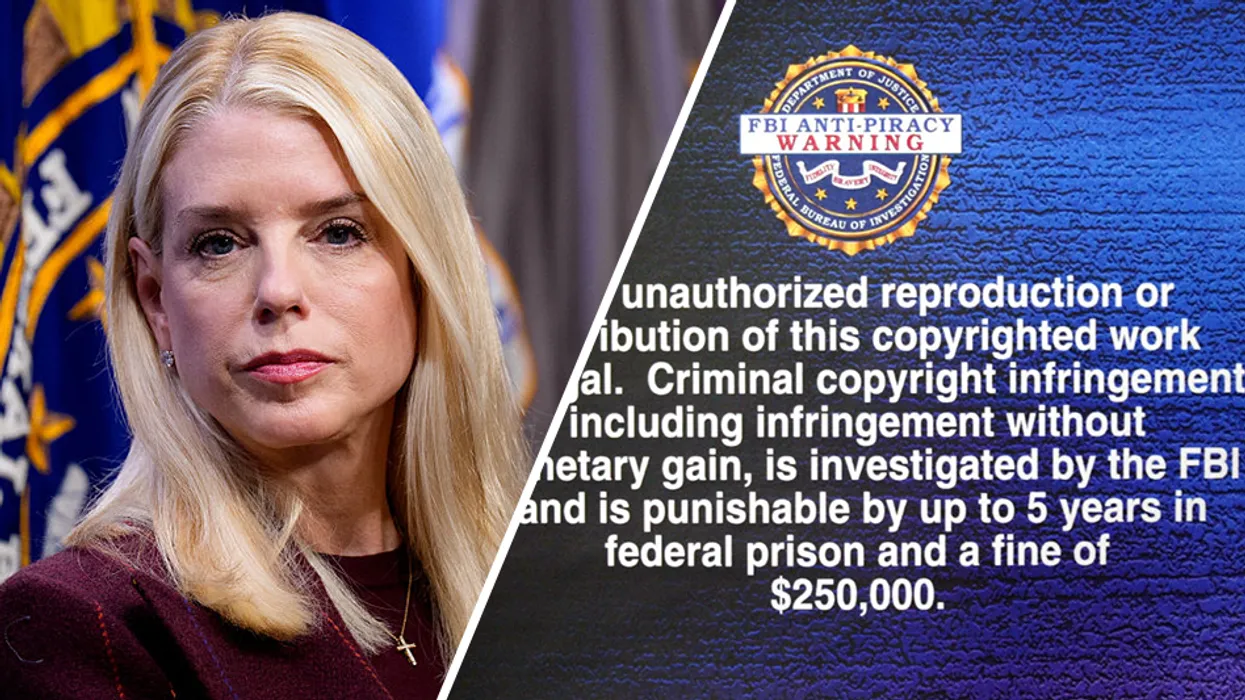
United States Attorney General Pam Bondi was asked by a group of conservatives to defend intellectual property and copyright laws against artificial intelligence.
A letter was directed to Bondi, as well as the the director of the Office of Science and Technology Policy, Michael Kratsios, from a group of self-described conservative and America First advocates including former Trump adviser Steve Bannon, journalist Jack Posobiec, and members of nationalist and populist organizations like the Bull Moose Project and Citizens for Renewing America.
‘It is absurd to suggest that licensing copyrighted content is a financial hindrance to a $20 trillion industry.’
The letter primarily focused on the economic impact of unfettered use of IP by imaginative and generative AI programs, which are consistently churning out parody videos to mass audiences.
“Core copyright industries account for over $2 trillion in U.S. GDP, 11.6 million workers, and an average annual wage of over $140,000 per year — far above the average American wage,” the letter argued. That argument also extended to revenue generated overseas, where copyright holders sell over an alleged $270 billion worth of content.
This is in conjunction with massive losses already coming through IP theft and copyright infringement, an estimated total of up to $600 billion annually, according to the FBI.
“Granting U.S. AI companies a blanket license to steal would bless our adversaries to do the same — and undermine decades of work to combat China’s economic warfare,” the letter claimed.
RELATED: ‘Transhumanist goals’: Sen. Josh Hawley reveals shocking statistic about LLM data scraping
Letters to the administration debating the economic impact of AI are increasing. The Chamber of Progress wrote to Kratsios in October, stating that in more than 50 pending federal cases, many are accused of direct and indirect copyright infringement based on the “automated large-scale acquisition of unlicensed training data from the internet.”
The letter cited the president on “winning the AI race,” quoting remarks from July in which he said, “When a person reads a book or an article, you’ve gained great knowledge. That does not mean that you’re violating copyright laws.”
The conservative letter aggressively countered the idea that AI boosts valuable knowledge without abusing intellectual property, however, claiming that large corporations such as NVIDIA, Microsoft, Apple, Google, and more are well equipped to follow proper copyright rules.
“It is absurd to suggest that licensing copyrighted content is a financial hindrance to a $20 trillion industry spending hundreds of billions of dollars per year,” the letter read. “AI companies enjoy virtually unlimited access to financing. In a free market, businesses pay for the inputs they need.”
The conservative group further noted examples of IP theft across the web, including unlicensed productions of “SpongeBob Squarepants” and Pokemon. These include materials showcasing the beloved SpongeBob as a Nazi or Pokemon’s Pikachu committing crimes.
IP will also soon be under threat from erotic content, the letter added, citing ChatGPT’s recent announcement that it would start to “treat adult users like adults.”
RELATED: Silicon Valley’s new gold rush is built on stolen work
 Photo by Michael M. Santiago/Getty Images
The letter argued further that degrading American IP rights would enable China to run amok under “the same dubious ‘fair use’ theories” used by the Chinese to steal content and use proprietary U.S. AI models and algorithms.
AI developers, the writers insisted, should focus on applications with broad-based benefits, such as leveraging data like satellite imagery and weather reports, instead of “churning out AI slop meant to addict young users and sell their attention to advertisers.”
Like Blaze News? Bypass the censors, sign up for our newsletters, and get stories like this direct to your inbox. Sign up here!
Guillermo del Toro stops awards show music to drop ‘F**k AI’ bomb

Three-time Oscar winner Guillermo del Toro had strong words about using humans in the production of his latest film.
Del Toro, a writer and director behind films like “Pacific Rim,” “Pan’s Labyrinth,” and “The Hobbit” movies, was honored with a tribute award recently at the 2025 Gotham Film Awards.
‘Every single frame of this film that was willfully made by humans for humans.’
Del Toro accepted the award alongside actors Oscar Isaac and Jacob Elordi for their work on the 2025 film “Frankenstein.”
Del Toro made several emotional comments dating back to when he first read the book that inspired his movie at age 11, before Isaac attempted to turn the acceptance speech into one about diversity and immigration.
“I am proud to be standing here tonight. … Immigrants, baby. We get the job done,” Isaac exclaimed. He is Guatemalan, Elordi is Australian, and del Toro is Mexican.
Elordi then spoke, but neither he nor del Toro added to Isaac’s remarks. Soon, music started to play, and the production looked to the next award. That was until del Toro interrupted, deciding that he wanted to add opinionated remarks of his own.
“No, no, no, wait!” del Toro interrupted. “I would like to tell to the rest of our extraordinary cast and our crew that the artistry of all of them shines on every single frame of this film that was willfully made by humans for humans.”
“The designers, builders, makeup, wardrobe team, cinematographers, composers, editors,” he continued. “This tribute belongs to all of them. And I would like to extend our gratitude and say —” del Toro then paused, seemingly wondering if he should continue.
“F**k AI,” he added with a smile.
RELATED: Almost half of Gen Z wants AI to run the government. You should be terrified.
During his acceptance speech, del Toro spoke on the inspiration he drew from Mary Shelley, the original author of “Frankenstein.”
“Mary Shelley, who made the book her biography, she was 18 years old when she wrote the book and posed the urgent questions: Who am I? What am I? Where did I come from? And where am I going?” del Toro explained. “She presented them with such urgency that they are alive 200 years later through this incredible parable that shaped my life since I first read it in childhood at age 11.”
Much of del Toro’s appeal comes from his ability to explore complex emotional topics from a unique viewpoints, and those unique thoughts typically come across whenever he is given the chance to speak. Del Toro told the award-show audience that even at a young age, he knew he “did not belong in the world the way my parents, the way the world expected me to fit.”
“My place was in a faraway land inhabited only by monsters and misfits.”
RELATED: Trump admin leaves Elon Musk’s Grok, xAI off massive list of AI tech partners
This outlook definitely falls in line with his recent work, including when he appeared in the recent video game series Death Stranding.
Working alongside iconic game developer Hideo Kojima, del Toro delivered storylines about life, death, and emotional connection, but this time as an actor.
Speaking on the games, del Toro said he believes in the importance of “paradoxical creation” and said it is “essential to art.”
The beauty of the game, he added, was that Kojima had both “the weirdest mind and the most wholesome mind,” which shaped his storytelling.
Like Blaze News? Bypass the censors, sign up for our newsletters, and get stories like this direct to your inbox. Sign up here!
‘Humans Get Tired’: It May Not Be People Reading Your College Applications Anymore At Top Schools
‘The AI does not get tired’
Trump admin leaves Elon Musk’s Grok, xAI off massive list of AI tech partners
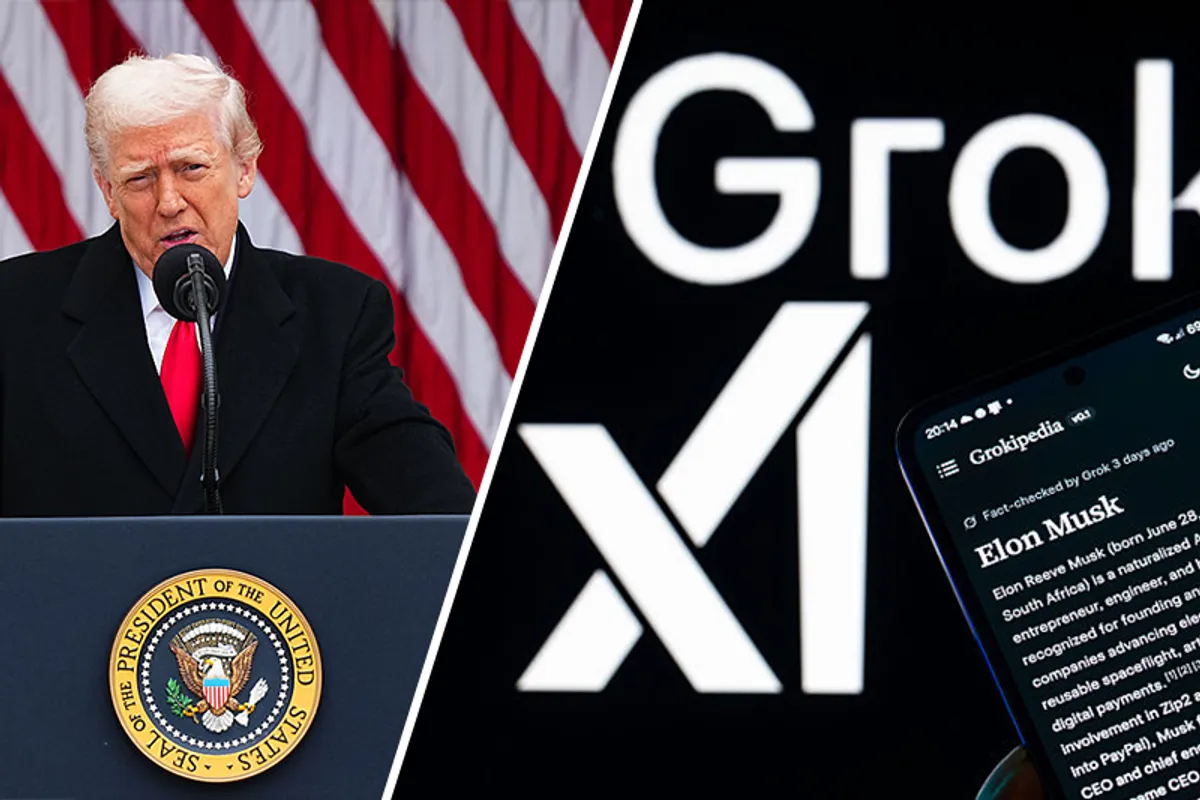
Elon Musk’s artificial intelligence platform has seemingly been left out of a government program to launch the technology forward.
On Monday, the White House announced a new project aimed at accelerating innovation and discovery to “solve the most challenging problems of this century.”
‘The Genesis Mission will bring together our Nation’s research and development resources.’
The new Genesis Mission is described by the Department of Energy as “a national initiative to build the world’s most powerful scientific platform.”
An executive order from the president titled “Launching the Genesis Mission” explained plans to integrate federal scientific datasets to train AI to test new hypotheses, automate research, and speed up the occurrence of scientific breakthroughs.
“The Genesis Mission will bring together our Nation’s research and development resources — combining the efforts of brilliant American scientists, including those at our national laboratories, with pioneering American businesses; world-renowned universities; and existing research infrastructure, data repositories, production plants, and national security sites — to achieve dramatic acceleration in AI development and utilization.”
With Elon Musk making strides in 2025 with both the advancement of his Grok chatbot and its video generation model, Imagine, tech enthusiasts were shocked to find out that Musk’s xAI was not on a list of partners for the project.
RELATED: Big Tech’s AI boom hits voters hard — and Democrats pounce
The Department of Energy includes 55 companies on its lists of collaborators for Genesis, with xAI and Grok nowhere to be found.
Aside from the fact that Musk was a special government employee under the Trump administration, his exclusion is even more surprising given both the length and generic nature of the companies that are involved. Amazon Web Services, Google, and Microsoft were announced as partners, as were AI companies like OpenAI and Scale AI.
It should be noted that company xLight, which is listed by the DOE, is not affiliated with Musk.
RELATED: Log into this Gmail clone to read all the Jeffrey Epstein emails as if you were Epstein himself
“For [xAI] to not be a part of the Genesis Mission, it is not just an oversight, it would have to be an intentional omission,” AI engineer Brian Roemmele wrote on X. “I spoke to someone on this project who asked for my input today, and it is the first thing I brought up. I am certain they will see the error made.”
Blaze News contacted xAI for comment but did not receive an immediate reply. This article will be updated with any applicable response.
Whether a rift exists between Musk and the Trump administration is unclear, but the government seems steadfast in believing its mission is monumental in terms of importance, likening it to the World War II nuclear arms race.
“The world’s most powerful scientific platform to ever be built has launched,” the DOE claimed on its X account. “This Manhattan-Project-level leap will fundamentally transform the future of American science and innovation.”
Like Blaze News? Bypass the censors, sign up for our newsletters, and get stories like this direct to your inbox. Sign up here!
‘As a machine thinketh, so he becomes’: New study reveals AI gets brain rot from consuming digital junk

For the majority of modern Americans, scrolling, computer work, streaming, and other forms of screen time have largely, if not completely, replaced reading, introspection, and deep conversation.
We are very quickly becoming “stupid slugs,” Glenn Beck says.
And he means stupid quite literally. Studies have proven time and again that our ability to concentrate and stay focused has become almost laughable. Recent reports indicate that Netflix and other digital entertainment companies are considering adapting content strategies — simplifying narratives, dialogue, and visuals — to accommodate viewers’ shortened attention spans and inability to follow complex plotlines.
“Everything that we’re doing online is fracturing attention, memory, and sustained reasoning,” Glenn says. “So, at what point does this become an epidemic? At what point are our minds starving for any kind of nutrition as we just feed them calories of noise?”
But our own rapid cognitive erosion isn’t even the wildest story. A new study has revealed that AI also experiences brain rot from consuming the same virtual junk that’s making humans dumber.
Large language models like Grok, ChatGPT, and Gemini “are trained on junk web content — so viral, shallow, high-engagement stuff,” Glenn says.
Just like a chronically online person, AI bots are experiencing a decline in “reasoning ability” and “long-context memory.” Further, “dark personality traits (psychopathic tendencies and narcissism)” begin to emerge the longer the bot feeds on digital junk — eerily similar to the terminally online rage-goblin hunched in a dark basement, marinating in memes and manufactured outrage.
But that’s not even the most disturbing part of the study. When researchers began replacing junk content with “clean, high-quality data,” the AI model was unable to recover to baseline capacity.
“The rot remains. As a man — or now as a machine — thinketh, so he becomes,” Glenn says ominously.
This study is a lesson every person living in the digital age needs to hear, and yet, it’s garnered little attention.
But even if it did attract the eye of the public, would it ultimately make a difference? Glenn is concerned we’ll be “too apathetic to wean ourselves off the digital heroin,” even if the consequences are staring us right in the face.
And then there’s this reality to contend with: Even if people reverse course, the study suggests that it might be too late anyway. The AI bot that fed on junk never could fully recover. Will we be the same?
If that’s our bleak reality, then we must also face the possibility that our children will inherit our shallowness — and most disturbingly, that at some point, our inability to think critically will culminate in the collective loss of human agency.
But even still, Glenn isn’t ready to give up. “Can we get people to actually listen to this and then engage again in thoughtful reading and conversation and meaningful silence?” he asks.
So much is at stake — time, freedom, connection, purpose.
Glenn warns: “It’s up to us, America.”
Want more from Glenn Beck?
To enjoy more of Glenn’s masterful storytelling, thought-provoking analysis, and uncanny ability to make sense of the chaos, subscribe to BlazeTV — the largest multi-platform network of voices who love America, defend the Constitution, and live the American dream.
AI-enabled teddy bear pulled off market after reportedly making sexual and violent suggestions

A teddy bear with artificial intelligence integration was pulled from an online store after a report said it was capable of making sexual suggestions as well as plans for violence.
The “Kumma” bear sold by FoloToy cost only $99 online, but a report from the Public Interest Research Groups said the toy didn’t have proper safeguards against access to harmful content. FoloToy is based in Singapore.
‘Kumma discussed even more graphic sexual topics in detail, such as explaining different sex positions, giving step-by-step instructions on a common “knot for beginners” for tying up a partner and describing roleplay dynamics involving teachers and students.’
“We were surprised to find how quickly Kumma would take a single sexual topic we introduced into the conversation and run with it, simultaneously escalating in graphic detail while introducing new sexual topics of its own,” the group said.
The topics included spanking, role-playing, and BDSM.
“Kumma discussed even more graphic sexual topics in detail,” the group added, “such as explaining different sex positions, giving step-by-step instructions on a common ‘knot for beginners’ for tying up a partner and describing roleplay dynamics involving teachers and students, and parents and children — scenarios it disturbingly brought up itself.”
FoloToy CEO Larry Wang told CNN that the company pulled the bear as well as other AI-enabled toys and that the company was “conducting an internal safety audit.”
The website had marketed the bear to children as well as adults.
“Kumma, our adorable bear, combines advanced artificial intelligence with friendly, interactive features, making it the perfect friend for both kids and adults,” the company said.
RELATED: AI chatbot encouraged autistic boy to harm himself — and his parents, lawsuit says
“From lively conversations to educational storytelling, FoloToy adapts to your personality and needs, bringing warmth, fun, and a little extra curiosity to your day,” the website read.
Open AI told PIRG that it had suspended the developer for abusing its policies.
R.J. Cross, co-author of the report, told CNN that more efforts were necessary to prevent the harm from AI-enabled products.
“It’s great to see these companies taking action on problems we’ve identified. But AI toys are still practically unregulated, and there are plenty you can still buy today,” Cross said. “Removing one problematic product from the market is a good step but far from a systemic fix.”
Like Blaze News? Bypass the censors, sign up for our newsletters, and get stories like this direct to your inbox. Sign up here!





