

Category: Bible
Do you follow a diluted Jesus — or the full-strength one?

One of the most revealing features of modern Christianity — across Catholic, Protestant, and nondenominational churches alike — is how Jesus is so often presented: gentle, affirming, and above all reassuring. He is described primarily as the “Prince of Peace,” a title that appears only once in scripture (Isaiah 9:6), or reduced to a generalized ethic of niceness often summarized as “Jesus is love.”
The problem is not that these ideas are false. It is that they are radically incomplete.
Jesus prays for His followers, not for the world as such. He commands love of neighbor, but He never pretends that truth and allegiance are optional.
Scripture presents God as merciful, gracious, and abundant in goodness and truth (Exodus 34:6), but the same passage insists that He “will by no means clear the guilty.” Love, in the biblical sense, is inseparable from justice.
When Jesus commands His disciples to love one another, the apostle Paul clarifies what this means: to fulfill the law and do no harm to one’s neighbor (Romans 13:8-10). Love is not affirmation of wrongdoing; it is obedience to God’s moral order.
This distinction was not always obvious to me.
Scriptural reckoning
For much of my life, I was a Christian in name only — attending church, absorbing familiar slogans, and assuming that the moral core of Christianity consisted of kindness paired with a firm prohibition against judgment or righteous anger. That changed four years ago when I began reading scripture seriously, first through a Jewish translation of the Old Testament and later through a King James Study Bible in weekly study with a close friend.
We made a simple but demanding commitment: start at Genesis and read every verse, in order, without skipping the difficult passages. We are now in Matthew 6. This approach differs sharply from curated reading plans that promise familiarity with the Bible while quietly filtering out the parts that unsettle modern sensibilities.
Reading scripture this way forces a reckoning.
Anger management
Consider Matthew 5:22, where Jesus warns against being angry with one’s brother “without cause” — a qualifying phrase absent from many modern translations. That distinction matters. Without it, the verse suggests that all anger is sinful. With it, scripture acknowledges a truth borne out repeatedly: Anger can be justifiable, but it must be governed.
Jesus Himself demonstrates this. He overturns tables in the Temple (Matthew 21:12). He rebukes religious leaders sharply. He experiences betrayal, grief, and indignation — yet never loses control. The lesson is not emotional suppression, but moral discipline.
Reading the King James Bible makes these tensions impossible to ignore. Its language is austere and elevated, but more importantly, it preserves a view of humanity that allows for courage, judgment, and resolve alongside mercy. This stands in contrast to many modern ecclesial presentations of Christ, which portray Him almost exclusively as a comforting presence whose primary concern is emotional reassurance.
RELATED: The day I preached Christ in jail — and everything changed
 menonsstocks/Getty Images Plus
No more Mr. Nice Guy
But Jesus explicitly rejects this reduction. In Matthew 5:17-20, He states plainly that He did not come to abolish the law or the prophets, but to fulfill them. The New Testament does not replace the Old; it completes it. The Old Testament establishes the moral and civilizational framework. The New Testament builds the interpersonal life of faith upon it.
Jesus is eternal (John 8:58), one with the Father and the Spirit (John 14). He is not absent from the demanding and often terrifying episodes of Israel’s history. The same Christ who calls sinners to repentance is present when God judges nations, disciplines His people, and establishes His covenant through struggle and sacrifice.
This continuity matters because it exposes the weakness of a Christianity that treats faith primarily as therapy. Churches shaped around likability and marketability inevitably soften doctrine. Hard truths drive people away; reassurance fills seats. The result is a faith that speaks endlessly about peace while avoiding the cost of discipleship.
A pastor at my church recently put it well: It is better to hold a narrow theology — one that insists scripture means what it says — and to extend fellowship generously to those who submit to it, than to hold a broad theology that can be made to say anything and therefore demands nothing. Jesus prays for His followers, not for the world as such (John 17). He commands love of neighbor, but He never pretends that truth and allegiance are optional.
This is why Jesus’ own words about conflict are so often ignored. In Luke 22:36, He tells His disciples to prepare themselves, even to the point of acquiring swords. The passage is complex and easily abused, but its presence alone undermines the notion that Jesus preached passive moral disarmament. Scripture consistently portrays a God who calls His people to vigilance, readiness, and courage — spiritual first, but never abstracted from the real world.
Cross before comfort
Many of Jesus’ parables involve kings, landowners, or rulers — figures of authority, stewardship, and judgment. The Parable of the Ten Minas in Luke 19 is especially unsettling. There Jesus depicts a king rejected by his people, fully aware of their hatred, and describes the fate rebellion would merit if this were a worldly kingdom. The point is not to license violence, but to make unmistakably clear that rejection of Christ is not morally neutral.
Modern Christianity often flinches at this clarity. It prefers a Jesus who reassures rather than commands, who affirms rather than judges. But scripture presents something sterner and more demanding. Jesus does not seek universal approval. He seeks faithfulness. He does not promise comfort. He promises a cross.
As the late Voddie Baucham frequently observed, the cross is not a symbol of tolerance; it is a declaration of war against sin.
The question Christianity ultimately poses is not whether Jesus is kind — He is — but whether He is Lord. And if He is, discipleship is not a matter of sentiment, but allegiance.
America’s old cultic trick: Sex, salvation, and the return of polygamy

American religious history is littered with cult leaders who promised a blessed life through deviant sexuality. From the earliest frontier movements to the modern era, the pattern is remarkably consistent: a charismatic figure announces that traditional Christian morality is oppressive, outdated, or unnatural — and that true freedom, enlightenment, or spiritual power is found through sexual transgression.
Today’s polygamy apologists are not offering anything new. Like cult leaders before them, they package sexual license as enlightenment and rebellion as honesty.
The sexual revolution of the 1960s can be understood as a much larger cultural wave of the same desire. “Any way you want it, that’s the way you need it,” became a slogan of liberation, echoing the older Luciferian maxim, “Do what thou wilt.” The point was not merely freedom from social constraints, but freedom from moral law itself.
The LGBTQ+ movement followed this trajectory and intensified it by questioning the very idea of nature altogether. Gender was no longer something discovered or received but something invented by the autonomous mind. Reality itself became plastic, malleable to inner desire. If the mind declares it, then it must be so.
That impulse represents the more openly “liberal” side of the sexual revolution. But today we are witnessing what some might call a more “conservative” version gaining traction: a renewed interest in polyamory and polygamy. This, too, bears all the classic marks of rejecting Christian marriage — only now it does so in a more crafty way, cloaking itself in appeals to nature, history, and even Scripture. This camouflage makes it especially dangerous.
The first move modern polygamy advocates is an appeal to what comes naturally. Men, we are told, are not designed to be with just one woman for life. What is the proof? Male desire. Men experience lust for multiple women; therefore, monogamy must be unnatural.
This argument collapses on closer inspection. It amounts to saying that because men experience disordered desire, they should not be expected to govern it. Lust becomes its own justification. By this logic, no appetite — sexual or otherwise — should ever be restrained. Gluttony, rage, greed, and violence would all be “natural” simply because they occur.
Others dress this same claim in evolutionary language. Men, we are told, are merely advanced apes whose biological purpose is to spread their seed as widely as possible. This argument is simply an abdication of moral reasoning. If evolutionary impulse defines moral obligation, then fidelity, sacrifice, and self-control become irrational. Civilization itself becomes a mistake.
Proponents of polygamy then pivot to the Bible. Didn’t Jacob have two wives? Didn’t David have many? And Solomon more than all of them?
Therefore — what, exactly?
These are not normative examples for the Christian. Scripture never presents polygamy as an ideal. At best, it records God’s tolerance of sinful arrangements within a fallen world, never His approval. In fact, the biblical record consistently highlights the misery, injustice, and disorder produced by polygamous households. The entire account of Jacob having children with four women is an account of their contest and jealousy.
Most strikingly, the very man most often invoked by modern apologists — Solomon — is the author of Scripture’s greatest celebration of monogamous love: the Song of Solomon. The man with many wives wrote the Bible’s most eloquent testimony to exclusive devotion between one man and one woman. That irony should give pause.
From the beginning, marriage was instituted as a one-flesh union. One man. One woman. One covenant. When adultery occurs,it is not the creation of a new marriage but the violation of an existing one. Bringing in a third, fourth, or fifth person breaks the union between one man and one woman as the man moves on to the next woman. This is why God uses adultery as His primary image for Israel’s sin. The prophets do not praise Israel’s “polyamory” with other gods; they condemn it as betrayal.
RELATED: Michael Knowles explains why he isn’t a Christian Zionist
 Photo by Olivier Touron/AFP via Getty Images
In the New Testament, Jesus explicitly reaffirms this creational order. Appealing not to cultural norms but to Genesis itself, He teaches that from the beginning God made them male and female and that the two — not three, not many — become one flesh. Jesus was perfectly aware that pagans often practiced polygamy.
Paul makes this even more explicit in 1 Timothy 3. As the gospel advances into pagan cultures where polygamy existed, Paul does not relax the standard for Christian leadership. An elder must be the husband of one wife. Polygamist marriages of people who converted to Christianity were not dissolved, but they were not held up as ideal in the place of Christian marriage, which points us to Christ’s monogamous love for his church. A man should have known better, even as a pagan, and thus Christian leadership was preserved for those who understood what marriage pointed toward from the beginning.
From beginning to end, the biblical story is monogamous. The Old Testament image of God and Israel gives way to the New Testament image of Christ and His bride, the church. History itself culminates not in a harem, but in a wedding: the marriage supper of the Lamb.
Christ has a bride — not brides.
Today’s polygamy apologists are not offering anything new. Like cult leaders before them, they package sexual license as enlightenment and rebellion as honesty. Like wolves in sheep’s clothing, they aim not at hardened skeptics but at the unguarded and naïve.
Christians must be better equipped. Know the Scriptures. Understand the arguments. Do not be deceived by appeals to desire dressed up as nature or sin disguised as tradition. The sexual revolution — whether “progressive” or “conservative” — always ends the same way: with broken people, broken families, and broken faith.
Truth, by contrast, calls us not to indulge our lusts, but to master them. The Christian marriage points us to Christ’s monogamous love for his church.
Who’s Afraid of the Ten Commandments?
On Tuesday, the full, 17-judge U.S. Court of Appeals for the Fifth Circuit heard consolidated oral arguments in a crucial…
The Soundness of a Discipline
Ken Burns has come in for some deserved criticism for pushing the line, in his new documentary on the American…
Leftist heresy: This Bible pitch sounds holy — until you spot the socialist trick

“Nothing is free.” I can still hear my dad saying this whenever I excitedly told him I got something for “free.” I would argue, “But it was free for me,” and he would reply, “Yes — because someone else paid for it.”
That is exactly how many of the 40 million Americans hooked on food stamps and government assistance think. It feels “free,” but it is paid for by hardworking taxpayers — like yours truly. And a government that can feed you can also starve you.
On paper, socialism looks compassionate — until you remember history and human nature.
In the wake of the New York mayoral election, socialism is trending again. Zohran Mamdani is just the latest pawn to make it look flashy and appealing.
Even worse, progressive Christians have jumped on the bandwagon, insisting that socialism is biblical and pointing to Acts 2 as their proof text. They say, “We need to feed the hungry,” “We need to provide for the homeless,” “We need to sell what we have so others have more.” These are admirable sentiments. But they are often advocated by people who rarely offer up their own property or pocketbooks, though they are eager to demand yours.
But who is the “we” in Acts 2?
The answer is simple: the church — not the government.
Acts 2 took place during Pentecost, when Jerusalem was crowded with Jewish pilgrims from across the empire. After thousands came to faith, many stayed longer than expected, creating urgent, unusual needs. In response, believers shared what they had. Acts 2:44-45 says Christians “had everything in common” and “were selling their possessions” and distributing the proceeds “as any had need.”
A few important clarifications:
- These were Christians, not government officials.
- Their giving was voluntary, not legislated.
- Their generosity was rooted in personal sacrifice, not state coercion.
- This was a temporary response to a specific moment, not an economic model for nations.
The early church practiced radical generosity because the situation demanded it — not because God or scripture command state-run redistribution. It was compassion from the heart, not a political system.
Socialism starts and ends with a deadly sin
Socialism is inherently immoral because it is built on envy — one of the seven deadly sins. Envy is a resentful desire for what someone else has. Scripture warns against it repeatedly because it is rooted in covetousness: “Do not covet.” Proverbs says envy “rots the bones.” Galatians tells us not to provoke or envy one another. It is part of the “acts of the flesh,” something to root out of our lives entirely — not something to build public policy around.
Socialism claims it reduces inequality by redistributing resources “fairly.” In practice, that means taking from those who earn and giving to those who don’t, with the government deciding how every penny is spent. The poor become dependent, the productive get punished, and the state grows stronger.
On the NYC campaign trail, Mamdani promised a buffet of freebies — free child care, free bus rides, rent control, city-run grocery stores. Margaret Thatcher famously and pointedly said, “The problem with socialism is that eventually you run out of other people’s money.”
Economist Thomas Sowell put it even more bluntly: “What do you call it when someone steals money secretly? Theft. What do you call it when someone takes money by force? Robbery. What do you call it when politicians take someone else’s money and give it to people likely to vote for them? Social justice.”
That is how Mamdani won and why the fantasy of socialism keeps selling. There’s a reason the mousetrap always has “free” cheese.
Interestingly enough, Mamdani also claims to be in favor of feminism and woke policies at the same time — but these contradict with his Muslim faith entirely. His ideas end up at stark odds with Christian values and the dominant moral language of modern progressives alike.
As believers, we must reject his ideas altogether and fight for what is true and good for human flourishing.
Socialism sounds compassionate — but it’s not
On paper, socialism looks compassionate. Everyone gets something “free,” and everyone is supposedly happier. It can even sound like something Jesus would endorse — until you remember history and human nature.
The Bible promotes voluntary generosity, not government-run redistribution. From “You shall not steal” (Exodus 20:15) to Paul’s reminder that giving should never be “under compulsion” (2 Corinthians 9:7), scripture keeps ownership and charity in the realm of personal moral choice. With socialism, religious liberty — living out your faith convictions — goes out the window completely.
Every nation that has embraced socialism — from the Soviet Union to Venezuela — has collapsed into shortages, inflation, and hunger. Power consolidates at the top, innovation dies, dependence grows, and people lose freedom, dignity, and hope.
RELATED: How one ancient sin empowers wokeness, socialism, and cancel culture
 bauhaus1000/iStock/Getty Images
Human nature hasn’t changed, and it will not change any time soon. No one wants to build a business through blood, sweat, and tears only to watch the government seize most of the earnings and waste them. The more you make, the more the state takes.
Arthur Brooks’ research in his book “Who Really Cares” shows conservatives give about 30% more to charity than liberals — even though liberals earn slightly more. Conservatives volunteer more, give blood more often, and donate more time.
Why? Because voluntary, faith-driven generosity is far more effective than state-mandated redistribution.
Socialism is born from envy, mandated by force, and finished by famine. It has never worked, and it will not magically work now. Socialism in practice is like being a zoo animal: fed and controlled, but never free. Liberty lets you roam, build, create, and live with dignity.
I will choose freedom over control every single time.
The Bible doesn’t endorse socialism — and neither should we
Scripture calls believers to voluntary generosity and selflessness. It never once advocates for government coercion or its reckless policies. And America’s heritage of Christian-informed self-governance affirms personal responsibility and limited government.
That’s why the Bible doesn’t endorse socialism, and that’s why Mamdani’s state-centered vision should concern anyone who values Christian freedom and America’s founding principles.
Government has a role, and the church has a role. They are not the same. And because politics deals with morality, Christians must be engaged — especially when socialism resurfaces dressed up as compassion.
My dad was right: Nothing is free. Not then, not now, not ever. Someone always pays for it.
Why Gavin Newsom’s Bible quotations should alarm Christians — before it’s too late

The Bible isn’t meant to be a selective tool from which we cherry-pick elements we like and leave behind those truths with which we disagree.
But many of our politicians have a penchant for taking this very approach, with some on the hyper-progressive side commonly enacting policies that directly fly in the face of Scripture.
It’s a diabolical form of spiritual manipulation meant to prey on people’s thoughts and emotions.
Amid the mayhem, some of these individuals have simultaneously perfected the art of gaslighting, often times unexpectedly emerging from the abyss to quote the Bible as an appeal to truth when it suddenly seems to serve their policy proclivity.
Case in point: California Gov. Gavin Newsom (D) recently waxed poetic on the Old and New Testaments, wielding the Bible to condemn the Trump administration over the impact of the recent government shutdown.
Newsom announced during a press conference that he had filed a lawsuit against the Trump administration over Supplemental Nutrition Assistance Program benefits, a government program that provides food to low-income Americans.
“It’s also interesting to me because I spent a little time at a wonderful Jesuit university,” Newsom said. “If there was anything I remember about my four years with Father Cos is that the New Testament, Old Testament have one thing dominantly in common — Matthew, Isaiah, Luke, Proverbs. I mean, go down the list. It’s around food. It’s about serving those that are hungry. It’s not a suggestion in the Old and New Testament. It’s core and central to what it is to align to God’s will, period, full stop.”
But he wasn’t done there. The liberal governor went on to say that “these guys need to stop the BS in Washington, D.C.,” and took further aim at political foes who often tout the importance of prayer and yet supposedly don’t align with him on these issues.
“They’re sitting there in their prayer breakfasts,” Newsom continued. “Maybe they got an edited version of Donald Trump’s Bible and they edited all of that out. I mean, enough of this. Cruelty is the policy. That’s what this is about. It’s intentional cruelty, intentionally creating anxiety for millions and millions of people, 5.5 million here in our home state.”
The outrageousness of these statements is beyond anything comprehensible. Newsom isn’t wrong that feeding the poor and helping those in need is a core tenet of Jesus’ call for humanity to love God and love others. But the hypocrisy here is limitless.
The Bible also says a lot about religious liberty, protecting life, and putting God above the whims of man, yet we don’t see Newsom offer the same level of energy on those issues.
RELATED: How liberals hijack the Bible to push their agenda on you
 Justin Sullivan/Getty Images
It’s become beyond remarkable to watch some of our politicians behave and legislate in ways that are openly hostile toward the Bible and Christianity, but then start unleashing verses and Christian claims when it’s convenient for their own political agendas.
It’s a diabolical form of spiritual manipulation meant to prey on people’s thoughts and emotions — and it’s particularly rich coming from a political crop of people who have spent the past few years warning about the purported perniciousness of so-called Christian nationalism.
In 2024, Newsom responded to President Donald Trump’s re-election by calling a special session aimed at addressing “reproductive freedoms, immigration, climate policies, and natural disaster response.”
The governor somehow missed the biblical lessons on the value of life, as his statement at the time warned that Trump would likely continue the “assault on reproductive freedom” and limit “access to medical abortion.” Newsom also worried over any “expanding conscience objections for employers and providers.”
The reality is that California is hardly governed as a bastion of Christian and biblical thought. Quite the contrary: In California, basic freedoms are often on the chopping block, with bizarre battles and strange debates taking root.
Newsom was also recently under fire for a post on X seen by many critics as missing the mark on prayer. After the August shooting at Annunciation Catholic Church in Minnesota, Newsom went after White House press secretary Karoline Leavitt.
At the time, Leavitt criticized MSNBC host Jen Psaki’s controversial comments about the shooting after Psaki proclaimed, “Prayer is not freaking enough. Prayers does [sic] not end school shootings. Prayers do not make parents feel safe sending their kids to school. Prayer does not bring these kids back. Enough with the thoughts and prayers.”
When Leavitt called these remarks “insensitive and disrespectful” to those who believe in the power of prayer, Newsom proclaimed, “These children were literally praying as they got shot at.” Newsom’s failure to understand prayer — and his attempt to step into the debate in what felt like an effort to purportedly score political points — wasn’t only unneeded, but it was also grotesque.
Of course, Newsom’s official press office recently did invoke prayer — to lambaste Trump. “Please pray for our President,” a post read. “He is not mentally well.”
Once again, the governor seems to be using faith to push political antics.
These incongruities, when it comes to faith rhetoric, aren’t unique to Newsom. We see it unfold again and again from politicians who seem to rely upon Scripture and faith themes when it’s convenient or expedient, yet other elements of their rhetoric and policy-making ignore elementary biblical truth.
Interestingly, the San Francisco Chronicle noted that Newsom’s invoking of Scripture, in particular, has ramped up in recent weeks.
“In recent months, the California Democrat’s rhetoric has become strikingly biblical,” the outlet noted. “Even his mocking ‘patriot shop’ — which mimics the merchandise sold by President Donald Trump to raise money for his political work — sells a Bible (though, as part of a long-running gag, it is always sold out).”
The Chronicle noted that Newsom has cited his Catholic faith in the past for his choice to end state executions and that he has sometimes referred to his Jesuit education. But, according to the Chronicle, “his overt and repeated references to scripture are new in the past few months.”
Some observers believe Newsom could be gearing up to appeal to middle America and other voters for whom faith is a central part of their identity.
At this point, that’s unclear. But what is evident is that his selective policy-making and proclamations are incongruent — and anyone paying close attention should keep that in mind as they watch Newsom continue to weaponize the Bible for his own political ends.
How Joe Rogan stumbled into defending Christianity — and exposed atheist nonsense

Joe Rogan is undoubtedly the most popular podcaster in the world, hosting intriguing and expansive conversations about topics ranging from politics to sports — and everything in between. Rogan’s influence over the culture cannot be overstated.
That’s why his recent comments about Jesus, the Bible, and church are so notable.
‘I’m sticking with Jesus on that one. Jesus makes more sense. People have come back to life.’
Before this year, many had long assumed Rogan was a firm agnostic based on various on-air proclamations and statements. But 2025 seemed to signify what can only be described as a spiritual shift in the host’s life.
Specifically, Rogan’s recent statements about Christianity aren’t merely pointed and effective; they actively dismantle and challenge some of the most absurd atheist arguments against the Christian faith, with Rogan’s responses to Jesus, the Big Bang, and other related issues raising eyebrows.
Intrigue over his spiritual journey kicked into high gear in May when Christian apologist Wesley Huff, who appeared on “The Joe Rogan Experience” in January, revealed that Rogan had started attending church on a “consistent” basis.
Not long after this stunning news, Rogan delivered remarks that went mega-viral when he openly bolstered belief in Jesus’ resurrection and casted doubt on the Big Bang theory.
“It’s funny, because people will be incredulous about the resurrection of Jesus Christ, but yet they’re convinced that the entire universe was smaller than the head of a pin and for no reason that anybody’s adequately explained to me — that makes sense — instantaneously became everything? OK,” Rogan told fellow podcaster Cody Tucker, noting that the Big Bang isn’t as credible as some believe.
RELATED: Like, subscribe, and spread the good news: Joe Rogan helps gospel go viral
Rogan quoted late ethnobotanist Terence McKenna, who reportedly once made notable comments about the debate over faith and science — comments with which Rogan agreed. Ultimately, when juxtaposing Christ’s story with science’s claims about creation, the podcast host said there’s a clear winner.
“That’s McKenna’s great line … the difference between science and religion is that science only asks you for one miracle … the Big Bang,” Rogan said.
“I’m sticking with Jesus on that one. Jesus makes more sense. People have come back to life.”
These comments were just the beginning, though, because Rogan again dove into similar issues on another recent episode of his show. In fact, he addressed his church attendance and said he sees incredible benefits from being present inside houses of worship.
“It’s a bunch of people that are going to try to make their lives better. They’re trying to be a better person,” Rogan said.
“I mean, for me — at least the place that I go to — they read and analyze passages in the Bible. I’m really interested in what these people were trying to say, because I don’t think it’s nothing.”
It’s this latter quote that’s most notable, because Rogan was speaking to the essential issues of the Christian faith — the questions core to the debate over biblical truth. Is scripture real or filled with fables? Are the stories we read in the Bible rooted in eternal truth — or are they mere allegories and fictitious sentiments?
While Rogan said “atheists and secular people” will go out of their way to dismiss the Bible, the mega-popular podcaster offered a checkmate of sorts, asserting that there’s more happening in the pages of the New and Old Testaments than these critics are willing to recognize.
“I hear that among self-professed intelligent people, like, ‘It’s a fairy tale.’ I don’t know that’s true. I think there’s more to it,” he said. “I think it’s history, but I think it’s a confusing history. It’s a confusing history because it was a long time ago, and it’s people telling things in an oral tradition and writing things down in a language that you don’t understand, in the context of a culture that you don’t understand.”
And he wasn’t done there. Rogan went on to herald Christianity as the “most fascinating” of all religions, noting that Jesus’ life, ministry, crucifixion, and resurrection are all hallmarks that differentiate the faith.
“Christianity in particular is the most fascinating to me, because there’s this one person that everybody agrees existed that, somehow or another, had the best plan for how human beings should interact with each other and behave,” he said.
“He didn’t even protest,” Rogan said. “[He] died on the cross, supposedly for our sins. It’s a fascinating story. What does it represent, though? That’s the real thing. What was that? What happened? Who was Jesus Christ, if it was a human being? What was that? That’s wild.”
RELATED: Is Joe Rogan’s podcast becoming a platform for Christian truth?
Ponder the fact that the most popular podcaster on Earth is seeking, asking important questions — and offering compelling arguments to push back on so much of the atheistic nonsense that has dominated our discourse.
From the media to Hollywood, we have endured decades of ludicrous absurdity, with many folks forcing down our throats secular humanism and anti-Christian folly. And now an unlikely hero — a podcaster not previously known for faith chops — has emerged and is taking the world along for his personal journey.
My only hope is that we all start to pray for Rogan’s faith, life, and spiritual growth. His platform is massive, and his foray into the Christian faith — if it persists — could be key to helping further shift young people and older generations to move closer to the Lord.
Dear Christian: God didn’t call you to be a ‘beautiful loser’
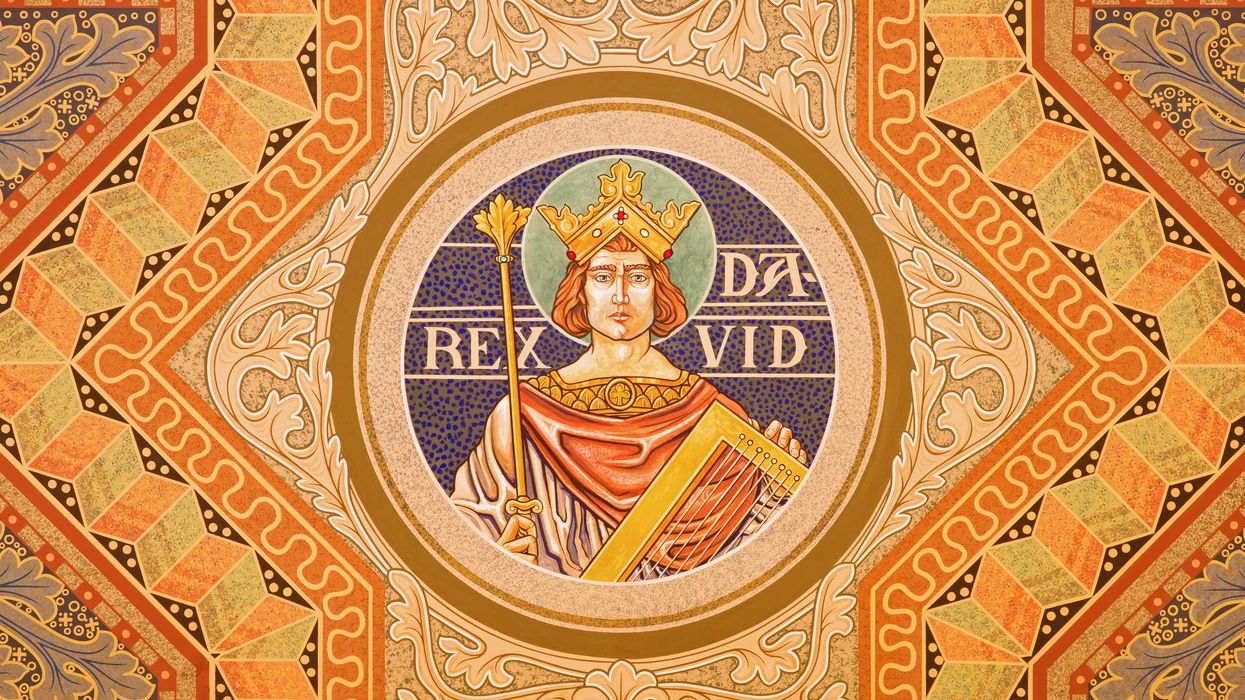
Many Christians aim too low. We mistake humility for passivity and meekness with mediocrity, thinking God wants us to suppress all ambition. In doing so, we turn losing into a kind of twisted Christian virtue. We call it humility, but really, it’s just unbelief.
God never called His people to be beautiful losers. He called us to reign with Christ.
To seek glory, honor, and immortality is to seek what God Himself promises to the faithful.
The Bible’s vision of humanity is larger and more dignified than the self-loathing — the false humility that passes for spirituality today. The Christian life was never meant to be small. Redeemed men and women are not required to limp through life. Rather, He made us for glory.
Consider Paul’s words in Romans 2:6-8: “He will render to each one according to his works: to those who by patience in well-doing seek for glory and honor and immortality, he will give eternal life.”
For a long time, I’d come to this verse in my Bible reading plan, and it struck me as odd. Paul can’t be saying we are saved by seeking glory and honor, since the whole book of Romans teaches the opposite. We are saved by grace, not works. So what is Paul saying?
Here’s my answer in a nutshell that I’ll develop below:
God originally created man to pursue glory, honor, and immortality through faithful obedience and exercising dominion over creation. Since Adam sinned, he “fell short” of this glory. But Christ, the second Adam, succeeded where Adam failed and restored man to his original purpose. Therefore, redeemed Christians are now free to pursue glory and honor by faith, in the power of the Holy Spirit, exercising godly dominion for the glory of God.
Adam’s lost glory
To understand Paul’s statement in Romans 2:6-10, let’s go back to the Garden of Eden. Genesis 2 teaches that there were two trees in the garden: (1) the tree of life and (2) the tree of the knowledge of good and evil. Adam was permitted to eat from the first tree but forbidden to eat from the second.
When Adam sinned, the verdict was exile. “[God] drove out the man, and at the east of the garden of Eden he placed the cherubim and a flaming sword that turned every way to guard the way to the tree of life” (Genesis 3:24).
The trees represented two possible destinies: glory or death. Had Adam persevered in obedience, he would have eaten from the tree of life and entered into immortality. Instead, he reached for forbidden knowledge and fell under the curse of death.
Though Adam was created in innocence, he was not yet as glorious as he could have become. God gave him a gloriously ambitious task to “be fruitful and multiply and fill the earth and subdue it and take dominion” (Genesis 1:28). That’s a global ambition. Adam’s task was to take the wild and untamed world outside of Eden and bring it under subjection to him. In other words, God created Adam with an eschatology — a purpose, telos, or end — that he might rise from innocence to glory through faithful obedience.
To fulfill God’s command, Adam would need to develop various skills he wasn’t created with. He would have needed to learn to plant gardens, name animals, lead a wife, and raise children. Those latent potentialities would have been drawn out of him through experience over time.
In other words, though Adam was morally innocent, he was not yet as glorious as he would have become had he been faithful to God’s commands. He could have attained glory by becoming a more skilled and excellent man in the pursuit of glorious goals. In so doing, Adam would have grown intellectually, physically, spiritually.
Christ succeeded where Adam failed. And the result of Christ’s obedience was glory.
In other words, innocence was the starting line, glory was the finish line.
With this in mind, notice Paul’s famous description of sin as not merely “doing bad things” but falling short of the glory of God (Romans 3:23). That’s important. Sin is more than merely breaking the rules; it is the forfeiture of glory. Because of Adam’s sin, he was no longer able to attain the glory God made him for. He “fell short of the glory of God.” And humanity has been falling short ever since.
Christ, the second Adam, attains the glory of God
But the story doesn’t end in failure. Scripture presents Christ as the “last Adam” who succeeded where the first Adam failed. In His human nature, Christ sinlessly retraced Adam’s path.
The author of Hebrews (quoting Psalm 8) draws this out explicitly:
What is man, that you are mindful of him,
or the son of man, that you care for him?
You made him for a little while lower than the angels;
you have crowned him with glory and honor,
putting everything in subjection under his feet. (Hebrews 2:6-8)
Notice Hebrews 2 and Romans 2 both use the same word pair: “glory” and “honor.” The author or Hebrews 2 is citing Psalm 8, which is a commentary on Genesis 1–2. In other words, these texts tie together the creation of man, the image of God, and the dominion mandate.
Hebrews 2 also connects the creation of Adam with the incarnation of Christ, who was likewise crowned with glory and honor. And through His suffering and death, Christ brought “many sons to glory” (Hebrews 2:10).
Thus, Christ succeeded where Adam failed. And the result of Christ’s obedience was glory. Jesus said it Himself: “Was it not necessary that the Christ should suffer these things and enter into his glory?” (Luke 24:26).
Therefore, Jesus hit the reset button on the human story. Adam’s sin broke the circuit of glory, but Christ reconnected it. Jesus secured the glory that Adam lost and offers it freely to His people. He restores humanity to its intended place as rulers over creation, crowned with glory and honor, who must once again revisit the dominion mandate given to Adam.
Thus, Christ completed the redemption arc of humanity. The fullest Christian life will not be marked by mediocrity but glory. And our savior will reward his faithful servants who pursue it. Through Christ, obedience is glorious again.
Redeemed humanity restored to the pursuit of glory
This brings us back to Romans 2:6-7. When Paul says that God “will render to each one according to his works,” he isn’t teaching salvation by merit. He’s describing the reward of faith — the fruit of a life transformed by grace. Those who “seek for glory and honor and immortality” are not grasping for self-exaltation; they’re following the path of Christ, the second Adam, who entered glory through obedience.
Christians are to do all things to the glory of God (1 Corinthians 10:31) while also hoping in glory as our inheritance (Romans 5:2). Those united to Him by faith are once again free to pursue what Adam forfeited.
God is ambitious. The creation mandate is ambitious (Genesis 1:28). The great commission is ambitious (Matthew 28:18-20). These ambitions are global in scale and and can only be accomplished by Spirit-filled men and women who dare attempt great things for God. Thus, redeemed Christians are likewise made to pursue great and glorious ambitions.
Christians who, therefore, think small, equating humility with mediocrity, are settling for less than what God made them for. God intends His people to exercise dominion under Christ’s authority — to build, teach, create, and govern. To seek glory, honor, and immortality is to seek what God Himself promises to the faithful.
Glory is not a zero-sum game
Perhaps you may find it surprising to hear that when we obey God, giving God the glory, there is also a glory that overflows back to us. But it does. God’s glory is not a zero-sum game.
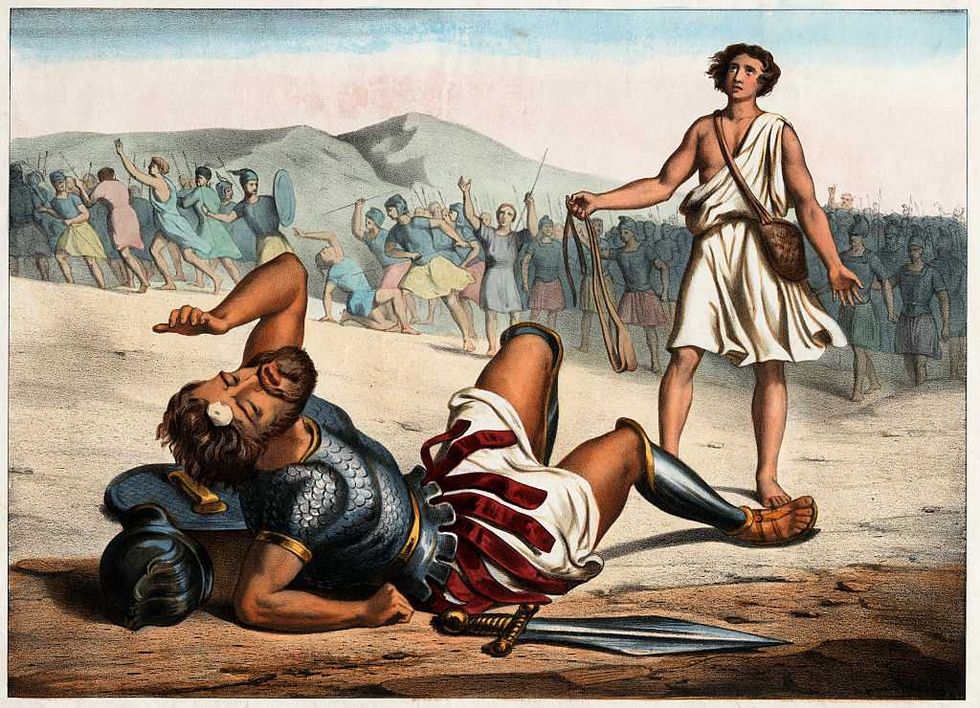
Take David’s victory over Goliath, for example. Who gets the glory for that? That’s actually a trick question. David could have stayed home that day, tending his sheep, playing it safe, and keeping his hands clean. If he’d stayed home, he would have remained innocent, but he would not have received glory.
RELATED: How ‘loser theology’ is poisoning the church
 Stefano Bianchetti/Corbis via Getty Images
Innocence isn’t the same as glory. One can remain innocent while doing nothing. Glory requires risk, faith, and obedience. When David stepped onto that battlefield, he was seizing the opportunity to magnify God through courage. That’s why we know his name. King David is on the Mount Rushmore of the Christian faith because he didn’t stay home. We know his name because he courageously rushed into battle.
In the defeat of Goliath, God gets the glory, but David also shares in it. That’s because God’s glory is not a zero-sum game — it is expansive. The more we glorify God, the more His glory spills over onto those who take courageous action by faith.
When some Christians feel satisfaction for succeeding at a great task, they might feel a little guilty for enjoying it. They might wonder if it’s pride or selfish ambition. That’s certainly possible, but it’s also possible that they’re merely enjoying an echo of glory in their achievement.
Rather than allowing the fear of pride to smother the glory we’re meant to enjoy, it is better to pursue glory while repenting of any pride that we see arising within us. Better to repent of sin while pursuing great things than to bury your talents and avoid the risk.
Greater ambition, greater glory
This matters because glory can be a powerful motivator for faithful Christians to pursue ambitious goals. The greater the ambition, the greater the glory when it is accomplished.
Put another way, glory scales with ambition. The kid who wins a backyard football game may feel a taste of glory, but the man who wins a Super Bowl ring experiences it in full. This same pattern applies to life in God’s kingdom: the greater the goal, the greater the glory. Glory is out on the battlefield, not at home on your couch.
There’s glory in raising faithful children, mastering your craft, building a business that blesses others, and serving others with excellence. Christians should be the most competent, disciplined, and creative people in the world. Why shouldn’t we be? We are indwelled by the Holy Spirit, sent on a divine mission, and commanded to take dominion. That means aiming high — not low.
Aim higher
Since many Christians don’t think this way, they end up aiming too low. They pray, go to church, pay a tithe, read their Bible, and stay out of trouble, thinking that’s the fullness of the Christian life. None of those things are wrong, but they’re not glorious either.
Innocence is where the journey begins, but glory is where we should end up.
So if there’s a promotion offered at work, go for it. If you’ve got a business idea, build it. If you’re presented with a leadership opportunity, take it. Godly Christians should make the best business owners and bosses in the world, should they not?
Pursue excellence in your vocation such that you will be a blessing to others. That’s what practical dominion taking looks like.
God has given you gifts and opportunities. The question is: What will you do with them? Will you aim low out of false humility? Or will you seek glory, by faith?
We were never meant to limp through life as losers or apologize for our successes. God crowned us with glory and honor and set us loose in His world. So don’t smother your ambition under the guise of humility. God doesn’t call us to be beautiful losers. He called us to reign with Christ. So aim higher. Pursue greatness for the glory of God. And when you succeed, give Him the glory and enjoy the reciprocal glory He delights to share with you.
May your pursuit of glory lead you upward, outward, expanding, and fruitful.
This essay was adapted from an article published at Michael Clary’s Substack.
Why the Bible is suddenly flying off shelves across America
I’ve watched a lot of cultural moments come and go in my lifetime, but this one has felt different.
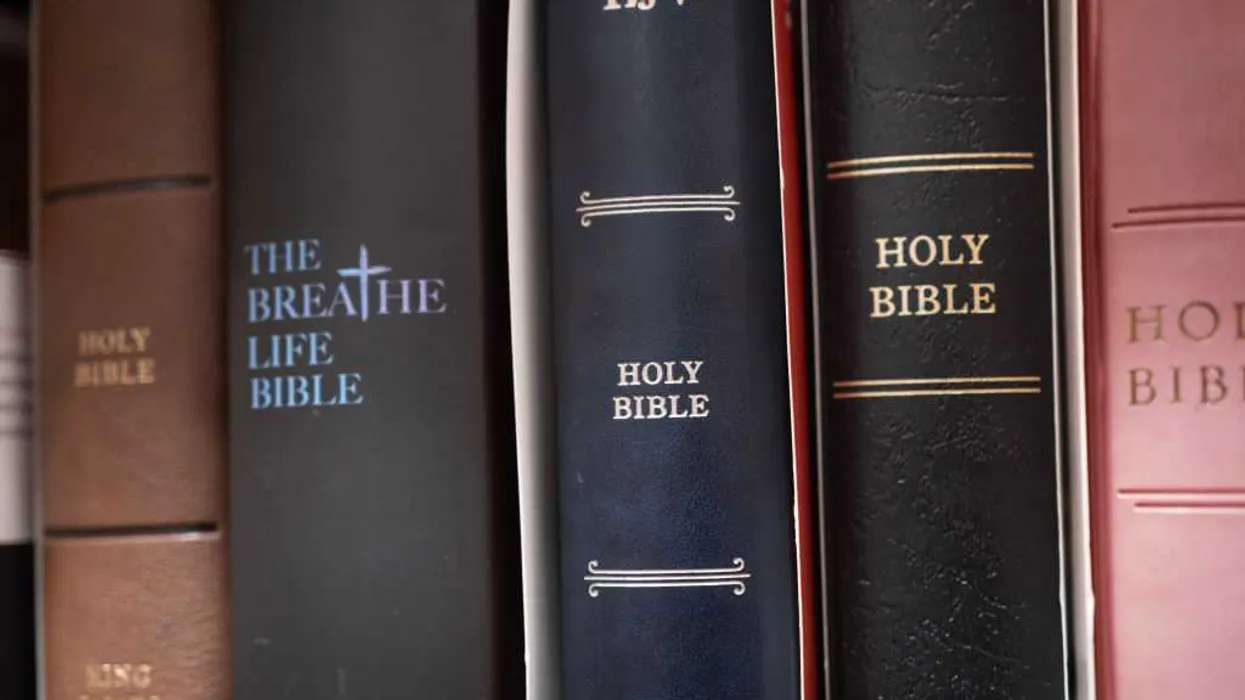
The shocking assassination of Charlie Kirk didn’t just send tremors through the conservative world — it created a ripple that reached far beyond it. In the days and weeks that followed, I saw headlines I never thought I’d see: reports of a Bible-sales surge unlike anything in recent years.
When the noise of culture gets stripped away, the hunger for truth rises to the surface.
According to Fox Business, more than 2.4 million Bibles were sold in the U.S. in September — a 36% increase over last year.
The Bible-sales surge that coincided with Charlie Kirk’s assassination reveals something profound.
When America faces moments of crisis, people often turn to scripture for hope and answers. While no one can say with absolute certainty what caused the surge, the timing and impact of Charlie’s life and testimony make it reasonable to believe it played a significant role. And I personally believe that his assassination likely contributed to this powerful moment.
A cultural shockwave I’ll never forget
Charlie’s assassination on Sept. 10, 2025, shook me to the core. Like so many others in conservative circles, I admired him. But for me, it was more than admiration. Charlie was my role model in Christ — a man who stood unapologetically for Jesus in a culture that often mocked Him. He lived boldly, unfiltered, and unafraid. That resonated with me deeply.
For years, those of us who followed Charlie knew who he was and what he stood for. But it wasn’t until his assassination that millions outside our circle — people on the left, independents, and even those who normally tune out of politics — truly saw him. His name wasn’t just on conservative media anymore; it was everywhere. And in that moment, the world encountered the testimony of a man whose faith was front and center.
That matters. His assassination didn’t just make headlines — it made people think about eternity. It made them think about what kind of man he was and, more importantly, Who he lived for.
This cultural moment reminds me of how believers are called to stand firm even when the world doesn’t understand.
Why people turn to the Bible in times like this
I’ve learned over the years that when tragedy strikes, people instinctively reach for something that doesn’t shake. They reach for something real. For many Americans, that means reaching for the Bible.
We’ve seen this before — after 9/11, during the pandemic, and now again. The Bible-sales surge isn’t just about a number on a spreadsheet. It’s a reflection of millions of hearts suddenly looking for answers they can’t find anywhere else. People may not even fully understand why they’re buying a Bible — but something in them knows they need hope.
Deep down, every person has a God-shaped void. And when the noise of culture gets stripped away, the hunger for truth rises to the surface.
The power of one man’s testimony
Charlie’s faith spoke louder in his assassination than most people’s do in their lifetime. I’ve followed him for years, not just for his courage in politics, but for his unwavering love for Jesus. Seeing the way his story spread afterward impacted me profoundly. People who would have never listened to him while he was alive suddenly heard about him everywhere.
I believe some of those 2.4 million Bibles may have been bought by people who wanted to understand why Charlie believed what he believed. Others probably acted out of grief, curiosity, or quiet searching.
RELATED: Why Gen Z is rebelling against leftist lies — and turning to Jesus
 StanislavSalamanov/iStock/Getty Images Plus
Whatever the reason, it’s reasonable to believe his testimony was one of several factors prompting people to seek answers in scripture.
The early church experienced the same kind of ripple effect. Persecution never silenced the gospel — it multiplied it. Charlie wasn’t a martyr in the classical sense, but the way God is using his life after his assassination fits that same pattern: light shining in the darkness.
Why the Bible-sales surge matters
To me, this surge isn’t just encouraging — it’s revealing. Beneath the noise of politics and division, there’s still a spiritual hunger in America. People are tired of the chaos. They’re searching for something real. And whether they know it or not, they’re reaching for the only truth that can set them free.
The Bible isn’t just another book on a shelf. It’s living and active (Hebrews 4:12). If even a fraction of the millions who bought a Bible actually open it, read it, and meet the living God, this moment could be the spark of something extraordinary.
But this also means we need to be discerning because buying a Bible isn’t the same thing as being transformed by it.
Reaction or revival?
I remember the wave of church attendance after 9/11. America prayed. Churches filled up. People searched for answers. But as the months passed, that spiritual hunger faded.
Crisis can wake people up, but it doesn’t guarantee lasting change. That’s the question now. Will this Bible-sales surge be a turning point or just a reaction to pain?
Reaction is emotional, but revival is spiritual. Reaction fades, but revival transforms.
Real revival isn’t just a wave of emotion or a spike in sales. According to GotQuestions.org, true revival is a spiritual reawakening that brings a heartfelt return to God and obedience to His word. That’s the kind of revival America needs — not just a cultural reaction to tragedy.
My prayer is that this moment becomes more than a headline, that it becomes a holy spark that ignites something real.
The church — and you and me — must be ready
This is where we come in. If people are turning to the Bible, the church has to be ready to lead them to the Author. And I’m not talking about pastors and leaders alone — I’m talking about all of us. I’m talking about me.
People who might never have stepped into a church are holding a Bible right now. Some don’t know where to begin. Some are skeptical. Some are hungry. If we stay silent, this moment may fade away like so many before it. But if we speak up — if we share the hope we’ve found — we can meet those searching hearts with truth and grace.
Charlie’s example and our call
Charlie Kirk lived the kind of bold faith I want to live. He didn’t compartmentalize his Christianity. He proclaimed it from the rooftop, even when it cost him culturally. That’s why he became my role model in Christ. And I believe the best way to honor that kind of legacy is not just to admire it — but to live it.
A Bible sitting unopened on a shelf won’t change a single life. But the Word of God, opened and believed, absolutely will.
This is our moment to shine the light of Christ, to speak boldly, and to live with conviction. Charlie did. Now it’s our turn.
America is reaching for the Bible again. But this time, it’s personal for me. Charlie Kirk wasn’t just a public figure I respected — he was a man whose faith inspired mine. His witness is still bearing fruit, even now. I don’t want to see this moment fade into history as just another cultural reaction. I want to see lives transformed.
That starts with believers like you and me living out the truth we say we believe.
This article is adapted from an essay originally published at Arch Kennedy’s blog.





