

Category: Blazetv
Are we about to complete the Great Commission and unleash the End Times?
The Great Commission, most famously recorded in the Gospel of Matthew, was Jesus’ final instruction to His disciples before His resurrected body ascended into heaven.
In Matthew 28:18-20, after gathering them on a mountain in Galilee, He said: “All authority in heaven and on earth has been given to me. Therefore go and make disciples of all nations, baptizing them in the name of the Father and of the Son and of the Holy Spirit, and teaching them to obey everything I have commanded you. And surely I am with you always, to the very end of the age.”
Since that command was given roughly 2,000 years ago, generation after generation of faithful Christians have been bringing the gospel message to every corner of the world. Today, that mission is nearly complete, says entrepreneur, Christian ministry leader, and author Douglas Cobb, who just published a book on this subject titled “The Sprint to the Finish: The Global Push to Complete the Great Commission in This Generation.”
Less than 100 unreached people groups remain; Bible translation organizations project that 100% of the global population will have access to the Bible or key parts of Scripture by 2033; right now, mission networks are planting churches in the last untouched regions on Earth.
We are inching ever closer to fulfilling the Great Commission — a precursor to Christ’s final return.
On this episode of the “Steve Deace Show,” Deace and Cobb discuss this question: Are we living in the generation that will finish the mission Jesus gave His church?
“Jesus said in Matthew 24:14: ‘This gospel of the kingdom will be preached in the whole world as a testimony to all nations, and then the end will come,’” Cobb recites.
“As I read the Bible, it’s one of the most, if not the most, direct promise about the timing of Jesus’ return. He’s given us a mission to take the gospel to the whole world, and when we’re finished with it, that will open the door to His return. I don’t think He’ll come back until we’ve done that,” he tells Deace.
But the crazy thing is, we’re on the verge of doing it. The people alive right now might just be “the ones that finish this race,” Cobb says.
“Based on my understanding, I think we’re within a year or two of seeing the ‘every nation’ finish line crossed, and what I mean by that is, gospel work begun in every people group,” he continues.
According to the Finishing Fund — an organization Cobb started to accelerate the fulfillment of the Great Commission — the list of unreached people groups who “do not have a gospel program, a gospel effort under way” is “well under 100,” he says.
“The folks who work on Bible translation — the second finish line — have set 2033 as their deadline for the completion of the Bible in every language on the planet. And another group that I’m a part of, the ACHIEVE Alliance … [is] pursuing the ‘every place’ finish line, and similarly, they are working toward a 2033 goal for that effort of a church in every place everywhere,” he adds.
“We’re down to under 10 years on all three finish lines.”
To hear more, watch the video above.
Want more from Steve Deace?
To enjoy more of Steve’s take on national politics, Christian worldview, and principled conservatism with a snarky twist, subscribe to BlazeTV — the largest multi-platform network of voices who love America, defend the Constitution, and live the American dream.
2025: Triumphs, tragedies, and lasting legacies — Allie Beth Stuckey’s year in review
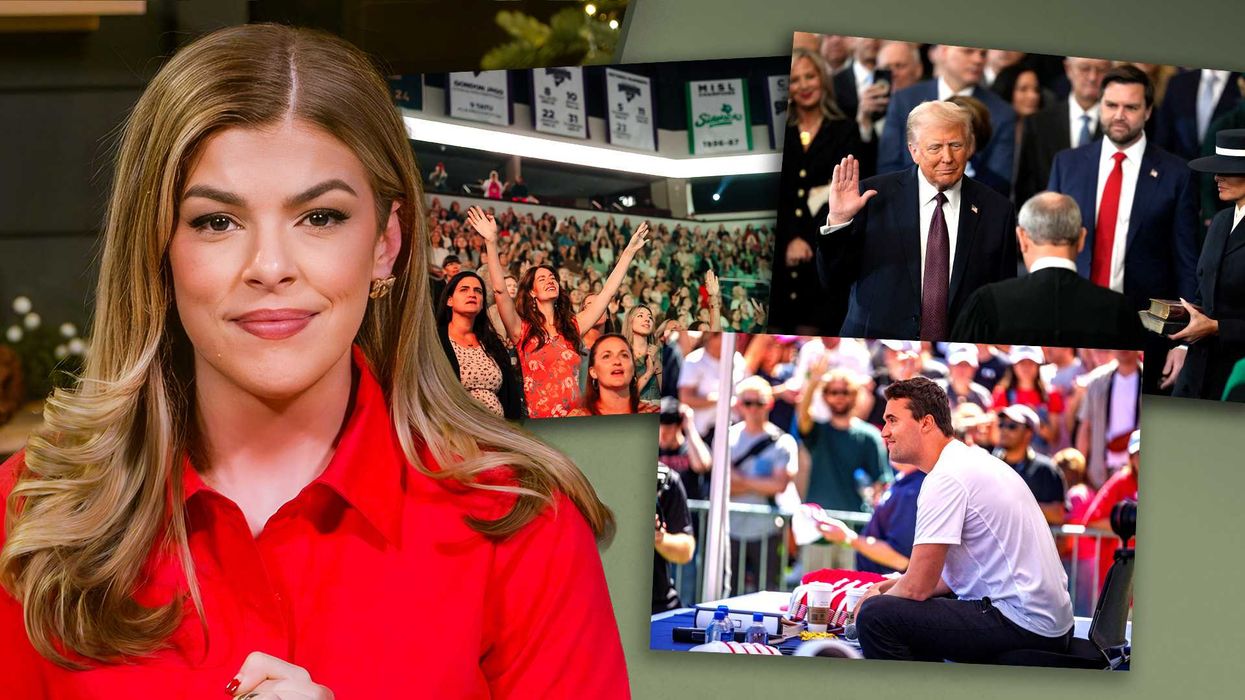
Without question, 2025 was anything but dull. Trump made a historic return to the White House. Biden regime policies were thankfully booted out the door. Left-wing violence reached astonishing heights. Natural disasters ravaged parts of the country. Infighting in conservatism burned bridges and fractured the MAGA base.
It’s been a wild year full of ups and downs. On this episode of “Relatable,” Allie Beth Stuckey revisits four defining moments of 2025.
1. Trump’s inauguration
On January 20, 2025, Donald Trump was sworn into the presidency for his second term.
It was quite an eventful occasion. The sound system failed just as Carrie Underwood began “America the Beautiful.” But the blonde country icon didn’t skip a beat, launching into an a cappella performance and hitting every note with her usual precision and cadence.
“That was beautiful,” Allie says.
However, controversy erupted when Trump took his oath. Unlike the majority of presidents before him, he did not put his hand on the Bible, leading many to brand it a scandal. But Allie says there was nothing significant or covert about it. The fact that the Trump family provided their own family Bible for the ceremony is proof that he wasn’t making any sort of anti-Bible statement.
2. Vatican elects the first American pope
On May 8, 2025, following the death of Pope Francis, white smoke billowed from the Sistine Chapel, announcing that the successor had been named. It was Cardinal Robert Francis Prevost, who selected the name Pope Leo XIV. Born and raised in Chicago, Illinois, he is the first-ever American pope.
“It’s a really important historical moment — not just in the Catholic Church, but really in the West in general,” Allie says.
“Unfortunately, Pope Leo has some progressive views on some things that I would call unbiblical views on some things that I don’t love,” she adds.
3. Loss of four prominent Protestant leaders
The year 2025 sadly saw four courageous evangelicals pass away.
On May 26, Duck Dynasty patriarch, BlazeTV host, and devout Christ-follower Phil Robertson passed away at the age of 79 after a long battle with Alzheimer’s disease.
John MacArthur, an 86-year-old evangelical pastor and theologian, then died on July 14. He died from pneumonia after being hospitalized.
The following month on August 21, James Dobson — psychologist, author, and founder of the conservative Christian ministry Focus on the Family — passed away at age 89 from undisclosed causes.
And finally, reformed Baptist preacher and speaker Voddie Baucham Jr. passed away from an undisclosed emergency medical incident on September 25, 2025. He was only 56 years old.
“I mean, this is, like, just a generation of faithful evangelical Protestant pastors and leaders that we lost,” Allie says.
“Their legacy lives on, and God ordained all of their days, knew exactly when they were going to pass, but it’s still sad for all of us, but especially their families.”
4. Murder of Charlie Kirk
Lastly, 2025 will go down in history as the year when our beloved Charlie Kirk was murdered while speaking at a Turning Point USA event. On September 10, the TPUSA founder was struck in the neck by an assassin’s bullet on the Utah Valley University campus where he was launching his TPUSA 2025 tour. He left behind his wife, Erika, and their two children, as well as the TPUSA empire that has only exploded in growth since his death.
“I will never forget that day,” says Allie, who was friends with Charlie.
“This renewed interest in [God] that we all saw at Charlie’s memorial, that we all saw on college campuses, it is happening,” she encourages.
“It seems like the love of many has grown cold really fast — like we so quickly went from this unified moment at the memorial to conspiracies, to accusations, to slander, to gossip, to division.”
But revival is still happening. Maybe it’s not as loud and bold as it appeared in the beginning, but it’s happening nonetheless. “When we get to the other side of eternity, we are going to see this incredible, complex, interwoven tapestry of all of these little unseen and unsung moments in the lives of believers that culminated in someone’s salvation, and angels rejoicing because of that,” Allie says.
To hear more of Allie’s 2025 recap, watch the episode above.
Want more from Allie Beth Stuckey?
To enjoy more of Allie’s upbeat and in-depth coverage of culture, news, and theology from a Christian, conservative perspective, subscribe to BlazeTV — the largest multi-platform network of voices who love America, defend the Constitution, and live the American dream.
3 BlazeTV hosts give their top 2026 predictions — and they’re wild

2026 is widely predicted to be an explosive and turbulent year. AI is growing faster than we can keep track of. Global conflicts are simmering. The world economy is teetering on a debt-fueled monetary reset and possible dollar crisis.
It’s going to be a wild year.
On this episode of “Glenn TV,” Glenn Beck, Steve Deace, and Liz Wheeler give their top predictions for 2026.
Steve Deace
Prediction #1: America trades Taiwan for Venezuela’s oil
“I think that China and the U.S. are going to effectively swap Taiwan and Venezuela,” says Deace.
“With the disruption that is happening in markets and where we are in terms of a long-term paradigm shift, I think we are not just going to sit there and just let Venezuela with maybe the largest oil reserves in the world just go on the bye-bye here in our own hemisphere.”
This, in turn, he says, will spur China to “do the exact same thing to Taiwan.”
“Steve is right on the money,” says Glenn’s head writer and researcher, Jason Buttrill, who is a former U.S. Marine intelligence specialist and Department of Defense contractor.
Glenn notes that this has massive implications for chip-making, as Taiwan currently supplies the United States with over 90% of the world’s highest-performance chips that go into smartphones, modern weapons, and artificial intelligence.
Prediction #2: Global leader alleges alien contact
“I think we’re going to see at least one elected official somewhere in the world next year claim to have directly communicated one-on-one with non-human intelligence,” says Steve.
Public interest in extraterrestrial life is peaking right now, he says. “The number-one-selling movie in America right now on Amazon, the biggest website in the world, is ‘Age of Disclosure”’ — a 2025 documentary claiming to expose an 80-year global government cover-up of non-human intelligent life and a secret international race to reverse-engineer extraterrestrial technology.
On top of that, world-renowned director Steven Spielberg — who has been pretty quiet since what many thought was his farewell film back in 2022 — has come out of retirement to direct a “disclosure film on UFOs” in 2026.
“The pressure on this is amping up,” says Steve.
Liz Wheeler
Prediction #1: Cabinet turnover
“I think we’re going to see some significant Cabinet turnover in the Trump administration,” says Liz, noting that it is Attorney General Pam Bondi who is most likely on the chopping block.
“Listen, we voted for Trump because we want justice for all of the deep-state weaponization of the government targeted at us. And we have not seen that from the Pam Bondi Department of Justice,” says Liz.
“The Trump voter demographic has patience. We’re generous. We understand that we’re up against this conglomerate enemy, but I think people are starting to run out of patience.”
Prediction #2: Denaturalization and deportation of a certain member of Congress
Liz’s top prediction, she says, is that “a member of the U.S. Congress will be denaturalized and removed from Congress and deported from the United States of America.”
“I wonder who that could be,” laughs Glenn.
Liz is, of course, referring to Democrat Rep. Ilhan Omar (Minn.) — a radical leftist who prioritizes foreign interests, especially her home country of Somalia, over America.
Besides the strong speculation that Omar illegally married her own brother, there is ample evidence that Omar’s father, Nur Omar Mohamed, came to America not because he was fleeing a tyrannical regime but rather because he was “a member of that regime,” says Liz.
“He was actually a high-ranking military official [in Somalia]. He tried to hide that association so that he could claim asylum here in the United States, but he was in charge of propaganda for that communist regime,” she explains, calling it “immigration fraud.”
If that is found to be true, then “Ilhan Omar’s naturalized citizenship status is itself illegitimate.”
Glenn Beck
Prediction #1: AI boom threatens US power grid
Glenn has been warning for some time that surging AI data-center energy demand will eventually strain the U.S. grid, causing rolling blackouts and brownouts.
“I think 2026 is going to be the first year that we see things like Texas having rolling brownouts for a week at a time. I think you’re going to start to see the strain on the grid by the end of next year in ways that you would never have expected,” he says.
Prediction #2: Civil rights movement 2.0 sparked by AI
“I think next year is going to be a huge year historically for the beginning of a civil rights movement,” says Glenn. “I think we are going to see massive civil rights cases come to the courts next year, and they’re only going to get bigger and bigger.”
He warns that these kinds of cases will be unprecedented, as courts will debate whether AI-generated content, like deepfakes for example, count as protected speech and whether censoring “harmful” AI output is a First Amendment violation.
2026 is also when AI rules and regulations will greatly impact public education, says Glenn. Whether it is heavy AI policing, which could spark a full-blown privacy revolt, or the opposite — intense AI implementation via proctoring software, keyword/voice monitoring, or facial recognition camera — a “civil rights movement” over technology in classrooms is sure to spark.
To hear more 2026 predictions, watch the episode above.
Want more from Glenn Beck?
To enjoy more of Glenn’s masterful storytelling, thought-provoking analysis, and uncanny ability to make sense of the chaos, subscribe to BlazeTV — the largest multi-platform network of voices who love America, defend the Constitution, and live the American dream.
We used to need guts to sin. Now we just need wi-fi.
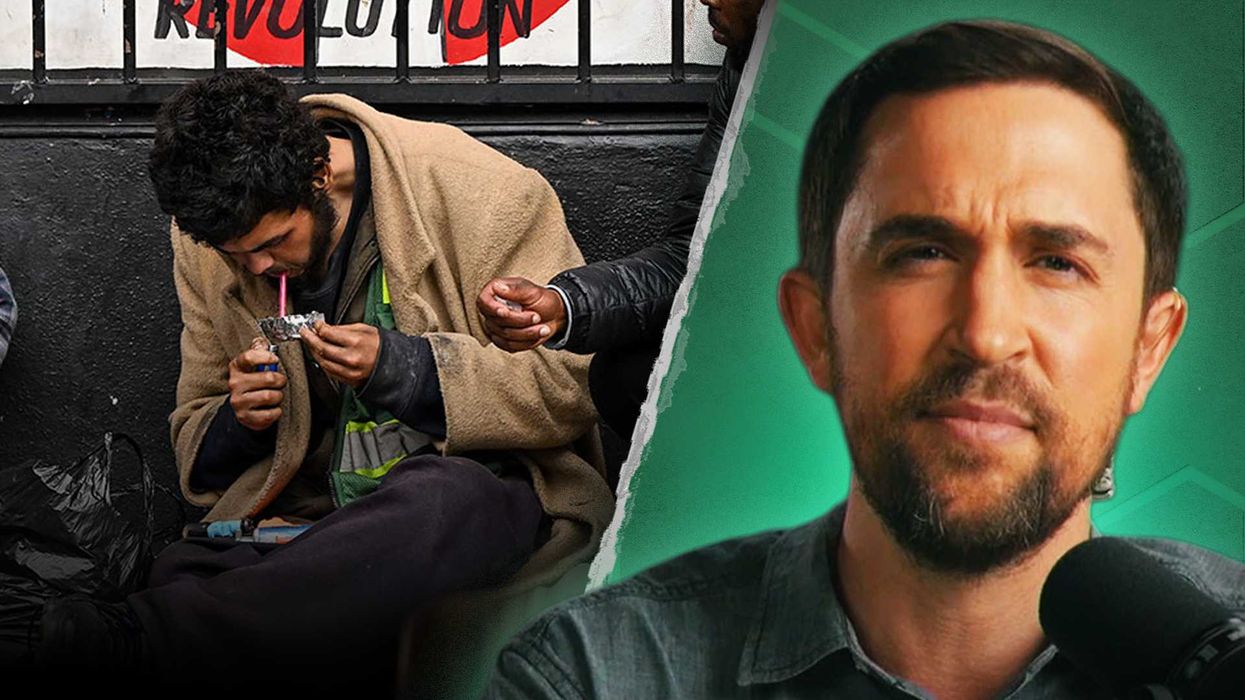
Once upon a time, before the digital age swept us up in a current of global access, vices like gambling, pornography, and marijuana were kept in check with what BlazeTV hosts Christopher Rufo and Jonathan Keeperman argue was healthy friction.
It’s what made Mr. Johnson blush when he skulked up to the checkout counter at the local video rental with an X-rated videotape sandwiched between two rom-coms. It’s what forced hopeful gamblers to sneak into illegal card rooms at the back of sketchy bars, pockets stuffed with ATM cash withdrawn in small increments to avoid spousal skepticism. It’s what necessitated dark parking lot meetups, secret car compartments, and stashes of air fresheners and breath mints.
But today, none of those physical and social barriers exist. Want to watch an adult film? Jump online; there are millions to choose from. Interested in placing a bet? Easy: Open an app and blow $10,000 on a random ping-pong match without ever leaving the comfort of your bed. Out of weed in a state that hasn’t legalized it? No problem; there are hundreds of dispensaries that will illegally ship right to your front door.
The glowing rectangle that lives in our pocket has pulverized every obstacle that once kept vices reined in.
Keeperman laments the death of “the gray market,” where “public shame and censure” were a real obstacle for vice-seekers but not so large an obstacle that they barred them completely from indulging.
“I think that balance is sort of ideal,” he tells Rufo.
“People, unfortunately, without any of these barriers to entry, they go down these rabbit holes; they start cultivating these bad behaviors, these addictions, and it ruins their lives. And it ruins the lives of the people around them, and it’s horrible for society.”
He remembers working at his town’s video rental shop as a teenager and the “cycle of shame” that commenced every time a local would sheepishly duck out of the curtained room at the back of the store with “Debbie Does Dallas” tucked covertly under his arm.
“It was like, ‘All right, man, like, cool. You’re embarrassed; I’m embarrassed to be doing this.’ … But it was good. That’s how it should be,” he reminisces.
This system of shame and risk also benefited kids. Keeperman recalls the notorious male student who stole Playboy magazines from his dad’s secret stash and smuggled them to school in his backpack so he could charge his fellow delinquents $5 for a week’s rental.
“It’s shameful, and if the vice principal catches you, you’re screwed, man. You’re in the doghouse. … You might get suspended or get these demerits or whatever, and your mom’s going to be mad at you,” he laughs.
But in all seriousness, these were real barriers that kept a lot of kids from engaging in pornography. But today, there’s no need for magazines or smuggling. All kids need to do is run a quick Google search alone in their bedrooms, and they’ll be inundated with graphic content from hundreds of sites. Addiction is all but guaranteed.
Keeperman says that while he takes all necessary precautions to prevent his children from accessing graphic content on their devices, he knows there’s only so much he can do.
“My kid’s going to have a public life. He’s going to have a social life that extends beyond the boundaries that we can draw for him as parents. And I can’t control what the kid next door does. You just can’t. And it’s just too easy. It’s too accessible,” he says.
Rufo says the answer to this problem of a barrier-less world is to re-create the barriers in the digital sphere.
“You have to have a digital version of the back room and the curtain, meaning you have to have ID verification, age verification,” he says.
To hear more of his theory, watch the episode above.
Want more from Rufo & Lomez?
To enjoy more of the news through the anthropological lens of Christopher Rufo and Lomez, subscribe to BlazeTV — the largest multi-platform network of voices who love America, defend the Constitution, and live the American dream.
Liberals in nuclear meltdown mode after 2026 ‘Color of the Year’ is announced
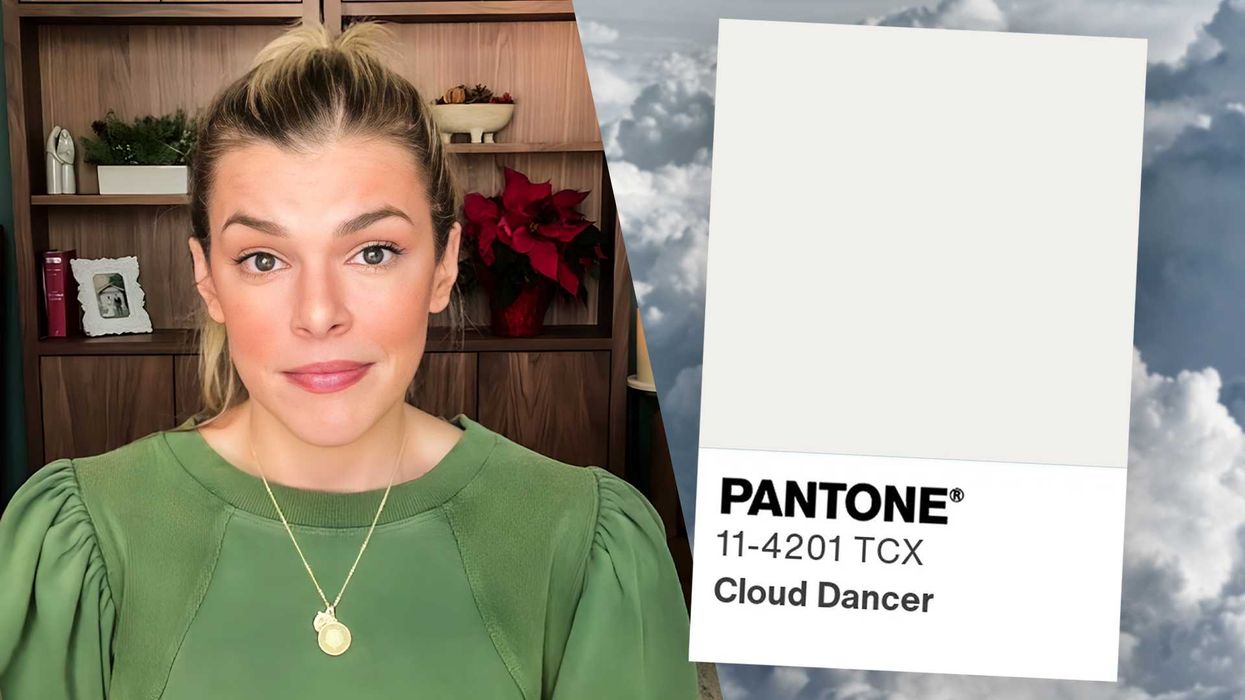
Liberals across the nation are in full tantrum mode after a shade of white was declared 2026’s top hue.
On December 4, Pantone LLC — which is considered the global authority on color standardization — announced “Cloud Dancer,” described as a “billowy white imbued with serenity,” as its 2026 Color of the Year.
“Similar to a blank canvas, Cloud Dancer signifies our desire for a fresh start. … An airy white hue, PANTONE 11-4201 Cloud Dancer opens up space for creativity, allowing our imagination to drift so that new insights and bold ideas can emerge and take shape,” wrote Pantone Vice President Laurie Pressman.
Pantone Executive Director Leatrice Eiseman echoed the VP’s words: “The cacophony that surrounds us has become overwhelming, making it harder to hear the voices of our inner selves. A conscious statement of simplification, Cloud Dancer enhances our focus, providing release from the distraction of external influences.”
Despite these rationales and Pressman’s statement that skin color “did not factor into” Pantone’s selection, furious liberals are accusing the company of being tone-deaf and racist.
Allie Beth Stuckey dives into the hilariously absurd reactions of several unhinged lefties.
X user @svviftlet tweeted:
In another social media video, two girls denounced Pantone’s Color of the Year, claiming it gives “Sydney Sweeney has good genes vibes.”
Back in July, Sweeney was lambasted for starring in an American Eagle denim commercial using the double entendre that Sydney Sweeney has good jeans/genes.
“You’re not allowed to say if you have blonde hair and blue eyes that you have good genes. … She clearly does have good genes. She’s beautiful,” scoffs Allie, “but if you’re a white person, you can’t say that.”
In another video, Feng Shui expert Katie Rogers literally set her Pantone color swatches on fire:
Another Instagram reel features influencer Charlotte Palermino, who ironically filmed her video in an off-white sweater in front of white-colored walls, whining, “It’s giving conservative.”
“It’s literally just a color, okay? It’s an inanimate color,” says Allie, “and the subliminal message is far more offensive than any supposed message that Pantone is communicating.”
The message these social media users are hammering is that “it’s not okay to be white. … You need to be ashamed of that, that white — having white skin — symbolizes something bad, that we need to reject the color of our skin.”
“In this age of self-confidence and self-love, it’s only white people who have to hate themselves or associate their skin color with the collective sins of people who lived elsewhere at a different time? No,” Allie says.
She encourages everyone, but especially Christians, to reject this social justice nonsense. “It’s completely unbiblical. That is not just. Justice is impartial. Justice is individual. Justice is direct. You don’t carry the sins of someone who kind of looked like you,” she says.
To see the videos and hear more of Allie’s commentary, watch the video above.
Want more from Allie Beth Stuckey?
To enjoy more of Allie’s upbeat and in-depth coverage of culture, news, and theology from a Christian, conservative perspective, subscribe to BlazeTV — the largest multi-platform network of voices who love America, defend the Constitution, and live the American dream.
AI isn’t killing writers — it’s killing mediocre writing
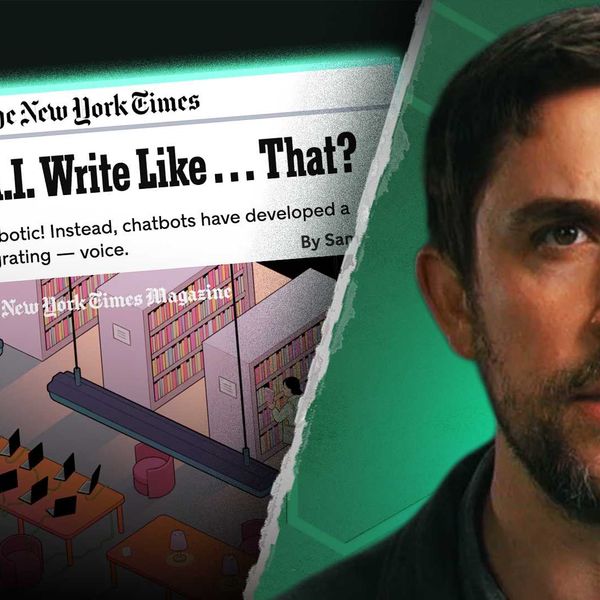
For years, we were warned that artificial intelligence would eventually eliminate the need for writers. In mere seconds, it would be able to crank out essays, articles, reports, blog posts, you name it, rendering flesh-and-blood writers obsolete.
Well, those days are here. AI writing floods our inboxes, social media feeds, and web pages every single day.
But it’s not quite the product we were pitched. While bots can indeed string coherent sentences together, the end result is mediocre at best. Its flat, em-dash heavy, idiosyncrasy-free, polite prose is easily recognizable to average readers, most of whom are disenchanted by the lack of human touch.
It turns out AI — beholden to algorithms and formulas — cannot counterfeit the voices of the deeply complicated, unique creatures that are human beings.
Christopher Rufo and Jonathan Keeperman, BlazeTV hosts of “Rufo & Lomez,” believe that AI writing may actually make writers more valuable — but just the ones with genuine talent.
AI is undeniably eliminating the massive class of mediocre writers. The kind of text AI produces is quickly becoming “the default sound or voice of people who don’t have talent, who can’t do things on their own. … It’s becoming the default voice of stupidity,” says Keeperman.
On the flip side, “Anybody who can write at a level above [AI] now has more value.”
The pervasiveness of AI copy seems to suggest that those genuine talents are few and far between.
“I am seeing [AI writing] everywhere. I am seeing it in published books. … Tons of ad copy even for really prominent companies that obviously have huge marketing departments [are] leaning on these sort of tripartite adjectival phrases. … There’s all these sort of syntactical signals that are giveaways,” says Keeperman, “but it’s also making me attuned to people who can write really well, and I find myself gravitating towards those people.”
But that doesn’t mean writers can’t use AI to their advantage. It is an excellent tool for “research,” “aggregating a lot of information,” “analysis,” and “brainstorming,” Keeperman adds.
Rufo agrees. “Terrible writing, [but] it’s good for discovery. … I think for certain tasks, it’s better than a Google search or a search engine search.”
For someone like him, who conducts large-scale research, AI can expedite the process of sifting through hundreds of pages of PDFs, but it’s not fail-proof.
AI is “maybe comparable to an undergraduate research assistant but … an unreliable [one],” says Rufo.
“You double-check the work, and you realize that the AI makes up 30% of the things that it’s telling you.”
“It seems like something that has huge potential, but I just see it slowing down in its improvement. I see it still having some fundamental flaws that would prevent it from being a trustworthy object of delegation,” he says.
“I remain extremely skeptical of the AI doomers or AI fatalists who think that this is going to take over the world and the machines are going to be controlling everything. It’s like it can’t even format citations. I think we’re a long ways away from the AI taking over the world.”
To hear more, watch the episode above
Want more from Rufo & Lomez?
To enjoy more of the news through the anthropological lens of Christopher Rufo and Lomez, subscribe to BlazeTV — the largest multi-platform network of voices who love America, defend the Constitution, and live the American dream.
Glenn Beck reveals the one thing he should have NEVER said about Donald Trump
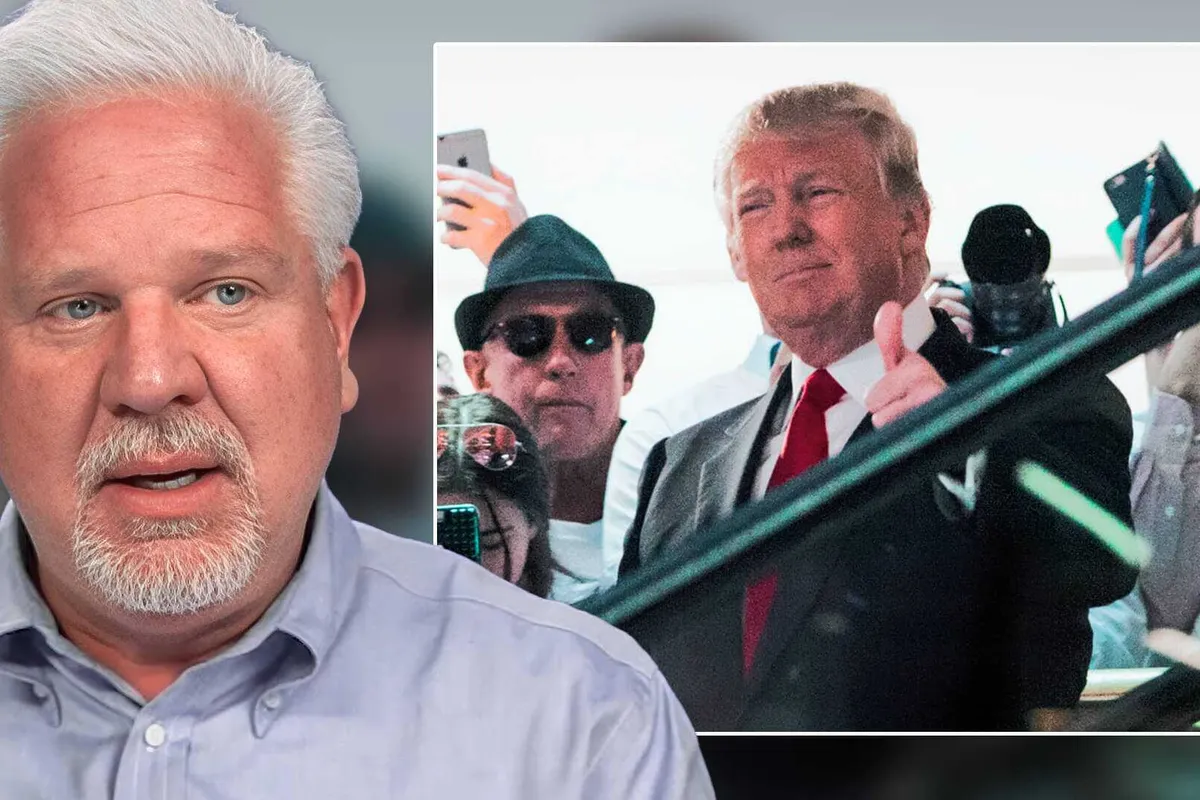
What many don’t know is that there are two sides to Donald Trump: the public persona known for scathing Truth Social posts and humiliating contentious reporters and the incredibly gracious family man behind the bombast.
Before Glenn Beck knew the difference, he believed Trump to be an insincere grifter, spurring him to make some public statements he deeply regrets today.
On a recent episode of “The Glenn Beck Program,” Glenn shared a story about Donald Trump that nearly drove him to tears.
Before Trump announced his presidential run in 2015, he and Glenn were friendly after hitting it off at one of Larry King’s birthday parties. During one conversation, Trump urged Glenn, who traveled often for work, to stay at one of the Trump hotels.
Glenn agreed to try it out and booked a room at the Trump International Hotel in New City during a business trip. However, at the time, he was on a strict diet for health reasons that only allowed him to eat 70 specific foods. As a result, a personal chef had to accompany him everywhere he went.
“And so I called [Trump] up, and I said, ‘Hey, I’m coming to New York. I have a chef that has to travel with me because I can only eat these 70 things, and it has to be exact. … Could you accommodate?’ … And he’s like, ‘Absolutely, not a problem,”’ Glenn recounts.
However, during Glenn’s stay in NYC, he got a phone call informing him that his father was about to pass away, requiring him to cut his trip short.
“Somehow or another, [Trump] found out that I left. I go to Seattle; my father dies; I come back home, and he calls me up, and he said, ‘Is there a reason you left early from the hotel? Did something go wrong?’ And I said, ‘Yes, sir. My father passed away.’ And he said, ‘Oh my gosh, Glenn, I’m so sorry to hear that,”’ Glenn says, calling Trump “so relatable and so kind.”
However, Glenn’s kindly opinion of the future president immediately soured when Trump announced just a week after their phone conversation that he was running for president.
“I can’t believe I’m confessing this. This is so horrible for me to say. This is one of the worst things I’ve done in a long time,” he says, fighting back tears.
“I remember getting on the air as soon as he announces [his candidacy] … and I said, ‘That son of b***h has been courting me this whole time. He has been setting me up for an endorsement. That’s what this whole thing has been about.’ And I assume the worst of him,” Glenn confesses.
Today Glenn knows the real Donald Trump — the one whose children and grandchildren worship the ground he walks on. He knows that the attentiveness and kindness Trump showed him after his father passed away wasn’t performance or grift. It was genuine.
“He was just such a gracious guy, and I spat in his face for it, and I regret it. Anything that you think he is, anything the press says he is, he’s not that guy,” says Glenn.
To hear Glenn retell the story in detail, watch the video above.
Want more from Glenn Beck?
To enjoy more of Glenn’s masterful storytelling, thought-provoking analysis, and uncanny ability to make sense of the chaos, subscribe to BlazeTV — the largest multi-platform network of voices who love America, defend the Constitution, and live the American dream.
Glenn Beck’s AI Christmas song just humiliated every ‘Happy Holidays’ grinch in America
Glenn Beck has been one of the loudest and boldest voices in conservative media regarding the dangers of artificial intelligence. For three decades, he’s been warning that a day is coming when technology outpaces human control and reshapes society.
As that day draws ever closer, Glenn has urged his audience to learn how to use AI — not as a source for critical thinking, not as a companion — but as a tool beholden to our command.
Glenn has been modeling for his listeners what it looks like to use artificial intelligence well. On his radio program, he regularly shares how he employs AI for research, meal planning, budget optimization, brainstorming, and trend analysis, among other tasks.
Bottom line: AI isn’t good or evil. It just amplifies whoever’s holding the reins.
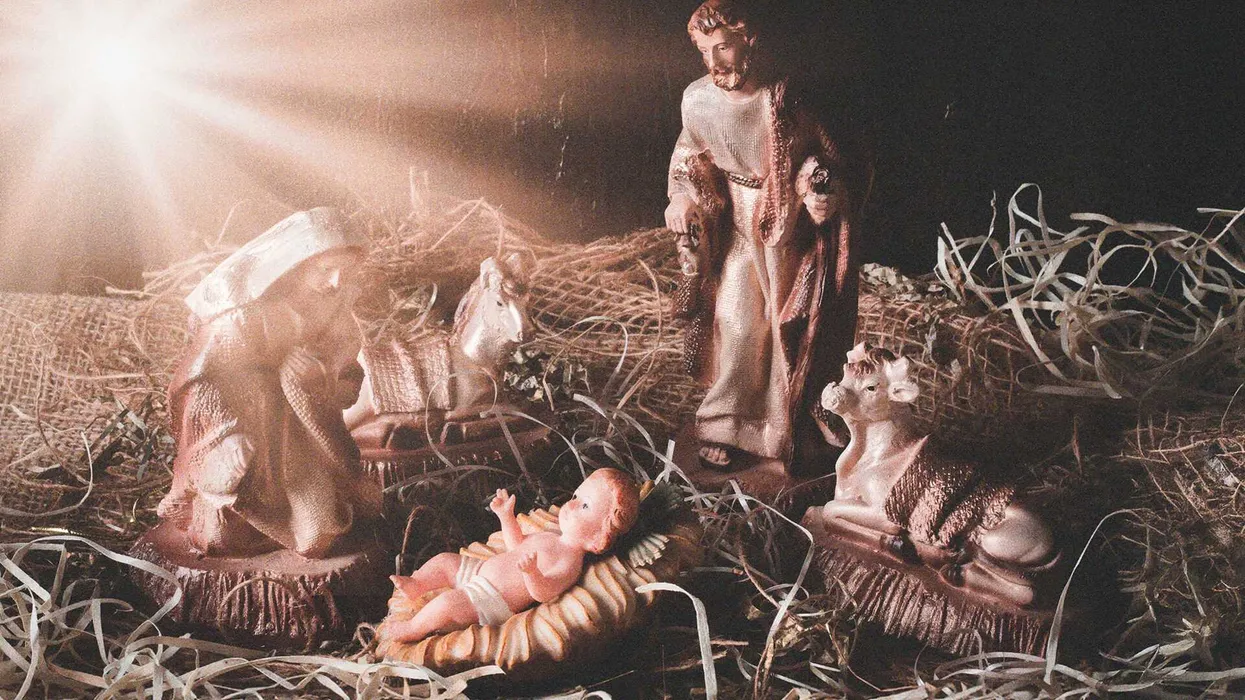
And this December, Glenn took that philosophy one joyful step further. While left-wing activists and institutions continue their annual push to secularize the holiday — replacing “Merry Christmas” with “Happy Holidays,” banning songs that mention Jesus, and swapping Christmas parties for generic “winter celebrations” — Glenn gave AI a simple but profound task: Produce a song that boldly puts Christ back in Christmas.
And it did not disappoint.
The lyrics are as follows:
Well, the season’s here, and the lights are bright, but they tell me, I can’t say Merry Christmas tonight.
They want RamaHanuKwanzMas all in one breath.
Buddy, that phrase is gonna bore me to death.
So grab some cocoa. Let’s reclaim this place.
It’s the birthday of the baby.
Yeah, remember who that is.
So I’m putting the Christ back in Christmas.
No microaggression here.
My friend, if words can break you, I’ll bless your heart, because that’s a battle we can’t defend.
Yeah, I’m putting the Christ back in Christmas.
Let common sense unfold. Out with the new, in with the old.
Merry Christmas. Let the truth be told.
And hey baby, it’s cold outside, relax.
It’s flirting, not a federal crime.
We used to laugh and dance in snow.
Now they fact-check mistletoe.
They say intent don’t matter.
Well, sure it does, ask Santa.
He’s judging hearts, not Twitter buzz.
So I’m putting the Christ back in Christmas.
You can keep your outrage warm.
If every jingle is problematic, buddy, that’s the real snowstorm.
Yeah, I’m putting the Christ back in Christmas.
Not buying what they sold.
Out with the new, in with the old.
Merry Christmas. Let the truth be told.
They say that greeting is oppressive.
Well, bless my soul.
Who knew if Merry Christmas makes you tremble, the problem ain’t the phrase, it’s you.
I’ll question with boldness. I’ll reason with grace, but don’t rewrite my holiday to make it a safe space.
So here’s to the manger.
The star in the sky.
The angels who sang up that holy night.
Here’s to the story that still brings hope
Even when cultures lost the remote.
Raise your voice, let the bells all ring.
This season was always about one King.
Yeah, I’m putting the Christ back in Christmas.
Let the real good news unfold.
The world may chase the wrapping paper, but the manger holds the gold.
So I put the Christ back in Christmas from the young to the gray and old.
Out with the new, in with the old.
Merry Christmas. Let the truth be told.
So crank up the volume, hit play, and let this AI-born anthem remind the culture: Christmas isn’t canceled — Christ is, and will forever be, King.
Want more from Glenn Beck?
To enjoy more of Glenn’s masterful storytelling, thought-provoking analysis, and uncanny ability to make sense of the chaos, subscribe to BlazeTV — the largest multi-platform network of voices who love America, defend the Constitution, and live the American dream.
BlazeTV host Sara Gonzales catches woke radicals spewing nonsense outside AmFest
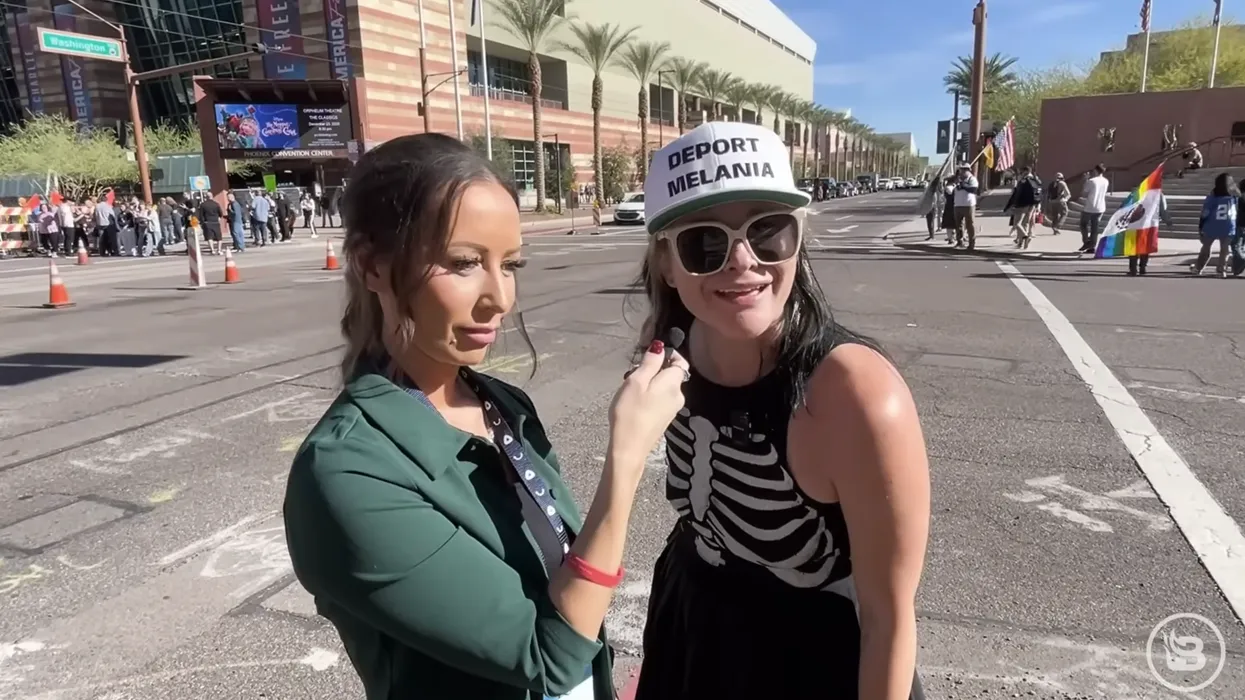
With America Fest coming to a close just days before Christmas, woke protesters showed no signs of taking a hiatus to celebrate the holiday. BlazeTV host Sara Gonzales went into the fray outside AmFest and came back with some footage of the nonsense the protesters were spewing.
While Gonzales interviewed multiple leftists outside the AmFest venue, one woman stole the show.
‘It’s just signs with really mean words on them and brain-dead individuals holding them, not able to back it up.’
The woman mocked Jesus Christ, shouted about explicit sexual acts with children around, and mocked Charlie Kirk’s widow, Erika Kirk.
At one point, Gonzales and the protester wearing the “Deport Melania” hat began arguing about whether there were children present, given that the protester was shouting and blasting explicit music.
“Oh, I’m so upset. There’s all these kids. You guys, there’s no kids. There’s no children here — unless you’re talking about the one I haven’t aborted yet! Am I right? Am I right?” she laughed.
The protester demanded that the cameraman pan around, and at least one kid was in the vicinity.
RELATED: Allie Beth Stuckey delivers bold speech at TPUSA AmericaFest: ‘Truth divides’
Concerned by this performance, Gonzales asked the woman several times if she was on drugs.
Gonzales also interviewed a man wearing a mask, sunglasses, bucket hat, and gloves who was carrying an American flag and a megaphone.
However, he refused to speak with Gonzales directly. Rather, to her disgust, he appears to have said, “I really love how Charlie Kirk hasn’t said anything racist in 90 days.”
“Are you happy with Charlie Kirk’s assassination? Cracking jokes? What is a racist thing that Charlie Kirk has said?”
He didn’t have an answer.
“Nothing,” Gonzales said. “Not a thing. These people have nothing. They stand here with their big signs and their big megaphones and they shout these tropes, and then when I ask them to explain themselves, they never can.”
Gonzales also got footage of a man in a giraffe costume singing a rendition of “YMCA” that changed the lyrics to say “f**k ICE,” among other mostly inaudible phrases.
The giraffe suit-wearing man was surrounded by other protesters, some carrying signs that said, for example, “Turning Point + Biggs = White Supremacy,” and “No Christo-Fascist Bulls**t Here.”
“Biggs” appears to refer to Rep. Andy Biggs (R-Ariz.), a featured AmFest speaker.
Gonzales tried one more time to talk to another person with a megaphone and a sign that said, “Stop the Nazi S**t.” Once again, the protester couldn’t, or wouldn’t, provide an explanation. Instead, she just played what sounded like a police siren to drown out the interviewer.
Over the sound of the siren, Gonzales said, “It’s so crazy. They come here with these signs, and they have nothing to back it up. They don’t know what they mean. They can’t explain them. They can’t define them. It’s just signs with really mean words on them and brain-dead individuals holding them, not able to back it up.”
Like Blaze News? Bypass the censors, sign up for our newsletters, and get stories like this direct to your inbox. Sign up here!
You’ve got the Christmas story wrong: Lee Strobel tells Glenn Beck the ONE Greek word that shatters our classic narrative
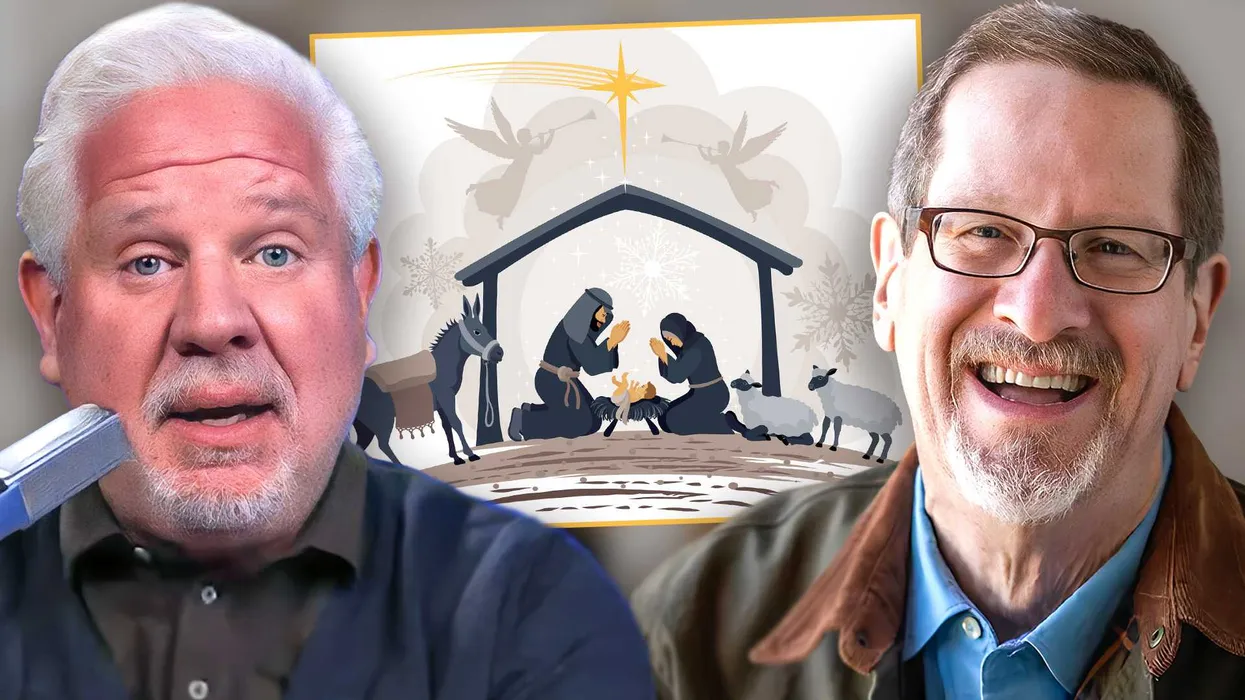
Back in 2005, “The Case for Christ” author and Christian apologist Lee Strobel published a book called “The Case for Christmas: A Journalist Investigates the Identity of the Child in the Manger.”
In September this year, 20 years after its original publication, Strobel released an updated version of his Christmas book to include the latest scholarship, research, archaeological findings, and scientific insights that have emerged since.
On this episode of “The Glenn Beck Program,” Glenn interviews Strobel about these fascinating new findings that change the way we read the Christmas story.
According to the most widely accepted narrative, Mary and Joseph came to Bethlehem for the census, arrived at an inn, but were turned away by the innkeeper for lack of space, forcing Mary to give birth to Jesus in a separate stable or barn among animals, where she laid him in a manger.
But Strobel says there’s one Greek word that changes this narrative entirely, and that word is “kataluma.”
In the ancient manuscripts of the gospel of Luke, “kataluma” is the word used to describe the place where Mary and Joseph were turned away, but it doesn’t mean inn, according to most scholars.
It actually translates to “guest room.”
A typical house in first-century Bethlehem, Strobel explains, had “one large room broken down into two parts.”
“The larger part was a living area — that’s where people would live, eat, sleep — and then there was a couple of steps down to a smaller area where the animals were brought at night,” he explains.
However, because animals were often seen as beloved pets, sometimes they were allowed to come up into the main living area. A manger (a feeding trough) was therefore a common item in both the upper and lower spaces of the house.
Wealthier families also had a “kataluma” — a guest room — in their homes, used for hosting traveling family and friends.
The original scriptures say that Mary and Joseph were turned away from the “kataluma” because it was occupied. This means that the couple likely didn’t seek shelter at an inn at all but rather at a relative’s home.
It makes sense that the “kataluma” would have been full at this time because of all the people traveling into Bethlehem for the census. Mary and Joseph, Strobel explains, were likely told by their relatives that they could just stay and birth the baby in the main living area.
“And yes, there is a manger there. And yes, some of the animals may have come up the stairs because of the commotion,” he says, reiterating that animals and mangers were common in a home’s main living space.
“There probably was no inn,” he concludes.
But an imprecise translation for “kataluma” isn’t the only evidence for this new narrative.
Strobel explains that Luke uses the word “kataluma” only one other time in the book, and it clearly refers to a separate room in a family home. But he uses a different word — “pandocheion” — to refer to a traditional inn in the parable of the Good Samaritan.
“If he wanted to use the word ‘inn,’ he would have used ‘pandocheion,’ but he didn’t. He used ‘kataluma,’” he says.
Further, “in first-century Jewish culture, the value of hospitality was so high that it would have been impossible for an innkeeper to turn away a pregnant Jewish woman,” Strobel tells Glenn.
“It would have destroyed his business. … And we don’t even know there were any inns in Bethlehem. It was a small town — 500 people. It wasn’t on a main crossroads. There may or may not have even been an inn there in the first place,” he adds.
The revelation that Jesus was most likely born in a home rather than in a dirty barn “changes everything,” Glenn says.
But there are even more details that the traditional Christmas story gets wrong about Jesus’ birth, according to Strobel.
According to the standard narrative, Mary is on the verge of giving birth when she and Joseph arrive in Bethlehem, but this urgency, Strobel says, comes from “a book of fiction that was written in 200 A.D.”
The scriptures only tell us “that while they were in Bethlehem, she gave birth. Doesn’t say they’re in Bethlehem five minutes or five days or five months,” he explains.
To hear more incredible revelations from Strobel’s investigations into the authentic Christmas story, watch the video above.
Want more from Glenn Beck?
To enjoy more of Glenn’s masterful storytelling, thought-provoking analysis, and uncanny ability to make sense of the chaos, subscribe to BlazeTV — the largest multi-platform network of voices who love America, defend the Constitution, and live the American dream.





